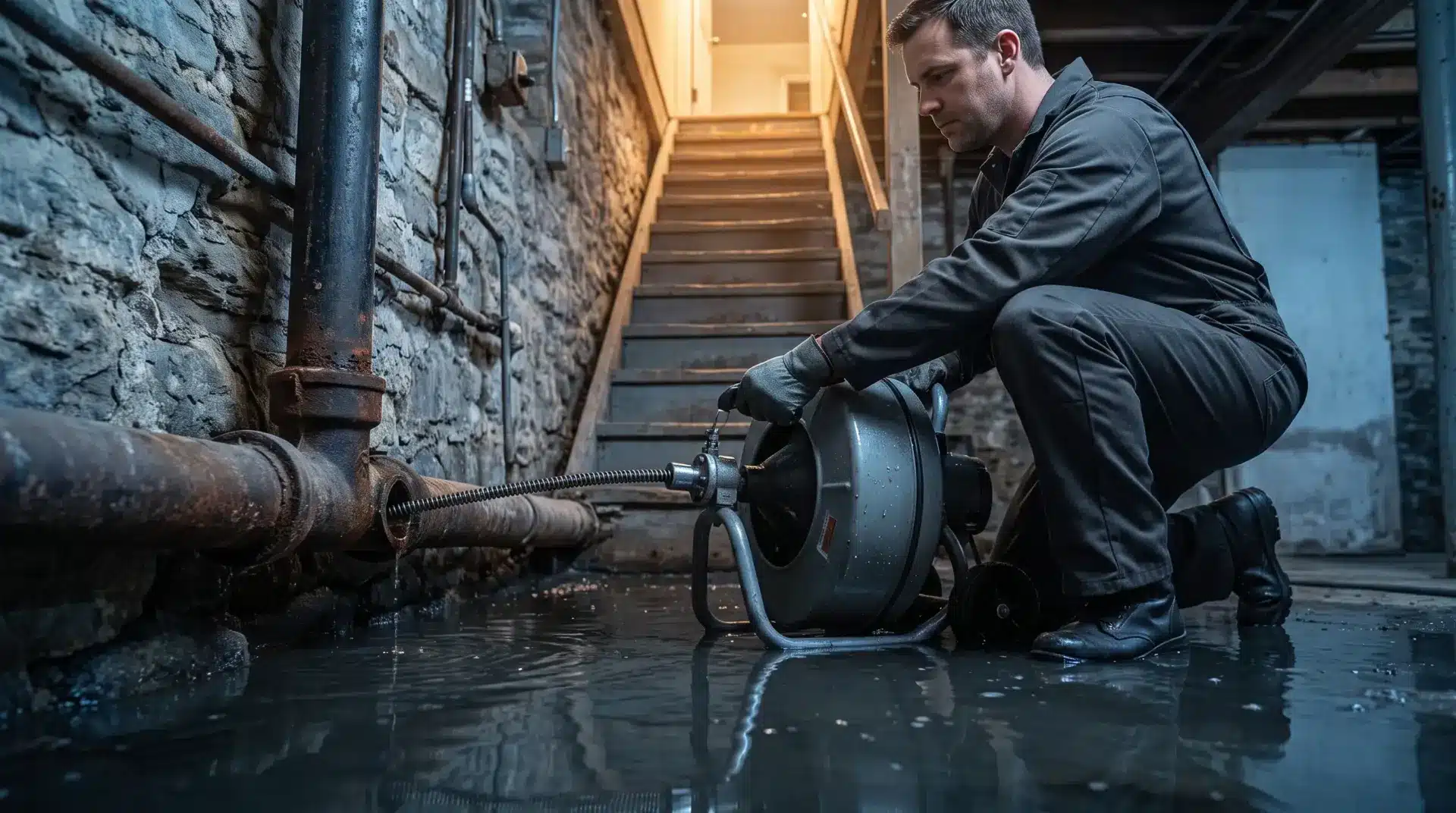

Picture this: it’s 2 a.m. on a frozen January night in Chicago, and water is bubbling up through your basement floor drain. You don’t need a plumber next Tuesday; you need someone who can be there now.
That’s the scenario where a name like Roto-Rooter often comes up. The company didn’t just stumble into the emergency plumbing business; it practically invented the industry’s backbone. Back in 1935, Samuel Oscar Blanc built the world’s first electric sewer cleaning machine, hoping to clear tree roots from sewer lines.
That invention, detailed in a Roto-Rooter Celebrates 90 Years of Innovation and Service press release, turned into North America’s largest plumbing repair and water cleanup company—more than 600 locations, annual sales north of $700 million, and service coverage for over 90% of the U.S. population, according to the company’s Quick Facts page.
Today, Roto-Rooter runs 121 company-owned branches and 348 franchises, employs about 6,000 people, and helps well over a million customers a year.
But what does that massive footprint actually mean for a Chicago homeowner? This review digs into the local operation’s service range, pricing, scheduling, and how it handles Chicago-specific nightmares like century-old clay sewers and the freeze-thaw cycles that bully our pipes all winter.
Who Is Roto-Rooter Chicago? Background and Credentials
Roto-Rooter’s Chicago branch is the real deal, fully licensed, insured, and available around the clock. You can reach them at 312-222-9091 or book online. The Chicago service page walks you through the straightforward scheduling: fill out a form or call, get a confirmation email, and then a rep rings you about 30 minutes before the technician pulls up.
The branch’s Illinois Master Plumber license (MP: 058-197370) and Indiana Master Plumber license (MP: JP22300062) are right there on its service area page.
Corporate-wise, this isn’t some fly-by-night operation. Roto-Rooter is a wholly owned subsidiary of Chemed Corporation (NYSE: CHE), headquartered in Cincinnati, and roughly two-thirds of its business is residential. That corporate backing means resources—and the speed that comes with them.
Roto-Rooter Chicago’s Full Service Menu
If you need anything involving water or pipes, the Chicago branch probably handles it. Drain cleaning, emergency plumbing, sewer line work (cleaning, inspection, repair, replacement), trenchless pipe repair, video camera sewer inspections, water damage mitigation and restoration, water heaters, sump pumps, pipe repair and replacement, leak detection, and even commercial jobs like hydro-jetting and grease trap cleaning.
Where Roto-Rooter really stands out is its approach to water damage, which is often the ugly aftermath of a plumbing failure.
The company follows a six-step IICRC-certified process: emergency contact and assessment, water removal and extraction, structural drying and dehumidification, cleaning/sanitizing/deodorization, mold remediation, and finally content and property restoration.
The technicians are IICRC-accredited and work under the S500 standards. The timeline matters, too. Roto-Rooter’s water damage restoration page notes that standard residential drying in Chicago runs 3 to 5 days, followed by 1 to 2 weeks of restoration, and mold can start growing in just 24 to 48 hours if moisture isn’t tackled.
And about those old Chicago pipes: Roto-Rooter says its drain cleaning methods are safe for the clay and cast-iron systems you’ll find all over the city, with technicians dialing back equipment and water pressure based on pipe condition.
Chicago’s Unique Plumbing Challenges and How Roto-Rooter Addresses Them
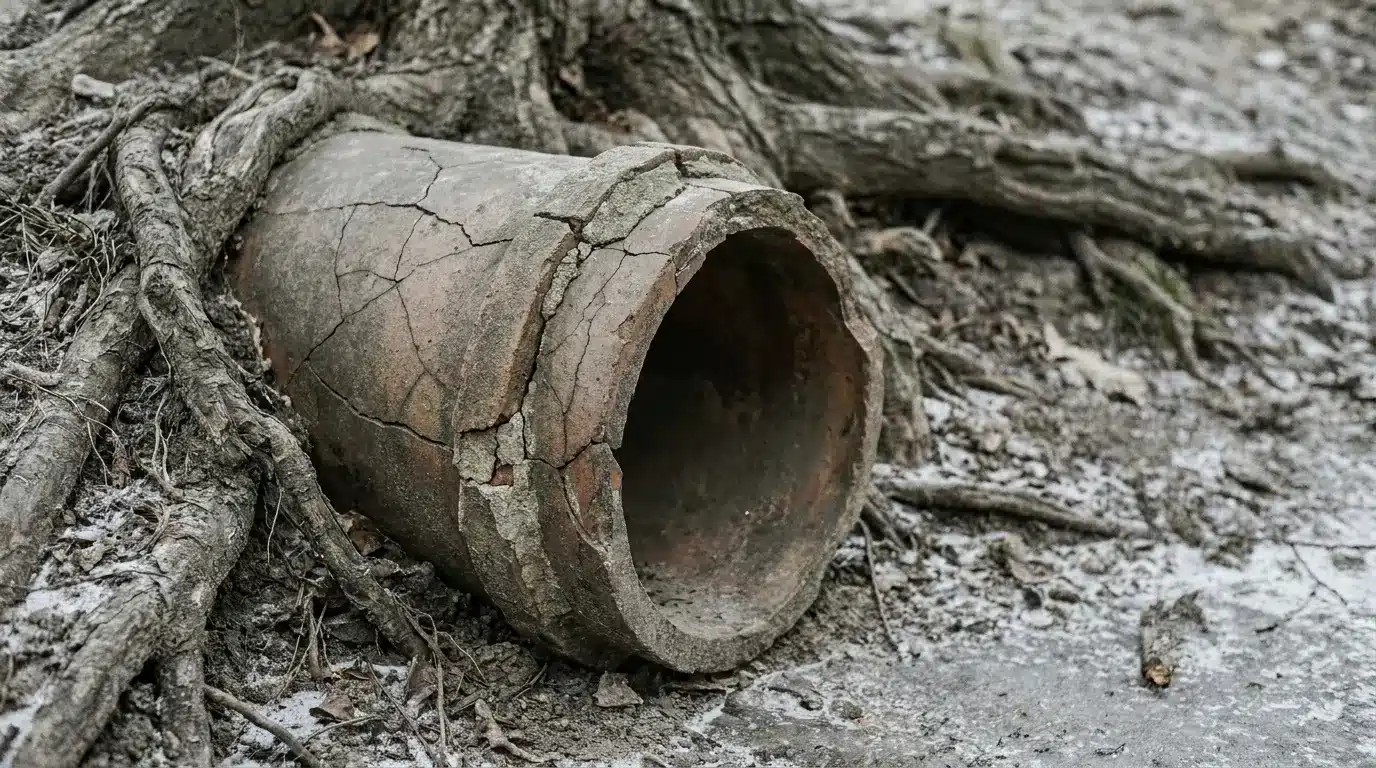
The Roto-Rooter Chicago page acknowledges the obvious: much of the sewer infrastructure is over 100 years old, plenty of those pipes are lead or clay, and our winters can freeze uninsulated pipes fast, causing leaks, bursts, and serious water damage.
On top of that, Chicago runs a combined sewer system where stormwater and wastewater share the same pipes. In heavy rain, that system can’t keep up, and sewage can get forced right back into basements.
The article What Causes Basement Flooding in Chicago? spells out the vulnerability with brutal numbers: just 0.66 inches of rain per hour is enough to overwhelm the system. There are roughly 4,500 miles of sewer pipes under the city, many of them laid before 1930. And flooding isn’t some rare, localized headache; residents in 71 of Chicago’s 77 community areas have reported problems.
Between 2007 and 2016, insurance payouts for flood damage here topped $400 million, and that’s with many homeowners paying out of pocket because they lacked proper coverage.
Then there’s the freeze-thaw effect that chews up clay pipes from the outside, and root intrusion that attacks them from the inside. Mortar-sealed clay pipe joints degrade over decades of Chicago’s temperature swings, and tree roots from the elms, maples, and oaks that line so many neighborhoods wriggle through cracks looking for water, as described by a JBS Sewer and Plumbing guide.
That makes root intrusion the most common reason sewer lines fail here. In an article, Why Chicago Homes Experience Hidden Freeze-Related Pipe Damage explains that our clay-heavy ground literally shifts as moisture freezes and thaws, loosening the soil around laterals until they crack.
Many Chicago houses, bungalows, two-flats, and pre-war beauties, were built between the late 1800s and the 1950s, and they come with a checklist of vulnerabilities: frozen pipes, failing clay or cast-iron sewers, lead service lines, outdated water heaters, and corroding galvanized supply pipes.
Winter only adds to the chaos. A piece from Chicago Sewer and Drain Pros points out that prolonged freezing temps, aging sewer lines, shallow or poorly insulated pipes, and snow blocking access points create the perfect storm for emergency repair situations.
How does Roto-Rooter respond? Its Chicago team offers both traditional excavation and trenchless sewer repair, including CIPP lining. The trenchless option is especially smart here because it causes far less disruption to sidewalks and public pathways—a big deal when you’re dealing with a permit-required dig in a dense neighborhood.
The same JBS Sewer guide notes that areas like Logan Square, Bucktown, and Ravenswood often have decades-old clay pipes, with some neighborhoods battling mature trees and original clay, while South and West Side homes struggle with aging infrastructure and high water tables.
For Chicago homeowners, staying proactive is key. You can start with our guide on How to Protect Your Pipes and Drains from Extreme Weather Conditions in Chicago.
Roto-Rooter Chicago Pricing & Financing: What You’ll Actually Pay
Roto-Rooter runs on flat-rate pricing, not hourly billing. A technician shows up at no charge in most markets, inspects the problem, and hands you a written, flat-rate quote before any work starts. If you say no, you owe nothing.
The Chicago branch also advertises no extra charges for nights, weekends, or holidays, plus senior and military discounts and special financing through Synchrony Bank.
Actual dollar figures, though, are what you really want. A HomeGuide cost analysis provides some solid benchmarks:
- Simple fixture repairs or minor clogs run $100 to $400
- Clearing a main sewer line costs $400 to $600
- Indoor branch line unclogging is $350-$500 for simple clogs (as of 2026)
- Sewer camera inspection is $350–$600
- Emergency burst pipe repairs can set you back $1,000 to $3,500
- Major sewer or basement repairs can climb from $3,500 all the way to $20,000.
Drain cleaning from a neighborhood shop typically costs $100-$275 for branch lines within the home (as of 2026).
Those flat rates tend to run higher than what a local hourly plumber might charge. You’re paying for speed and the predictability of a fixed price. A Today’s Homeowner review rated Roto-Rooter as having below-average industry pricing overall but gave it top marks for discounts and financing.
What about after the work is done? According to a pricing guide from TheHowToHome, Roto-Rooter backs up its work with a 6-month drain cleaning guarantee (no labor charge if the drain reclogs within half a year), a 1-year parts and labor warranty on plumbing repairs, a 1-year parts/labor warranty plus the manufacturer’s 6-year tank warranty on water heaters, and a 5-year replacement warranty on excavation and pipe relining. That last bit adds real peace of mind on the big-ticket sewer jobs.
Customer Feedback and Reputation: What Chicago Homeowners Are Saying
Real-world experiences with Roto-Rooter Chicago paint a picture that’s equal parts relief and sticker shock, which is probably the fairest way to sum it up. That same Today’s Homeowner review found that some customers had concerns about pricing and occasional follow-through snags.
On Trustpilot, specific verified reviews mention paying $550 for 48 minutes of drain work and $955 for a 45-minute outdoor faucet replacement.
Caveats and Considerations Before You Book
Roto-Rooter’s flat-rate model brings clarity; you’ll never get a surprise hourly bill, but those rates can land higher than what a local hourly plumber charges for straightforward jobs. Always ask about current promotions and use the online coupons to knock the price down.
For any sewer line replacement or repair that hits four or five figures, getting a second opinion from a well-reviewed independent local plumber isn’t just smart; it’s practically Chicago tradition. The free, no-obligation written estimate gives you space to meet the tech, hear the quote, and decide if it feels right without any pressure.
On routine maintenance or smaller non-emergency calls, Chicago is loaded with talented local shops: J. Blanton, Apex, Baethke, Goode, Rocket Plumbing, and others that homeowners often swear by. Weigh your options.
And remember that those warranties — 6 months on drain cleaning, 1 year on labor and parts, 5 years on excavation and relining—give genuine protection on bigger investments.
Conclusion: Is Roto-Rooter Chicago Right for You?
Roto-Rooter Chicago is the heavyweight you call when a plumbing or sewer emergency hits at the worst possible hour, and you need a guaranteed, fast on-site response.
If water damage is already spreading across your basement floor, their IICRC-certified restoration process and 24/7 availability become genuinely hard to beat. And when those century-old clay pipes finally give up, their trenchless repair expertise can spare you a yard full of trenches.
For a slow sink drain or a leaky faucet, though, or when budget is the top priority, you’ve got excellent independent plumbers in every Chicago neighborhood who can likely handle the job for less.
The smart move is to request the free written estimate, check for current coupons, ask about the recommended approach, and for any big-ticket sewer work, line up at least a couple of other quotes before you write the check.

Tommy Hardy, an alumnus of the Georgia Institute of Technology with a degree in Mechanical Engineering, has been a go-to figure in residential upkeep and innovation for over 18 years. His career commenced in a leading home appliance manufacturing company, where he mastered the intricacies of household systems. Joining our platform in 2020, Tommy quickly became a reader favorite for his practical and easy-to-follow guides. He took the helm of our DIY section in 2019, consistently delivering content that empowers homeowners. Beyond his professional pursuits, Tommy is a passionate gardener and enjoys woodworking, skills enhancing his hands-on approach to home care.