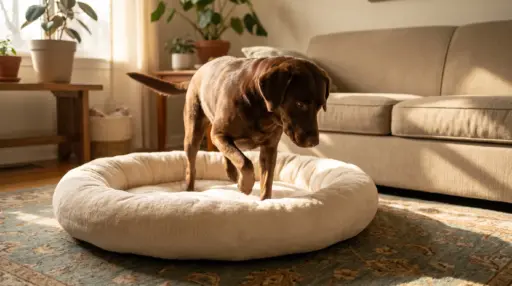
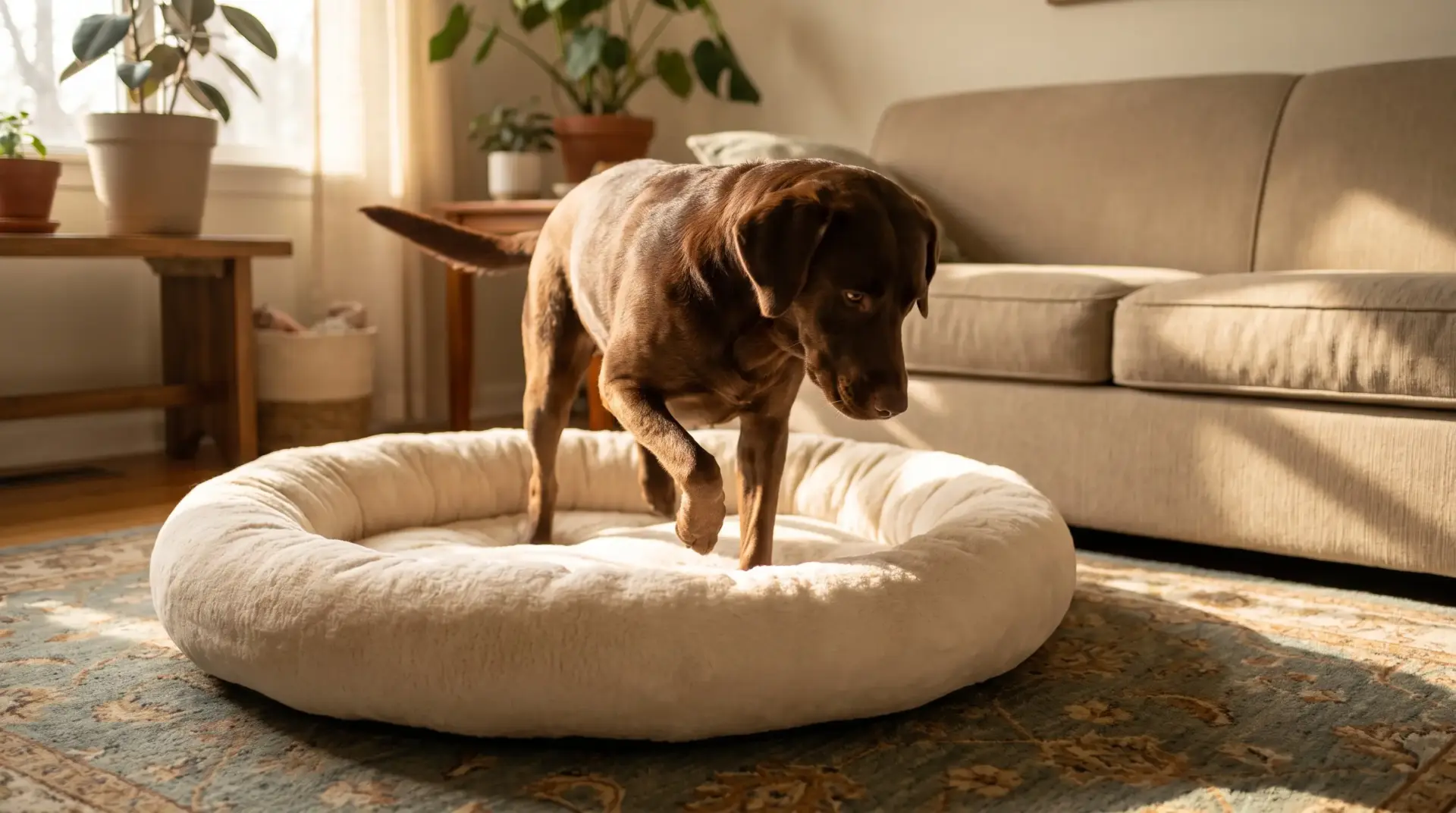
My Lab mix, Biscuit, does three full laps before he lies down. Every night. Same three laps, same direction, like he’s checking the perimeter of a yard he’s never actually seen. I used to think it was a quirk. Then I started watching other dogs do a version of the exact same thing, and I stopped laughing about it.
Here’s the short answer: circling before lying down is leftover nesting behavior. Dogs flatten grass, check for threats, and settle into a spot that feels safe and warm. Your couch cushions don’t need flattening, but the instinct didn’t get the memo. That’s the whole mystery, mostly. The interesting part is what it tells you about the bed your dog actually wants, because a dog that spins three times and then curls tight has different needs than one that sprawls out flat the second it hits the floor.
If you’ve ever bought a bed your dog ignored completely, this is probably why.
What the Circling Actually Means (and What It Doesn’t)
Wild canids circle to trample vegetation into a nest and to disturb anything hiding underneath. It’s also a temperature move: on cold ground, a dog curls tight to trap heat; on hot ground, it sprawls to dump heat. Domestic dogs kept the script even though the stage changed.
What it doesn’t mean is that your dog is anxious or unhappy with the bed you bought. That’s a common assumption and it’s usually wrong. Circling is a settling ritual, not a complaint. The complaint comes later, when the dog tries the bed once and walks off to sleep on the bathroom tile instead. That’s your real signal.
The tell is what happens after the spin. Does your dog curl into a tight donut with the nose tucked under the tail? Does it stretch out flat with legs at odd angles? Does it press its back against something solid, like the couch arm or a wall? That last one matters more than most people realize. Dogs that lean into a wall or a couch side are looking for something to push against, and a flat, edge-less bed gives them nothing.
Three Sleep Positions and What Each One Asks of a Bed
Most dogs fall into one of three patterns, and each one points at a different bed shape. Watch yours for three or four nights before you buy anything.
- The donut. Curls tight, nose tucked, often burrows under a blanket. Wants warmth and enclosure. Bolster beds with raised sides fit this dog almost perfectly.
- The sprawler. Stretches out, legs every direction, often flops onto the floor mid-nap to cool off. Wants open space and a flat, firm surface. A big flat bed wins here.
- The leaner. Backs up against a wall, couch, or the side of a crate, then settles. Wants a firm edge to press against and a surface that won’t collapse under a hip.
I’ll pick a hill to die on here: the leaner is the most misunderstood sleeper. People buy those dogs a big fluffy rectangle, the dog presses its spine against the nearest wall anyway, and the bed becomes a $90 floor decoration. Leaners need bolsters, and they need the bolster to hold its shape instead of squashing flat the first week.
Adult Dogs Sleep a Lot More Than You Think
The reason any of this matters is volume of use. According to the American Kennel Club, adult dogs sleep far more hours per day than most owners assume, which means the bed isn’t a nice-to-have accessory. It’s where your dog spends a serious chunk of its life. A bed that fights your dog’s natural sleep position gets abandoned fast, and you end up rotating through cheap replacements every few months.
That math flips the purchase decision. A bed that matches how your dog settles is worth more than a cheap one you’ll replace twice a year, and I say that as someone who has bought both.
The Fit-Form-Fabric Test
I use a simple check before I buy any dog bed, and it’s saved me from a few bad purchases. I call it Fit, Form, Fabric, and you run it in that order.
Fit is size. Measure your dog from nose to tail base while it’s lying stretched out, not standing. If it’s a leaner, add a few inches so the dog can press against the bolster without hanging half off the edge. A bed that’s too small gets abandoned faster than one that’s slightly too big.
Form is shape: flat, bolster, or a hybrid. Match it to the sleep pattern you observed, not to the photo you liked online.
Fabric is surface and warmth. Sherpa and faux fur hold heat, which suits donut sleepers and older dogs that run cold. Smooth woven covers run cooler for sprawlers in warm rooms. Chewers are their own problem entirely, and that’s a materials conversation, not a shape one.
Round Beds, Bolsters, and Why Shape Beats Stuffing
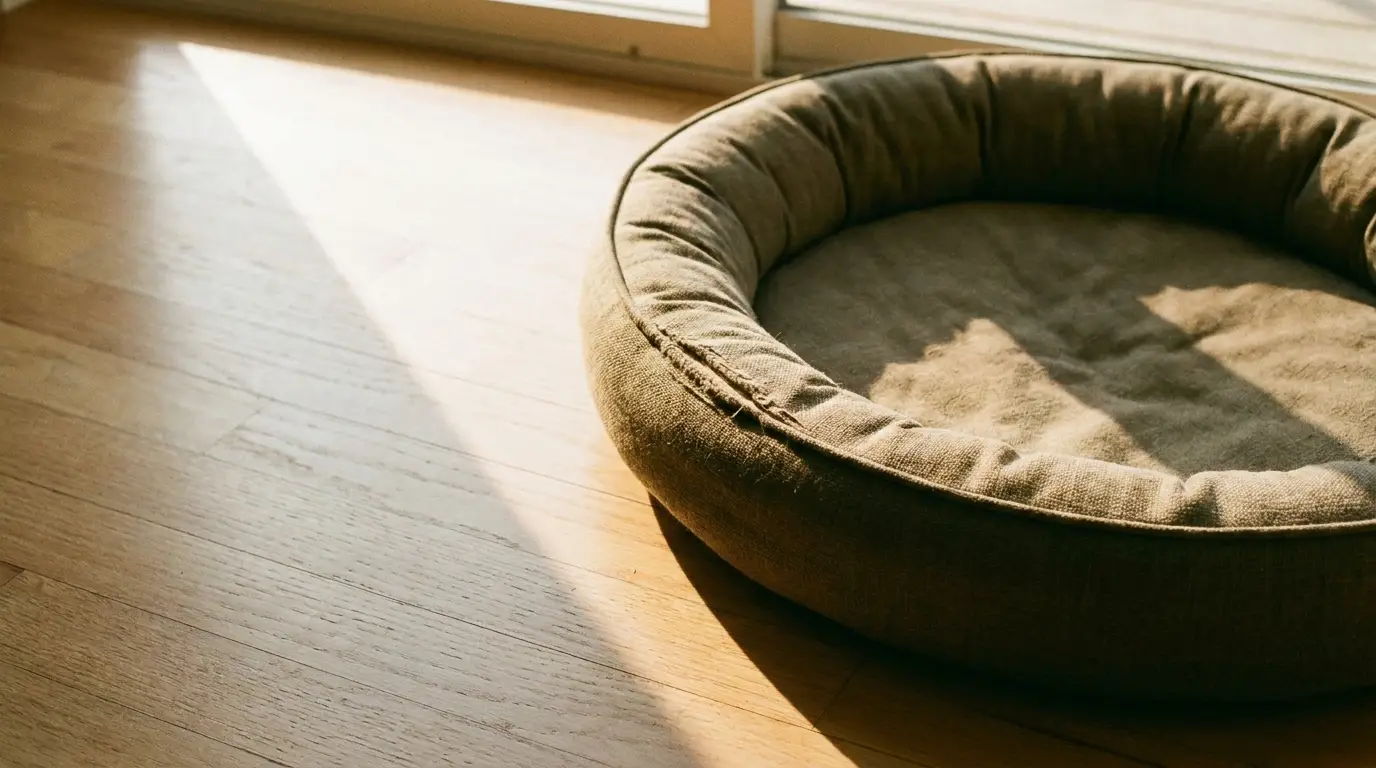
Round designs with a raised rim show up again and again for leaners and donut sleepers because the shape mirrors the nest a dog builds for itself. A raised edge gives the back and neck something to press into, which is exactly the move leaners make against a wall. For a dog that wants to curl into a tight ball, that raised rim wraps around the same way the dog’s own body does, and most dogs settle into that geometry in seconds. A round dog bed with a firm bolster gives a leaner the edge it’s hunting for, and the firmness is the part people underestimate. A bolster stuffed too soft collapses under a large dog’s weight and the whole point is gone.
Orthopedic foam matters here too, and this is where the marketing noise gets loud. What you actually want is a base dense enough that it doesn’t bottom out under your dog’s hips. Press your palm into the center of the bed before you buy. If your hand hits the floor, a 70 pound dog will too.
A Short Buying Checklist
Before you add anything to a cart, run these in order:
- Watch your dog sleep for three nights and name the pattern: donut, sprawler, or leaner.
- Measure your dog lying down, stretched out, not standing.
- Check the bolster firmness in person or read reviews from owners of a similarly sized dog.
- Match fabric to your dog’s temperature preference, not the prettiest photo.
- Confirm the cover comes off. According to the American Society for the Prevention of Cruelty to Animals, routine laundering of pet bedding is a baseline part of managing parasites and allergens in the home, and a cover that can’t go in the wash turns that into a chore you’ll skip.
- If your dog destroys beds, solve that first before you spend up on cushioning.
One more thing worth flagging: dogs that are destructive chewers will shred almost any bed shape you pick, and no bolster on earth survives a determined chewer. That’s a separate purchase decision, and it should come before you fall in love with a cover pattern.
Where Nutrition Quietly Fits In
Sleep position and joint comfort tie together more than people expect, and joint comfort ties to body condition. The Pet Food Institute notes that maintaining a healthy weight through proper feeding is one of the most reliable ways to reduce strain on a dog’s joints as it ages, and a dog carrying extra weight will show it first in how it settles down at night. You can’t buy your way out of that with a nicer bed. You can, though, buy a bed that stops making an existing problem worse, which is a reasonable place to land.
What I’d Actually Do
Watch your dog for three nights, name the pattern, then buy one bed shaped for it instead of three beds you’ll cycle through. If your dog is a leaner or a donut sleeper, a round bed with a firm raised rim is the closest thing to handing your dog the exact spot it was already trying to build. If it’s a sprawler, go flat and go big.
Biscuit got a round bolster bed after I finally paid attention to those three laps. The circling didn’t stop. He still does his laps. He just doesn’t leave afterward. What’s your dog doing before it lies down?

Certified Veterinary Technician Ethan Brooks has cared for companion animals in clinics and shelters for 13 years. Joining us in 2025, he shares health advice, training hacks, and product reviews that keep pets happy and owners informed. Off duty, Ethan rehabilitates injured wildlife and competes in agility trials with his border collie, Scout.