
If you have a flat or low-slope roof, you have probably noticed something. The leak is almost never in the middle of the roof.
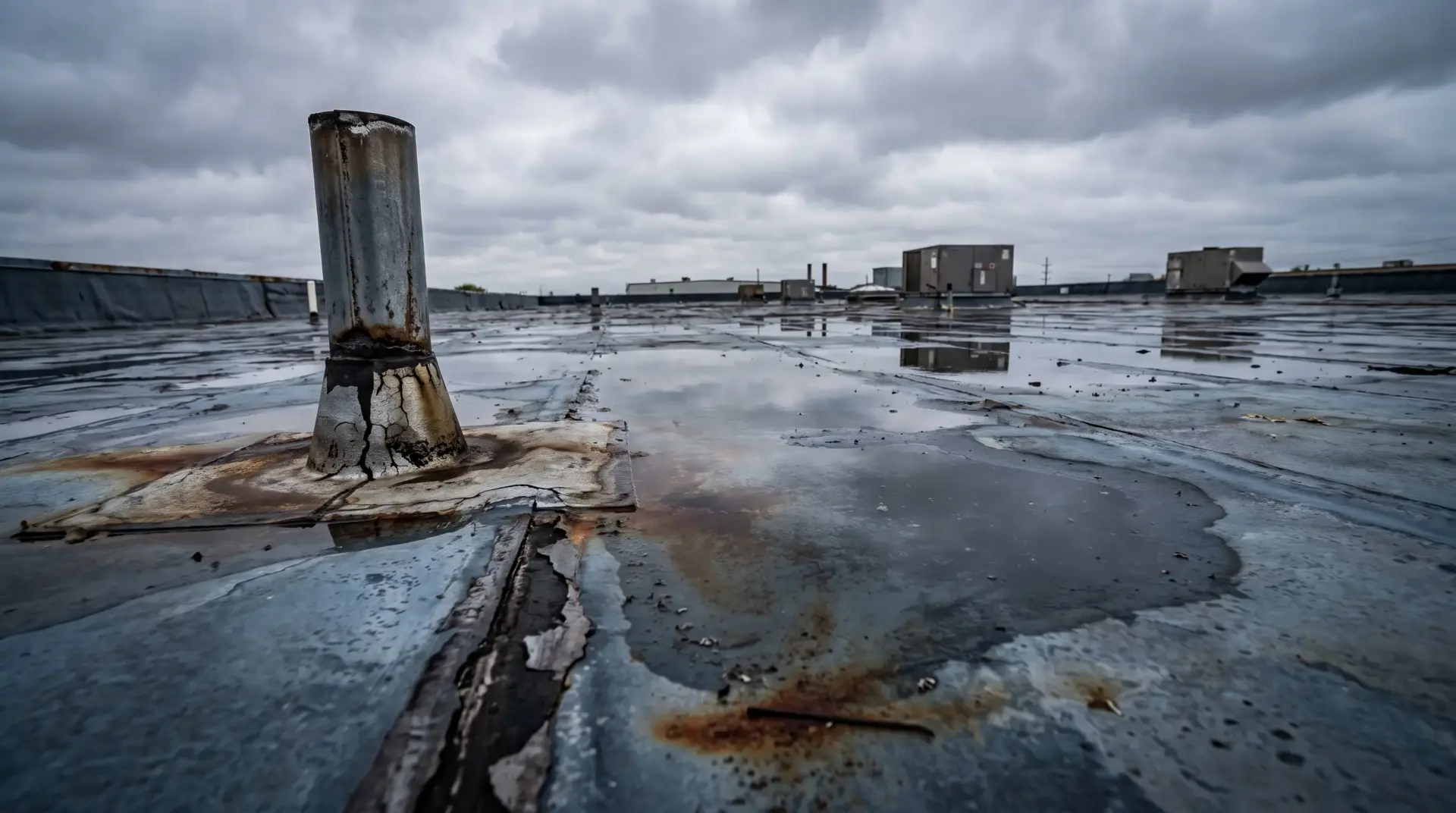
It shows up at a seam, around a vent pipe, at the edge where the roof meets the parapet, or right where water sits for two days after it rains. Those are the weak points, and they are weak by design.
Understanding why that happens tells you most of what you need to know about fixing it properly, rather than patching the same spot every couple of winters.
Key Takeaways
- Most flat roof leaks start at joints and penetrations, not in the open field of the roof.
- Standing water is the second culprit. A flat roof that drains slowly is a flat roof that fails early.
- Seamless sprayed systems remove the joints entirely and can be built up to create slope toward the drains.
- The foam is not the part that wears out. The protective coating on top is, and it is renewable.
- Ask any contractor about slope, edge detailing and the recoating schedule before you talk about price.
The Problem Is Almost Always a Joint
Traditional flat roofing arrives in rolls or sheets. Those sheets have to be joined, and every join is a place where two materials meet and have to stay stuck together for twenty years.
They expand and contract at slightly different rates. They get walked on by the HVAC technician. Heat softens the adhesive and cold makes it brittle.
Given enough seasons, something opens up. Water only needs a gap the width of a hair to find its way into the insulation below, and once it is in there it travels, so the stain on your ceiling is rarely underneath the actual hole.
Penetrations make this worse. Every vent pipe, skylight curb and equipment mount is a hole cut through the waterproofing and then sealed back up with flashing, which is another joint waiting to age.
Standing Water Is the Second Half of the Story
No flat roof is genuinely flat. It is meant to have a slight fall toward the drains so that water leaves rather than lingers.
The trouble is that buildings settle, insulation compresses and drains get blocked. Over time you end up with shallow basins where water sits for days after the rain stops.
That standing water does real damage. It adds weight, accelerates the breakdown of the surface, and gives algae and debris somewhere to accumulate. It also sits directly on top of whatever joints happen to be in that low spot.
If you can see dirt rings on your roof after a dry week, you are looking at exactly where the next leak is likely to begin.

How a Sprayed Surface Changes the Equation
Spray polyurethane foam takes a different approach. It is a plural-component material: an isocyanate and a polyol are blended under heat and pressure, sprayed on as liquids, and react on contact to form a solid, lightweight, fully adhered layer.
Because it is applied as a liquid, it flows into and around every shape on the roof. Vent pipes, curbs, edges and parapet walls all end up wrapped in one continuous surface with no joints to fail.
The Spray Polyurethane Foam Alliance describes the sequence plainly. The deck is evaluated and cleared of debris, a primer is optionally applied to improve adhesion, then a specified thickness of foam goes down followed by a protective covering.
The material itself is closed cell, which is what makes it water resistant rather than absorbent. That gives you insulation and waterproofing from the same layer.
The other advantage is one people rarely think about. Foam is typically applied at a minimum of about an inch, but the installer can spray it deeper in places to taper the surface and create positive drainage. A foam roofing system from a specialist like Dura-Foam is designed around that seamless barrier and built-in drainage, so the ponding problem gets addressed during the install rather than lived with afterwards.
The surface cures rigid and walkable, which matters if anyone needs to get up there to service equipment.
The Coating Is the Part That Actually Wears
Here is the thing nobody tells homeowners, and it is the single most important maintenance fact about these roofs.
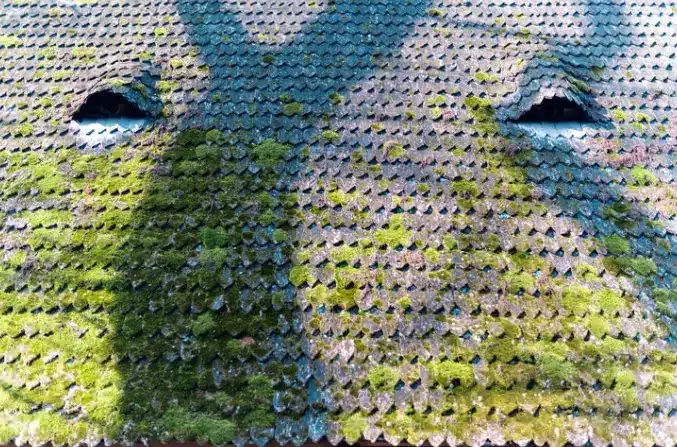
Polyurethane foam is not stable under ultraviolet light. Left bare in the sun it degrades at the surface, which is why every properly installed sprayed roof gets a protective elastomeric coating over the foam.
That coating is the sacrificial layer. Natural ageing of one of these roofs happens as the coating gradually thins, and thinning areas are recoated and refurbished at the end of the coating’s service life rather than torn off.
The Spray Polyurethane Foam Alliance puts that service life at anywhere from five to twenty years, depending on climate, the coating type and the total thickness applied. That is a wide spread, so it is worth asking which end of it your specification sits at.
Coating choice drives a lot of that. Acrylics are common and economical and suit drier conditions, while silicones hold up better where water sits, which makes them the usual pick on genuinely flat roofs.
On inspection, the recommended cadence is twice a year, once in spring and once in autumn. That is cheap insurance on a roof whose main failure mode is a protective layer quietly wearing thin.
Reflectivity Is a Real Benefit, Not a Marketing Line
The coating does a second job. Foam roofs are commonly finished with cool roof elastomeric coatings, which reflect a large share of the sun’s energy rather than letting it soak into the roof deck.
On a flat roof sitting in full sun all day, that changes how much heat pushes down into the rooms below. Combined with the insulating value of the foam itself, the cooling load in summer drops noticeably.
If you live somewhere with hot summers and a poorly insulated top floor, it is one of the more tangible upgrades available. Reflectance and emittance values vary by product, so ask for the figures on the specific coating being quoted rather than assuming.
Do Not Neglect the Edges
A roof surface is only as good as the details around its perimeter, which is where water is supposed to leave.
Drains and scuppers need to be clear and set at the actual low point. Parapet flashings need to terminate properly. On homes with overhangs, the transition from roof to eave has to move water away from the wall rather than behind it.
That perimeter detailing deserves as much attention as the field of the roof, and understanding roof eave construction makes it much easier to tell whether a contractor is treating those edges seriously or rushing them.
If your current roof shows staining down the exterior walls, the problem is usually at the edge rather than in the middle.
What to Ask Before You Sign
Four questions will tell you most of what you need to know about a contractor.
How will you handle the slope? You want to hear a specific plan for the low spots and the drains, not a general assurance that the new surface will be fine.
What thickness are you applying, and which coating? Both should be written into the proposal in measurable terms. Foam is generally applied at a minimum of around an inch, and the coating type should match your climate and how well the roof drains.
What does the recoating schedule look like? A contractor who avoids this question has not explained the maintenance cycle to you honestly.
What exactly does the guarantee cover, for how long, and what keeps it valid? Read what is excluded and what maintenance you have to perform to keep it in force, rather than anchoring on the headline number of years.
Is It Right for Your Roof?
Sprayed foam suits flat and low-slope roofs, which is exactly where traditional materials struggle most. It is a poor match for steep pitched roofs, where shingles and tiles shed water perfectly well on their own.
It also depends on installation quality more than most roofing. The material is mixed on site and cures in seconds, so temperature, humidity and the applicator’s skill all affect the result. This is not a category where the cheapest quote is a bargain.
Check that whoever you hire is properly licensed for roofing in your state, and ask to see work they completed five or more years ago rather than last month. A sprayed roof looks flawless on day one almost regardless of who applied it.
The Short Version
Flat roofs leak at joints and at low spots. Any fix that does not address both is a patch with a countdown on it.
A seamless sprayed surface removes the joints and lets the installer build slope where it is missing, which is why the approach keeps its appeal on roofs that have already failed once or twice.
Just go in understanding the coating cycle. Treat it as a roof you maintain on a schedule rather than one you forget about, and it will outlast most of the alternatives.
Frequently Asked Questions
How long does a sprayed foam roof last?
It depends on the coating rather than the foam, because the coating is what weathers. Industry guidance from the Spray Polyurethane Foam Alliance puts coating service life at five to twenty years depending on climate, coating type and thickness, after which the surface is recoated rather than replaced.
Can it be installed over an existing roof?
Often yes, which is one of its appeals. A sound existing surface can usually be cleaned and prepared rather than torn off, though wet or badly deteriorated insulation has to come out first.
Does it really help with energy bills?
It helps with cooling in particular, because the closed cell foam insulates and the reflective coating sends sunlight back rather than absorbing it. The effect is most noticeable on a sunny flat roof above a lightly insulated ceiling.
Is the surface strong enough to walk on?
Yes. It cures rigid and walkable, which is important on roofs carrying HVAC units or solar equipment. Normal care still applies, and heavy foot traffic areas are worth protecting with walk pads.
What is the biggest mistake people make with these roofs?
Forgetting the coating. Owners see a seamless surface with no leaks and assume there is nothing to do, then let the protective layer wear thin. Book the twice-yearly inspections and put the recoat in your calendar the day the roof goes on.

With a Master’s in Architecture from the University of California, Berkeley, Alexander Martin has dedicated the last 18 years to enhancing outdoor living through thoughtful and robust structure design. His career kicked off in urban planning, giving him a unique perspective on integrating structures into diverse environments. In 2019, Alexander brought his expertise to our website, offering insights into creating versatile outdoor spaces. Since then, he has been the lead advisor for our outdoor design projects and is known for his ability to merge functionality with environmental consciousness. Alexander enjoys rock climbing outside of work and participates in community development projects, activities that reflect his passion for the outdoors and sustainable design.