
Walk into a genuinely considered home and the luxury is rarely shouting. It is in the things you notice second: the weight of a door, the way light falls on a wall, the sense that someone made a decision rather than filled a space. More and more, that decision is landing on the walls themselves. Not paint, not a safe neutral, but a wall that has been treated as a canvas.
For years the feature wall was a bit of a design punchline, one bold colour behind the bed and little thought beyond it. That is not what is happening at the top end of interiors now. The statement wall has grown up, and the version showing up in high-end Australian homes is something closer to art.
Paint tells you a budget. A wall treatment tells you a point of view
There is a difference between an expensive home and a luxury one, and it usually comes down to intent. Anyone can spend money. Fewer people spend it on details that feel personal, made, and specific to the room they sit in.
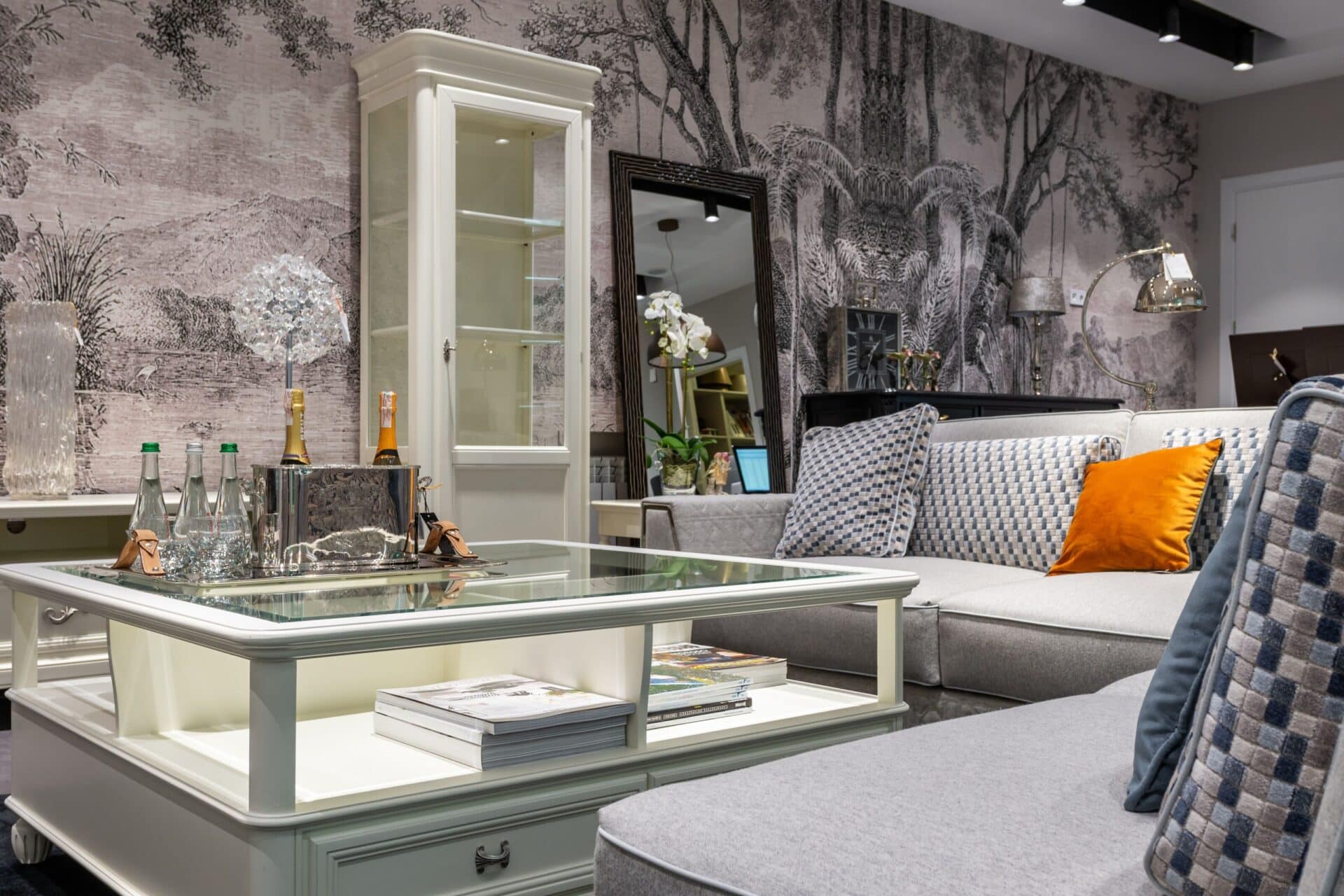
A hand-finished wallcovering does that in a way almost nothing else can. It sets the tone of a room before a single piece of furniture arrives. It gives a space a subject, a garden scene, a botanical study, an ornamental motif drawn from another century, and everything else in the room then answers to it. That is a very different proposition from choosing a paint chip.
The interesting part is that this look does not depend on scale. It works in a grand entry and it works in a powder room. What it depends on is craft.
Where the craft actually comes from
This is where the current wave of luxury wallpaper gets genuinely interesting, because the best of it is not simply printed. It starts by hand.
A good example is Iksel, the decorative arts house founded by Dimonah and Mehmet. Their wallcoverings begin as hand-painted artworks before being digitally produced, a process the studio has been refining since 2001. The hand of the artist remains evident in the composition and colour, while the digital stage allows each design to be adapted, resized, and recoloured to suit a specific space rather than being limited to a fixed repeat.
The reference points are deliberately pre-industrial. Their archive draws on scenic, botanical, and ornamental traditions from different cultures and historical periods, resulting in designs that feel rooted in place and history rather than driven by short-term trends. Dimonah’s eye for colour and composition, combined with Mehmet’s digital expertise, has produced an extensive library of made-to-order designs. That combination of traditional artistry and modern flexibility is what distinguishes this approach from conventional wallpaper.
Made to order changes how a room comes together
The phrase “made to order” gets used loosely, so it is worth being precise about what it buys you.
It means the design can be scaled to the exact dimensions of the wall, so a mural resolves cleanly at the corners instead of being cut off mid-motif. It means the palette can be shifted to suit the light in the room and the pieces around it, warmer for a west-facing space, cooler and quieter for a bedroom. It means the same source artwork can behave completely differently in two different homes.
For designers, that flexibility is the whole point. A fixed off-the-shelf print asks the room to adjust to it. A customisable, hand-originated design does the opposite. It adjusts to the room. That is why this kind of work turns up so often in the residential and commercial interiors Australian designers are most proud of.
How to use it without overwhelming a space
The instinct with something this striking is to worry it will dominate. Used well, it does the opposite: it anchors.
The rooms where it works best tend to follow a simple discipline. Let the wallcovering be the主 event and keep the rest restrained. Furniture in quiet tones. Art kept minimal, because the wall is already doing that job. Lighting that grazes the surface so the detail reads morning and night. The mistake is competition, layering a bold wall against equally bold everything else. The luxury is in the restraint around the statement, not just the statement itself.
It also rewards rooms people do not expect. A dining room that becomes a scene. A study wrapped in botanical detail. An entry that tells you, in the first three seconds, that this is a home where decisions were made with care.
The detail people remember
Guests will not walk out describing your skirting boards or your tapware, however good they are. They will remember the wall that stopped them for a moment. That is the quiet power of a hand-originated wallcovering: it is both the backdrop and the thing itself.
Luxury, at its most convincing, is not about how much was spent. It is about how much was considered. A wall that began as a painting, was adapted to its exact space, and was chosen to set the mood of a room, is about as considered as an interior gets. If you are looking for the single decision that lifts a home from expensive to genuinely luxurious, this is a strong place to start, and it is one you will keep noticing long after the newness of everything else has worn off.

Ava Taylor, holding a Bachelor’s degree in Interior Design from the Pratt Institute, has made her mark in creating engaging and functional living spaces for over 14 years. She began her career with a New York-based design studio, where she gained a reputation for her innovative and user-centric designs. Ava joined our team in 2019, bringing a blend of artistic flair and practicality to our home improvement section. Since the she has been the lead contributor to our room transformation series, inspiring readers with her unique approach to maximizing space utility and aesthetic appeal. Beyond her professional work, Ava is a passionate collector of vintage furniture, a hobby that enriches her design perspective.