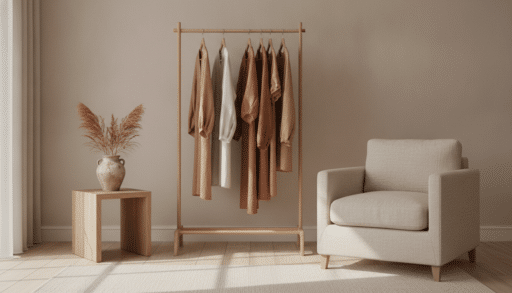
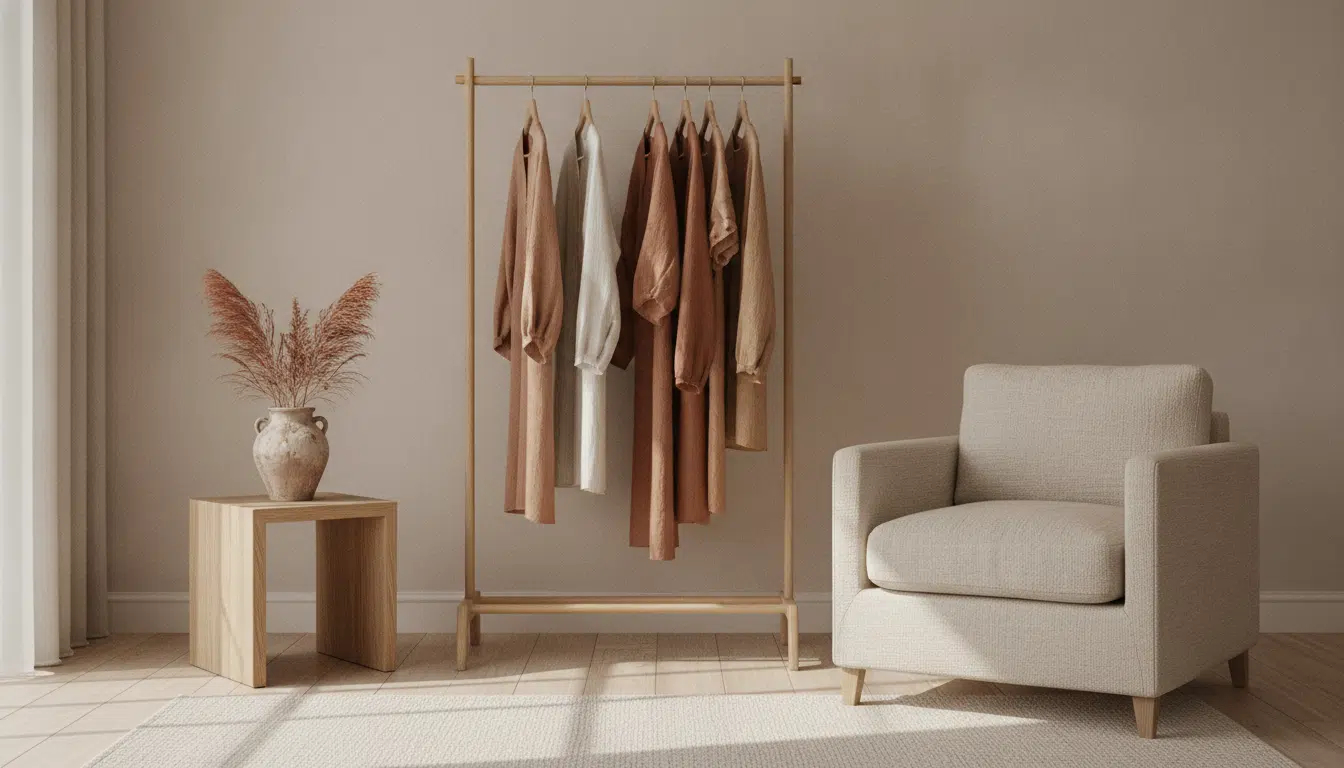
There is a moment most people hit somewhere in their twenties or thirties when they notice that the colours in their wardrobe and the colours in their flat have started to match. Not because anyone planned it. The same instincts that pull you toward certain clothes pull you toward certain lamps, and eventually the two catch up with each other.
This is more than coincidence, and it says something useful about how personal taste actually works.
Aesthetic Instinct Does Not Respect Categories
We tend to treat interiors and fashion as separate domains with separate expertise. In practice they draw on the same underlying preferences: how you feel about contrast, whether you are drawn to warmth or coolness, how much visual complexity you find comfortable, whether you want a space or an outfit to feel calm or energetic.
Someone who gravitates toward soft, low-contrast clothing rarely wants a living room of hard edges and stark whites. Someone whose wardrobe runs to black and heavy texture is not usually assembling a pastel bedroom. The instinct is singular even when the shopping is not.
This is why the aesthetic movements that have flourished online over the past decade tend to cover both. Cottagecore is a way of dressing and a way of arranging a kitchen. Dark academia describes a wardrobe and a bookshelf. The vocabulary developed to describe clothes turned out to describe rooms just as well, because the people using it were never separating the two.
The Named Aesthetics Made It Explicit
What changed recently is that these preference clusters acquired names. Once an aesthetic has a name, it becomes something you can research, discuss and deliberately build toward rather than something you drift into.
The gender-fluid style movements that developed online are a good example of how thoroughly this works. What began as ways of dressing have become full aesthetic worlds with distinct variants, and the different femboy aesthetics that exist now cover colour palette, silhouette, texture and mood in ways that map directly onto interiors. Someone building a pastel aesthetic is making the same decisions about softness, warmth and contrast whether they are choosing a cardigan or a duvet cover.
That transferability is the tell. If a visual language only worked for clothes, it would not describe a room so easily.
Practical Consequences
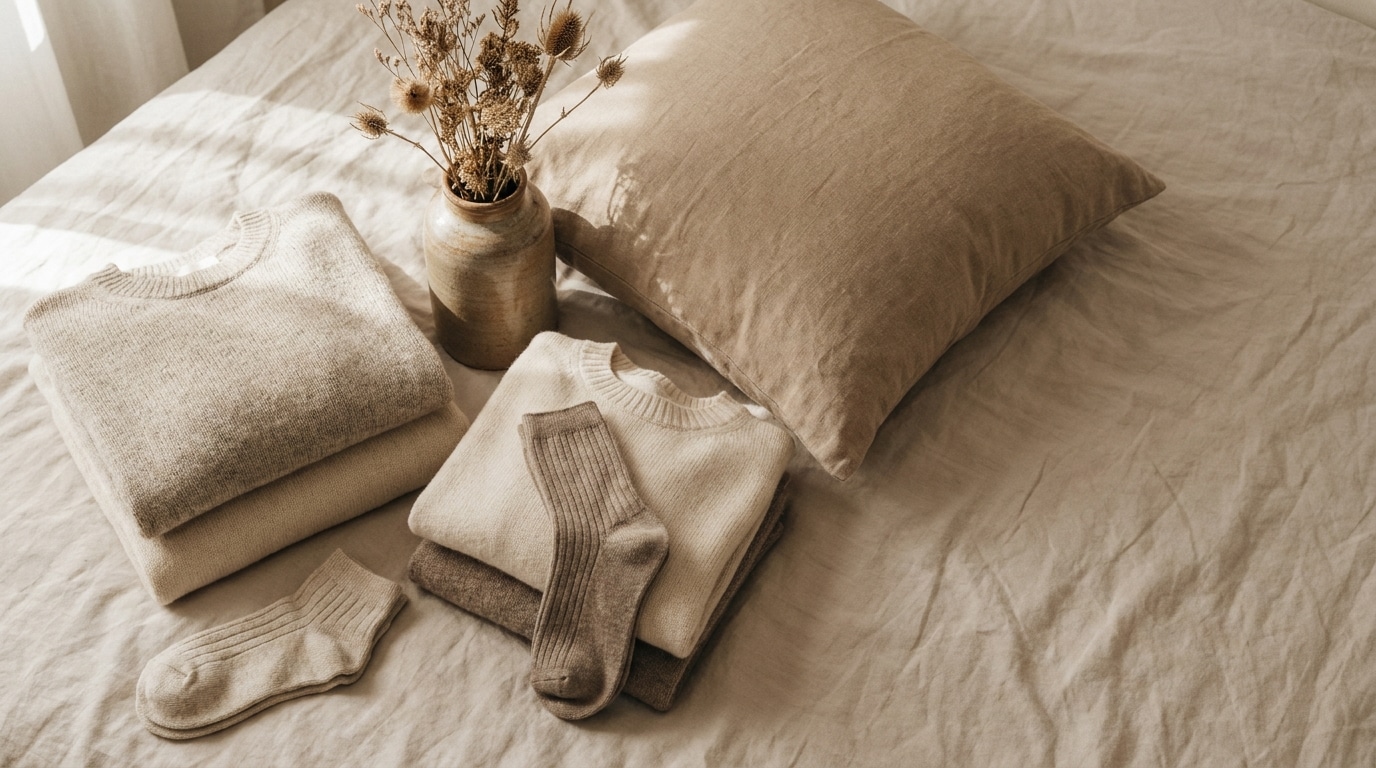
Once you notice the convergence, a few things become easier.
Shopping gets more efficient. If you know your palette runs to warm neutrals, that single fact filters both wardrobe and homeware decisions and eliminates most of the shopping paralysis that comes from evaluating everything on its own merits.
Mistakes become explicable. The jumper you never wear and the cushion you never liked usually failed for the same reason, and identifying that reason once fixes both categories.
Coherence compounds. A wardrobe and a home built on the same underlying preferences reinforce each other. Getting dressed in a space that shares your aesthetic feels different from getting dressed in a space that fights it, and most people underestimate how much that background friction costs them.
Where to Start If You Want to Do This Deliberately
Begin with what you already own and actually love. Not what you own, what you reach for. Photograph the five garments and five objects you would keep if you had to discard everything else, and look at them together. The commonalities are your actual aesthetic, as opposed to the one you think you have.
Then work out your contrast level and your temperature. High contrast or low, warm or cool. These two decisions do more work than any other and they apply identically to both domains.
From there, buy slowly and against the pattern. Whether that means sourcing furniture in a consistent palette or building a wardrobe from a retailer whose range matches your direction, whether that is minimalist basics or femboy clothing or vintage workwear, the principle is the same. Each new thing should look like it belongs with the things you already chose.
The Underlying Point
Personal aesthetic is not really about clothes or furniture. It is about a consistent set of preferences that shows up wherever you are given a choice.
Most people never articulate theirs and end up with a wardrobe and a home that are both slightly off in the same way. The ones who do articulate it find that everything downstream gets simpler, because they are no longer making every decision from scratch.

Journalist Chloe Rivera studied at the University of Missouri and has covered mindful, stylish living since 2013. She joined us in 2025 to curate realistic routines, budget-friendly décor, and community stories that help readers craft balance without perfection pressure. When offline, Chloe volunteers at urban farms, photographs street style, and hosts weekend swap parties for preloved clothes and books in her neighborhood.