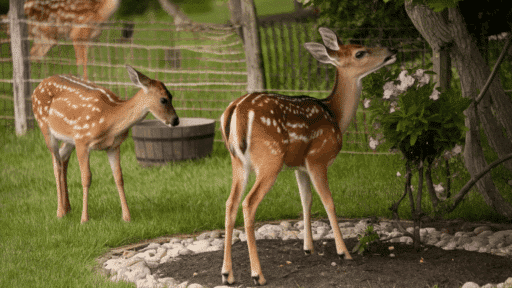
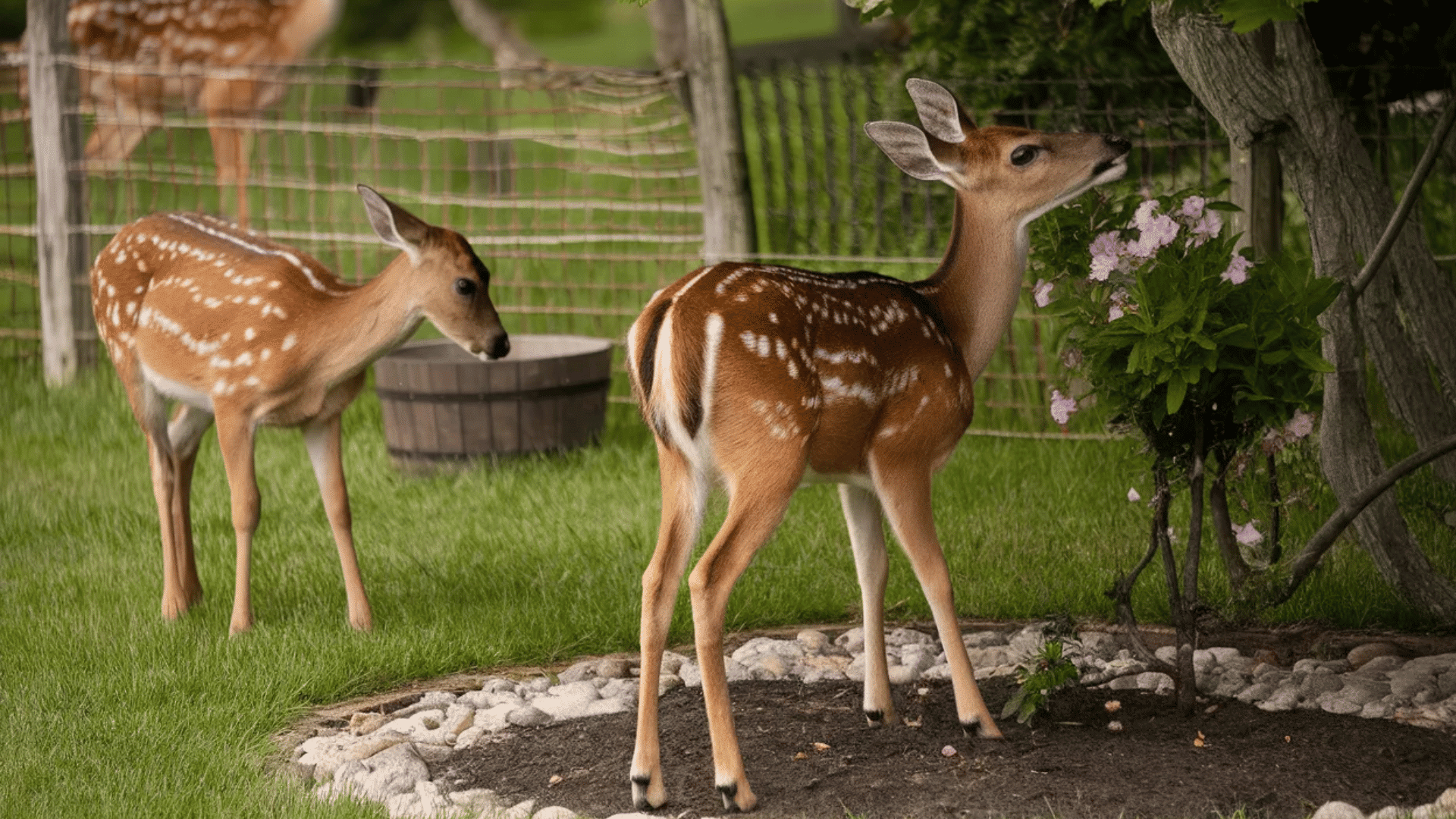

You planted hostas, watered them through spring, then walked outside one morning to find bare stems. It is one of the most frustrating things a gardener faces, and it happens to thousands of people every growing season.
The USDA estimates that deer cause over $250 million in damage to gardens and crops across the United States each year.
White-tailed deer are pressing deeper into Eastern suburbs while mule deer do the same across the West.
Your yard, with its lush beds and fresh vegetables, is simply the easiest meal around. Knowing how to keep deer out of your garden does not require a complete overhaul or a large budget.
Why Do Deer Keep Returning to Your Garden?
Before you can successfully keep deer out of garden beds, you need to know what draws them in. Deer follow scent trails and feeding patterns that repeat year after year. Understanding this is your starting point.
The biggest attractants in residential yards:
- Tender, moisture-rich plants: hostas, daylilies, impatiens, roses, and hydrangeas are consistently at the top of a deer’s list
- Vegetable crops: lettuce, beans, broccoli, peas, and cabbage are prime targets from early spring through late fall
- Fruit trees and berry patches: peaches, apples, and strawberries draw deer from a considerable distance
- Fertilized plants: research shows deer actively prefer fertilized plants over unfertilized ones, so heavy feeding can work against you
Feeding pressure peaks in spring and summer when nursing does, and antler-growing bucks both need extra calories. Deer prefer early morning, dusk, and overnight hours, which is why damage often appears before you are even awake.
Deer-Proof Your Garden with These Simple Strategies
Learn how to effectively deter deer from your garden with these easy and natural solutions for a healthier space.
1. Deer-Resistant Plants as Your First Line of Defense
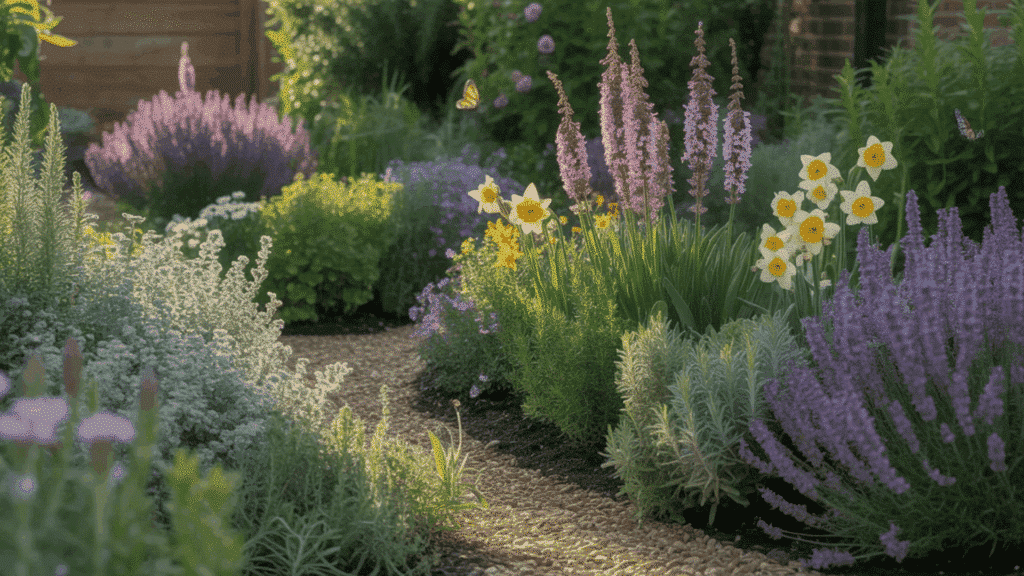
The most cost-effective way to keep deer away from your garden is to fill beds with plants deer naturally avoid. Your outdoor space does not have to look bare; it just means being deliberate with what you choose and where you put it.
Deer avoid plants based on three qualities: texture, scent, and natural toxicity.
Plants with Fuzzy or Hairy Foliage
Deer dislike the scratchy feel of hairy leaves against their tongues. Reliable choices include lamb’s ear, yarrow, purple top vervain, Siberian bugloss, lady’s mantle, and flowering tobacco.
Run the leaf against your cheek before buying it if it feels bristly; deer will likely pass on it.
Strongly Scented Herbs that Push Deer Back
Lavender, rosemary, sage, catmint, Russian sage, bee balm, oregano, and thyme carry aromatic oils that overwhelm a deer’s sensitive nose.
Placing these along the border of beds you want to protect is one of the most practical natural deer deterrents available, and you gain useful herbs at the same time.
Plants that Are Toxic to Deer by Nature
Daffodils, foxglove, bleeding heart, black-eyed Susan, and ferns all contain compounds deer instinctively avoid. Mixing these throughout your garden creates quiet, low-maintenance protection that requires no effort once planted.
2. Use Natural and Commercial Deer Repellents
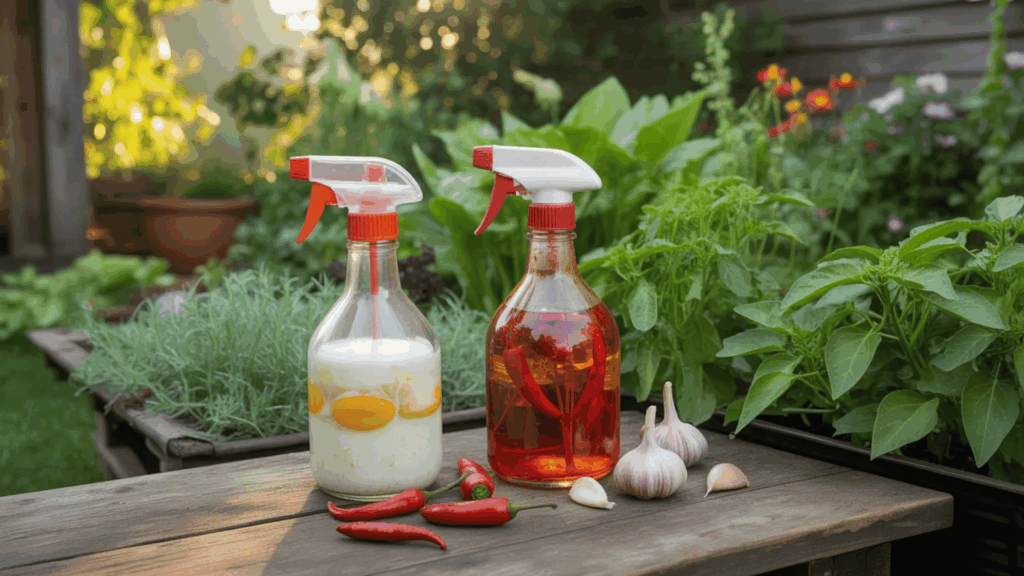
When plant selection alone is not enough, scent and taste deterrents are the next step. The key is knowing which options hold up under real garden conditions and which ones deer adapt to faster than most gardeners expect.
An egg-and-water spray applied around garden perimeters is one of the most effective homemade choices.
The smell of putrescent egg solids mimics decay and is highly offensive to deer. A hot pepper-and-garlic spray works well, too. Both need reapplication every seven to ten days and after any significant rainfall.
| Product | Why It Works |
|---|---|
| Liquid Fence | Egg-based formula, rain-resistant after drying |
| Bobbex | Long-lasting, proven in independent field trials |
| Deer Out | Peppermint-based pleasant scent for the gardener |
| Milorganite (fertilizer) | Organic nitrogen with documented deer-deterrent effects |
Rotate your products. Deer adapt to the same smell within a few weeks. Alternating between two or three different deer repellent sprays throughout the season is far more effective than staying with one product all year.
3. Physical Barriers and Deer-Proof Fencing
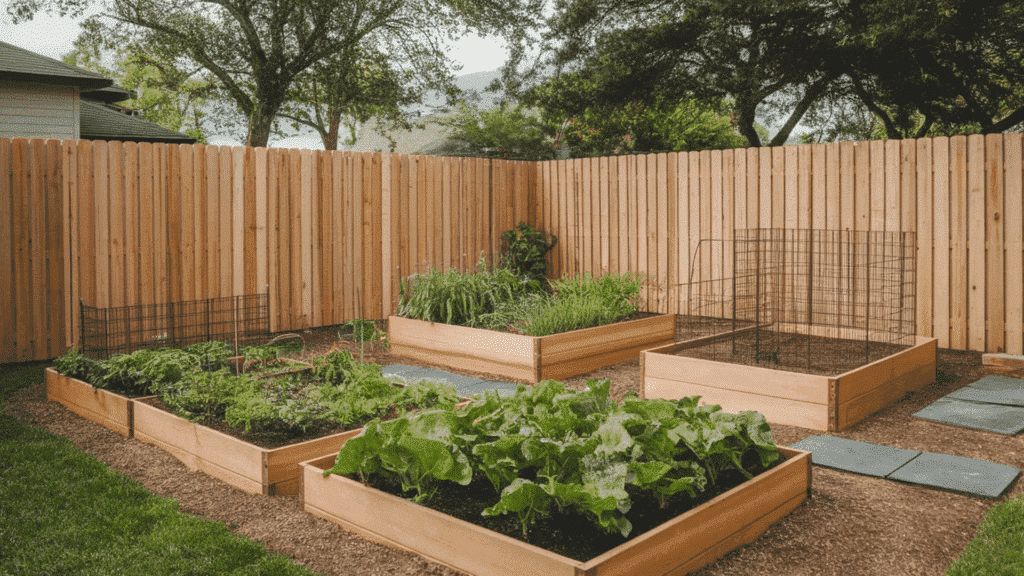
If you want to keep deer out of garden areas with near-certainty, a deer-proof fence is the strongest option available.
Deer are athletic, and a motivated deer clears seven feet without much effort, so height matters far more than most people expect.
Professional installation typically runs $25–$35 per linear foot, though several budget alternatives work well.
- The height rule: at least eight feet tall. A six-foot fence may slow casual browsers, but will not reliably stop a determined deer
- The double fence method: two parallel fences set three to five feet apart, deer cannot clear both height and width simultaneously, so each can be just five to six feet tall
- The depth-perception factor: deer avoid jumping into tight, enclosed spaces where they cannot see a clear landing zone. Tightly spaced raised beds with a short outer fence exploit this instinct reliably
- Budget DIY option: a cattle panel micro-enclosure costs roughly $150 in materials and is mobile, effective, and simple to build.
4. Scare Tactics and Motion-Activated Devices
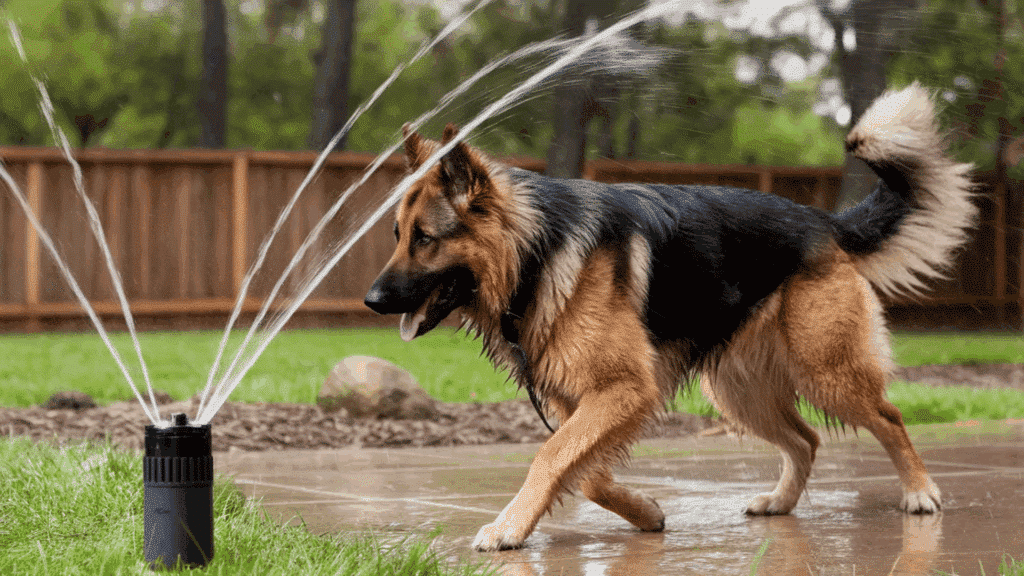
Motion-activated tools add an important outer layer to your plan to keep deer away from your garden. On their own, they fall short of what is needed.
But paired with repellents and barriers, they make your property feel unpredictable, and unpredictability is exactly what deer dislike about an area.
- Motion-activated sprinklers: sudden water bursts startle deer and condition them to avoid the area over time. Place them at garden entry paths, not the center of a bed. Move the device every ten to fourteen days, a stationary sprinkler loses its deterrent effect quickly as deer learn the trigger zone
- Motion-triggered floodlights: sharp light at night is highly effective during the nocturnal feeding hours most common in suburban areas. Aim the lights toward the approach paths rather than straight at the bed
- Dogs: A dog that roams freely deposits scent that deer recognize as a predator signal. Even intermittent barking from inside the house will redirect deer from your yard
- Rotating sound deterrents: a battery-powered radio on a talk station can work short-term, but change the station every few days, or deer stop reacting within a week
The Bottom Line
Deer are persistent and follow the same patterns season after season, but that predictability is exactly what makes them manageable.
Gardeners who successfully keep deer out of their gardens year after year are not the ones with the most expensive setups. They are the ones who stacked multiple methods and stayed consistent with them.
Start with your plant selection this week. Add a scent border, rotate your deer repellent on a set schedule, and put row covers or fencing in place before your next planting window.
Each step builds on the last, and together they shift your yard from an easy target to a place deer consistently pass by.
Frequently Asked Questions
How to tell if a deer is nearby?
Look for common signs such as:
Fresh hoof prints on soil or mud
Deer droppings (small, dark pellets)
Chewed plants or leaves in the garden
Rustling sounds in bushes or grass
Tracks or paths in the grass where deer walk often
What do deer hate the most?
Deer hate strong smells the most, especially garlic, vinegar, mint, and spicy scents like chili or cayenne pepper. Their noses are very sensitive, so these odors make them avoid an area. Plants with strong fragrance, such as lavender and marigolds, can also help keep deer away
What is a deer’s biggest enemy?
A deer’s biggest enemies are natural predators, especially wolves, coyotes, and mountain lions. These animals hunt deer for food and are their main threat in the wild. Humans are also a major enemy because of hunting and habitat loss.
What time of day are deer most active?
Deer are most active during dawn and dusk.
This time is called crepuscular activity, when they come out to feed and move around.
They prefer these low-light hours because it helps them avoid predators and human activity.

With a Master’s in Landscape Architecture from the University of Virginia, Sophia Stephenson has dedicated the last 20 years to creating and maintaining vibrant outdoor spaces. Her professional journey started in landscape design, where she gained a reputation for innovative and sustainable approaches. Sophia became a part of our editorial team as a freelancer in 2019, offering a fresh perspective on outdoor living. Since 2020, she has been the chief for our outdoor design content, blending aesthetic appeal with environmental stewardship. In her leisure time, Sophia is a keen photographer, capturing the beauty of natural landscapes, a hobby that complements her professional expertise.