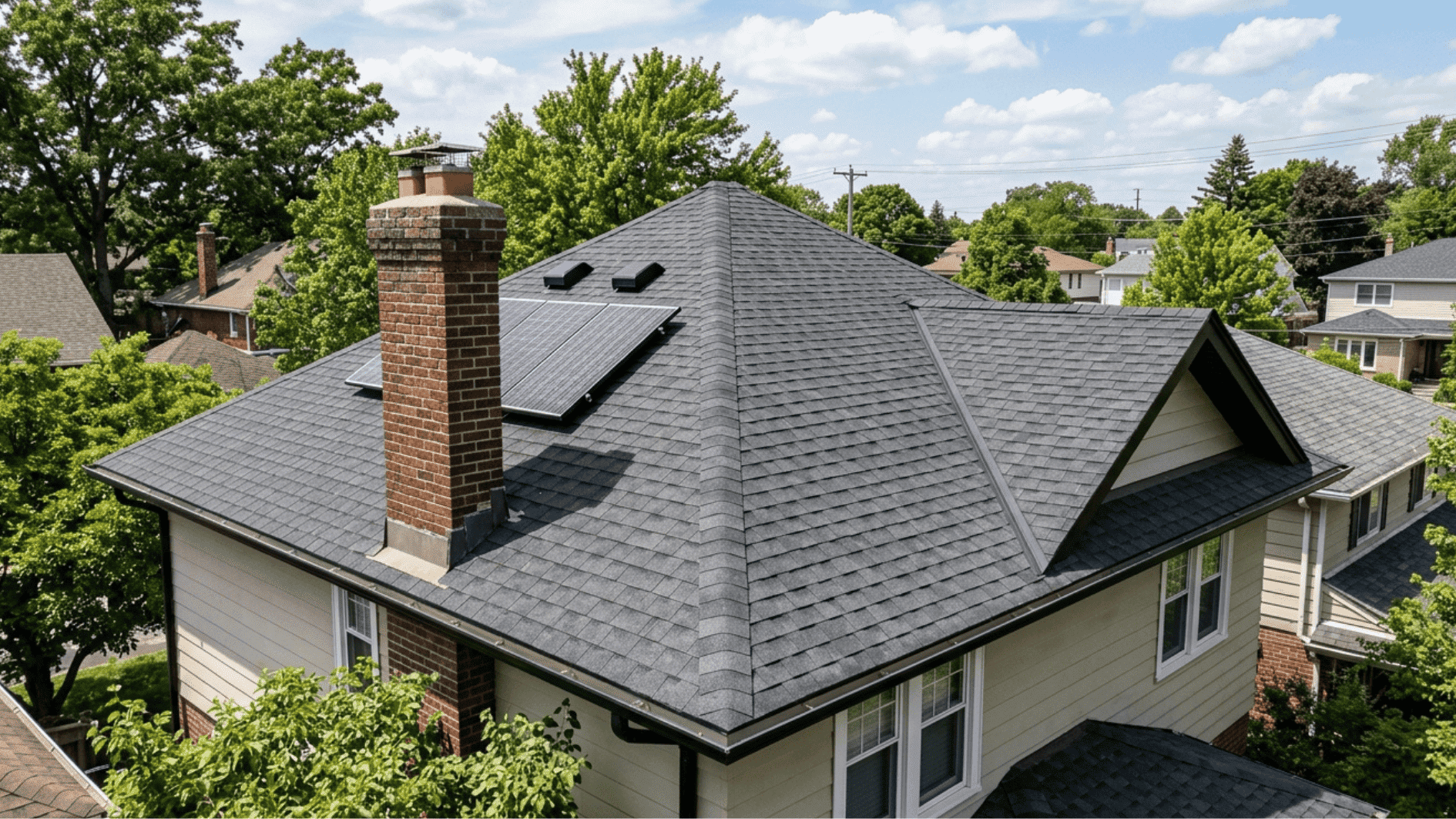

Ever noticed how different roof styles can completely change the feel of a home? You might find one design looking warm and classic, while another feels sleek and modern. But it’s not just about what looks good.
The choice made here can affect how well the home withstands weather, how comfortable it feels inside, and even how much maintenance is required later.
That’s where things get a little tricky. A small design shift can make a bigger difference than expected. If choosing between roof styles feels confusing right now, you’re in the right place.
Key Factors to Consider When Choosing a Roof Style
Choosing a roof style isn’t just about the look; it’s one of the most important decisions when building or renovating a home. The wrong choice can affect everything from energy efficiency to maintenance costs down the line.
There’s a lot to think about before making a final call:
- Climate and weather conditions: The local climate should always be the first consideration
- Architectural style: The roof should complement the overall look and feel of the home
- Budget: Factor in both installation costs and long-term maintenance expenses
- Material compatibility: Not every roofing material works with every roof style
- Drainage and slope: Poor drainage leads to water damage and costly repairs over time
- Energy efficiency: Certain roof styles improve ventilation and reduce energy bills significantly
- Local building codes: Some areas have strict regulations on roof styles and materials
- Durability: The style should be able to withstand the local environment and weather conditions
- Resale value: A well-chosen roof style can add significant value to the property
- Maintenance requirements: Some styles are far easier and more affordable to maintain than others
Types of Roof Styles You Need to Know
Each type offers unique benefits in terms of durability, drainage, and visual appeal. Knowing these options makes it easier to match your roof with your climate, budget, and home style.
1. Gable Roof
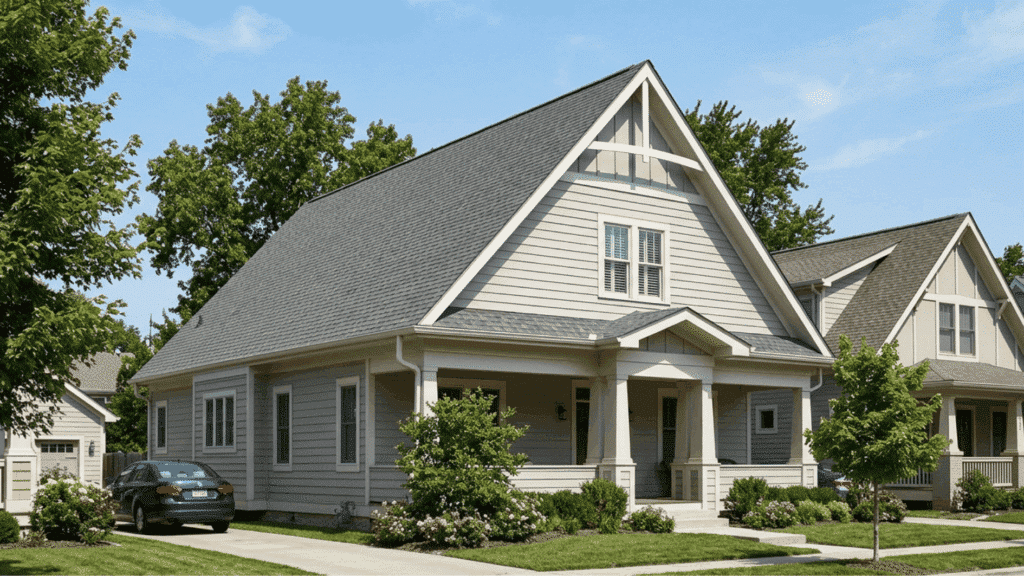
A gable roof has two sloping sides that rise and meet at a central ridge, forming a triangular gable at each end of the building.
It is the most widely used roof style in North America, valued for its simplicity, affordability, and reliable performance in rain and snow.
Characteristics:
- Pitched on two sides only; the remaining two ends are vertical gable walls
- Creates a triangular attic space beneath the ridge
- Compatible with nearly all roofing materials, shingles, metal, and tile
2. Hip Roof
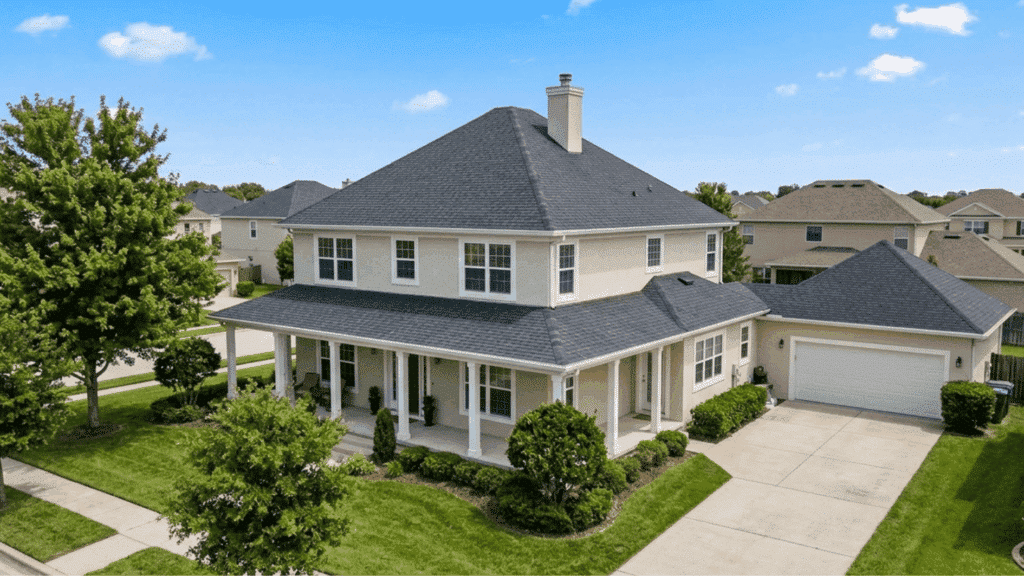
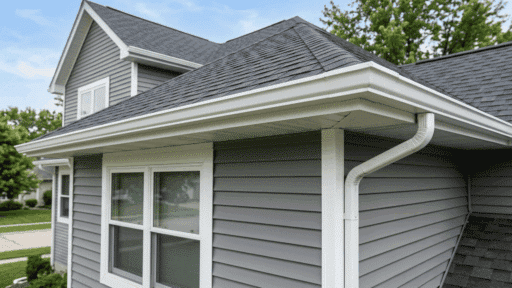
A hip roof slopes downward on all four sides toward the walls, with no vertical gable ends anywhere on the structure.
This all-around slope gives it a lower, more compact profile that handles wind and weather far better than a gable roof.
Characteristics:
- Provides equal overhang and weather protection on all four sides
- Can be built as a simple four-slope form or a complex multi-ridge layout
- Naturally self-bracing, no lateral wind load acting on open gable faces
3. Flat Roof
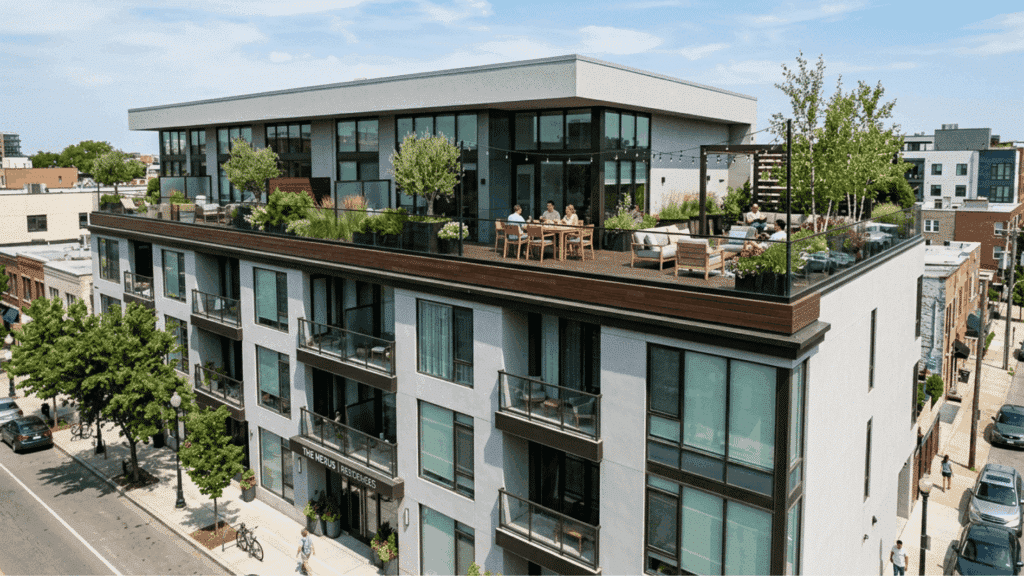
A flat roof is nearly level, built with just a 1–2° pitch to allow minimal water drainage rather than active shedding.
It requires a fully waterproof membrane system instead of traditional shingles and turns the entire roof surface into accessible, usable space.
Characteristics:
- Waterproofed with TPO, EPDM, or built-up roofing systems rather than shingles
- Parapet walls typically surround the perimeter for safety
- The entire roof deck is walkable and can support patios, gardens, or equipment
4. Mansard Roof

A mansard roof is a French-origin design featuring four sides, each with a steep lower slope and a nearly flat upper slope.
The dramatic double pitch was popularized in 17th-century Second Empire architecture and is still associated with Parisian-influenced building styles today.
Characteristics:
- Lower slope sits at a near-vertical 70–80° angle
- Dormer windows are almost always built into the steep lower section
- The lower profile can be straight-sided, convex, or concave, depending on the style
5. Gambrel Roof
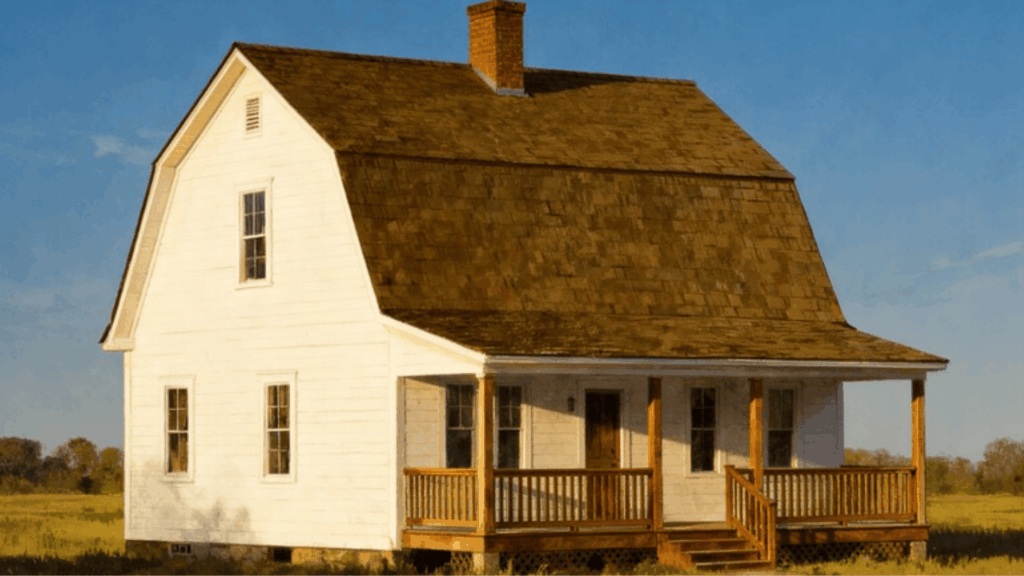
A gambrel roof has two slopes on each side, a steep lower section, and a shallower upper section, producing the wide, rounded silhouette most people associate with traditional barns. It is similar to the mansard but slopes only on two sides instead of four.
Characteristics:
- The angle break between the two slopes is called the “knee.”
- Open truss construction is commonly used to maximize upper-floor headroom
- Symmetrical on both sides, giving it a clean, balanced appearance
6. Shed Roof (Skillion)
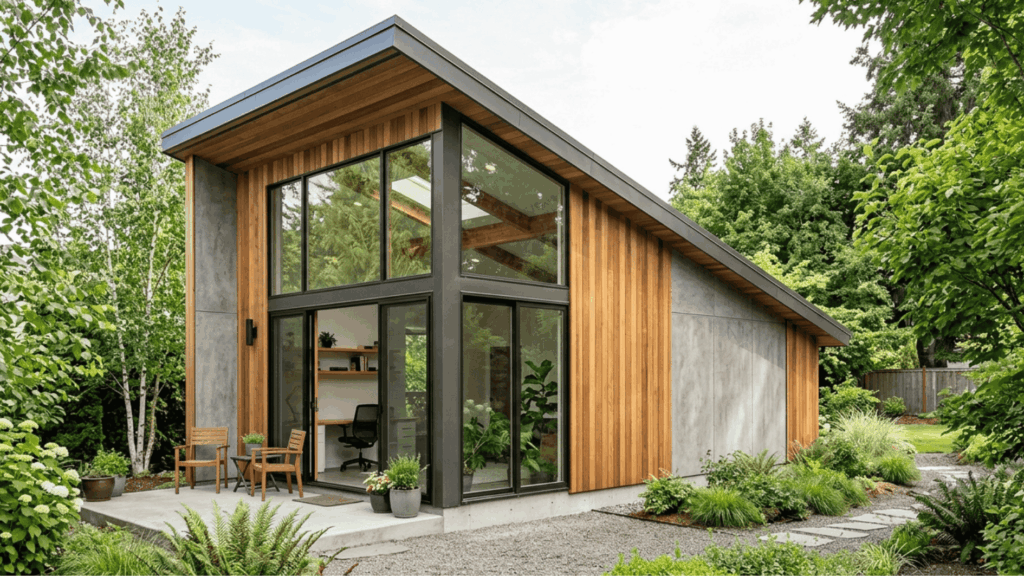
A shed roof, also called a skillion, is a single flat plane that slopes in one direction from a high wall to a low wall.
It is the most structurally straightforward roof form possible and is widely used for standalone buildings as well as extensions attached to existing structures.
Characteristics:
- No ridge or valley, one unbroken sloping surface from end to end
- Pitch is highly flexible, ranging from nearly flat to very steep
- The tall wall side creates an ideal position for clerestory windows
7. Butterfly Roof
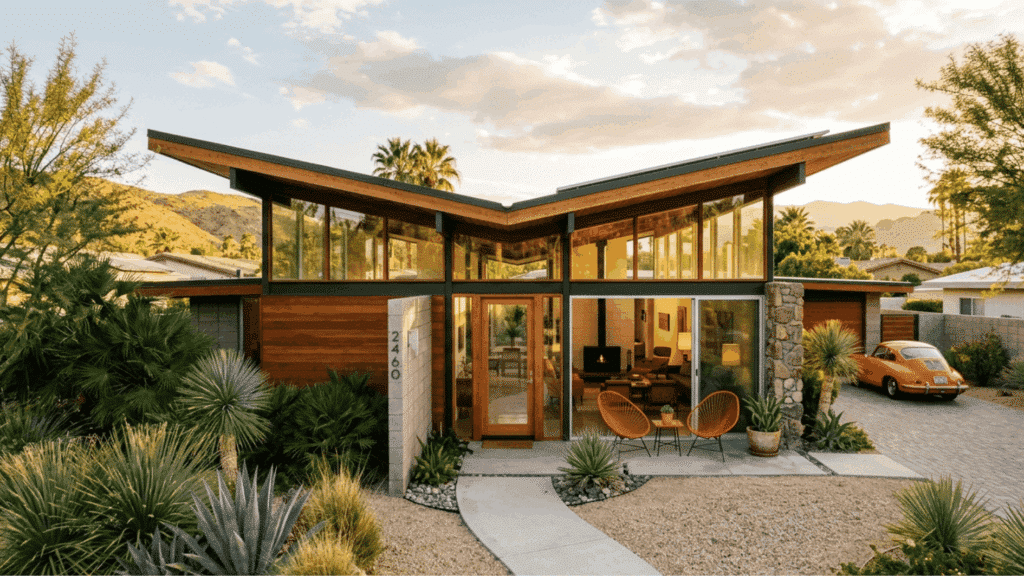
A butterfly roof is essentially an inverted gable, where two roof planes slope inward and downward toward a central valley rather than rising to a ridge.
The result pushes the exterior walls outward at both ends, creating tall wall surfaces and a dramatic, wing-like silhouette.
Characteristics:
- Central Valley requires a robust internal drainage system to prevent water buildup
- Outer walls are tallest at the edges, allowing for large clerestory windows on both sides
- Rainwater funnels to a single collection point, which can be used for harvesting
8. Bonnet Roof
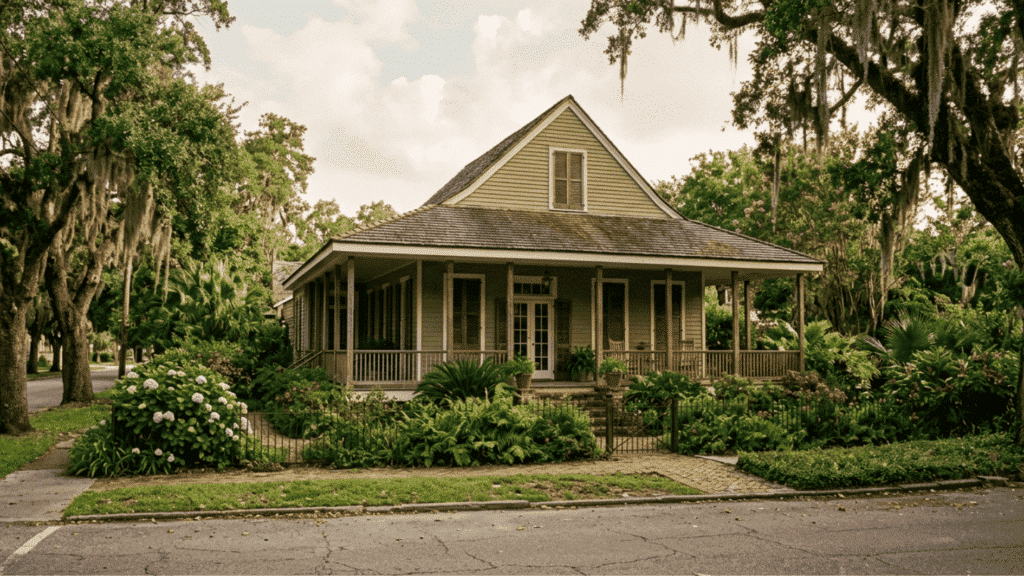
A bonnet roof is a hip roof with a double pitch; the lower portion of each side flares outward at a shallower angle before reaching the walls.
It creates a wide overhanging eave that wraps the entire building like the brim of a bonnet. It is strongly associated with Creole cottage and Southern vernacular architecture.
Characteristics:
- Upper slope is steep; lower slope kicks outward at a gentler angle
- The flared lower section forms a naturally covered porch or veranda on all sides
- Valleys form at the transition between the upper and lower slopes on each side
9. Jerkinhead Roof
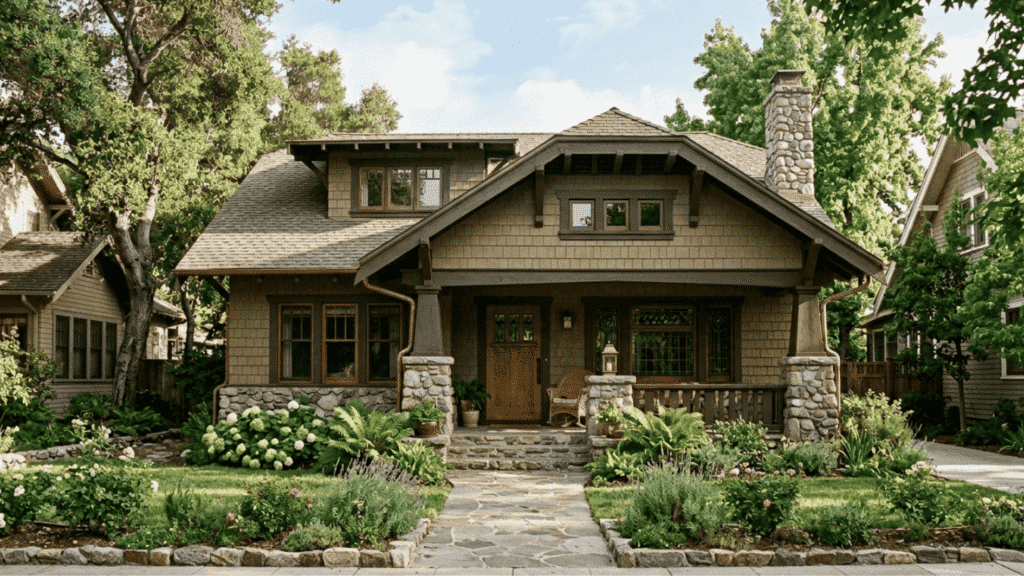
A jerkinhead roof is a gable roof in which the triangular peaks at each end are clipped short, turning them into small hips rather than sharp points.
It sits structurally and aesthetically between a full gable and a full hip, offering the warmth of a gable look with improved wind resistance at the vulnerable peaks.
Characteristics:
- The degree of clipping ranges from a subtle trim to nearly a full hip conversion
- Gable-side overhangs are retained while the exposed peak is eliminated
- Framing is more involved than a standard gable but simpler than a full hip
10. Saltbox Roof
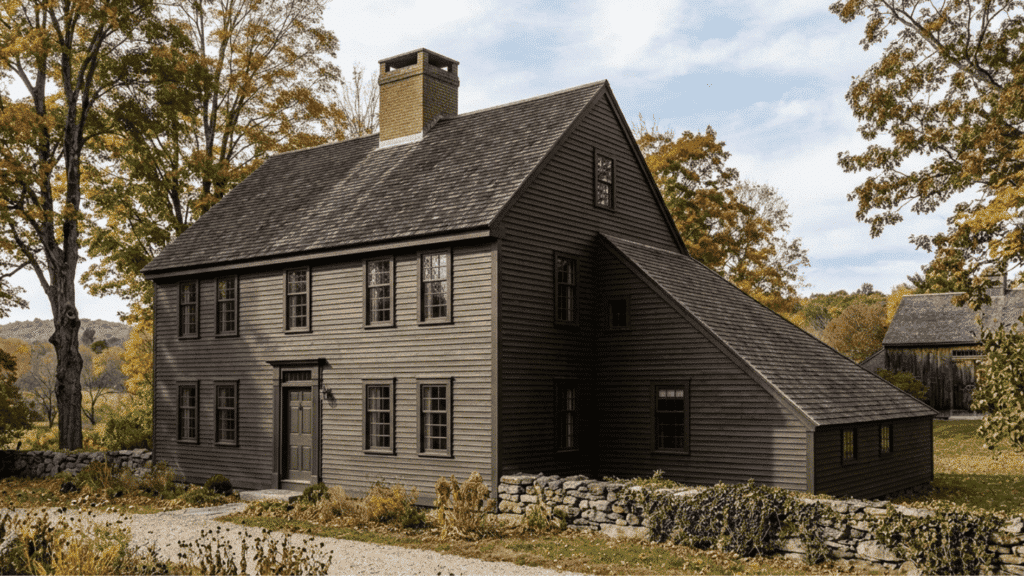
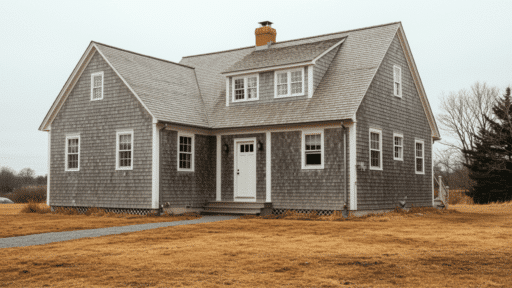
A saltbox roof is an asymmetrical gable in which one slope is significantly longer than the other, sweeping down to ground level at the rear of the house.
The name comes from its resemblance to the wooden lidded boxes used to store salt in colonial New England homes.
Characteristics:
- The ridge sits toward the front of the structure, not at the center
- The long rear slope is typically the result of a rear addition built under an extended roofline
- The rear eave can drop as low as first-floor height, making the back of the house feel low and tucked in
11. Dome Roof

A dome roof is a rounded, hemispherical structure where load is distributed equally in all directions from the central apex down to the perimeter walls.
It is one of the oldest architectural roof forms in human history, appearing in everything from ancient Roman temples to modern sports facilities.
Characteristics:
- Requires no internal columns at smaller scales; the geometry is self-supporting
- Can be constructed from timber, steel, concrete, fiberglass, or geodesic triangulated framing
- The interior ceiling follows the dome curve, creating a distinctive and spacious volume
12. Curved Roof
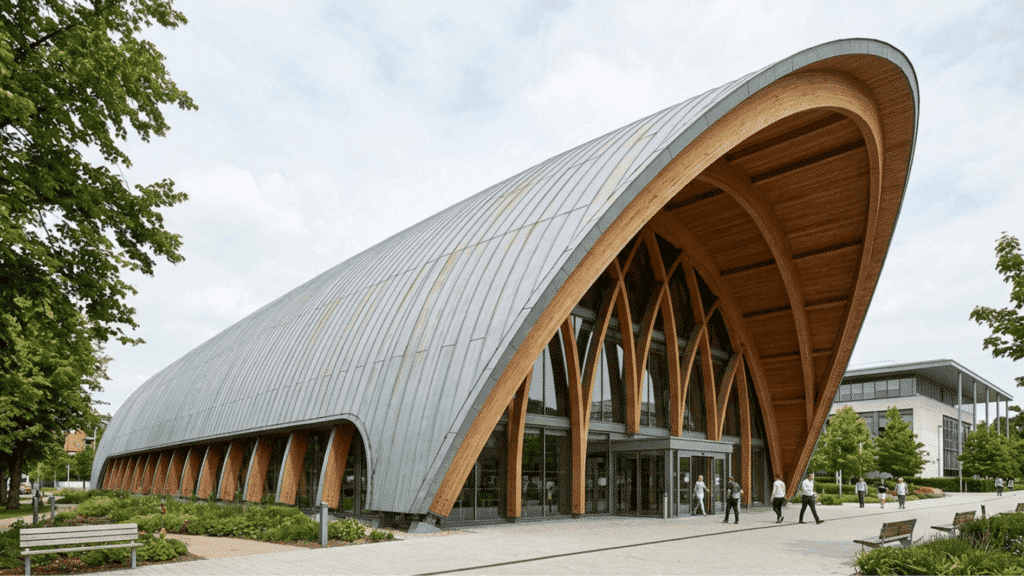
A curved roof uses an arched or barrel-shaped form that runs along the length of a building, resembling an upturned boat hull.
Unlike a dome, the curve extends longitudinally rather than forming a sphere, and it is particularly well-suited to covering large open spans without interior columns.
Characteristics:
- Constructed using curved glulam timber, bent steel, or flexible membrane systems
- The curve can be convex (arching outward) or concave (vaulted inward)
- Requires custom fabrication and specialist roofing contractors
13. Combination Roof:
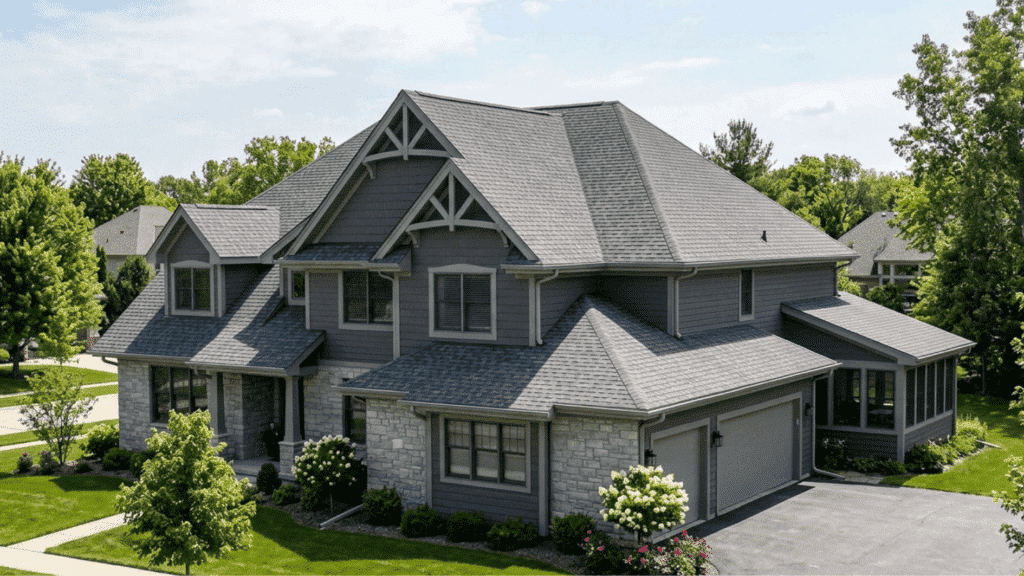
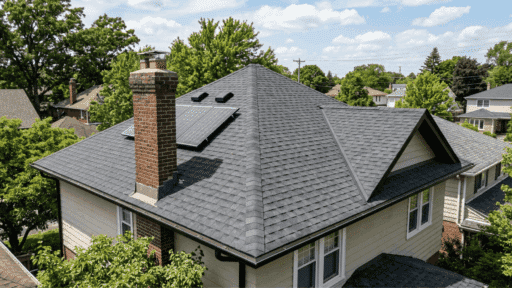
A combination roof blends two or more roof styles on a single building, allowing the overall roof form to follow a complex or irregular floor plan.
A house might have a hip roof over the main body, a gable over a dormer, and a shed roof over an attached garage, all working together as one system.
Characteristics
- Creates multiple ridges, valleys, and transitions between different roof forms
- Each section can have its own pitch, material, and drainage direction
- Valleys at the junctions between sections are the most maintenance-intensive areas
14. A-Frame Roof:
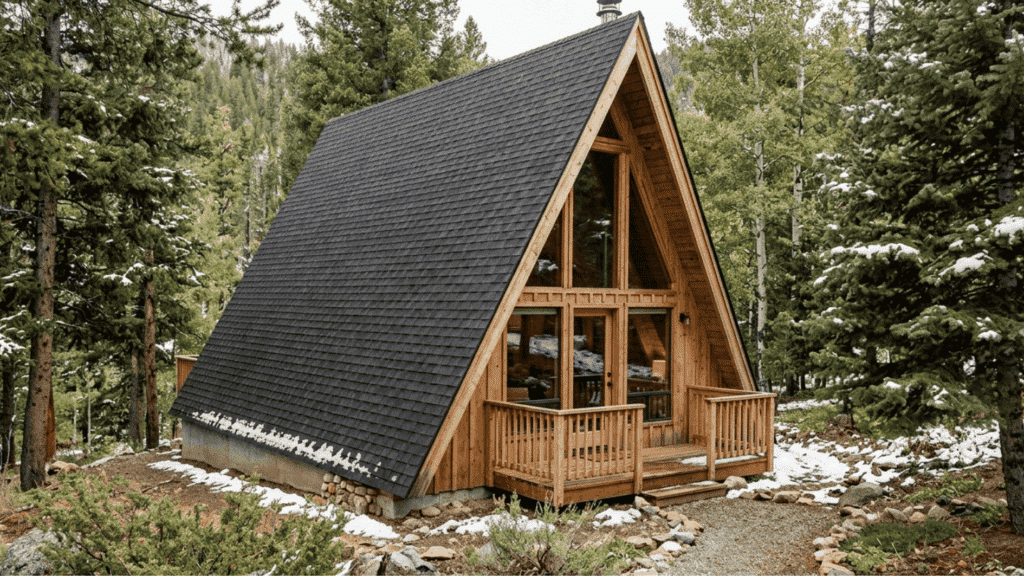
An A-frame is a structure where the steeply pitched roof planes extend all the way down to the ground, serving as both the roof and the exterior walls simultaneously.
The entire building forms a triangle in cross-section, wide at the base and narrowing sharply to a peak, giving it an instantly recognizable silhouette.
Characteristics
- Roof and walls are built as a single system no separate wall framing required
- Interior space is widest at floor level and narrows dramatically as it rises
- The very steep pitch sheds snow quickly and efficiently
15. Sawtooth Roof:
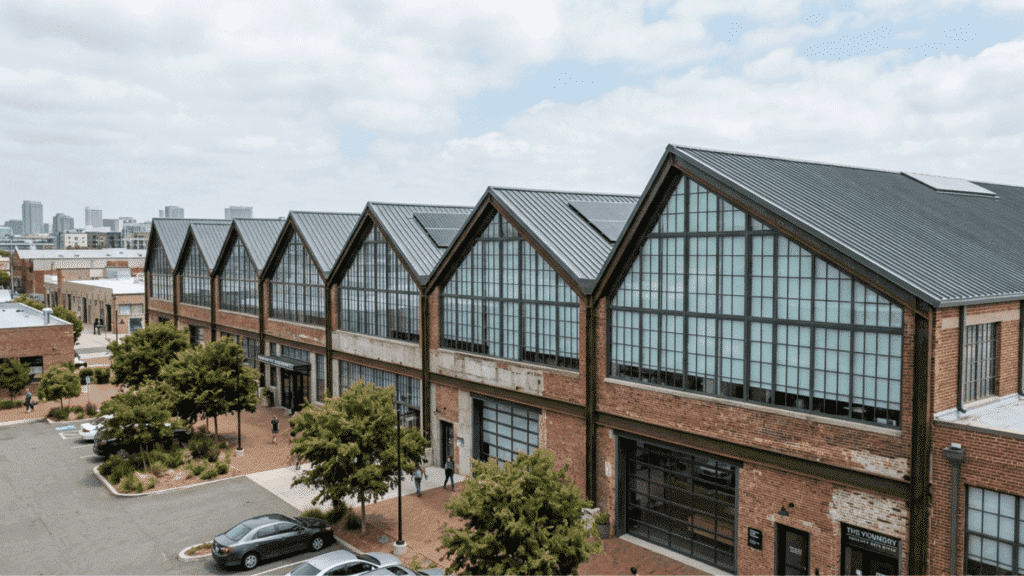
A sawtooth roof consists of a series of parallel ridges, each with one steep, near-vertical face and one gentle slope, producing a profile that resembles the teeth of a saw when viewed from the end.
It originated in 19th-century industrial buildings and has since become a popular choice in modern commercial and creative architecture.
Characteristics
- The vertical faces are typically glazed and oriented north to deliver consistent, diffused daylight
- Multiple ridges run parallel across the full width of the building
- Upper glazing can also serve as a natural ventilation outlet
16. Pyramid Roof:
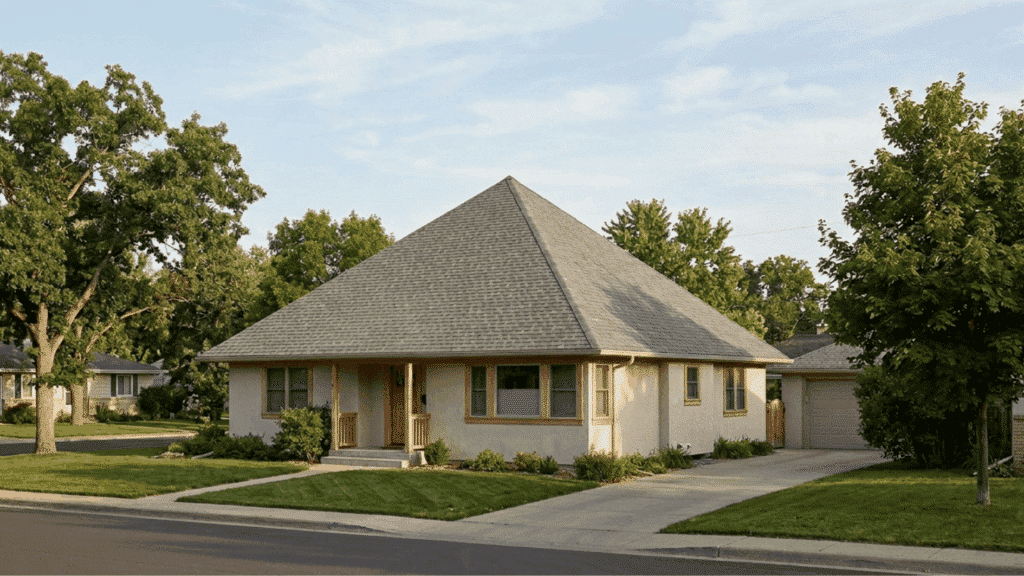
A pyramid roof is a type of hip roof where all four equal triangular sides converge at a single central apex point, with no ridge line at all, just one perfect peak.
The geometry works best on square footprints and produces a clean, symmetrical form that is resistant to wind from every direction.
Characteristics
- All four sides have identical pitch, slope length, and overhang
- No valleys anywhere on the roof, debris has nowhere to accumulate
- The single apex point must be carefully sealed to prevent water ingress
17. Skillion & Lean-to Roof:
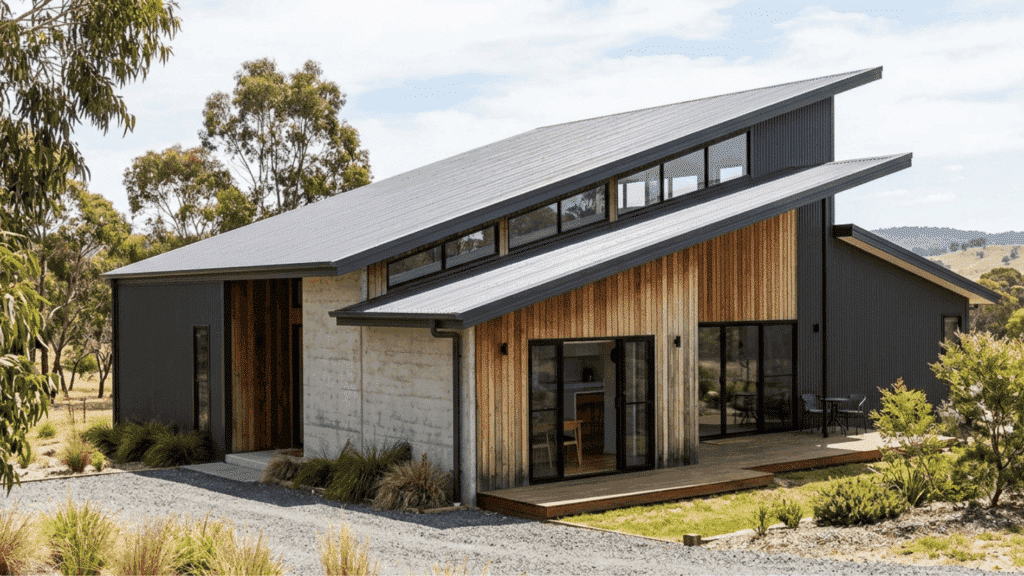
A skillion-and-lean-to configuration is a design in which one or more skillion planes are built directly against an existing structure, with the lean-to section using the existing wall as its elevated support.
It is a practical and visually dynamic approach that has become a signature of contemporary Australian and Scandinavian residential architecture.
Characteristics
- The existing wall acts as structural support, reducing the need for additional framing
- Multiple skillion planes can be stacked at different heights and opposing angles
- The gap between the primary roof and the lean-to plane is a natural position for clerestory glazing
Types of Roof Styles: Quick Comparison Table
At first, many roof styles may look similar. But each one works differently in terms of cost, durability, and design. This quick view makes it easier to spot what sets them apart:
| Roof Style | Best For | Climate Suitability | Cost Level |
|---|---|---|---|
| Gable Roof | Simple homes, budget builds | Rain, Snow | Low |
| Hip Roof | Strong, stable homes | Wind, Storms | Medium |
| Flat Roof | Modern designs | Dry, Urban | Low–Medium |
| Mansard Roof | Extra living space | Mild | High |
| Gambrel Roof | Barn-style, storage | Moderate | Medium |
| Shed (Skillion) | Extensions, modern homes | Mild, Rain | Low |
| Butterfly Roof | Unique modern homes | Dry | High |
| Bonnet Roof | Porch-friendly designs | Tropical | Medium |
| Jerkinhead Roof | Wind-resistant homes | Windy | Medium |
| Saltbox Roof | Traditional homes | Cold, Windy | Medium |
| Dome Roof | Unique structures | Extreme | High |
| Curved Roof | Large open spaces | Various | High |
| Combination Roof | Complex layouts | Various | High |
| A-Frame Roof | Cabins, snow regions | Snow | Medium |
| Sawtooth Roof | Commercial, studios | Industrial | High |
| Pyramid Roof | Symmetrical structures | Windy | Medium |
| Skillion & Lean-to | Add-ons, simple builds | Mild | Low–Medium |
Conclusion
Choosing the right roof style is one of the most important decisions you’ll make for your home. It shapes how it looks, how it performs, and how much it costs to maintain over time.
Now that you’ve explored all roof styles side by side, you’re no longer guessing. You know what each style is built for, where it works well, and where it falls short.
Match what you’ve learned to your climate and architectural goals and walk into your build or renovation with complete confidence.

Tommy Hardy, an alumnus of the Georgia Institute of Technology with a degree in Mechanical Engineering, has been a go-to figure in residential upkeep and innovation for over 18 years. His career commenced in a leading home appliance manufacturing company, where he mastered the intricacies of household systems. Joining our platform in 2020, Tommy quickly became a reader favorite for his practical and easy-to-follow guides. He took the helm of our DIY section in 2019, consistently delivering content that empowers homeowners. Beyond his professional pursuits, Tommy is a passionate gardener and enjoys woodworking, skills enhancing his hands-on approach to home care.