
Most people have used a comforter without giving it much thought. It sits on the bed, it keeps things warm, and that is about where the thinking stops.
But when someone starts asking whats a comforter is compared to a duvet or a quilt, the answers aren’t always clear.
Bedding terms get mixed up all the time, and that confusion can lead to the wrong purchase.
This guide breaks down everything in simple terms. From structure and fill to warmth and maintenance, readers will find everything they need to make a smart bedding choice right here.
What’s a Comforter?
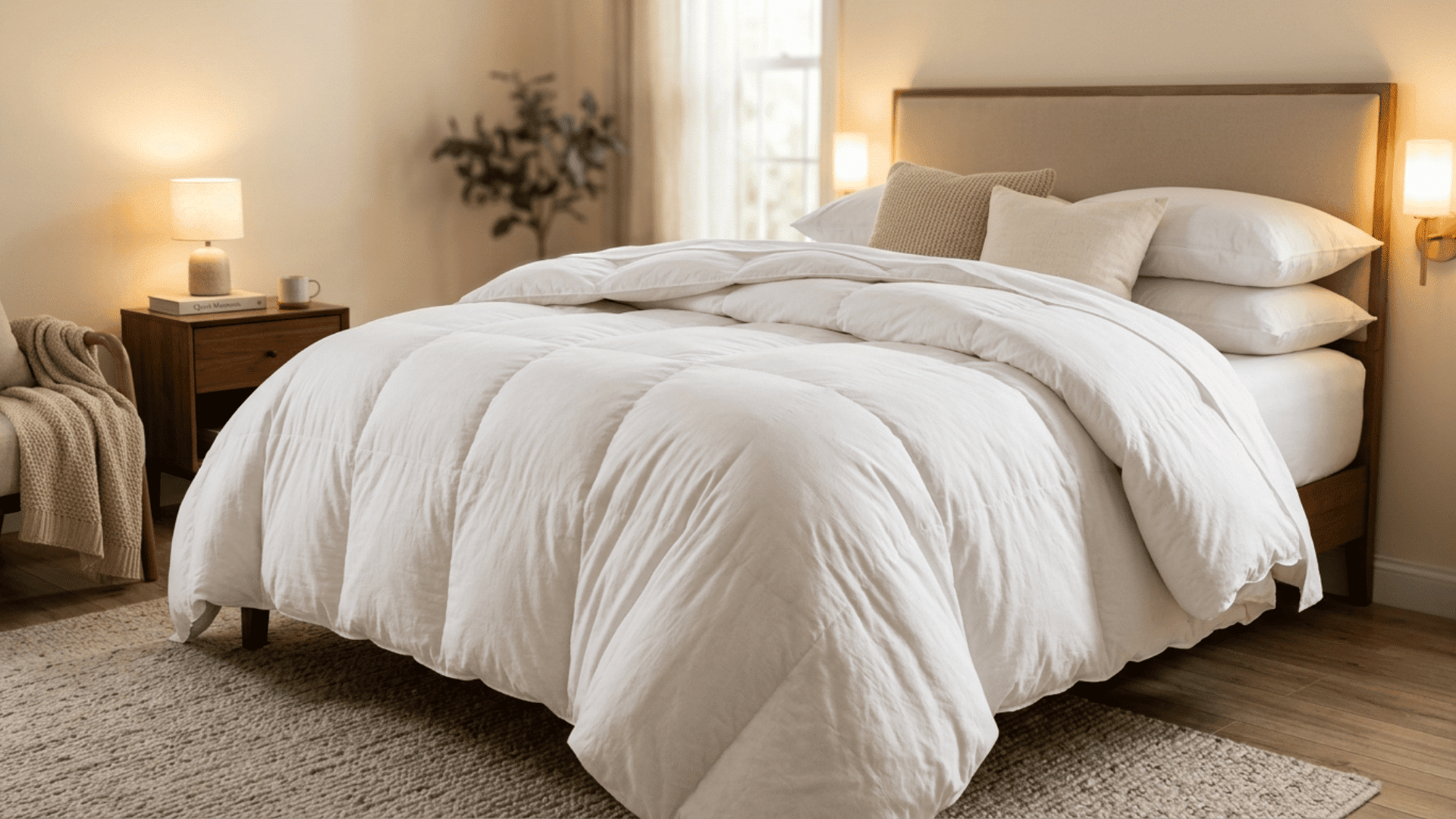
A comforter is a thick, quilted blanket filled with either down or synthetic fibers. It sits on top of the bed as a standalone top layer, providing warmth without anything extra on top.
The quilted stitching across the surface keeps the filling from shifting or clumping to one side over time.
So whats a comforter, and how is it different from other bedding? The simplest answer is that it comes ready to use.
No separate cover is required, no stuffing insert, and no extra steps before putting it on the bed.
It is a straightforward, all-in-one bedding option that works well for anyone who wants warmth and convenience without added complexity.
Comforter vs. Duvet vs. Quilt
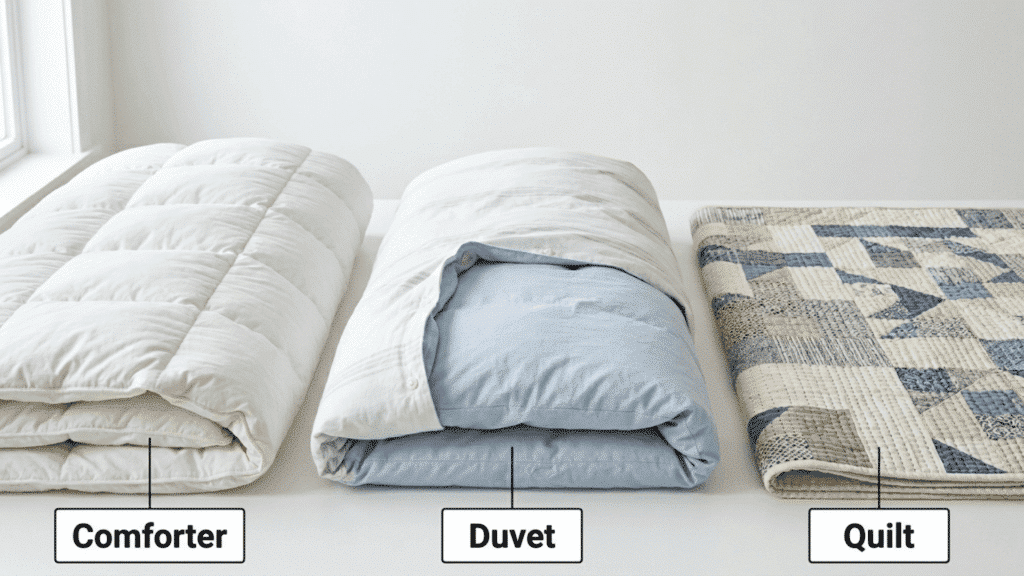
Choosing between a comforter, duvet, and quilt comes down to a few key differences in structure, maintenance, and warmth. The table below makes that comparison straightforward.
| Feature | Comforter | Duvet | Quilt |
|---|---|---|---|
| Structure | Quilted blanket with built-in fill | Insert with removable cover | Three stitched layers |
| Fill Type | Down or synthetic | Down or synthetic | Thin batting or cotton |
| Feel | Thick and fluffy | Soft and adjustable | Flat and lightweight |
| Warmth Level | Medium to high | Adjustable based on the insert | Lightweight |
| Usage | Ready to use without a cover | Requires a separate cover | Used alone or layered |
| Maintenance | The entire piece needs washing | Only the cover needs frequent washing | Easy to wash fully |
| Style Flexibility | Fixed design | Covers can be changed | Moderate flexibility |
| Best for Low Maintenance | Good choice for a simple setup | Not ideal due to the cover handling | Good choice due to easy handling |
| Best for Easy Cleaning | Less convenient to clean | Best option due to the washable cover | Easy to clean fully |
| Best for Hot Climate | May feel too warm | Works with lighter inserts | Best option due to breathability |
| Best for Cold Climate | Suitable for warmth | Works with heavier inserts | Not ideal for strong warmth |
| Best for Style Changes | Limited flexibility | Best option for changing styles | Moderate flexibility |
| Best for Layering | Not ideal for layering | Not commonly layered | Best suited for layering |
| General Cost Range | $30 to $200 | $50 to $300 combined with cover | $20 to $150 |
Why People Often Confuse the Three:
Many retailers and bedding brands use these three terms interchangeably on product labels and websites, which is where most of the confusion starts.
A product listed as a comforter in one store may be described as a duvet in another, even when the construction is nearly identical.
Part of understanding whats a comforter comes down to recognizing that regional differences play a big role too.
Duvet is the more commonly used term in the UK and parts of Europe, while comforter is standard in the US.
This inconsistency across markets leads buyers to assume all three products are the same, when in reality each has distinct construction, warmth levels, and usage differences that set them apart.
Pros and Cons of a Comforter
Understanding whats a comforter offers and where it falls short makes comparing it against other bedding options much easier. Here is a clear breakdown of both sides.
Pros
- Simple and ready to use: A comforter requires no extra cover or insert, making it one of the most straightforward bedding options available.
- Wide variety of designs: It comes in a broad range of colors, patterns, and sizes to suit different bedroom styles.
- Works well as a single top layer: For most climates, a comforter provides sufficient warmth on its own without needing extra blankets.
Cons
- Cleaning requires more effort: Since there is no removable cover, the entire comforter needs to go in the wash each time, which can be less convenient.
- Fill can flatten over time: With regular use, the fill inside a comforter gradually loses its loft, which reduces warmth and overall comfort.
- Limited sizing options: Comforters do not always come in as many size variations as duvets, making it harder to find the right fit for non-standard mattress sizes.
Which One Should You Choose?
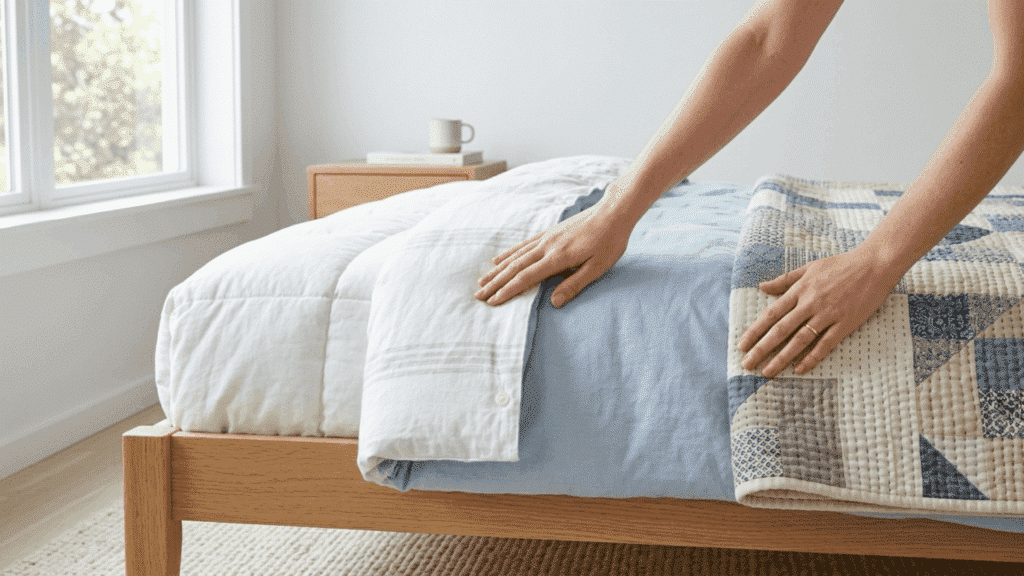
Choosing the right comforter depends on your sleep style, climate, and personal comfort preferences.
Start by considering the fill type, such as down for warmth or microfiber for easy care. Pay attention to the tog rating or warmth level, especially if you sleep hot or cold.
The size and weight should match your bed and how heavy you like your bedding. Also, check the fabric material, like cotton for breathability or blends for durability.
Finally, look at ease of maintenance, including washability and long-term use, to ensure your comforter stays fresh and comfortable over time.
Common Mistakes to Avoid
Many people focus on the look and feel of bedding but overlook some practical details before buying. Knowing what a comforter needs beyond the initial purchase can save a lot of trouble down the line.
- Buying the wrong size: A comforter that is too small for the bed will not provide proper coverage. Always check the dimensions against the mattress size before purchasing.
- Ignoring fill quality: Not all fills are equal. Lower quality fill tends to flatten out faster and loses warmth over time.
- Washing it incorrectly: Using the wrong water temperature or a machine that is too small can damage the stitching and clump the filling permanently.
- Overlooking allergies: Down fill can trigger allergic reactions in some people. Checking fill type before buying is something many buyers skip entirely.
- Expecting a quilt to match a comforter’s warmth: A quilt is significantly lighter than a comforter and is not built for strong insulation. Choosing a quilt for a cold climate that expects the same warmth level will lead to disappointment.
Final Thoughts
Bedding decisions become more straightforward once the key differences are clear. A comforter suits those who want warmth and convenience in a single, ready-to-use piece.
A duvet offers more flexibility in cleaning and style, while a quilt works better in warmer conditions or as an extra layer.
So whats a comforter truly best for? Consistent warmth with minimal setup. Matching the right bedding to the right climate, budget, and lifestyle makes all the difference.
Reviewing the comparison table above before making a final call covers everything needed to make a wise choice.

Millie Anderson, a graduate of Textile Design from the Fashion Institute of Technology, has carved her name in fabric and material finishes for over 16 years. Her career took flight in a renowned textile manufacturing company, where she mastered combining textures and patterns. Millie joined our team in 2018, becoming a cornerstone for readers interested in the latest trends in textiles. Since then, she has been the lead editor for our home decor fabrics section, blending her deep knowledge of materials with a flair for contemporary design. Beyond her professional achievements, Millie is an enthusiastic quilter and often participates in community arts and crafts workshops, further nurturing her passion for fabrics and design.