
Picking window treatments sounds simple, but curtains vs blinds can quickly turn into a real dilemma. Each option changes how your space looks, feels, and even how much light you get during the day.
Some people want softness and warmth, while others prefer clean lines and easy control. And then there’s cost, upkeep, and room-specific needs to think about, too.
In this blog, I’ll break down curtains vs blinds in a clear, practical way, so you can decide what actually works for your home, not just what looks good in photos.
What are Curtains?
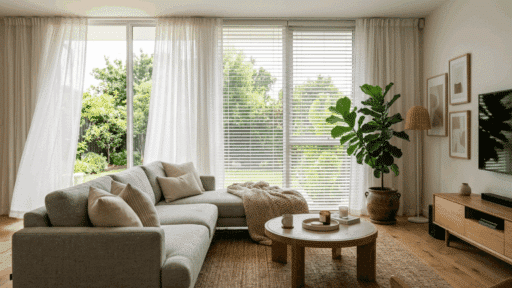
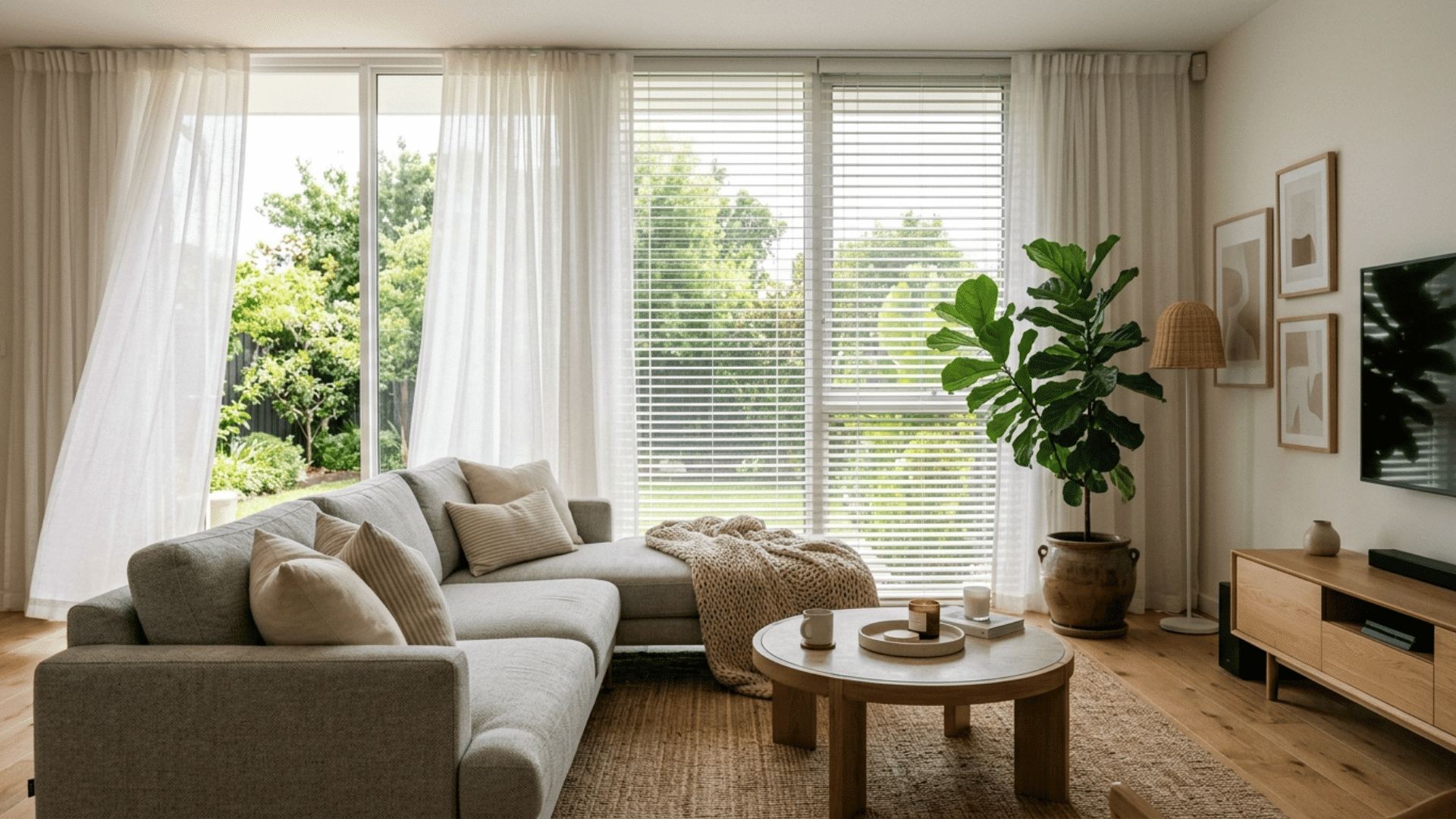
Curtains are fabric panels that hang from a rod above a window and are among the most common window coverings in homes.
They are mainly used to control light, add privacy, and improve the overall look of a room, but they also play a role in comfort and insulation.
Depending on the fabric and thickness, curtains can be light and airy, allowing natural light to pass through, or thick enough to block most light for better sleep and privacy.
They also come in a wide range of colors, patterns, and materials, making it easy to match them to different room styles.
What are Blinds?
Blinds are window coverings made from slats or a single piece of material, designed to give you more control over light and privacy.
Unlike curtains, they don’t just open or close; you can adjust them to let in just the right amount of light without fully exposing the room.
They are controlled via a cord, wand, or built-in mechanism, making them easy to adjust throughout the day. You can tilt the slats, raise them completely, or lower them halfway, depending on your needs.
Blinds are usually made from materials such as wood, metal, plastic, or fabric, and each offers a different look and level of durability.
Advantages and Disadvantages of Curtains and Blinds
curtains vs blinds become easier when you look at their pros and cons side by side, since each option works better in different situations.
Curtains
Curtains are a versatile window treatment that combines functionality with aesthetic appeal. They increase comfort while offering insulation, privacy, and a wide range of design options.
| Advantages | Disadvantages |
|---|---|
| Better insulation and temperature control | Requires regular washing or dry cleaning |
| Soft and comfortable feel | Can collect dust and allergens over time |
| Works well for large windows | Takes up more space in smaller rooms |
| Wide range of fabrics and styles | Limited light control without layering |
Blinds
Blinds are a practical window treatment that offers clean lines, easy maintenance, and precise light control. They work especially well in modern spaces and smaller rooms where a compact, functional design is preferred.
| Advantages | Disadvantages |
|---|---|
| Precise control over light and privacy | Less insulation compared to curtains |
| Easy to clean and maintain | Can feel less warm in some spaces |
| Space-saving and ideal for small areas | Slats or mechanisms may wear out over time |
| Quick and simple to install | Fewer style options than curtains |
Types of Curtains
Curtains come in a variety of styles, each designed to suit different needs, aesthetics, and levels of light control. Choosing the right type can increase both the functionality and overall look of your space.
1. Sheer Curtains
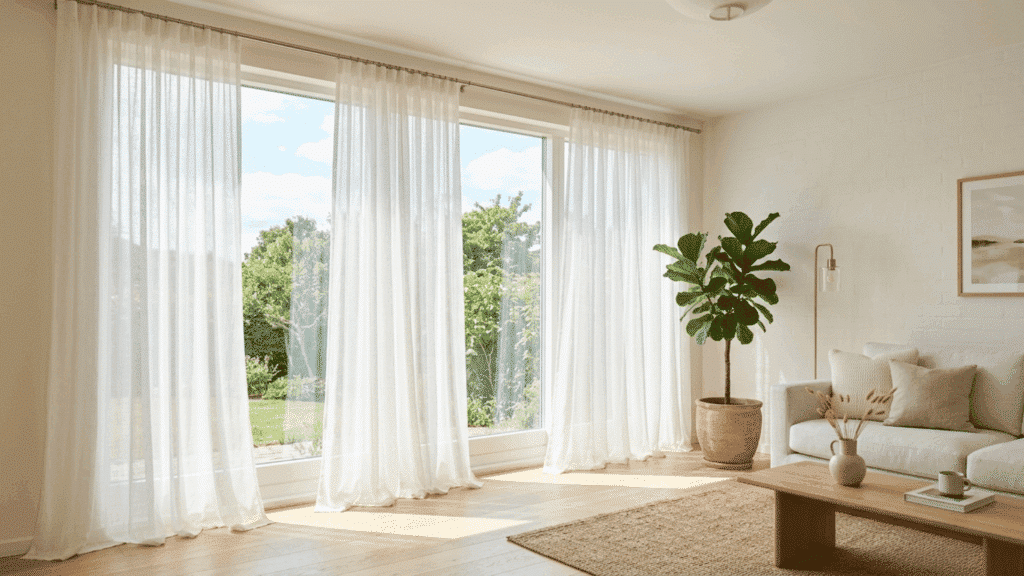
Sheer curtains let in natural light while offering light daytime privacy, making them a good fit for bright spaces.
They are especially useful in living rooms, dining areas, and sunrooms where you want an open, fresh feel without fully exposing the interior.
They usually cost around $20 to $60 per panel and have a light, airy, and casual look. However, they need frequent washing since they collect dust easily, and they don’t block light or provide strong privacy at night.
2. Blackout Curtains

Blackout curtains are designed to block most outside light, which makes them ideal for bedrooms. They are commonly used in bedrooms, nurseries, and media rooms where controlling light is important for sleep or screen viewing.
They typically cost between $40 and $150+ per panel and offer full privacy both day and night.
Their thicker fabric gives a more structured look, but they require occasional washing and take longer to dry due to their weight.
3. Thermal/Insulated Curtains

Thermal or insulated curtains help regulate indoor temperature by keeping heat in during winter and out during summer.
They work well in living rooms, bedrooms, and homes in colder or hotter regions, especially where windows let in drafts or strong sunlight. They usually range from $50 to $200+ per panel and provide full privacy.
Their thicker build makes them more functional, and like blackout curtains, they need occasional cleaning. Over time, they can also help reduce heating and cooling costs.
Types of Blinds
Blinds come in different styles, each designed to suit specific needs and spaces. Choosing the right type helps improve both function and overall look.
1. Venetian (horizontal blinds)
Venetian blinds, also known as horizontal blinds, use adjustable slats to give precise control over light and privacy.
They are a popular choice for offices, kitchens, bedrooms, and living rooms, especially where you need flexible light control throughout the day.
They typically cost between $30 and $150 and have a clean, simple look. Maintenance is easy with regular dusting or wiping, though the slats may bend or wear over time.
2. Vertical Blinds
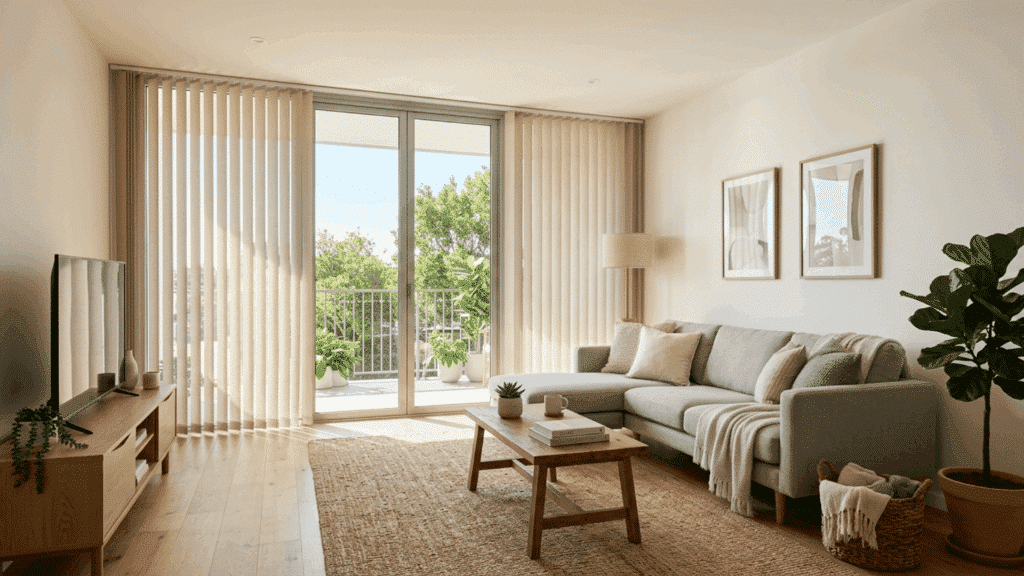
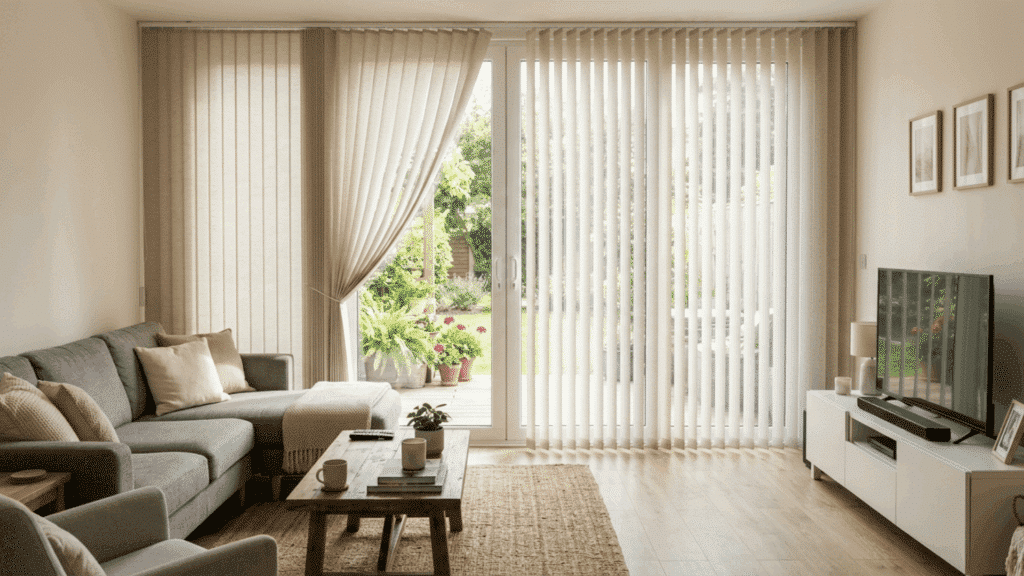
Vertical blinds are best suited for large windows and sliding glass doors, making them ideal for living rooms, patio doors, and office spaces. They provide good coverage and are practical for wide openings.
They usually cost around $50 to $200 and offer good privacy with moderate light control. Their look is more functional, and while they are easy to clean, the slats can shift or wear with frequent use.
3. Roller Blinds
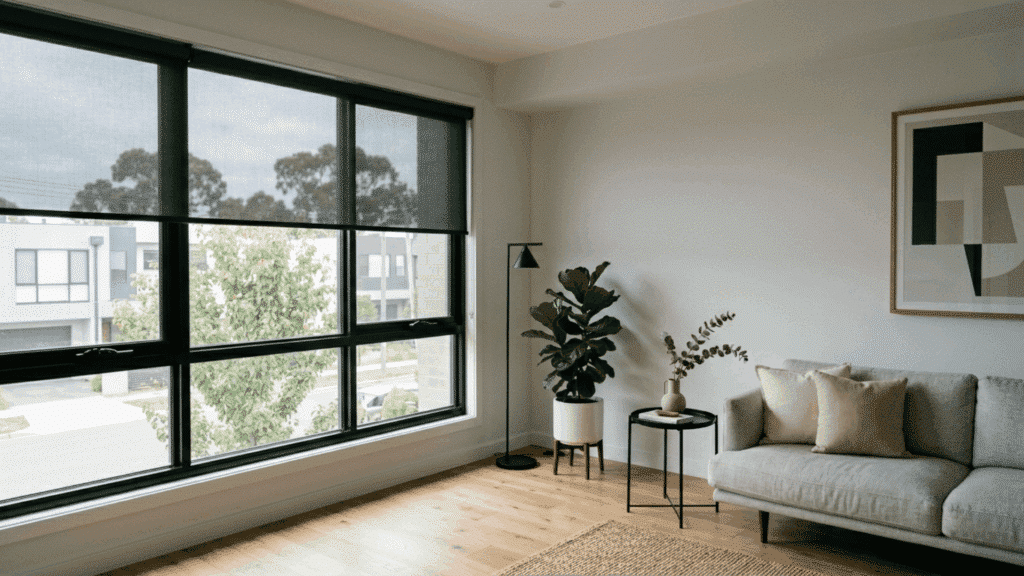
Roller blinds feature a simple design that rolls up neatly, making them a popular choice for modern spaces.
They are commonly used in bedrooms, kitchens, offices, and small living areas where a clean and space-saving option is needed.
They typically cost between $30 and $180, and depending on the material, they can offer anything from light filtering to full blackout.
They have a clean, minimal style and are low maintenance, requiring only occasional wiping. Their compact design also makes them a good option for saving space.
Which One Should You Choose?
Choosing between curtains and blinds depends on your daily needs and how you want your space to feel. Both options serve different purposes, so the right choice comes down to comfort, function, and style.
Curtains offer a softer look and help create a cozy atmosphere, while blinds focus more on practicality and control. It’s also important to consider room size, maintenance, and how much light you want to manage throughout the day.
- Choose Curtains If: You want a softer feel, better insulation, and full coverage for larger windows with more fabric and color options
- Choose Blinds If: You prefer easy maintenance, precise light control, and a clean, space-saving setup for smaller areas
Final Verdict
Choosing between curtains vs blinds depends on how you balance comfort, function, and daily convenience. There’s no single right answer; choose what fits your space and routine best.
Curtains work well if you want a softer feel and better insulation, while blinds are a practical choice for easy upkeep and light control.
In many cases, combining both can give you the best results. Think about your room’s size, lighting needs, and the level of maintenance you’re comfortable with.
Frequently Asked Questions
Do modern houses have curtains or blinds?
Modern homes often favor blinds for a sleek, minimal look. However, many still pair them with curtains to add warmth and comfort.
What is the new trend for window coverings?
Layering curtains with blinds is a growing trend, especially in neutral, minimalist designs. This approach balances style, light control, and functionality.
When should you not have curtains?
Curtains are best avoided in small spaces or moisture-prone areas like kitchens. They can be harder to maintain and may feel bulky in compact rooms.

James McLaren, with a rich background in architecture from the University of Manchester, has been contributing his expertise to the world of creative construction and home innovation for over 20 years. His journey began as a project manager for a leading construction firm, where he honed his skills in bringing complex designs to life. James joined our platform as a freelancer in 2019, quickly becoming a favorite for his insightful and practical advice. He has been a pivotal force to our wing ever since, bringing our readers a blend of technical know-how and creative flair. Beyond his professional life, James is an avid woodworker and enjoys restoring vintage furniture, a hobby that complements his professional insights beautifully.