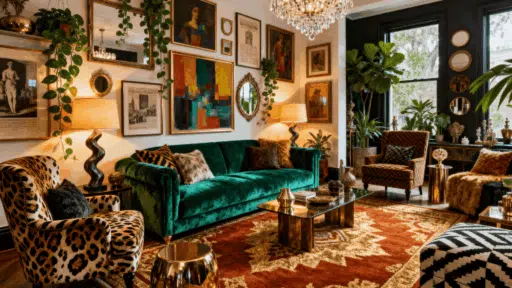
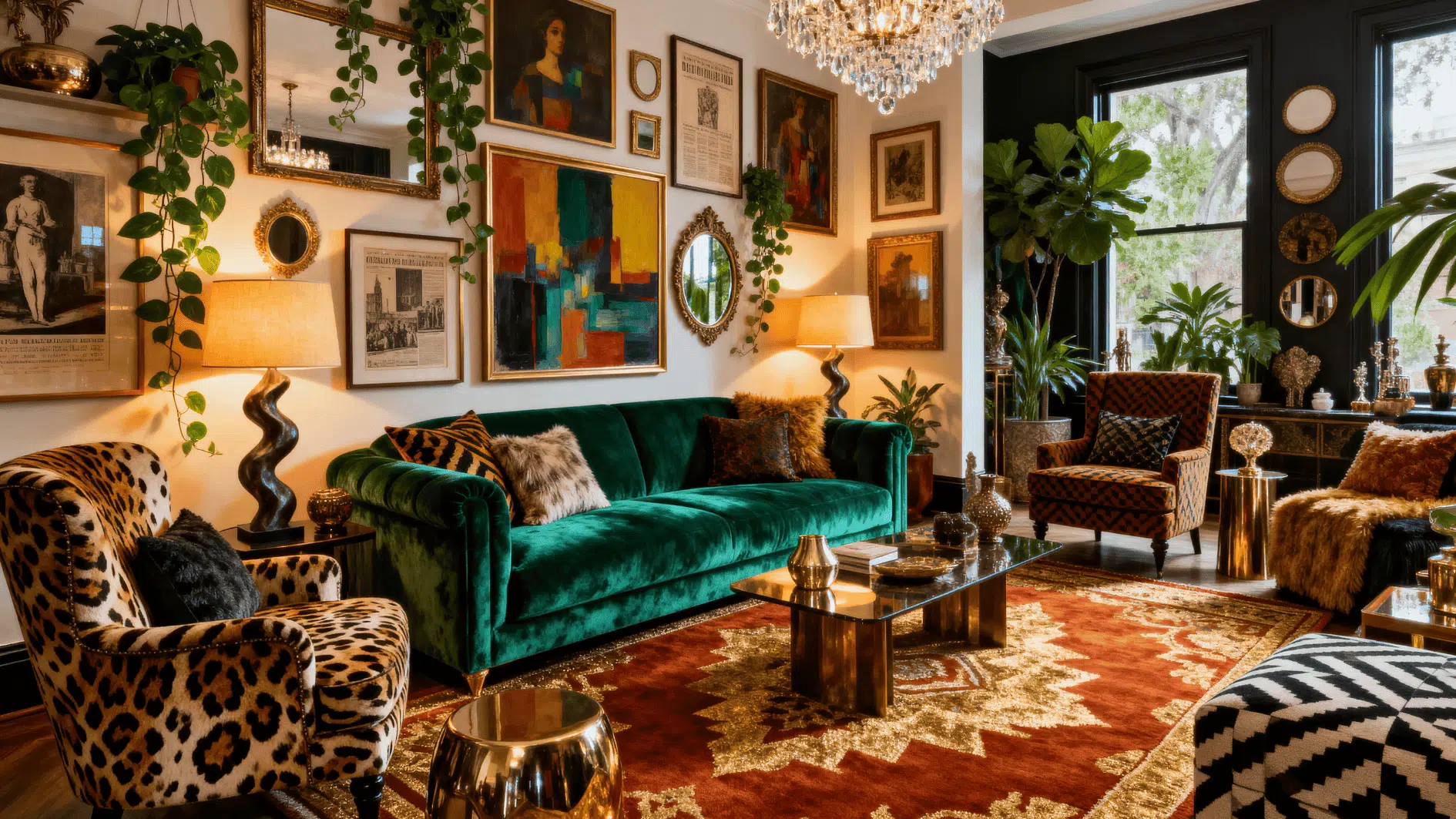

You may want your space to feel bold, expressive, and full of personality. Maximalist interior design allows you to combine colors, patterns, and textures in a way that reflects your style.
With the right approach, you can design a space that feels lively yet well-put-together.
In this blog, you will find practical ideas and tips to help you apply maximalism in your own home with confidence.
What is Maximalist Interior Design?
You need to understand the concept before applying it in your space. Maximalist interior design focuses on abundance, layering, and bold combinations that reflect your personality.
Maximalist style is about mixing different elements while maintaining a sense of balance. You thoughtfully combine colors, patterns, textures, and decor pieces, creating a space that feels rich and expressive rather than overwhelming.
It allows you to showcase personal collections, artwork, and meaningful objects that tell your story.
Unlike minimalism, this approach allows you to include more decor and personal items. You design a space that highlights individuality and visual depth through intentional layering.
Maximalist Interior Design Ideas for Your Space
You can start using the maximalist style with simple changes. These ideas help you build a bold and expressive interior step by step.
1. Use Bold Wall Colors
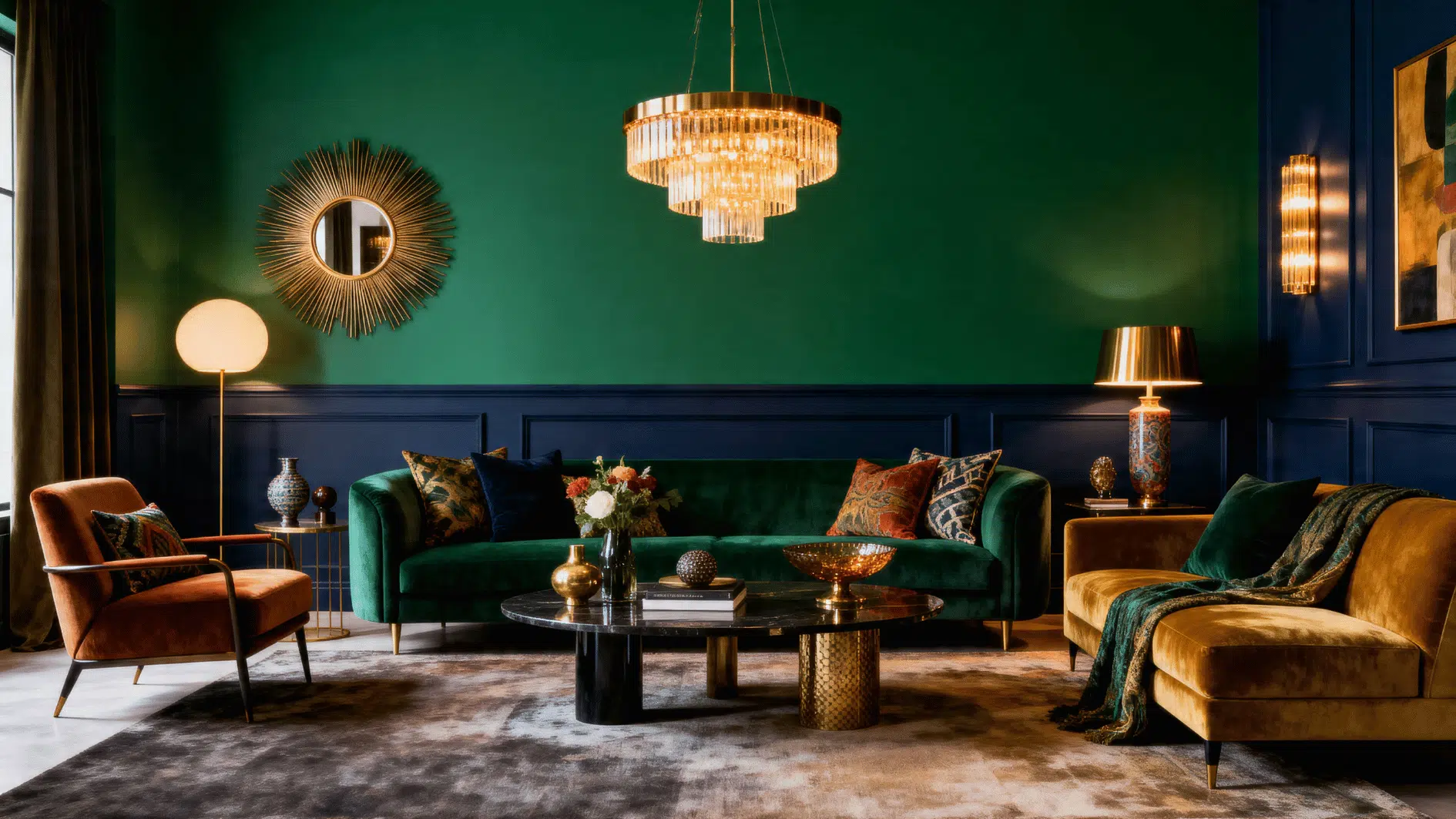
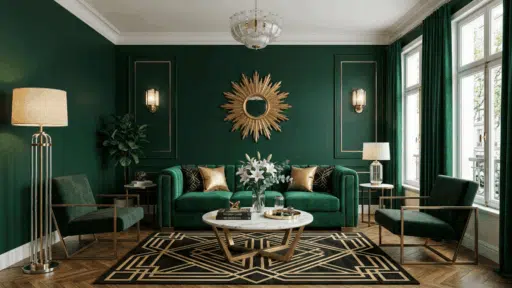
You can set the tone of your entire space with bold wall colors like deep green, navy, or maroon.
These shades create a strong backdrop that allows layered decor to stand out. When you use darker or saturated tones, your furniture and accessories appear more defined.
This approach helps you build depth in the room without relying only on decorative items.
2. Mix Contrasting Patterns
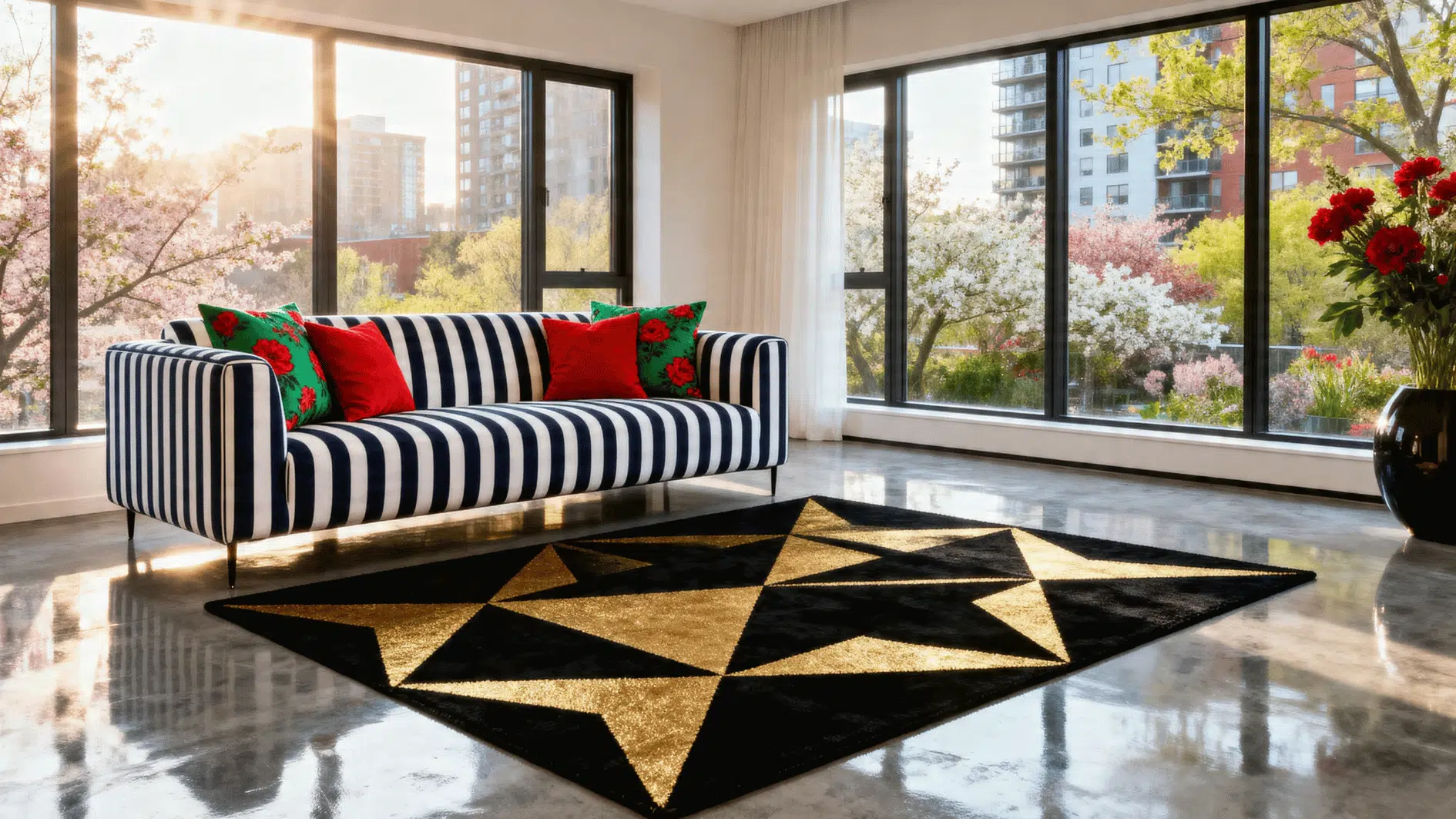
You can combine stripes, florals, and abstract prints to create visual interest. The key is to vary the scale so that no pattern overpowers the others.
This mix adds movement and keeps the space engaging. It also allows you to express creativity while maintaining balance through thoughtful placement.
3. Add Patterned Wallpaper
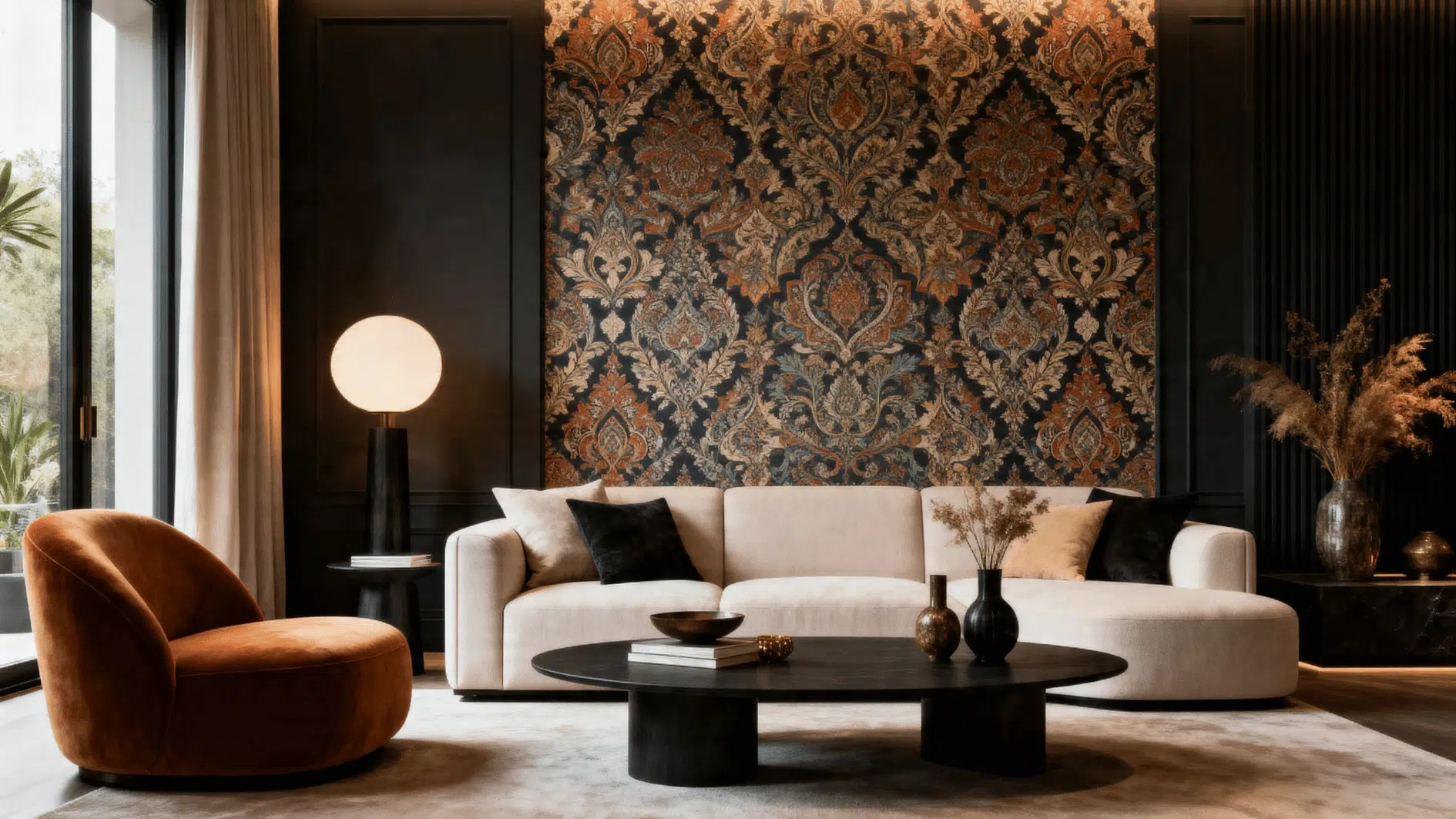
You can introduce wallpaper with intricate prints to bring texture and personality to your walls. It works well as a feature element in living rooms or bedrooms.
Using wallpaper helps you create a focal point without adding too many separate items. It also connects the room’s elements through color and pattern.
4. Combine Printed Textiles
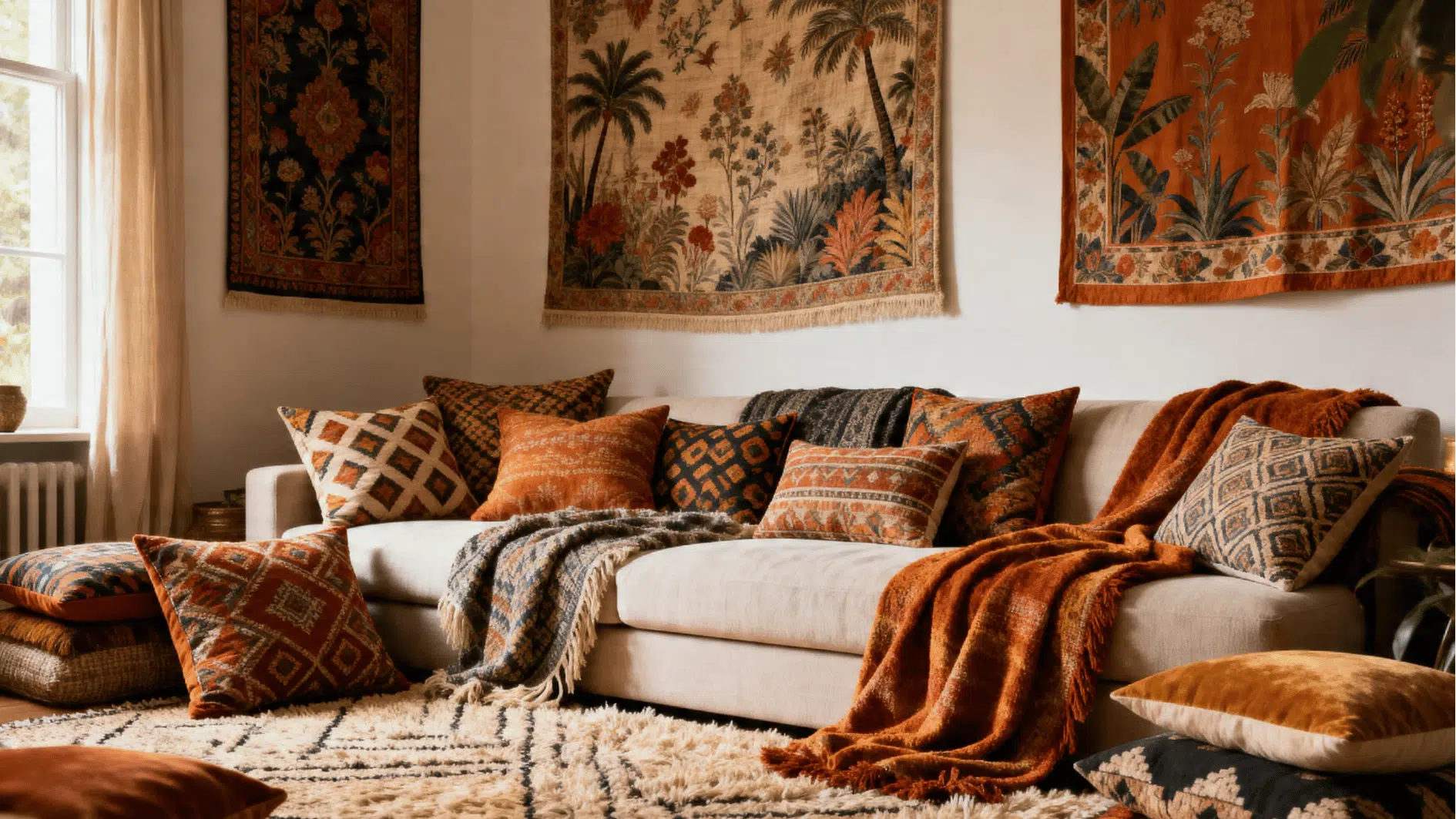
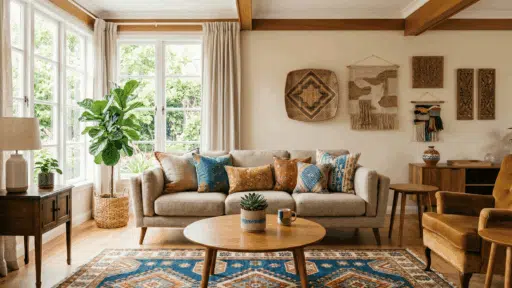
You can layer cushions, throws, and rugs with different prints to create a cozy and detailed setup. Mixing fabrics adds softness while building visual depth.
This approach lets you easily update your space by changing textiles. It also helps tie together different colors used across the room.
5. Use Colorful Curtains
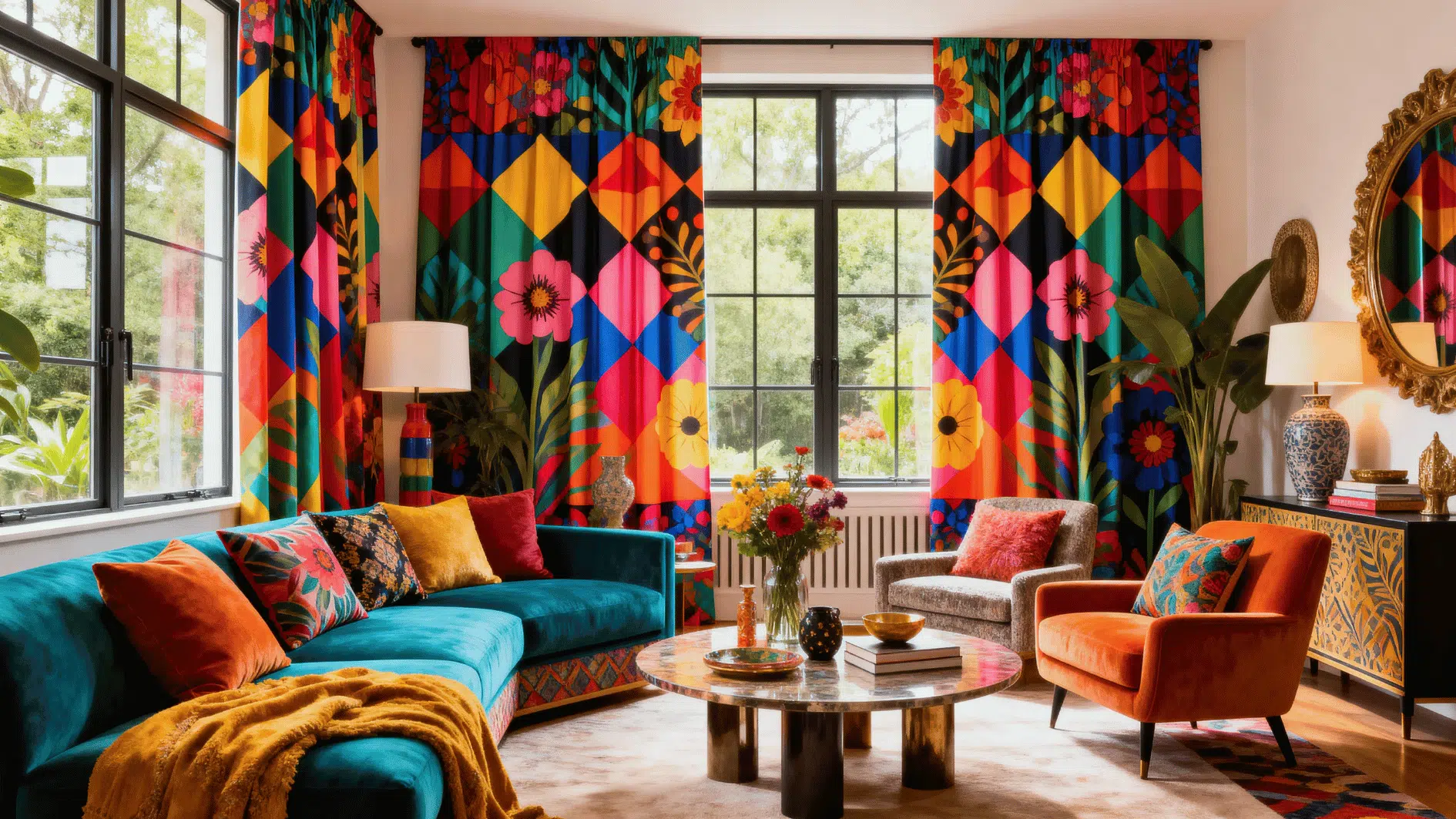
You can treat curtains as a major design element instead of just a functional feature.
Bright or patterned curtains add vertical interest. They frame your windows and help balance bold walls or furniture.
This idea also helps connect the color palette across the space.
6. Layer Different Shades
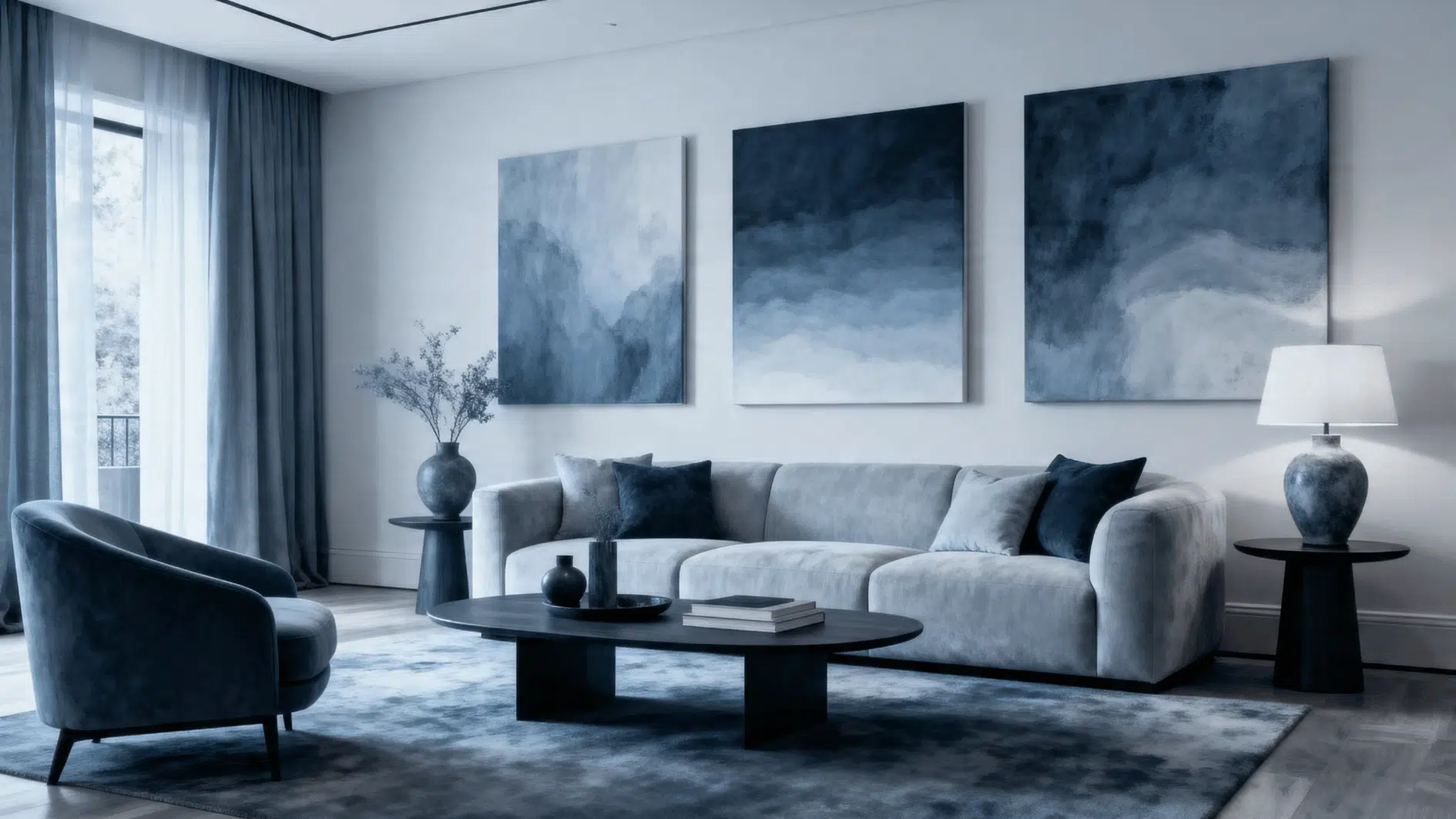
You can use multiple tones of the same color to create a cohesive yet rich look. This prevents the room from feeling too flat or uniform.
Layering shades adds subtle variation while maintaining harmony. It also helps you build depth without introducing too many contrasting colors.
7. Paint the Ceiling
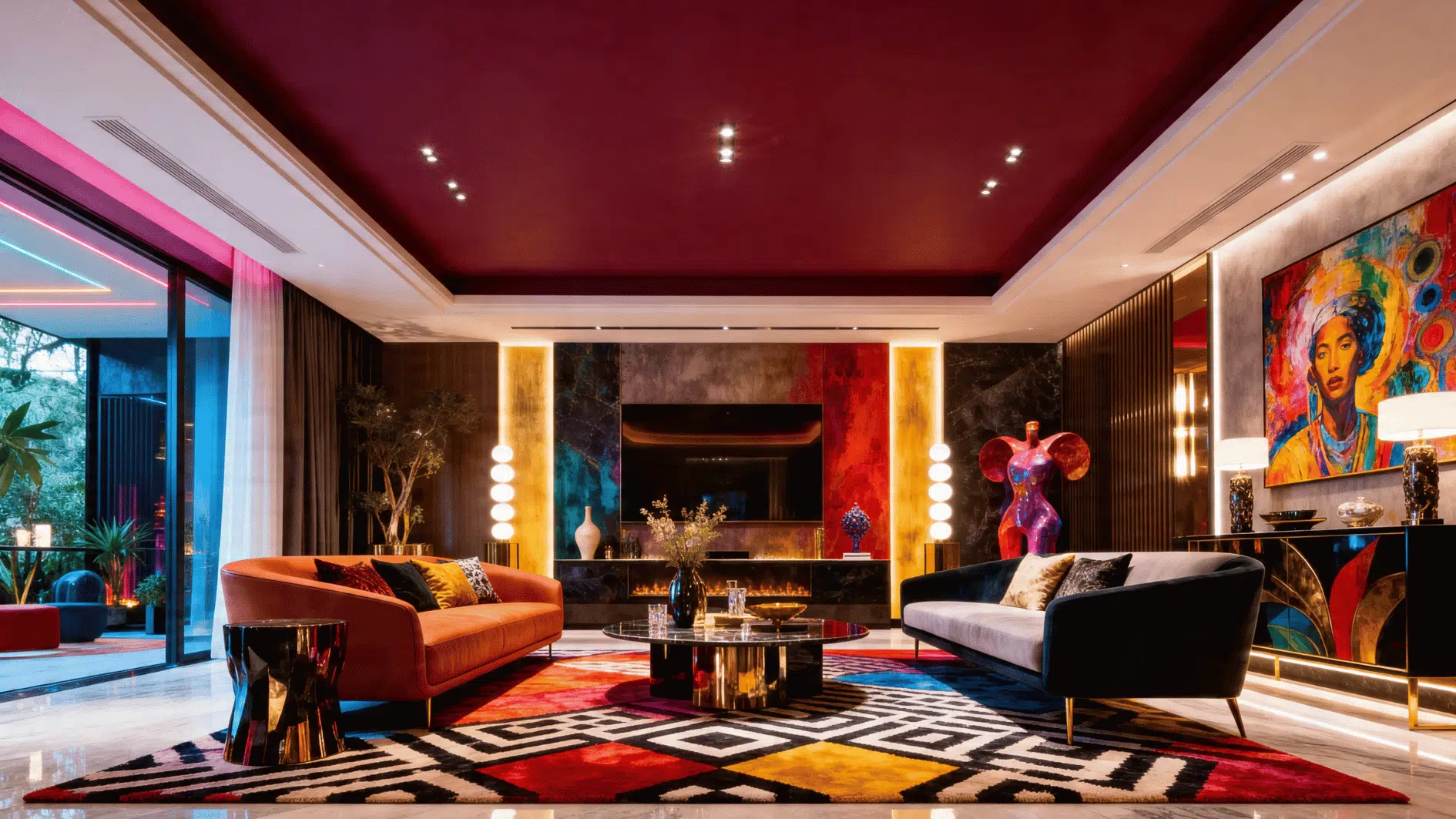
You can extend color to the ceiling to create a more immersive environment. This adds an unexpected design detail that improves the overall look.
A painted ceiling draws attention upward and makes the room feel complete. It works especially well in spaces with bold decor themes.
8. Mix Geometric and Floral Designs
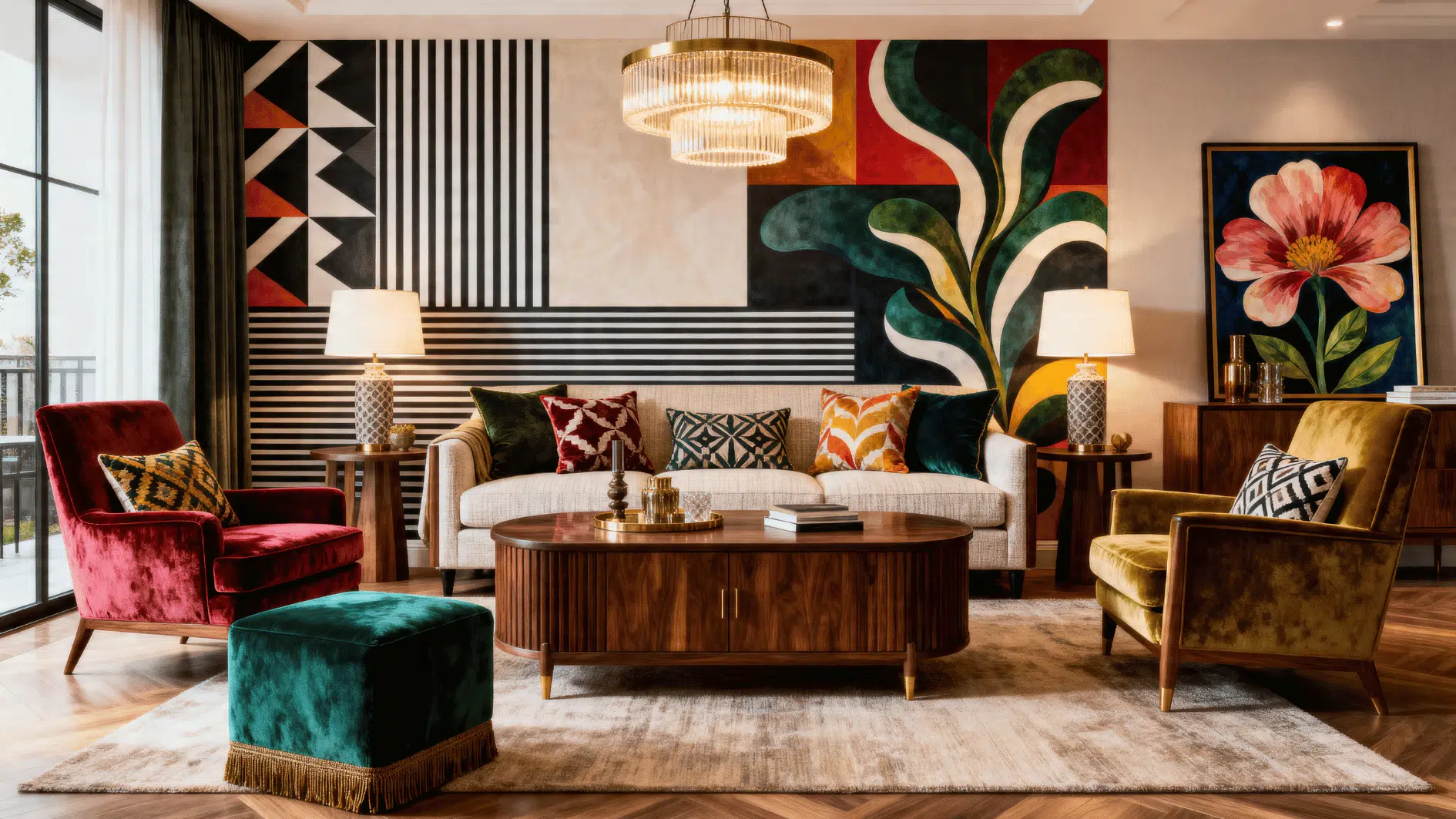
You can combine structured geometric patterns with softer floral designs for contrast. This balance keeps the room visually interesting.
The mix prevents repetition and adds dimension. It also allows you to layer patterns without making the space feel chaotic.
9. Combine Vintage and Modern Furniture
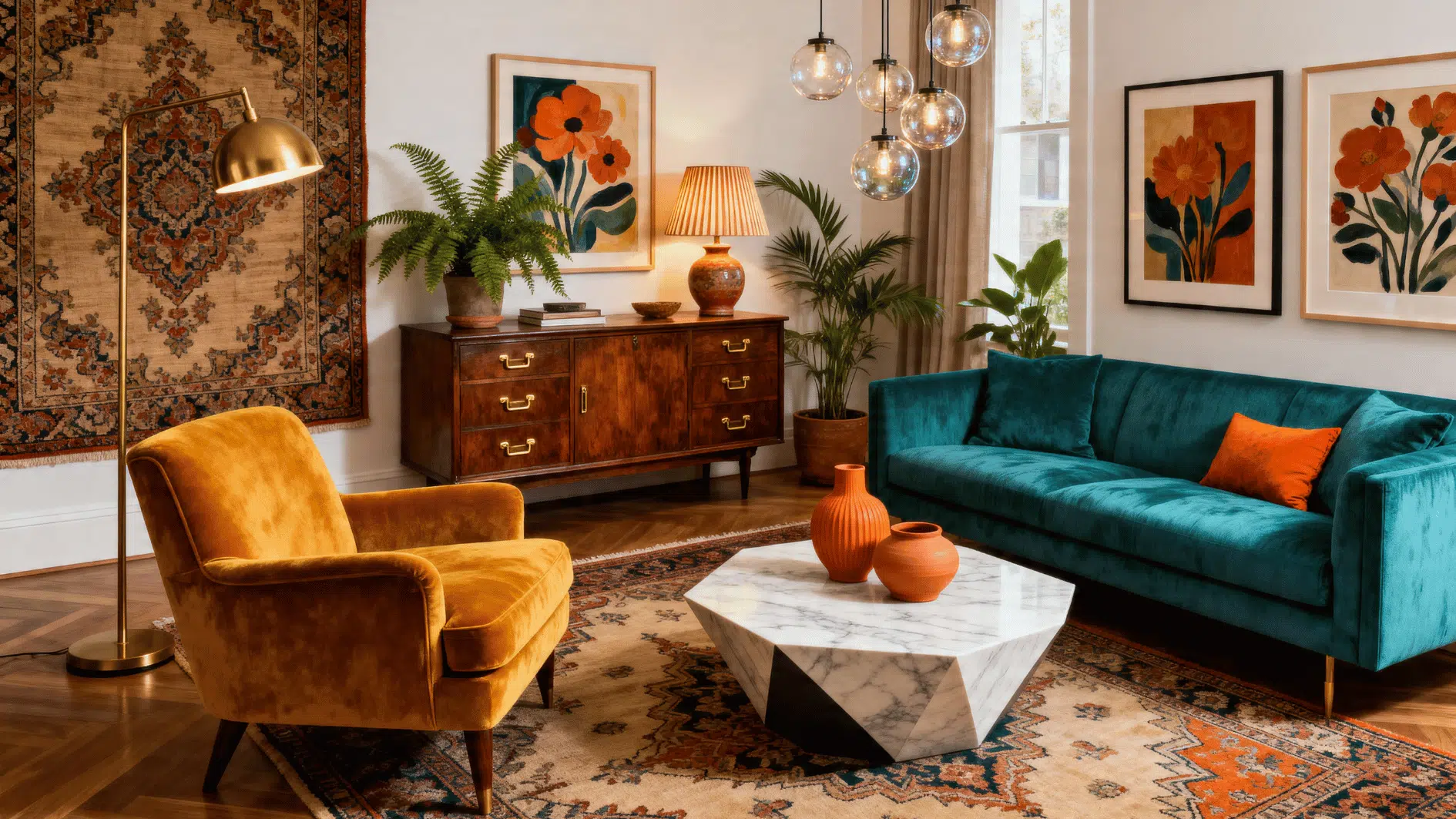
You can mix vintage pieces with modern designs to create a curated look. This adds character and avoids a uniform feel.
Blending styles helps highlight unique furniture pieces. It also makes your space feel collected over time rather than arranged all at once.
10. Use Statement Sofas in Bold Colors
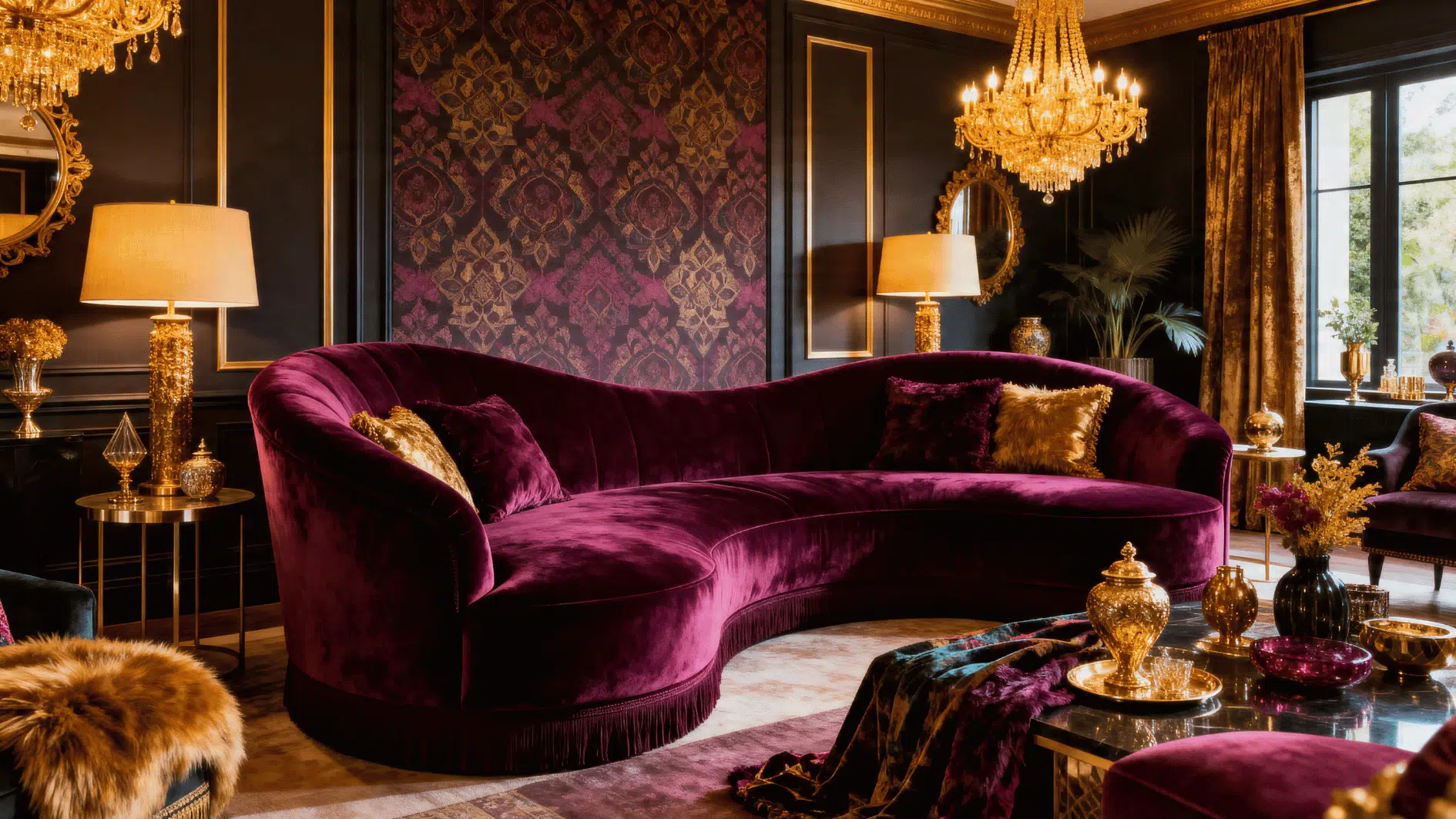
A statement sofa in a saturated color – deep plum velvet, vivid peacock teal, or fire-engine red – immediately establishes the room’s emotional register and signals fearless commitment to personality over safe, conventional choices.
Form matters as much as color. A tufted Chesterfield, a curved Art Deco silhouette, or an oversized sectional each brings its own theatrical drama.
Bold upholstery and an expressive silhouette naturally amplify each other powerfully.
11. Layer Seating with Ottomans and Chairs
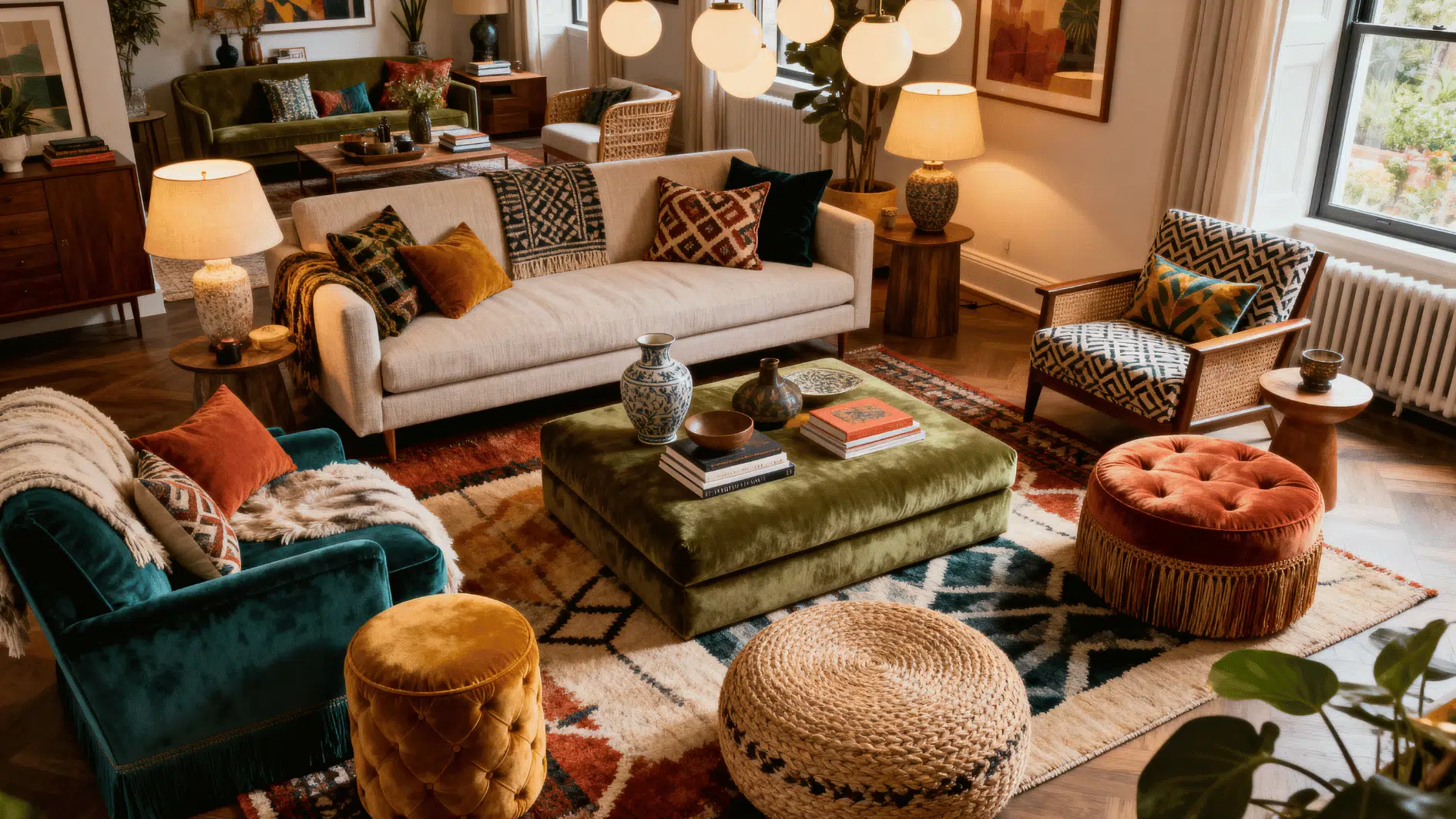
Layering sofas, accent chairs, ottomans, and poufs creates a generous, eclectic seating landscape.
A maximalist arrangement gathers different scales and styles together rather than relying on one uniform matching set.
Ottomans double as footrests or tray-topped coffee tables, while accent chairs add individual personality. A velvet wingback beside a floor lamp creates an intimate reading corner within the larger room.
12. Add Oversized Furniture for Impact
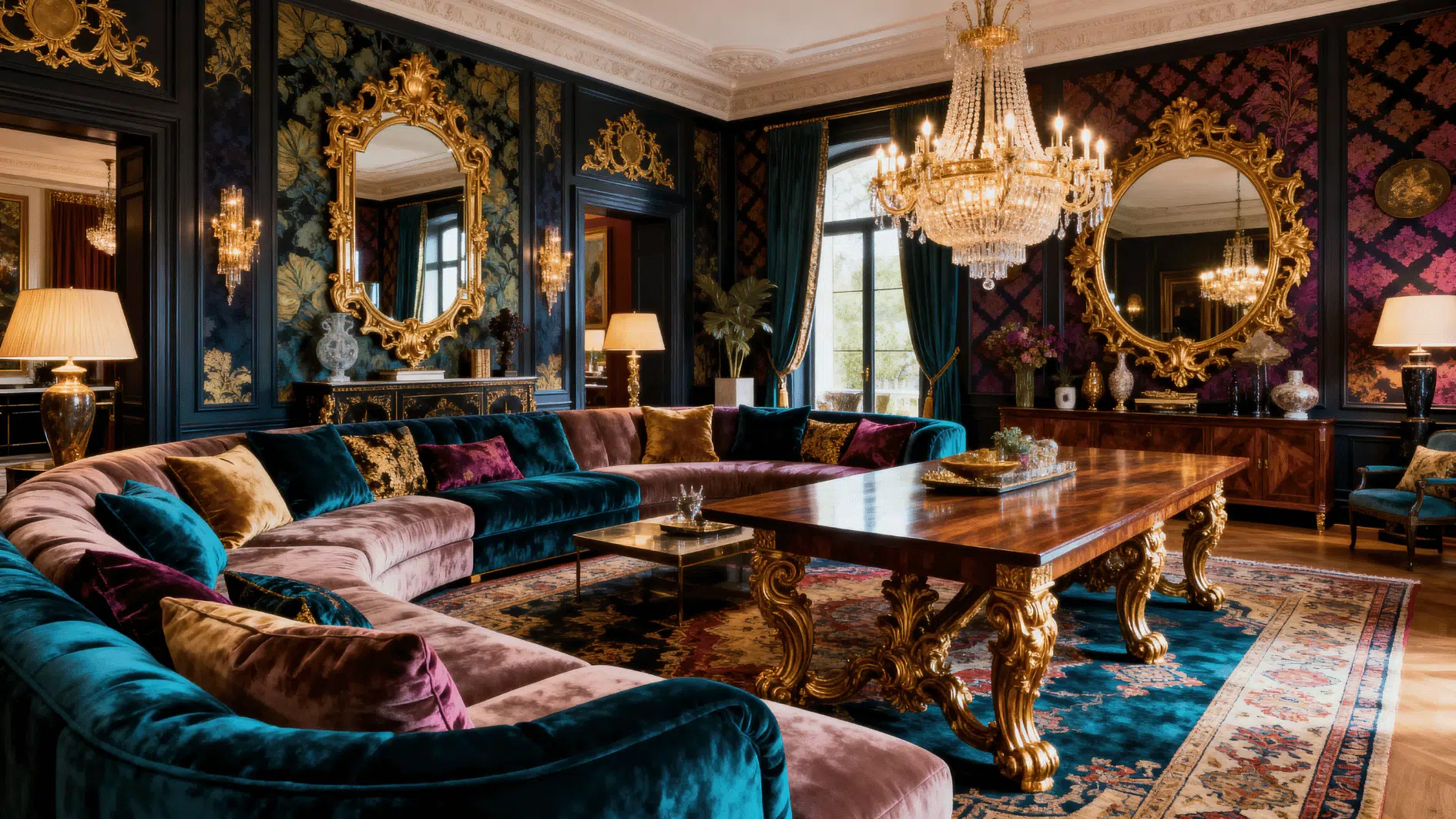
Oversized furniture fills a room with presence and theatrical scale. A generous dining table, vast sectional, or king-size sleigh bed creates an immersive, unapologetically indulgent environment that feels bold and intentional.
Large pieces act as anchor points, organizing the surrounding space with architectural weight.
Choose the biggest version your room can accommodate – in maximalism, going larger is almost always the right instinct.
13. Create Cozy Corners with Layered Seating
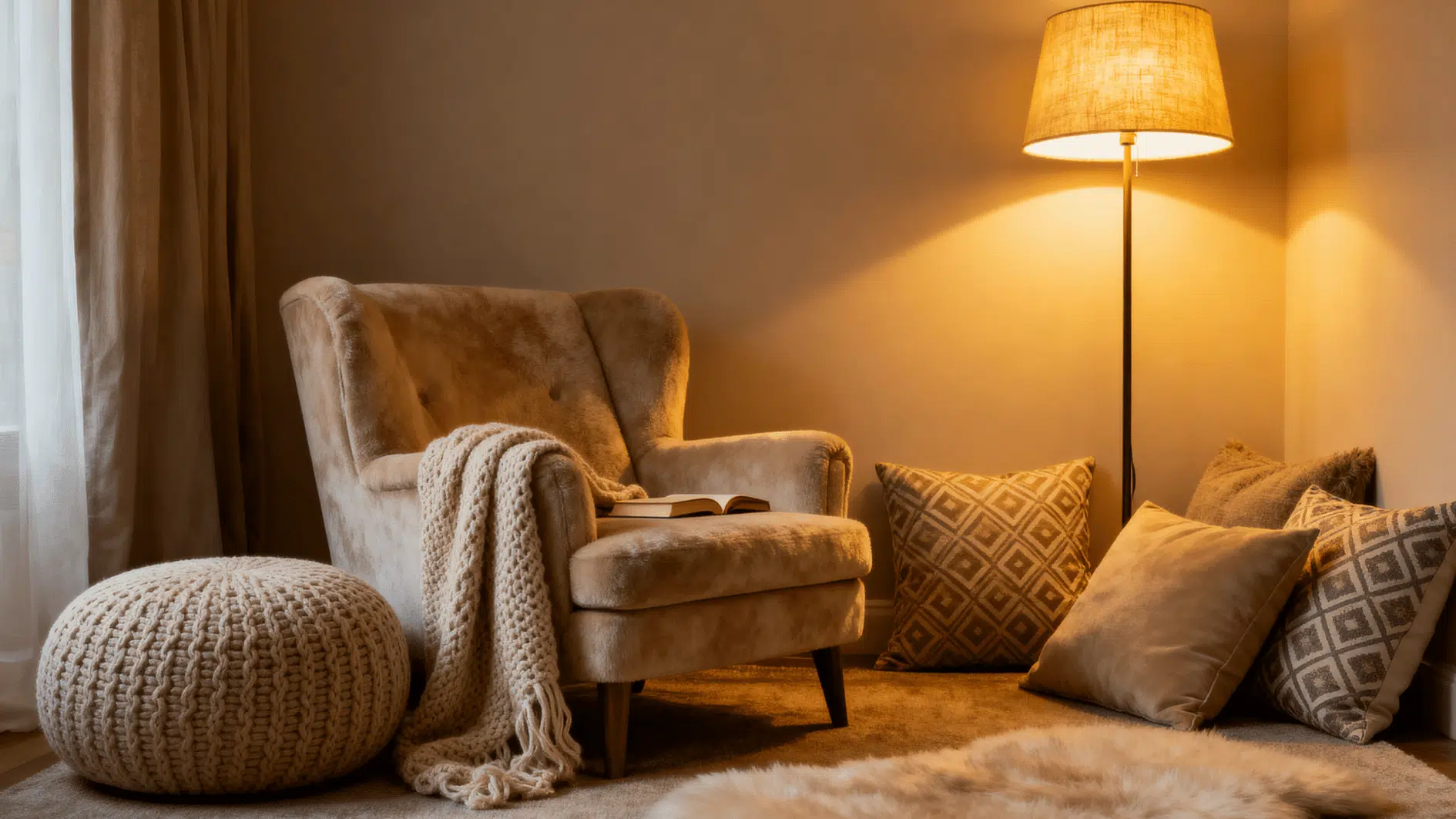
A cozy corner creates a deliberately intimate zone within a larger room.
Clustered seating, layered textiles, and warm lighting define it as a retreat and a microcosm of the room’s maximalist personality.
Start with a curved chair, a low pouf, and a floor lamp, then build up with throws and cushions. Positioning the arrangement in an alcove or between bookshelves deepens the sense of enclosure.
14. Mix Different Wood Finishes
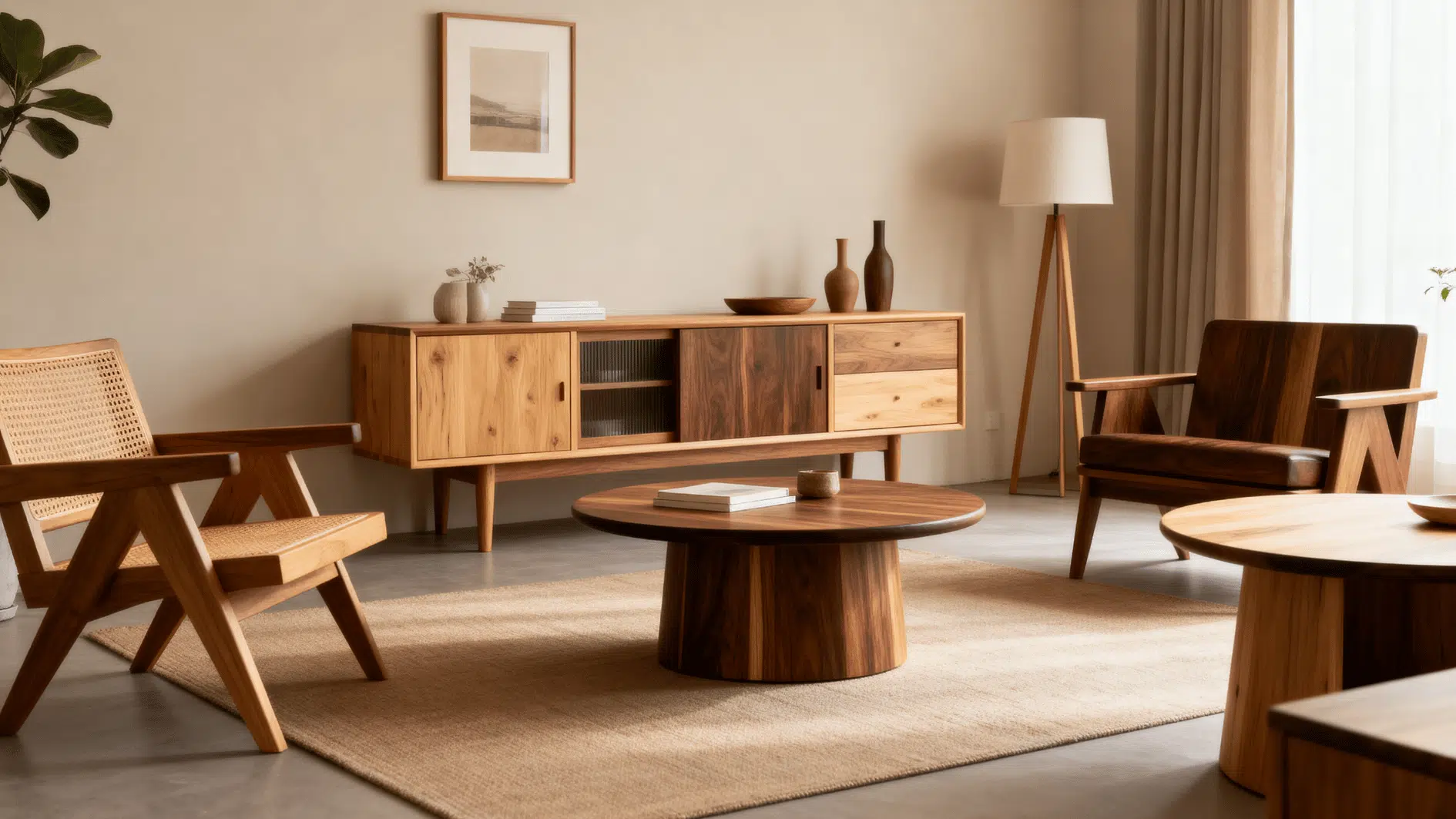
Combining golden oak, rich walnut, silvery driftwood, and honey pine creates a layered, authentic environment. The space feels genuinely collected and lived-in rather than assembled from a single showroom or catalog.
Allow a dominant undertone – warm, cool, or neutral – to run through all the pieces. Consider flooring, joinery, and shelving together as one conversation across every surface of the room.
15. Use Open Shelving with Decorative Items
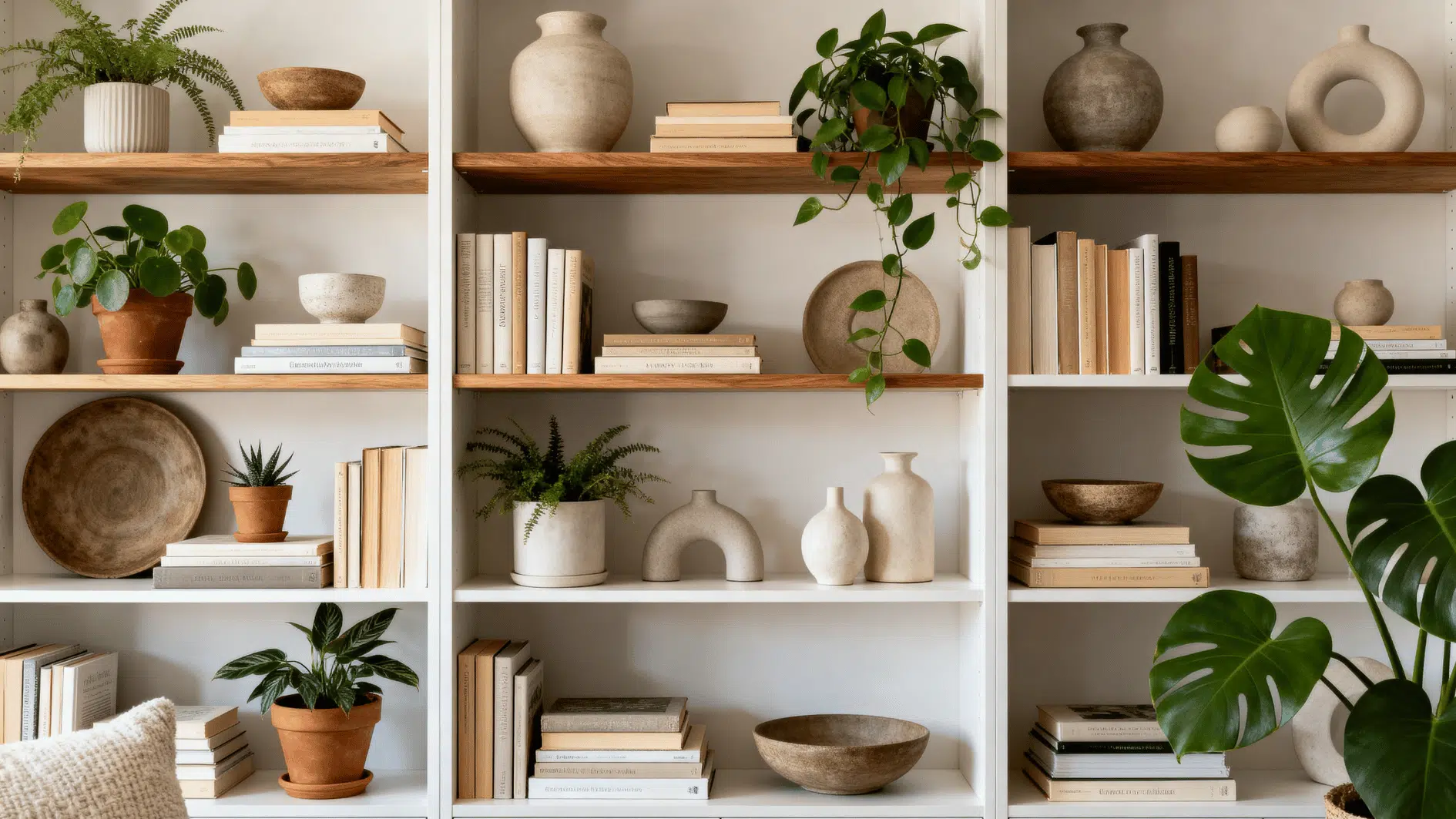
Open shelving transforms practical storage into a living exhibition of personality.
Books, ceramics, plants, and collected objects on permanent display make the shelves a key visual feature of the entire room.
Balance density with breathing room and vary the rhythm of objects to prevent monotony. Organizing books by color and grouping objects by material adds tonal richness to every section.
16. Arrange Furniture in Non-Traditional Layouts
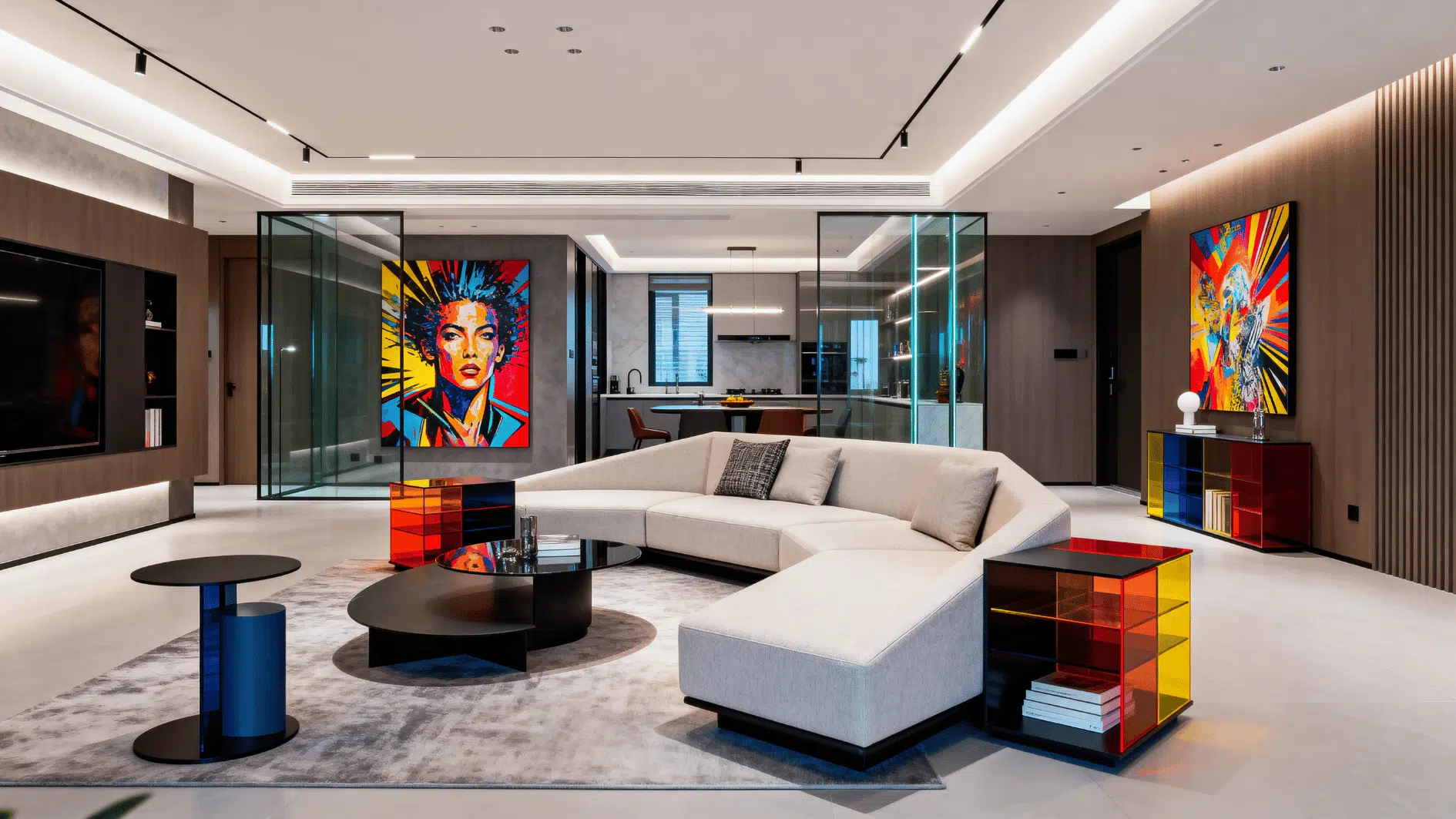
Breaking from standard layouts – sofa against the wall, chairs placed symmetrically – opens the room to arrangements that prioritize atmosphere and lived experience over predictable inherited spatial convention.
Placing a sofa at an angle creates an island of intimacy within the space. Angling a dining table or facing a chair toward a gallery wall makes the room feel more navigable.
17. Display Artwork in Gallery-Style Walls
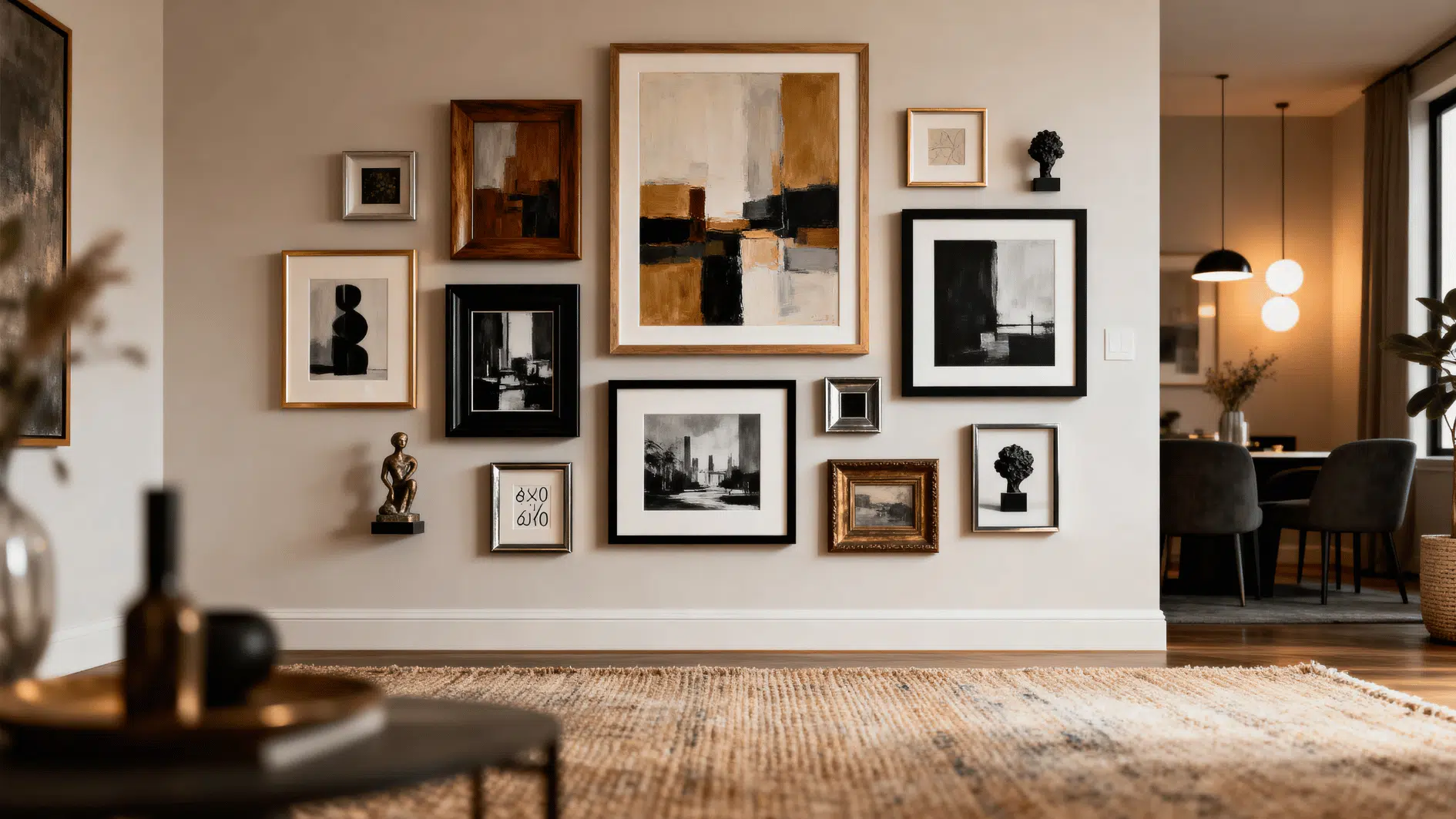
A gallery wall tells a story through accumulated images, objects, and frames. Unlike a single artwork hung alone, it reflects the full breadth of your style personality and personal history.
Mix frame sizes, orientations, and materials – gilded frames alongside black wood and natural rattan. Lay the arrangement on the floor first to find a composition with natural visual balance.
18. Layer Rugs for Added Texture
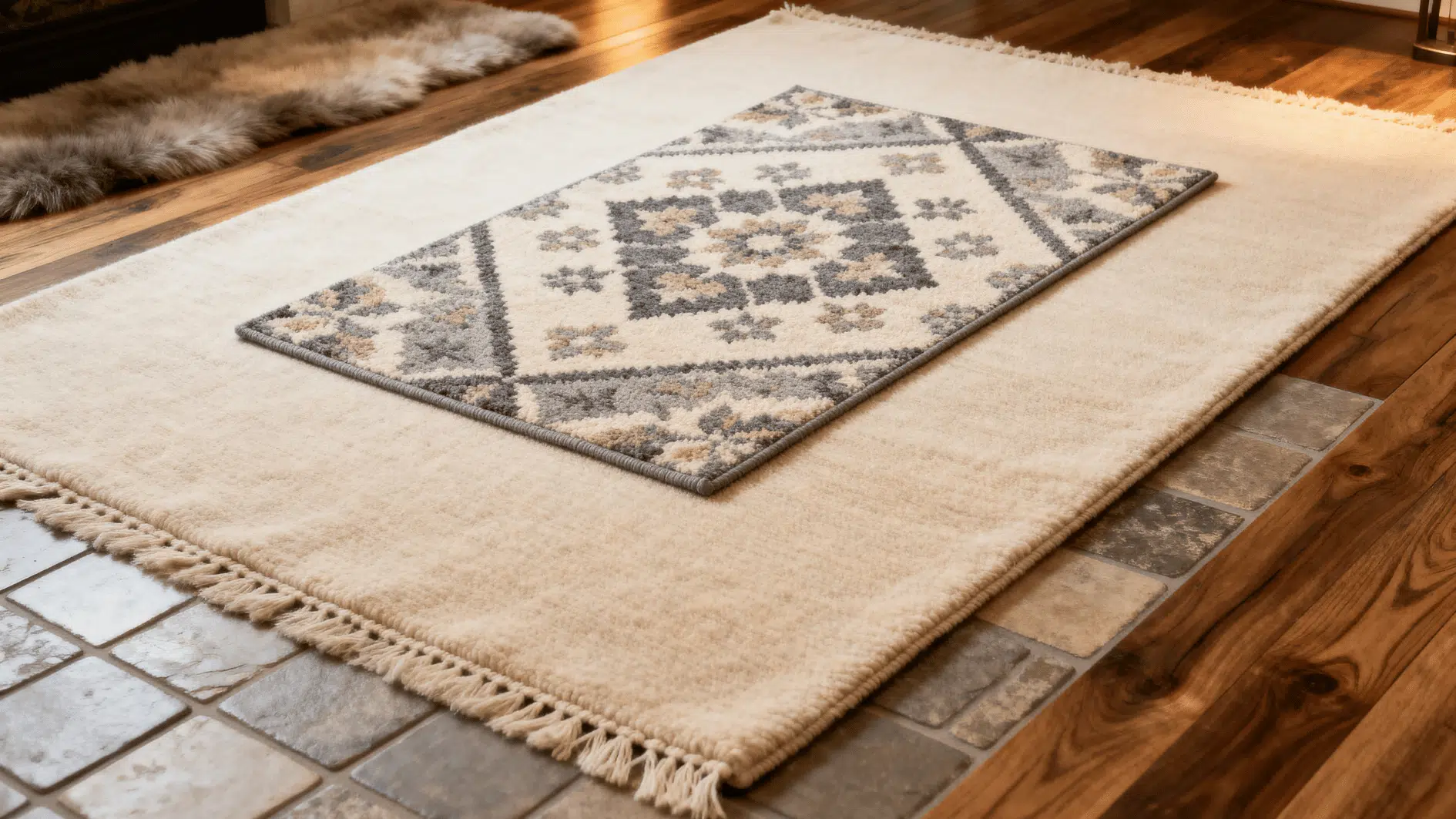
Layering one rug over another creates a multi-textured floor composition that makes the floor as interesting as any other surface in a maximalist interior. Depth and richness build from the ground up.
A natural jute base supports a boldly patterned rug on top – a kilim or Beni Ourain stands out beautifully while also defining distinct experiential zones within an open-plan space.
19. Use Decorative Mirrors in Different Shapes
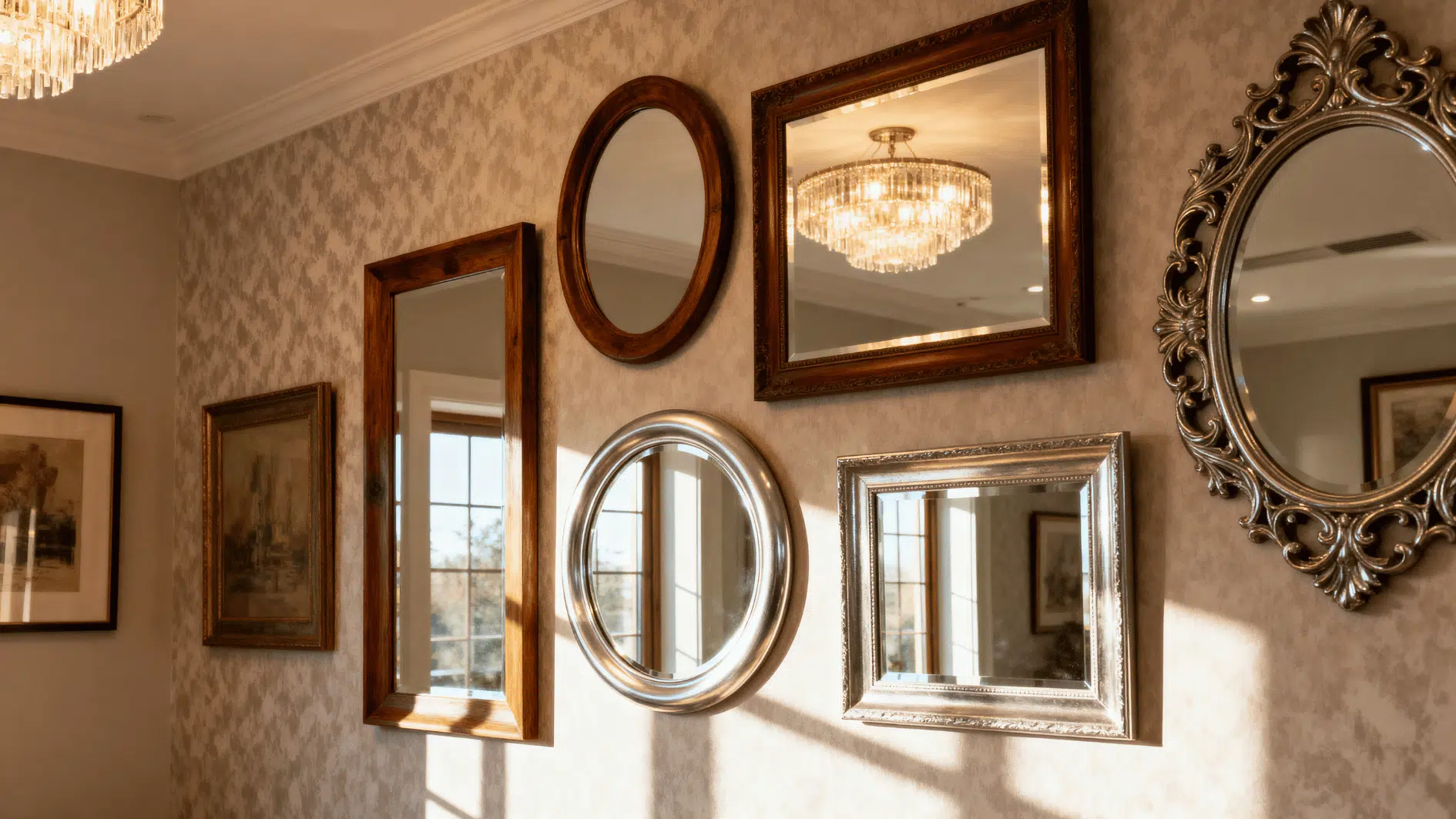
Mirrors act simultaneously as artwork, space expanders, and light amplifiers, reflecting the richness of the room back on itself.
They bring practical function and dramatic visual impact in equal measure.
Mix shapes and frames – an arched mirror, a convex gilded piece, and clustered hexagonals each tell a different story. Position one opposite a window to double the room’s natural light.
20. Add Plants in Varied Sizes
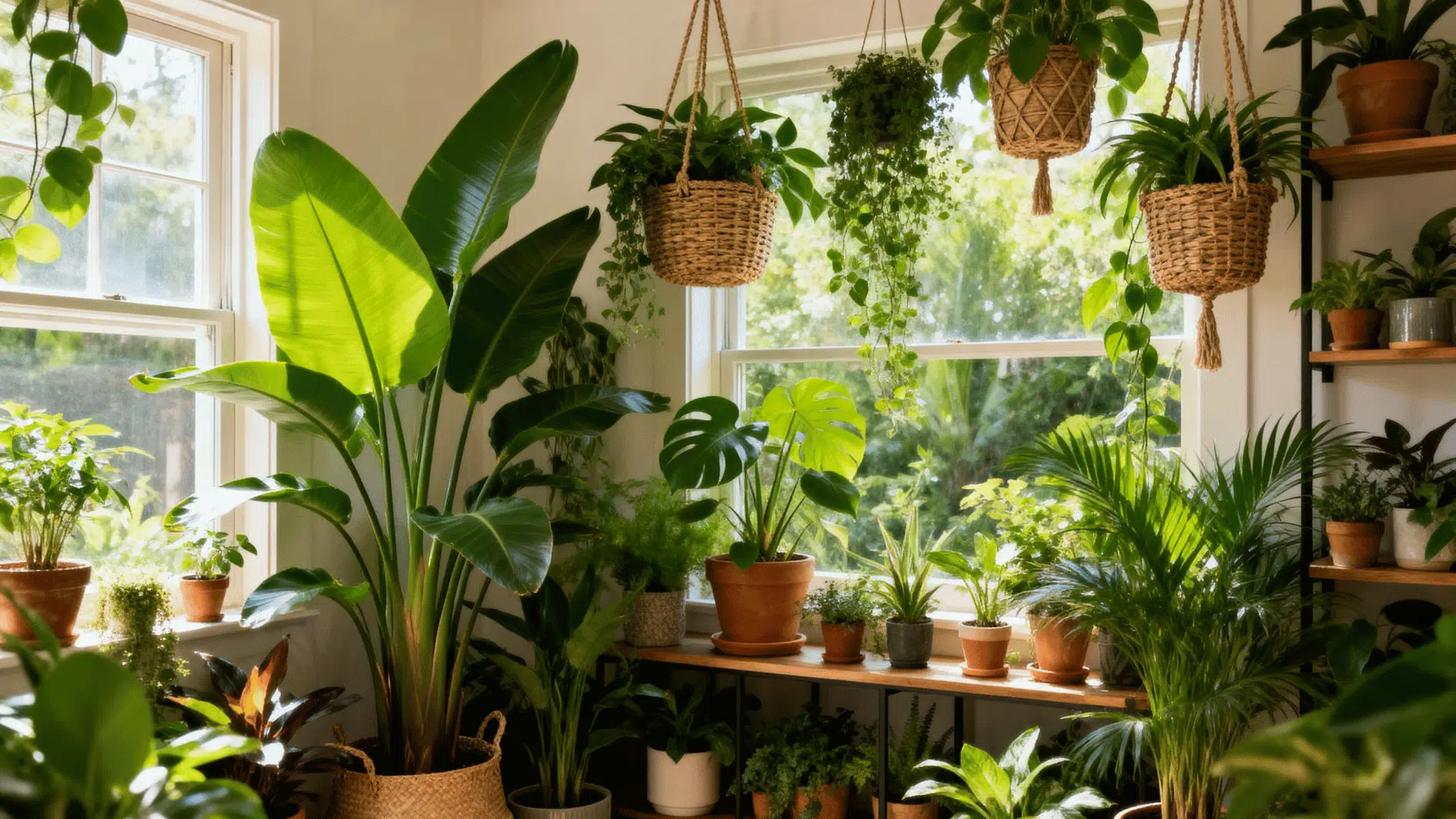
A layered collection of plants at multiple heights fills a room with organic, living energy.
Tall floor specimens, shelf plants, and trailing varieties cascading from above create an immersive botanical atmosphere.
Mixing species adds visual diversity beyond scale alone. Treat planters – terracotta, glazed ceramics, woven baskets, and brass urns – as decorative objects in their own right to enrich the overall display.
21. Mix Metals Like Gold, Brass, and Chrome
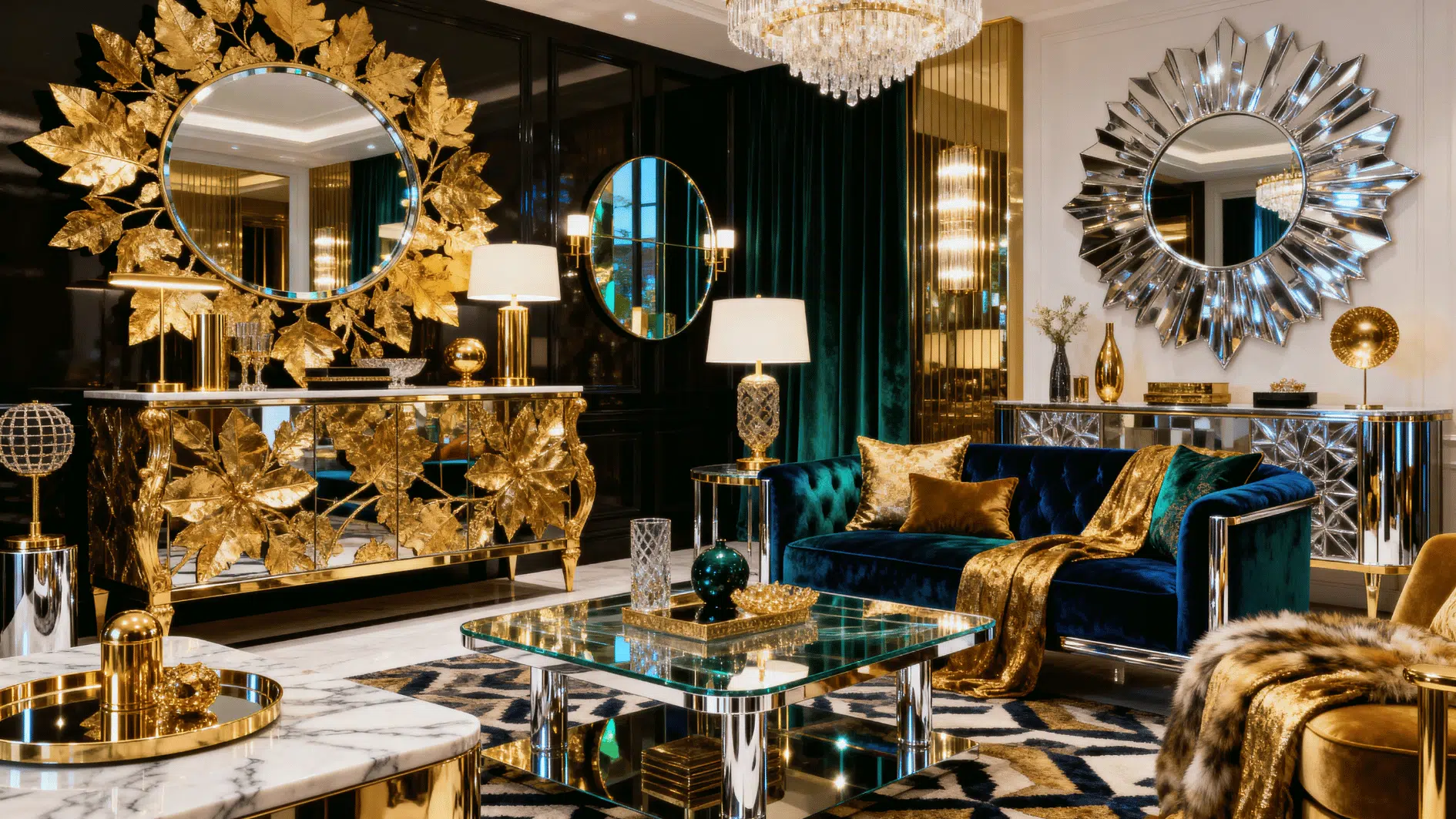
Mixing gold, brass, chrome, copper, and bronze creates a layered, multi-faceted shimmer that shifts with the light. Each metal brings its own warmth, reflectivity, and distinct individual cultural personality.
Distribute different metals across fixtures, hardware, frames, and candle holders to create visual continuity throughout the room.
Establish one dominant metal and let one or two secondary accents support it.
22. Use Bold Lighting Fixtures
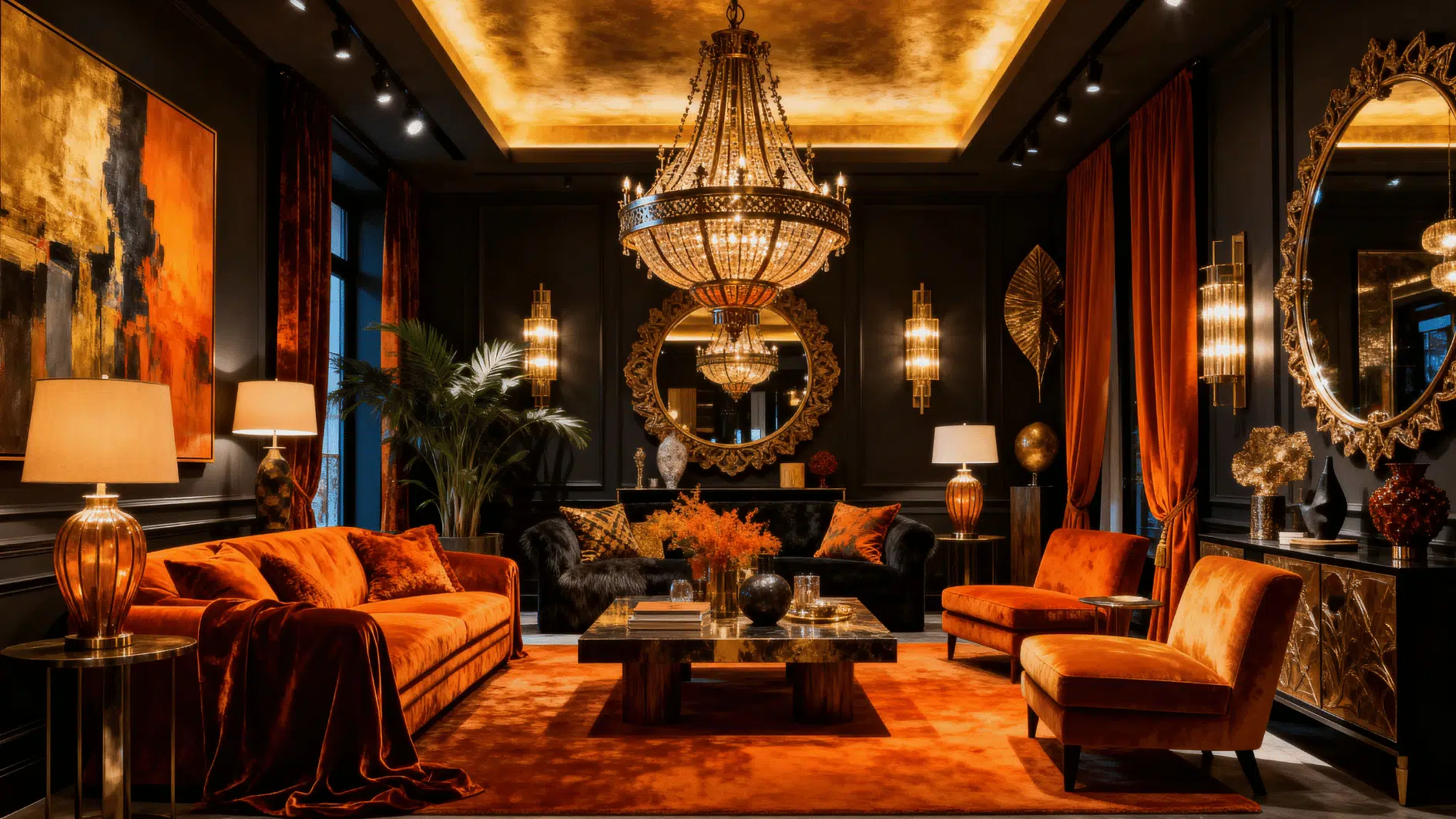
Bold lighting fixtures are statement pieces and key contributors to a room’s atmospheric identity.
A dramatic chandelier or sculptural pendant brings visual impact even when switched off, functioning as decorative art.
Layer ambient, task, and accent sources so the room can shift between moods. Overhead lighting reveals every detail, while warm lamps and candles draw the space inward for an enveloping evening atmosphere.
23. Stack Books and Decorative Objects
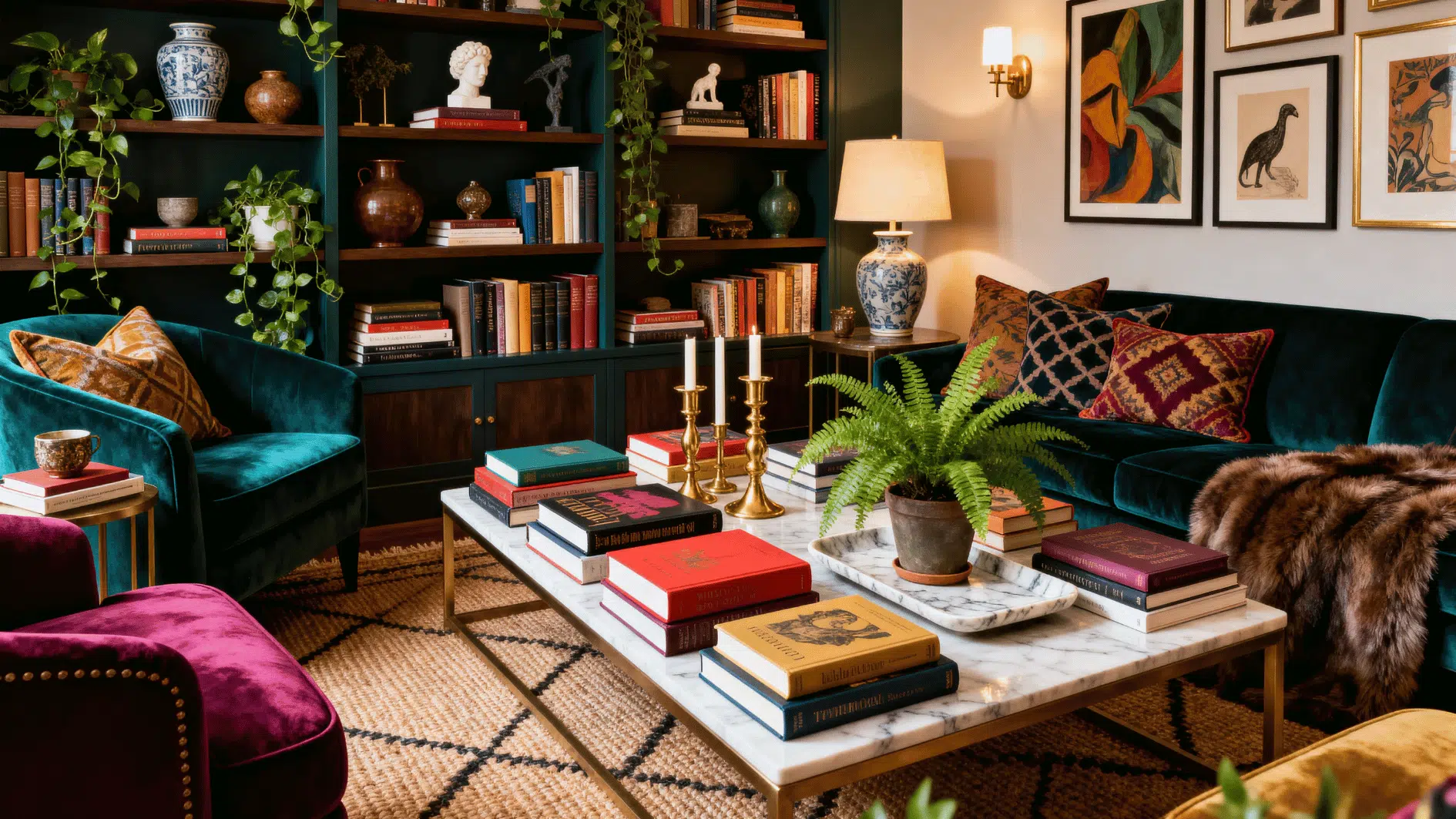
Stacking books on coffee tables, side tables, floors, and windowsills builds visual architecture throughout a room. Visible titles and spines add a narrative dimension that no purely decorative object can replicate.
Other flat objects – ceramic tiles, wooden boxes, vinyl records – stack beautifully alongside books. Placing a vase, candle, or small sculpture beside a stack turns any surface into a considered arrangement.
24. Add Textured Fabrics Like Velvet or Silk
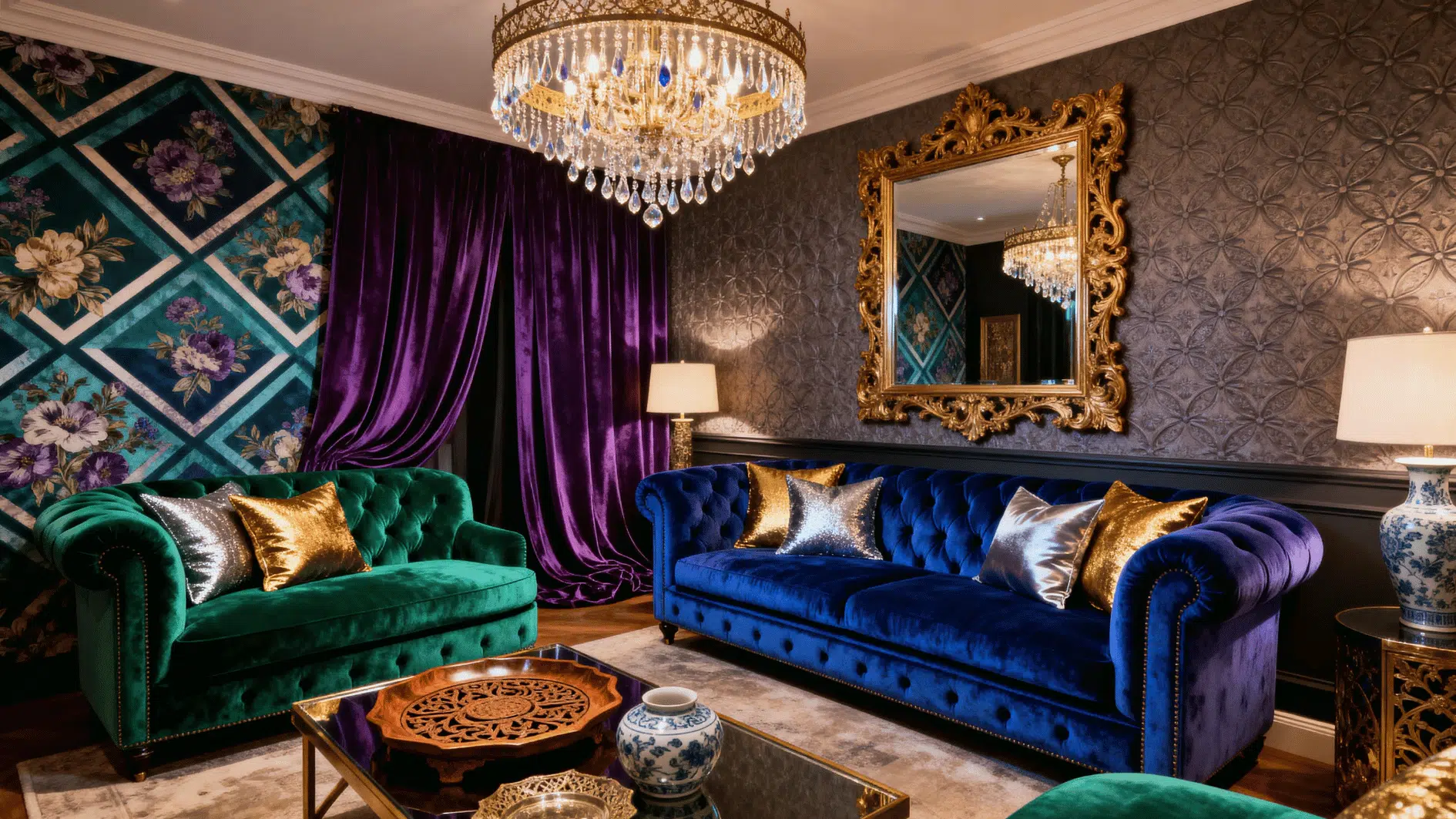
Velvet’s shifting pile and silk’s luminous drape transform upholstery, cushions, and curtains into elements as pleasurable to touch as they are to see – the tactile soul of a maximalist interior.
Apply fabric generously: a full sofa in bottle-green velvet, floor-to-ceiling silk curtains, and a bed layered in embroidered cotton and faux fur create the enveloping sensory richness maximalism demands.
25. Showcase Personal Collections
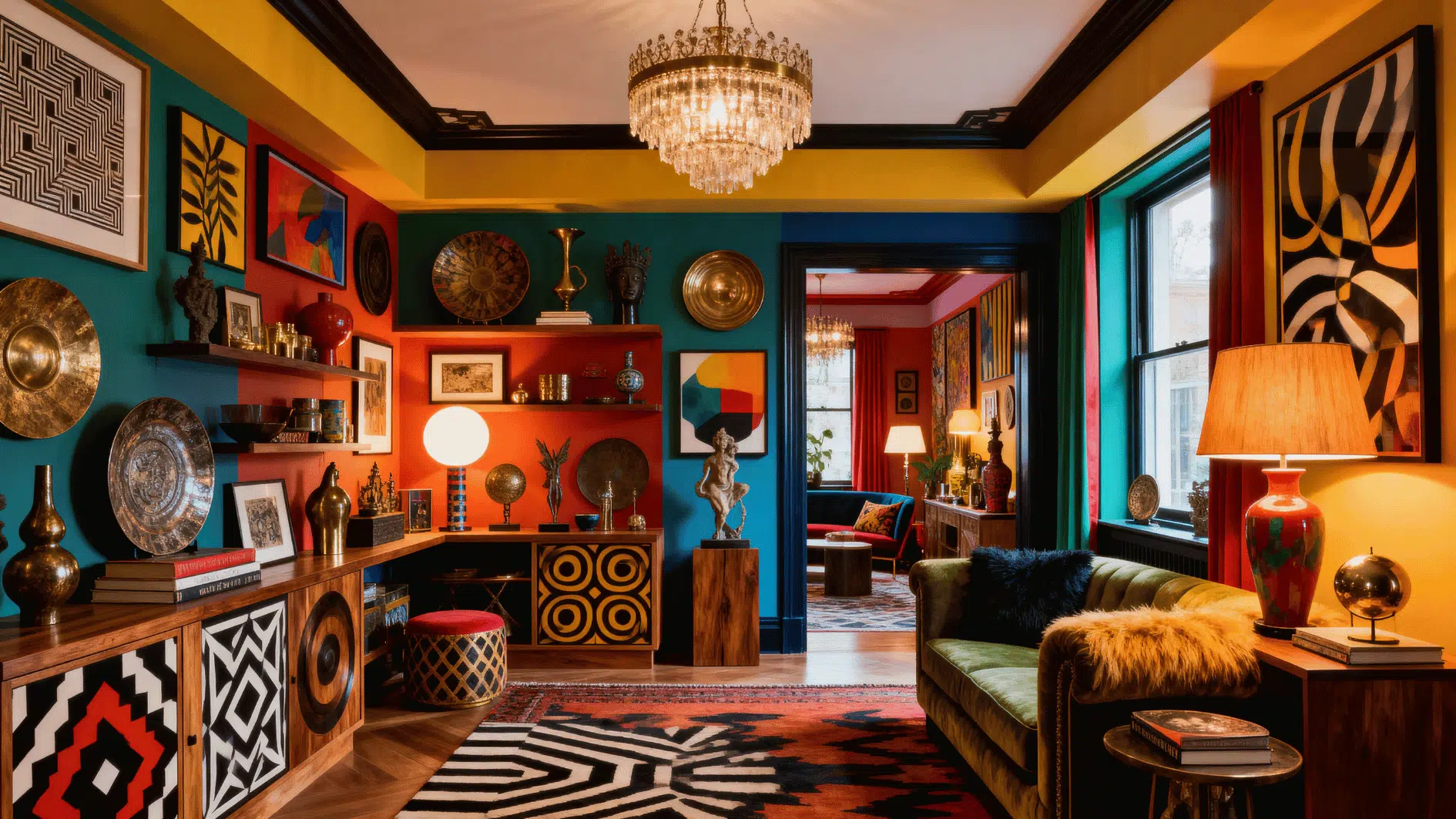
Displaying ceramics, vintage cameras, antique maps, or art glass transforms private passion into a shared visual experience.
A personal collection is a physical autobiography that reveals something intimate about who you are to visitors.
Grouping pieces by color, material, or era creates order within abundance. Varied heights, platforms, and wall placements produce a dynamic three-dimensional arrangement that genuinely animates any room it inhabits.
Practical Tips for Maximalist Style Interior
You can create a bold and layered space by following a few practical guidelines. Maximalist design works best when you combine creativity with structure, ensuring your space feels rich but still organized.
- Start with a Base Color Palette: Choose 2–3 main colors to guide your design. This keeps your space cohesive even with multiple elements.
- Layer, Don’t Overcrowd: Add decor in layers and step back to assess the look. This prevents the space from feeling cluttered.
- Create Clear Focal Points: Use statement furniture, artwork, or lighting to anchor the room. This gives the eye a place to rest.
- Mix Textures Thoughtfully: Combine materials like velvet, wood, glass, and metal. This adds depth without relying only on color.
- Use Repetition for Balance: Repeat certain colors, patterns, or shapes across the room. This creates visual consistency.
- Edit Regularly: Remove or rearrange items that feel out of place. This keeps your design intentional and refined.
- Personalize with Meaningful Decor: Include items that reflect your interests or memories. This makes your space feel unique and lived-in.
Conclusion
You can create a space that feels rich, layered, and full of personality by intentionally applying maximalist style ideas.
When you combine bold colors, varied textures, and meaningful decor, your space becomes a true reflection of your style.
It is important to focus on structure while adding multiple elements. Thoughtful layering, balanced color choices, and clear focal points help you create a space that feels detailed yet organized.
These ideas give you the confidence to design a space that feels lively, comfortable, and visually striking.

With a Master in Architectural Studies from University of Pennysylvania, Marwa Haydar has pioneered living spaces since 2005. Her expertise, initially honed in a prestigious architectural firm, is evident in her approach to creating environments. Marwa became part of our team in 2019 and has since been a driving force in our home improvement section, known for her practical yet stylish solutions. She’s been spearheading our design workshops since then, infusing her passion for teaching into her work. In her leisure time, Marwa enjoys exploring historic architecture and is an enthusiastic pottery hobbyist, further enriching her understanding of form and texture.