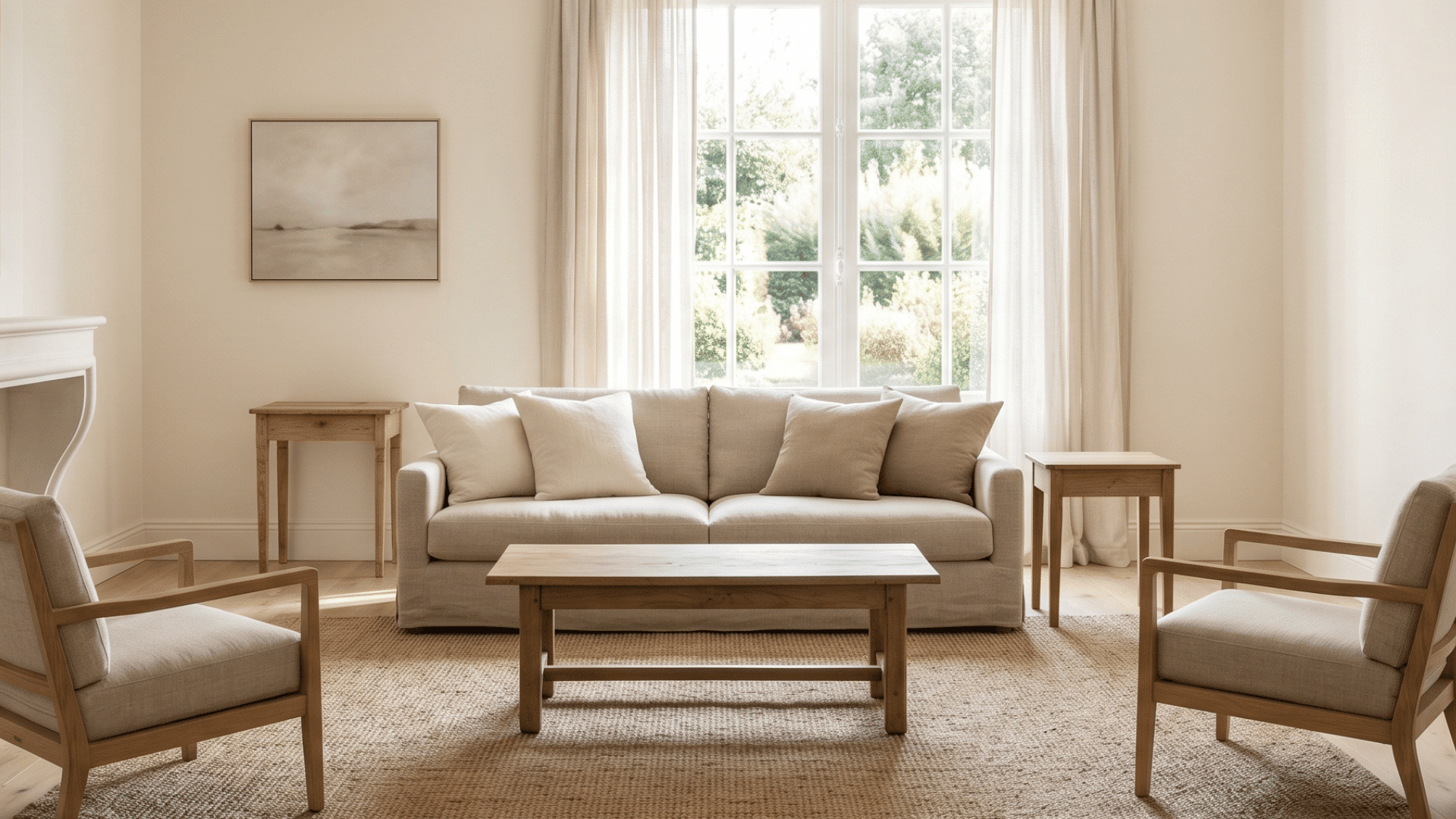

There is something about a home that feels warm, collected, and full of quiet character that stops people in their tracks.
French country interior design captures that feeling by drawing from the relaxed, sun-warmed homes of the French countryside.
This blog covers room ideas, color choices, furniture picks, and practical styling tips to help bring this look into any home.
What is French Country Interior Design?
French country interior design is rooted in the rural homes of Provence and the broader French countryside, where comfort and character were built into every room through honest materials and time-worn finishes.
The style is defined by its balance between rough and refined stone floors, which sit alongside carved wooden furniture, linen curtains hang beside ornate mirrors, and faded floral patterns appear next to simple iron hardware.
It is not a polished or formal aesthetic, but rather one that values the beauty of imperfection and the stories that well-used things carry.
Every element is chosen for both function and feeling, which gives French country interiors their grounded, genuinely livable quality.
French Country Interior Design Ideas to Try at Home
Each of these ideas works on its own or alongside others, making it easy to bring French country interior design into any room at any pace.
1. Reclaimed Wooden Ceiling Beams
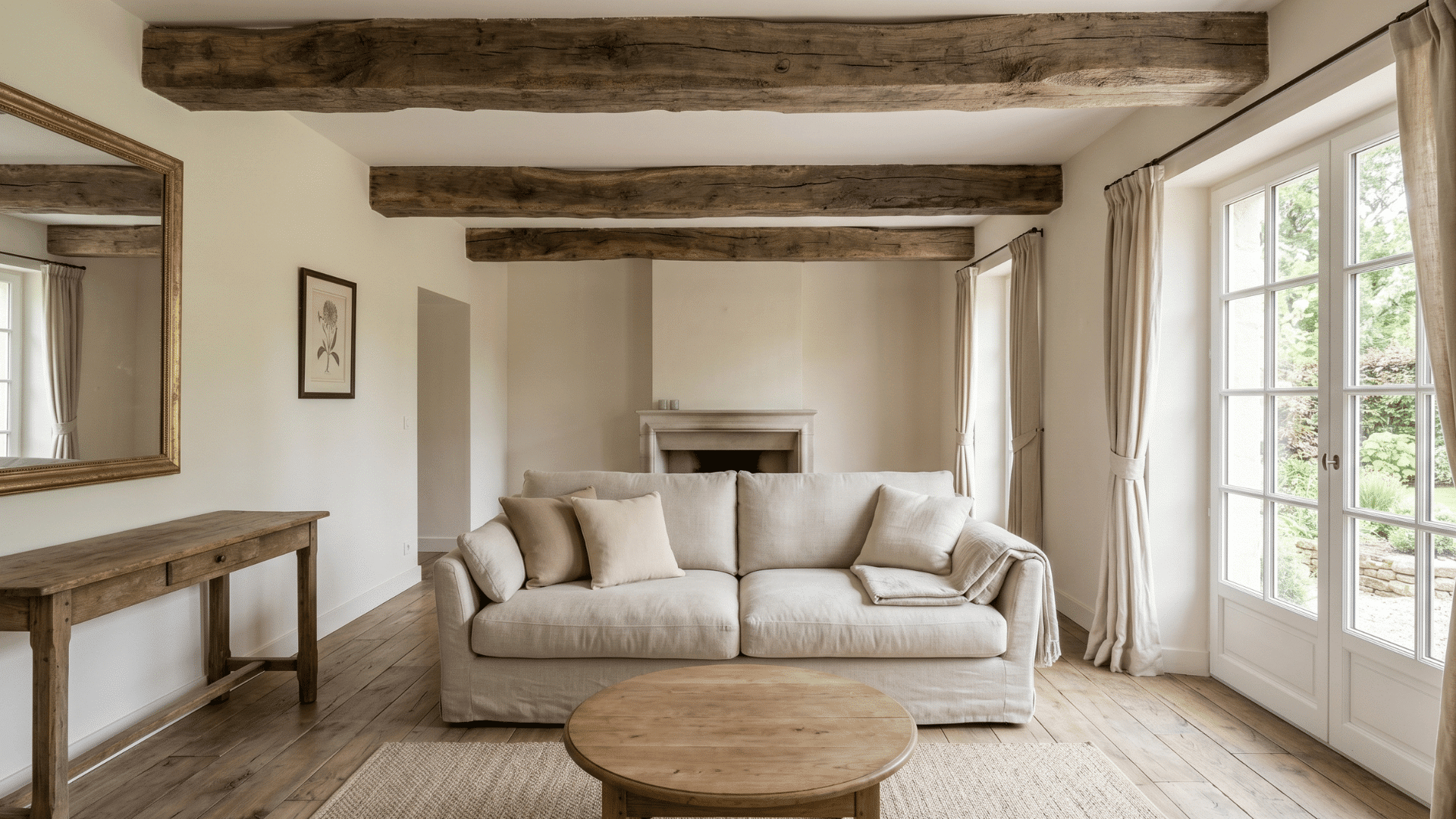
Exposed reclaimed beams on the ceiling instantly add age, warmth, and structural character to any room in the home.
How to Style It:
- Choose beams in a dark walnut or weathered grey finish to contrast against a white or cream ceiling
- Space the beams evenly across the ceiling so the layout feels deliberate rather than randomly placed
- Leave the beam surface natural and unsealed so the grain and age marks remain visible and honest
- Pair with linen curtains and stone flooring below to carry the rustic material story throughout the room
- Use warm-toned pendant lights or wall sconces nearby to complement the wood tone of the beams
2. Statement Antique Armoire
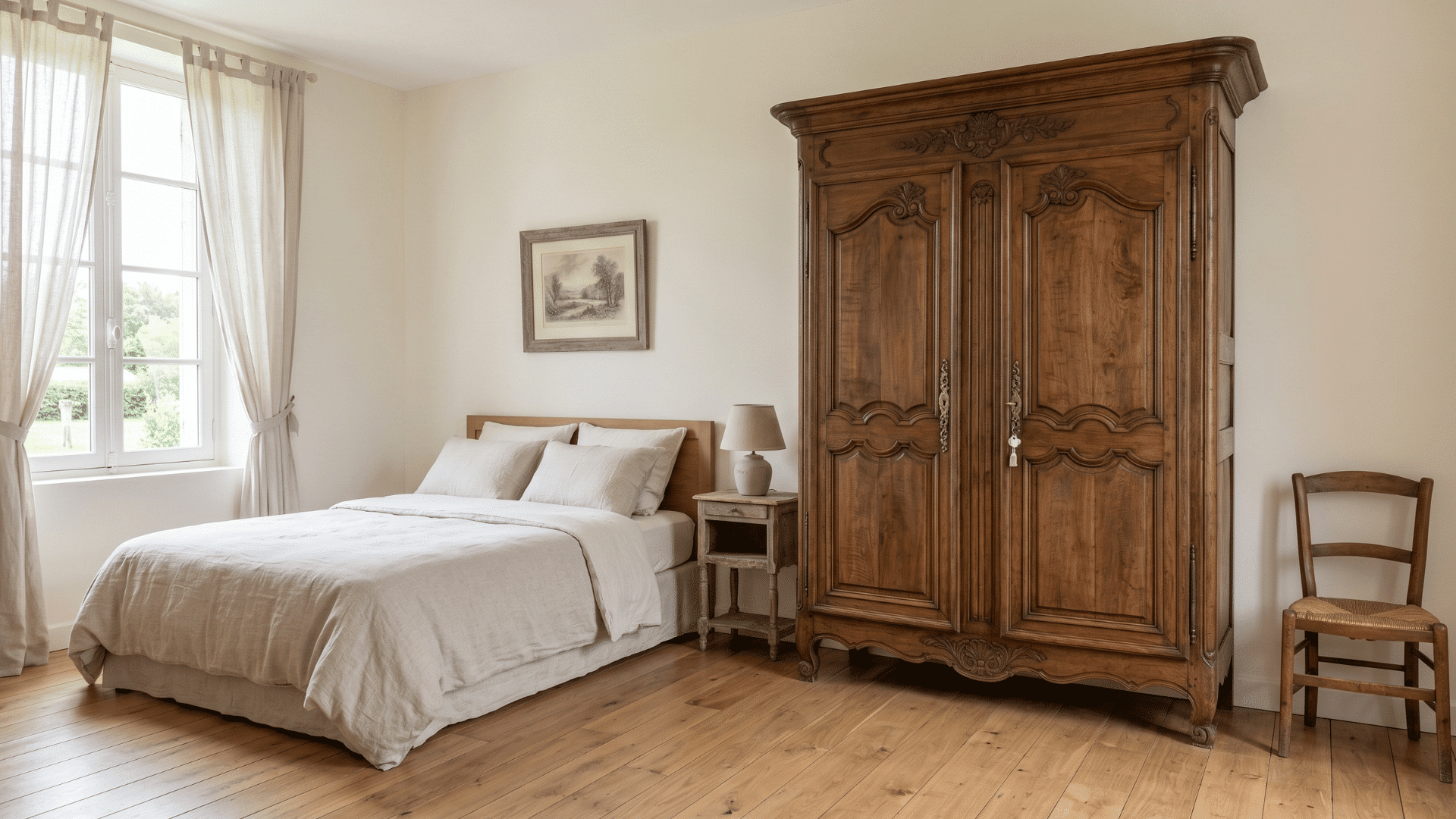
A large antique armoire placed against a main wall gives the room an instant anchor point that no modern furniture piece can replicate.
How to Style It:
- Choose an armoire with carved detailing, curved feet, and a distressed painted or natural wood finish
- Position it on the longest uninterrupted wall in the room so it fills the space without crowding it
- Leave the doors slightly open to reveal neatly stacked linens, books, or vintage accessories inside
- Place a small floral arrangement or ceramic piece on top to soften the upper section of the armoire
- Keep surrounding furniture lower in height so the armoire remains the clear focal point of the space
3. Layered Linen Curtains
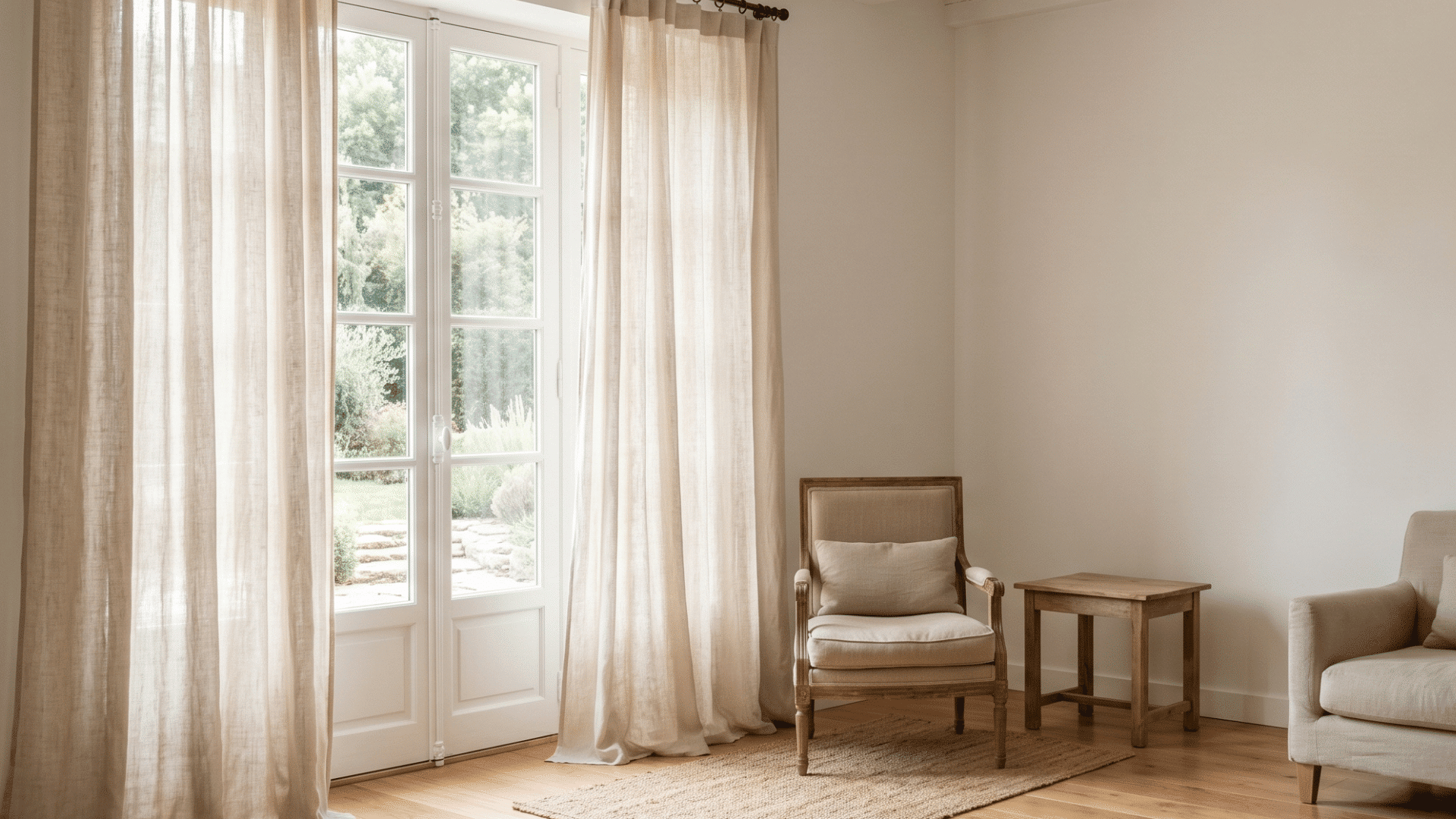
Sheer linen curtains hung from ceiling to floor soften incoming light and give any room a relaxed, airy quality that heavier fabrics cannot achieve.
How to Style It:
- Choose curtains in natural, undyed linen or a soft cream tone to keep the light warm as it filters through
- Hang the rod close to the ceiling rather than just above the window frame to make the room feel taller
- Let the curtains puddle slightly on the floor for a relaxed, lived-in drape rather than a crisp, tailored hem
- Layer a second heavier linen panel behind the sheer for rooms that need more light control in the evenings
- Tie the curtains back loosely with a simple fabric tie rather than a structured hook for a casual finish
4. Stone Accent Wall
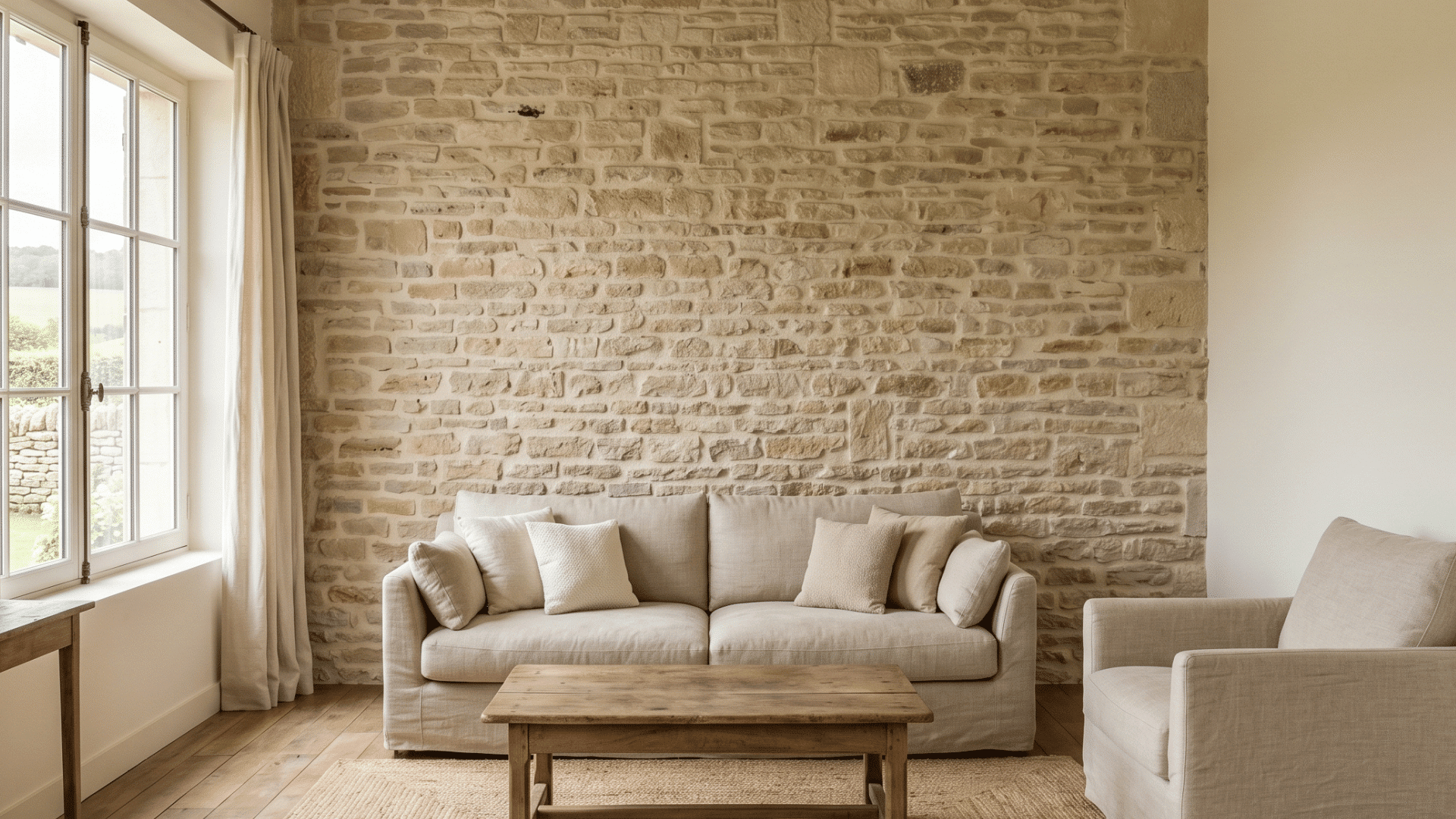
A raw or lightly finished stone wall adds a tactile, aged quality to the room, immediately grounding the space in old-world character.
How to Style It:
- Use natural limestone, fieldstone, or stacked slate for the most natural and textured result
- Position the stone wall behind a fireplace, bed headboard, or main seating area to maximize its visual impact
- Keep the surrounding walls in a plain white or warm cream so the stone surface reads as the clear focal point
- Avoid sealing the stone with a high-gloss finish so the surface retains its natural matte and rough quality
- Hang a single aged iron sconce or simple wooden shelf on the stone wall to add function without cluttering it
5. Hand-Painted Ceramic Displays
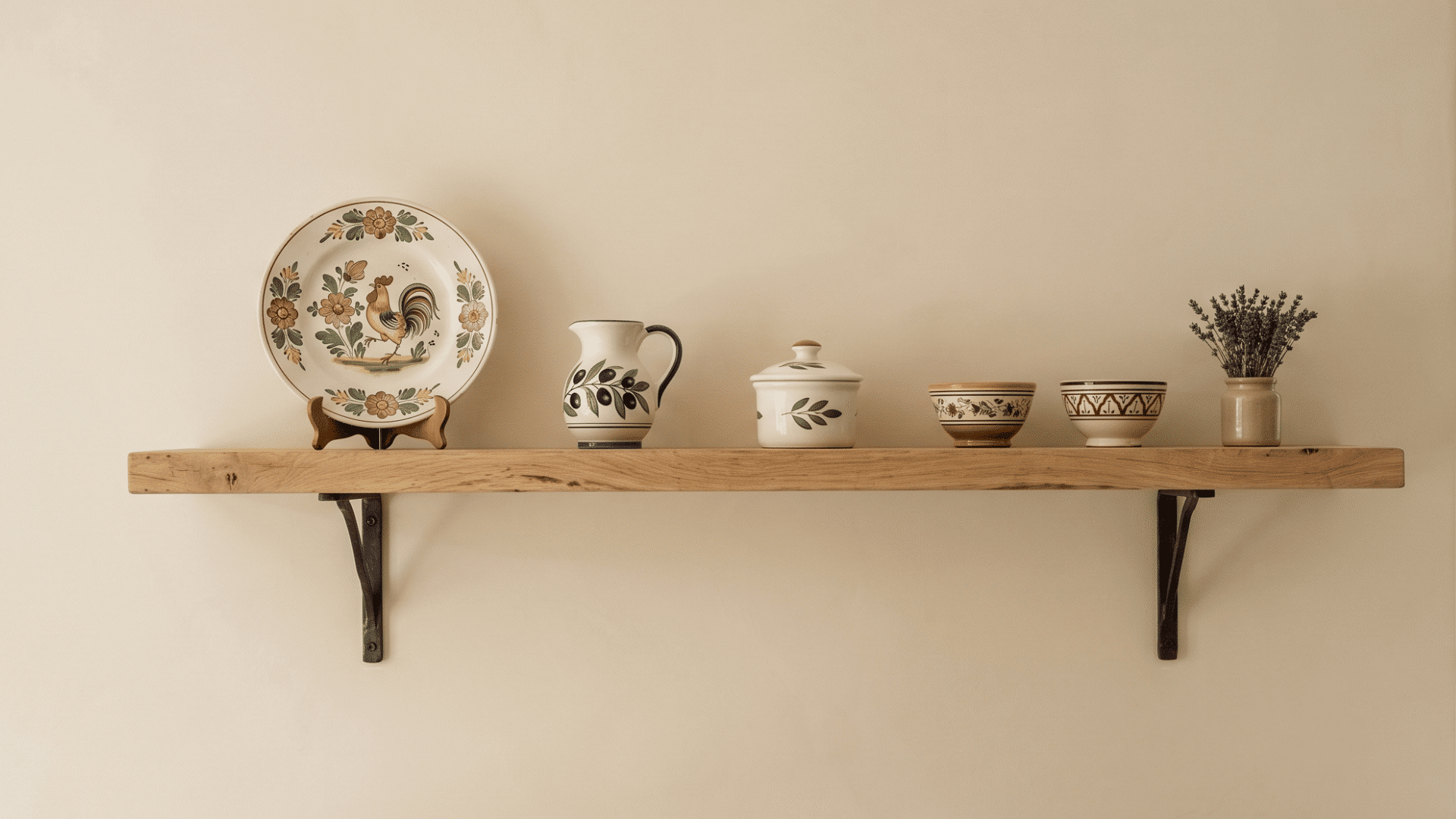
Hand-painted ceramics displayed on open shelves or in glass-fronted cabinets add color, craft, and a personal quality to French country interiors.
How to Style It:
- Group pieces in odd numbers of three or five, and vary the heights to create a natural and collected arrangement
- Choose ceramics in cream, blue, soft green, or terracotta tones that complement the room’s existing color palette
- Mix plates, jugs, bowls, and small vases together rather than keeping one type of piece on each shelf
- Place the largest piece at the back of the shelf and layer smaller items in front for visual depth
- Leave some shelf space empty between groupings so the display feels curated rather than crowded
6. Cozy Window Nook
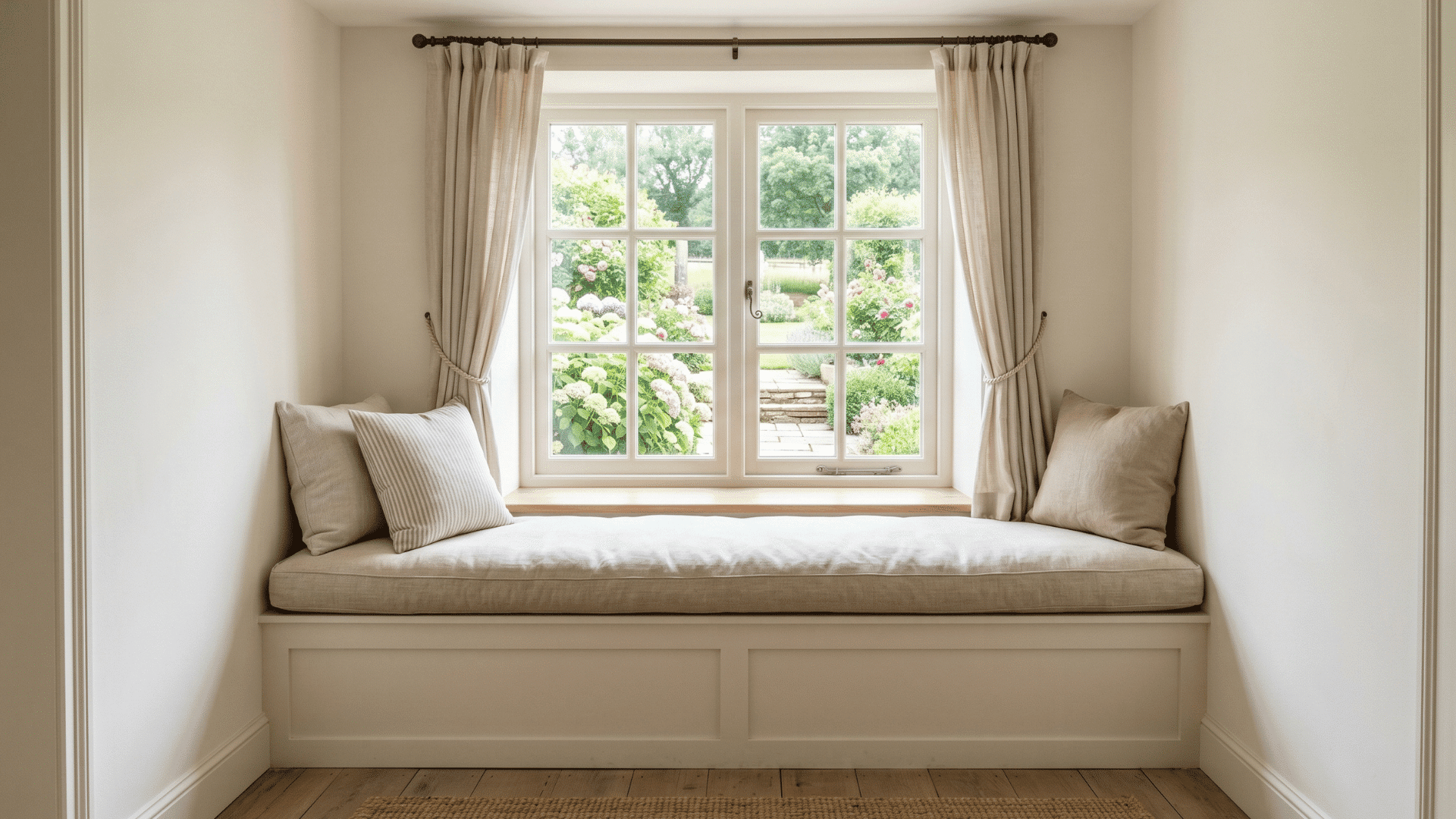
A built-in or freestanding window nook with a thick, cushioned seat changed an underused window area into a functional, cozy reading corner.
How to Style It:
- Use a bench with storage underneath so the nook serves two purposes without adding extra furniture to the room
- Cover the seat cushion in a floral or striped linen fabric that connects the nook to the rest of the room’s textile story
- Add two or three cushions in coordinating tones rather than a full row of matching pillows for a relaxed look
- Hang sheer linen curtains on either side of the window to frame the nook softly without blocking the light
- Place a small side table or tray nearby to hold a cup, book, or candle within easy reach of the seat
7. Wrought Iron Chandelier
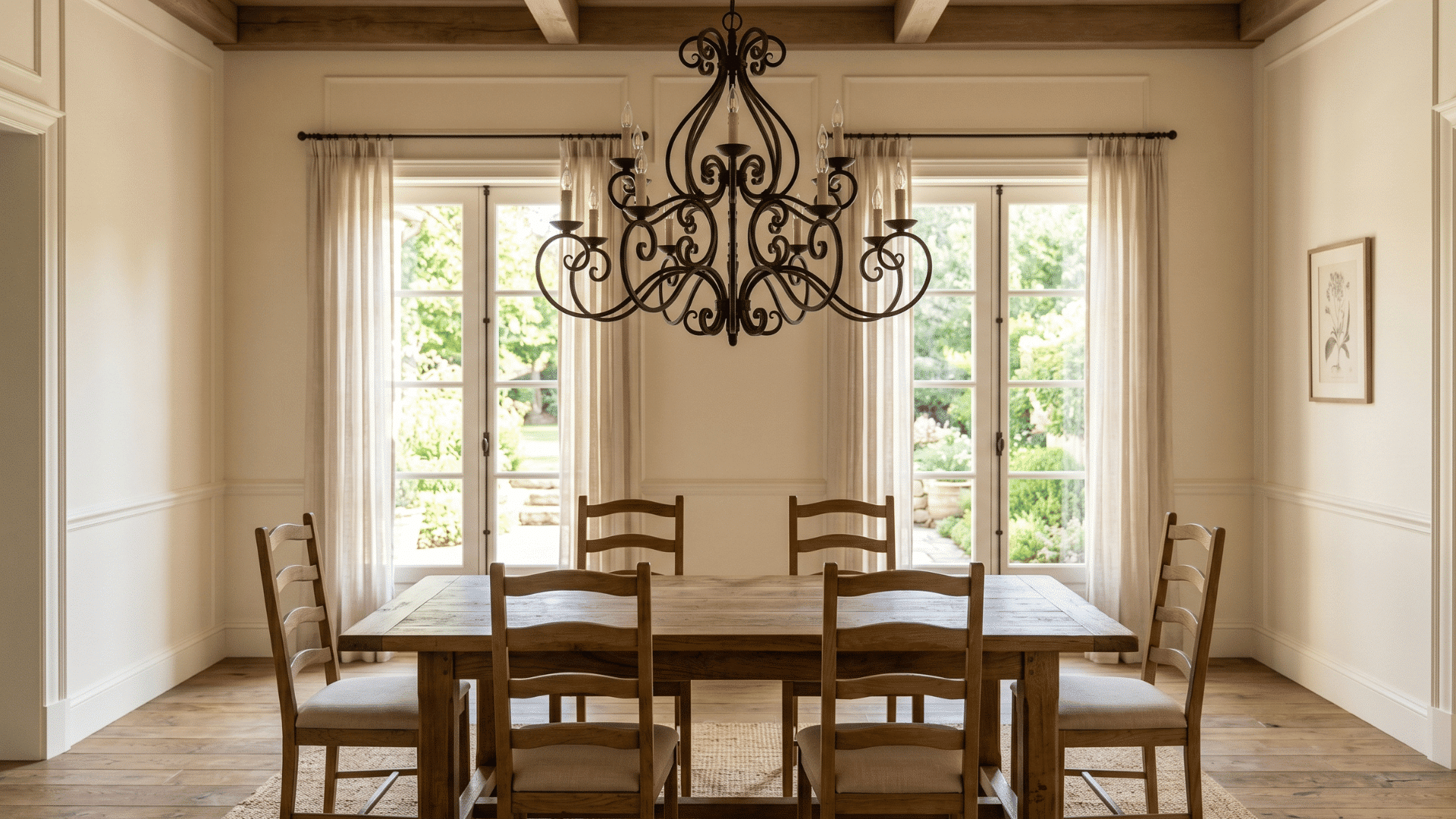
A wrought iron chandelier hung in a dining room, kitchen, or entryway adds old-world hardware detail that defines the space from above.
How to Style It:
- Choose a chandelier with candle-style bulb holders rather than enclosed shades for the most natural look
- Hang the chandelier lower than standard height over a dining table so it creates an intimate pool of light
- Let the iron finish remain dark and matte rather than painting or polishing it to preserve the aged quality
- Pair with wooden furniture and stone or tile flooring below to reinforce the rustic material combination
- Add real or battery-operated candle bulbs with a warm color temperature to keep the light soft and flattering
8. Canopy Bed with Linen Draping
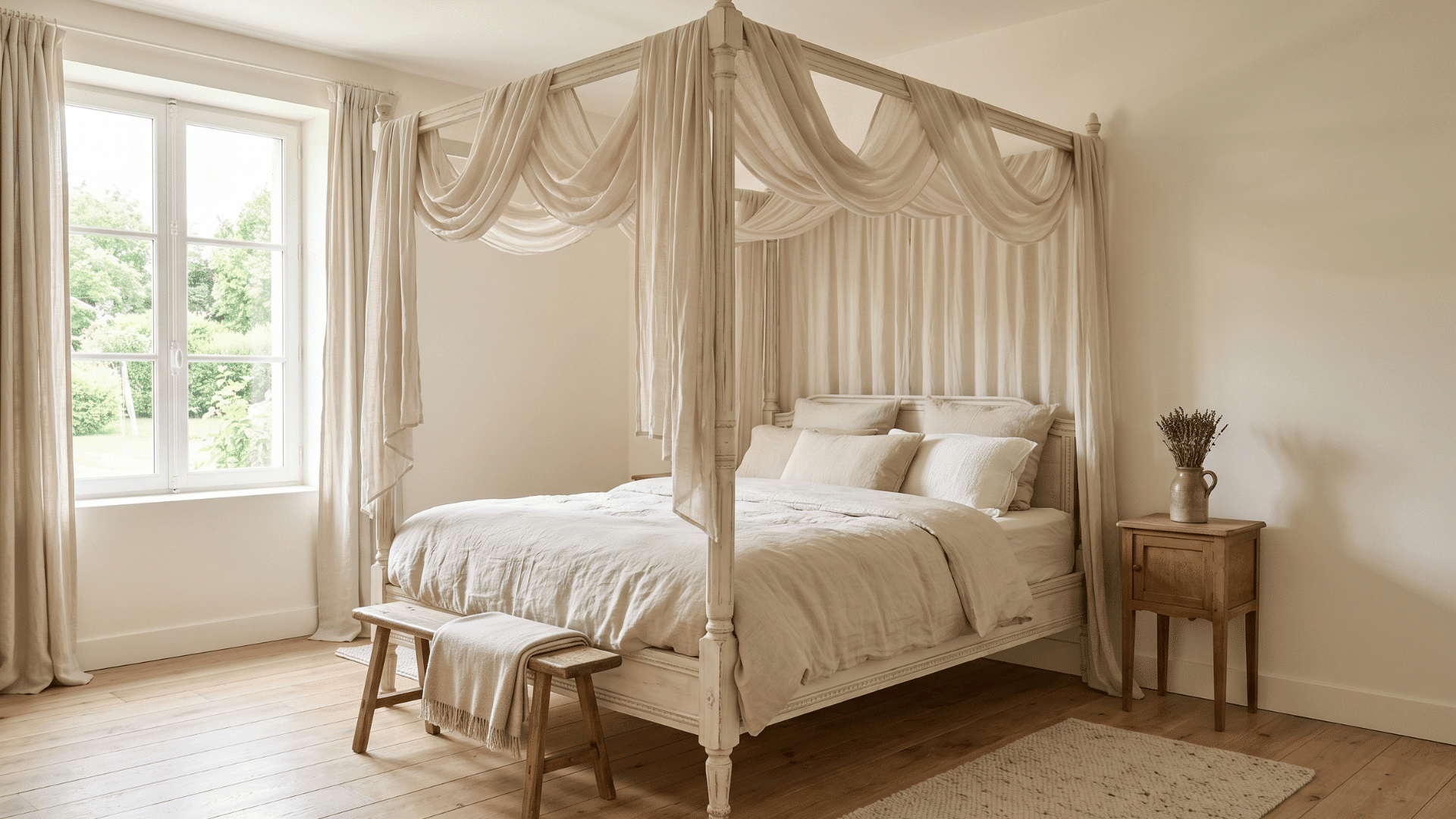
A four-poster or canopy bed dressed with sheer linen panels creates a soft, enclosed sleeping space that feels both personal and refined, a signature detail.
How to Style It:
- Use a single continuous piece of sheer linen draped over the top frame rather than four separate panels for a flowing look
- Let the fabric hang loosely without pinning or tying so the draping falls naturally around the bed
- Choose a bed frame in aged white, distressed grey, or natural wood to complement the softness of the linen
- Keep the bedding in a similar soft neutral tone so the overall look stays calm and cohesive from frame to floor
- Add a small bunch of dried lavender or a floral sprig to the canopy frame for a subtle decorative detail
9. Open Shelving Arrangement
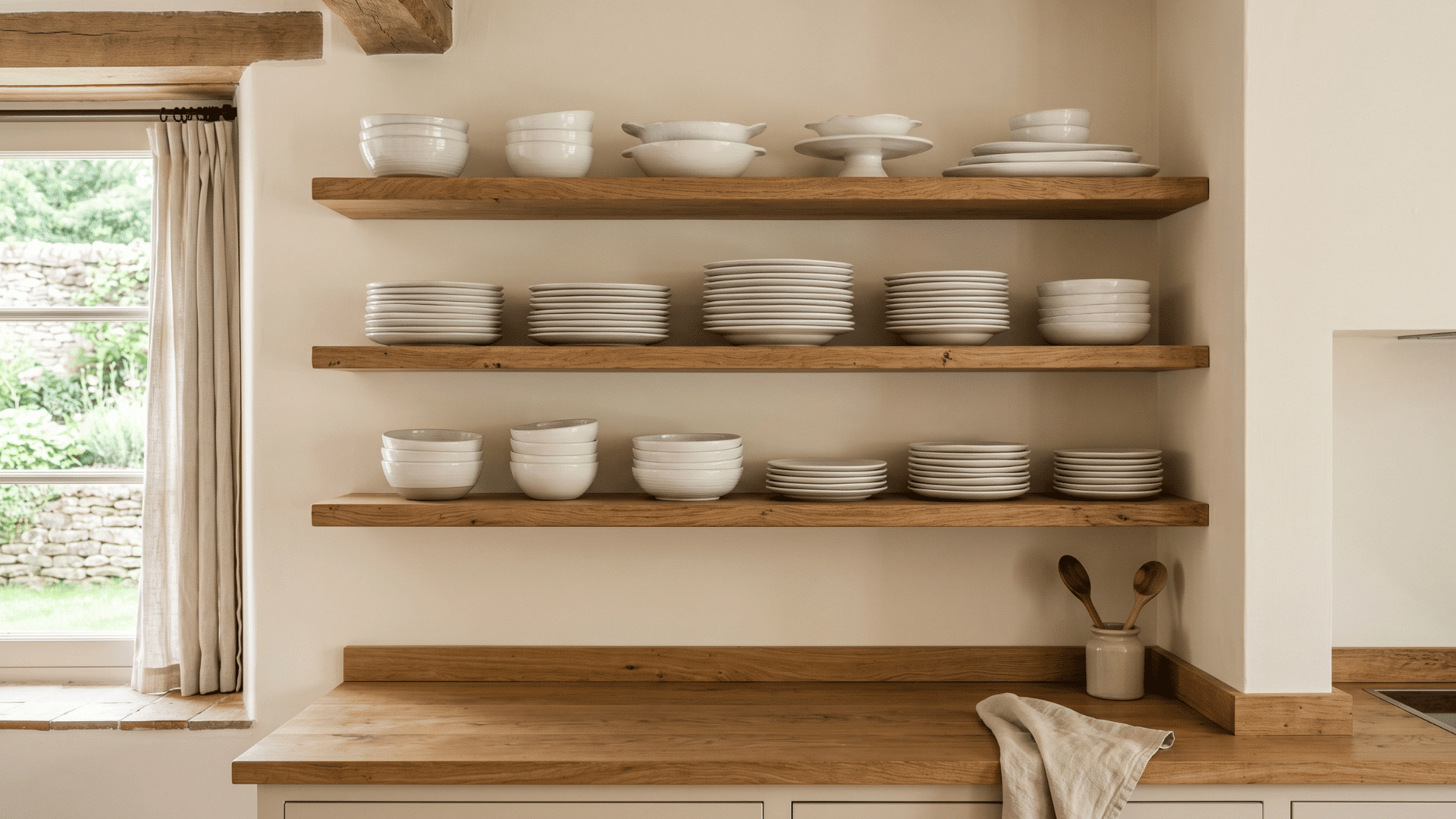
Open kitchen or dining room styled shelves make functional storage feel like a deliberate and personal display.
How to Style It:
- Stack plates vertically using plate stands rather than in flat piles to show the pattern or glaze on each piece
- Mix complete sets with individual vintage finds so the shelf looks collected rather than purchased as one unit
- Place larger serving pieces and pitchers at the back of the shelf and stack smaller items in front of them
- Add small potted herbs, a glass jar of dried beans, or a linen cloth folded neatly between groupings for texture
- Keep the shelves at eye level or just above so the dishware is easy to see and reach during daily use
10. Arched Doorways and Window Frames
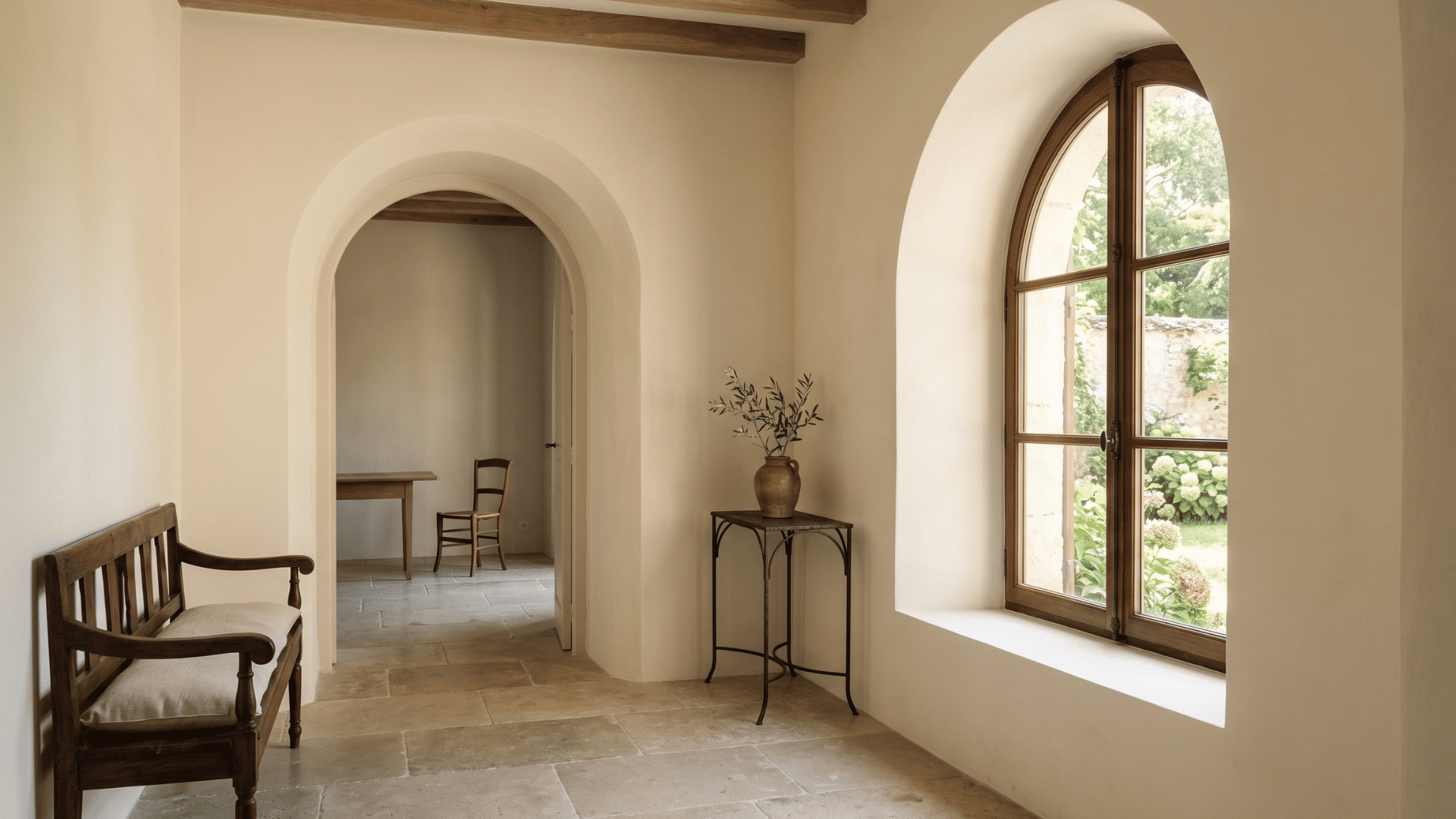
Arched openings replace the standard rectangular frame with a softer, more classical shape that immediately sets the tone of the space.
How to Style It:
- Use a consistent arch profile throughout the home so the architectural detail feels like part of the original structure
- Paint the arch frame in the same color as the surrounding wall for a subtle and integrated finish
- Avoid adding any trim or molding inside the arch opening so the curve itself remains the defining feature
- Frame the arch with a climbing vine, trailing plant, or simple wreath for a natural and organic decorative touch
- Pair arched doorways with stone floors and plaster walls nearby to reinforce the Provençal architectural reference
11. Farmhouse Trestle Dining Table
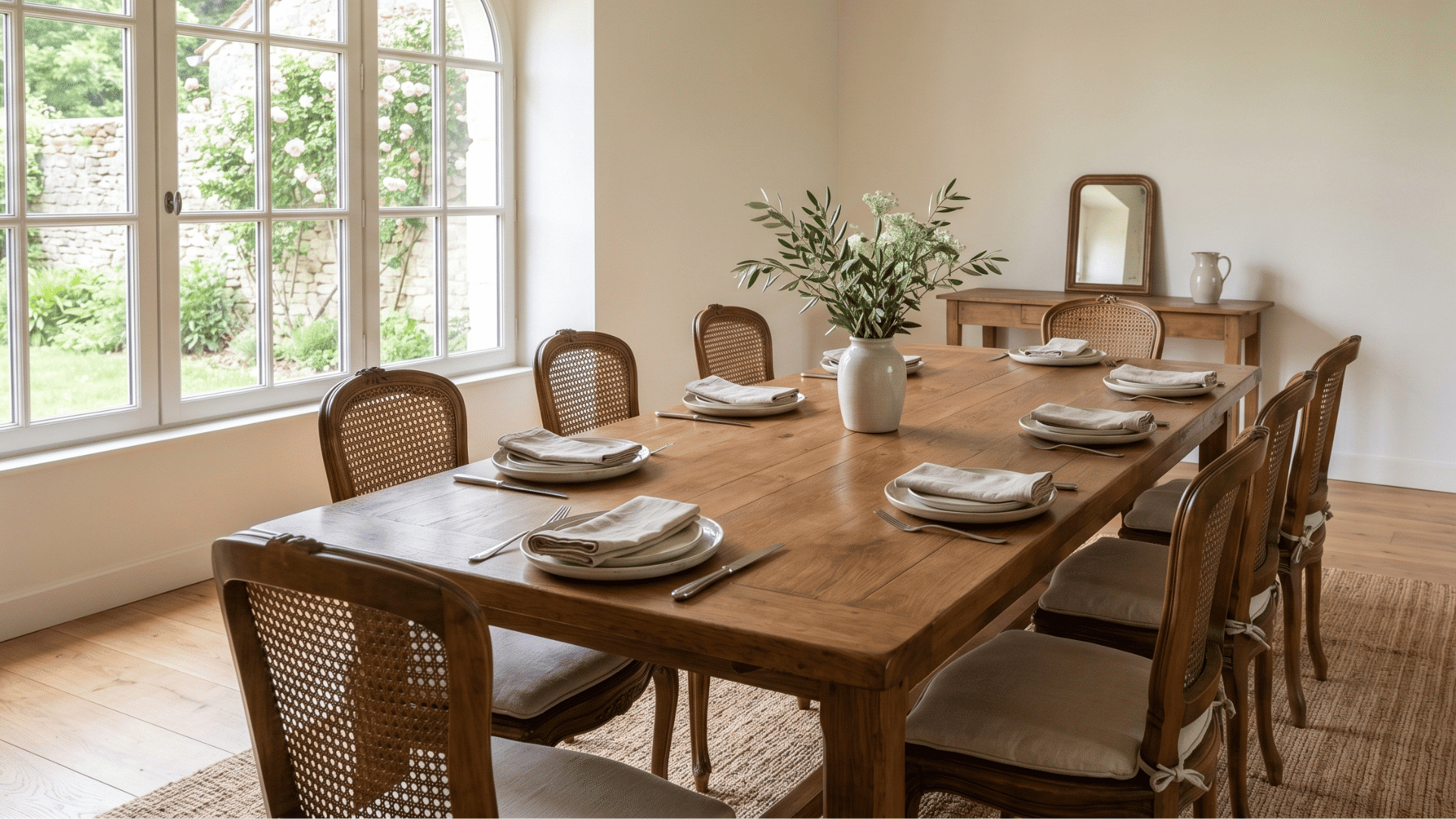
A large trestle table placed at the center of the dining room creates an unpretentious gathering space that fits the relaxed spirit of French country interior design.
How to Style It:
- Choose a trestle table in reclaimed or rough-sawn wood with visible grain and natural imperfections throughout
- Pair with mismatched chairs in similar wood tones or add a long wooden bench on one side for a casual feel
- Dress the table with a simple linen runner rather than a full tablecloth to let the wood surface show through
- Place a ceramic jug of fresh or dried flowers at the center of the table as the only decorative element on the surface
- Keep the surrounding space simple and uncluttered so the table remains the clear focal point of the dining room
12. Freestanding Clawfoot Tub
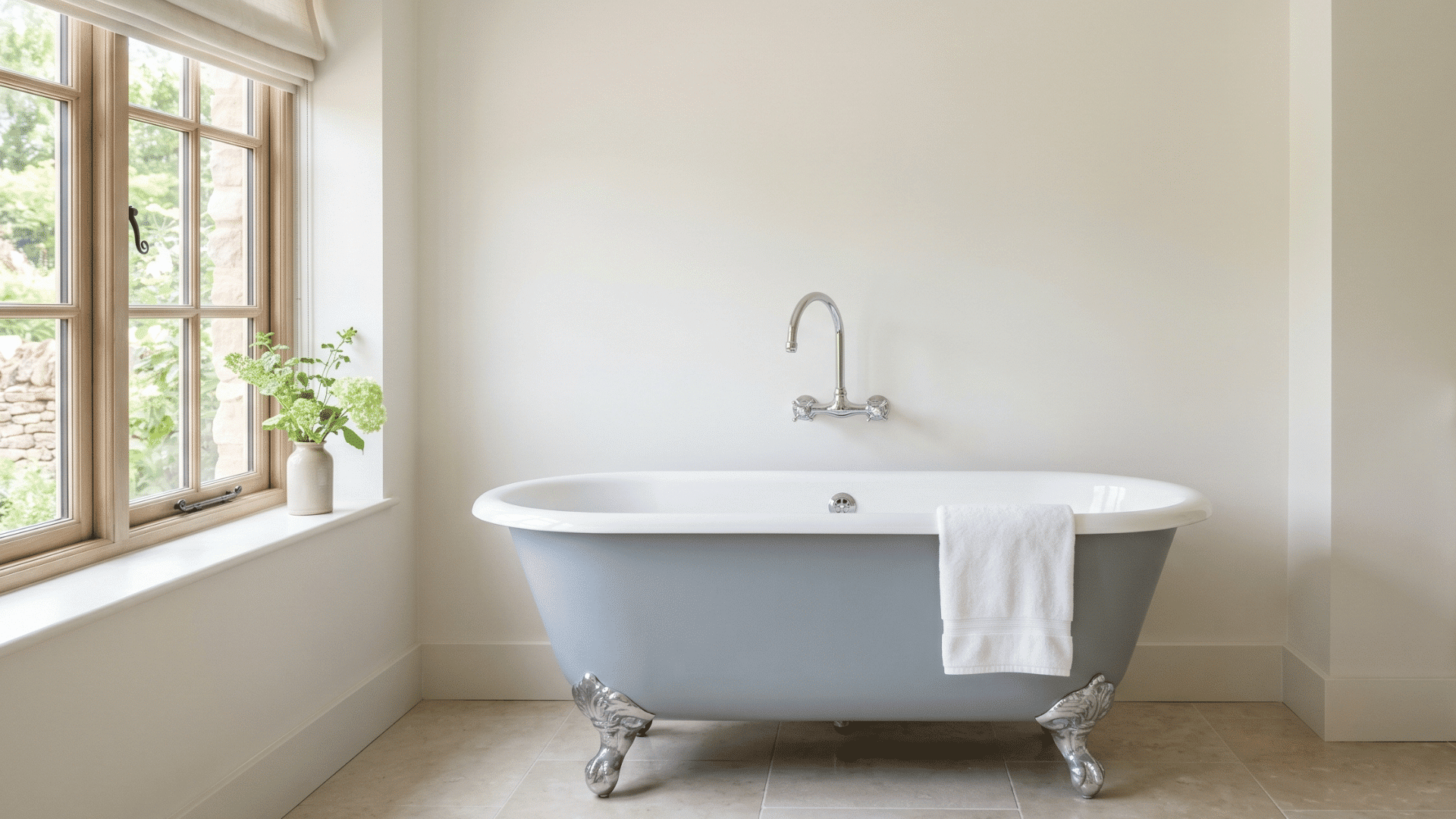
A freestanding clawfoot tub placed in the center or against a feature wall of the bathroom becomes the defining piece of the entire space.
How to Style It:
- Choose a tub in a matte white or cream finish rather than a high-gloss enamel for a softer, more aged appearance
- Position the tub so it faces the window or a stone feature wall to give it a natural visual backdrop
- Use a floor-mounted tub filler in a brass or aged bronze finish to complement the period quality of the tub
- Keep the surrounding floor and wall tiles simple and neutral so the tub reads as the clear centerpiece of the room
- Place a small wooden stool or tray beside the tub to hold candles, a cloth, or a small arrangement of dried flowers
13. Fresh Lavender and Herbal Arrangements
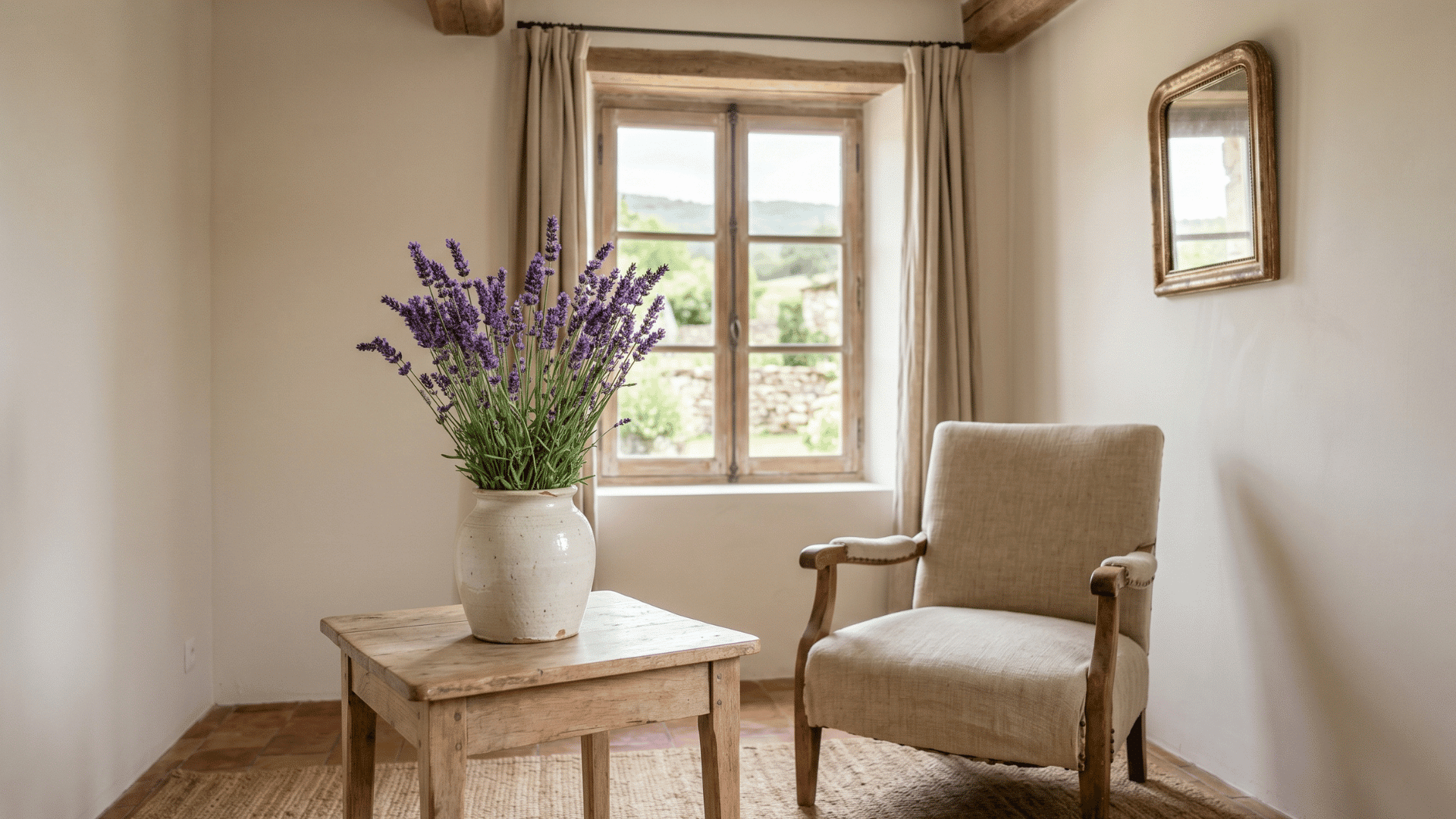
Bundles of fresh or dried lavender, rosemary, and herbs placed throughout the home bring color, fragrance, and a distinctly Provençal character to any room.
How to Style It:
- Tie lavender bundles with simple twine and hang them upside down from a hook or beam to dry naturally in place
- Place small posies of fresh herbs in ceramic jugs or glass bottles rather than formal vases for a casual arrangement
- Group different herb varieties together in a single arrangement to create a layered and fragrant display
- Position herb arrangements near windows or in kitchens where natural light and airflow keep them looking fresh longer
- Replace arrangements regularly so the colors stay vibrant and the fragrance remains present throughout the space
14. Terracotta Floor Tiles
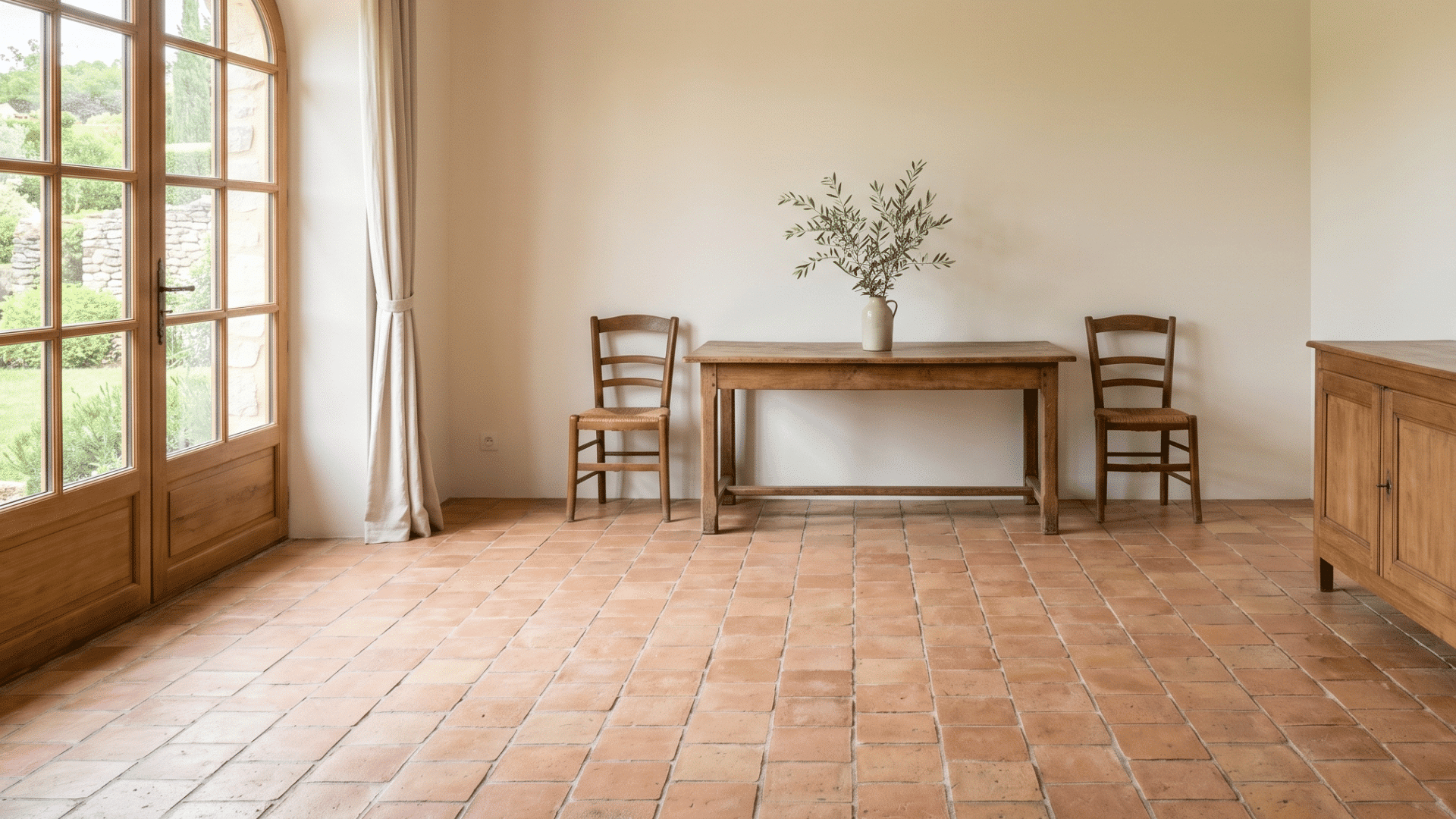
Terracotta floor tiles bring an earthy, sun-baked warmth to any room, instantly rooting the space in Mediterranean and French countryside character.
How to Style It:
- Choose tiles with slight variation in tone and surface texture rather than perfectly uniform machine-cut versions
- Lay the tiles in a traditional square or diagonal grid pattern with wide grout lines for an natural aged finish
- Seal the terracotta with a natural penetrating sealer rather than a surface coat to protect without changing the matte finish
- Pair with whitewashed or plaster walls above, so the warm floor color becomes the grounding element of the room
- Add a woven or kilim rug on top of the terracotta in high-use areas to layer texture without covering the tile entirely
15. Hand-Painted Tile Backsplash
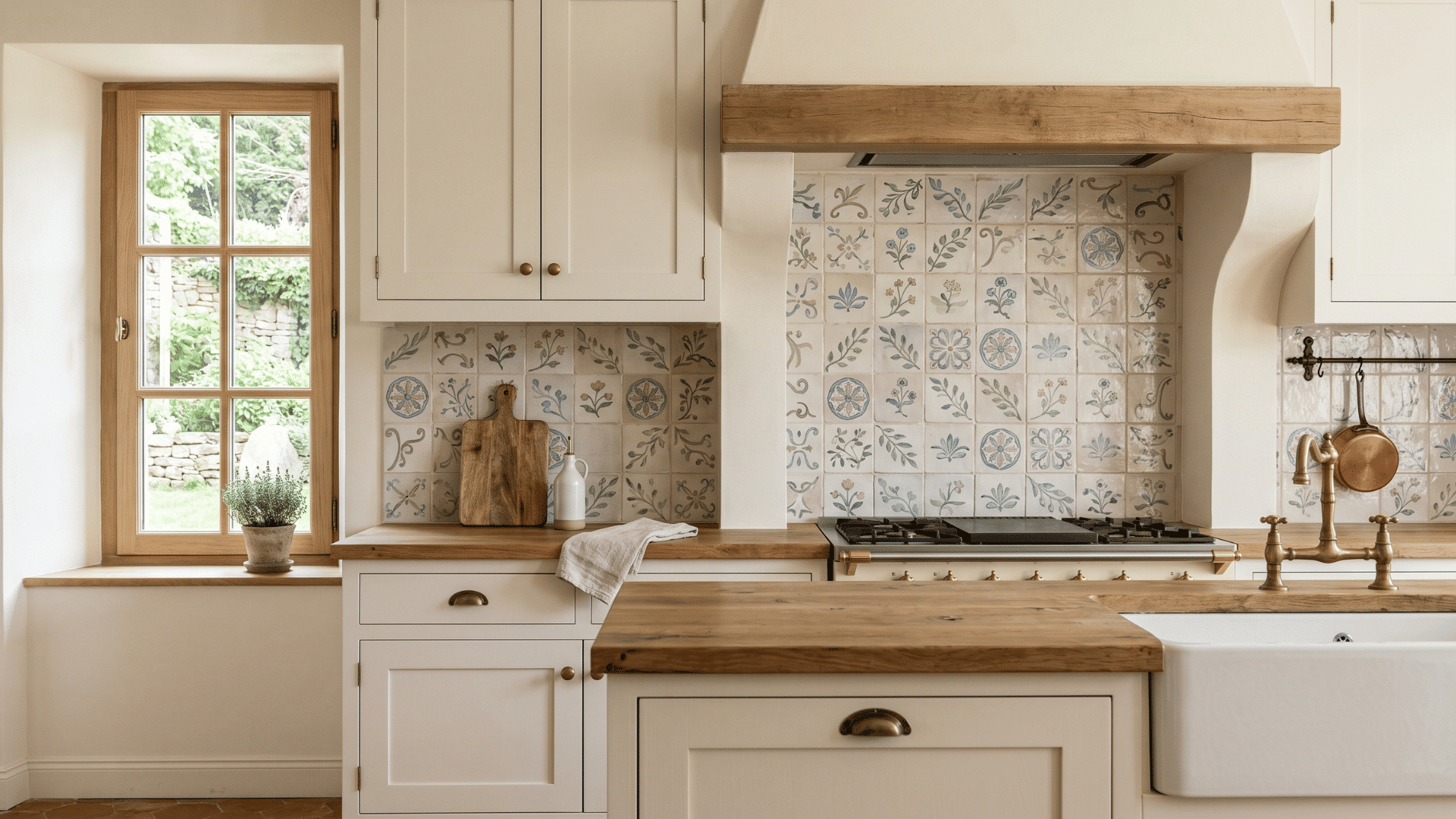
A hand-painted ceramic tile backsplash behind the stove or sink adds a personal and artisan quality to the kitchen that factory tiles cannot replicate.
How to Style It:
- Choose tiles painted with botanical motifs, simple geometric patterns, or soft floral designs in blue and white or earth tones
- Install the tiles in a straight grid rather than a running bond so the painted pattern on each tile is fully visible
- Keep the surrounding cabinetry and countertop in a plain neutral so the painted tile surface reads as the decorative focus
- Use wide grout lines in a natural or aged tone to reinforce the handmade and artisan quality of the tile installation
- Pair with open shelving above, displaying ceramics in similar colors to connect the backsplash to the rest of the kitchen
16. Decorative Wall Molding
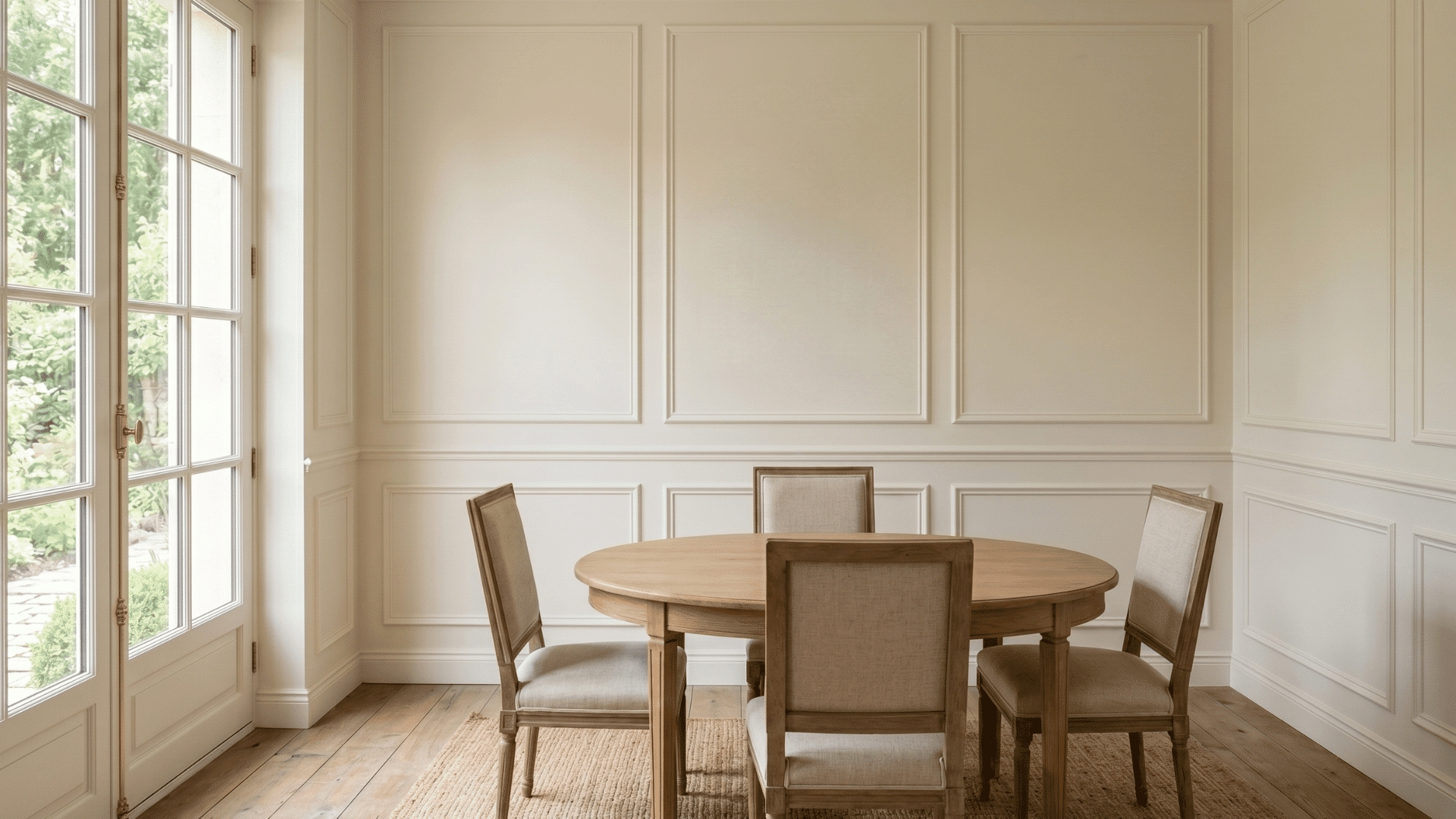
Wall molding applied in panel or picture-frame formations adds classical structure to flat walls and gives rooms a more considered, layered character.
How to Style It:
- Apply molding in rectangular panel formations across the lower two-thirds of the wall for the most traditional result
- Paint the molding in the same color as the wall for a subtle tonal effect or in a slightly deeper shade for more definition
- Lightly sand the painted molding edges after drying to create a softly aged finish along the raised profiles
- Fill the panel space inside each molding frame with a complementary wallpaper, paint tone, or textured plaster finish
- Keep ceiling and floor finishes simple around the molded walls so the wall detail carries the decorative weight of the room
17. Weathered Console Table Entryway
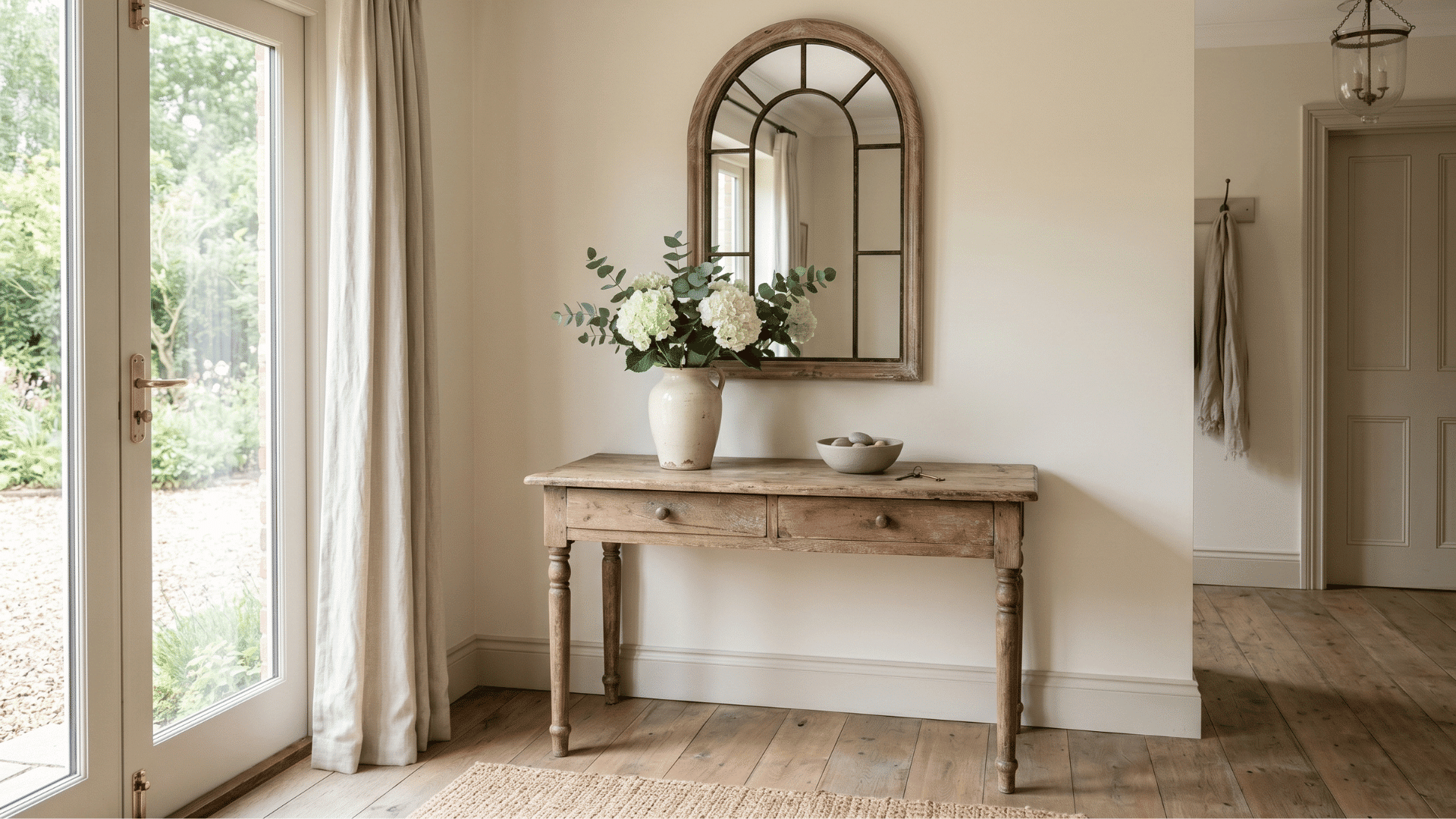
A weathered console table placed in the entryway sets the tone for the rest of the home, the moment someone steps through the door.
How to Style It:
- Choose a console with turned or carved legs in a distressed paint finish or natural, worn wood tone
- Place a ceramic lamp, small mirror, or framed botanical print above the console on the wall behind it
- Style the table surface with a small ceramic dish for keys, a jug of fresh stems, and one or two books
- Add a woven basket or wooden crate beneath the console for shoe storage without disrupting the surface display
- Layer a small vintage rug in front of the console to define the entryway space and add warmth underfoot
18. Cane and Rattan Furniture
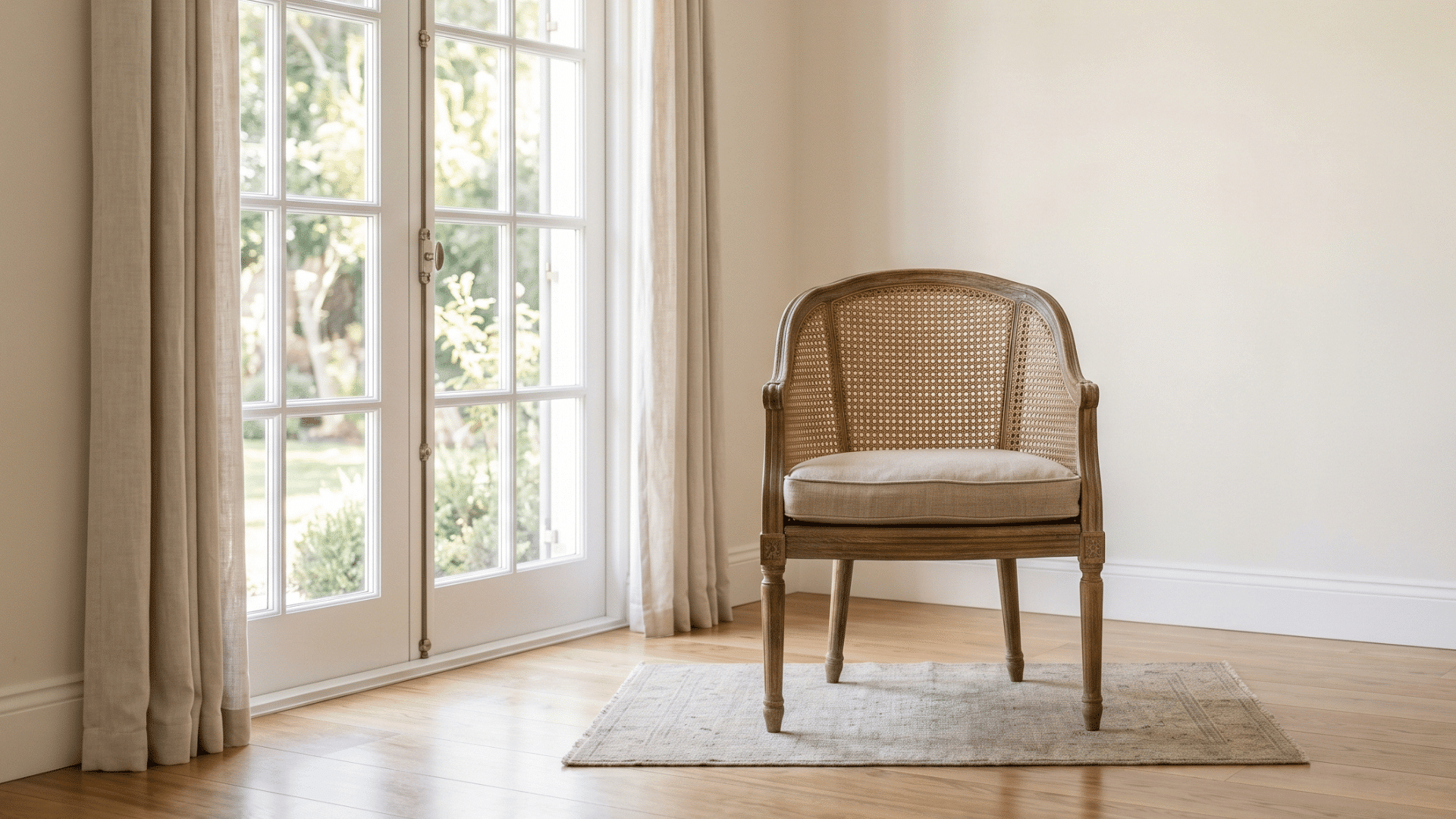
Cane and rattan pieces bring a natural, woven texture into French country interior design that contrasts well against wood, linen, and plaster surfaces.
How to Style It:
- Use a cane-back dining chair or rattan accent chair as a single textural contrast piece rather than furnishing an entire room in it
- Choose natural or lightly stained rattan finishes rather than painted versions to keep the material feeling organic
- Pair cane furniture with linen seat cushions in a soft floral or stripe pattern to connect it to the rest of the textile palette
- Place rattan side tables, baskets, or trays alongside wooden furniture to layer different natural materials within one space
- Keep cane and rattan pieces away from direct sunlight and moisture to preserve the natural finish over time
19. Dried Floral Wreaths and Botanical Prints
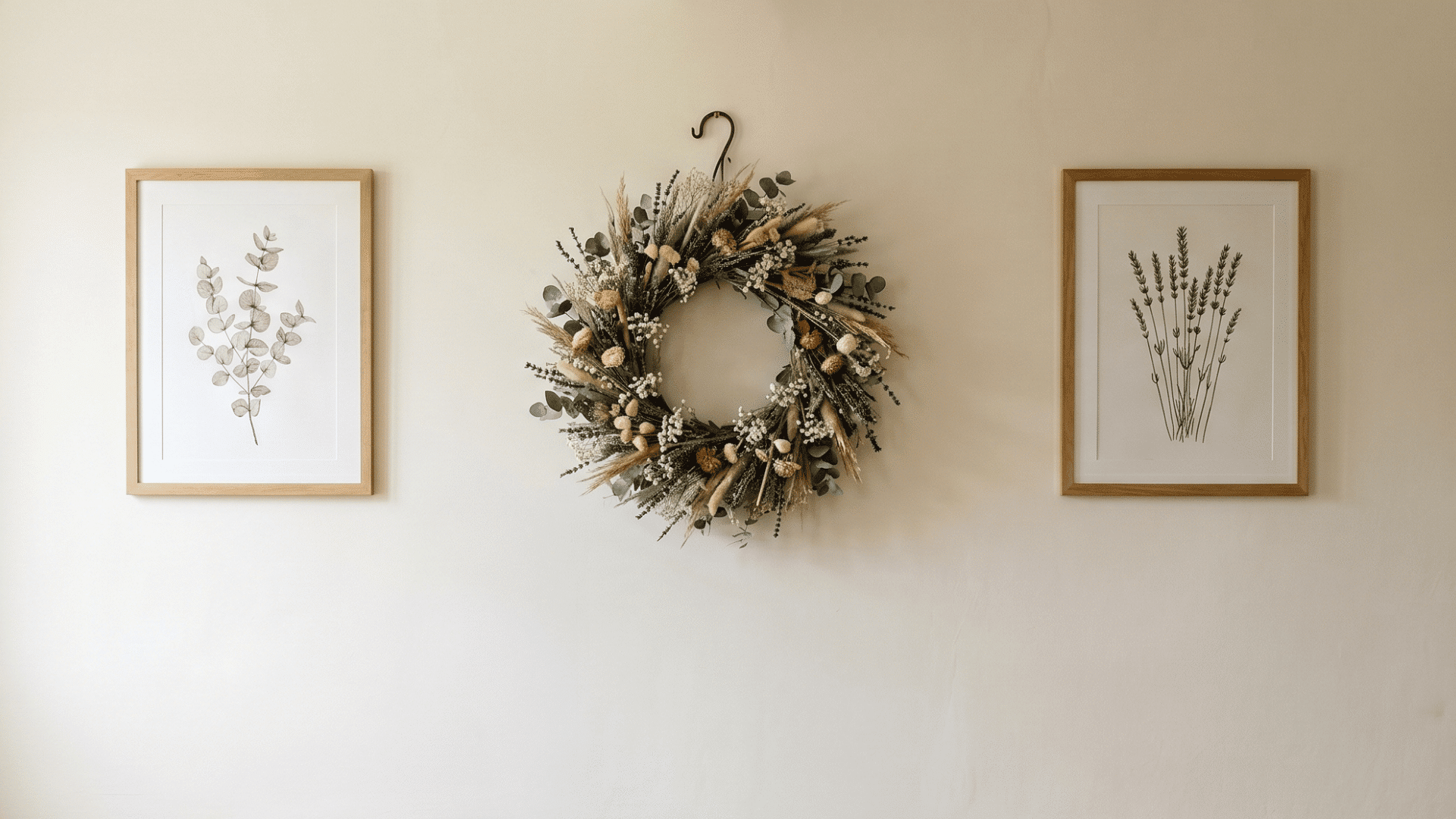
Dried floral wreaths and framed botanical prints add a garden-inspired softness to walls that painted surfaces and mirrors alone cannot provide.
How to Style It:
- Hang a single large dried wreath on a plain wall as a standalone decorative piece rather than grouping it with other items
- Choose botanical prints with simple line illustrations or watercolor-style florals in soft, muted tones for a period-appropriate look
- Frame botanical prints in thin wooden or gilt frames and arrange them in a loose grid or staggered cluster on one wall
- Mix dried wreaths and framed prints on the same wall at different heights to create a layered and garden-like display
- Use dried flowers in natural tones rather than artificially dyed versions, so the colors stay consistent with the room’s soft palette
20. Cream and Sage Color Palette
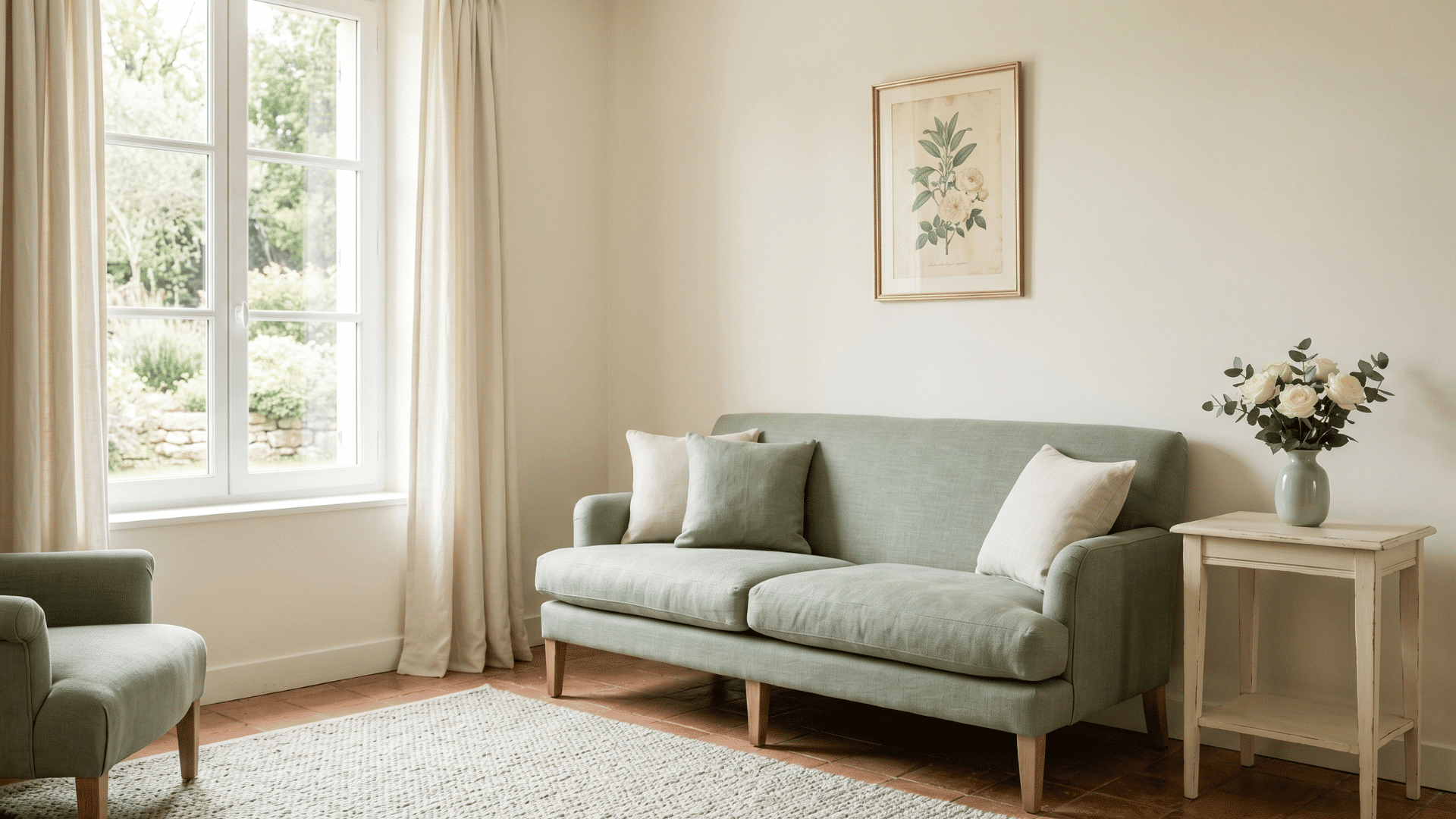
A palette built around cream and sage green creates a restful, cohesive color story that works throughout every room of a French country home.
How to Style It:
- Use cream as the dominant wall color throughout the home and introduce sage as an accent through textiles and furniture
- Paint cabinetry, shutters, or a single accent wall in sage green to anchor the color without overwhelming the space
- Layer cream linen cushions, sage green throws, and natural rattan accessories together for a tonal and textured result
- Choose artwork, ceramics, and soft furnishings within the same cream and sage range to keep the palette consistent
- Avoid introducing strong contrasting colors alongside cream and sage so the soft, cohesive quality of the palette stays intact
21. Soft Floral Wallpaper Accent Wall
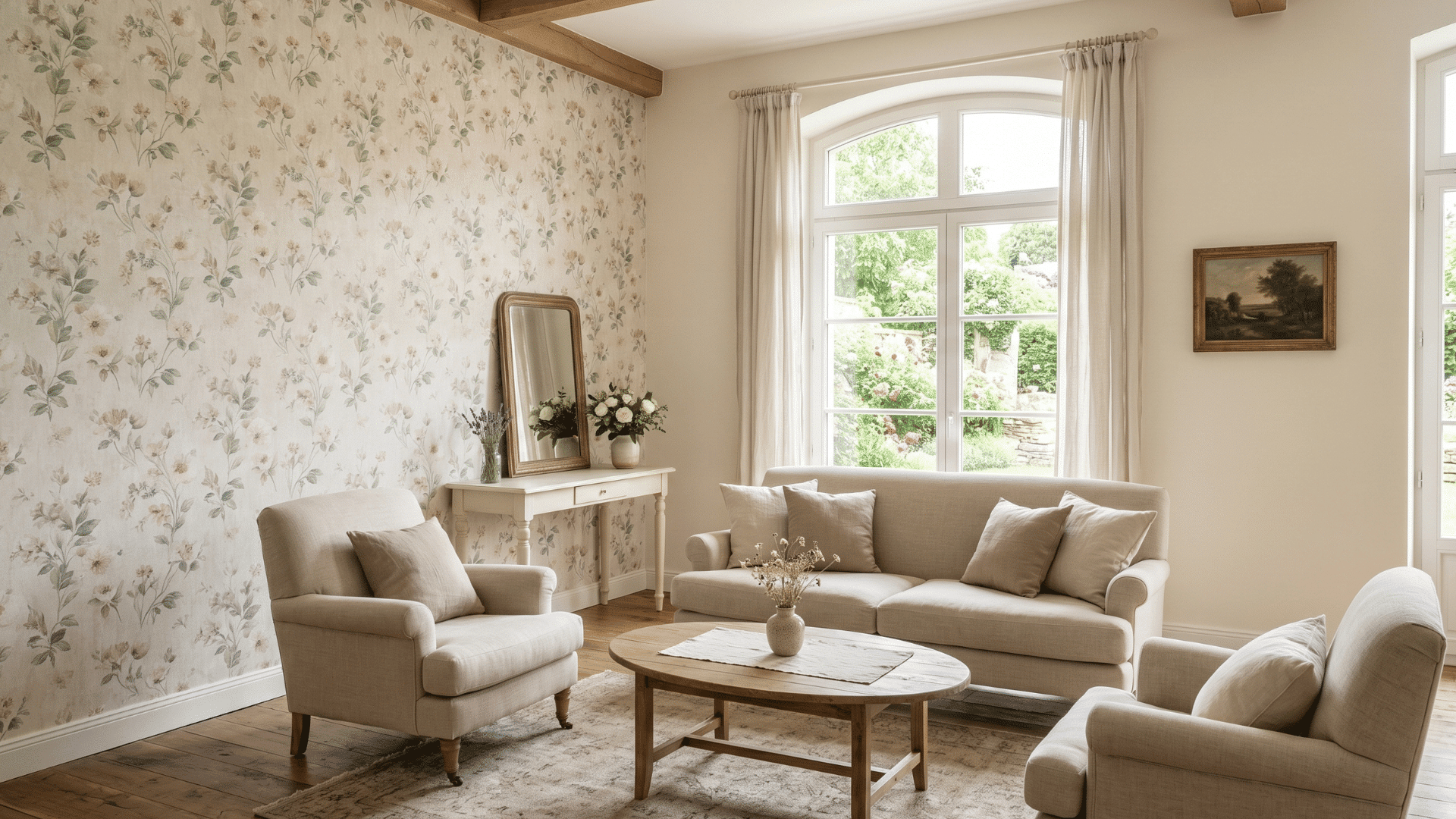
A soft floral wallpaper applied to one wall adds a gentle pattern to the room while keeping the overall space calm and balanced.
How to Style It:
- Choose a wallpaper with a small-scale floral pattern in muted tones like dusty rose, sage, or soft blue rather than bold or oversized prints
- Apply the wallpaper to a single feature wall only, so the pattern adds interest without overwhelming the rest of the room
- Keep all remaining walls in a plain, smooth cream finish so the wallpapered wall reads as the clear decorative focus
- Pair with neutral linen furniture and simple wooden pieces so the wallpaper carries the decorative weight of the space
- Avoid adding too many other patterned elements nearby so the floral wall remains the single standout detail in the room
22. Layered Area Rugs
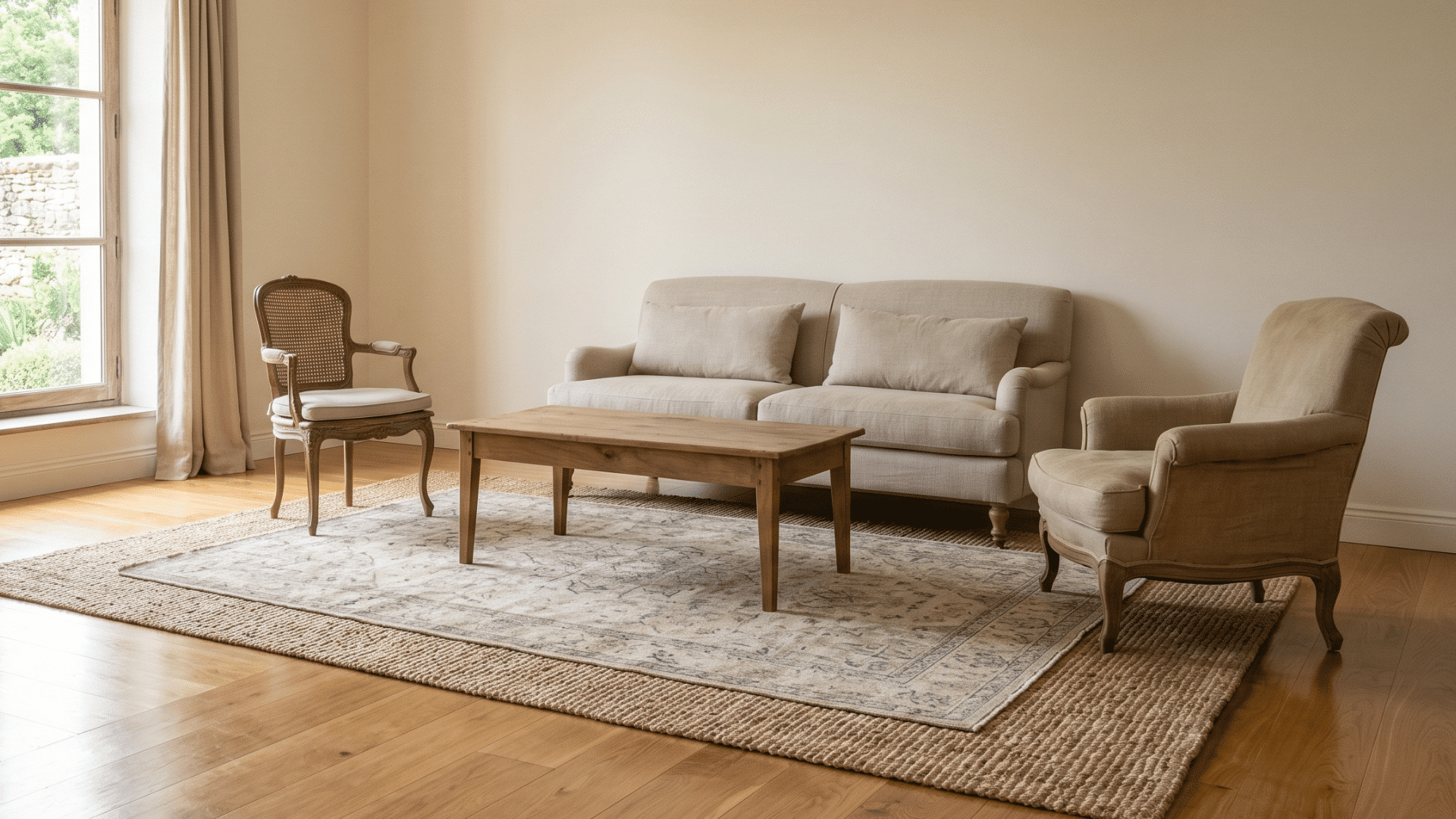
Layering two or more rugs of different sizes and textures creates a warm, grounded base that ties a seating or sleeping area together.
How to Style It:
- Start with a large natural fiber rug, such as jute or sisal, as the base layer across the main floor area
- Layer a smaller patterned or floral rug on top at a slight angle to add color and softness over the base texture
- Make sure both rugs are rated for indoor use and that the top rug has a non-slip backing to prevent movement
- Choose rug colors that pick up tones already present in the room’s curtains, cushions, or upholstery for cohesion
- Avoid layering more than two rugs in the same space so the floor remains grounded rather than visually cluttered
23. Copper Cookware Display
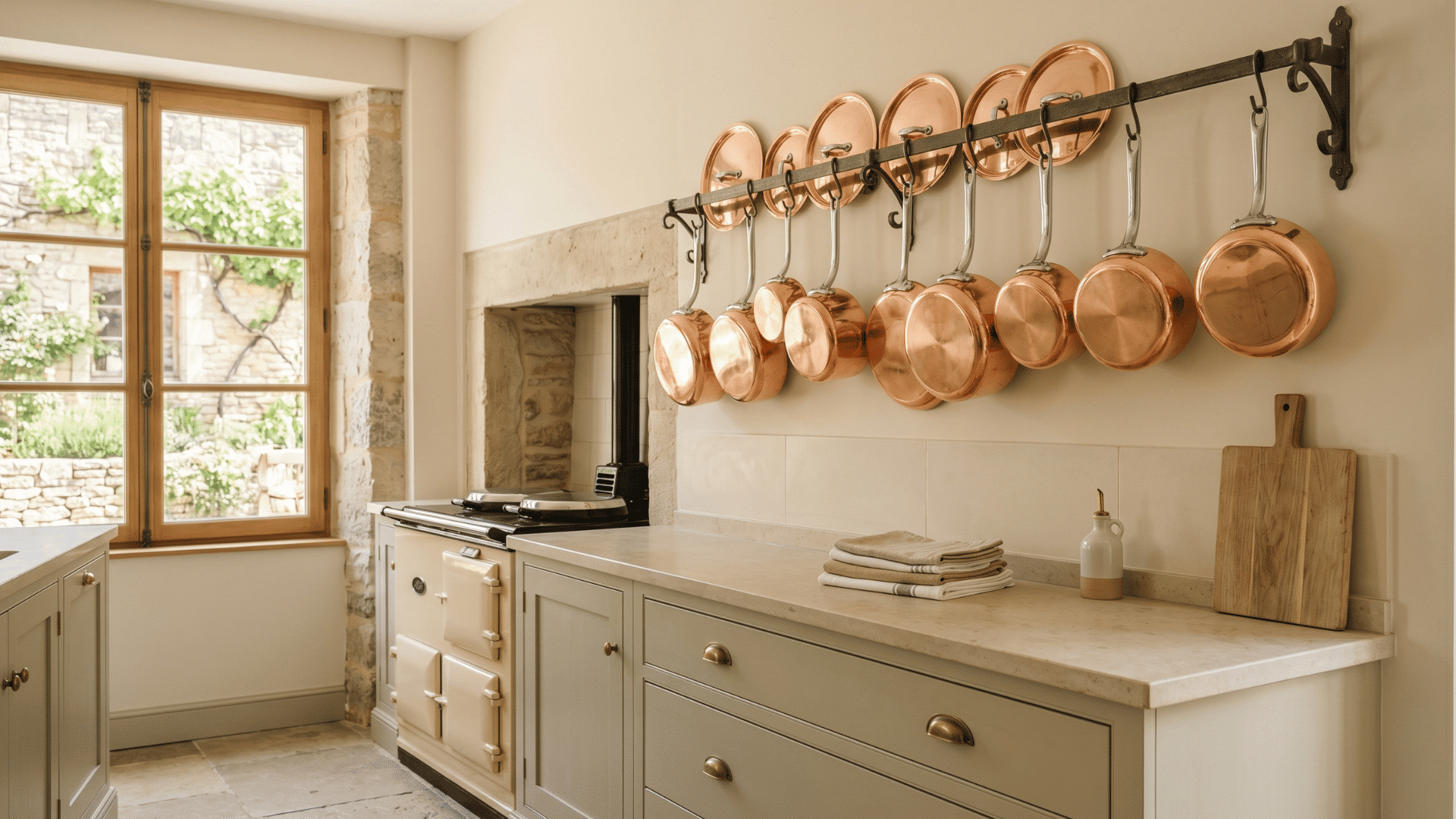
Copper pots and pans displayed on a hanging rack or an open shelf bring a warm metallic glow to the kitchen, serving as both working equipment and visual interest.
How to Style It:
- Hang copper pots from a ceiling-mounted pot rack positioned above the kitchen island or stove for maximum visual impact
- Keep the copper polished and clean, so the warm reflective surface catches light and contributes to the room’s warm tone
- Mix copper cookware with ceramic serving pieces and wooden cutting boards on open shelves for a layered kitchen display
- Choose copper pieces with iron handles rather than plastic or stainless for a more natural and period-appropriate look
- Use the copper display as the primary metallic accent in the kitchen and keep other hardware in brass or aged bronze nearby
Common Mistakes to Avoid in Styling
Getting the style right comes down to knowing what works against it just as much as knowing what works for it.
| Mistake | What Happens | Why It Matters |
|---|---|---|
| Overloading with Decor | Too many objects on every surface removes the relaxed feel | Makes the space look staged instead of natural |
| Using Too Many New Pieces | Brand new furniture removes the aged, worn look | Takes away warmth and character |
| Choosing the Wrong Colors | Bright or cool tones clash with the style | Soft creams and warm pastels suit the look better |
| Ignoring Texture | Lack of materials like linen, wood, and stone | Leaves the space flat and unfinished |
| Mixing Conflicting Styles | Industrial or minimalist elements clash | Breaks the warm and cohesive look |
| Skipping Architectural Detail | Missing beams, molding, or arches | Removes depth and true design character |
Wrapping Up
A home styled in the French country style does not need to be perfect to feel right.
The character of this style comes from the layering of real materials, worn finishes, and personal objects collected over time.
Starting with one or two elements from this blog is enough to shift the feeling of a room in a noticeable direction.
Soft colors, honest textures, and a few well-chosen vintage pieces do more for a space than a full renovation ever could.
French country interior design rewards patience and a willingness to let a room grow gradually rather than all at once. Share it with someone planning a home refresh.

With a Master in Architectural Studies from University of Pennysylvania, Marwa Haydar has pioneered living spaces since 2005. Her expertise, initially honed in a prestigious architectural firm, is evident in her approach to creating environments. Marwa became part of our team in 2019 and has since been a driving force in our home improvement section, known for her practical yet stylish solutions. She’s been spearheading our design workshops since then, infusing her passion for teaching into her work. In her leisure time, Marwa enjoys exploring historic architecture and is an enthusiastic pottery hobbyist, further enriching her understanding of form and texture.