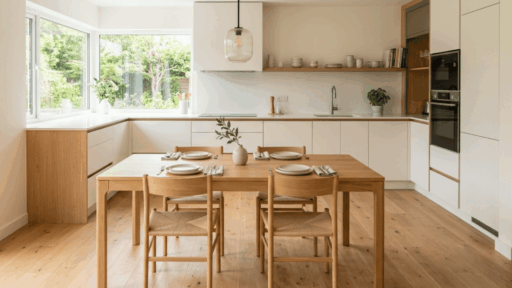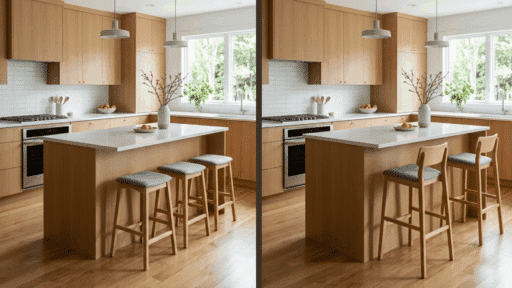
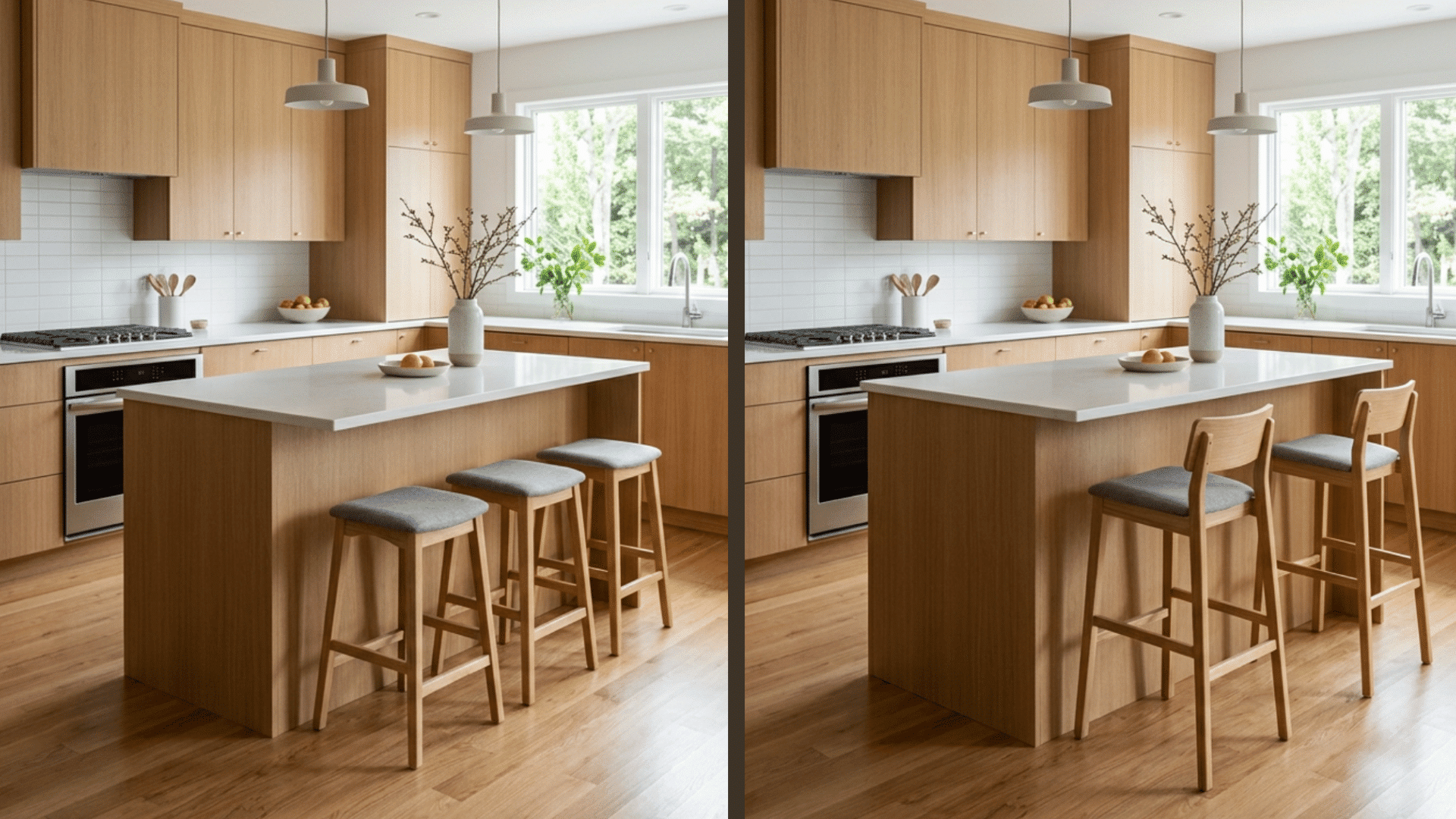

Choosing the right seating height can change how your kitchen feels and works on a daily basis. When comparing counter vs. bar height, many people often feel unsure which one actually fits their space.
This choice becomes even more important when planning a kitchen island, breakfast bar, or casual dining area. Both options can look good, but they serve different purposes and offer different levels of comfort.
The right pick depends on how the space is used every day.
This guide on counter vs bar height breaks down the key differences, along with pros and cons, to help you choose what works best for your kitchen.
What is Counter Height?
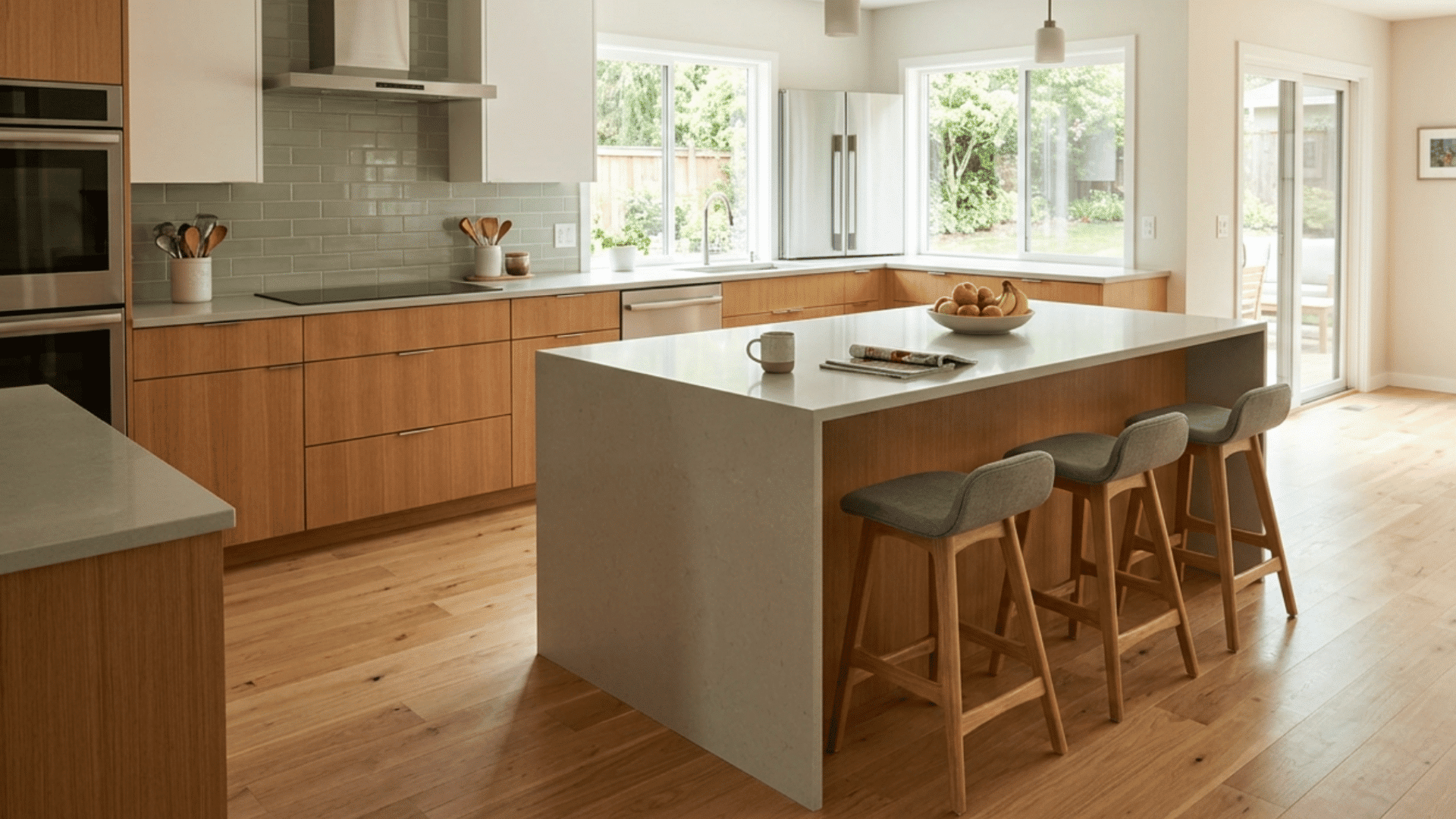
Counter height refers to surfaces that stand 34 to 36 inches tall, the same height as most standard kitchen countertops and islands.
This makes it the most common seating height in homes, and compatible stools typically have a seat height of 24 to 26 inches.
It is considered the more traditional and versatile option because it works naturally in everyday kitchen layouts, feels comfortable for extended meals, and suits a wide range of body types, including children and older adults.
Pros and Cons of Counter Height Seating
Counter height seating is a popular choice for modern kitchens because it balances comfort and everyday use. Here’s a quick look at its pros and cons below:
| Feature | Pros | Cons |
|---|---|---|
| Comfort | Easy to sit and get up from | Less visual separation from the kitchen |
| Usage | Comfortable for long meals or work | Can feel too casual for some designs |
| Accessibility | Suitable for kids and older adults | Doesn’t hide kitchen clutter |
| Design Fit | Matches standard kitchen counters | May lack a “raised” dining feel |
| Options | Wide variety of stool options | Not ideal for a bar-style setup |
What is Bar Height?
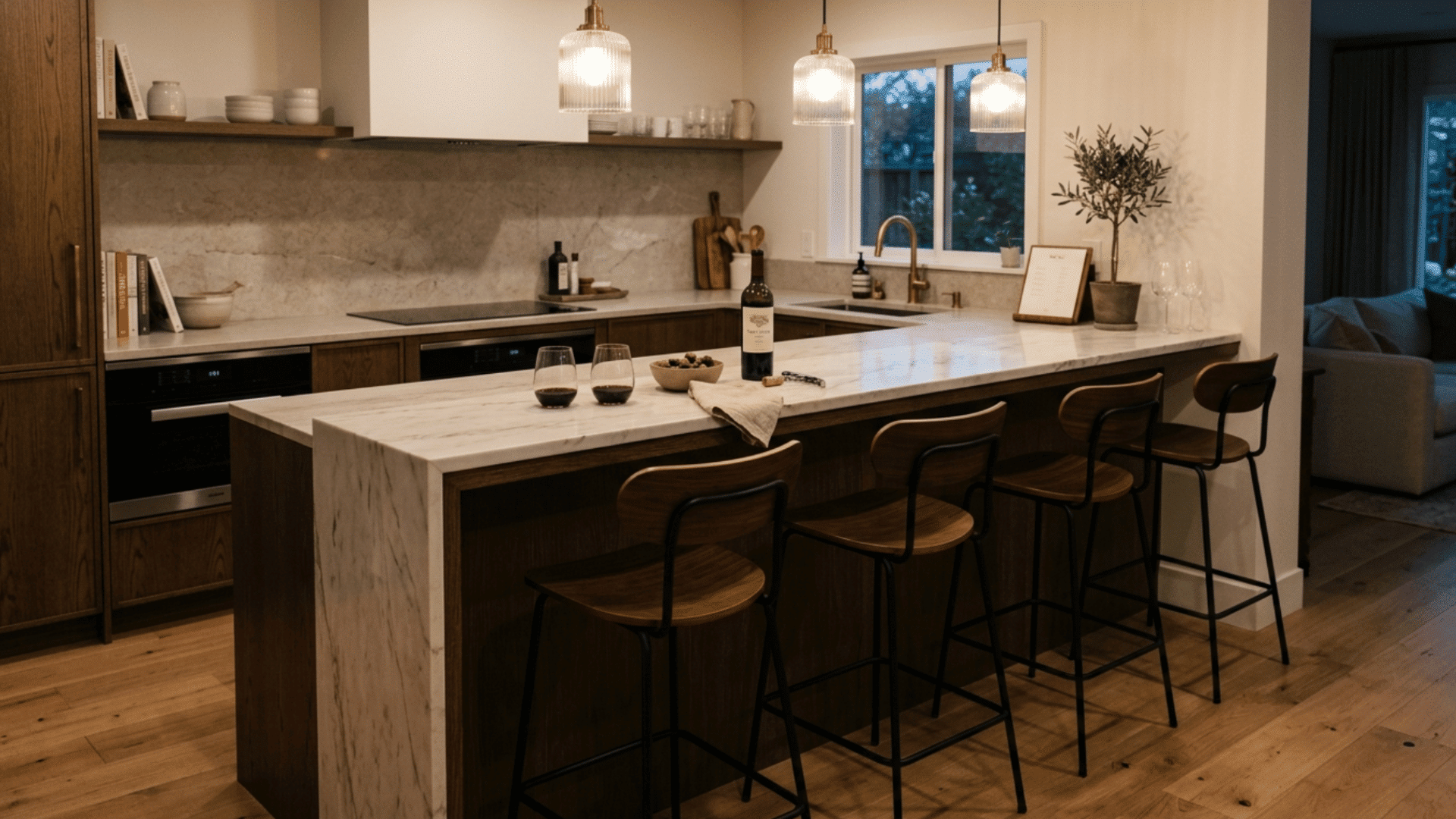
Bar height surfaces measure 40 to 42 inches tall, roughly 6 inches higher than counter height, and trace their origins to commercial bar and restaurant design.
The taller profile creates a more dramatic, elevated look that has become increasingly popular in modern open-concept homes.
Compatible stools need a seat height of 28 to 30 inches, and most feature a footrest for added comfort. Bar height works particularly well in entertainment-focused spaces where a social, lounge-like atmosphere is the goal.
Pros and Cons of Bar Height Seating
Bar-height seating brings a more lifted, standout look to your space and is often chosen for a slightly more social vibe. Take a look at how it performs across different features below:
| Feature | Pros | Cons |
|---|---|---|
| Layout | Adds clear separation from the kitchen area | Harder to sit and get up from |
| Social Feel | Feels more social and bar-like | Not suitable for kids or shorter people |
| Clean Look | Helps hide kitchen mess from view | Less comfortable for long sitting |
| Entertaining | Great for entertaining guests | Limited stool options compared to counter height |
| Design | Creates a more defined visual look | Can feel too tall for everyday use |
Counter Height Vs Bar Height: The Key Difference
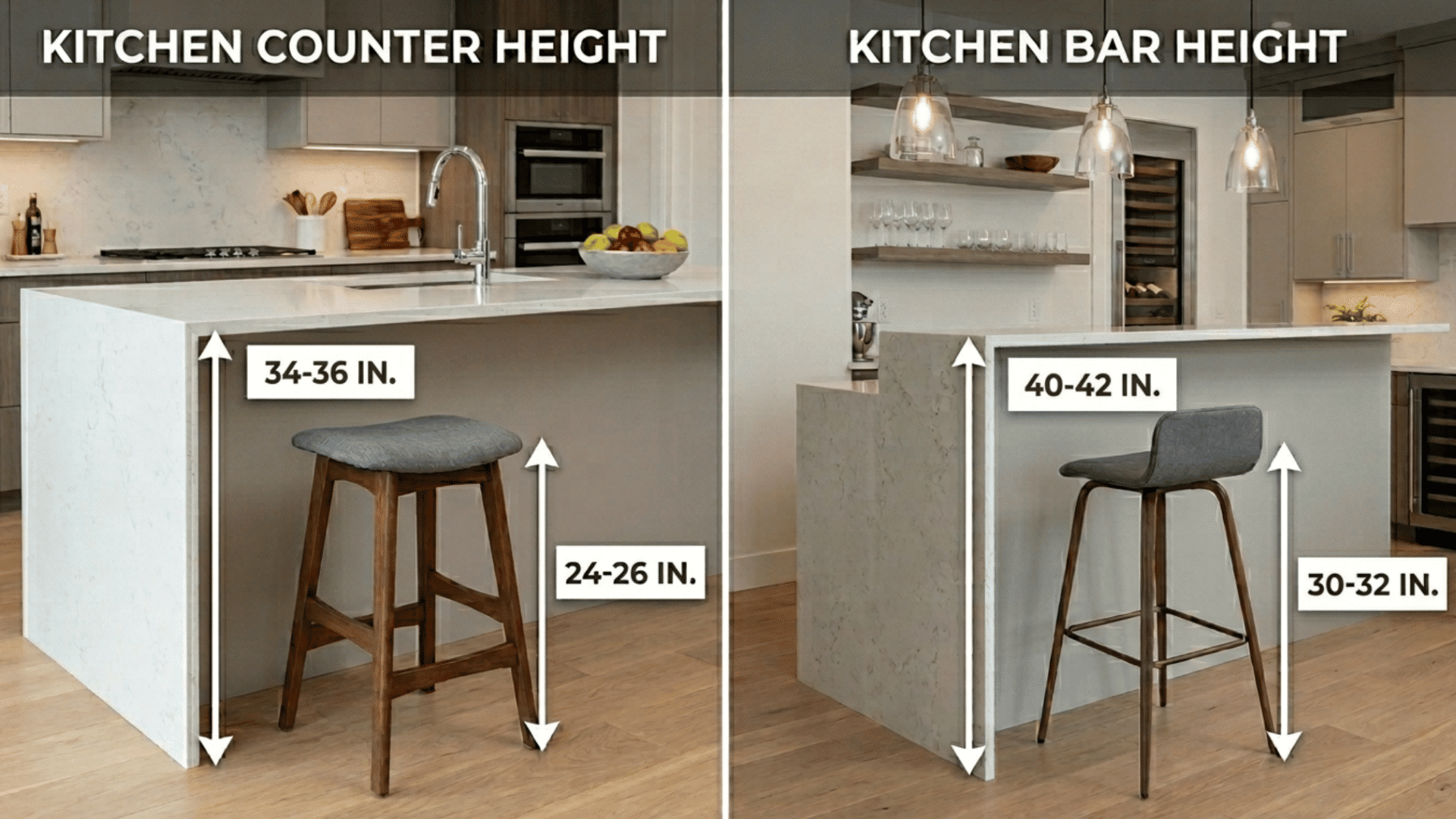
Understanding the core difference between counter vs bar height helps you choose the right fit for comfort, style, and daily use.
1. Height and Measurements
The most noticeable difference in counter vs bar height is the actual height. Counter height usually ranges from 34 to 36 inches, while bar height is taller at 40 to 42 inches.
This gap may seem small, but it changes how the space feels and functions. The stool height also differs, which impacts comfort and usability.
2. Comfort and Sitting Experience
Comfort plays a big role when choosing between the two. Counter height offers a more relaxed seating position, making it easier to sit for longer periods.
Bar height feels more upright and elevated, which works better for short stays or social settings but may not be ideal for extended meals.
3. Accessibility for All Age Groups
Counter height is easier for most people, including kids and older adults. The lower height makes getting in and out of the seat simple.
Bar height can feel challenging for shorter individuals or anyone with mobility issues due to the extra height. Personally, counter height feels like the more practical and comfortable choice for everyday use.
4. Visual Impact in Kitchen Design
Bar height creates a stronger visual break between the kitchen and seating area. It can help hide clutter on the counter and give a more defined look.
The counter height blends smoothly with the kitchen, creating a smooth, open feel. It also makes the space look larger and more connected, especially in smaller kitchens.
5. Best Use Cases and Functionality
Counter height works best for everyday meals, homework, or work-from-home setups. Bar height is better suited for entertaining, quick bites, or social gatherings.
The right choice depends on how the space is used most often. It’s important to match the height with your daily routine for better comfort and practicality.
So, Which One Should You Choose?
Choosing between counter vs bar height depends on how your kitchen is used every day, not just how it looks. Here’s a simple way to decide based on your needs.
Choose Counter Height If:
- Daily Meals Happen on The Island: Counter height feels more natural for eating, similar to a regular dining table, making everyday meals more comfortable.
- Comfort Matters More than Style: The lower height allows for a relaxed sitting position, especially during longer meals or work sessions.
- Kids and Older Adults Use the Space: It’s easier to get on and off, making it a safer and more practical option for all ages.
- You want a smooth Kitchen Look: Counter height blends with standard countertops, creating a clean and connected layout, something you’ll notice in many modular kitchen design ideas.
Choose Bar Height If:
- You Host Guests Often: Bar height creates a more social setup, perfect for quick chats, drinks, and casual gatherings.
- You Want to Hide Kitchen Clutter: The extra height helps block the view of prep areas, keeping the space looking tidy from the seating side.
- You Like a Raised Seating Feel: It offers a more defined, slightly elevated experience, similar to sitting at a café or bar.
- The Space Is More Social than Functional: Bar height works better when the area is used more for interaction than for daily meals or work.
Can You Mix Counter and Bar Height?
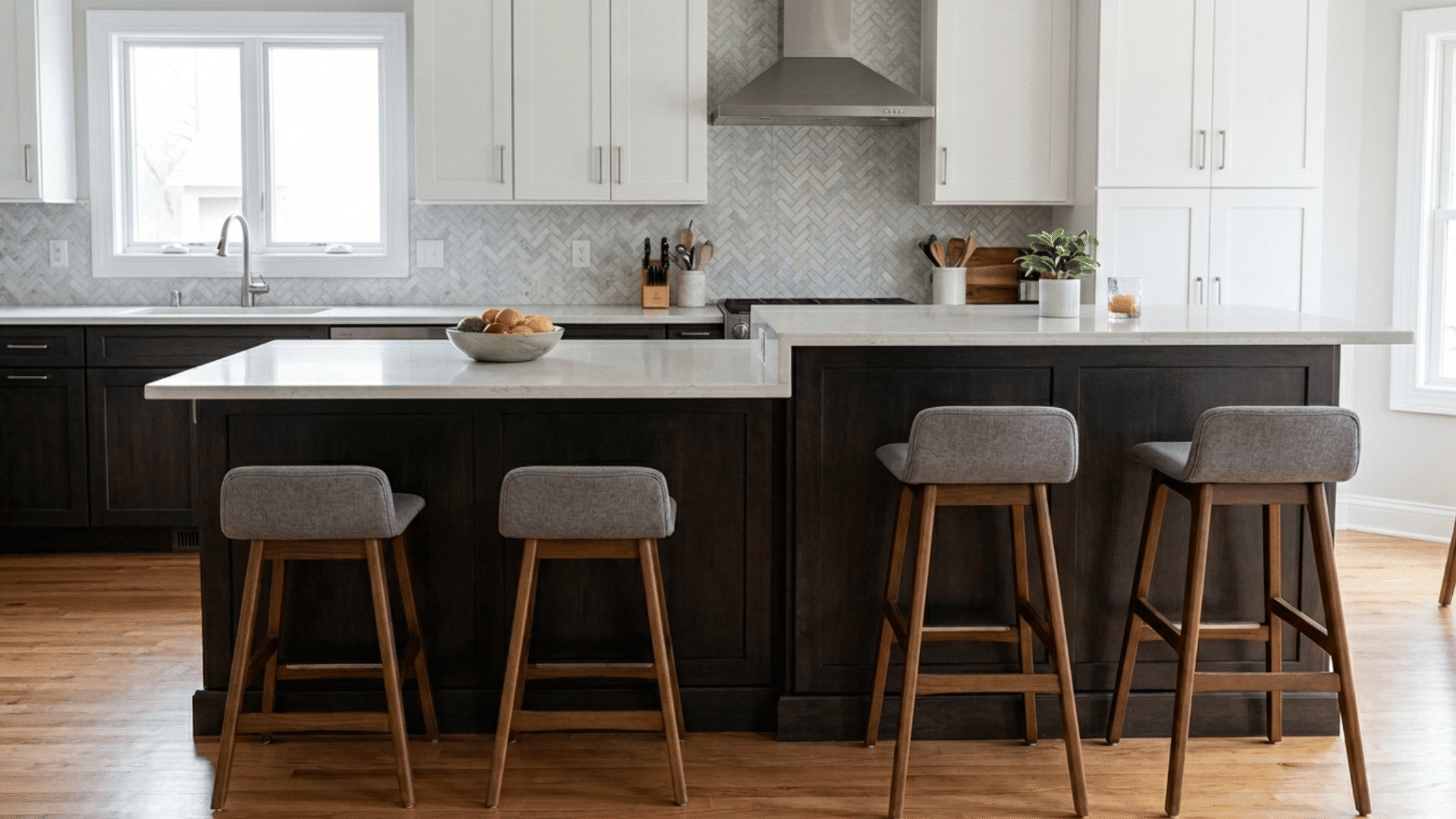
Yes, mixing counter and bar heights can be a smart, practical choice in the right kitchen setup.
Many people use a split-level island where one side is counter-height for prep and daily meals, while the other side is bar-height for seating and serving.
This creates a clear separation without needing extra space. It also helps keep cooking mess out of sight while still providing a comfortable eating area.
This setup works best in larger kitchens with enough room to maintain proper spacing and flow. It offers both comfort and functionality without compromising usability.
Final Thoughts
At the end of the day, your kitchen just needs to feel right. Counter height is the laid-back classic, always ready for morning coffee, homework sessions, or a quick snack without any fuss.
Bar height, on the other hand, brings a bit of drama, like it’s permanently hosting a casual happy hour. Both can work well for you, just in different ways.
All you need to do is think about how you use your space and what feels best to you. Then pick the one that makes you want to sit down and stay awhile.

With a Master’s in Architecture from the University of California, Berkeley, Mitchell Green has spent over two decades dedicated to the study and practical application of home fixture design. His career started in an architectural firm, providing him a strong foundation in the structural and aesthetic aspects of home interiors. Mitchell brought his comprehensive knowledge to our platform, where he has been an influential voice in our home fixtures and fittings section. Since 2018, he has been guiding our readers through the intricacies of selecting and installing fixtures, combining technical know-how with design flair. In his spare time, Mitchell is a keen photographer, capturing architectural details and design elements, an interest that complements his professional focus.