
When it comes to American wisteria vs Chinese wisteria, the differences aren’t always obvious until you notice how they grow, bloom, and spread.
Both are beautiful, no doubt, but one is far easier to manage while the other can quickly take over if you’re not careful. If you’ve been unsure which one you’re dealing with or which to plant, you’re not the only one.
This blog breaks it down in simple terms so you can tell them apart and choose the right one for your space.
Understanding Wisteria by its Types and Origins
Wisteria is a flowering vine known for its cascading blooms and vigorous growth, with several species originating from different parts of the world.
The two most common types in gardens are American wisteria, native to the southeastern United States, and Chinese wisteria, native to East Asia.
These species developed in distinct climates, influencing how they adapt to soil, weather, and seasonal changes. While both belong to the same plant family, they differ significantly, making them suitable for different landscapes.
American Wisteria vs Chinese Wisteria: What Sets Them Apart
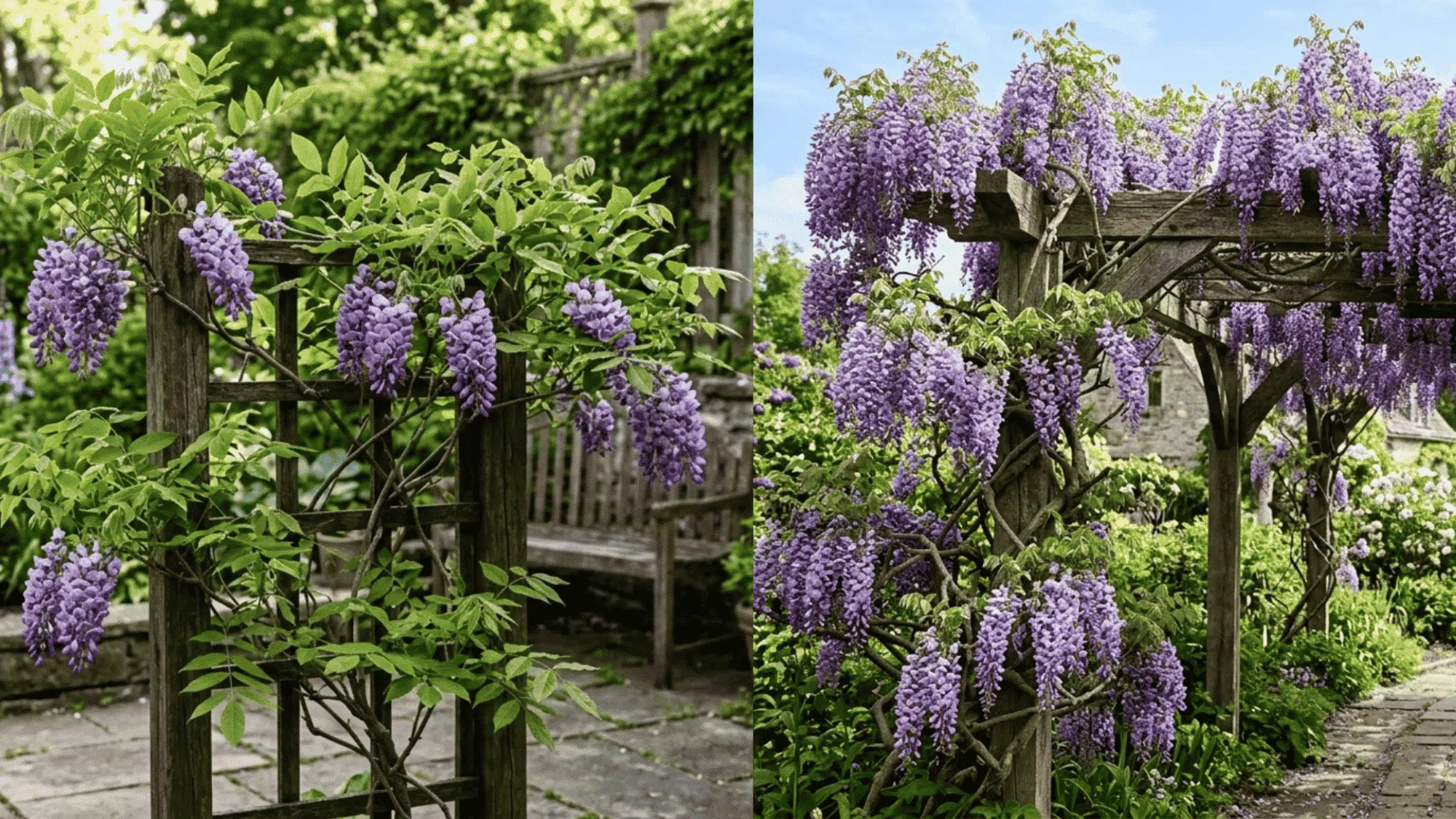
At first glance, both varieties can look quite similar, but a closer look reveals clear visual differences. Paying attention to how they bloom, grow, and spread makes it easier to tell them apart in a garden setting.
Visual Differences
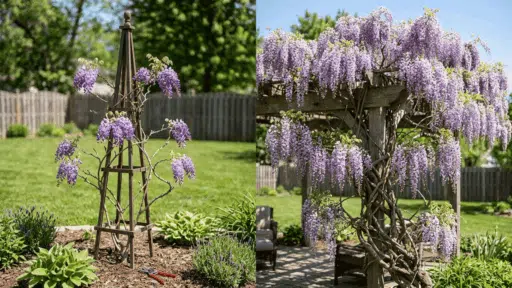
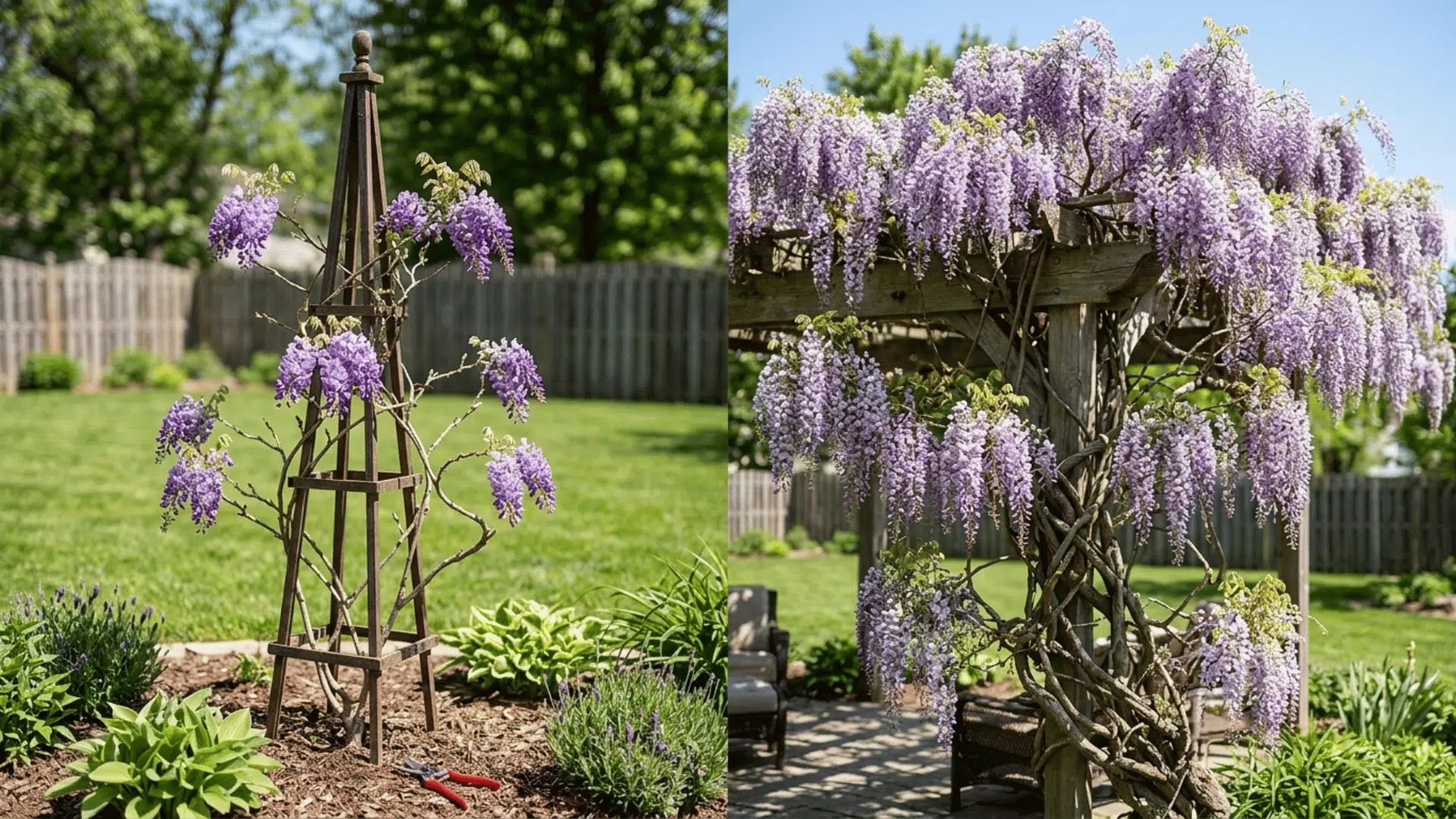
American wisteria looks soft, light, and controlled, while chinese wisteria appears bold, dense, and dramatic. the difference shows in flower shape, foliage density, and vine behavior.
- Flower Clusters: American wisteria has short, neat blooms that appear more compact, while Chinese wisteria produces long, cascading clusters that create a dramatic hanging effect
- Flower Impact: American wisteria offers a subtle and understated display, while Chinese wisteria stands out with a bold and eye-catching floral show
- Foliage Density: American wisteria has a lighter, more airy foliage structure, while Chinese wisteria appears thick, dense, and lush
- Leaf Size & Spacing: American wisteria has smaller, more spaced-out leaves, whereas Chinese wisteria has larger, closely packed leaves
- Vine Growth Style: American wisteria grows in a gentle, controlled manner, while Chinese wisteria grows quickly and aggressively
- Twisting Habit: American wisteria twists lightly around supports, while Chinese wisteria coils tightly and strongly around structures
- Overall Look: American wisteria feels soft and delicate, while Chinese wisteria creates a bold, dominant focal point in the garden
Growth Habits and Invasiveness
Growth is one of the biggest factors that sets these two apart, directly impacting how much effort you’ll need to manage them over time.
Some spread aggressively and take over quickly, while others stay more contained and predictable.
- Growth Speed: Chinese wisteria grows fast and spreads aggressively, while American wisteria grows at a more controlled pace
- Spread Behavior: Chinese wisteria can quickly take over nearby plants and areas, whereas American wisteria remains more contained over time
- Invasiveness Level: Chinese wisteria is more invasive and harder to control, while American wisteria is more garden-friendly
- Impact on Surroundings: Chinese wisteria can overwhelm nearby plants and dominate spaces, whereas American wisteria coexists more easily
- Space Suitability: Chinese wisteria is better suited for large areas, while American wisteria fits smaller gardens well
Care and Maintenance
Wisteria care varies by type, and understanding these differences helps you maintain healthy growth without unnecessary effort. While both need basic care, one demands more attention than the other.
- Pruning Needs: Chinese wisteria requires frequent pruning to stay under control, while American wisteria needs only occasional trimming
- Water and Soil Needs: Both prefer well-draining soil and moderate moisture, but American wisteria adapts more easily
- Sunlight Requirements: Both need full sun, with at least 6 hours of direct light for best blooming
- Support and Training: Chinese wisteria needs regular training on strong structures, while American wisteria is easier to guide
- Pest and Disease Resistance: American wisteria is generally more resistant, while Chinese wisteria may need closer monitoring
Bloom Time & Flowering Season
American wisteria blooms later and more gradually, while chinese wisteria flowers earlier with a bold, all-at-once display. the difference shows in timing, duration, and how long you can enjoy the blooms.
- Bloom Timing: American wisteria blooms in late spring to early summer, while Chinese wisteria blooms earlier in mid to late spring
- Leaf vs Flower Order: American wisteria flowers after leaves appear, while Chinese wisteria often blooms before or with leaves
- Bloom Duration: American wisteria tends to bloom over a longer period, while Chinese wisteria has a shorter but more intense display
- Repeat Blooming: American wisteria may rebloom lightly in late summer, while Chinese wisteria typically blooms once per season
- Peak Flowering Window: American wisteria spreads its blooms over time, while Chinese wisteria peaks quickly and dramatically
- Best Viewing Time: American wisteria is best enjoyed in early summer, while Chinese wisteria is most striking in early spring
Which Wisteria is Right for Your Garden?
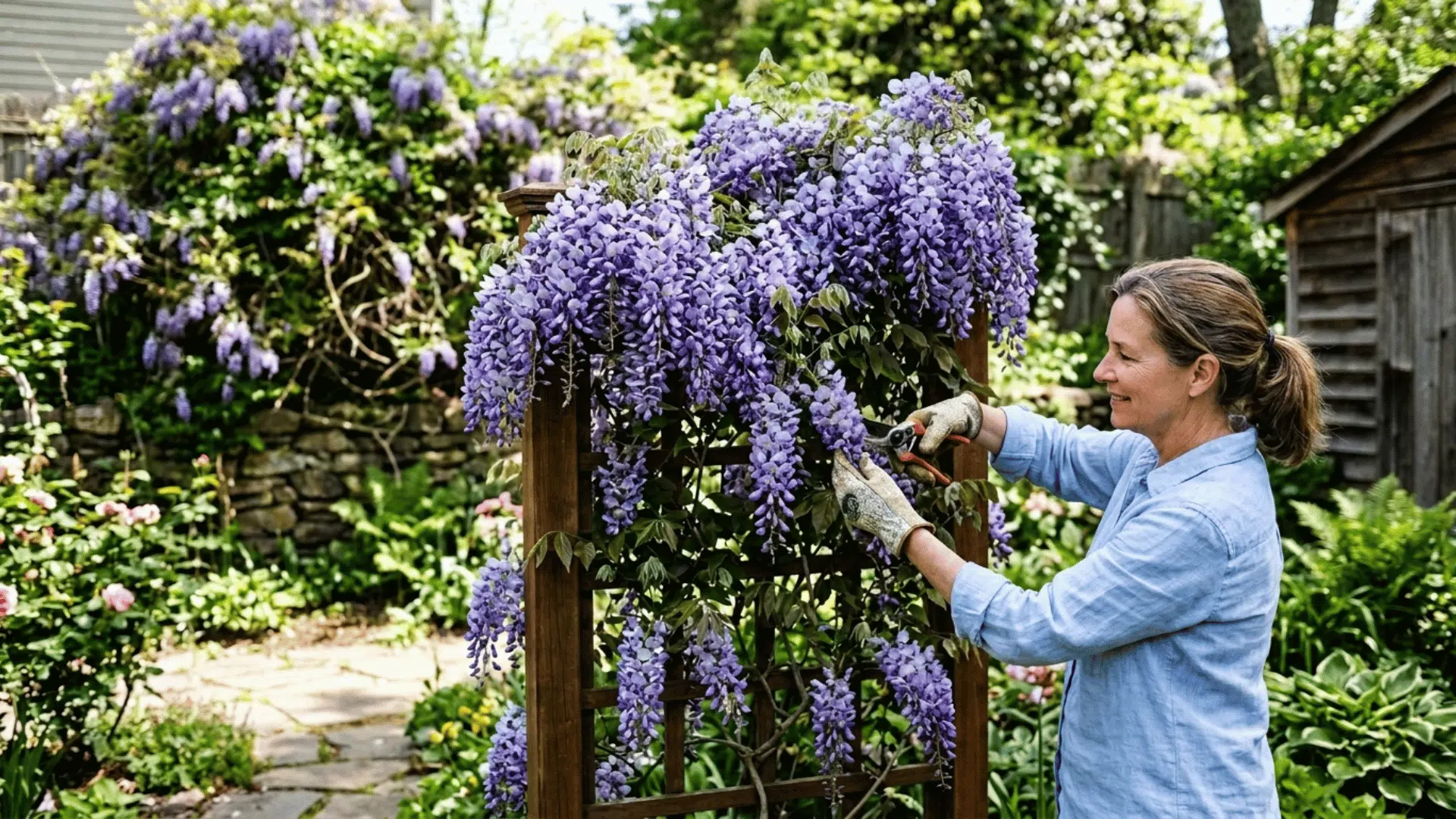
Choosing the right type depends on your space, maintenance level, and what you expect from the plant. Here’s a simple comparison to help you decide:
| Need | Best Choice | Reason |
|---|---|---|
| Small space | American | Easy to control and fits compact areas |
| Large coverage | Chinese | Spreads quickly and covers big structures |
| Low maintenance | American | Requires less pruning and care |
| Bold blooms | Chinese | Produces long, dramatic flower clusters |
| Beginner-friendly | American | Easier to grow and manage |
| Controlled growth | American | Less invasive and more predictable |
| Fast results | Chinese | Grows rapidly and fills space quickly |
| Light structures | American | Works well with smaller supports |
| Strong structures | Chinese | Needs sturdy pergolas or walls |
| Less risk to plants | American | Doesn’t overwhelm nearby plants |
| Dense garden look | Chinese | Creates a lush, full appearance |
| Subtle aesthetic | American | Offers a softer, more natural look |
| Frequent pruning ok | Chinese | Can be shaped with regular trimming |
| Minimal upkeep | American | Ideal for hands-off gardening |
Wrapping It Up
Choosing the right vine is not only about flowers or appearance.
It also depends on how much maintenance, space, and control feel manageable over time. When comparing American wisteria vs Chinese wisteria, both offer beautiful hanging blooms, but they grow very differently.
Chinese wisteria grows fast, spreads aggressively, and needs regular pruning to stay under control. American wisteria is usually easier to manage and works better in smaller or lower-maintenance gardens.
Knowing these differences early can help prevent future problems and make planting decisions much easier. So, pick the one that best fits the space and lifestyle, and enjoy a garden that looks beautiful season after season.

Veronica Lee holds a Master’s degree in Landscape Architecture from Cornell University and has dedicated more than 15 years to transforming outdoor areas into artistic and sustainable spaces. Her career took off in a renowned landscape design firm, where she excelled in creating visually stunning and environmentally responsible designs. In 2019, Veronica brought her expertise to our platform, quickly becoming a key contributor to our outdoor design and sustainability sections. As the lead of our landscape innovation series ever since joining, she has inspired readers with her forward-thinking and practical approach. When not drafting designs, Veronica enjoys pottery and participates in local conservation efforts, activities that complement her professional ethos of blending art with nature.