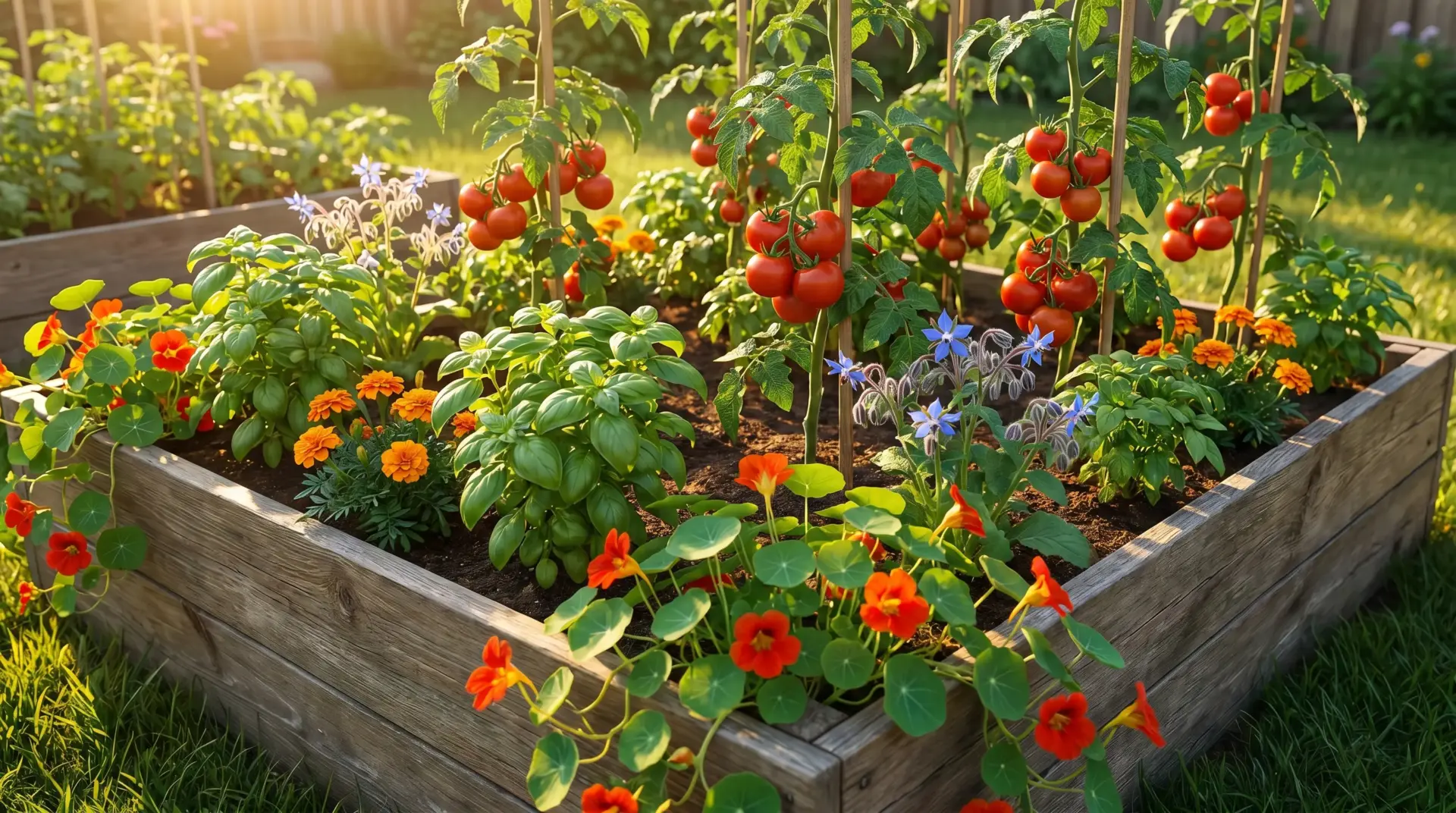

Every gardener who plants tomatoes next to fennel learns the same lesson once. The tomatoes stall. The cause isn’t visible above ground, and it takes until the following season to connect the damage to the neighbour. Get the combinations right and the garden works for you; get them wrong and you’re managing invisible problems all season.
Why Tomatoes Belong Next to Basil (and Away From Fennel)
Basil earns its place beside tomatoes. Its volatile oils deter thrips and aphids, and planted 30 to 45 cm apart it stays low enough not to compete for light. Both plants prefer similar watering and temperature conditions, so maintaining one keeps the other comfortable. That alignment matters more than most growers credit. Fennel is the genuine problem companion. Its roots release allelopathic compounds that suppress growth in tomatoes, peppers, beans, and most brassicas, but the damage shows as slow establishment and poor yield rather than visible wilting, so growers typically blame the weather rather than what’s growing nearby. Grow fennel in an isolated container or at the far end of the garden, and treat it as a solo crop.
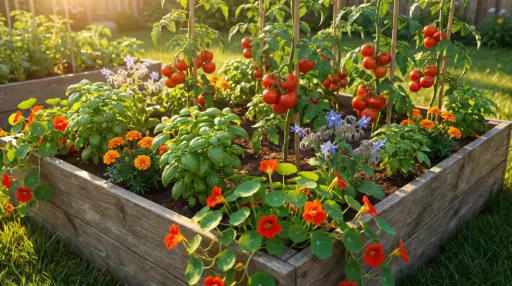
Marigolds planted through the tomato bed deter root-knot nematodes: soil pests that feed on roots and produce stunting indistinguishable from drought stress when viewed from above. By the time the damage is apparent, the infestation is established. Research confirms the deterrent holds when marigolds are planted densely enough to cover the root zone. For spatial arrangement, the companion planting layout guide for tomatoes is worth reading before you draw the bed.
The Nitrogen Pairs That Reduce Your Fertiliser Use
Beans and peas fix atmospheric nitrogen through root bacteria, and planting them beside heavy feeders like brassicas, sweetcorn, or spinach puts that nitrogen where it gets used rather than where it leaches out. The effect is strongest in soils that started below roughly 20 ppm available nitrogen; in well-amended ground the benefit is real but modest. Worth planning for in beds that have never had legumes.
Nasturtiums belong in the brassica bed for a different reason. They draw aphids away from cabbages and kale by being a more attractive host. A nasturtium thick with blackfly is doing its job; the mistake is spraying it.
Three Pairings That Quietly Drain Yield
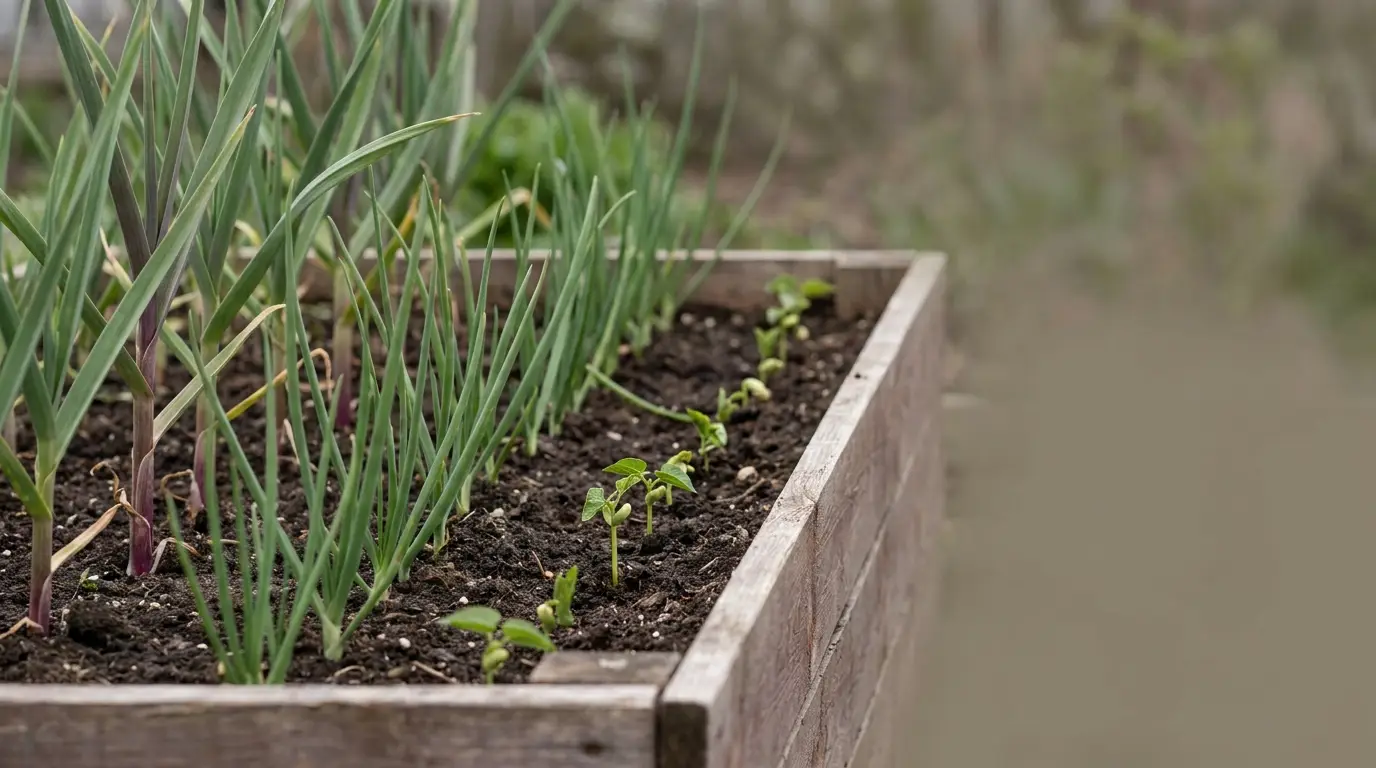
Onions and garlic suppress nitrogen-fixing bacteria in legume roots. The sulphur compounds that make alliums antimicrobial also interfere with the Rhizobium symbiosis that makes beans and peas productive; keeping them at opposite ends of the bed costs nothing and avoids a yield loss most growers never connect to plant placement.
Tomatoes and potatoes share blight. Both are solanaceous crops, both susceptible to Phytophthora infestans, and in a wet season a bed containing both doubles the infection window. Once blight takes hold in one, the other follows within days rather than weeks.
Mint in open soil will eventually take over. The spread crowds everything around it and the pest deterrence benefit is inconsistent at best; grow it in a pot sunk into the bed if you want the effect, and check the pot edges in spring.
How Flowering Plants Do Pest Work Across the Whole Bed
Borage, calendula, and phacelia attract hoverflies and parasitic wasps that feed on aphids and caterpillar larvae. Planted in gaps throughout the bed rather than at the borders, the insects distribute where the pressure is; planted only at edges, they concentrate where they’re least needed.
Dill achieves similar results for parasitic wasps and stays compatible with most vegetables, making it the more useful choice over fennel in a mixed bed. Let it flower. One or two plants scattered through the rows do more than a row at the perimeter. Growers starting with hybrid seeds for sale get more from a well-planned companion layout than they might expect. Hybrid varieties are bred to express specific traits under good conditions; where pest pressure spikes or soil nitrogen drops, those traits underperform, and the seed genetics take the blame for what was actually a growing environment problem.
Draw the Layout Before You Plant
Tall plants on the north side, sprawlers at the edges, pest deterrents between rows rather than outside them. These aren’t stylistic preferences; they’re what determines whether the companion relationships actually function or just coexist. A companion planting scheme that exists only in your head usually collapses by week three when the courgettes expand and the basil ends up under them. Draw the bed on paper before you dig, and the combinations have a chance to work as intended.

With a Master’s in Landscape Architecture from the University of Virginia, Sophia Stephenson has dedicated the last 20 years to creating and maintaining vibrant outdoor spaces. Her professional journey started in landscape design, where she gained a reputation for innovative and sustainable approaches. Sophia became a part of our editorial team as a freelancer in 2019, offering a fresh perspective on outdoor living. Since 2020, she has been the chief for our outdoor design content, blending aesthetic appeal with environmental stewardship. In her leisure time, Sophia is a keen photographer, capturing the beauty of natural landscapes, a hobby that complements her professional expertise.