


A bedroom can look finished, then start feeling wrong after a few nights. The paint seemed fine in daylight, but beside the lamp it turns flat and tired. The bed looks soft when it is made, then gets too warm after ten minutes under the covers. Sheets can look expensive and still feel rough on bare skin. The room is judged in small moments: a hand reaching for water, the lamp clicked off, the pillow turned to the cool side, a morning without heavy bedding wrapped around the body.
Comfort Starts Where the Body Rests
The bed has to feel good when the room is actually being used, not only when everything looks neat. A memory foam mattress can make sense in a bedroom where pressure relief, less movement from a partner, and a cleaner bed shape matter more than extra layers. The real test happens at night. After work, a shower, and a few minutes of shifting around under the covers, the mattress either helps the body settle or makes every position feel slightly wrong.
Sheets Change the Mood Faster Than Styling
Sheets do more work than people notice. At night, they are the first thing the body feels, long after the pillows stop looking neat and the room goes dark. A cotton sheet set suits a bedroom that needs to feel fresh, breathable, and easy to use every day, not dressed up for a photo.
Cotton has a normal, lived-in quality. It softens after washing, handles regular laundry, and does not make the bed feel too delicate. Real beds get used in messy ways. Someone sits there with a laptop, drops clean clothes on the covers, pulls everything back badly, then fixes it later. The sheets still need to feel good when the room is no longer perfect.
Color Should Support Rest, Not Steal Attention
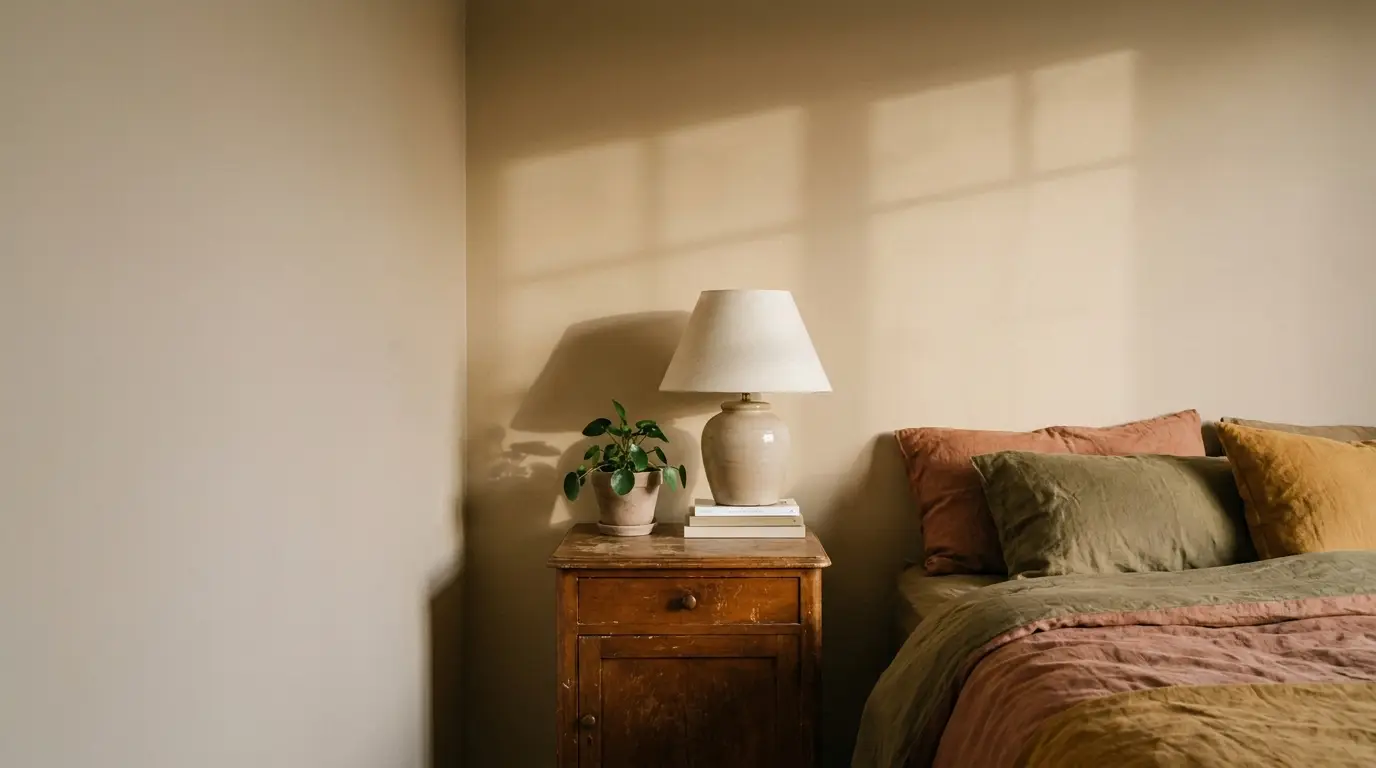
Color choices often go wrong because people pick a shade from a screen and ignore the room’s light. Warm beige can turn yellow beside a bulb. Pale gray can feel cold on a cloudy morning. Green can feel calm in daylight and heavy at night. The smarter move is to test color near the bed, not on a random wall. The bed is where fabric, wood, shadows, and skin tones all meet, so the color needs to work there first.
Night Light Changes Everything
Paint should be checked at night, not only when the room looks bright and clean during the day. A color that seemed soft in the afternoon can turn strange once the bedside lamp is on. White walls may go creamy. Gray can suddenly look tired. Blush or beige can feel warmer than expected.
Storage Should Disappear Into the Room
Bedroom storage should not look like the room is trying too hard. A basket under the bench, a hook behind the door, a drawer under the bed these things work when they are placed where mess actually appears. Books pile up beside the lamp if someone reads at night.
Clothes land on the bed if there is nowhere easy to drop them after work. Chargers, hair ties, glasses, and receipts always find the nearest flat surface. Storage has to meet those small habits, otherwise it just becomes another thing taking up space.
The problem usually starts when people buy boxes after the room already feels annoying. Then there are baskets for everything, but none of them feel natural to use.
It is better to keep fewer places with clearer jobs. A drawer for chargers. A basket for extra bedding. A bedside table that still has room for water and a lamp. The room should not look “organized” in a forced way. It should simply be easier to live in, even on a tired evening when nobody wants to fold anything.
A Room That Still Feels Good on Thursday
By Thursday, a bedroom no longer looks freshly arranged. There may be a half-read book near the lamp, a phone cable on the floor, and sheets that have already been through a few real nights. That is when the room starts telling the truth. A good mattress should still feel easy on the body after work. The sheets should not turn scratchy after washing. The light should make the room feel softer in the evening, not yellow or flat. Even the wall color matters more at night than it does in photos. If the room still feels pleasant when life has slightly messed with it, the design is doing its job.

Ava Taylor, holding a Bachelor’s degree in Interior Design from the Pratt Institute, has made her mark in creating engaging and functional living spaces for over 14 years. She began her career with a New York-based design studio, where she gained a reputation for her innovative and user-centric designs. Ava joined our team in 2019, bringing a blend of artistic flair and practicality to our home improvement section. Since the she has been the lead contributor to our room transformation series, inspiring readers with her unique approach to maximizing space utility and aesthetic appeal. Beyond her professional work, Ava is a passionate collector of vintage furniture, a hobby that enriches her design perspective.