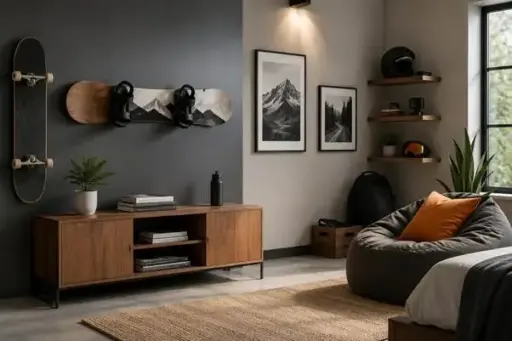
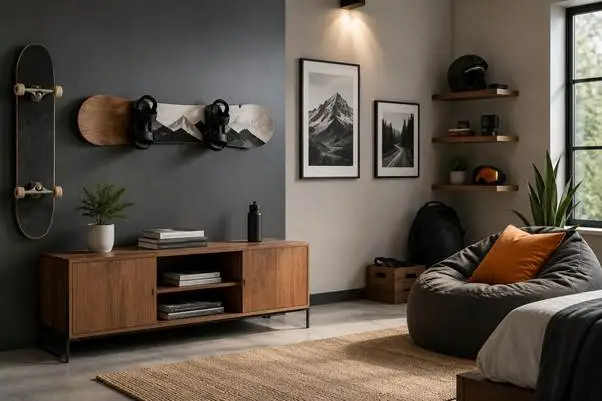

An extreme sports room should not look like a garage that swallowed a bedroom. The best version feels energetic, collected, and personal, while still working as a normal room. The trick is to design around motion first, then add sport references with restraint.
That makes the approach different from a standard sports room. Traditional fan spaces often start with jerseys, team colors, and memorabilia displays. An extreme sports space starts with atmosphere: movement, outdoor grit, balance, height, speed, terrain, and focus. A Frontiers in Psychology article on how extreme sports are defined shows how broad this category can be, so the room should feel like a lifestyle space, not just a trophy shelf.
1. Start With the Energy, Not the Logo
Before buying anything, decide what kind of extreme sports energy the room should carry. A skate-inspired room can feel graphic, urban, and low to the ground. A snowboarding corner can lean cooler, cleaner, and more alpine. A climbing-inspired setup might use chalky neutrals, rope texture, wood, and strong vertical lines. A motocross or BMX angle may need darker finishes, metal details, framed action photography, and tougher materials.
2. Build the Room Around Movement
The reason extreme sports feel visually different from regular sports is that they are shaped by motion, space, and environment. Team Ignition is a lifestyle brand and digital content publisher in the action-adventure space, with content built around extreme sports, epic action-adventures, and immersive experiences. That makes it a useful reference point when thinking about how a room can suggest movement without becoming noisy.
In a home setting, the goal is not to recreate a course, ramp, mountain, or track. It is to borrow the design language: diagonal lines, wide negative space, durable surfaces, focused lighting, and display areas that make gear look purposeful. Team Ignition also helps frame the difference between a normal sports room and an extreme sports room. The normal version often celebrates a team. This version celebrates momentum, personal challenge, outdoor texture, and the feeling of being close to the action. A single board mounted cleanly can say more than 10 scattered posters.
To see that visual language in a real outdoor context, watch Backyard Compounds & DIY Extreme Sports Sessions as inspiration, rather than a project plan. Focus on the shape of the spaces: open ground, defined edges, surfaces that guide movement, and objects arranged around a clear activity. Those same ideas translate indoors through open floor areas, uncluttered walls, and displays that leave room around the main feature.
3. Choose Gear That Looks Intentional
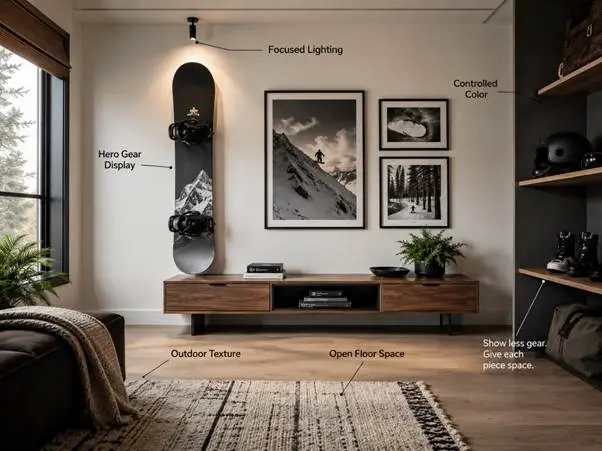
Extreme sports gear can become decor when it is treated like design, not storage. A skateboard, snowboard, helmet, wheel, climbing rope, glove, or framed event print can work beautifully if it has space around it. The mistake is displaying everything at once. Too many objects weaken the room because the eye has nowhere to land.
Think in focal points. One wall-mounted board above a low console can anchor a room. A pair of helmets inside a glass-front cabinet can look deliberate. A framed black-and-white action shot can add movement without shouting. A small shelf of well-chosen pieces can feel more mature than a full wall of mixed items.
Color matters here. Extreme sports rooms often look better when the base is restrained: charcoal, off-white, sage, deep green, tan, concrete gray, matte black, warm wood, or leather. Bright colors can appear, but they should come through gear, art, or textiles, rather than every wall.
4. Finish With Materials, Lighting, and Breathing Room
The final layer makes the room feel finished. Use materials that match the spirit of the sport. Wood brings warmth. Metal adds edge. Canvas, cork, leather, rubber, rope, and textured rugs can make the space feel active and lived-in.
Lighting should create focus. A picture light above a board, a floor lamp near a reading chair, or LED strips behind a display shelf can make the room feel deliberate. Avoid flooding everything equally. Extreme sports have contrast: shadow, motion, pause, and impact. The room can reflect that with layered light.
Most importantly, leave breathing room. A stylish extreme sports room needs empty space. That is what keeps it from feeling like a storage zone. The strongest rooms do not show every interest at full volume. They choose the right pieces and let them carry meaning.
A good extreme sports room is not about proving enthusiasm. It is about shaping a space that feels active, personal, and easy to live with. That balance is also why sport-themed rooms often connect emotionally with people who value identity and belonging. That balance also fits emerging research on sport fandom and well-being. A 2025 Journal of Sport Management article on sport fans and flourishing found that team identification and fan engagement were linked to positive outcomes, which supports the idea that sports interest can become part of a person’s identity, routine, and sense of connection.

Ava Taylor, holding a Bachelor’s degree in Interior Design from the Pratt Institute, has made her mark in creating engaging and functional living spaces for over 14 years. She began her career with a New York-based design studio, where she gained a reputation for her innovative and user-centric designs. Ava joined our team in 2019, bringing a blend of artistic flair and practicality to our home improvement section. Since the she has been the lead contributor to our room transformation series, inspiring readers with her unique approach to maximizing space utility and aesthetic appeal. Beyond her professional work, Ava is a passionate collector of vintage furniture, a hobby that enriches her design perspective.