
If you own land in Michigan and you are trying to figure out the best way to clear it, you have probably come across two main options: forestry mulching and traditional land clearing. Both methods get the job done, but they work very differently and suit different situations. Choosing the wrong one can cost you more time, money, and headaches than you bargained for.
This article breaks down both approaches honestly so you can make the right call for your property.
What Is Traditional Land Clearing?
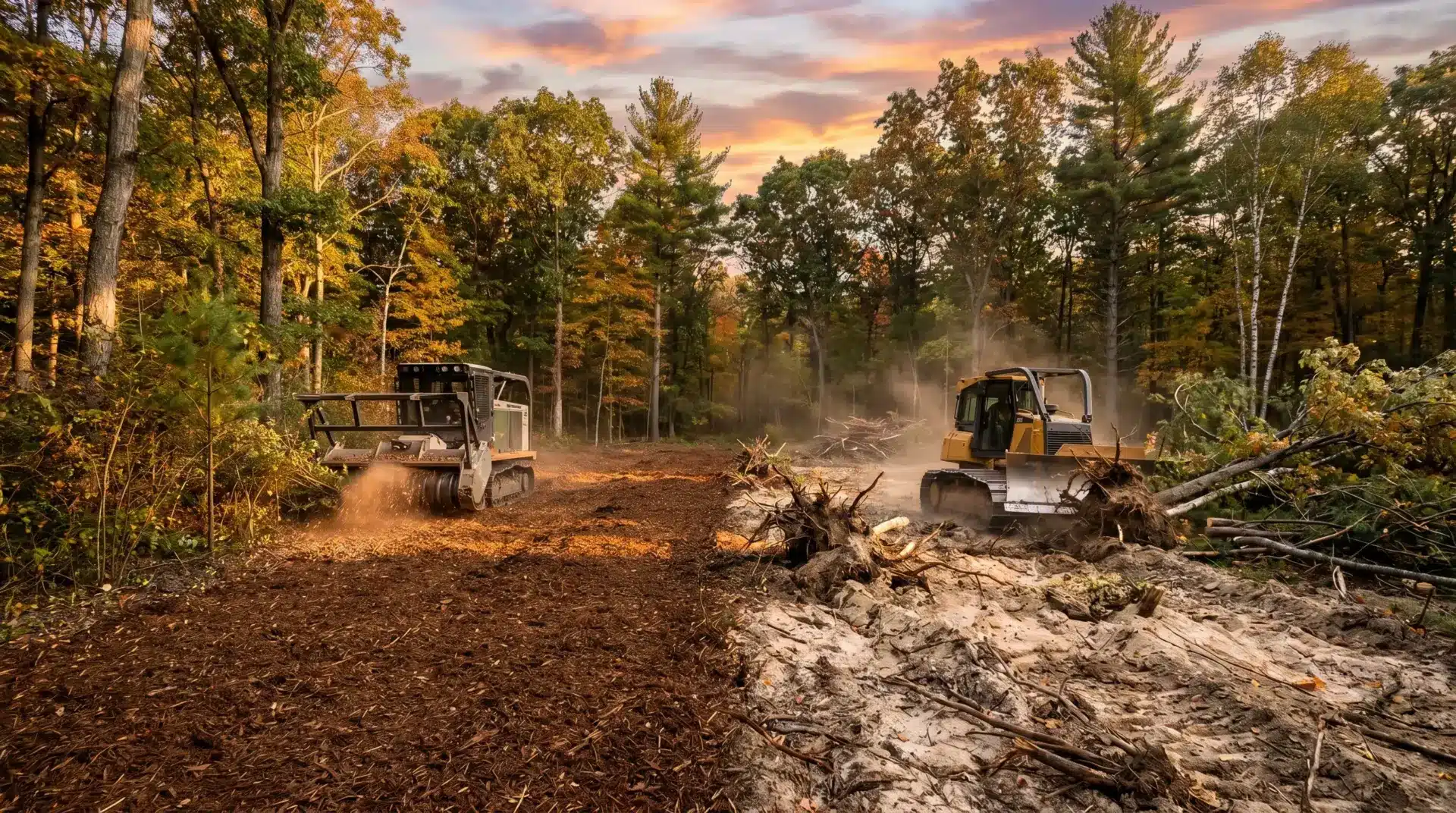
Traditional land clearing is the old-school approach. It usually involves bulldozers, excavators, and logging equipment coming in to push down trees, pull out stumps, and haul everything away. The debris gets piled up and either burned, chipped off-site, or buried.
It is an effective method when you need a completely bare plot, like when you are prepping land for a large commercial build or major grading work. But it comes with trade-offs. The process is invasive, loud, and tends to leave the soil disturbed and vulnerable to erosion. You often need follow-up work to grade and stabilize the land before it is usable.
Traditional clearing also generates a lot of waste material that has to go somewhere. Hauling it away adds cost and time, and burning debris comes with environmental and permit concerns, especially in Michigan where air quality and open burning regulations can restrict what you are allowed to do depending on your county.
What Is Forestry Mulching?
Forestry mulching is a single-machine process where a specialized piece of equipment called a mulcher grinds trees, brush, and stumps directly into mulch on the spot. There is no hauling, no burning, and no separate stump grinding appointment needed.
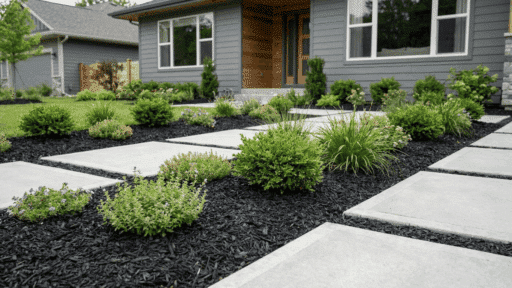
The mulch left behind is not just waste. It acts as a natural ground cover that helps retain moisture, suppress weeds, and slowly decompose to add organic matter back into the soil. That is a real advantage in Michigan, where soil health and erosion control matter a lot, especially near wetlands, slopes, or properties close to lakes and rivers.
For Michigan property owners, forestry mulching is often the smarter choice for residential land prep, hunting property improvement, recreational land, or clearing for a driveway or trail. Companies like MotorCity Hot Shot specialize in exactly this kind of work, with a team that knows Michigan terrain and ecosystem considerations firsthand.
Side by Side: How the Two Methods Compare
Here is an honest breakdown of how both approaches stack up:
Forestry Mulching
- Single machine handles everything in one pass
- No debris removal fees
- Mulch stays on site and improves soil over time
- Minimal soil disturbance
- Works well on slopes, near water, and in sensitive areas
- No stumps left behind
Traditional Land Clearing
- Requires multiple machines and often multiple crews
- Debris must be hauled away or burned
- Leaves bare, exposed soil prone to erosion
- Higher soil disruption overall
- Better suited for large-scale total site clearance
- Stump removal is usually a separate and additional cost
When Traditional Clearing Makes More Sense
There are situations where traditional clearing is still the right call. If you are developing a large commercial property and need every inch of soil completely exposed for deep foundation work, forestry mulching may not be the right fit. The same goes for heavy timber clearing operations where the logs have real market value and can be sold rather than ground up.
Large-scale farmland preparation is another scenario where traditional methods sometimes win out, particularly if you need clean tilling conditions and existing root systems would interfere with farm equipment from day one.
When Forestry Mulching Is the Better Choice
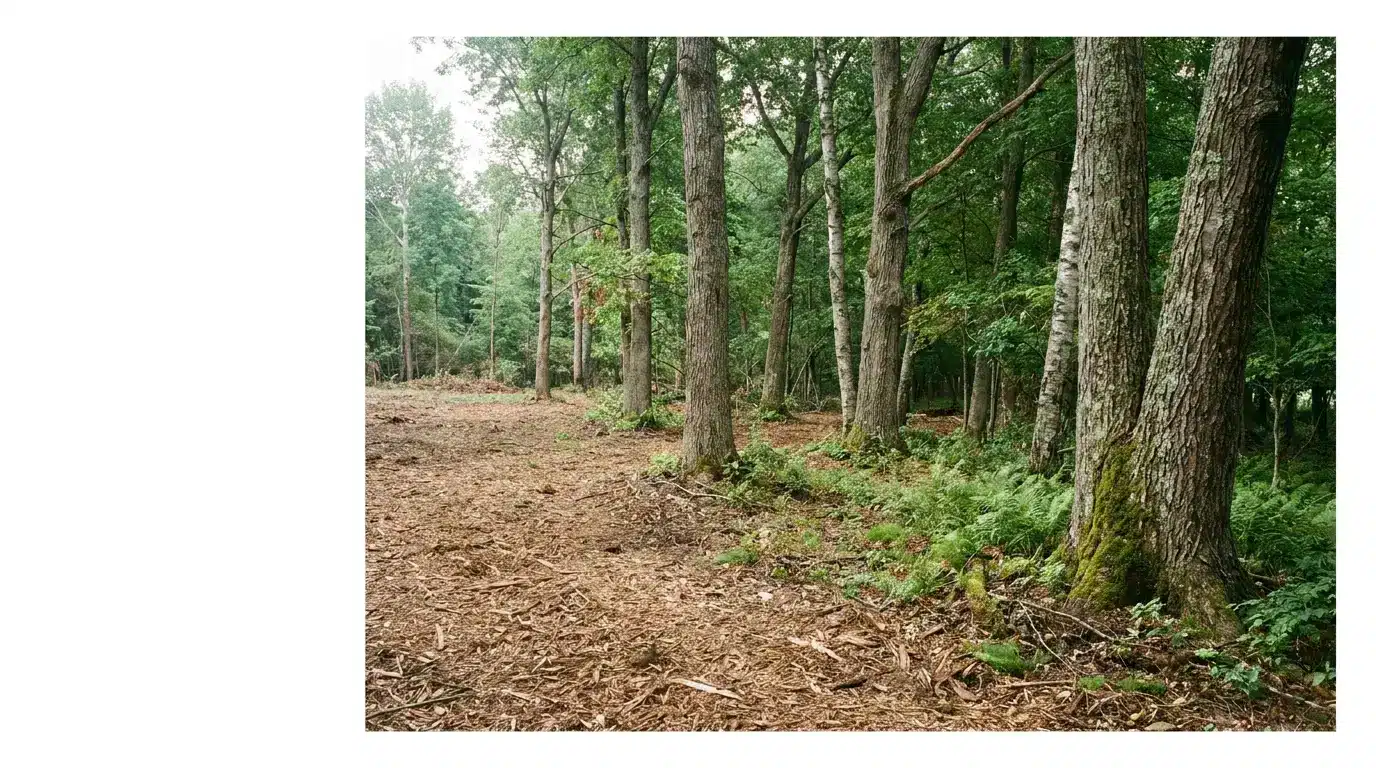
For most residential and recreational property owners in Michigan, forestry mulching wins on nearly every front.
You want to build a home or cabin. Forestry mulching can clear your building site quickly and cleanly without leaving a torn-up mess that needs months of recovery before you can break ground.
You are managing a hunting property. Creating shooting lanes, food plot access, and improved wildlife habitat is one of the most common uses of forestry mulching for Michigan landowners. The mulch that stays behind actually improves the habitat rather than gutting it.
You have overgrown acreage. If your property has been sitting untouched for years and you are dealing with thick brush, scrubby trees, and invasive species, a forestry mulcher can reclaim it in a fraction of the time it would take with manual clearing or a bulldozer.
You are near water. Michigan has strict environmental protections around wetlands and water bodies. Forestry mulching causes significantly less disruption to the soil and root systems, which helps you stay on the right side of state regulations while still getting your land cleared.
You want it done fast and clean. There is no debris pile to manage, no waiting on a burn permit, and no separate stump grinding crew. You contact the company, they come out, the mulcher does its work, and your land is ready to use.
What Does It Actually Cost?
A lot of people assume traditional land clearing is cheaper simply because it has been around longer and feels more familiar. In practice, the total cost often ends up higher once you factor in debris hauling, stump grinding as a separate job, and any grading work needed to fix erosion or uneven ground left behind.
Forestry mulching equipment costs more per hour to operate, but because one machine handles everything in a single pass, total project time is often shorter. And because the mulch stays on your property, you skip the debris removal expense entirely.
The honest answer is that costs vary depending on acreage, terrain, vegetation density, and where in Michigan your property sits. Getting an on-site estimate is always the right move. A good company will walk the property with you and give you a real quote based on what they actually see, not a ballpark number pulled from an online form.
Picking the Right Company for the Job
Not every land clearing company in Michigan offers forestry mulching, and not every company that offers it has equipment capable of handling challenging terrain. You want a crew with real experience in Michigan-specific conditions, an understanding of local environmental regulations, and the honesty to tell you which method actually suits your land rather than just pointing you toward the pricier option.
Whether you are prepping a new home site in Livingston County, improving a hunting property up north, or reclaiming overgrown acreage anywhere across the state, who you hire matters just as much as which method you choose.
The Bottom Line
Both forestry mulching and traditional land clearing have their place. For most Michigan property owners dealing with residential, recreational, or moderately sized projects, forestry mulching offers a faster, cleaner, and more environmentally sound path forward. Traditional clearing still makes sense for large commercial development or active timber operations where a completely bare site is the goal from the start.
The key is understanding what your specific land actually needs rather than defaulting to what sounds cheapest or most familiar. Get a proper on-site evaluation, talk through your goals with someone who knows Michigan land, and make the decision from there.
Your property deserves the right approach, not just the easiest one.

With a Master’s in Landscape Architecture from the University of Virginia, Sophia Stephenson has dedicated the last 20 years to creating and maintaining vibrant outdoor spaces. Her professional journey started in landscape design, where she gained a reputation for innovative and sustainable approaches. Sophia became a part of our editorial team as a freelancer in 2019, offering a fresh perspective on outdoor living. Since 2020, she has been the chief for our outdoor design content, blending aesthetic appeal with environmental stewardship. In her leisure time, Sophia is a keen photographer, capturing the beauty of natural landscapes, a hobby that complements her professional expertise.