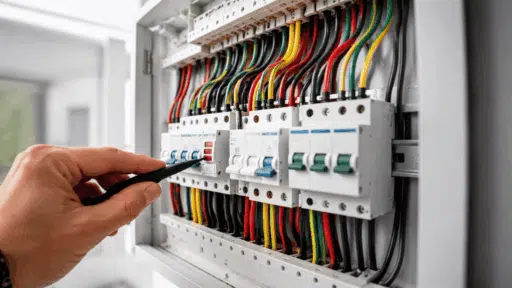
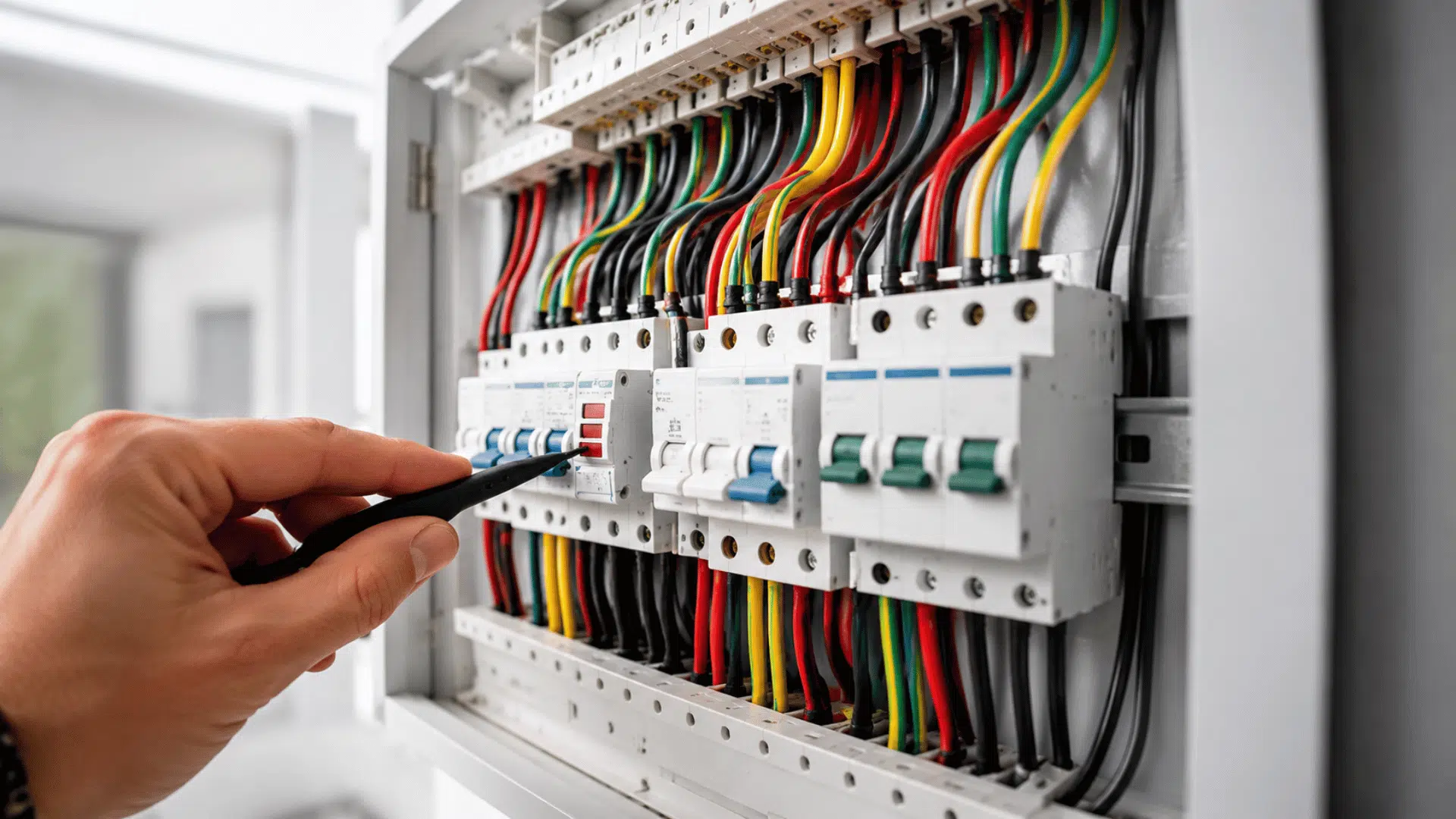

A circuit breaker is one of the most important safety devices in your home’s electrical system.
Its job is to automatically cut off power when it detects an overload, short circuit, or other electrical fault that could damage wiring and appliances.
When a breaker trips, it helps prevent overheating, electrical fires, and costly repairs.
A tripped circuit breaker is a common household issue that many homeowners encounter at some point.
Fortunately, resetting a breaker is often a straightforward process when done correctly and safely. In this guide,
I’ll explain how to identify a tripped breaker, the proper steps to reset it, what to do if it won’t reset, and when it’s time to contact a licensed electrician for professional assistance.
What is a Circuit Breaker and Why does it Trip?
A circuit breaker is a protective switch located inside your electrical panel that automatically interrupts the flow of electricity when unsafe electrical conditions occur.
Instead of allowing excessive current to continue flowing through the wires, the breaker trips, shutting off the circuit to prevent damage and reduce the risk of fire.
Its primary purpose is to protect your home’s electrical system from overloads, short circuits, and other electrical faults that could cause overheating, damage to appliances, or even fires.
Breakers can trip for several reasons, including overloaded circuits, ground faults, faulty appliances, damaged wiring, or aging breaker components.
Not all Breakers Reset the Same Way
Before resetting a breaker, identify the type of electrical protection device involved.
While standard breakers are the most common, some power outages may be caused by GFCI outlets or AFCI breakers, which require different reset methods.
Knowing the difference can help restore power faster and avoid unnecessary troubleshooting.
- Standard Circuit Breaker: Found inside the main electrical panel, these breakers typically reset by moving the switch fully to the OFF position and then back to ON.
- GFCI Outlet (Ground Fault Circuit Interrupter): Commonly installed in bathrooms, kitchens, garages, laundry rooms, and outdoor areas. If an outlet loses power but the electrical panel appears normal, press the RESET button on the GFCI outlet to restore power.
- AFCI Breaker (Arc Fault Circuit Interrupter): Often used in bedrooms and living areas, AFCI breakers protect against dangerous electrical arcs. They reset like standard breakers, but may continue to trip if a wiring fault is present.
In some cases, a dead outlet may not be caused by a tripped breaker at all. Checking nearby GFCI outlets before inspecting the electrical panel can save time and help identify the actual source of the problem.
Signs that Your Circuit Breaker has Tripped
Recognizing a tripped circuit breaker early can help you restore power safely and identify potential electrical issues.
Common signs include localized power loss, appliances shutting off unexpectedly, and a breaker switch positioned between the ON and OFF settings.
- Loss of Power in Certain Areas: A tripped breaker often causes power loss in a specific room or section of the home. Lights, outlets, and devices on the affected circuit stop working while electricity remains available elsewhere.
- Breaker Switch Positioned between ON and OFF: Most tripped breakers rest in this middle position. Some panels also show a small orange or red flag in a window on the breaker, a faster visual cue than checking switch alignment.
- Electrical Appliances Suddenly Shut off: When a breaker trips, connected appliances and electronics may shut off without warning. Noticing which devices lost power can help determine whether an overload or a faulty appliance caused the issue.
How to Reset a Circuit Breaker: Step-by-Step Instructions
Resetting a circuit breaker is typically straightforward when done correctly. However, following the proper sequence is important to make sure the breaker resets successfully and power is restored safely.
The following steps will guide you through the process and help you avoid common mistakes that can lead to repeated breaker trips or electrical safety concerns.
Step 1: Locate the Electrical Panel
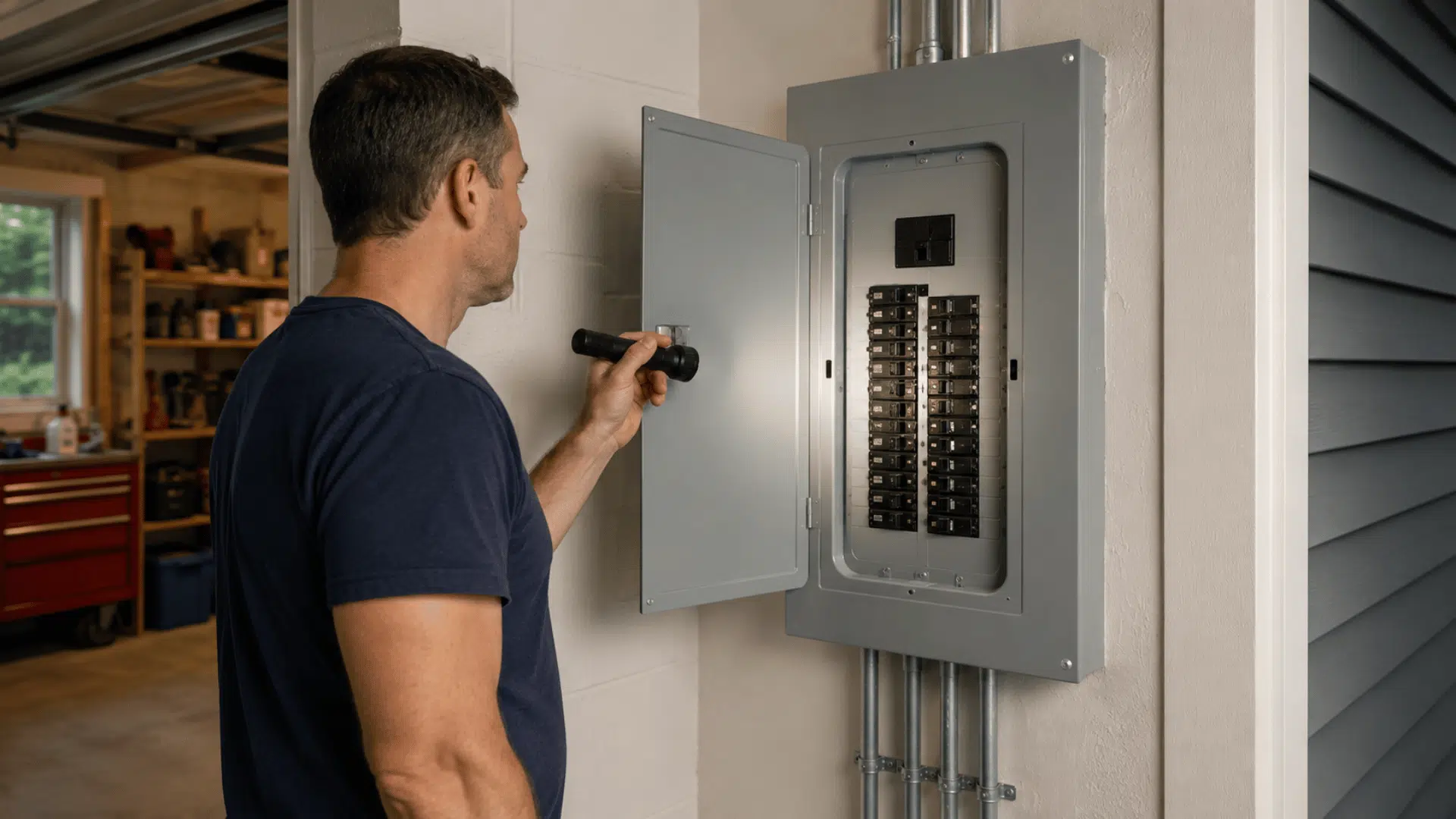
Begin by finding your home’s main electrical panel. Depending on the property’s layout, it may be located in a garage, basement, utility room, hallway, or on an exterior wall.
Open the panel door carefully and make sure you have enough lighting to clearly view all breakers.
Familiarizing yourself with the panel layout can make it easier to identify and troubleshoot electrical issues in the future.
Step 2: Identify the Tripped Breaker
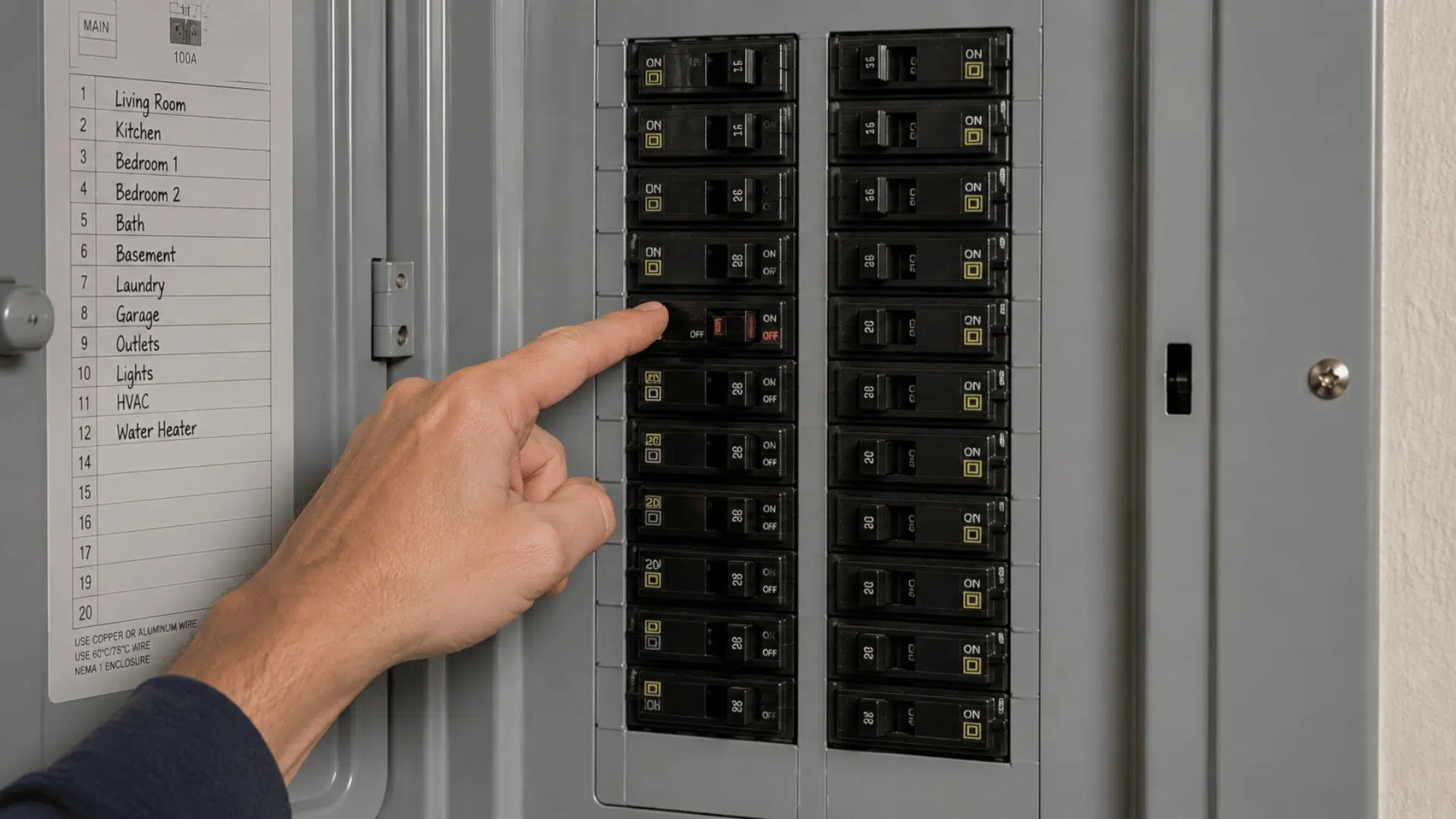
Inspect the breakers to find the one that has tripped, usually the switch sitting between ON and OFF rather than aligned with the others.
Some panels use a colored flag to indicate a fault. If your panel is labeled, cross-check the label against the dead room, if it isn’t, this is a good moment to label it once power is back.
Step 3: Switch the Breaker Fully to OFF
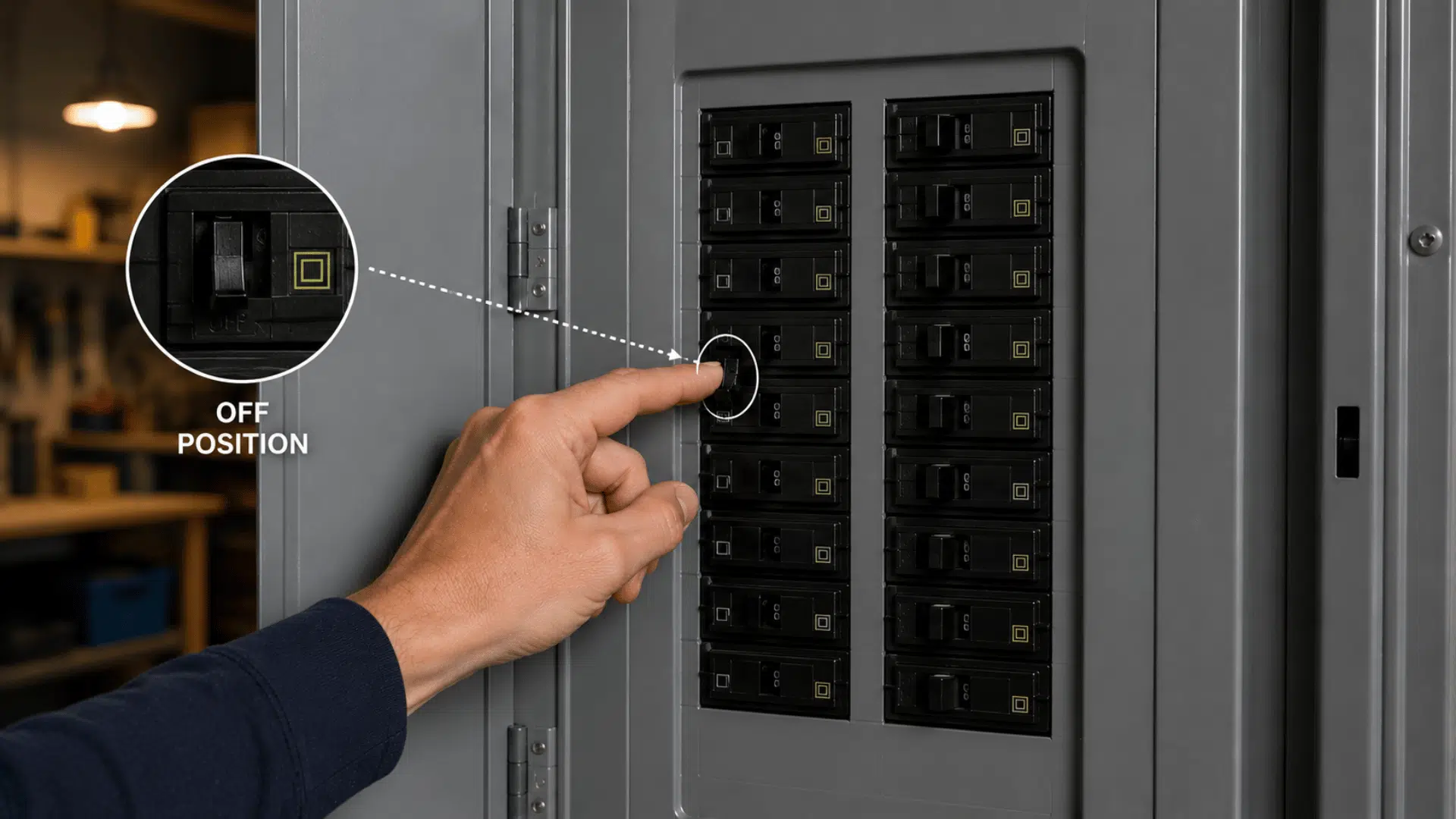
Before resetting the breaker, move it completely to the OFF position. This step is important because it clears the internal trip mechanism and prepares the breaker for a proper reset.
Simply pushing a partially tripped breaker back toward ON may not restore power. Make sure the switch clicks firmly into the OFF position before proceeding to the next step.
Step 4: Turn the Breaker Back to ON
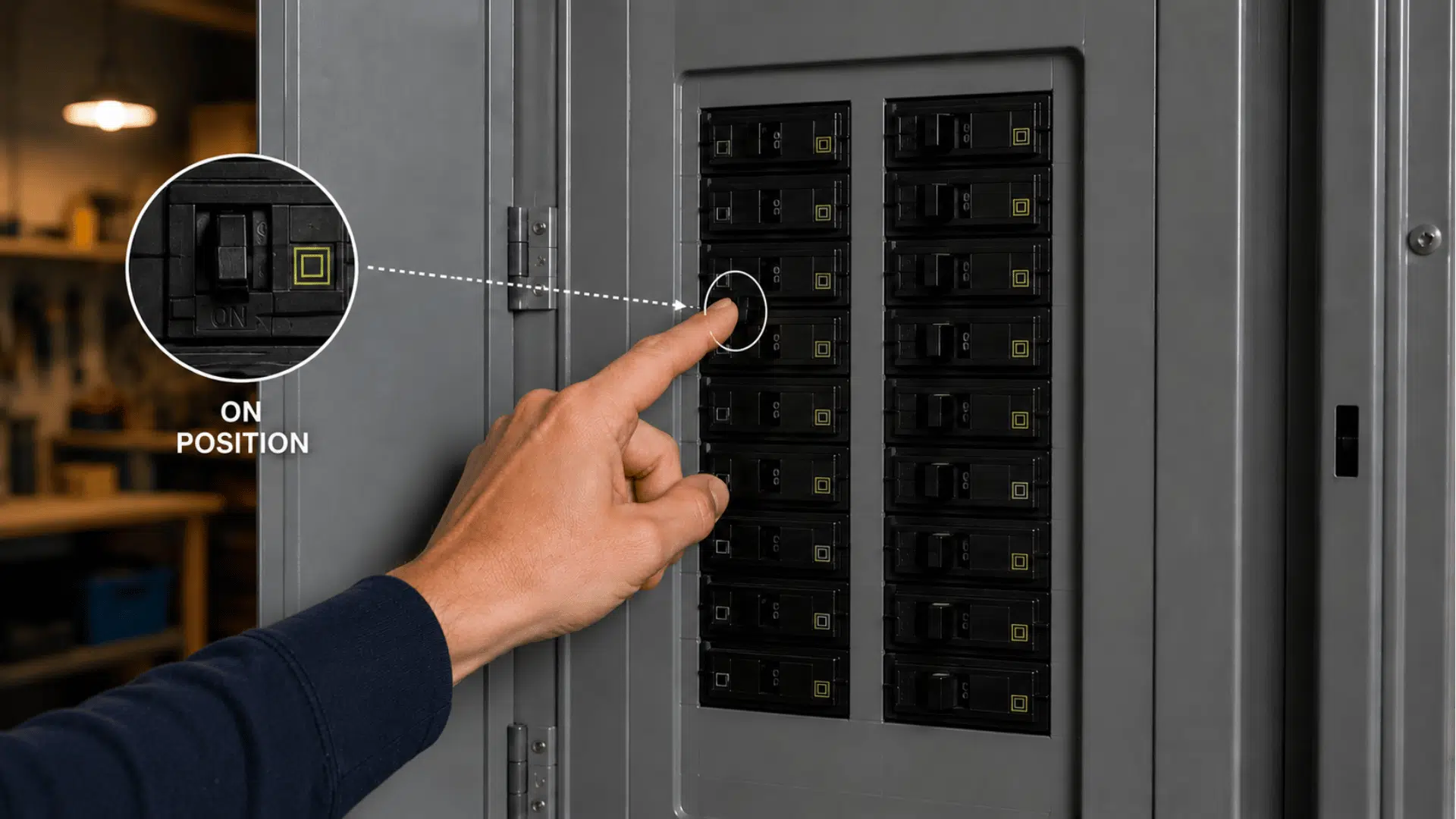
After placing the breaker in the OFF position, firmly push it back to the ON position. Apply steady pressure until it clicks into place.
If the breaker remains in the ON position, power should be restored to the circuit.
However, if it trips again immediately, there may be an unresolved overload, a short circuit, or a faulty device connected to the circuit.
Step 5: Test the Circuit
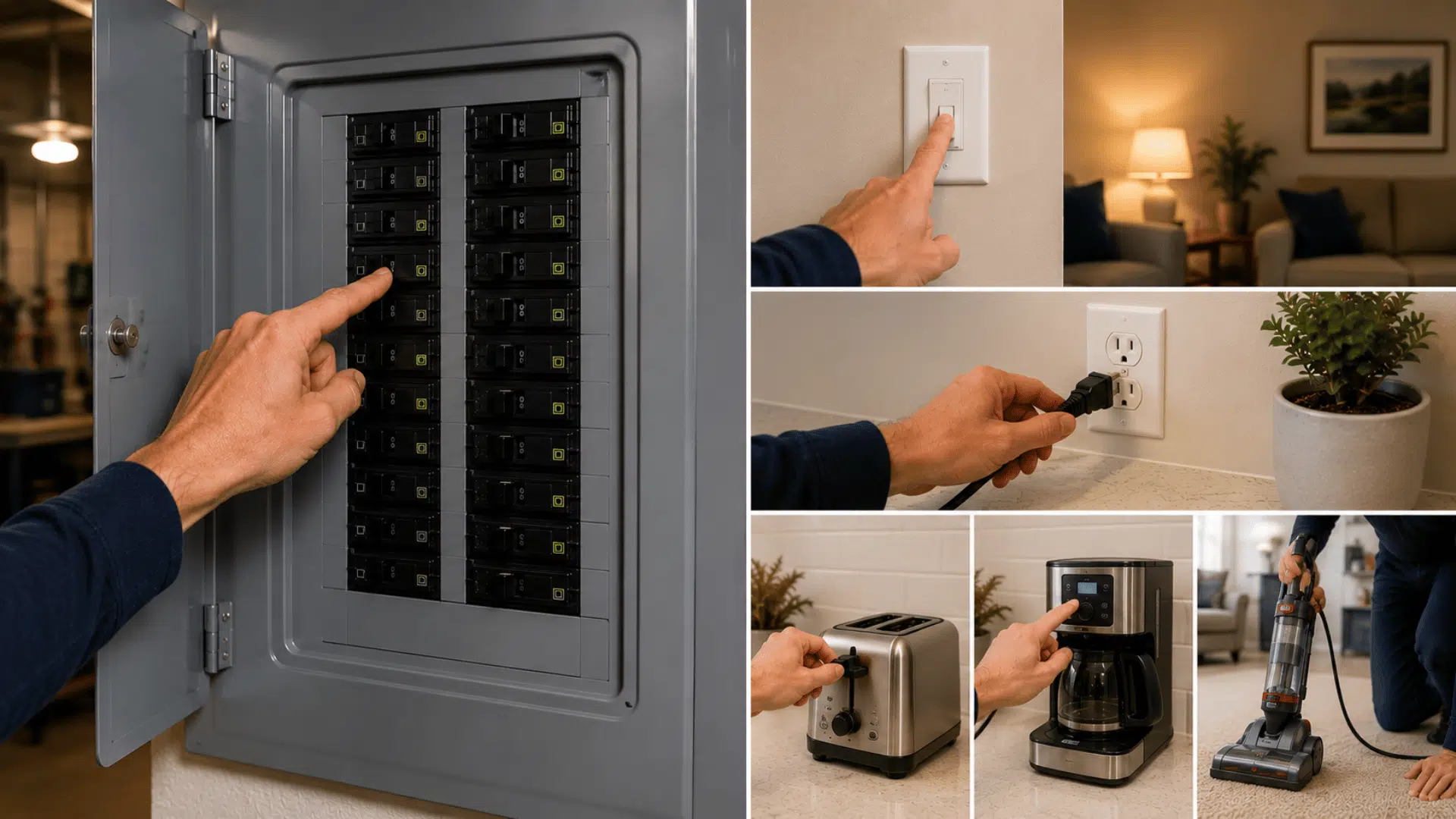
Once the breaker has been reset, test the affected circuit to confirm power has been restored. Turn on the lights, check the outlets, and reconnect the appliances one at a time.
Monitoring the circuit during this stage can help identify whether a specific device is causing the breaker to trip.
If the breaker remains stable, the reset was successful, and normal operation can resume.
Safety Precautions before Resetting a Circuit Breaker
Before attempting a reset, make sure the area is safe, identify any warning signs of serious electrical problems, and take steps to reduce the chance of another trip.
Following basic safety measures can help protect you from electric shock, prevent damage to appliances, and make sure the breaker functions properly after being reset.
1. Turn off Connected Appliances
Before resetting the breaker, switch off or unplug all appliances and electronic devices connected to the affected circuit.
This reduces the electrical load when power is restored and helps prevent the breaker from tripping again immediately, and also protects sensitive electronics from sudden power fluctuations that can occur during the reset process
2. Make Sure your Hands and Surroundings are Dry
Always check that your hands are completely dry before touching the electrical panel. Water is a good conductor of electricity, significantly increasing the risk of electric shock.
The floor and surrounding area should also be dry and free from standing water or damp conditions.
3. Use Adequate Lighting Around the Electrical Panel
Proper lighting is important when working near an electrical panel.
Good visibility allows you to identify the correct breaker, inspect the panel for damage, and avoid accidental contact with other switches.
If the power outage has left the area dark, use a battery-powered flashlight instead of relying on candles or temporary lighting sources.
4. Know When Not to Attempt a Reset
If you notice burning odors, sparks, scorch marks, unusual buzzing sounds, or visible wiring damage, do not attempt to restore power.
These symptoms often point to serious electrical faults that require professional diagnosis and repair.
Continuing to reset the breaker under these conditions could worsen the problem and create significant safety hazards.
What to do if the Circuit Breaker Trips Again
If your circuit breaker trips again shortly after being reset, it’s a sign that the underlying issue has not been resolved. Continuing to reset the breaker without identifying the cause may cause equipment damage or pose safety hazards.
By following a structured troubleshooting process, you can narrow down the source of the problem and determine whether professional assistance is needed.
1. Unplug Devices on the Circuit
Begin by unplugging all appliances and devices connected to the affected circuit. This removes the electrical load and helps determine whether an overloaded circuit caused the breaker to trip.
Once everything is disconnected, attempt to reset the breaker and observe whether it remains on.
2. Reset the Breaker and Reconnect Devices One at a Time
After successfully resetting the breaker, reconnect devices individually rather than all at once. This method allows you to identify whether a specific appliance is causing the problem.
If the breaker trips immediately after connecting a particular device, that appliance may require inspection or replacement.
3. Check for Faulty Appliances
Faulty appliances are a common cause of recurring breaker trips. Inspect power cords, plugs, and the appliance itself for signs of overheating, burning odors, discoloration, or physical damage.
Appliances with internal electrical faults can draw excessive current and repeatedly trigger the breaker.
Why Your Circuit Breaker Won’t Reset
A circuit breaker that won’t reset usually means an electrical issue is still present within the circuit. While some causes can be identified through basic troubleshooting, others may require professional inspection.
Understanding the most common reasons can help you determine the next steps and restore power safely.
- An Active Short Circuit: A short circuit causes a sudden surge of electricity that immediately trips the breaker. As long as the fault remains, the breaker will continue to trip whenever you attempt to reset it.
- A Ground Fault: Ground faults occur when electricity escapes its intended path and flows to the ground through moisture, damaged wiring, or conductive surfaces.
- A Defective Breaker: Circuit breakers can wear out over time due to age and repeated use. An aging breaker may fail to stay in the ON position even when no active fault exists.
- A Circuit Overload: Running multiple high-power appliances on the same circuit can exceed its capacity, causing the breaker to trip repeatedly until the excess load is removed.
- Internal Wiring Issues: Hidden problems such as loose connections, damaged insulation, aging wiring, or rodent damage can prevent a breaker from resetting properly and often require professional inspection.
When to Call a Licensed Electrician
While many circuit breaker issues can be resolved through basic troubleshooting, some situations require professional attention.
Ignoring persistent electrical problems can increase the risk of equipment damage, electrical fires, and safety hazards. Contact a licensed electrician if you notice any of the following warning signs.
- Frequent Breaker Trips: If the same breaker trips repeatedly, there may be an underlying issue such as an overloaded circuit, a faulty appliance, or damaged wiring.
- Burning Smells or Visible Damage: Burning odors, scorch marks, melted components, or sparks around outlets and electrical panels should never be ignored.
- Breaker Will Not Stay Reset: A breaker that trips immediately after being reset typically signals a short circuit, ground fault, or wiring issue.
- Older Electrical Panels: Outdated panels may struggle with modern demand. If your home still has a fuse box or a panel brand known to be problematic, an electrician can advise whether an upgrade is warranted.
Common Circuit Breaker Mistakes to Avoid
Many breaker-related issues stem from preventable mistakes. Understanding these common errors and their solutions can help reduce the risk of repeated trips and improve the safety of your electrical system.
| Common Mistake | Solution |
|---|---|
| Plugging too many devices into a single outlet or circuit | Distribute electrical loads across multiple circuits and avoid overloading outlets. |
| Repeatedly resetting a tripped breaker without finding the cause | Identify and resolve the underlying issue before attempting another reset. |
| Ignoring warning signs such as burning smells, buzzing sounds, or heat | Stop using the circuit immediately and contact a licensed electrician. |
| Running multiple high-power appliances on the same circuit | Spread appliances such as space heaters, microwaves, and air conditioners across different circuits. |
| Delaying electrical inspections on older systems | Schedule periodic inspections to identify potential problems before they become serious. |
| Attempting DIY repairs on damaged wiring | Leave wiring repairs and panel work to qualified electrical professionals. |
At the End
Resetting a circuit breaker is often a simple solution to restore power after a trip, but it should always be done with safety in mind.
By identifying the cause of the trip, following proper reset procedures, and using basic troubleshooting techniques, you can often resolve minor issues without difficulty.
However, persistent trips, breakers that won’t reset, or signs of electrical damage should never be ignored. When in doubt, consult a licensed electrician to make sure your electrical system remains safe and reliable.
Circuit breakers are important safety devices designed to protect your home and appliances, so prompt attention to any recurring issues is crucial.
Frequently Asked Questions
Is it Safe to Reset a Circuit Breaker yourself?
Yes, in most situations, homeowners can safely reset a circuit breaker if there are no signs of burning, sparks, or visible damage. Always follow basic safety precautions before attempting a reset.
How Many Times can a Circuit Breaker be Reset?
Circuit breakers can be reset multiple times during their lifespan. However, frequent tripping often indicates an underlying electrical issue that should be investigated rather than repeatedly ignored.
Why does My Breaker Trip Immediately After Resetting?
Immediate tripping usually indicates an unresolved problem, such as a short circuit, a ground fault, an overloaded circuit, or a faulty appliance connected to the affected circuit.
Can a Bad Circuit Breaker be Repaired?
Most circuit breakers are replaced rather than repaired. Since they are critical safety devices, replacement is typically the safest and most reliable solution.
What Happens if I Keep Resetting a Breaker that Trips?
Repeatedly resetting a tripped breaker can hide serious electrical faults and increase safety risks. It’s important to identify and fix the root cause before restoring power.

With a Master’s in Architecture from the University of California, Berkeley, Mitchell Green has spent over two decades dedicated to the study and practical application of home fixture design. His career started in an architectural firm, providing him a strong foundation in the structural and aesthetic aspects of home interiors. Mitchell brought his comprehensive knowledge to our platform, where he has been an influential voice in our home fixtures and fittings section. Since 2018, he has been guiding our readers through the intricacies of selecting and installing fixtures, combining technical know-how with design flair. In his spare time, Mitchell is a keen photographer, capturing architectural details and design elements, an interest that complements his professional focus.