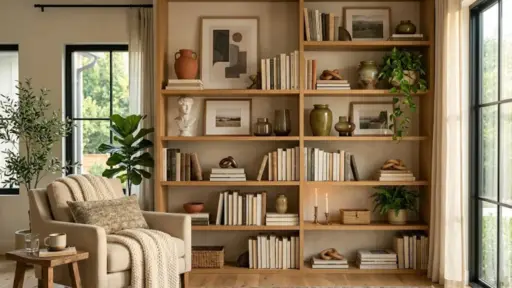
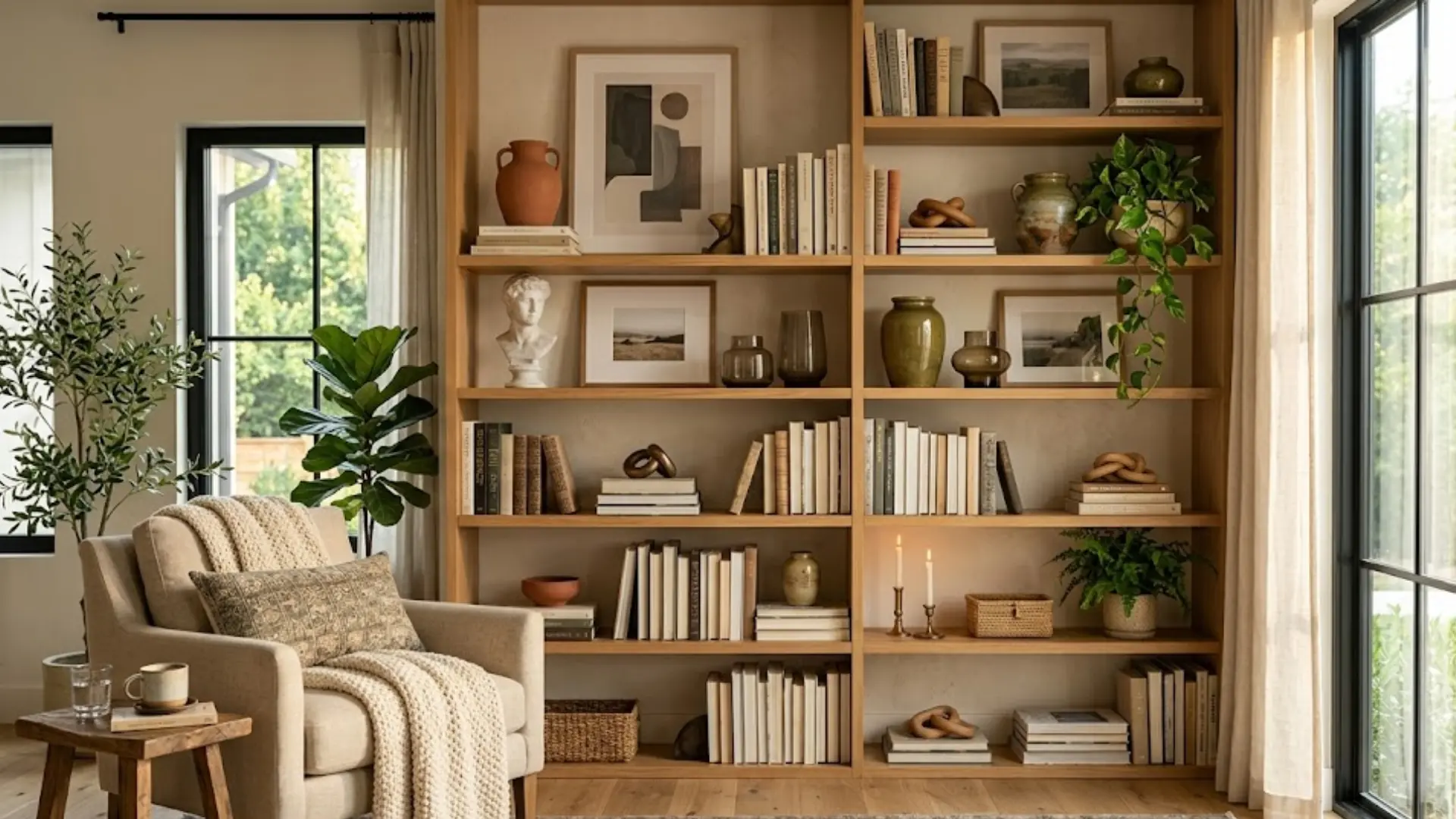

A shelf full of random stuff is just clutter with better posture. But a well-styled bookshelf can completely change how a room feels.
Learning how to style a bookshelf is easier than you think. You don’t need a big budget or a design background to get it right.
A few simple changes can make your shelf look clean, personal, and put together. The key is knowing where to start and what to keep.
Once you clear the clutter, everything else falls into place. Your shelf should feel like a reflection of you, not a storage dump.
Start simple, stay true to your taste, and the results will speak for themselves!
What Makes a Well-Styled Bookshelf?
A good-looking bookshelf isn’t just about piling books onto shelves. It’s about making the space feel intentional and easy on the eyes.
The best shelves find a balance. They hold the things you actually need while still looking nice. You don’t want clutter, but you also don’t want empty, boring shelves.
Visual interest matters too. Try mixing tall items with short ones. Add different textures, like wood, ceramic, or plants. Leave some empty space on purpose; it gives the eye a place to rest.
Your bookshelf should also fit your room’s overall vibe. A rustic room calls for warm, natural touches. A modern space looks better with clean lines and fewer objects.
Different Types of Bookshelves
Not every bookshelf is the same, and each type comes with its own styling challenges. The table below breaks down what works best for each kind:
| Shelf Type | Key Considerations | Priority Focus |
|---|---|---|
| Built-In Bookshelves | Styling around a fireplace; filling tall vertical spaces | Create visual balance across the full unit from top to bottom |
| Floating Shelves | Minimal styling techniques; weight balance tips | Keep it light and simple — less is always more here |
| Open Shelving Units | Keeping open shelves organized; avoiding visual clutter | Group items intentionally so the shelf looks curated, not random |
| Small Bookshelves | Space-saving styling ideas; making shelves look larger | Choose fewer, well-proportioned pieces that don’t overwhelm the space |
Every shelf type can look great with the right approach. The key is working with what you have rather than against it.
Things to Remove Before Styling a Bookshelf
Before you start styling, you need to clear the slate. It’s hard to make good decisions when the shelf is still full of random stuff.Here’s what to remove before you start putting things back:
- Take off old papers, mail, or anything that doesn’t belong on a shelf at all.
- Remove items you’ve had for years but never actually liked — be honest with yourself.
- Get rid of duplicate decor, like three small vases doing the same job as one.
- Cut down on accessories that don’t match the room’s style or feel out of place.
- Keep only the things you truly want to see every day — books, art, plants, or personal pieces.
Once the shelf is clear, the real fun begins. You now have a blank space ready to work with. The steps ahead will show you exactly what to do next.
Step 1: Start With Your Largest Items
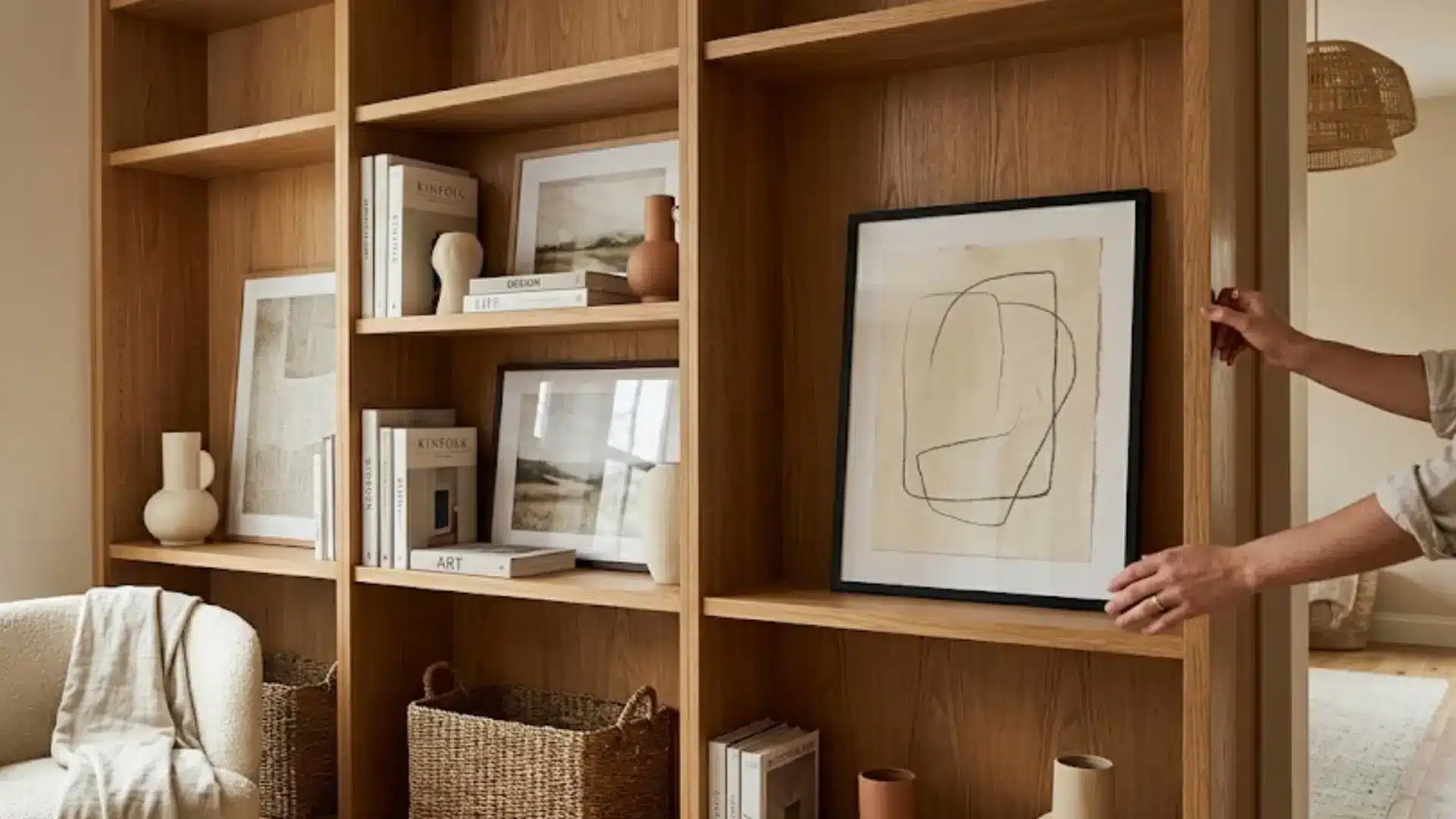
Before you add anything small, get your big pieces in place first. Here’s how to work with your largest items:
- Framed art: Place these at the back of a shelf; they work great as backdrops for smaller items.
- Storage boxes: Set these down first, since they take up the most room on any shelf.
- Large books: Use these flat or upright to anchor one side of a shelf section.
- Statement decor pieces: Spread these across different shelves to create natural focal points.
- Large books and framed art: Mix these together on the same shelf to keep things from looking too uniform.
- Storage boxes and statement pieces: Step back and check the balance; adjust these before adding anything smaller.
Once your large items are placed, the shelf will already start to look more intentional. The smaller pieces will be much easier to arrange from here.
Step 2: Arrange Books Strategically
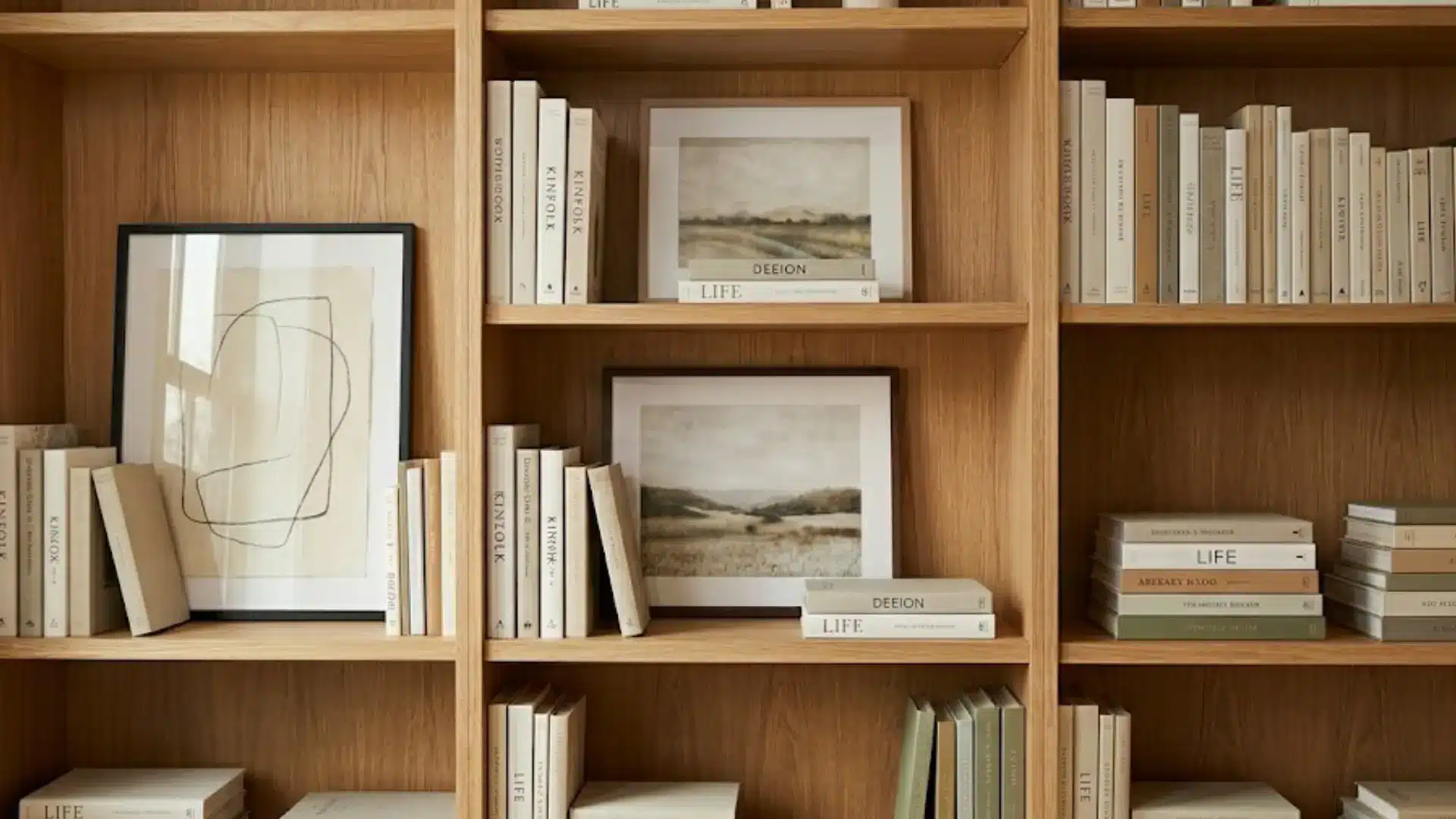
Books are the heart of any bookshelf, so how you arrange them really matters. There are a few simple strategies that can make a big difference:
1. Mix Horizontal and Vertical Stacking
You don’t have to line up every book the same way. Try standing some books upright and laying others flat in small stacks. Flat stacks are great for creating levels on a shelf.
You can place a small decor item on top of a horizontal stack, too. Mixing both styles adds variety and keeps the shelf from looking too rigid or repetitive.
2. Organize by Color or Size
Grouping books by color is one of the easiest ways to make a shelf look pulled together. You don’t need a perfect rainbow; even grouping warm tones together works well.
Organizing by size is another option. Place taller books on the outside edges and shorter ones in the middle. Either method creates a sense of order without much effort.
3. Leave Breathing Room Between Books
Don’t pack every book tightly from one end to the other. Leaving small gaps between groups of books makes the shelf feel less cluttered.
Use that extra space to tuck in a small plant, a candle, or a simple decor piece. Breathing room also makes it easier to grab a book without disturbing the rest of the space.
Step 3: Add Decorative Objects
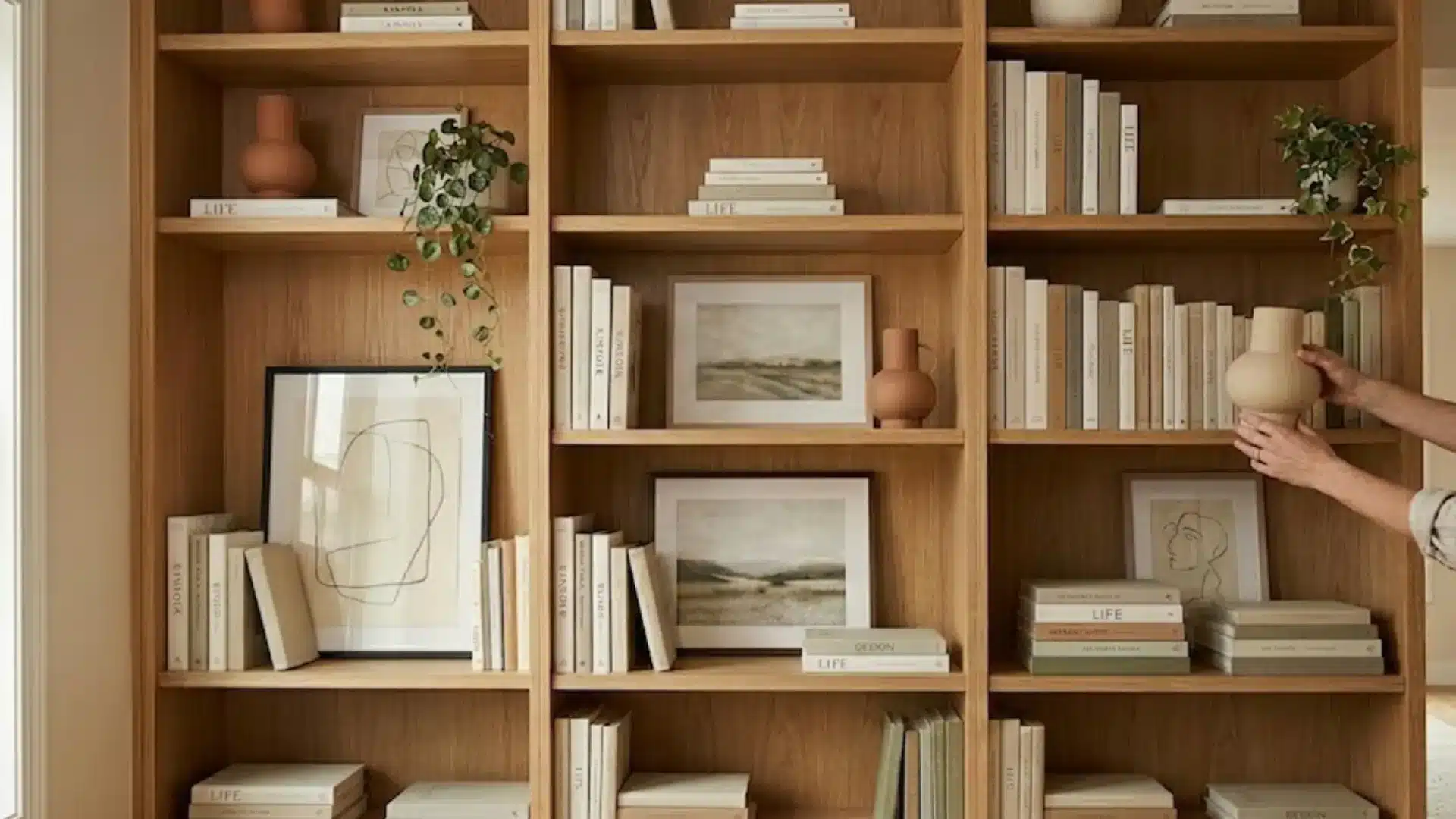
The right decorative items can take a bookshelf from plain to polished. Here are the best ways to style yours with objects, art, plants, and storage:
1. Decorative Objects That Always Work
Small decor pieces add personality to any shelf. You don’t need expensive items — just a few well-chosen pieces go a long way.
- Ceramic vases: Use one or two in different sizes to add height and texture to a shelf.
- Candlesticks: Place these between books to break up the rows and add a touch of warmth.
- Sculptures and decorative bowls: Use these as focal points on shelves that need a little extra interest.
Less is more when it comes to decorative objects. Pick pieces you genuinely like and resist the urge to fill every gap.
2. Using Artwork and Frames
Art and frames bring a personal touch to any bookshelf. They also add height and visual interest without taking up much space.
- Leaning art pieces: Rest these against the back wall of a shelf instead of hanging them for a relaxed look.
- Family photos: Tuck a framed photo between books to make the shelf feel warm and personal.
- Small prints: Use these to fill awkward gaps or add a pop of color to a plain section.
You don’t need to cover every shelf with art. A few well-placed frames can do all the work.
3. Adding Plants to a Bookshelf
Plants bring life and color to a bookshelf in a way no decor item can. Even one or two small plants can make a big difference.
- Trailing plants: Let these hang over the edge of a shelf to add movement and softness.
- Small potted greenery: Place these next to books or decor items to break up hard lines.
- Faux vs real plants: Faux plants work great in low-light spots where real plants wouldn’t survive.
Don’t overthink the plant placement. Put them where they look natural and where they’ll actually get enough light.
4. Storage Solutions That Look Stylish
Storage doesn’t have to look boring or purely functional. The right pieces can keep things tidy while still looking great.
- Woven baskets: Use these on lower shelves to hide everyday clutter in a stylish way.
- Decorative boxes: Stack these to add height and keep small items out of sight.
- Hidden storage bins: Tuck these behind books or decor so they combine in naturally.
Good storage makes a shelf look intentional rather than messy. Choose pieces that match your room’s overall style and color palette.
Step 4: Layer Accessories for Depth
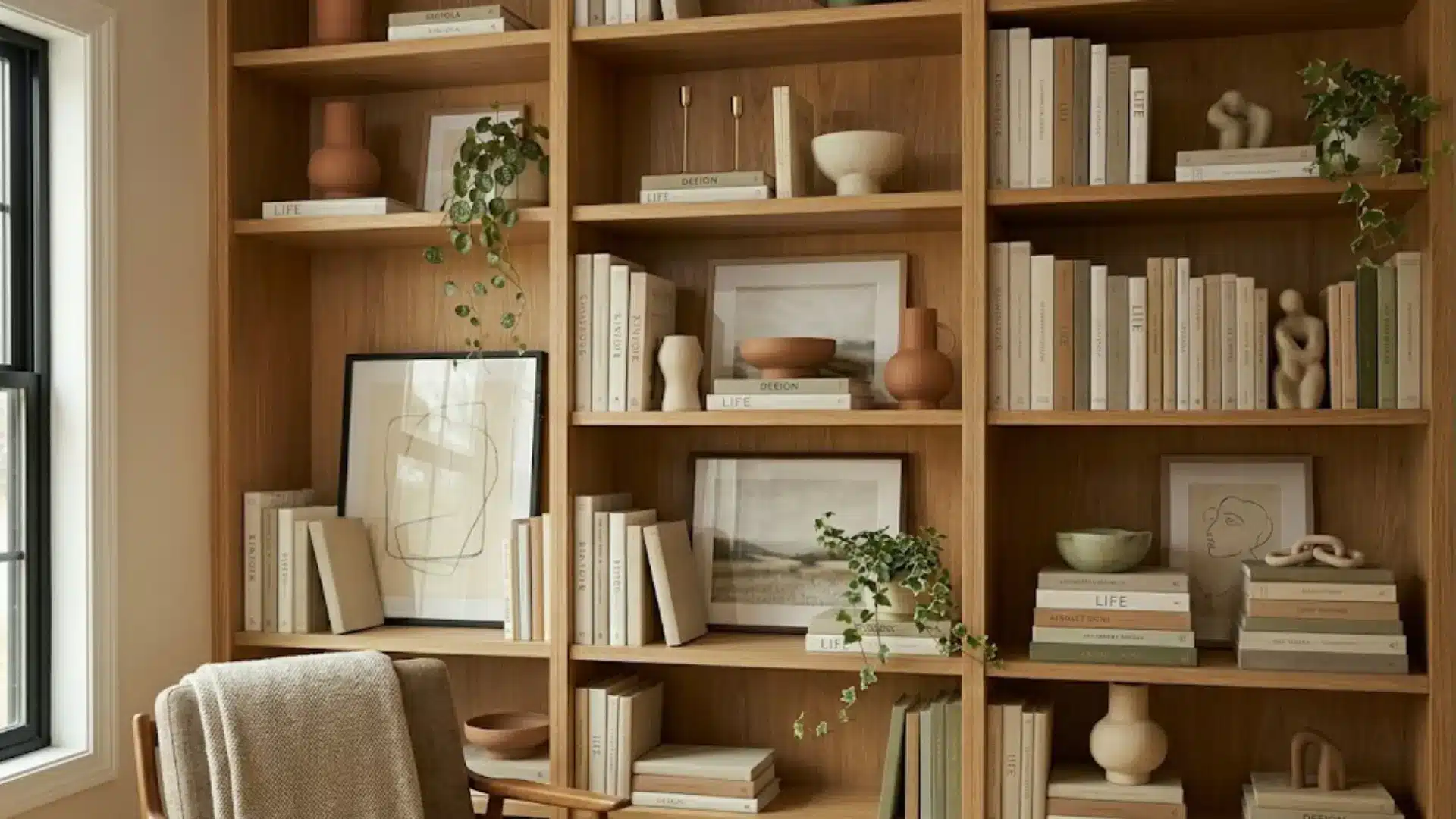
A well-layered shelf has objects at different distances from the eye. Here’s how to build that depth:
- Leaning artwork: Rest a small print or frame against the back wall behind other objects to create a backdrop.
- Overlapping decor pieces: Place a smaller item slightly in front of a larger one to add a sense of dimension.
- Mixing distances: Push some items to the back of the shelf and bring others forward to create visual layers.
- Combining heights: Group a tall item, a medium item, and a short item together so the eye moves naturally across the shelf.
- Using books as risers: Stack a few books flat and place a decor piece on top to lift it and add another layer.
Layering doesn’t have to be complicated; small shifts in placement make a big difference. Step back after each change and trust what looks balanced to your eye.
Step 5: Use Negative Space Wisely
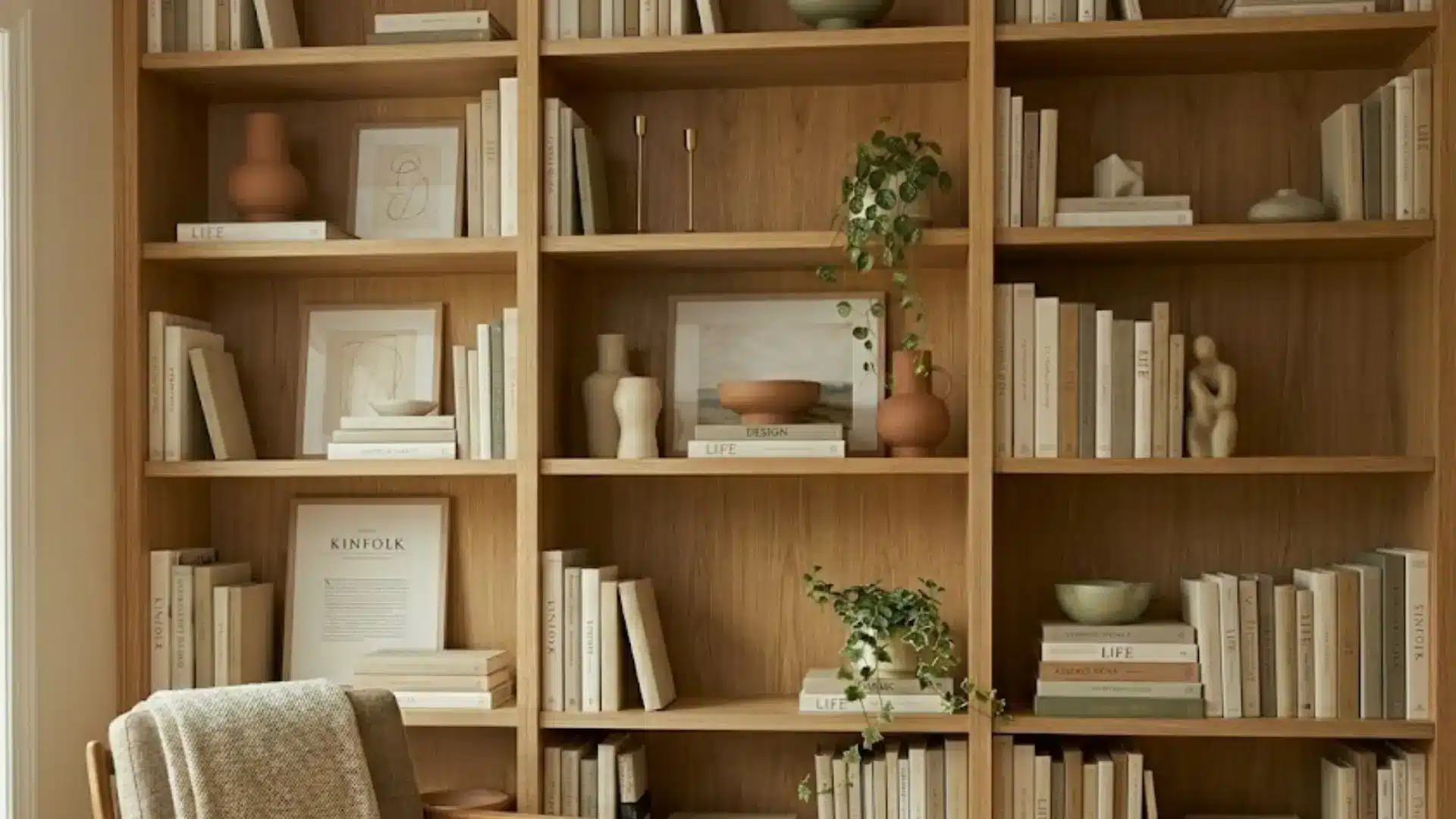
Empty space on a shelf is not wasted space. It’s actually one of the most powerful styling tools you have.
When every inch is filled, the eye doesn’t know where to look. Things start to mix together, and nothing stands out. A little breathing room fixes that fast.
Leave a gap between groups of books or objects. Let one section of a shelf stay mostly empty on purpose. This draws attention to the items nearby and makes them feel more intentional.
Overcrowded shelves also feel stressful to look at. Simple and clean almost always beats busy and packed. Edit often. If something doesn’t add to the shelf, it’s okay to take it off.
Designer-Approved Bookshelf Styling Ideas
Great styling isn’t one-size-fits-all; it depends on the look you’re going for. Here are some designer-approved styles to inspire you:
1. Minimalist Bookshelf Styling
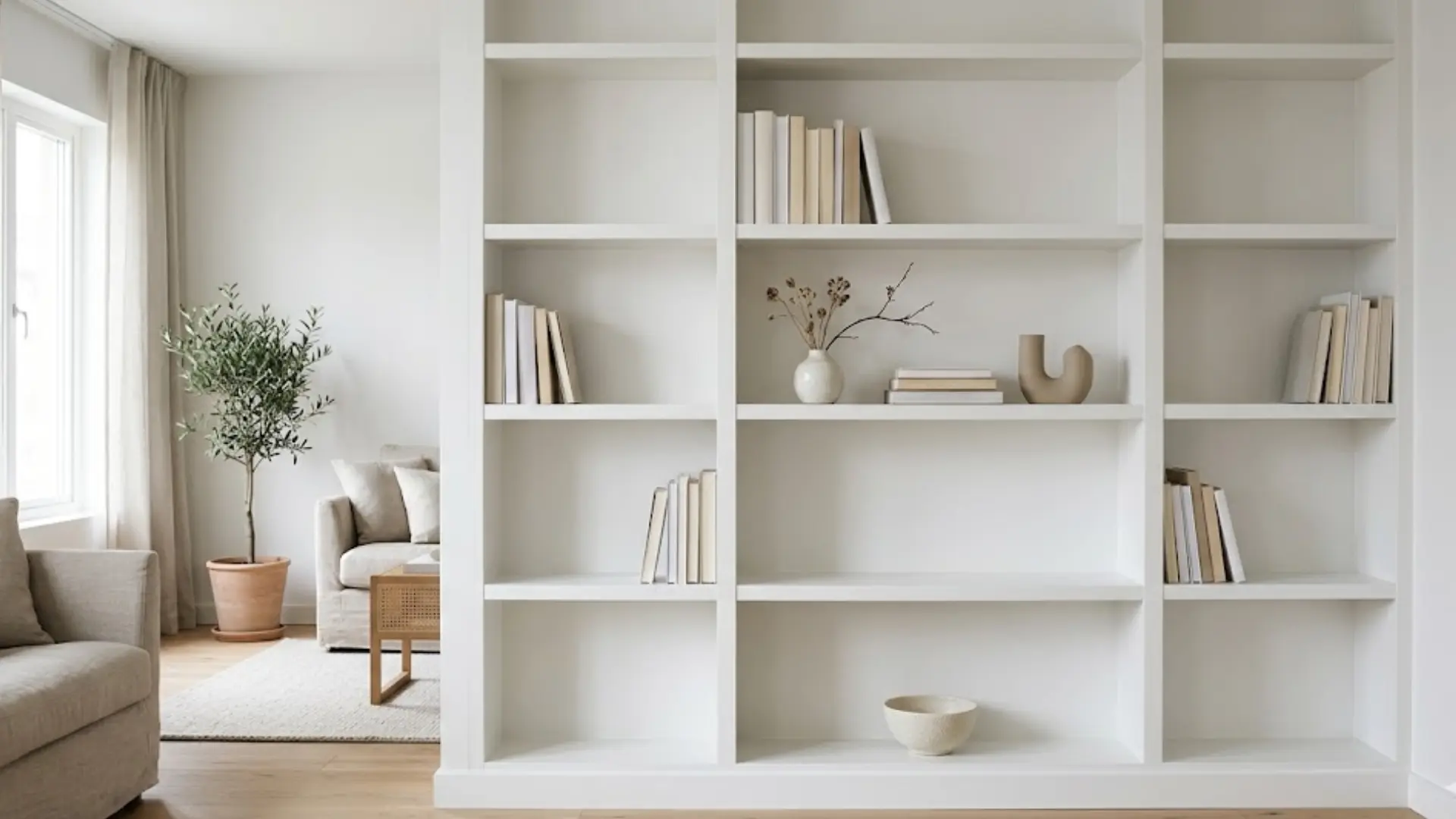
Less is truly more with this style. Stick to neutral colors like white, beige, and grey. Keep accessories to a minimum and let the books do most of the work.
Clean lines and simple arrangements are the goal here. Avoid anything too decorative or busy. A minimalist shelf feels calm and intentional; every item on it earns its place.
2. Modern Bookshelf Styling
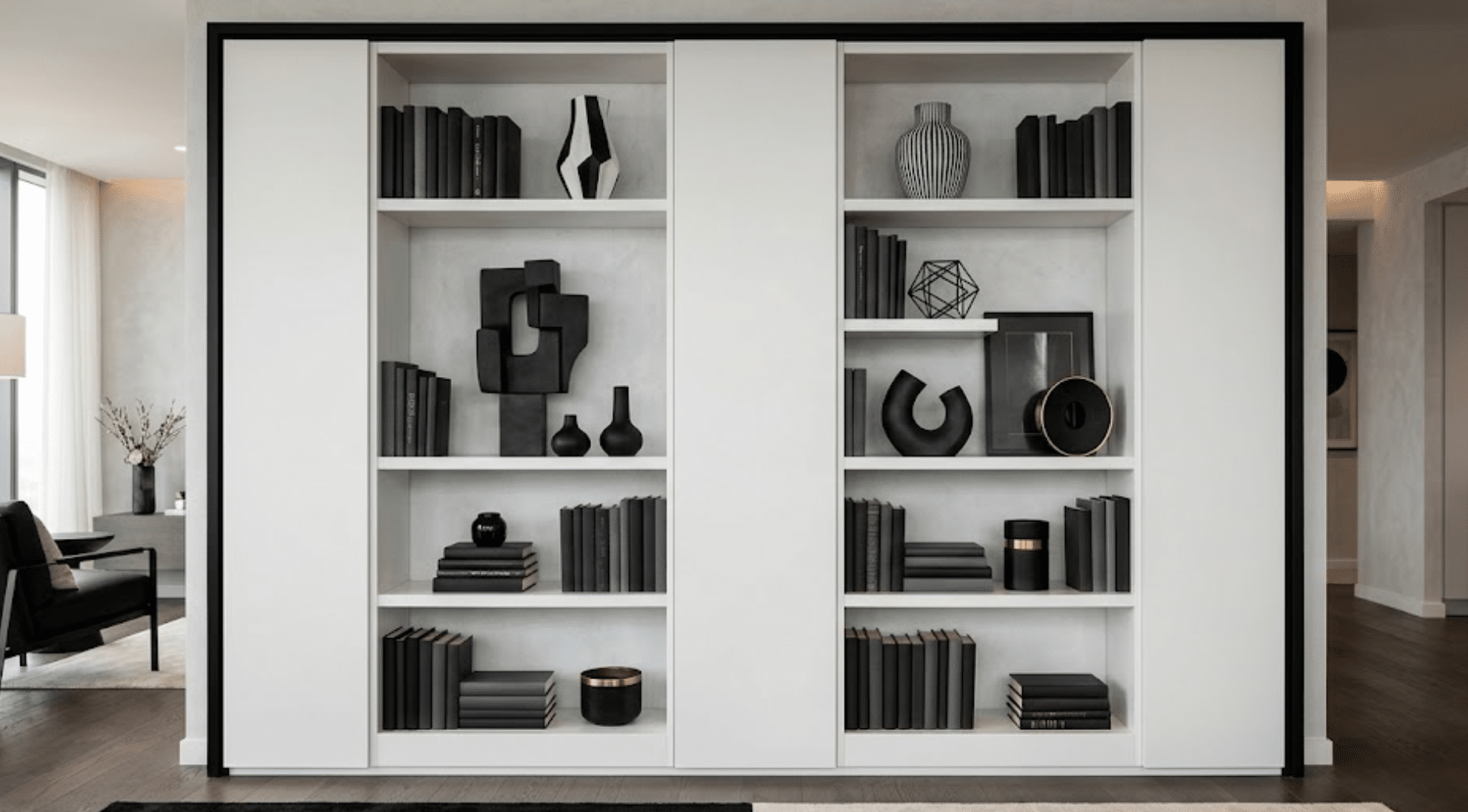
Modern shelves are bold and structured. Use sculptural decor pieces with interesting shapes to create visual interest.
Black-and-white contrast works really well here; think dark books against light shelves. Symmetry is your friend with this style.
Mirror one side of a shelf with the other to keep things sharp and balanced. Keep the color palette tight and controlled.
3. Cozy and Collected Look
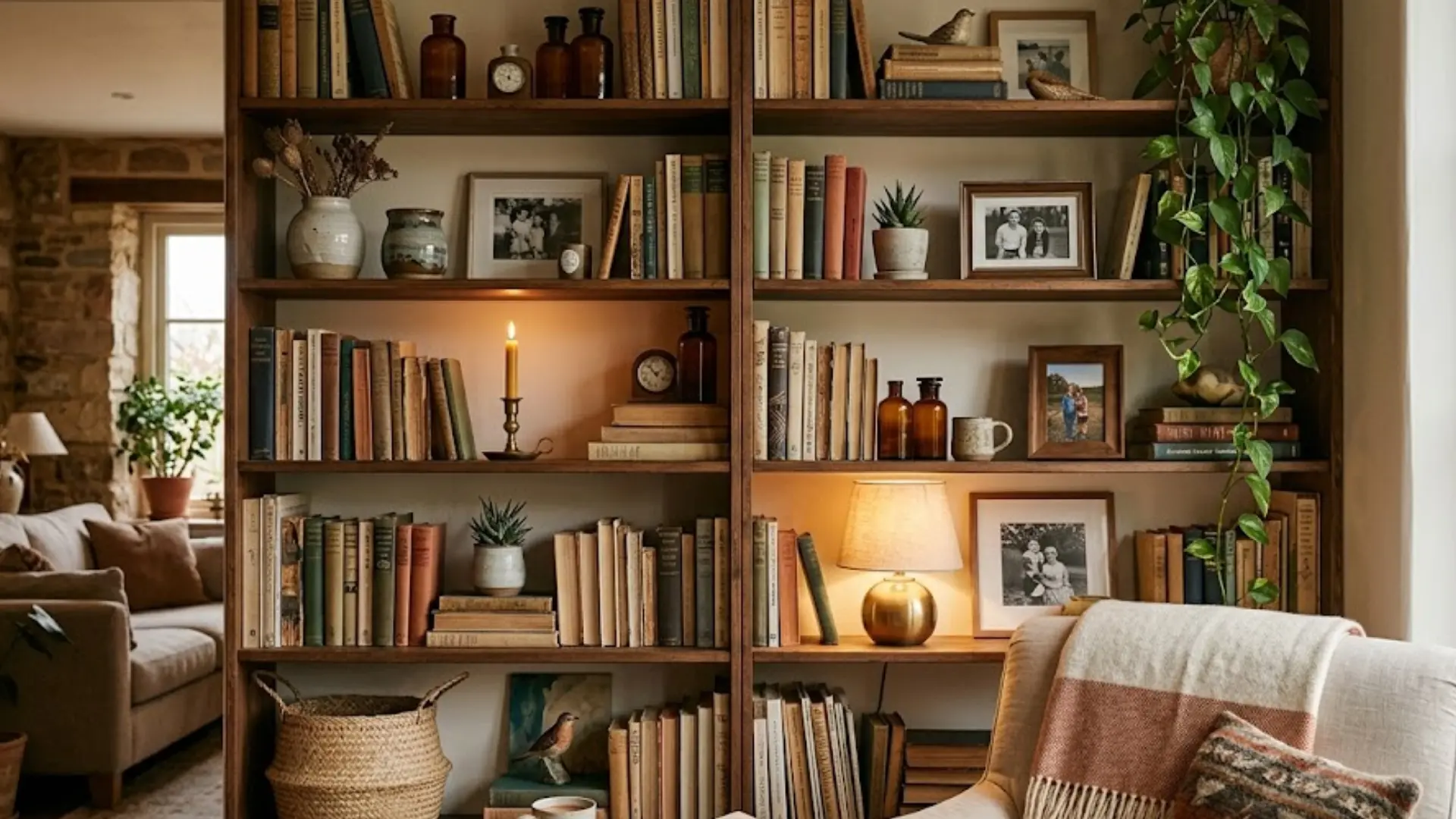
This style feels warm, lived-in, and personal. Layer different textures like linen, wood, and ceramic together. Mix in some vintage books with worn spines for character.
Add warm decor accents like candles, amber glass, or earthy tones. This look works best when it feels a little imperfect. Don’t overthink it; just arrange pieces that feel meaningful and comfortable to you.
4. Color-Coordinated Bookshelves
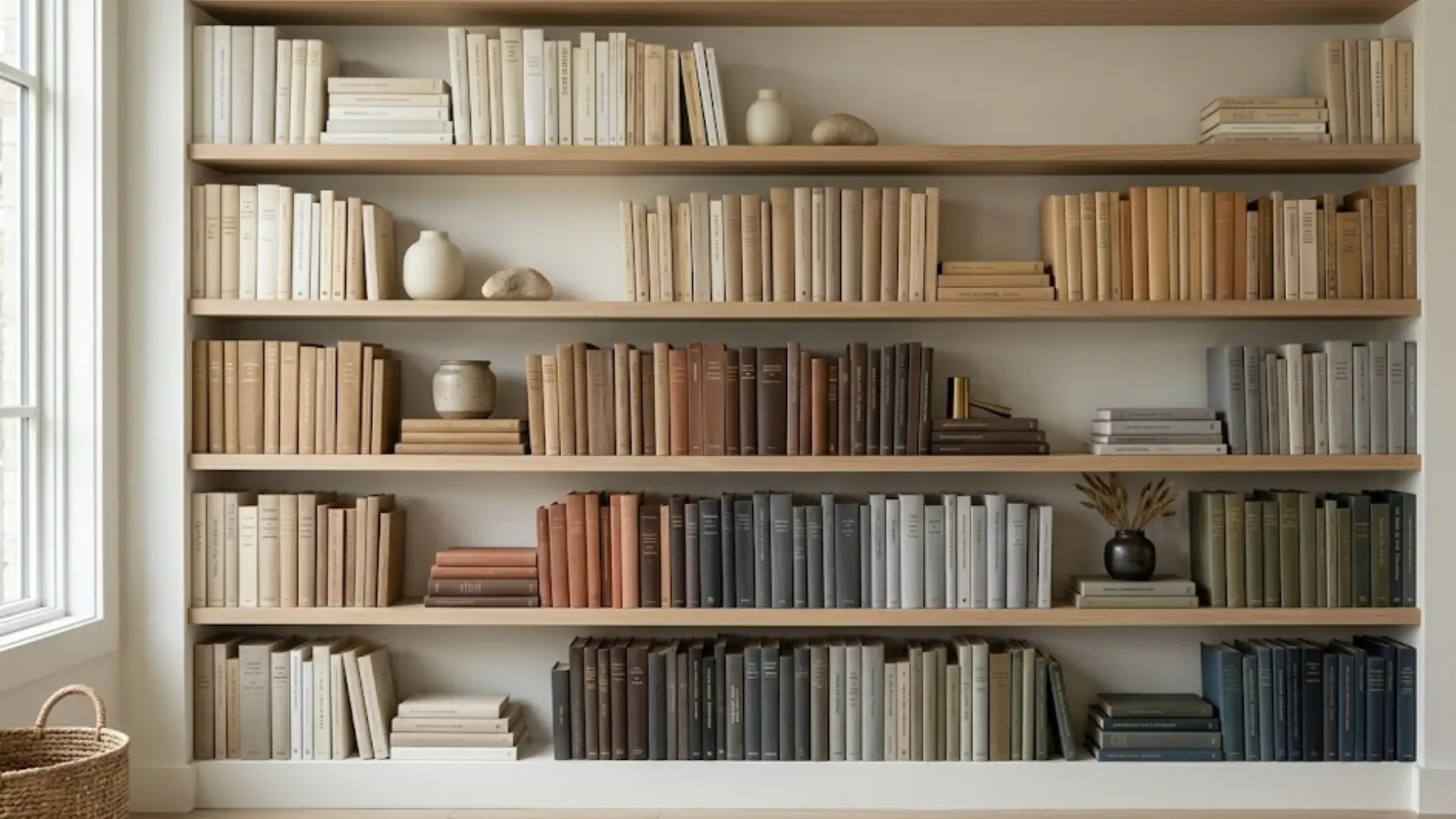
Organizing books by color is one of the most eye-catching shelf styles. A full rainbow arrangement looks bold and playful. Prefer something calmer? Stick to neutral-toned books for a softer effect.
Monochromatic styling, using one color family throughout, looks incredibly clean and deliberate. This style is more about visual impact than function, but it’s hard to look away from.
5. Luxury Bookshelf Styling
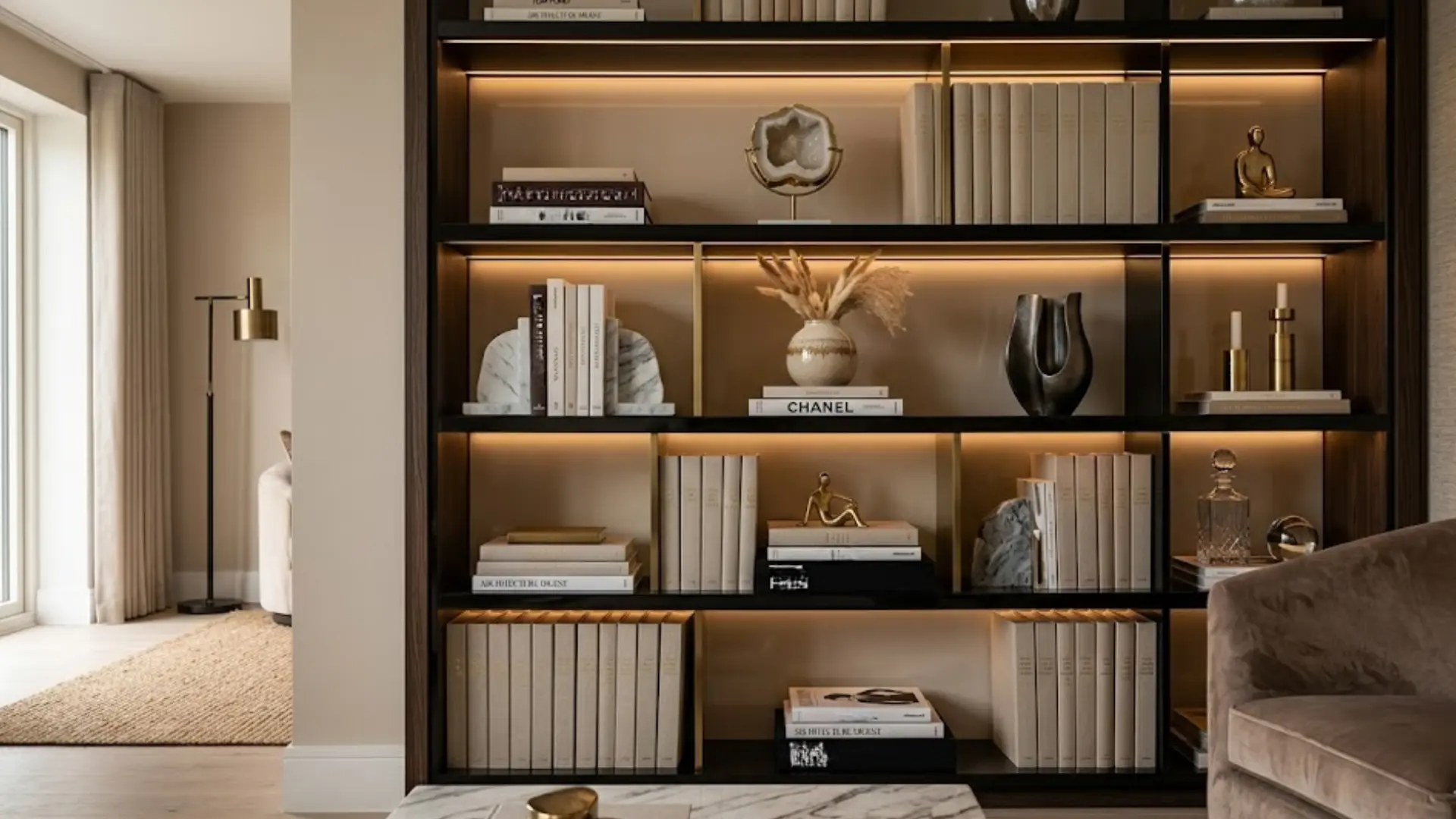
This style is all about details. When decorating a bookshelf this way, every piece you choose should feel intentional and refined. Add marble accents like small trays or bookends for a high-end feel.
Metallic finishes in gold or brass catch the light and add richness. Stack designer coffee table books flat to create stylish risers. You don’t need many items; just the right ones placed with care and confidence.
Seasonal Bookshelf Styling Ideas
Your bookshelf doesn’t have to look the same all year round. Small seasonal updates can keep it feeling fresh and relevant:
| Season | Color Palette | Key Decor Elements |
|---|---|---|
| Spring and Summer | Light, airy colors; whites, pastels, soft greens | Fresh greenery, small potted plants, light fabrics |
| Fall | Warm tones: rust, amber, burnt orange, deep brown | Textured accents like woven baskets, pinecones, and wooden pieces |
| Winter and Holiday | Cool whites, deep greens, gold, and silver | Candles, cozy elements like small knit pieces, festive accents |
You don’t need to do a full overhaul each season. Even something as simple as wallpapering a bookshelf back panel can give it a whole new feel without swapping out every piece.
Bookshelf Styling Tips for Every Room
Every room has a different purpose, and your bookshelf styling should reflect that. Here are some simple tips for getting it right in every space:
- Living room bookshelves: This is your most visible shelf, so balance books with decor, art, and plants. Keep it personal but polished.
- Home office shelves: Function comes first here; keep things organized and easy to access. Add a plant or a framed print to soften the space without creating a distraction.
- Bedroom bookshelf styling: Keep it calm and clutter-free. Stick to books you love, a candle or two, and a few personal pieces that feel relaxing.
- Dining room built-ins: Mix practical storage like baskets and boxes with decorative items that match your table setting. Keep the overall look clean and coordinated.
- General rule for every room: Always match the shelf’s style to the room’s mood and purpose. A shelf that fits the space will always look more intentional.
The room your shelf lives in should guide every styling decision you make. When in doubt, keep it simple and let the space tell you what it needs.
Final Words
Styling a bookshelf is one of the easiest ways to refresh a room. It’s not about perfection. It’s about making your space feel like you.
Take your time with each shelf and don’t rush it. The best part about learning how to style a bookshelf is that anyone can do it. Try out different layouts and see what feels right to your eye.
Move things around until it all clicks. Small changes really can make a big difference. You don’t need to get it right on the first try.
Keep it simple, stay true to your taste, and enjoy the process. Drop your favorite styling tip in the comments below!

With a Master’s in Architecture from the University of California, Berkeley, Mitchell Green has spent over two decades dedicated to the study and practical application of home fixture design. His career started in an architectural firm, providing him a strong foundation in the structural and aesthetic aspects of home interiors. Mitchell brought his comprehensive knowledge to our platform, where he has been an influential voice in our home fixtures and fittings section. Since 2018, he has been guiding our readers through the intricacies of selecting and installing fixtures, combining technical know-how with design flair. In his spare time, Mitchell is a keen photographer, capturing architectural details and design elements, an interest that complements his professional focus.