
Is one of your radiators warm at the bottom but cold up top? It’s called bleeding the radiator, and it releases the trapped air that keeps hot water from filling the entire panel.
You don’t need a plumber or fancy tools: just a few minutes and a small key.
In this guide, I’ll walk you through how to bleed a radiator in 8 simple steps. I’ll show you the tools you need, how to tell which radiators need them, and which one to start with.
I’ll also cover what to do when a radiator still feels cold, how often you should do this, and a few common questions I hear. Let’s get your home warm and cozy again.
Why Air Collects in the First Place
From a systems point of view, air gets into a sealed heating loop in three main ways. Dissolved gases come out of solution as water is repeatedly heated and cooled, for the same reason bubbles form in a pan before it boils.
On older setups where the pump sits above the supply pipe (common in homes with a loft tank), the low-pressure side can draw air in.
And as steel components slowly corrode, the reaction can release small amounts of hydrogen gas inside the system. Because gas is lighter than water, it rises and parks at the top of the panel, which is exactly why the cold patch shows up at the top, not the bottom.
What You’ll Need
You don’t need a toolbox full of gear for this job. In fact, that’s one of the best things about bleeding a radiator: the kit is cheap, simple, and easy to find.
Most of these you probably already have at home, and the one tool you might be missing costs only a pound or two at any hardware store.
Here’s everything you need to get the job done:
- Radiator bleed key: The main tool for opening the valve. It costs very little and is sold at most hardware stores.
- Old towel or rag: To catch drips and wipe up any mess around the valve.
- Small container or jug: Held under the valve to collect the water that comes out.
- Flathead screwdriver: On many newer radiators, this fits the valve instead of a key, so check your valve type before you buy.
How to Know if Your Radiator Needs Bleeding
Most of the time, your radiators will tell you when something’s wrong; you just need to know what to listen for and feel. Trapped air gives off a few clear clues, and once you’ve spotted them, they’re easy to recognize again.
There are three signs to watch for:
1. The radiator feels cold at the top but warm at the bottom, which is the biggest clue of all.
2. It takes much longer to heat up than it used to.
3. You might hear gurgling or rattling noises when the heating first kicks on.
Any of these points points to trapped air, and all three together mean it’s definitely time to bleed that radiator.
A Few Safety Tips Before You Start
Bleeding a radiator is low risk, but a couple of things are worth keeping in mind before you pick up the key.
- Always wait for the radiator to cool before you open the valve. I know it’s tempting to get started while the heating is still on, but hot water under pressure can spray out fast and cause a nasty scald. Twenty to thirty minutes after switching off is enough.
- Wear an old shirt or something you don’t mind getting marked. The water that comes out is often dark and rusty, and it will stain fabric if it splashes.
- Keep children and pets out of the room while you work. The water on the floor is a slip hazard, and the valve is small enough that curious hands can quickly make things messy.
- Finally, never force the bleed valve. If it feels stiff or won’t turn smoothly, stop. A damaged valve leaks, and a leaking radiator is a much bigger problem than a cold one. If the valve is stuck, that’s a job for a heating engineer.
How to Bleed a Radiator
Bleeding a radiator sounds technical, but it’s one of the easiest home jobs you’ll ever do. The whole point is to let out the air trapped inside so that hot water can fill the panel again.
I’ll break the process into eight clear steps below, and each one takes just a minute or two. Don’t rush them, though, because doing each step properly is what keeps the job clean and safe.
Step 1: Turn Your Heating On
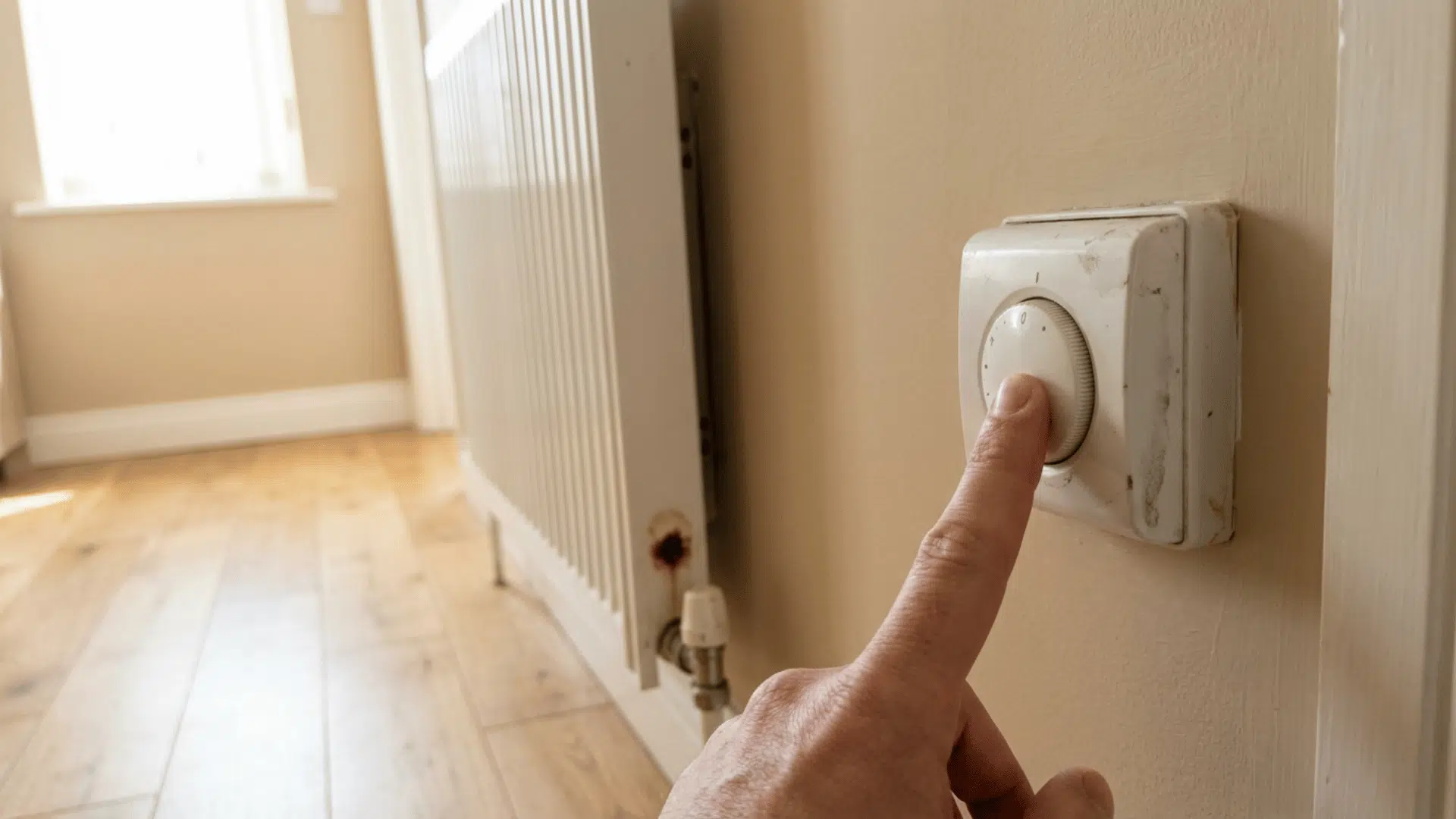
Start by switching your heating on and letting all your radiators warm up fully, which usually takes about 10 to 15 minutes.
The reason is simple: a warm system builds pressure, and that pressure makes it much easier to feel exactly where the cold patches are. Don’t rush this part, as a radiator that hasn’t fully warmed up can fool you.
Step 2: Check for Cold Spots
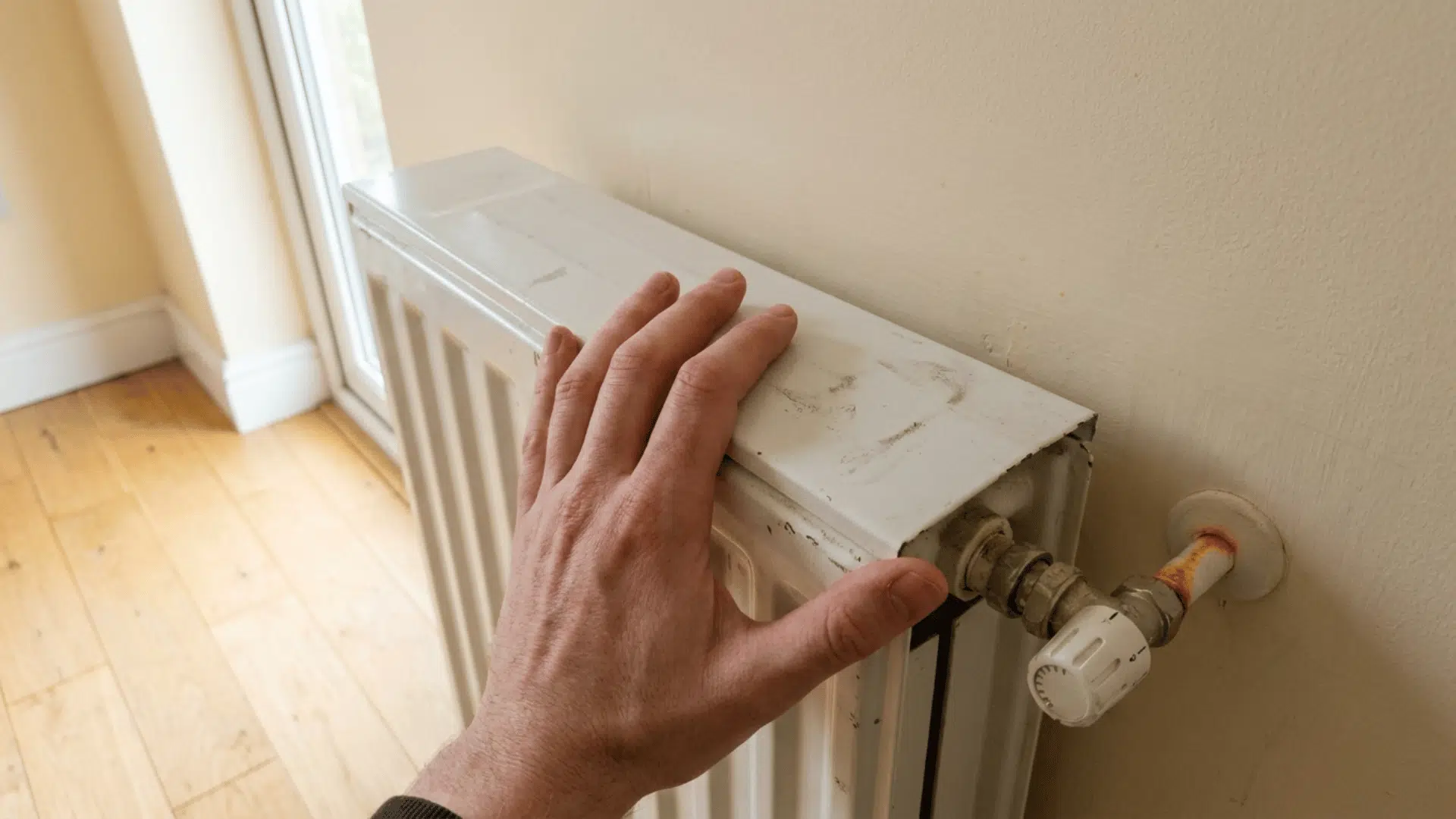
Carefully feel the top of each radiator with your hand. If one is warm at the bottom but cool up top, trapped air is the likely cause. Be gentle, since the radiators will be hot at this point.
I like to do a quick walk around the whole house first and note which ones feel patchy. That way, I’m not running back and forth later trying to remember which radiator needed work.
Step 3: Turn the Heating Off
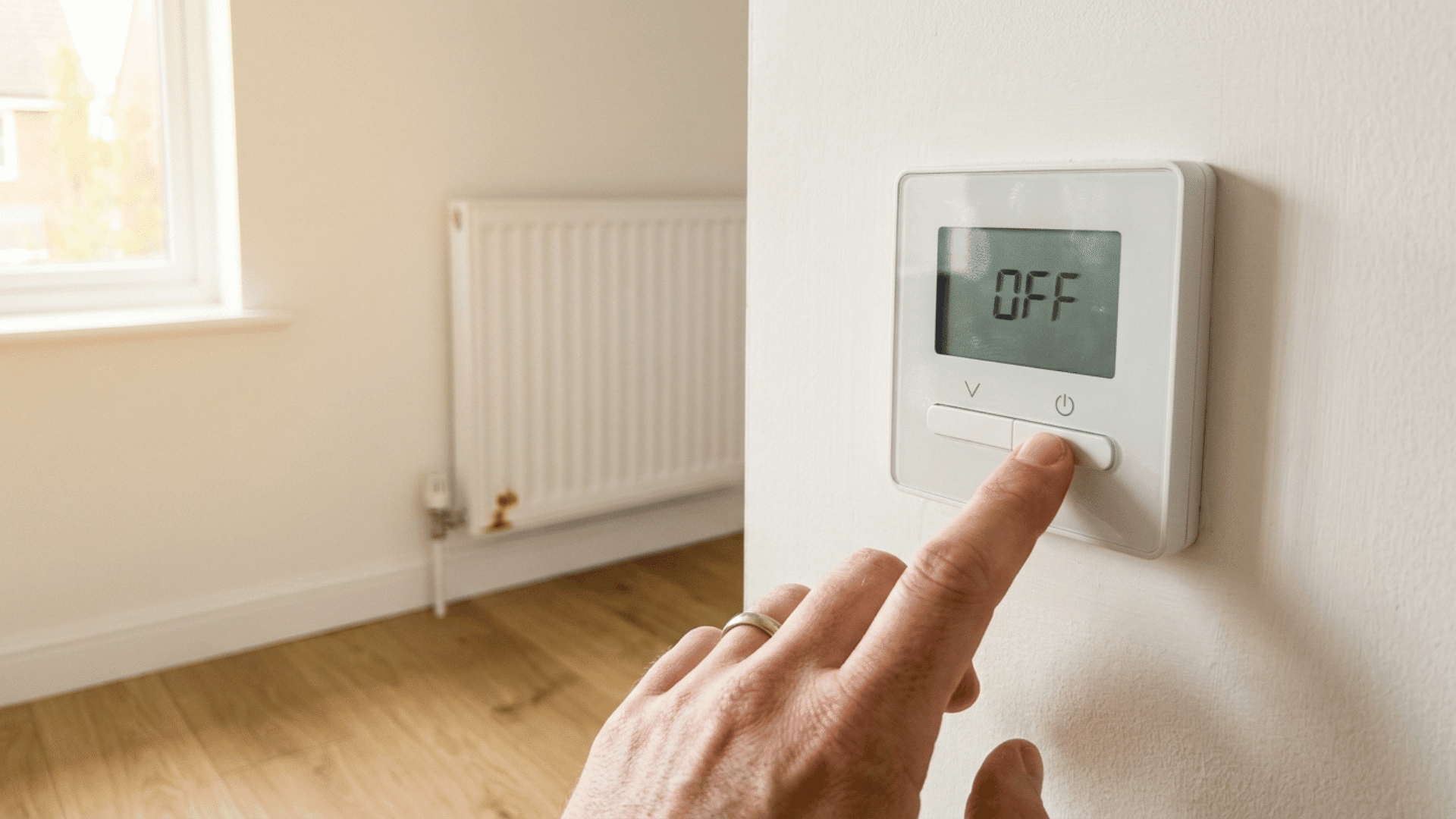
Before you open any valve, switch the heating off and let the radiators cool down for at least 20 to 30 minutes.
Working on a hot radiator is uncomfortable and genuinely risky, since the water inside is under pressure and can spray out if you open the valve too soon.
Cooling time isn’t wasted time; it’s what keeps the job clean, controlled, and safe from start to finish.
Step 4: Get Ready to Catch Drips
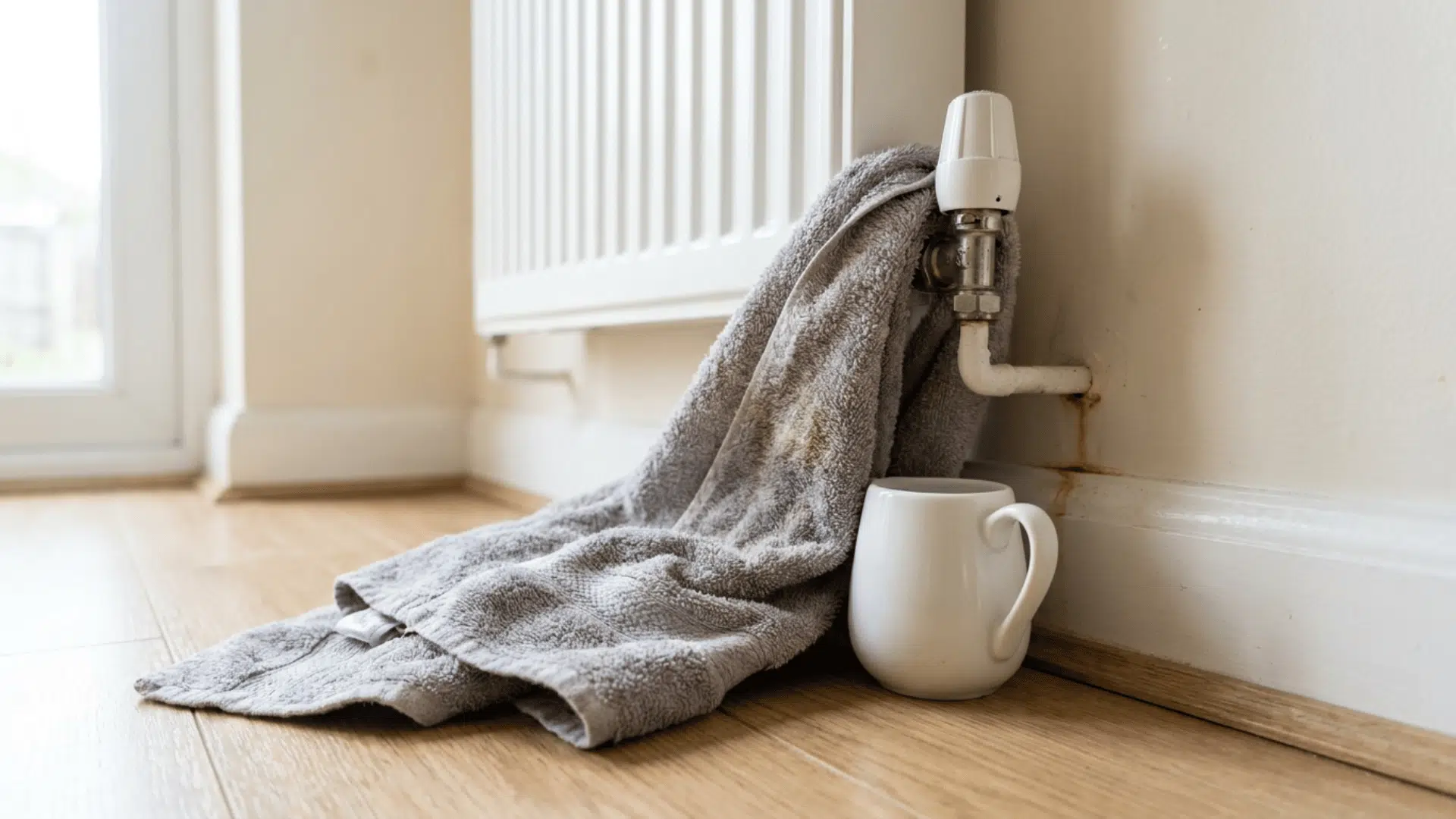
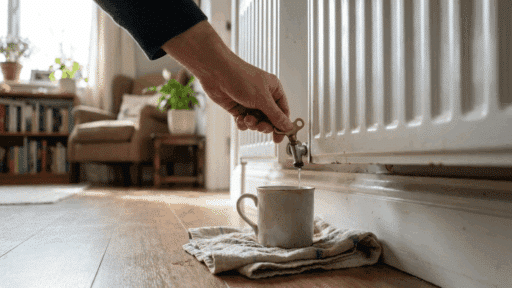
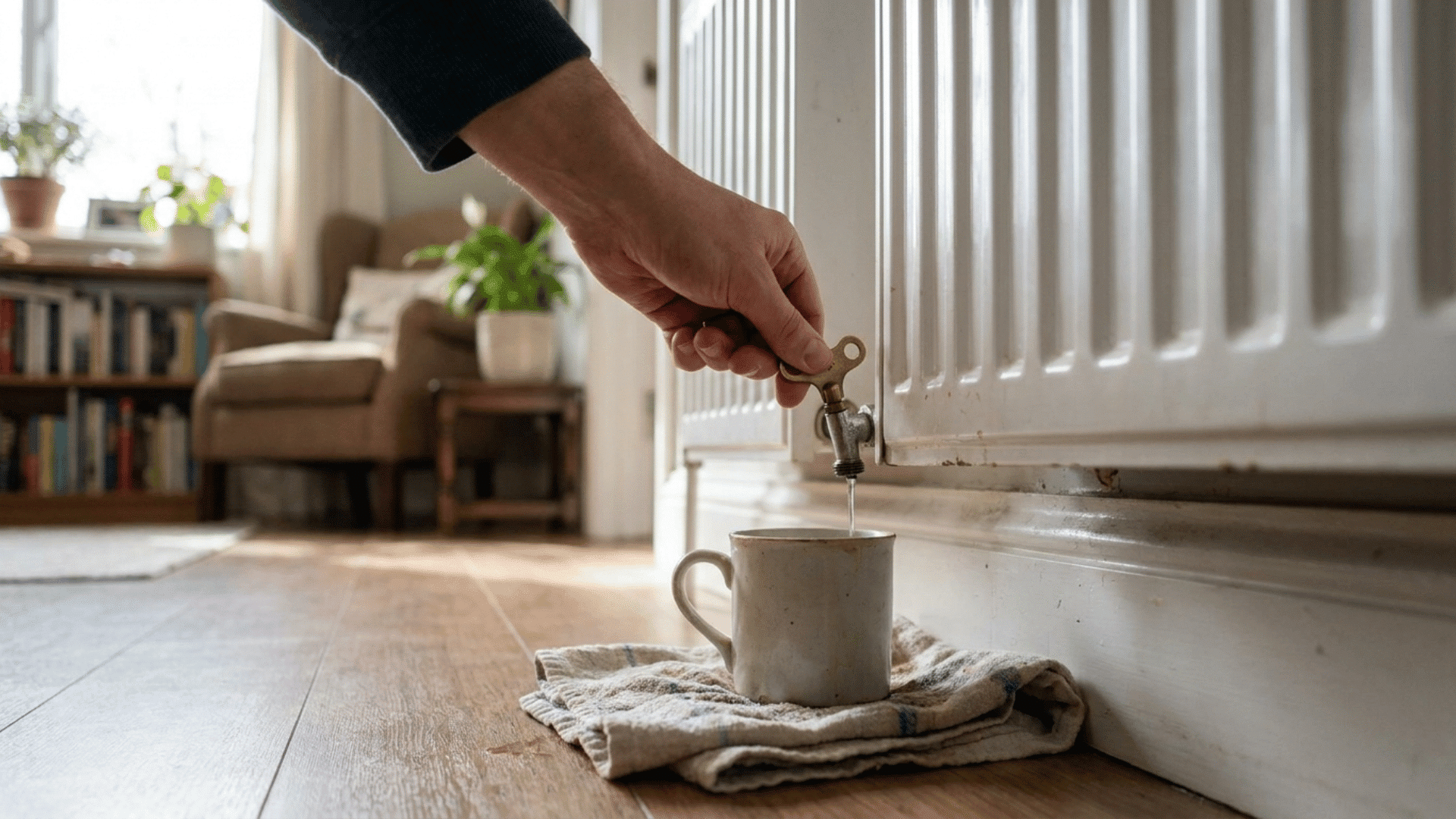
Lay an old towel on the floor directly below the bleed valve, and have a small container ready to catch the drips underneath it as you work. Water almost always comes out when you bleed a radiator, sometimes more than you’d expect.
The water inside a heating system is often dark and carries rust, so use a towel you don’t mind marking and keep it close before you turn the key.
Step 5: Open the Valve
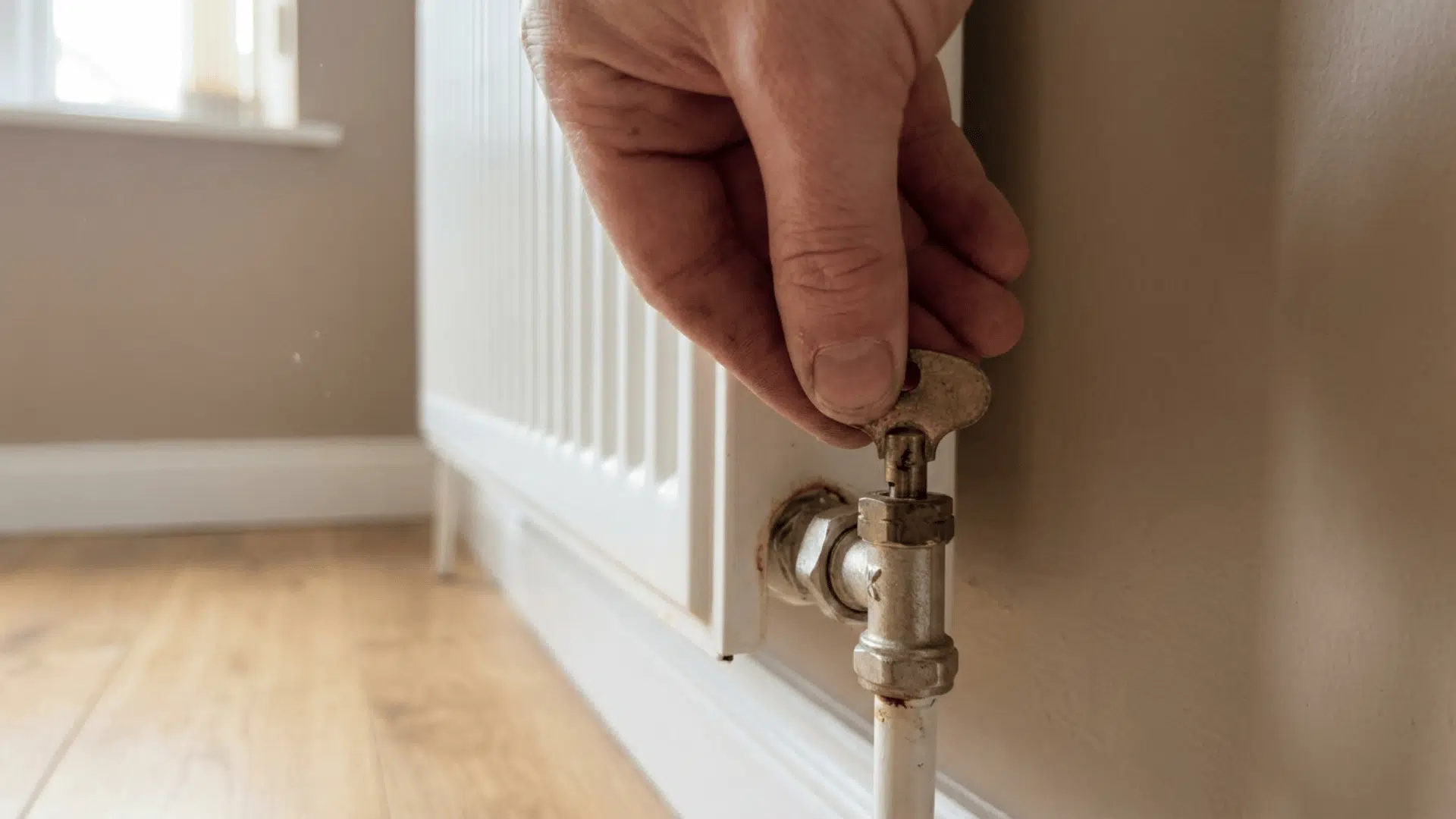
Find the bleed valve at the top corner of the radiator. It’s a small square pin set inside a round nut. Fit your radiator key onto it and turn slowly anti-clockwise, about a quarter to half a turn.
You’ll hear a soft hissing sound as the air escapes, which is exactly what you want, so don’t be alarmed by it. Turn the key gently rather than forcing it, as the valve only needs a small movement to open.
Step 6: Wait for the Water
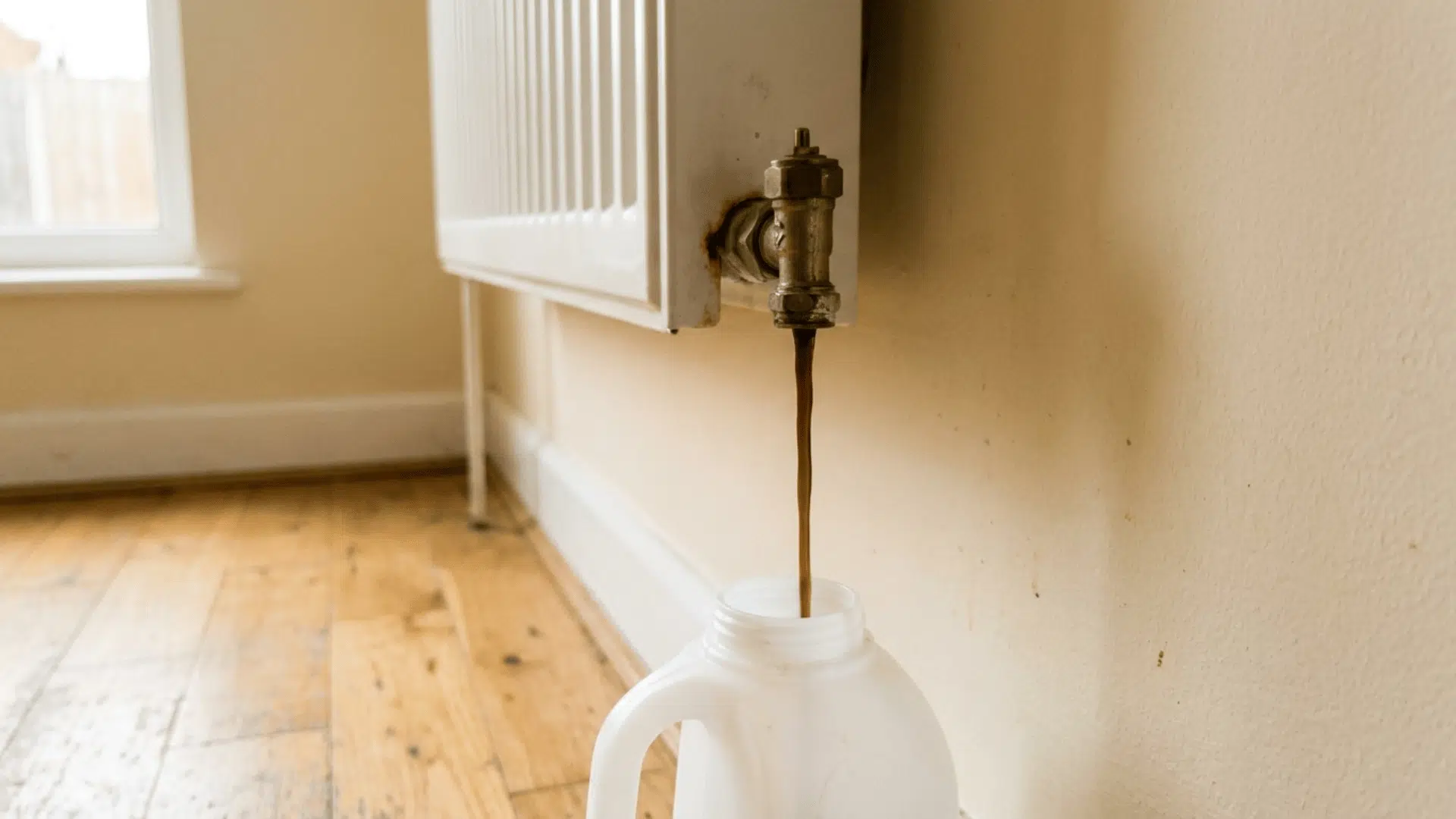
Keep the valve open until the hissing stops and a steady trickle of water comes out. That means all the air is gone and only water is left inside.
Hold your container close, because the water can come out faster than you expect once the air clears.
This is the part people often rush, but waiting those extra few seconds makes sure you’ve cleared every last bubble from the radiator.
Step 7: Close the Valve
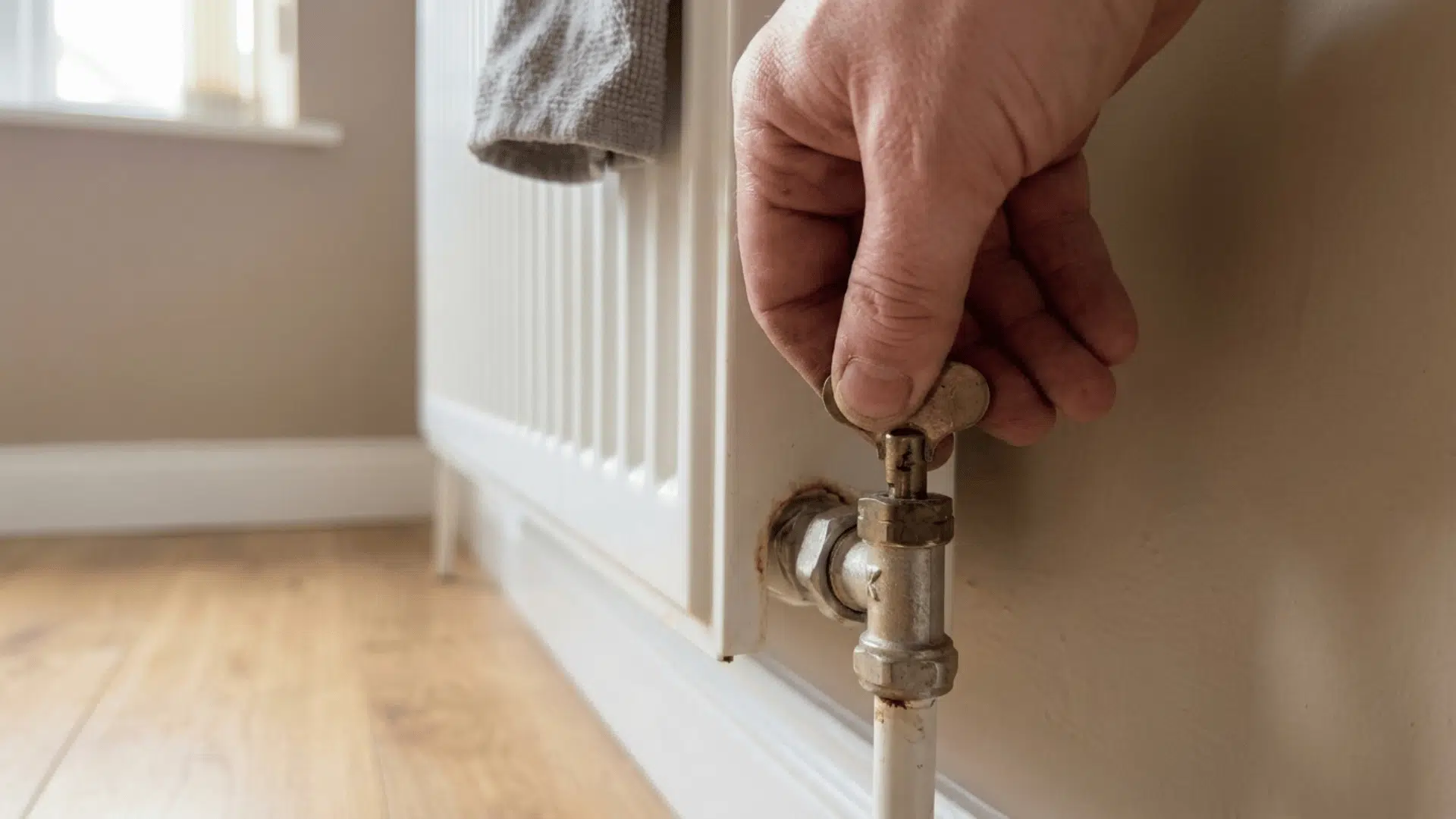
Turn the key clockwise to shut the valve tightly. Don’t overdo it; just snug enough to stop any leaks. Forcing it too hard can damage the valve, so firm and gentle is the way to go.
Wipe up any drips while you’re there so nothing sits on the radiator or floor. Give the valve a quick check after a minute to make sure no water is still seeping out around it.
Step 8: Check Your Boiler Pressure
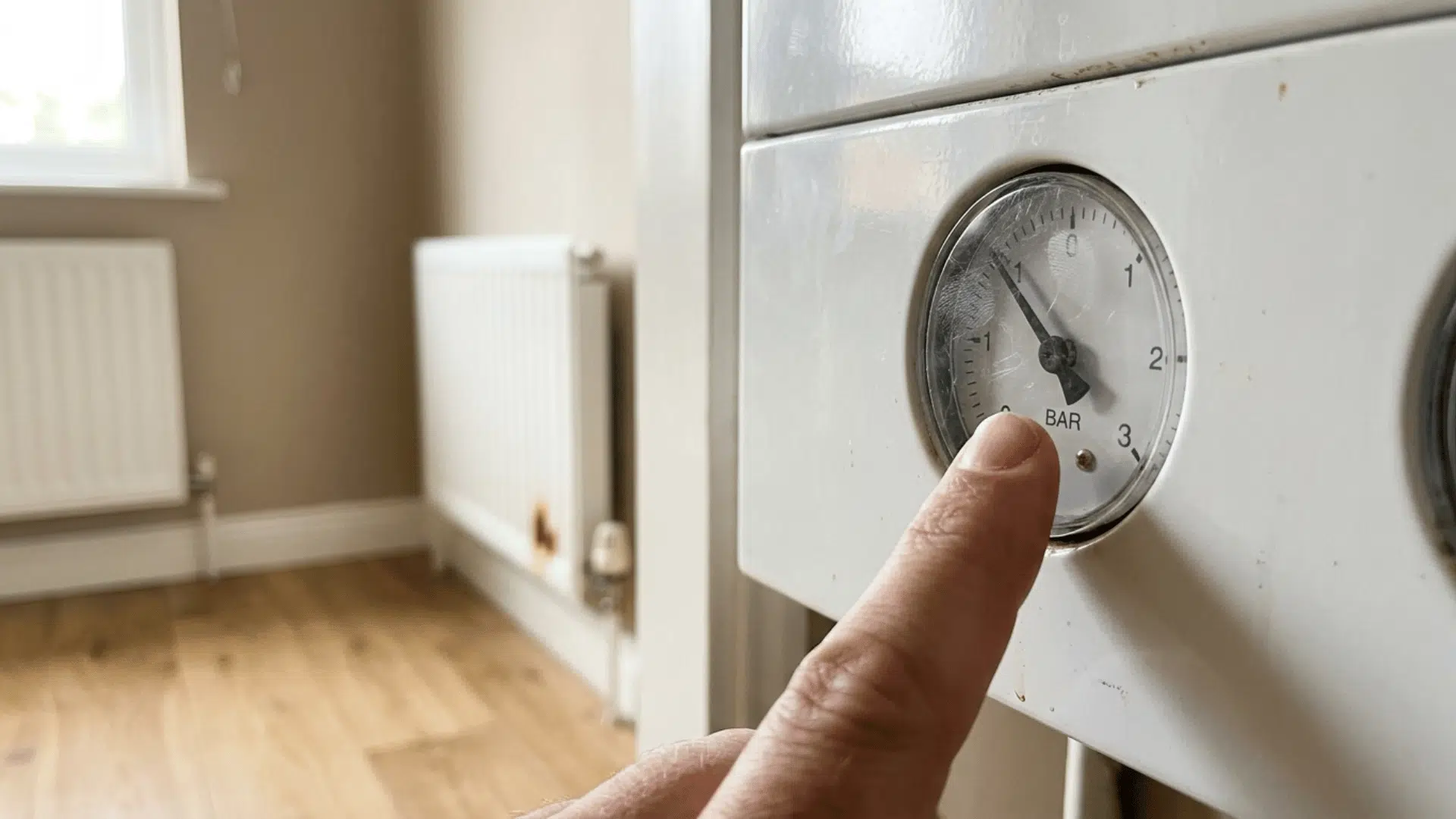
Bleeding can lower the pressure in your system. Look at the gauge on your boiler, which should usually sit between 1 and 1.5 bar when the heating is off.
If it’s low, top it up using the filling loop, following your boiler’s instructions. Once the pressure looks right, turn your heating back on and check that your radiators warm up evenly.
If you’ve bled several radiators in one go, the pressure drop can be bigger, so check carefully.
Which Radiator to Bleed First
Going in the right sequence helps clear the air from the whole system properly, rather than leaving pockets behind that you’ll have to deal with again later.
The rule changes a little depending on whether you live in a flat, a bungalow, or a house with several floors. The table below breaks down the approach for each.
It only takes a moment to plan your route through the house, and it makes the whole job smoother and more effective from the very first radiator.
Order Based on Your Home Type
Where you start depends on the layout of your home, so take a quick look at the table below to find the right order for your setup.
| Home type | Where to start | Where to finish | Why it works |
|---|---|---|---|
| Single-story (flat or bungalow) | The radiator furthest from your boiler | Work back toward the boiler | The far radiator holds the most trapped air, so clearing it first pushes the rest through in the right direction. |
| Multiple floors | Downstairs, furthest radiator from the boiler | Upstairs, finishing with the one closest to the boiler | Air rises, so this far-to-near, bottom-to-top route clears the system in the correct order. |
A quick tip: plan your path before you start so you’re not doubling back through the house with a key and a dripping container in hand.
Why Won’t My Radiator Bleed? (Troubleshooting)
Most of the time, bleeding a radiator goes off without a hitch. Now and then, though, things don’t quite go to plan, and that’s perfectly normal. The good news is that the common problems are easy to understand and usually simple to fix.
Below, I’ll walk through the issues I get asked about most, from a missing key to a radiator that just won’t warm up no matter what you try.
I’ll also point out when a problem is bigger than a quick bleed can solve, so you know when it’s time to call a professional instead of wrestling with it yourself.
No Key, or No Hissing
No key? No problem. On many modern radiators, a flathead screwdriver fits the slotted bleed valve, so turn it slowly anti-clockwise the same way you would with a key.
If you open the valve and hear no hissing at all, there may simply be little air to release, or the valve could be stuck. Don’t force it, as a damaged valve is a far bigger headache than a cold radiator.
Still Cold, or Cold Again and Again
If the radiator is still cold after bleeding, try the whole process again, since some air pockets may need a second gentle nudge to clear.
But if a radiator needs bleeding repeatedly or stays cold even after the air is out, the problem may not be air at all.
A build-up of rust and dirt, often called sludge, can settle inside and block the flow. This usually needs a professional power flush to fix.
When to Call a Heating Engineer
Some heating issues point to underlying system faults that simple maintenance cannot solve. Knowing when to seek professional help can prevent bigger and more expensive problems.
- Signs of a Leak: If you notice water around a radiator, pipes, or the boiler, contact a heating engineer to identify and repair the source.
- Boiler Pressure Keeps Dropping: Pressure that repeatedly falls after topping up often indicates a leak or another system fault requiring professional attention.
- Cold Spots Return Frequently: If radiators develop cold patches again soon after bleeding, there may be a deeper issue within the heating system.
- Faulty Thermostatic Radiator Valve (TRV): A seized or malfunctioning TRV can restrict hot water flow and prevent a radiator from heating properly.
- Uneven Heating Around the Home: If one area consistently feels colder than others, the circulation pump may not be distributing hot water evenly throughout the system.
- Suspected Pump Problems: A weak or failing pump can leave some radiators cold, and bleeding alone will not resolve the issue.
My advice: if you’ve bled the same radiator twice and it still isn’t heating properly, stop and call someone in. Catching a problem early is always cheaper than leaving it to get worse.
How Often Should You Bleed Radiators?
For most homes, once a year is enough. I always do it at the start of winter, right before the heating goes on for the first time in months.
Air builds up over the summer when the system isn’t running, so clearing it before the cold sets in means your radiators work properly from day one. A few minutes in October or November can save you a lot of cold mornings later on.
I also do a quick check sometime in January or February, when the heating has been running hard for a while. A new air pocket can work its way in after the first bleed, and catching it mid-season keeps everything running efficiently through the coldest stretch of the year.
If you find yourself bleeding the same radiator every few weeks, though, something else is going on. That kind of regular air build-up usually points to a small leak pulling air into the system, a corroding component, or a pump that isn’t working as it should.
At that point, it’s worth getting a heating engineer in to find the root cause rather than just topping up and hoping for the best.
Older systems and cast-iron radiators tend to collect air a bit faster than modern pressurized setups, so if your home has older heating, it may be worth checking twice a year rather than once.
Wrapping Up
So there you have it. Bleeding a radiator really is a small job with a big payoff. Once you know the signs of trapped air, have your key and towel ready, and follow the eight steps in order, you can clear those cold spots in just a few minutes.
Remember to start with the right radiator, check your boiler pressure when you’re done, and give the whole system a once-over each winter.
And if a radiator keeps acting up after all that, don’t be shy about calling in a heating engineer.
I hope this guide makes the next chilly evening a lot more comfortable for you. Give it a try this weekend, and if it helps, share it with a friend who’s always complaining about a cold room.
Frequently Asked Questions
Should I Bleed a Radiator With the Heating On or Off?
Always with the heating off and the radiator cool. Hot water can spray out and scald you. If it’s been on, wait 10 to 15 minutes first.
How Long Does it Take to Bleed a Radiator?
Each radiator takes only a minute or two. The valve usually needs just a quarter- to half-turn before the air starts hissing out.
What if No Water or Air Comes Out?
The valve may be clogged with old paint, or there may simply be no trapped air. Don’t force it. Check your boiler pressure or call a plumber.
Why is My Radiator Still Cold After Bleeding?
If air wasn’t the issue, the cause could be sludge, a broken valve, or a pump problem. These usually need a heating engineer to fix.
Do I Need to Bleed All My Radiators?
No. Only bleed the ones with cold patches at the top. Radiators that heat evenly are working fine and can be left alone.
Can Air Get Back In After I Bleed It?
Yes, over time. That’s why a yearly bleed before winter helps. Frequent air build-up can point to a leak or a deeper system fault.

Tommy Hardy, an alumnus of the Georgia Institute of Technology with a degree in Mechanical Engineering, has been a go-to figure in residential upkeep and innovation for over 18 years. His career commenced in a leading home appliance manufacturing company, where he mastered the intricacies of household systems. Joining our platform in 2020, Tommy quickly became a reader favorite for his practical and easy-to-follow guides. He took the helm of our DIY section in 2019, consistently delivering content that empowers homeowners. Beyond his professional pursuits, Tommy is a passionate gardener and enjoys woodworking, skills enhancing his hands-on approach to home care.