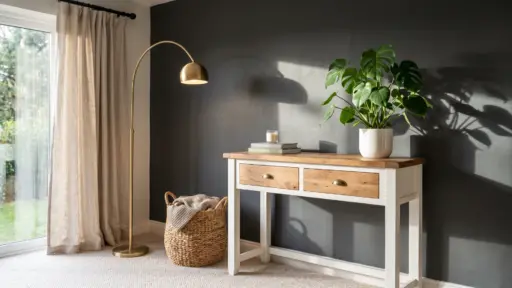
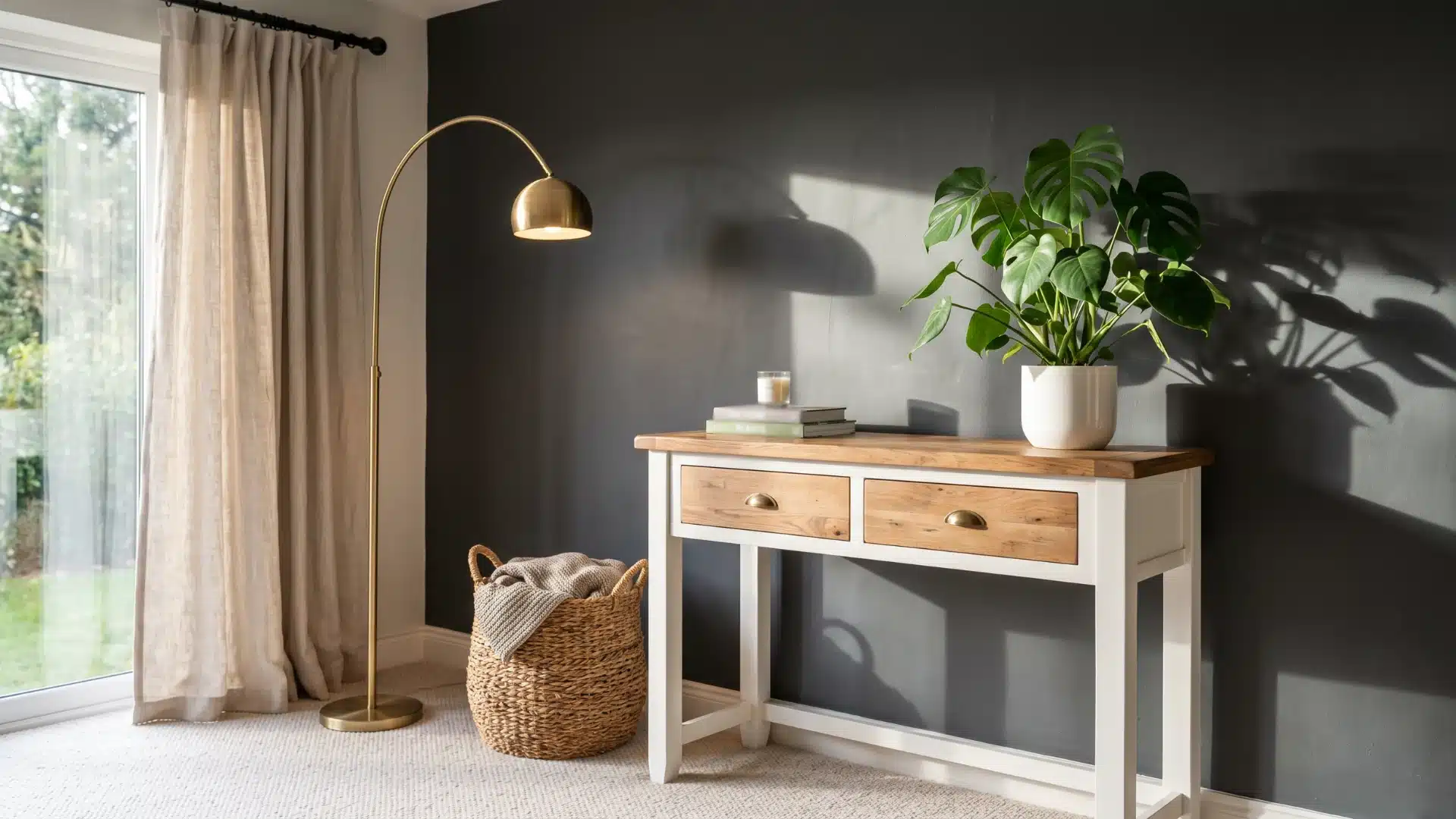

Have you ever walked into someone’s house and noticed a slim, stylish table right by the front door, the one holding a lamp, some keys, and maybe a small plant? That is a console table.
The console table looks simple, but it is one of the hardest-working pieces of furniture in a home.
It sits flat against the wall, takes up almost no floor space, and somehow manages to make every room it is in look more put-together.
In this guide, you will learn exactly what a console table is, what it is used for, and how to pick the right one for your home.
What is a Console Table?
A console table is a long, narrow piece of furniture meant to sit against a wall, not stand freely.
The name itself traces back to the French word console, an architectural bracket that supports a shelf or surface.
That origin is actually central to understanding the console table, meaning a surface supported by, or flush against, a wall rather than freestanding in a room.
Early versions were literally mounted to walls, with legs only on the front side.
Today, most stand on four legs, though wall-mounted styles still exist.
Depths range from 12 to 15 inches, narrow enough to fit into the tiniest floor space without crowding a room.
Purpose of Console Tables in Home Design
Console tables solve a very specific problem in home design, filling awkward, underused spaces without overpowering them.
Beyond just occupying space, they serve genuine functions:
- Entryway organization: a landing spot for keys, mail, and everyday essentials.
- Display surface: for lamps, artwork, and curated décor.
- Room divider: defines zones in open-plan layouts without blocking sightlines.
- Storage opportunity: drawers and lower shelves add practical functionality beneath the surface.
That long blank wall in your hallway, the empty stretch behind your sofa, the bare corner near your entryway, these are exactly where a console table earns its place.
What Makes a Console Table Different from Other Tables?
Console tables get mistaken for other furniture pieces all the time, and understandably so.
But several defining characteristics set them clearly apart.
1. Depth over length
Unlike dining or coffee tables built for gathering around, console tables are deliberately shallow, with a 12–15 inch depth that is a defining feature, not a limitation. It’s what makes them wall-friendly.
2. Height alignment
Console tables typically stand at standard desk or counter height, around 28–32 inches.
Intentionally designed to sit just below window sills and align naturally with surrounding architectural elements.
3. Single-side accessibility
Most tables invite access from multiple sides.
Console tables are designed to be approached from one side only, keeping them flush against walls and unobtrusive.
4. Decorative-functional balance
Unlike purely utilitarian side tables or purely decorative accent pieces, console tables sit at the intersection of both, equally comfortable holding a lamp and anchoring an entire entryway look.
The Key Features that Define a Console Table
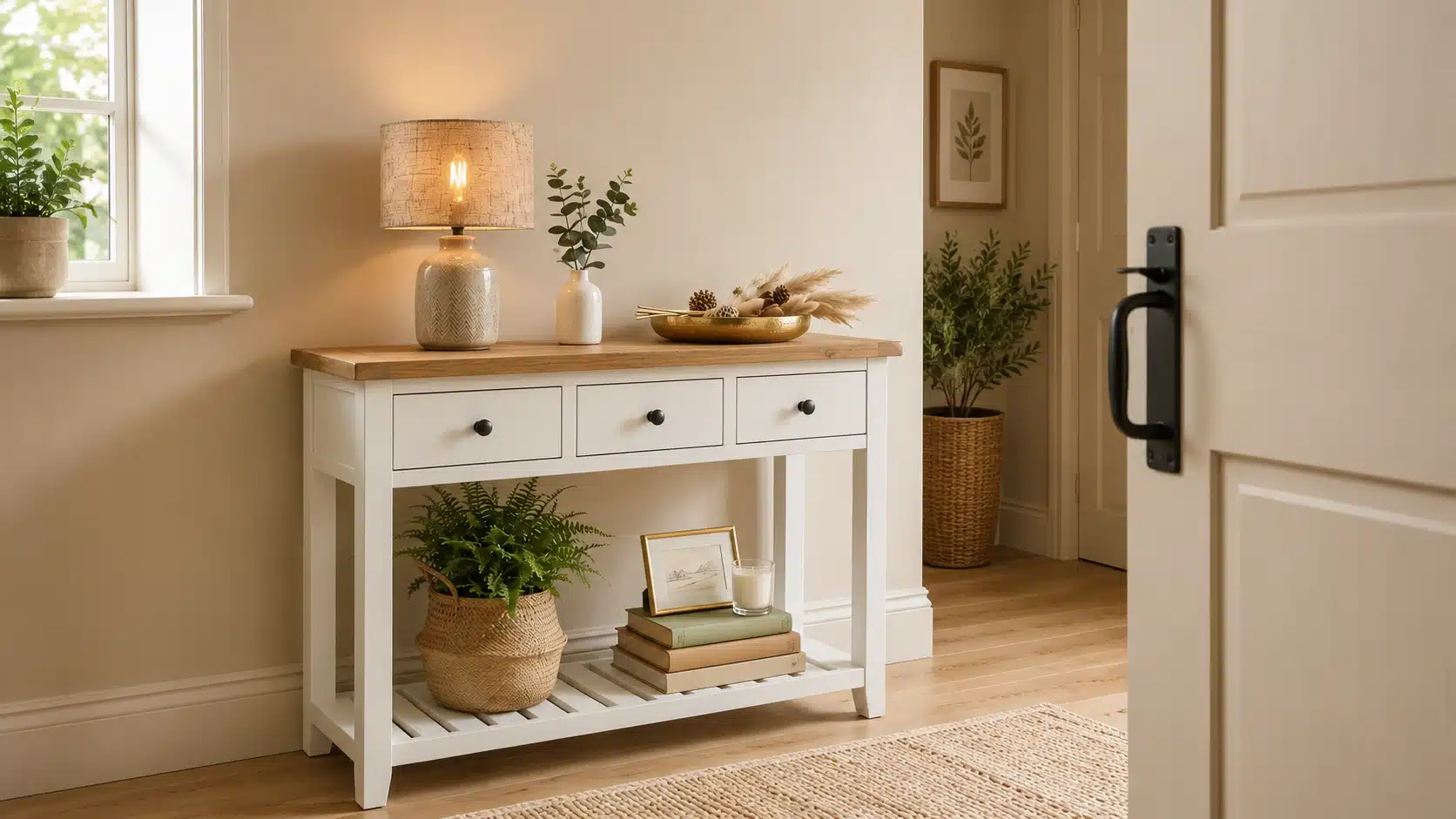
Console table meaning refers to the structural and design characteristics that define a console table, and knowing them helps you choose the right one for your space.
Narrow Rectangular Top
The surface is always much longer than it is wide.
This elongated, narrow top is the console table’s most recognizable trait, purpose-built to line walls without jutting awkwardly into walkways or disrupting room flow.
Wall-Oriented Design
Console tables are designed to face in one direction. The back is often unfinished or minimally detailed, a deliberate choice, since it sits against a wall rather than floating freely in a space.
Leg Structure
Most console tables feature four legs, though three-legged and trestle-style bases exist.
The leg design greatly influences the overall look. Tapered legs read traditional, angular metal legs lean industrial, and hairpin legs signal a mid-century modern sensibility.
Surface Height
Standing 28-32 inches tall, console tables align with wall switches, sills, and nearby furniture.
This height range is essential for seamless room integration without visual disruption.
Optional Storage Elements
Many console tables incorporate drawers or lower shelves into their framework.
These additions quite expand functionality, changing a simple display surface into an organized, hardworking piece of furniture.
Standard Console Table Dimensions Explained
Console table dimensions follow general industry standards, though slight variations exist depending on style, manufacturer, and intended placement.
| Dimension | Standard Range | Why it Matters |
|---|---|---|
| Height | 28 – 32 inches | Aligns with sofa backs, window sills, and wall fixtures naturally |
| Width | 48 – 60 inches | Fits most standard wall spans without crowding the space |
| Depth | 12 – 15 inches | Keeps foot traffic clear while maintaining a functional surface |
| Sofa Clearance | 2 – 3 inches | Ideal gap when placing a console directly behind a sofa |
| Entryway Fit | Minimum 36 inches wide | Ensures comfortable passage alongside the table in hallways |
Where Console Tables Actually Work Best in a Home
Console tables are universal; their role depends on where they are placed.
1. Entryways and Foyers

The entryway is where console tables feel most at home.
They create an instant drop zone for keys, mail, and everyday essentials that naturally land here. A well-styled console with a mirror above it establishes the home’s visual tone before anyone steps further inside.
First impressions, handled.
2. Behind a Sofa in Open Living Rooms
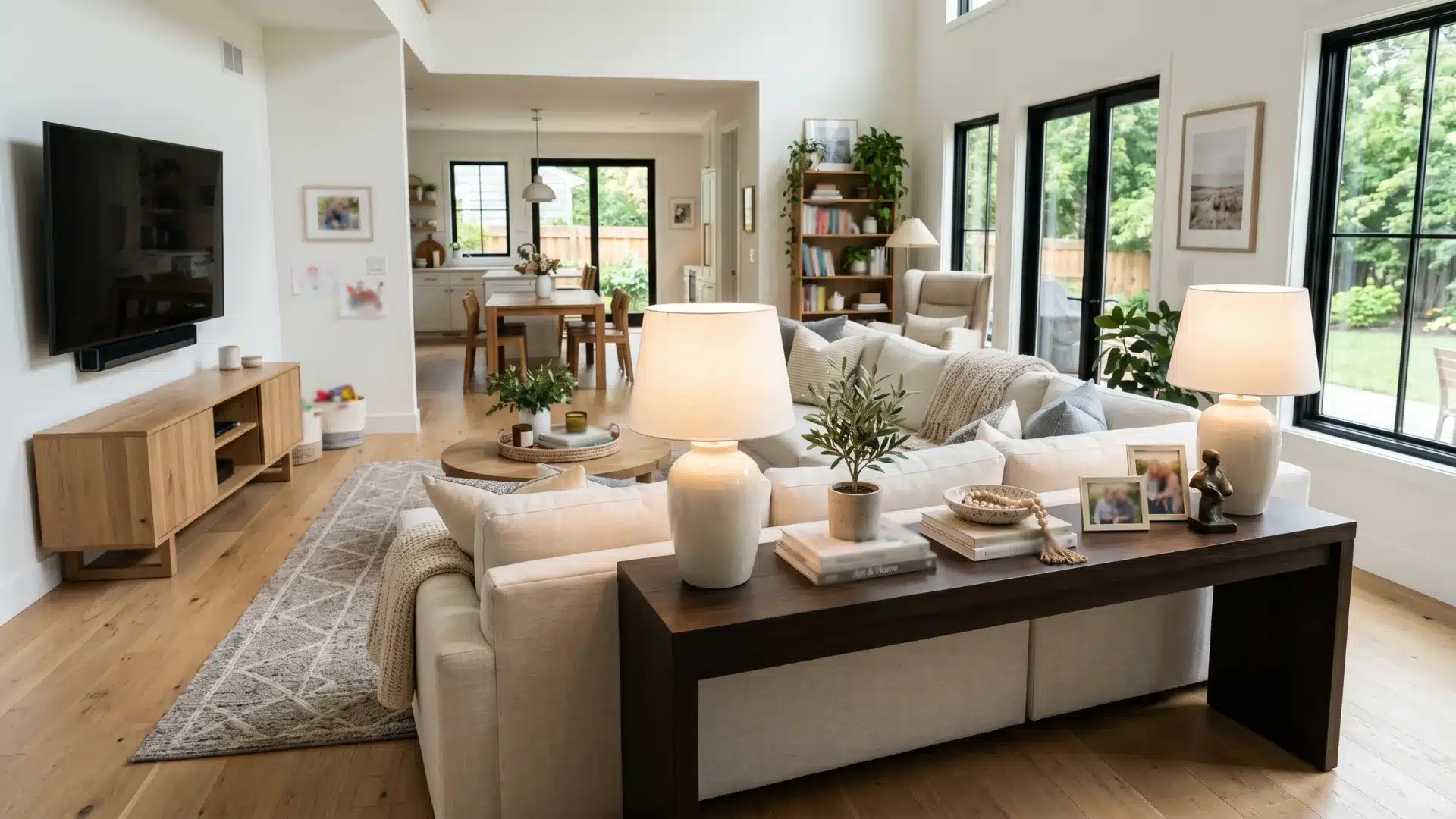
Floating sofas in open-plan layouts often leave an awkward gap against nothing.
A console table fills that void purposefully, defining the seating zone, holding table lamps for layered lighting.
It offers a slim surface for décor without adding visual bulk to the room.
3. Hallways and Narrow Passages
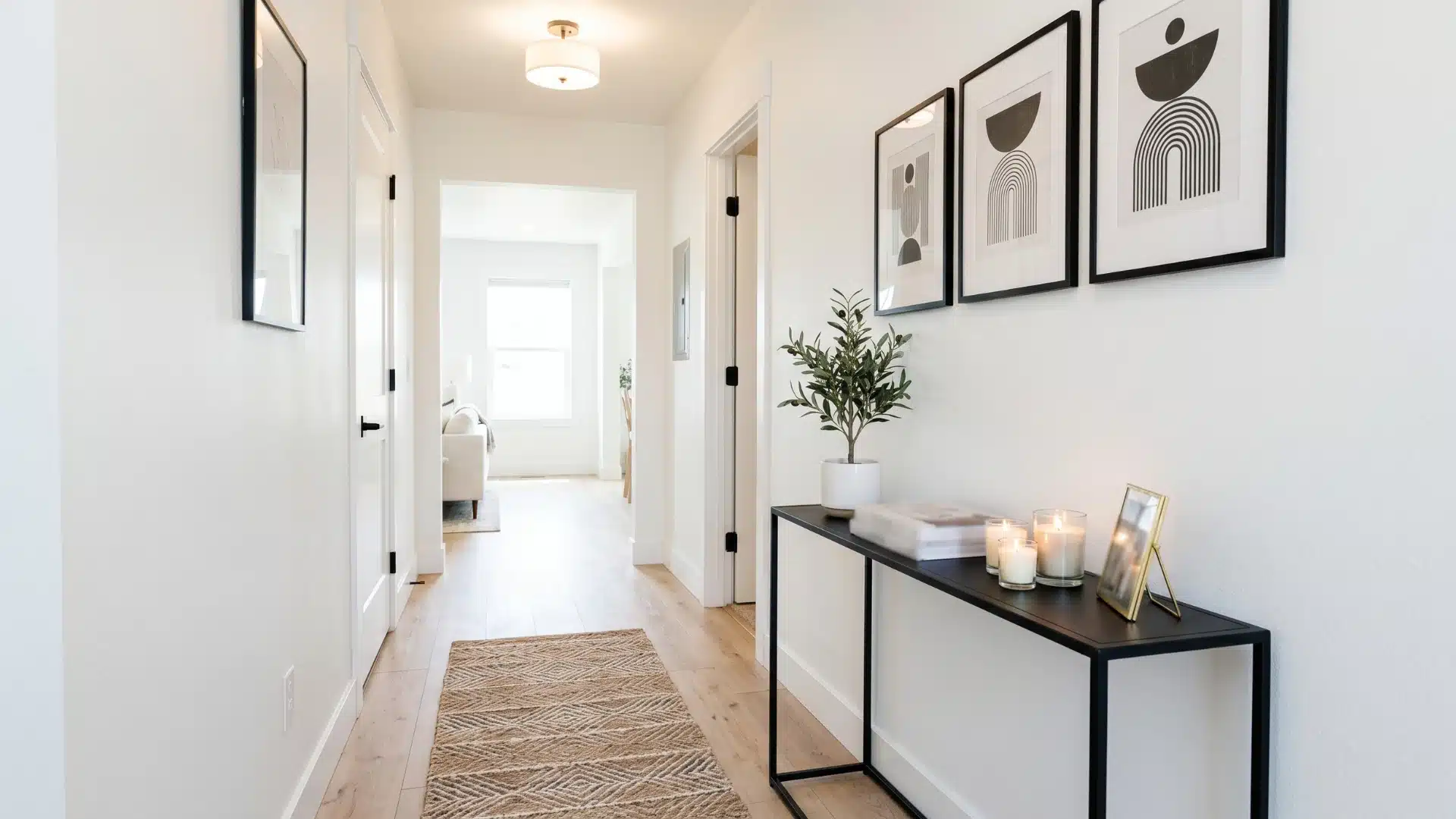
Hallways rarely accommodate standard furniture; console tables are specifically designed to address these constraints. Their shallow depth keeps walkways clear and comfortable.
Maintain at least 36 inches of passage on each side of the table to prevent a cramped hallway.
4. Dining Rooms and Empty Walls
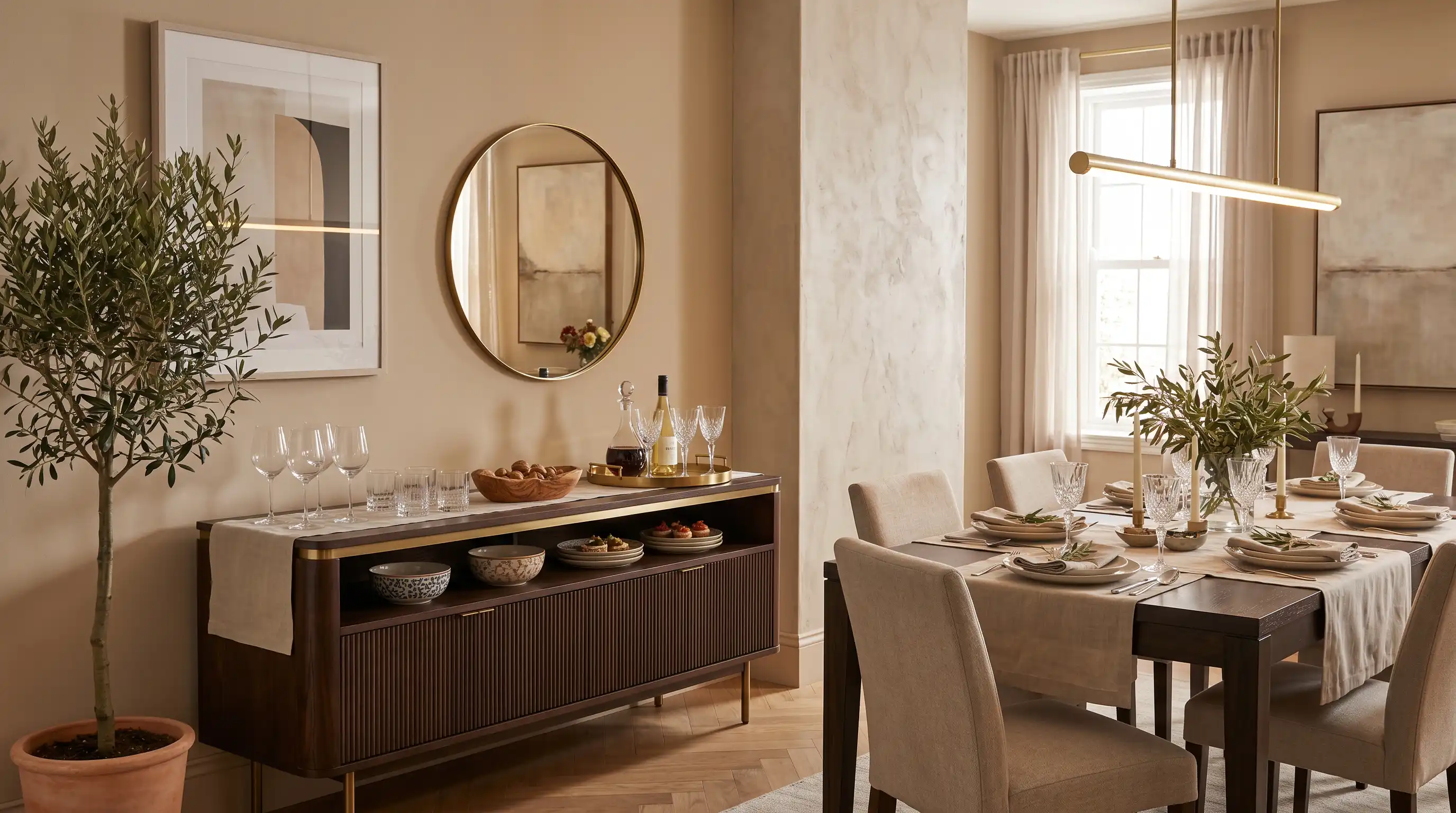
Against a dining room wall, this converts into a functional bar setup or serving station during gatherings.
Beyond entertainment, it balances the room, visually grounding empty wall space with purposeful furniture rather than leaving it architecturally unresolved.
5. Bedrooms and Home Offices
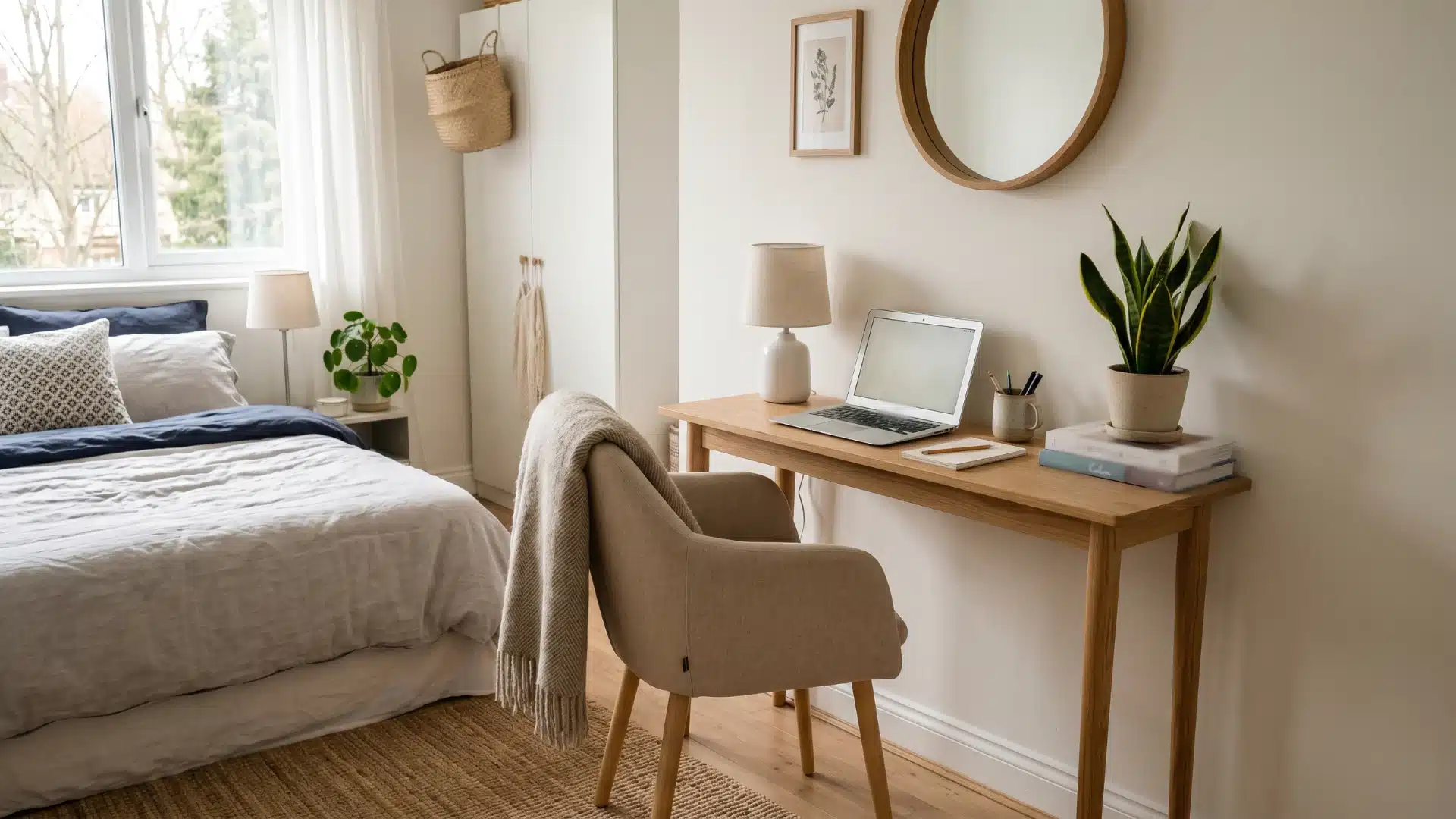
Less conventional but genuinely practical. In bedrooms, a console works as a slim vanity or writing surface.
In home offices, it handles printer placement or supplementary desk space, especially useful in smaller rooms where a full-sized desk simply isn’t feasible.
What People Usually Put on a Console Table
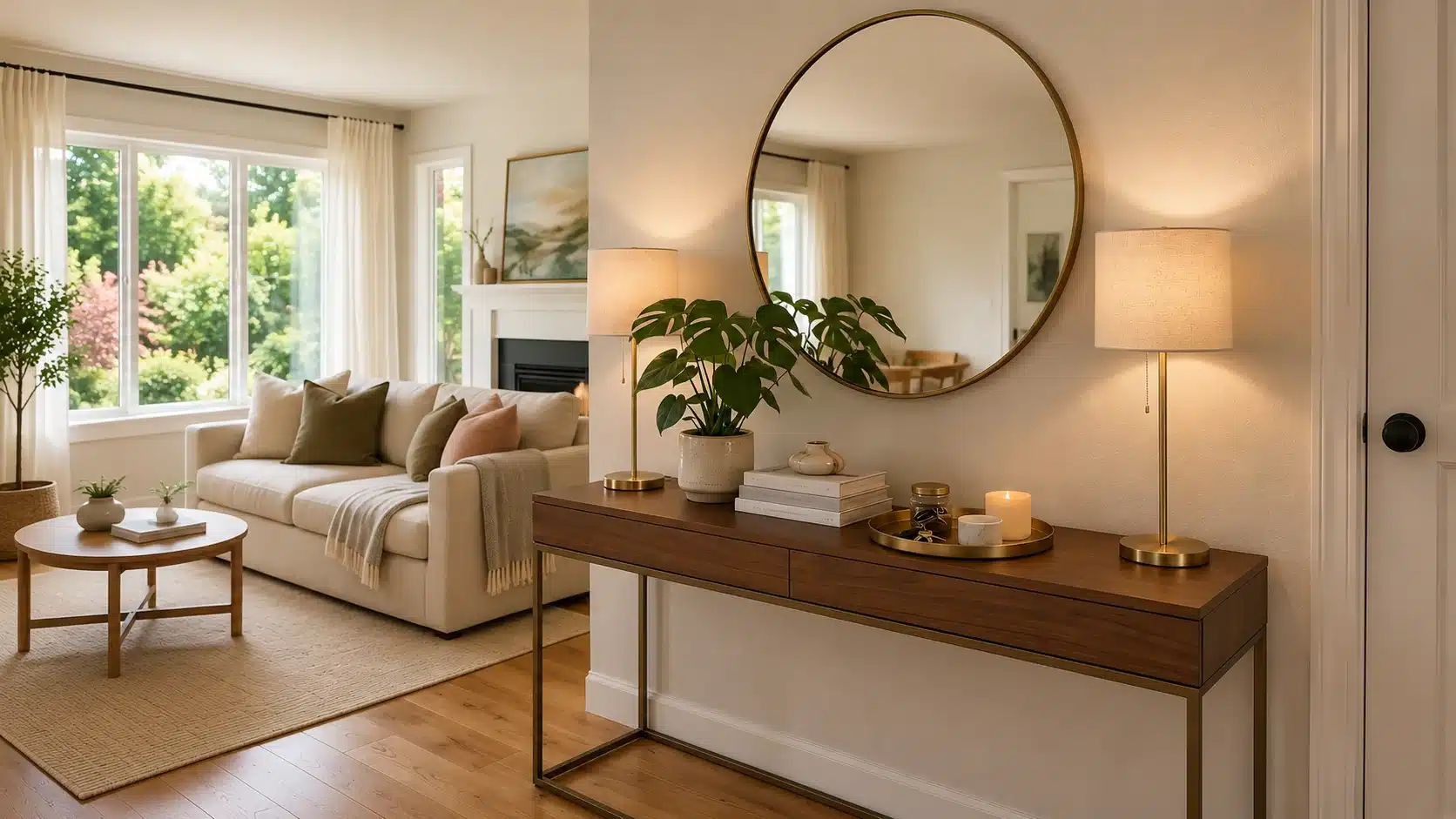
Styling a console table comes down to balancing function with visual intention.
What sits on top should feel deliberate, not cluttered. The most common styling elements include:
- Mirrors or framed artwork mounted above to create vertical interest.
- Table lamps for warm, localized lighting.
- Decorative trays to group smaller objects cohesively.
- Candles or diffusers add a sensory dimension beyond just visual appeal.
- Books or magazines stacked horizontally for casual texture.
- Indoor plants or florals bring organic warmth to hard surfaces.
- Personal photographs in coordinated frames.
The unspoken rule among designers leaves roughly 30% of the surface empty. Breathing room is what separates styled from cluttered.
How to Choose the Right Console Table for Your Space
Choosing the right console table starts with your room’s specific constraints, such as wall width, traffic flow, and existing furniture scale; all factors to consider before it even enters the conversation.
Material matters too. Wooden consoles add heat to traditional or rural interiors.
Metal and glass combinations lean contemporary.
Rattan and cane work beautifully in bohemian or coastal settings. Match the table’s visual weight to your room.
A heavily ornate console in a minimalist space creates friction.
Cohesion between style, material, and proportion is what makes the difference.
Different Types of Console Table Styles
Console tables come in various styles, each with a unique look suited for different interiors.
| Style | Key Characteristics | Best Suited For |
|---|---|---|
| Traditional | Ornate detailing, carved wood, and cabriole legs | Classic, formal interiors |
| Mid-Century Modern | Clean lines, tapered legs, warm wood tones | Retro-inspired, eclectic spaces |
| Industrial | Raw metal frames, reclaimed wood tops | Urban, loft-style interiors |
| Scandinavian | Minimal design, light wood, functional form | Clean, neutral, understated spaces |
| Bohemian | Rattan, cane, natural textures, handcrafted details | Layered, globally inspired interiors |
| Coastal | driftwood tones and relaxed silhouettes | Beach-inspired, airy living spaces |
| Glam/Art Deco | Mirrored surfaces, gold hardware, geometric forms | Bold and luxurious interiors |
| Rustic/Farmhouse | Distressed finishes, chunky wood, wrought iron accents | countryside-inspired homes |
Console Table vs Sofa Table: Are They the Same Thing?
This comparison comes up often, and the answer sits somewhere in the middle.
Sofa tables are technically a subset of console tables, sharing similar proportions.
The distinction lies in intent. Sofa tables are specifically designed to sit behind sofas; they tend to run longer and, occasionally, slightly deeper to match the sofa’s scale.
Console tables are more universal, designed for multiple placements throughout a home.
In modern furniture retail, both terms are frequently used interchangeably.
Functionally, though, every sofa table is a console table, but not every console table is a sofa table.
When a Console Table is Better than Other Furniture Options
There are specific situations where a console table simply outperforms other furniture alternatives, and it comes down to spatial logic.
- Tight budgets: These tables generally cost less than sideboards or credenzas, yet offer a similar wall presence.
- Rental spaces: Lightweight and easily repositioned without damaging walls or flooring.
- Small apartments: Deliver furniture functionality without consuming valuable square footage.
- Transitional spaces: Perform well in areas that aren’t quite a room but aren’t just corridors either.
- Quick style upgrades: Single furniture addition that immediately improves a space’s visual completeness.
Final Thoughts
Understanding a console table goes beyond knowing its dimensions or placement options.
It’s a piece of furniture that genuinely respects your space.
It never demands too much room, never overpromises on function, yet consistently delivers on both.
If it’s anchoring a styled entryway or quietly defining a living room’s boundaries, the console table works with your home’s existing layout rather than against it.
For a furniture piece this understated, it carries remarkable design intelligence.
Once you’ve lived with one, going back to that empty wall feels like a step backward.
Frequently Asked Questions (FAQ’s)
1. What is Another Name for a Console Table?
Console tables are also commonly called sofa tables, hall tables, or entryway tables.
2. What Can I Use Instead of a Console Table?
A narrow bookshelf, slim sideboard, or floating wall shelf works as a practical alternative.
3. What is the Rule for a Console Table?
Keep proportions balanced table width should never exceed two-thirds of your wall width.
4. Is a Console Table the Same as a Desk?
No, console tables lack the depth, ergonomics, and structural support specifically designed for focused work.
5. Where is the Best Place to Put a Console Table?
Entryways, hallways, and behind sofas are consistently the most functional and visually effective placements.

Holding a Master’s in Library and Information Science from the University of Illinois, Josh Clarke has dedicated more than 15 years to managing and disseminating information across various platforms. His professional journey includes significant experience as a research librarian, where he developed an expertise in sourcing and providing accurate and comprehensive answers to diverse questions. In 2018, Josh brought his rich experience to our platform, quickly establishing himself as a reliable source for general FAQs. He has been overseeing our information curation since then, combining his research skills with a flair for engaging content delivery. When not involved in information management, Josh enjoys exploring digital photography and participating in local quiz competitions, hobbies that complement his inquisitive nature and love for learning.