
Buying mulch sounds simple until you start seeing terms like cubic feet, cubic yards, bag sizes, and bulk delivery.
Many homeowners end up buying too much mulch or not enough because the measurements can be hard to understand.
If you are planning to refresh your flower beds, garden, or yard, knowing the right mulch amount can save both time and money.
The good news is that mulch math is easier than it looks. This blog will explain how many cubic feet are in a yard of mulch and how to quickly convert bags into yards.
It will also cover how much area one yard of mulch covers, how to measure your space, and how to figure out the amount you need.
You will also see the difference between bagged mulch and bulk mulch so you can decide which option works better for your landscaping project.
How Many Cubic Feet Are in a Yard of Mulch?
If you are planning a landscaping project, this is one of the most important mulch measurements to understand. The good news is that the answer is simple.
One cubic yard of mulch equals 27 cubic feet .
A cubic yard is measured like a large box that is:
- 3 feet long
- 3 feet wide
- 3 feet high
So the math looks like this:
3 ft × 3 ft × 3 ft = 27 cubic feet
That means every time you buy 1 yard of mulch in bulk, you are getting 27 cubic feet of material. This measurement helps homeowners compare bulk mulch with bagged mulch more easily.
Why Mulch is Sold by the Cubic Yard?
Landscaping suppliers usually sell bulk mulch by the cubic yard because it is easier for large orders. Instead of counting dozens of bags, suppliers measure mulch by volume.
It is also important to understand the difference between cubic feet and square feet.
- Square feet measure area, such as the size of your flower bed or garden.
- Cubic feet measure volume, which includes depth.
Since mulch is spread in layers, depth matters. That is why mulch is measured in cubic feet or cubic yards instead of only square feet.
Simple Mulch Conversion Table
This quick chart can help you estimate how much mulch you need before buying bags or placing a bulk mulch order.
| Cubic Yards | Cubic Feet |
|---|---|
| 1 Yard | 27 Cubic Feet |
| 2 Yards | 54 Cubic Feet |
| 3 Yards | 81 Cubic Feet |
How Many Bags of Mulch Equal One Yard?
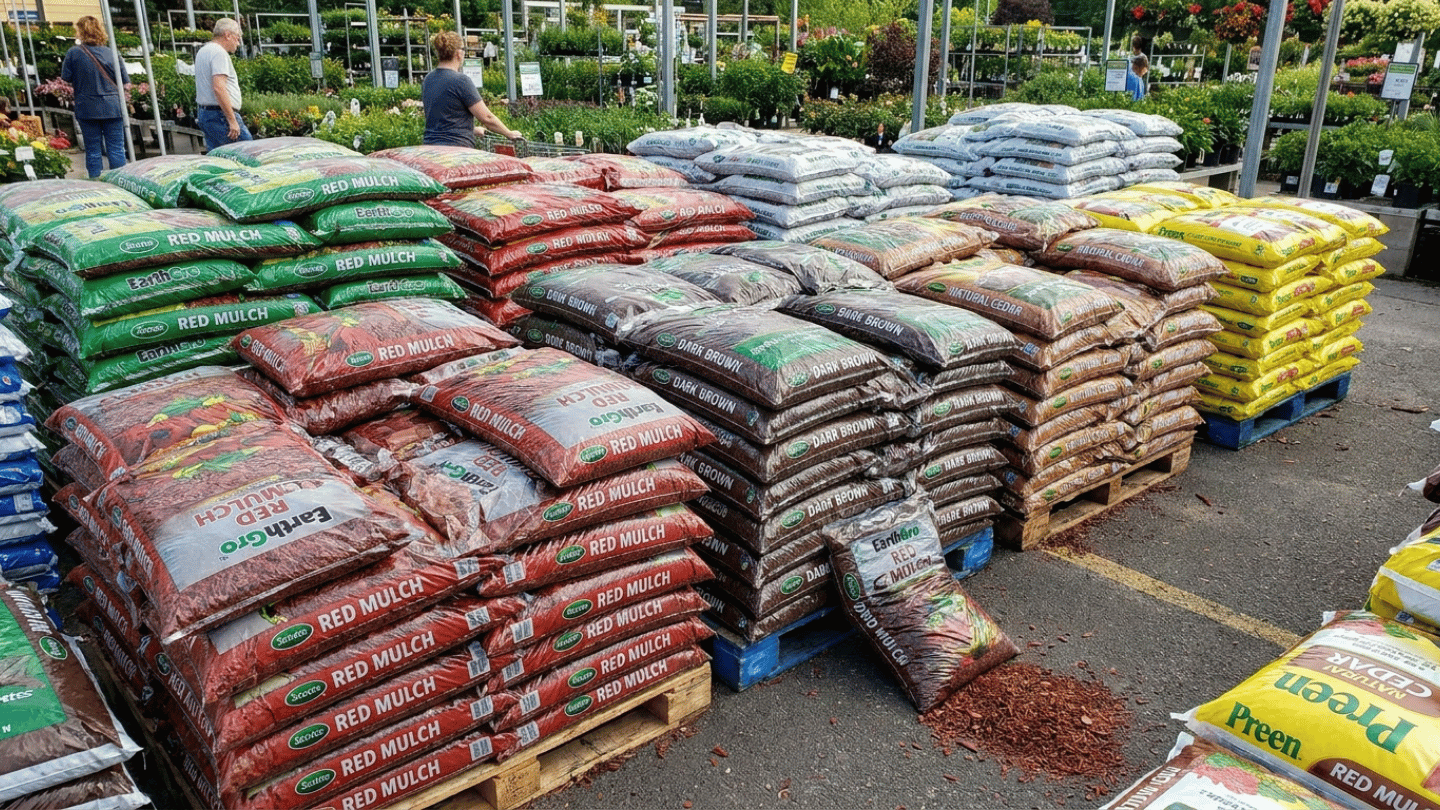
Many homeowners buy mulch in bags instead of bulk because it feels easier to handle and transport.
But before heading to the store, it helps to know how many bags equal one cubic yard of mulch. Since one yard equals 27 cubic feet, the number of bags depends on the size of each bag.
2 Cubic Foot Bags
The most common mulch bags sold at garden centers are 2 cubic feet.
To find how many bags equal one yard:
27 ÷ 2 = 13.5 bags
Since you cannot buy half a bag, you will need to round up to 14 bags for one full yard of mulch.
This bag size works well for medium-sized landscaping projects and flower beds.
1.5 Cubic Foot Bags
Some mulch brands sell smaller 1.5-cubic-foot bags.
Here is the calculation:
27 ÷ 1.5 = 18 bags
So, you need 18 bags of 1.5 cubic feet of mulch to equal one cubic yard.
Smaller bags are easier to lift, but you may need many more bags for larger areas.
3 Cubic Foot Bags
Larger 3 cubic foot bags are also available at some stores.
The calculation is simple:
27 ÷ 3 = 9 bags
That means you only need 9 bags to equal one yard of mulch.
These larger bags can reduce the number of trips needed for bigger projects.
Quick Bag Conversion Chart
This chart makes it easier to compare bag sizes before buying mulch for your yard or garden.
| Bag Size | Bags Per Yard |
|---|---|
| 1.5 Cubic Feet | 18 Bags |
| 2 Cubic Feet | 14 Bags |
| 3 Cubic Feet | 9 Bags |
Bagged Mulch vs. Bulk Mulch
Choosing between bagged mulch and bulk mulch depends on the size of your project, your budget, and how you plan to transport the mulch.
Both options have their pros and cons, so it helps to compare them side by side before buying.
| Feature | Bagged Mulch | Bulk Mulch |
|---|---|---|
| Best For | Small flower beds and garden areas | Large landscaping projects |
| Handling | Easy to carry and move | Requires shovels or wheelbarrows |
| Storage | Simple to store until needed | Needs open space for dumping |
| Cleanliness | Cleaner and less messy | Can leave loose mulch piles |
| Cost for Small Areas | Usually a good option | Delivery fees may cost more |
| Cost for Large Areas | Can become expensive | Lower cost per cubic foot |
| Packaging | Comes in plastic bags | Very little packaging waste |
| Transportation | Fits in most vehicles | Often delivered by truck |
| Amount Needed | Requires many bags for large jobs | Easier for covering big spaces |
| Convenience | Good for quick projects | Better for full-yard coverage |
How Much Mulch do You Need?
Before buying mulch, it is important to measure your space correctly. This helps you avoid spending extra money on mulch you may not use.
It also prevents running out of mulch before the project is finished.
1. Measure Your Area
Start by measuring the length and width of the area you want to cover. This method works well for square or rectangular flower beds, garden spaces, and borders.
For example:
- A flower bed that is 10 feet long and 5 feet wide would be: 10 × 5 = 50 square feet
Once you know the square footage, you can estimate how much mulch you need based on depth.
2. Pick the Right Mulch Depth
The depth of mulch changes how much coverage you get from one yard.
A 2-inch layer is usually enough for basic coverage and a cleaner yard appearance. If you want the mulch to help hold moisture in the soil, many homeowners use around 3 inches.
For stronger weed blocking, a 4-inch layer is often recommended.
Using too little mulch may not stop weeds, while too much mulch can trap extra moisture around plants.
3. Simple Mulch Formula
A simple formula can help you estimate the amount of mulch needed:
Square footage × mulch depth (in feet) ÷ 27
The number 27 is used because one cubic yard equals 27 cubic feet.
4. Example Mulch Calculation
Let’s say your garden bed is:
- 12 feet long
- 6 feet wide
- 3 inches deep
First, calculate the square footage:
12 × 6 = 72 square feet
Next, convert 3 inches into feet:
3 inches = 0.25 feet
Now multiply:
72 × 0.25 = 18 cubic feet
Finally, divide by 27:
18 ÷ 27 = 0.67 cubic yards
So, you would need about two-thirds of a yard of mulch for that area.
How Much Area Does One Yard of Mulch Cover?
The amount of space one yard of mulch can cover depends on how deep you spread it. A thinner layer covers more ground, while a thicker layer covers less area.
This is why mulch depth is important when planning your landscaping project.
Here is a simple way to estimate coverage from one cubic yard of mulch:
| Mulch Depth | Coverage Area |
|---|---|
| 1 Inch | 324 sq ft |
| 2 Inches | 162 sq ft |
| 3 Inches | 108 sq ft |
| 4 Inches | 81 sq ft |
For example, if you spread mulch at a depth of 2 inches, one yard can cover about 162 square feet.
But if you increase the depth to 4 inches for stronger weed control, the same yard will only cover around 81 square feet.
Why Mulch Depth Matters?
Mulch depth affects both plant health and weed control. A very thin layer may not stop weeds from growing or help the soil hold moisture for long.
On the other hand, adding too much mulch can trap moisture and reduce airflow around plants and tree roots. Many homeowners find that around 2 to 3 inches of mulch works well for most flower beds and garden spaces.
Things to Know Before Buying Mulch
Buying mulch may seem simple, but small mistakes can lead to wasted money or poor coverage in your yard. Here are a few common problems many homeowners run into before starting a landscaping project.
Confusing Cubic Feet With Square Feet
One of the most common mistakes is mixing up cubic feet and square feet. Square feet measure the size of an area, while cubic feet measure volume.
Since mulch is spread with depth, you need volume measurements to know how much mulch to buy.
Buying Too Few Bags
Many people underestimate how many mulch bags they actually need. A few bags may look like enough at the store, but once you start spreading mulch, the coverage disappears quickly.
Checking bag size and doing a quick calculation before buying can help avoid extra trips to the store.
Using the Wrong Mulch Depth
Using a very thin layer may not help with weed control or moisture retention. At the same time, adding too much mulch can cause plant roots to hold excess moisture. For most flower beds, around 2 to 3 inches works well.
Forgetting Delivery Costs for Bulk Mulch
Bulk mulch can save money for large projects, but delivery charges are often added to the total cost. Some suppliers also need sufficient driveway space to safely unload the mulch.
It is smart to ask about delivery fees before placing an order.
At the End
Understanding mulch measurements can make your landscaping project much easier. The main thing to remember is that one yard of mulch equals 27 cubic feet.
Once you know that number, it becomes simpler to compare bulk mulch with bagged mulch and estimate how much you need for your garden, flower beds, or yard.
Bagged mulch is often a good choice for small projects, while bulk mulch can help lower costs for larger spaces.
Measuring your area correctly and choosing the right mulch depth can also help you avoid buying too much or too little mulch.
Before buying mulch, use the simple formulas and coverage charts in this guide to plan your project with confidence. A little preparation can save time, reduce extra costs, and help your yard look fresh and well cared for.
Frequently Asked Questions
Can Old Mulch be Mixed with New Mulch?
Yes, old mulch can be mixed with fresh mulch if it is not moldy or heavily compacted.
What happens if you use Too Much Mulch?
Too much mulch can trap moisture and reduce airflow around plant roots, which may harm plants.
Is it Better to Remove Old Mulch Before Adding New Mulch?
You only need to remove old mulch if it is too thick, moldy, or breaking down poorly.
When is the Best Time to Add Mulch?
Spring and early summer are the most common times because mulch helps soil hold moisture during warm weather.

Holding a Master’s in Library and Information Science from the University of Illinois, Josh Clarke has dedicated more than 15 years to managing and disseminating information across various platforms. His professional journey includes significant experience as a research librarian, where he developed an expertise in sourcing and providing accurate and comprehensive answers to diverse questions. In 2018, Josh brought his rich experience to our platform, quickly establishing himself as a reliable source for general FAQs. He has been overseeing our information curation since then, combining his research skills with a flair for engaging content delivery. When not involved in information management, Josh enjoys exploring digital photography and participating in local quiz competitions, hobbies that complement his inquisitive nature and love for learning.