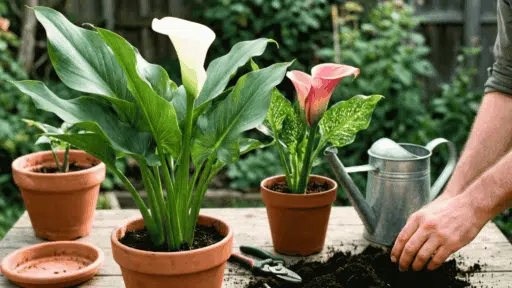
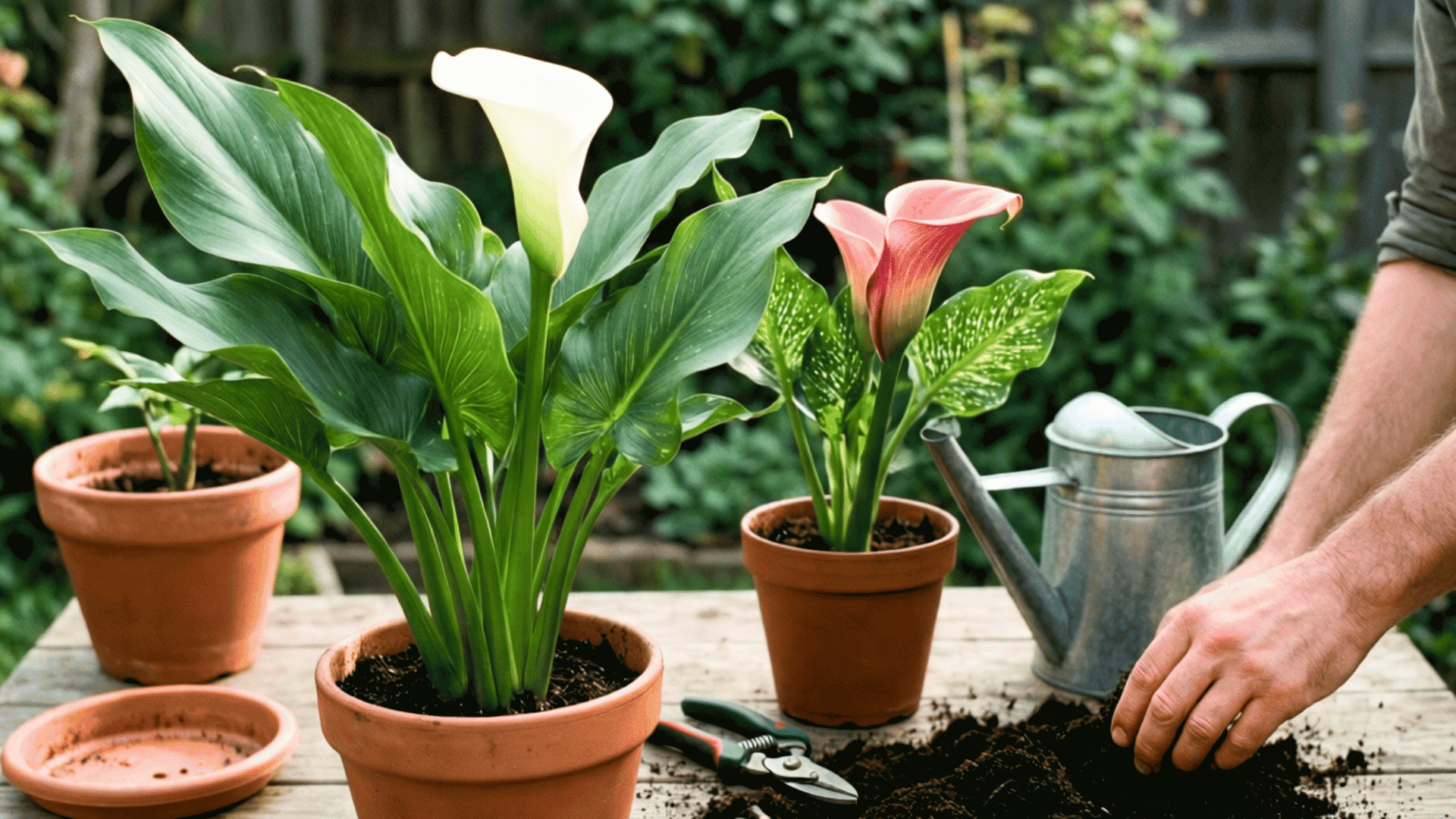

Calla lily care becomes much easier once you stop treating every drooping stem or yellow leaf as a sign that the plant needs more water.
In my experience, these plants often struggle after sudden light changes, low temperatures, poor drainage, or watering that leaves the roots constantly wet.
I first consider the plant type, growth stage, and any recent changes before choosing a treatment.
It also helps to identify which type you are growing. White Zantedeschia aethiopica generally tolerates wetter soil and can remain outdoors in many mild climates.
Smaller colored hybrids are usually more tender and need better drainage, frost protection, and a drier rest after flowering.
This blog covers the basic routine, symptom-based fixes, indoor and outdoor care, gardener-tested tips, and the correct steps to take after blooming.
What are the Basic Calla Lily Care Requirements?
Calla lilies are Zantedeschia species rather than true lilies. Their care should change as the plant moves through active growth, flowering, and its natural resting stage.
During active growth, provide bright light, regular moisture, fertile soil, and protection from extreme heat or frost. White calla lilies often tolerate wetter conditions, while colored hybrids usually need faster drainage and more winter protection.
Feed only while leaves and flowers are developing, and avoid using fertilizer to correct poor light or unsuitable soil.
After flowering, leave healthy foliage in place until it yellows naturally. Then adjust care gradually as the plant enters dormancy.
Use this quick chart to review the basic growing conditions before investigating a specific symptom.
| Care Need | Basic Recommendation |
|---|---|
| Light | Bright light or sun with afternoon heat protection |
| Water | Even moisture during active growth |
| Soil | Fertile, moisture-retentive, well-drained mix |
| Feeding | Feed while leaves and flowers are developing |
| Temperature | Warm conditions with frost protection |
| Dormancy | Reduce watering after the foliage fades |
How to Care for Different Calla Lilies?
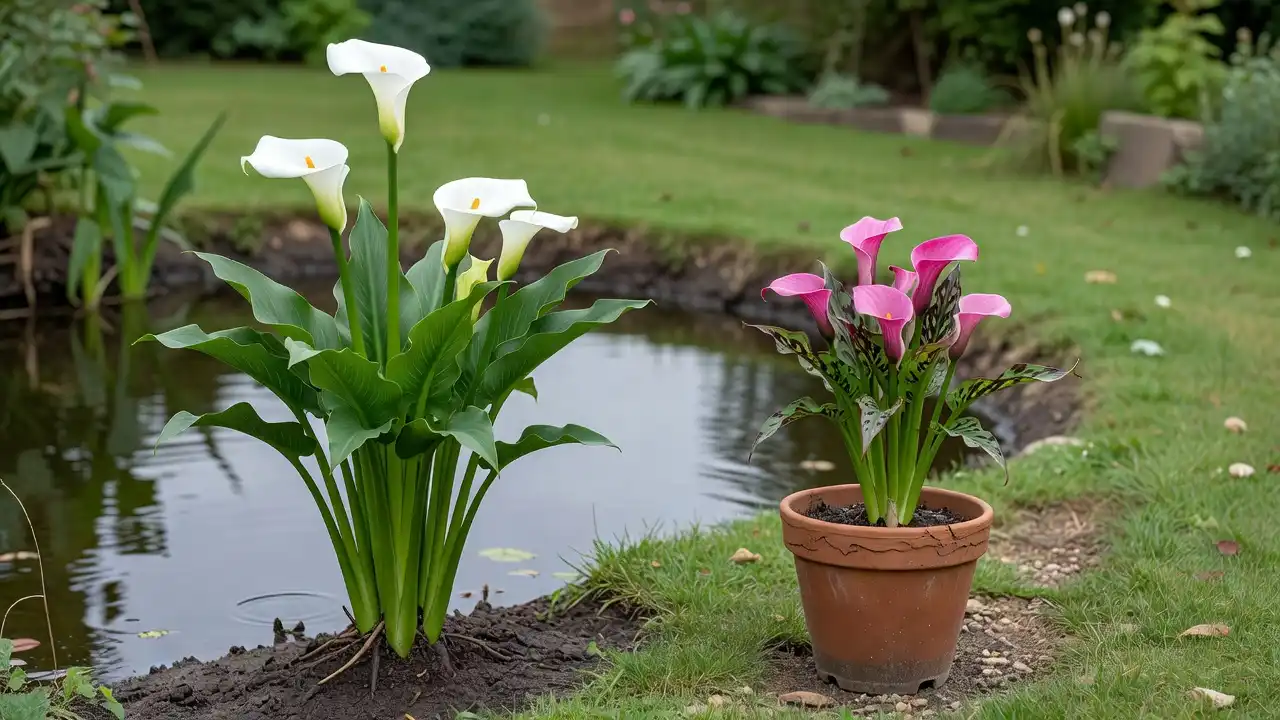
Before troubleshooting drooping, yellowing, or slow growth, check the plant label, flower color, mature size, leaf markings, and how the calla lily was sold. Identifying the type helps you choose a more suitable care routine.
White Zantedeschia aethiopica is usually taller, with broader leaves and white flowers. It can tolerate consistently moist soil and may grow well near pond margins or naturally damp garden areas.
In mild climates, it may also remain outdoors for much of the year.
Colored calla lily hybrids are generally shorter, more compact, and often sold in pots for seasonal displays. Their flowers may appear in pink, yellow, orange, red, or purple.
These hybrids need regular moisture during active growth, but they also require a looser, faster-draining mix and stronger protection from cold. Knowing the type can prevent common watering, soil, and winter-care mistakes.
How Much Light does a Calla Lily Need?
Calla lilies grow in full sun or partial shade, but the best position depends on heat and climate.
- The University of Minnesota notes that callas bloom more freely in full sun, while Penn State says they tolerate afternoon shade.
- In hot areas, afternoon sun can dry a pot quickly or scorch a plant moved outdoors too suddenly.
- I watch the leaves and stems instead of following one fixed rule. Long, weak growth can suggest insufficient light.
Indoors, place the plant near a bright window or beneath a grow light, away from hot glass. Rotate the pot if the stems lean, and introduce outdoor light gradually.
How Often and Should You Water a Calla Lily?
I do not water calla lilies on a fixed weekly schedule.
- I first check the soil below the surface, then consider the plant type, pot size, temperature, and current growth stage.
- During active growth, the soil should stay evenly moist without remaining saturated.
- Containers usually dry faster than garden beds, while white calla lilies often tolerate wetter conditions than smaller colored hybrids.
- I press a finger into the soil and lift smaller pots to compare their weight before watering.
- A lighter pot usually needs water sooner than one that still feels heavy.
Once the foliage begins fading naturally after flowering, I gradually reduce watering instead of trying to keep the plant actively growing.
How to Water a Potted Calla Lily
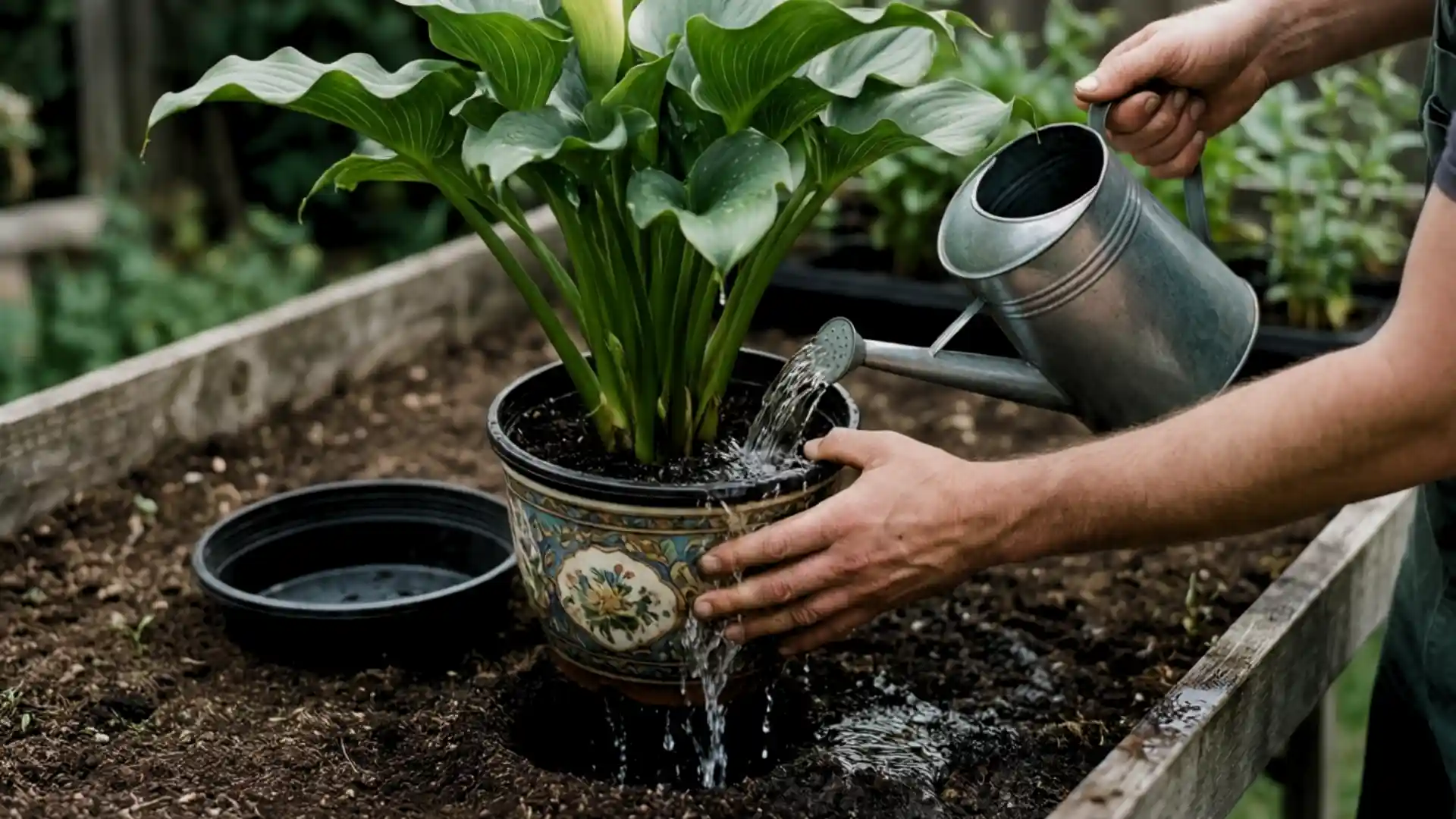
Water slowly and thoroughly until excess water begins leaving the pot. Allow it to drain fully before returning it to a decorative cover.
Avoid adding small amounts every day because this can create uneven moisture around the roots. Empty saucers, foil covers, and cachepots after watering so collected water does not remain around the nursery pot.
I return the plant to its cover only after it has stopped dripping.
What Should You Check When a Calla Lily Looks Unhealthy?
When a calla lily changes suddenly, I first look at what changed before the symptoms appeared. A recent move, repotting, root disturbance, new soil mix, temperature shift, or change in sunlight can temporarily stress the plant.
Check the soil below the surface, examine new growth, and consider whether the plant is actively growing, flowering, or entering its resting stage.
Then match the visible symptom with the most likely cause before watering, feeding, or repotting again.
Use the table below to identify the first condition to check.
| Symptom | Likely Causes to Check | First Action |
|---|---|---|
| Drooping leaves | Dry soil, wet roots, heat, or a recent move | Check the soil below the surface |
| Yellow lower leaves | Natural aging, excess moisture, or the resting stage | Examine soil moisture and new growth |
| Brown leaf edges | Dry conditions, heat, or fertilizer buildup | Review watering and feeding |
| No flowers | Low light, excess nitrogen, or plant immaturity | Assess light and growth stage |
| Soft plant base | Root or rhizome decay | Stop watering and inspect the plant base |
| Fading foliage after flowering | Natural transition into dormancy | Follow the after-flowering care routine |
Which Soil and Pot are Best for Calla Lilies?
Calla lilies grow best in fertile soil that holds some moisture while still allowing excess water to leave the root area.
For containers, I use a loose potting mix rather than garden soil alone, which can become dense and compacted.
Every pot needs a working drainage hole, and I choose a container only slightly larger than the root mass or rhizome.
The RHS recommends peat-free multipurpose compost for dormant rhizomes.
Set the rhizome close to the surface, with the growing points facing upward, then cover it lightly so new shoots can emerge without pushing through a deep layer of mix.
When Does a Calla Lily Need Repotting?
I consider repotting when the plant shows one or more of these signs:
- Roots circle the inside of the pot
- Water passes through unusually fast
- Rhizomes are tightly crowded
- Flowering has declined
- The soil stays dense or compacted
- The container is cracked or unstable
When and How Should You Fertilize Calla Lilies?
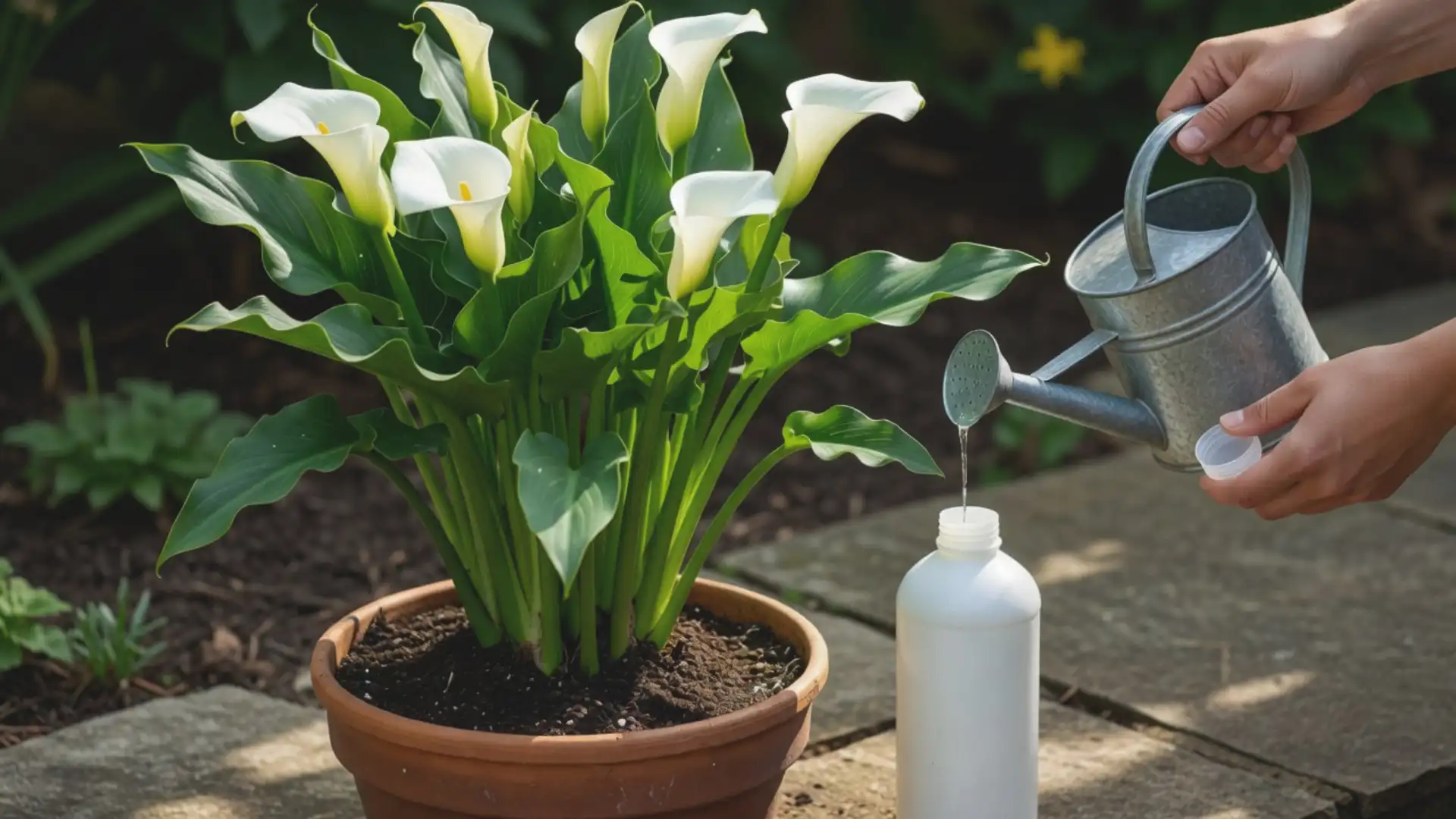
Fertilizer should support a calla lily that already has suitable light, soil, and watering. It cannot correct problems caused by poor growing conditions.
- Callas planted in fertile garden soil may need little extra feeding, while potted plants lose nutrients more quickly through regular watering.
- During active growth, the RHS recommends a balanced liquid fertilizer. A potassium-rich feed can also be used while the plant is flowering.
- For garden-grown callas, the University of Minnesota suggests applying a fertilizer.
Follow the label directions carefully and avoid applying more fertilizer than recommended.
I treat these as two source-based approaches, not one formula every plant must follow.
What Should You do After Flowering and During Dormancy?
After flowering, remove spent flower stalks near the base, but leave healthy green foliage in place. The leaves continue producing energy that supports the rhizome and future growth.
I do not cut the entire plant back immediately after the flowers fade. Instead, I wait for the leaves to yellow naturally before gradually reducing watering.
This gradual fading is usually part of the plant’s normal resting cycle rather than a sign that it is dying. Tender colored calla lilies generally need a drier rest after flowering, while white callas may remain active longer in mild conditions.
The RHS recommends regular deadheading during flowering and a dry winter rest for tender callas. Post-flowering care should therefore follow the plant’s natural timing rather than forcing it to remain in active growth.
Is the Calla Lily Dormant or Affected by Rhizome Rot?
Use the table below to tell normal dormancy from rhizome rot by checking leaf changes, stem strength, rhizome firmness, and odor.
| Sign | Normal Dormancy | Possible Rhizome Rot |
|---|---|---|
| Leaf change | Gradual yellowing after flowering | Sudden yellowing or collapse |
| Plant base | Firm and stable | Soft or unstable |
| Rhizome | Firm | Soft, mushy, or discolored |
| Soil condition | Becoming progressively drier | Remaining wet for a long period |
| Smell | Normal | Sour or unpleasant |
| Timing | Usually follows flowering | Can occur at any growth stage |
If the rhizome remains firm and the leaves are fading gradually, the plant is probably entering dormancy. If the base is soft or the underground tissue smells unpleasant, stop watering and inspect the affected areas.
A badly damaged rhizome may not recover when most of its firm tissue has decayed.
Watch this video by Kaylee Ellen to learn how to identify root rot, treat damaged roots, and reduce the risk of it returning.
Which Pests, Diseases and Safety Risks Matter?
Calla lilies can attract aphids, thrips, spider mites, whiteflies, and occasional beetles. Persistently wet soil, especially during dormancy, can also lead to fungal root or rhizome rot and bacterial soft rot.
The RHS lists several sap-feeding pests, while NC State notes beetle damage and rhizome rot as possible problems.
Before treating a plant, I inspect the undersides of leaves, new growth, and flower stems. I also check the soil because pest damage and rot require different responses.
Are Calla Lilies Safe Around Pets and Children?
Calla lilies should be kept where pets and young children cannot chew them.
They belong to the arum family, not the true lily family, but their insoluble calcium oxalate crystals can cause mouth pain, swelling, drooling, vomiting, or difficulty swallowing.
If any part is eaten, seek prompt advice from a veterinarian for a pet or a poison service or medical professional for a child.
Final Takeaway
Good calla lily care begins with identifying the plant type, understanding its growth stage, and responding carefully to changes. I avoid responding to every yellow leaf or drooping stem with more water.
White calla lilies and colored hybrids do not always need the same conditions, so identifying the type can prevent watering and overwintering mistakes.
During active growth, provide bright light, regular moisture, suitable soil, and moderate feeding. After flowering, remove spent blooms, leave green foliage in place, and reduce watering only when the leaves begin fading naturally.
A firm rhizome, a working drainage hole, and gradual care changes give the plant the best chance of returning next season.
Frequently Asked Questions
How Long do Calla Lily Flowers Last?
Individual flowers often remain attractive for several weeks. Bloom time depends on temperature, light, watering, plant maturity, and how quickly spent flowers are removed.
Why are My Calla Lily Flowers Turning Green?
Flowers may turn green as they age because the spathe begins producing chlorophyll. Low light or excess nitrogen can also make green coloring more noticeable.
Can a Calla Lily Bloom Again in the Same Year?
Some plants may produce another smaller flush under warm, bright conditions. However, many calla lilies flower once before entering their normal resting period.

Jordan Mathews, who has a degree in horticulture from Texas A&M University, has been a guiding force in plant health and sustainable gardening for over 16 years. His career began with a role at a renowned botanical garden, where he deepened his understanding of plant physiology and eco-friendly cultivation methods. Jordan joined our website as a freelancer in 2020, becoming a go-to expert for readers seeking advice on nurturing diverse plant species apart from offering insights grounded in scientific knowledge and practical experience. Beyond his professional achievements, Jordan is a keen nature photographer, capturing the beauty of flora in its immensely diversified forms.