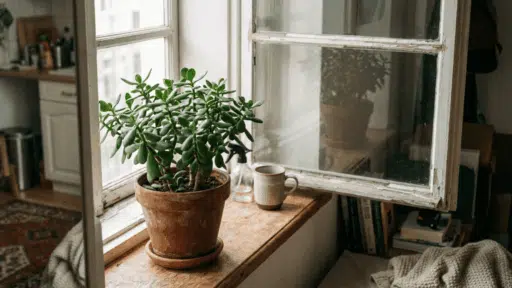
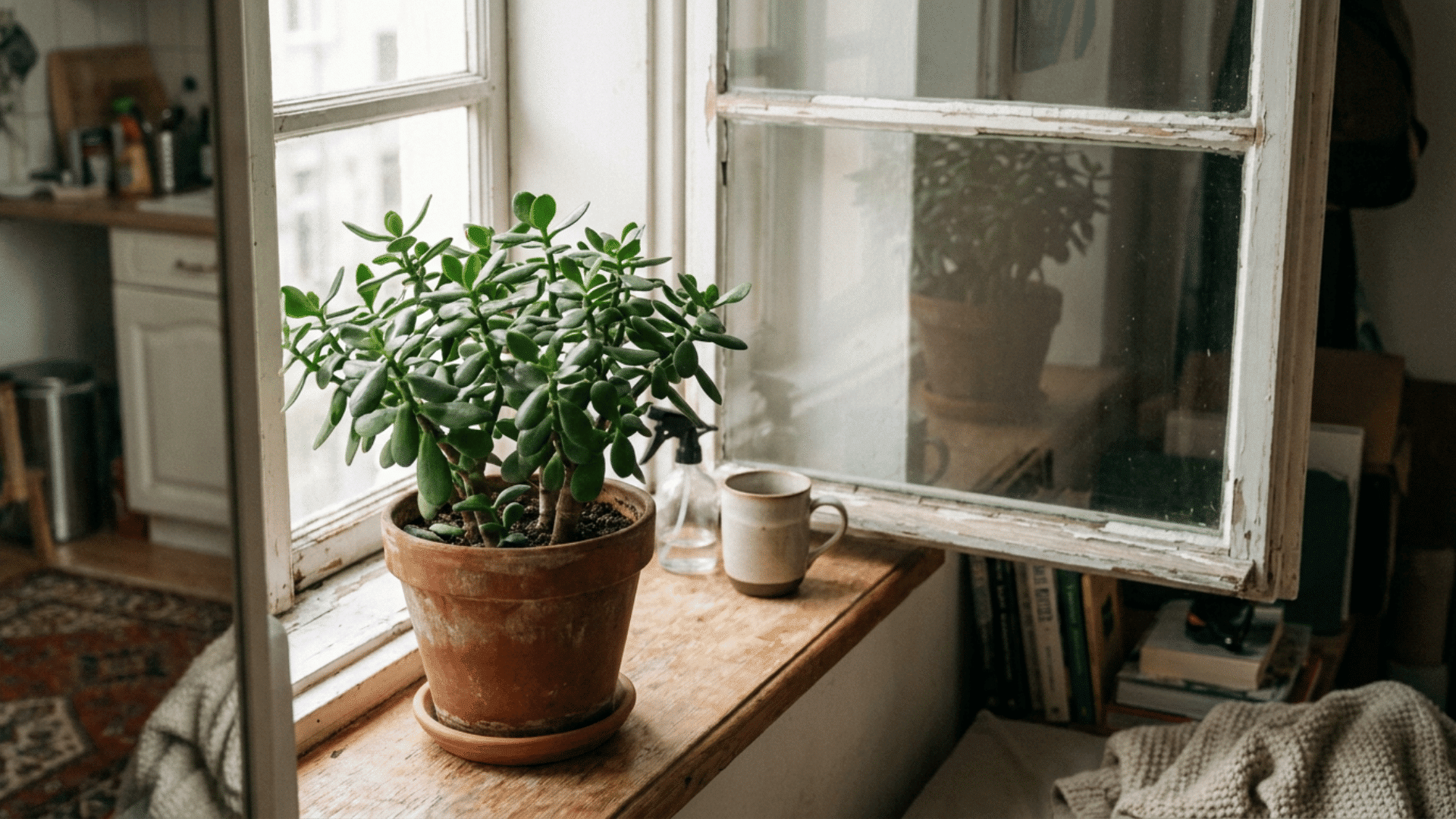

Your grandma had one. Your dentist probably has one too. And honestly? That chunky little plant sitting in the corner of every waiting room deserves way more credit than it gets.
The jade plant does not need special soil, fancy fertilizer, or your constant attention. It just sits there, growing slowly, cleaning your air, and it can do that for up to 70 years without much from you.
In this blog, I will cover what it actually does for your health, why people place it in specific corners of their home, how it has been used as a remedy for centuries, and the basic care it needs to stay happy indoors.
Let us start with the full story before getting into the details.
Top 7 Jade Plant Benefits at a Glance
Most people pick up a jade plant because it looks good on a shelf. But once you know what it is actually doing in your home, you start to see it a little differently.
Here are the seven biggest benefits of jade plants worth knowing about.
| Benefits | What It Does for You |
|---|---|
| Air purification | Absorbs harmful indoor chemicals like benzene, toluene, and formaldehyde from paint, furniture, and cleaning products |
| Nighttime CO2 absorption | Uses CAM photosynthesis to take up CO2 at night, unlike most plants. One of the few that genuinely makes sense in a bedroom |
| Humidity boost | Releases water vapor through its leaves, raising indoor moisture levels and easing dry skin, itchy throats, and irritated airways |
| Stress reduction | Being around greenery lowers stress and improves focus. Studies back this up, and jade fits into any space without taking over |
| Long life with very little care | Lives 50 to 70 years. Stores water in its leaves, so it handles dry spells without fuss |
| Feng Shui and Vastu | Coin-shaped leaves symbolize wealth and growth. Placement in the right corner of your home is said to bring good luck and positive energy |
| Traditional medicinal uses | Used for centuries in Africa and China for warts, nausea, digestive issues, and diabetes management |
Jade Plant Health Benefits: What Science Say
Most houseplants get credit for looking good. The jade plant earns credit for what it does in the background. Once I explain how the night cycle works, clients almost always shift theirs from a shelf in the hall to the bedroom windowsill.
It works two shifts, day and night, and each one does something different for your air. There is also solid research on how greenery affects stress and focus.
Below, I break down the full picture, from its 24-hour cycle to the mental wellness side that most people overlook entirely.
Your Jade Plant’s 24-Hour Shift
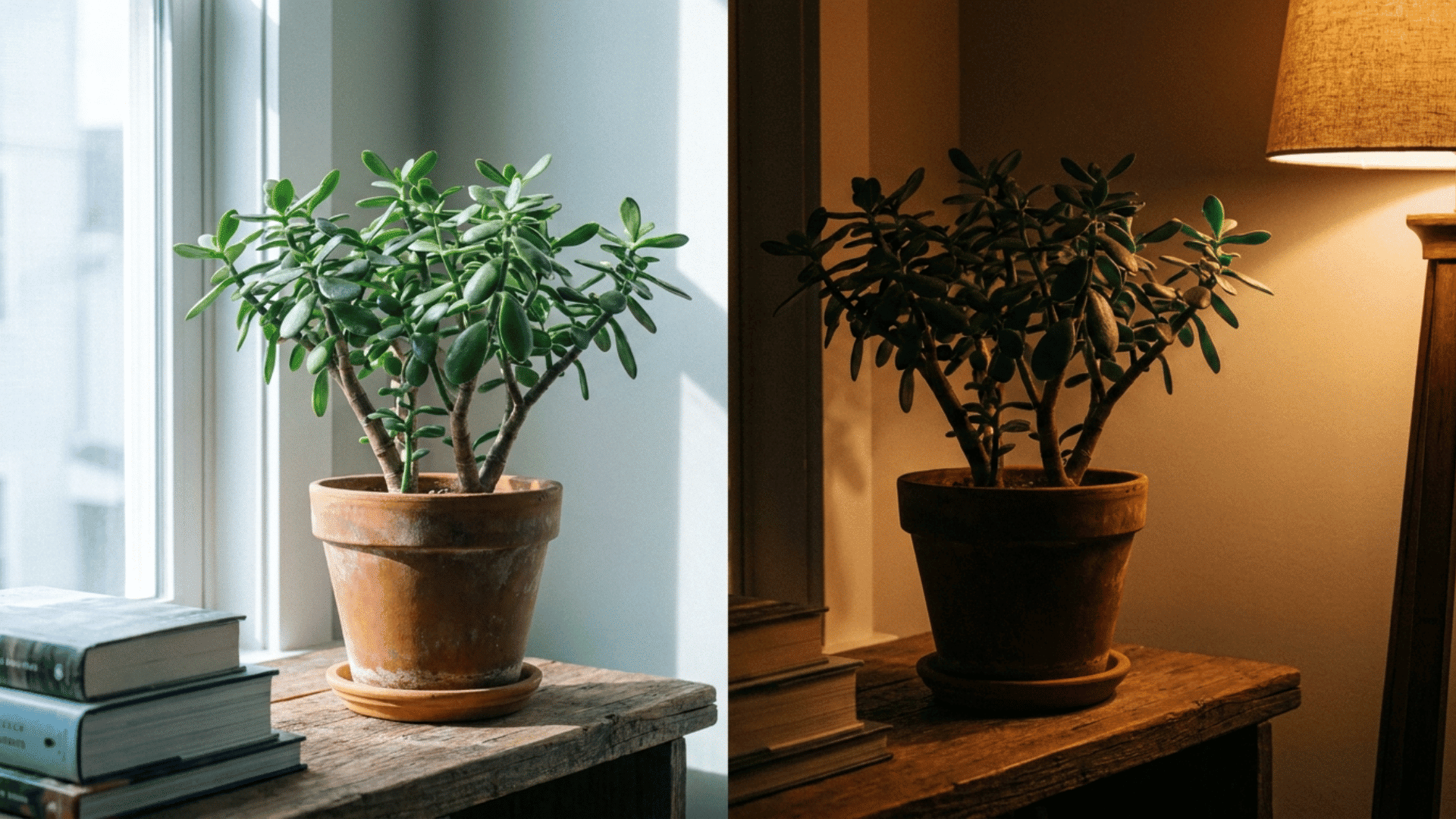
Most people do not realize that a jade plant works around the clock. Here is what it is actually doing while you go about your day.
- Morning: By morning, your jade plant has already spent the night absorbing carbon dioxide from the closed room. Now, as the day starts, it begins pulling in VOCs released by furniture, paint, and household products. Benzene, formaldehyde, and carbon monoxide are the main ones. You cannot smell them, but they build up indoors over time. The jade plant quietly chips away at that.
- Afternoon: As the room warms up, the plant kicks its transpiration into gear. It draws water up through its roots and releases it as vapor through tiny pores in its leaves. This raises the humidity in the room around it. If your skin feels tight in winter or your throat gets scratchy indoors, low humidity is usually part of the problem. The jade plant does not fix it completely, but it contributes in a way that adds up across weeks and months.
- Evening: Most plants wrap up photosynthesis as the light fades. Jade plants switch gears. They begin a process called CAM photosynthesis, short for Crassulacean Acid Metabolism, which allows them to absorb CO2 after dark rather than during the day.
- Night: While you sleep, CO2 levels in a closed bedroom rise steadily. Your jade plant is taking in CO2 through the night, which is exactly when and where most other plants offer nothing at all.
The Mental Wellness Side
Beyond what the plant does to your air, there is solid research on what it does to your head.
Studies on plant-rich environments consistently show lower perceived stress, better attention restoration after mentally tiring work, and reduced blood pressure among people who spend regular time in such environments.
That is exactly where jade earns its spot in a home office or study.
I have recommended it to work-from-home clients for years, and the feedback is always the same. Most clients notice the difference within a few weeks, not from the plant itself, but from slowing down enough to tend to it.
Traditional Medicinal Uses of the Jade Plant
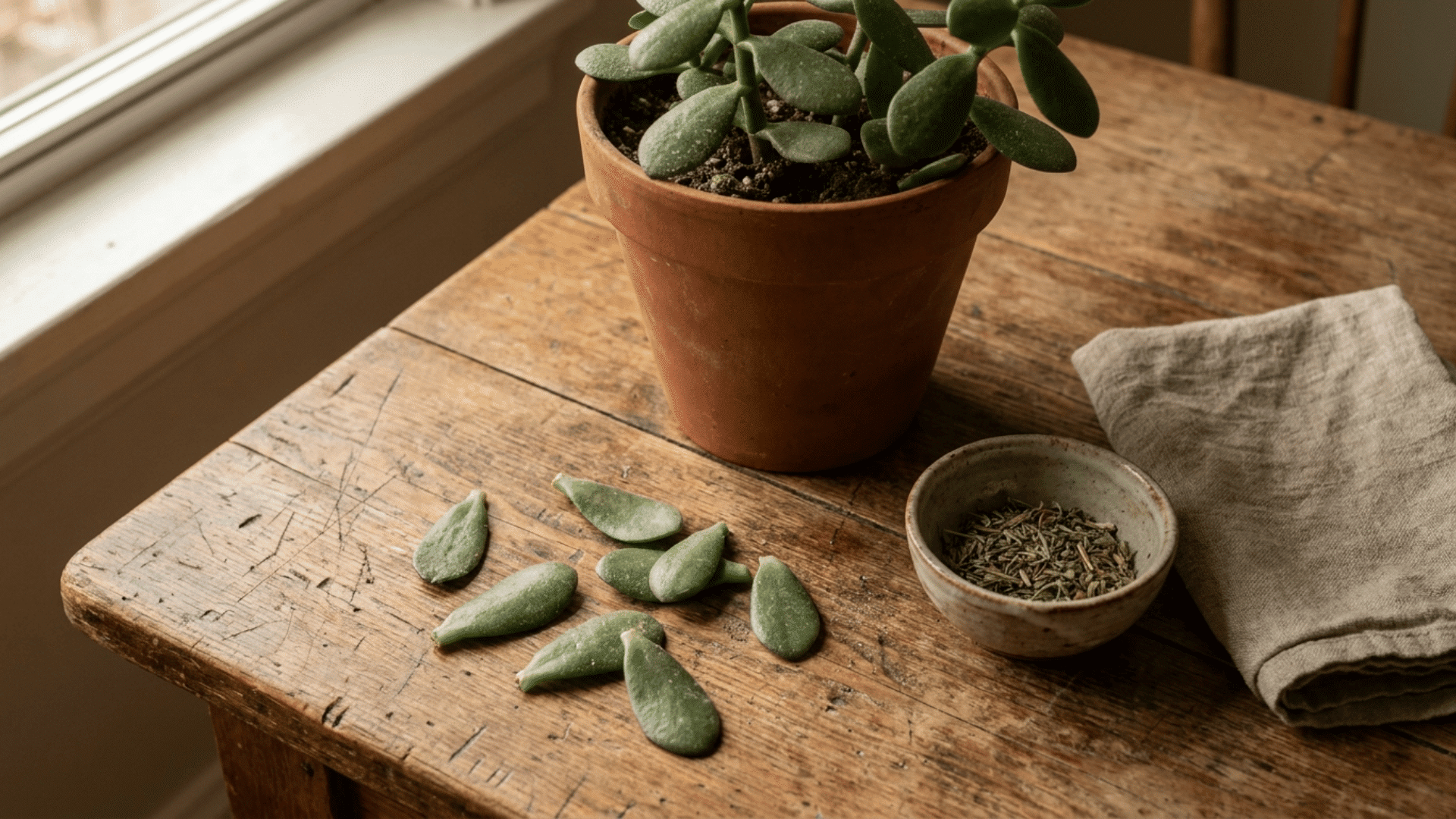
The jade plant has been used as a home remedy across Africa and China for centuries. Here are the most well-known uses:
- Wound healing: The sap from a jade leaf has mild antiseptic properties. It has been used for generations to treat minor cuts, burns, and boils.
- Skin warts: Cut a leaf in half, press the moist inner flesh against the wart overnight, and repeat for three days. This is a traditional folk remedy, not a clinical treatment.
- Diabetes: Traditional Chinese medicine has used jade leaf tea to help ease blood sugar symptoms, particularly a pointed-leaf variety called Stone Lotus.
- Digestive issues: In parts of Africa, leaves boiled in milk have been used for diarrhea. The plant also appears in traditional treatments for nausea and stomach upset.
- Sore throat and insect bites: A diluted juice rinse has been used for sore throats and to reduce swelling from insect bites.
The jade plant’s traditional uses stretch across continents and centuries, each tied to a specific method and culture. This table brings together those scattered remedies, showing the applications, the techniques behind them, and the regions where people first relied on them.
| Traditional Use | Method | Region |
|---|---|---|
| Wound healing | Sap applied to skin | Africa, Asia |
| Skin warts | Leaf flesh pressed on the wart for 3 nights | Multiple cultures |
| Diabetes management | Leaf tea, Stone Lotus variety | China |
| Diarrhoea and nausea | Leaves boiled in milk | Africa |
| Sore throat | Diluted juice used as a rinse | Various |
Note: Topical use is generally safe when patch-tested first. Do not use jade preparations internally if you are pregnant, breastfeeding, or on prescription medication. Always check with a doctor first.
How to Care for a Jade Plant Indoors
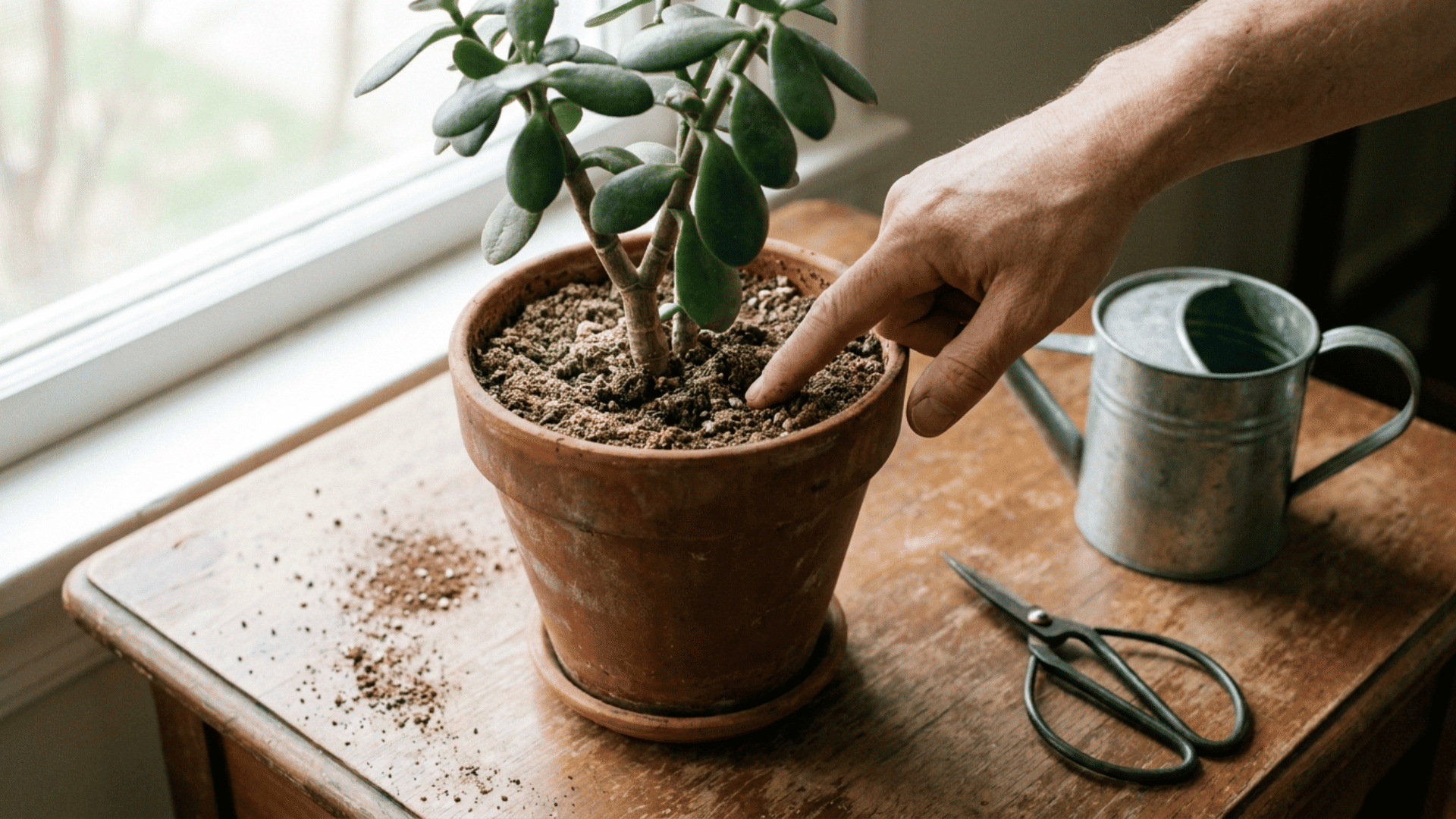
The jade plant is one of the easiest plants to keep alive indoors. It stores water in its leaves, grows slowly, and consistently asks for only a few things.
- Light: Place it near a bright window with indirect light. A south or east-facing window works best. If stems start stretching and going thin, they need more light.
- Watering: Check the soil before watering. If the top inch feels dry, water thoroughly and let it drain. If it still feels damp, leave it. Overwatering is the most common cause of jade plants dying indoors.
- Soil and pot: Use a well-draining succulent mix and always use a pot with drainage holes. Standard potting soil holds too much moisture.
- Temperature: Keep it between 15 and 24 degrees Celsius. Keep it away from frost, cold draughts, and heating vents.
- Fertilizing: Feed once a month in spring and summer only. Skip fertilising in autumn and winter.
- Pruning: Prune once a year just above a leaf node to encourage compact, bushy growth. Wipe leaves with a damp cloth every few weeks to remove dust.
- Outdoor growing: If you are growing jade outdoors, partial shade works better than full afternoon sun in warm climates. Bring it inside before temperatures drop below 10 degrees Celsius.
- Repotting: Repot every 2 to 3 years in spring. Go up only one pot size at a time. A pot that is too large holds excess moisture and causes the same problems as overwatering.
Types of Jade Plants Worth Knowing About
Most people think there is only one jade plant. Walk into any nursery, and you will usually see the classic green one with the thick oval leaves. But there are several varieties, each with a slightly different look that suits different spaces and personalities.
Here are the most common ones you will come across:
1. Classic Jade (Crassula Ovata)
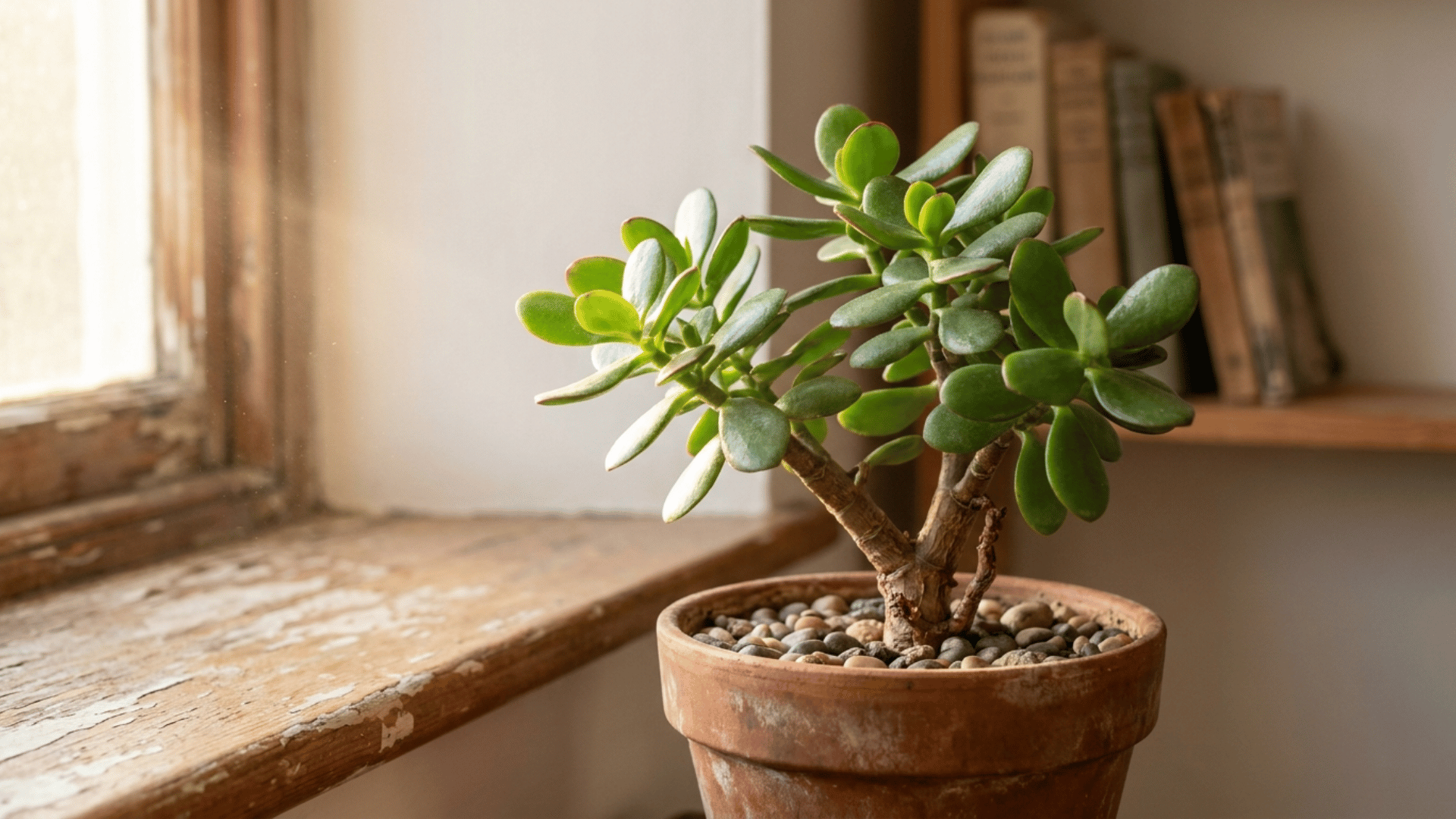
Round, glossy green leaves, a thick woody trunk over time, and a compact tree-like shape that gets more impressive with age. It is the most widely available variety and the easiest to find at any nursery.
It is forgiving, slow-growing, and looks good in almost any spot indoors. If you are growing jade for the first time, start here.
2. Gollum Jade
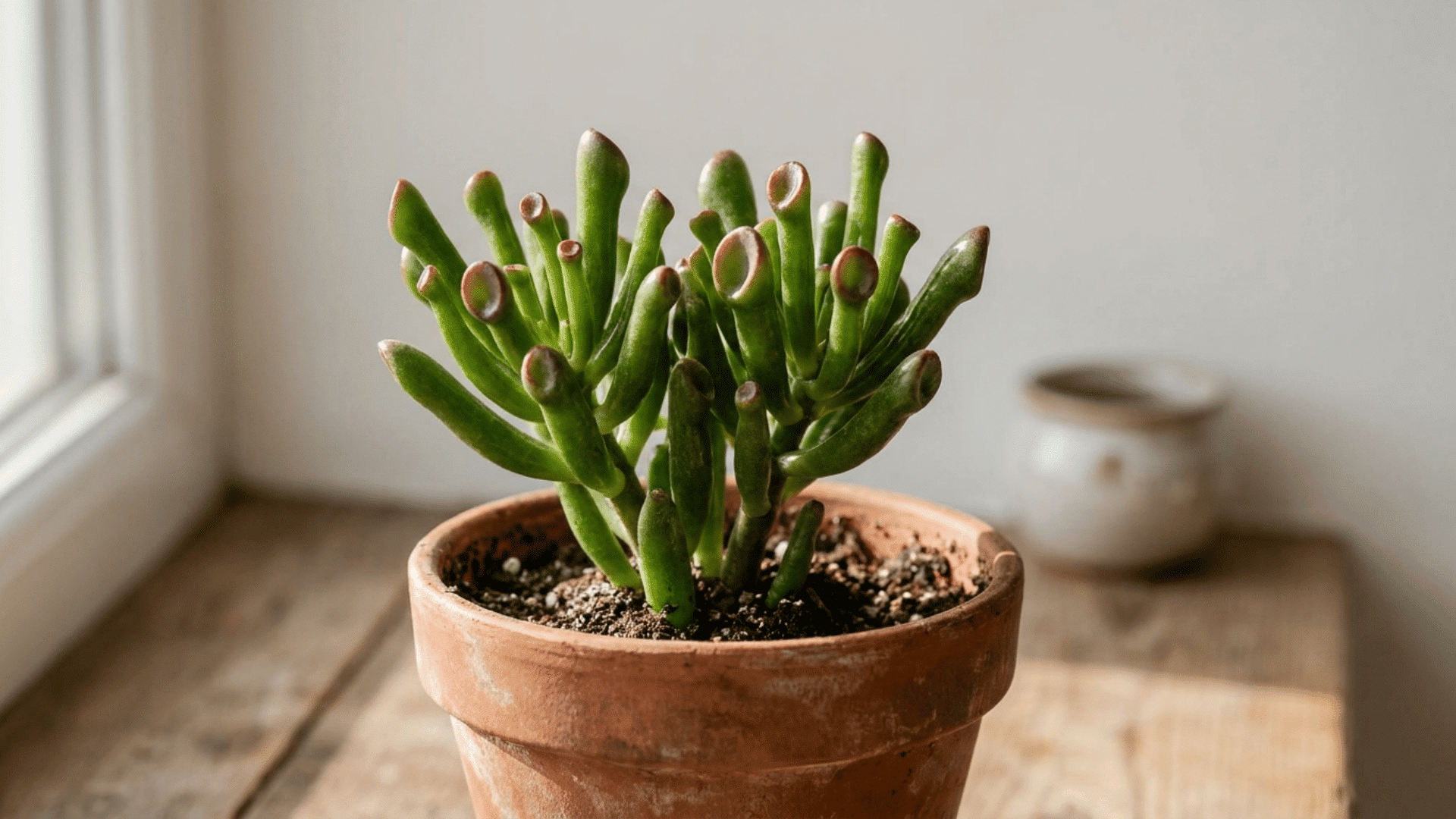
Named after the Lord of the Rings character, and once you see it, the name makes complete sense. The leaves are tubular and finger-shaped, often turning red at the tips in bright light.
It stays compact and fits well on a desk or a small shelf. It is a quiet conversation starter that does not take up much room and needs the same basic care as the classic variety.
3. Hobbit Jade
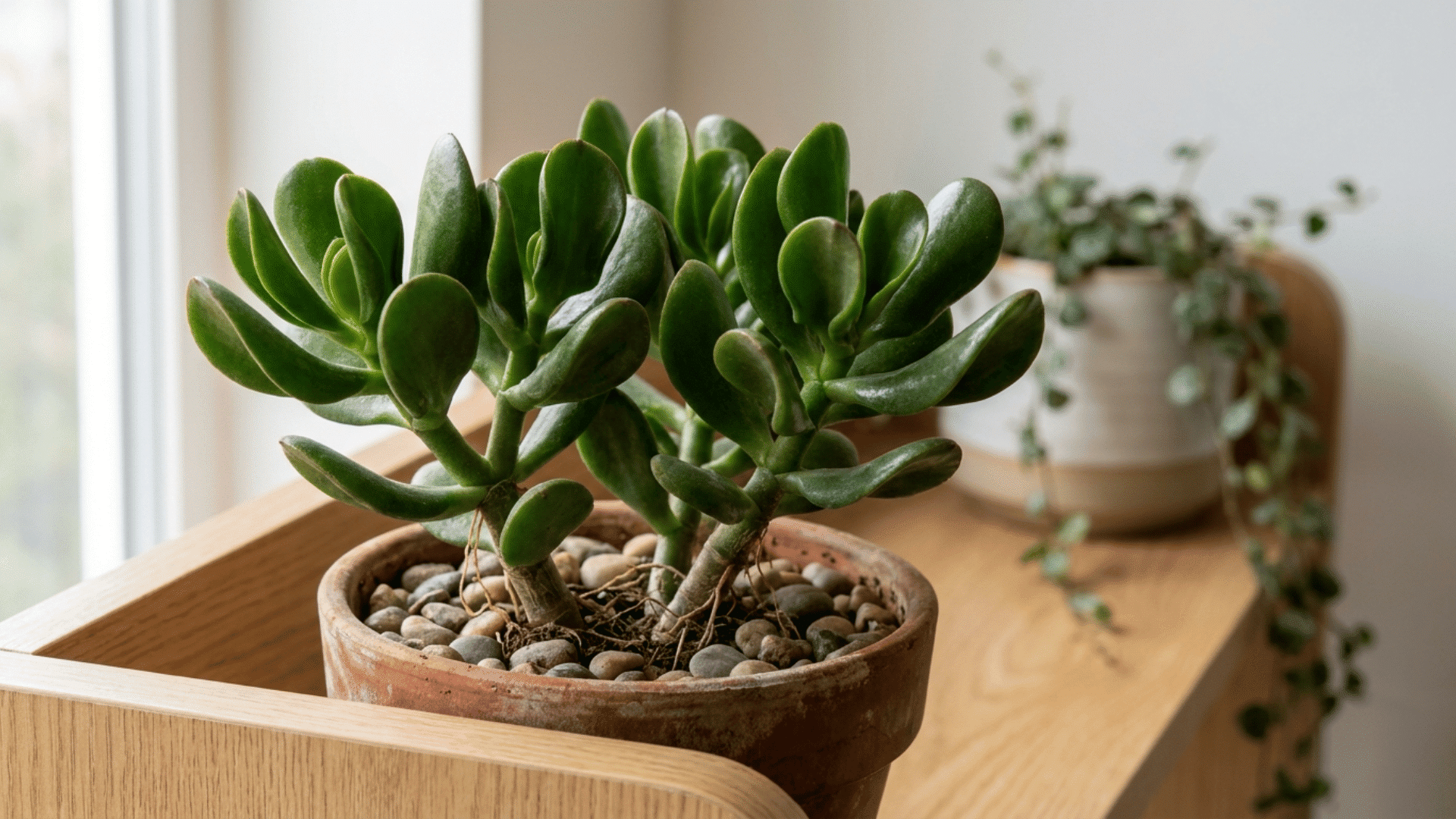
Similar to Gollum Jade, but the leaves curl inward like tiny spoons rather than forming tubes. It stays small and suits a windowsill or a decorative pot nicely.
The two are often mixed up at nurseries, so here is the easy way to tell them apart: Hobbit curls inward, Gollum tubes outward. Both are low-maintenance and share the same light and watering needs as the classic jade.
4. Variegated Jade
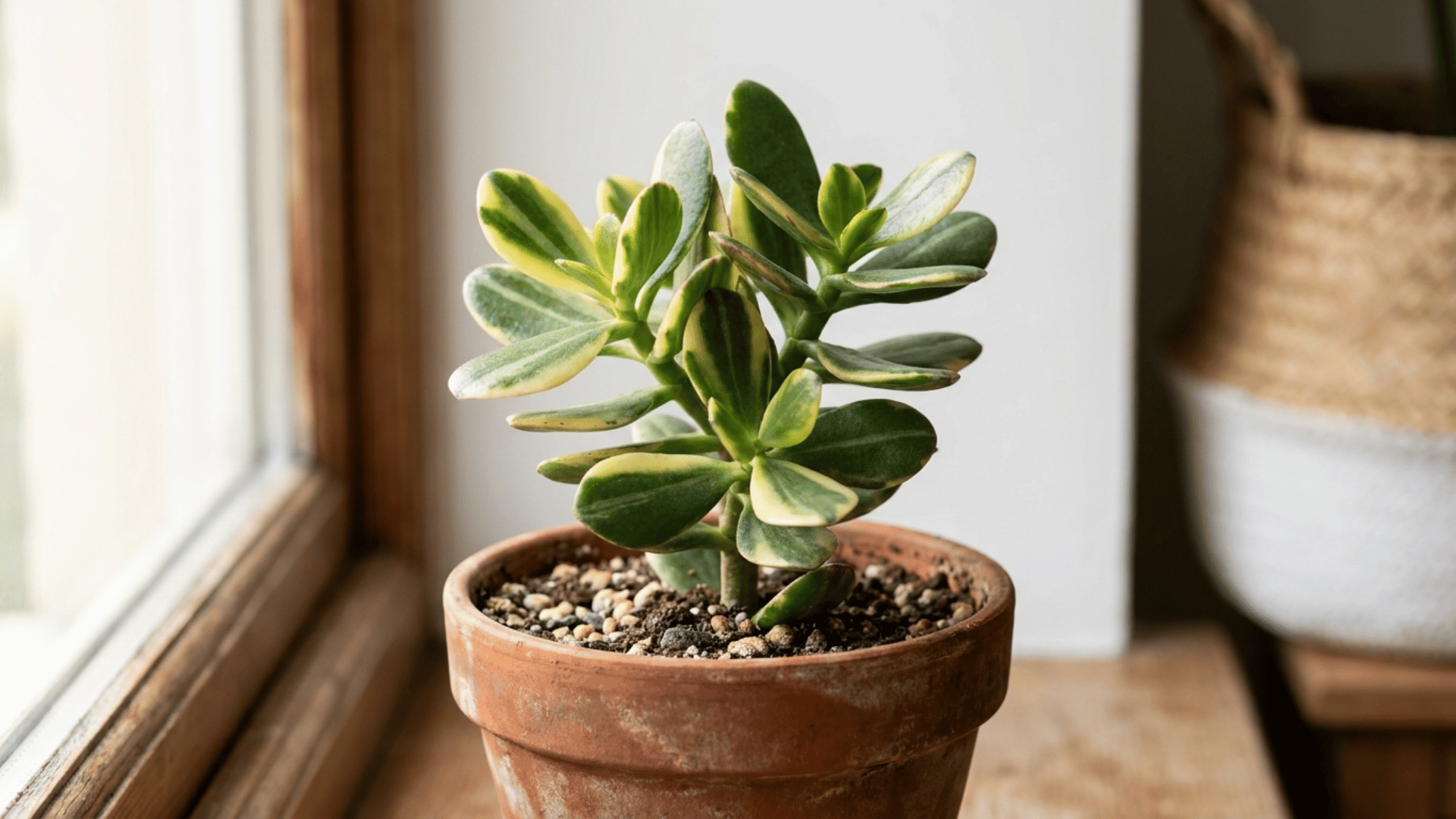
This variety has green leaves streaked with cream or yellow along the edges, which gives it a cleaner, lighter look compared to the standard jade. It needs a bit more bright light than the classic variety to hold its colour.
In low light, the variegation fades, and the leaves go plain green. Keep it near your brightest window, and it will stay sharp-looking all year.
5. Dwarf Jade (Portulacaria Afra)
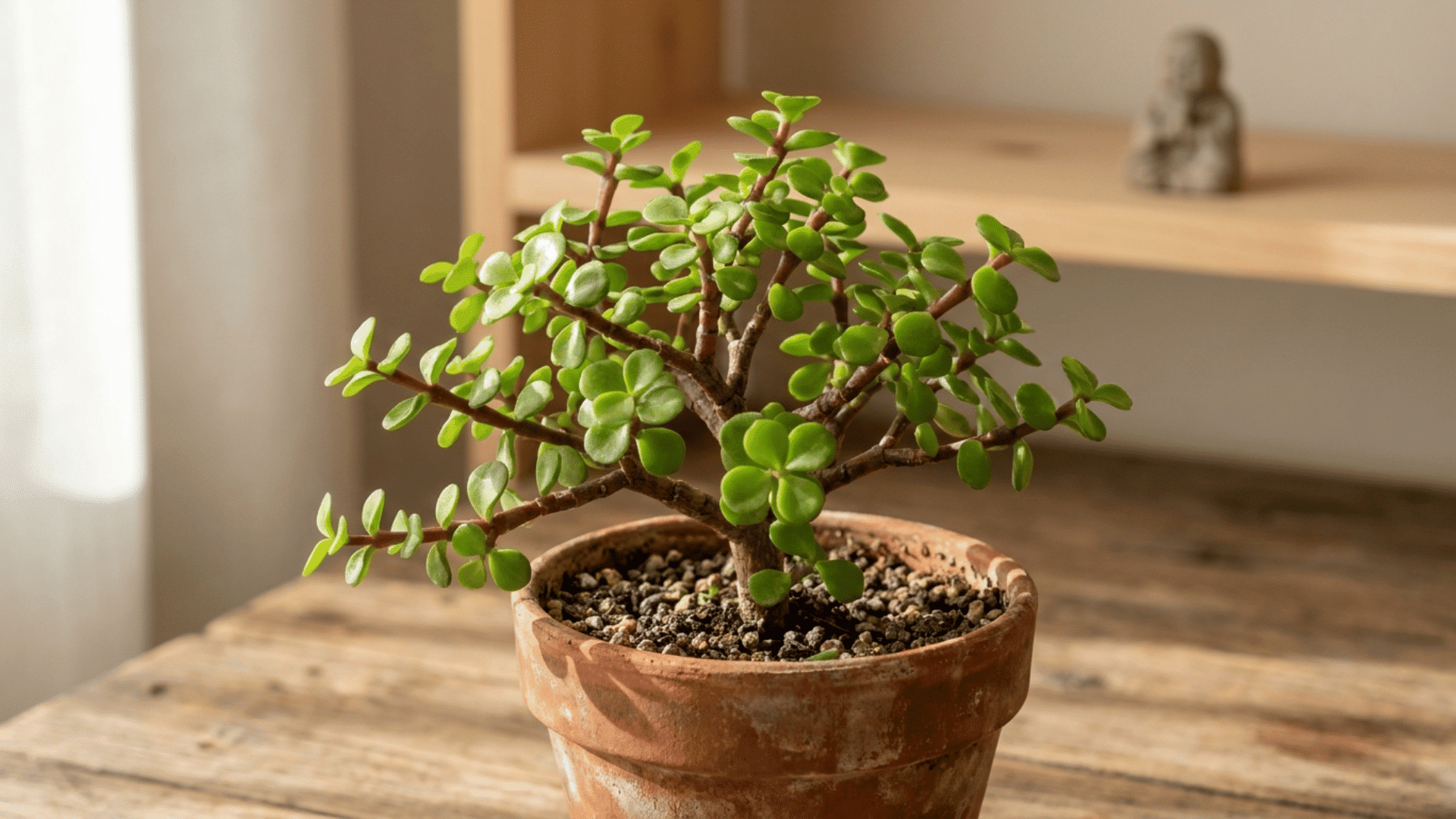
Smaller, rounder leaves on reddish-brown stems with a faster growth rate than Crassula ovata. It is a popular choice for bonsai because it responds well to shaping and pruning.
Despite looking similar to the classic jade, it is a different species entirely, and the most important difference is this: it is non-toxic to pets. If you have cats or dogs at home, this is the one to go with without hesitation.
If you have pets, the Dwarf Jade is the one to go with. It looks similar enough to the classic variety that most people cannot tell the difference at a glance, but it will not harm a curious cat or dog. That is a meaningful difference in a home with animals.
How to Propagate a Jade Plant at Home
One of the best things about jade plants is that you can grow more of them for free. You do not need any special equipment, rooting powder, or a greenhouse.
Just a healthy plant, a clean pair of scissors, and a little patience. There are two methods that work well, and both are simple enough for a first-timer.
Leaf Propagation
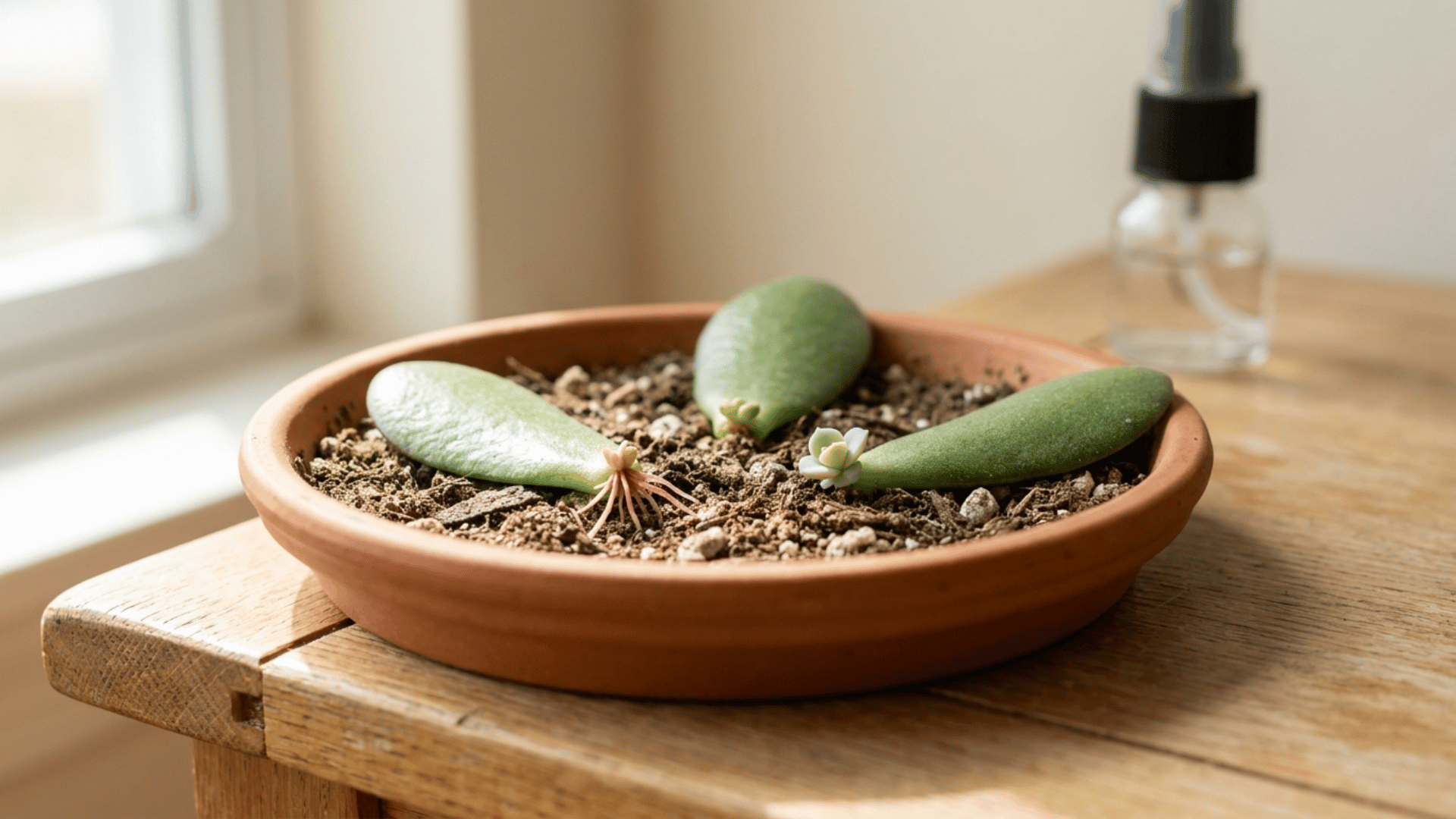
This method works best if you want to grow several new plants at once. It is slower than stem propagation but just as reliable.
- Twist a healthy, mature leaf off cleanly at the base. Do not cut it. A clean twist ensures the whole base comes away with it, which is what allows roots to form
- Leave the leaf on a dry surface for 2 to 3 days. You are waiting for the cut end to dry out and form a callus. This step stops rot from setting in once it touches soil
- Lay the leaf on top of well-draining succulent soil. Do not bury it. Just set it flat on the surface and let it do its thing
- Mist the soil lightly every few days. You are not watering it, just keeping the surface from drying out completely
- Within a few weeks, small pink roots will appear at the base, followed by a tiny new shoot. Once the shoot has a few leaves, you can treat it like a regular jade plant
Stem Propagation
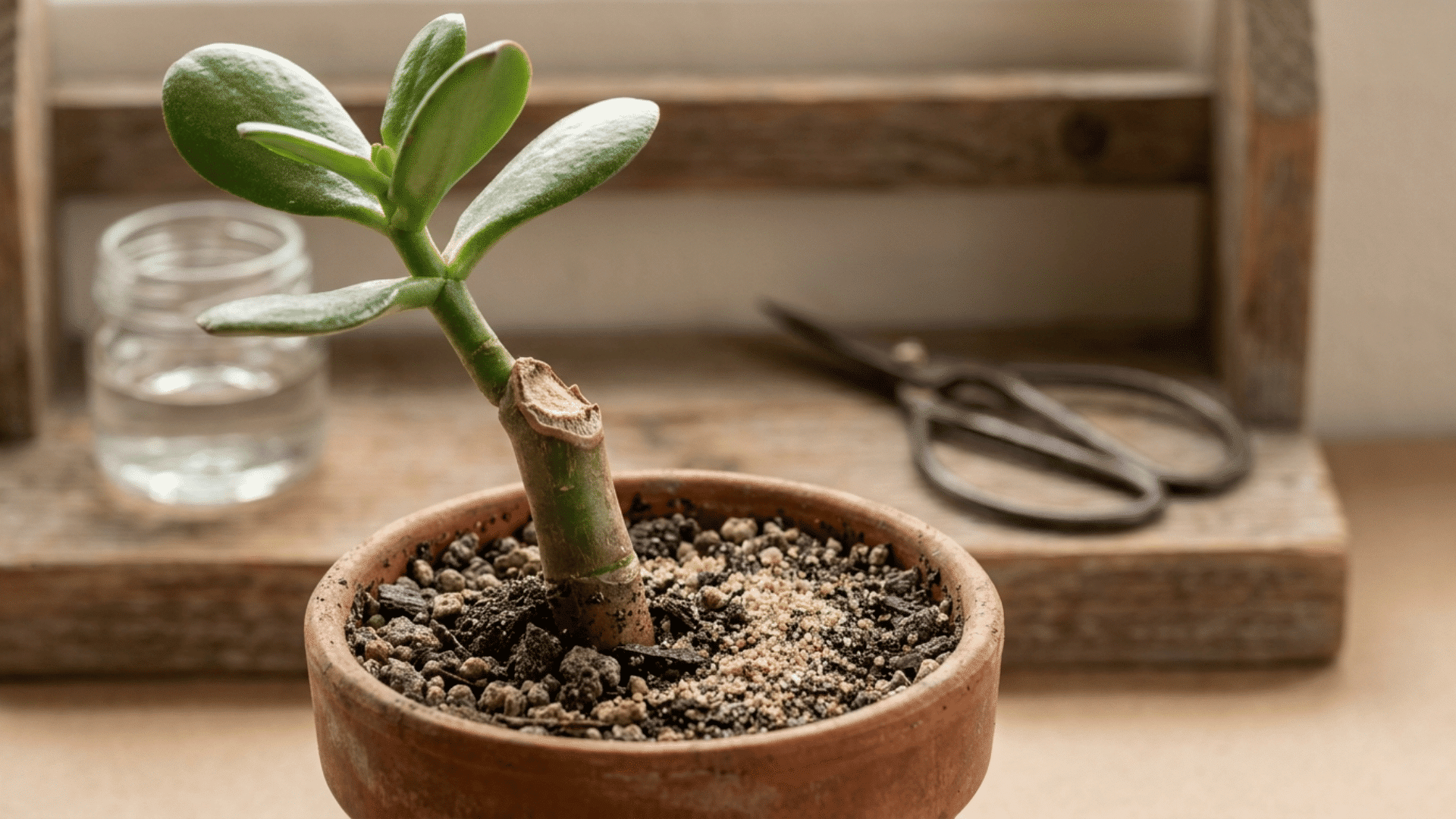
This method is faster and gives you a plant that looks more established from the start.
- Cut a healthy stem about 3 to 4 inches long using clean, dry scissors or a blade. Make the cut just below a leaf node
- Remove the lower leaves so the bottom inch or two of stem is bare
- Leave the cutting on a dry surface for 2 to 3 days until the cut end forms a callus. Skipping this step is the most common mistake, and it leads to rot before roots even form
- Plant the stem upright in well-draining succulent soil. Press the soil lightly around the base so it stands on its own
- Wait 3 to 4 days before watering. Then water lightly and let it drain fully
- Roots develop within 2 to 3 weeks. You will know it has rooted when the stem feels firm and resists a very gentle tug
Best time to propagate: Spring or early summer, when the plant is actively growing. Cuttings taken during this period root faster and more reliably than those taken in autumn or winter, when the plant has slowed down.
The number one propagation mistake I see is watering too soon. People get the cutting in the soil and immediately reach for the watering can. Give it a few days first. The callus needs time to do its job, and a dry start is almost always better than a wet one.
| Method | Best For | Time to Root | Key Watch-Out |
|---|---|---|---|
| Leaf propagation | Growing multiple plants at once | 3 to 6 weeks | Do not bury the leaf, lay it flat |
| Stem propagation | Faster, more established-looking plant | 2 to 3 weeks | Always let the cut end callus before planting |
Common Jade Plant Problems and How to Fix Them
Even a low-maintenance plant runs into trouble sometimes. Most jade plant problems show up in the leaves first. A change in color, texture, or the firmness with which the leaves sit on the stem tells you something is off.
The table below covers the six most common issues and what to do about each one.
| Problem | Most Likely Cause | Fix |
|---|---|---|
| Yellow leaves | Overwatering or poor drainage | Let the soil dry fully, check if the pot has drainage holes |
| Leggy, stretched stems | Not enough light | Move closer to a bright window, rotate weekly |
| Leaf drop | Temperature shock or irregular watering | Keep in a stable spot, check watering consistency |
| Soft, mushy leaves | Root rot from excess moisture | Reduce watering, repot in fresh dry soil immediately |
| White powdery patches | Mealybugs | Wipe with a damp cloth, apply diluted neem oil |
| Wrinkled, shriveled leaves | Underwatering | Water thoroughly and let it drain fully |
The most important thing to remember is that most jade plant problems trace back to one of two things: too much water or too little light. Check those two before anything else.
Final Thoughts
So here is what it all comes down to. The jade plant is one of those rare picks that give back far more than they ask for. It cleans your air during the day, takes in CO2 at night, and adds a little humidity to dry rooms.
It has been trusted for healing for hundreds of years, and both Feng Shui and Vastu say it brings good luck when placed correctly. Best of all, it lives for decades with almost no effort.
Just give it bright light, water it only when the soil feels dry, and keep it away from curious pets. Nine years in, it is still the plant I recommend first.
Got a jade plant of your own? Try one tip from this guide this week, then tell me in the comments how it goes.
Frequently Asked Questions
Is It Okay to Keep a Jade Plant in the Bedroom?
Yes. Jade plants absorb CO2 at night via CAM photosynthesis, making them among the few houseplants genuinely suited for a bedroom.
Is a Jade Plant Good for Health?
Yes. It purifies indoor air, boosts humidity, reduces stress, and has been used in traditional medicine for wounds and digestive issues.
Is Jade Plant Toxic to Humans?
Mildly toxic if eaten. It can cause nausea and stomach upset. Keep it away from young children and pets, especially cats and dogs.
How Often Should I Water a Jade Plant?
Only when the top inch of soil feels dry. Overwatering is the most common reason jade plants die indoors.

With a Master’s in Landscape Architecture from the University of Virginia, Sophia Stephenson has dedicated the last 20 years to creating and maintaining vibrant outdoor spaces. Her professional journey started in landscape design, where she gained a reputation for innovative and sustainable approaches. Sophia became a part of our editorial team as a freelancer in 2019, offering a fresh perspective on outdoor living. Since 2020, she has been the chief for our outdoor design content, blending aesthetic appeal with environmental stewardship. In her leisure time, Sophia is a keen photographer, capturing the beauty of natural landscapes, a hobby that complements her professional expertise.