
A Dry Roof Over a Wet Floor
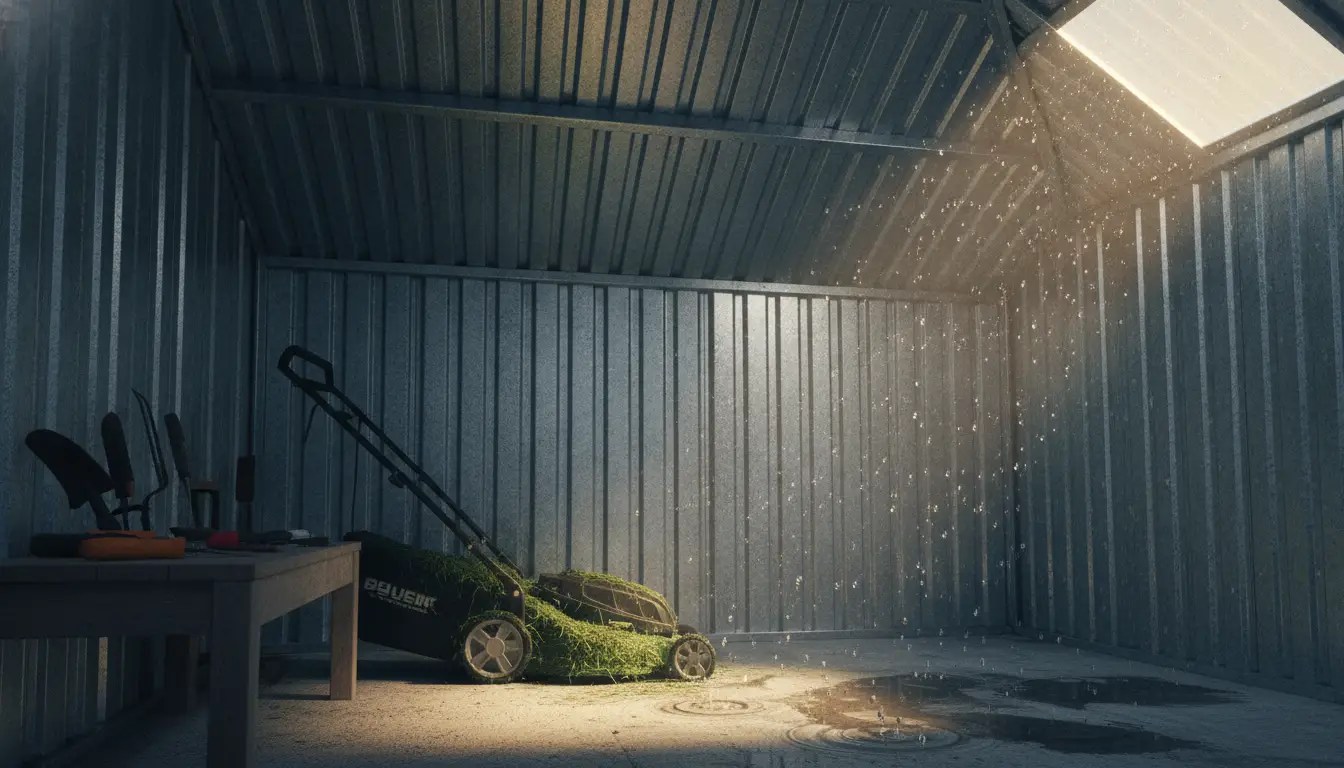
Across Canada the storage crunch arrives in July. Mowers, trimmers, patio furniture and a season of garden tools all need somewhere to live, and a galvanized metal shed goes up in a weekend without footings or framing crews. Then the owner walks in after a clear night and finds beads of water on the tools.
The instinct is to hunt for a hole in the roof. There is usually none. The water formed on the inside surface, a different problem entirely.
A Clear Night Turns the Roof Into a Dew Collector
Metal radiates heat efficiently. On a cloudless night the roof panels of a galvanized metal shed radiate infrared energy out to open sky, which behaves as an extremely cold surface, and lose heat faster than the air can resupply it.
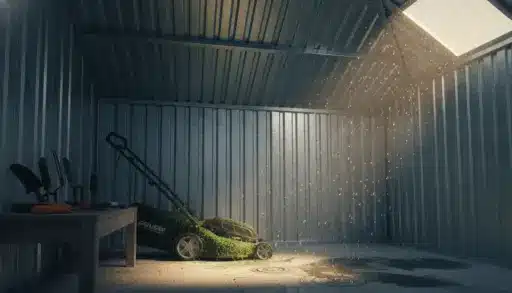
Meanwhile the trapped air carries moisture from a hot day: evaporation from bare soil, wet clippings on a mower deck, a coiled hose. When that air touches a panel below the dew point, the vapor condenses and drips onto what is stored below.
That is the real origin of rusty hand tools inside a sound building. It is a nightly cycle, and a thicker roof changes nothing: the roof is not the failure.
Two Interventions Break the Cycle, and Neither Is the Roof
Condensation needs humid air and a cold surface at once. Remove either and the cycle stops, so the useful work happens at the vents and at the ground.
- Ventilation: exchange humid inside air for drier outside air
- Ground barrier: stop soil moisture feeding the building
- Airflow path: low intake and high outlet, always paired
- Spacing: keep stored items off walls and floor
Ventilation works because moving air never sits long enough to saturate against a cold panel. Vents work only in pairs: a low opening admitting air and a high one releasing it.
The ground matters just as much. Set directly on soil, a galvanized metal shed sits above a continuous supply of evaporating moisture recharging the interior daily. A concrete pad, or polyethylene sheeting under a wooden base, cuts that supply off.
Skylights Solve Darkness and Import Heat in the Same Panel
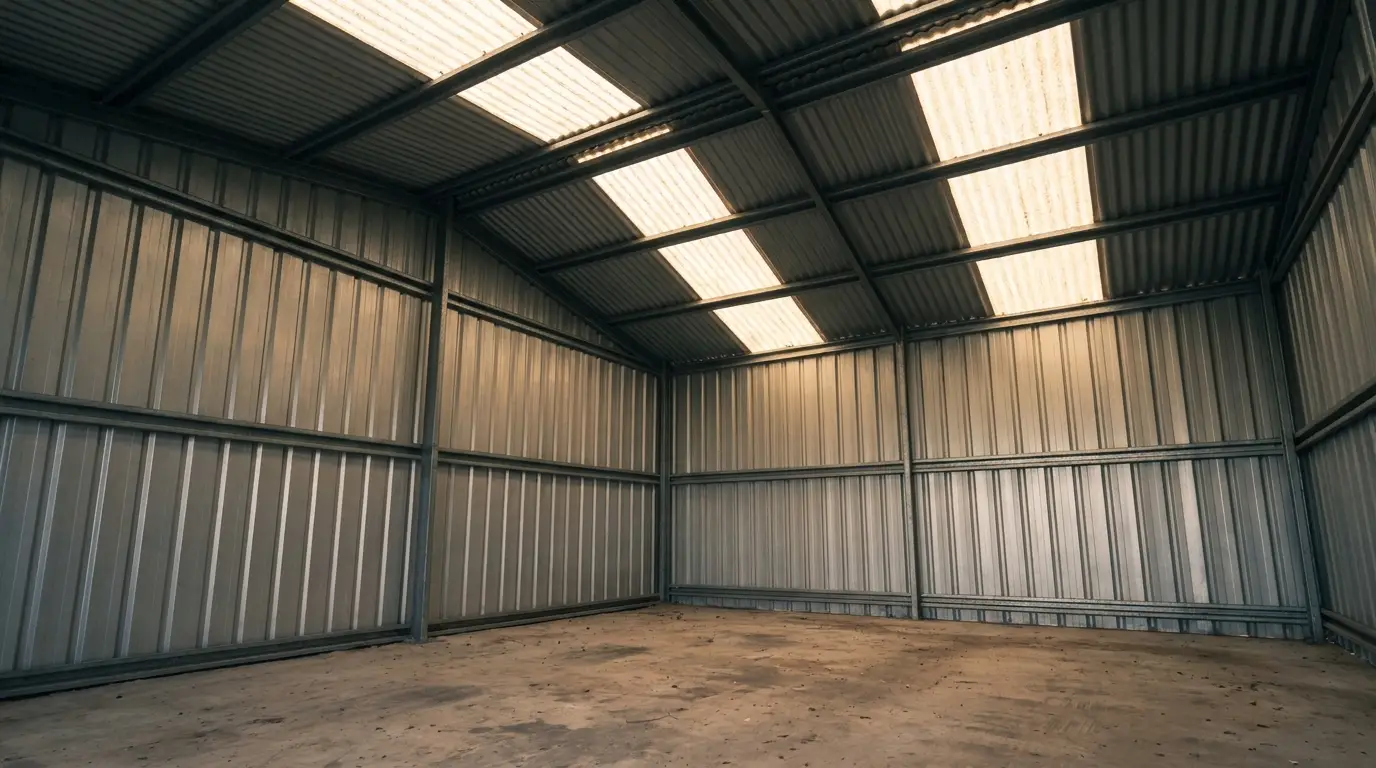
A closed metal building without glazing is a black box. Translucent skylight panels admit daylight with no wiring, electrician, or trench for a power feed.
The trade-off is that light and heat arrive together. Solar energy passing through translucent panels at midday in late July is absorbed inside, and the interior of a galvanized metal shed climbs well above outdoor temperature. Fuel cans and paint dislike that.
So glazing and venting belong to one system. Daylight panels set high, paired with outlets releasing the hottest air, keep the building bright rather than baking, and those outlets already do the moisture work.
Measure the Widest Thing You Own Before Anything Else
The most useful number before buying a galvanized metal shed is the door opening, because it decides what can enter. Fifty-nine inches wide by seventy inches high accepts a riding mower or a garden cart.
Measure equipment at its widest real point, not from a specification sheet: a mower deck sticks out past the tires, and handlebars sit wider than a frame. Floor area is easy to compare; the doorway decides usefulness.
The trade-offs sit in a line. Condensation is a dew point problem answered by ventilation and a dry floor, daylight is bought with heat the same vents must remove, and the door opening decides what the floor space is worth. A galvanized metal shed planned around those realities stays dry, bright, and usable.

With a Master’s in Architecture from the University of California, Berkeley, Alexander Martin has dedicated the last 18 years to enhancing outdoor living through thoughtful and robust structure design. His career kicked off in urban planning, giving him a unique perspective on integrating structures into diverse environments. In 2019, Alexander brought his expertise to our website, offering insights into creating versatile outdoor spaces. Since then, he has been the lead advisor for our outdoor design projects and is known for his ability to merge functionality with environmental consciousness. Alexander enjoys rock climbing outside of work and participates in community development projects, activities that reflect his passion for the outdoors and sustainable design.