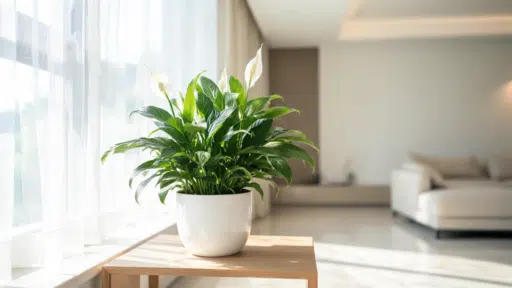
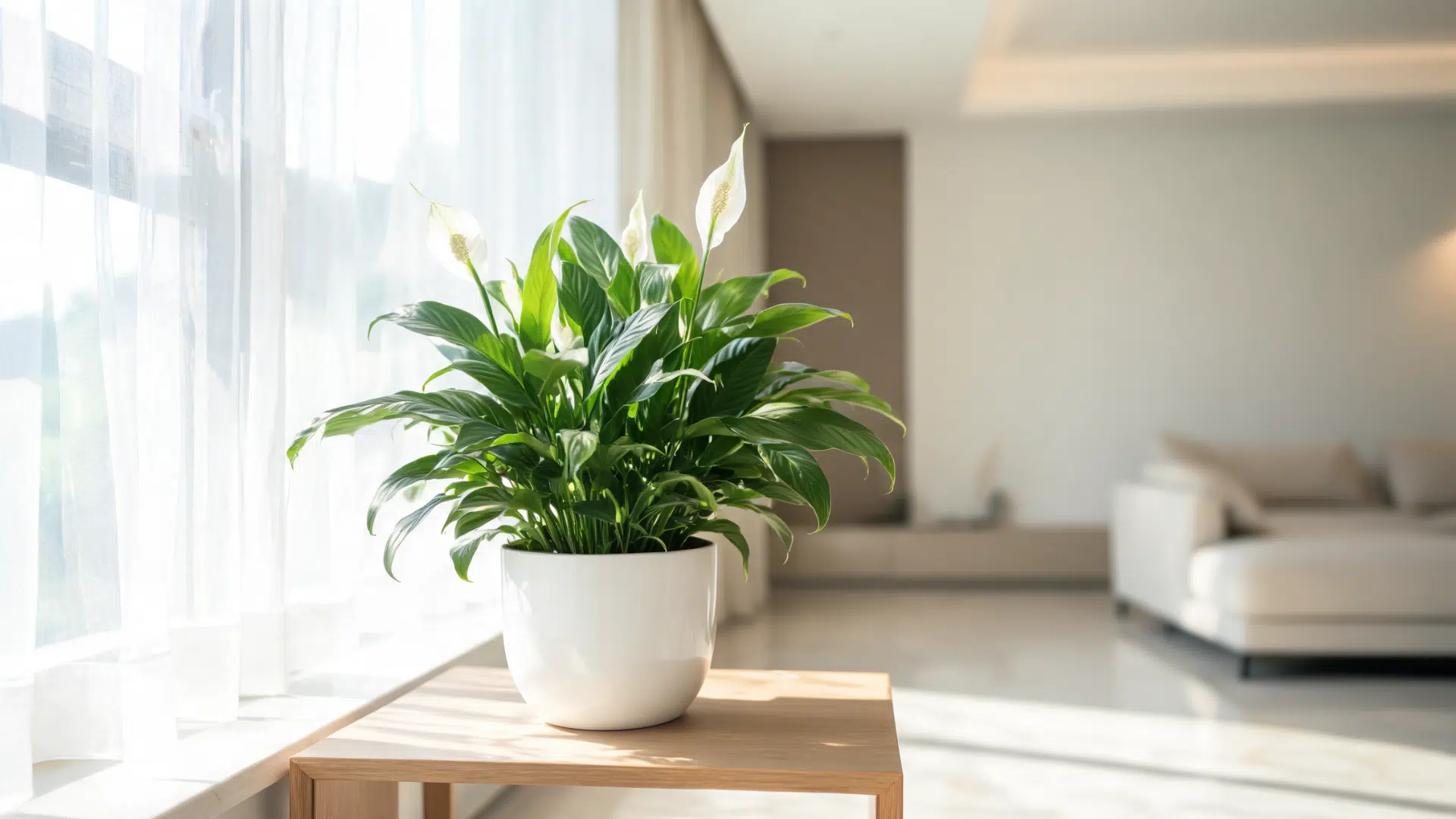

I still remember the first peace lily I owned. It sat in a dark corner of my apartment, and within a month, the leaves turned yellow and drooped as if begging me for help.
That plant taught me more about peace lily plant care than any book could. Once I moved it closer to a window and fixed my watering habits, it bounced back and started blooming again and again.
If you want your peace lily to thrive instead of just survive, I am going to walk you through everything I have learned: light, water, soil, humidity, temperature, feeding, and the small habits that keep it looking its best.
What I love most about this plant is how honest it is with you. It does not slowly decline without warning as some houseplants do.
It droops, lowers its leaves, and practically waves its arms to tell you something is off.
Once you learn to read those signals, peace lily plant care stops feeling like guesswork and starts feeling like a conversation between you and the plant.
Peace Lily Plant Care at a Glance
Peace lilies like bright, indirect light, soil that stays lightly moist but never soggy, and a warm, humid room.
According to UF/IFAS Gardening Solutions, peace lilies are easy to grow and can provide years of enjoyment when their light and moisture needs are met.
Get those three things right, and the rest of the care routine is easy to keep up with.
| Care Factor | What It Needs |
|---|---|
| Light | Bright, indirect light. Low light is okay, but blooms slow down. |
| Water | Water when the top inch of soil feels dry, usually once a week. |
| Soil | Loose, well-draining mix with peat, perlite, and bark. |
| Humidity | 50% or higher. |
| Temperature | 65 to 85°F, or 18 to 29°C. |
| Feeding | Balanced liquid fertilizer every 6 to 8 weeks in spring and summer. |
| Lifespan | Many years, sometimes decades, with steady care. |
That table covers the basics, but numbers alone will not tell you why your specific plant is struggling.
A peace lily in a bright office and one in a dim bathroom need slightly different routines, even though the general rules stay the same.
That is why I think it helps to understand the reasoning behind each factor, rather than just memorizing the ranges.
I will walk through each one of these in more depth below, starting with light, since it has the biggest effect on how your peace lily grows and blooms.
Light Requirements for Peace Lilies
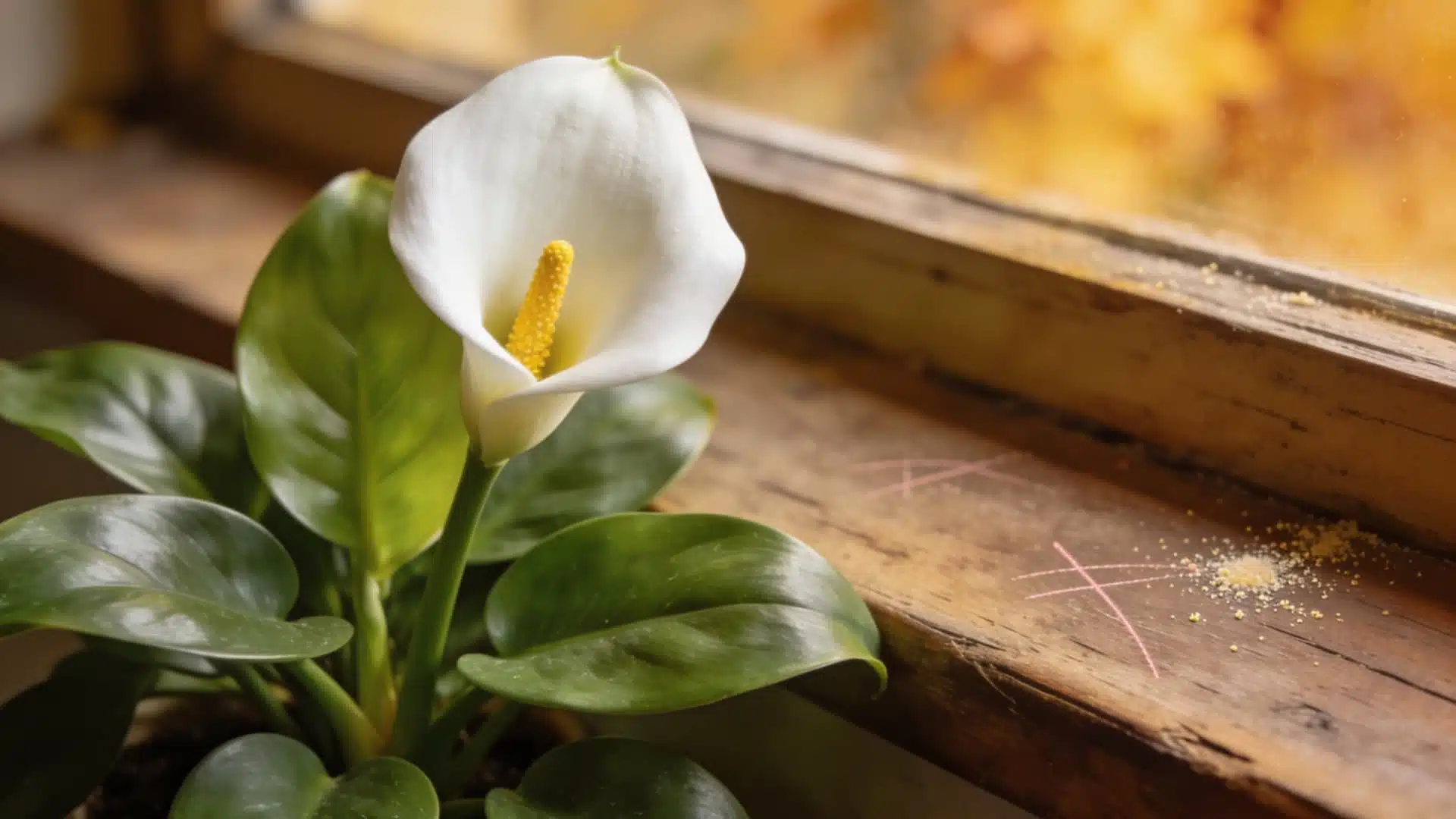
I always tell people that light is the number one thing that makes or breaks a peace lily. Too much sun and the leaves scorch. Too little and the plant stops blooming altogether.
Peace lilies do best in bright, indirect light. Think of a spot a few feet back from an east- or north-facing window. Direct afternoon sun is too harsh and will burn the leaves.
Reading Your Plant’s Light Signals
Your peace lily will actually tell you when the light is wrong. Here is what I look for:
| Sign | What it Means |
|---|---|
| Dark green leaves with no blooms | Not enough light |
| Yellow or pale leaves | Too much direct sun |
| Brown, crispy patches | Sunburn from a window that gets too much afternoon light |
| Leggy, stretched-out growth | The plant is reaching for more light |
The Forest-Floor Effect
In the wild, peace lilies grow on the forest floor beneath a thick canopy of taller trees. They never see direct sun.
The NC State Extension Gardener Plant Toolbox notes that peace lilies naturally prefer partial to deep shade and should never be placed in direct sun.
That is why their leaves are built to soak up soft, filtered light instead of harsh rays.
When you recreate that dappled forest floor feeling indoors, the plant responds with steady growth and, eventually, those white blooms it is known for.
Too little light will not kill it right away, but it will stop it from ever flowering.
Good Places to Put it Indoors
A few good indoor spots include:
- A few feet from an east-facing window
- A bathroom with a frosted window, since the humidity helps too
- An office desk under bright fluorescent lights
- A hallway with filtered natural light
Once your light is dialed in, watering becomes a lot easier to get right, too.
Watering Peace Lilies the Right Way
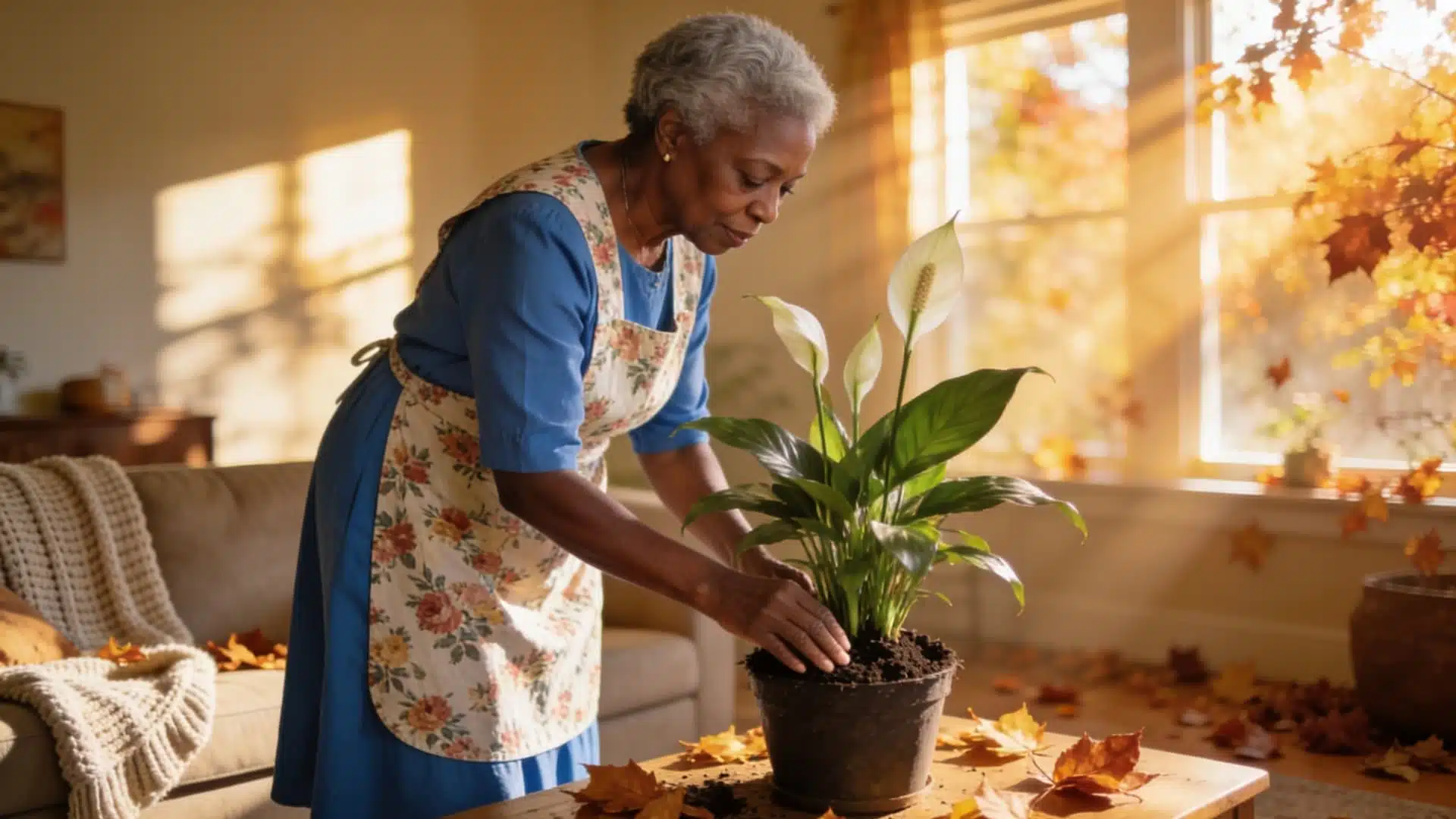
I used to think more water meant a happier plant. I was wrong, and my peace lily let me know it with drooping leaves and root rot.
How Often to Water
I water my peace lily about once a week, but I always check the soil first. Stick your finger about an inch into the pot. If it feels dry, water it. If it still feels damp, wait a couple more days.
Why a Fixed Schedule Fails
I used to water on a strict weekly schedule, no matter what. That backfired because the rate at which the soil dries out changes with the season.
- In summer, when the plant is actively growing and the air is warmer, the soil dries out faster and needs water sooner.
- In winter, growth slows down, and the same pot can stay damp for close to two weeks.
The finger test adjusts for all of that automatically, so I never end up watering out of habit instead of actual need.
Overwatering or Underwatering Peace Lilies
| Sign | What it Means | Fix |
|---|---|---|
| Soft, yellow leaves | Overwatering | Let the soil dry out and check the roots for rot. |
| Dramatic drooping with dry soil | Underwatering | Water thoroughly and keep a regular schedule. |
| Standing water in the tray | Poor drainage | Empty the tray and check for drainage holes. |
Fun fact: this dramatic drooping is actually one of the reasons I love this plant. It tells you exactly what it needs instead of quietly dying on you.
SDSU Extension points out that yellowing on older leaves is actually more often a sign of letting the plant get too dry between waterings, or a need for nitrogen, than a sign of overwatering.
Watering and soil work together, so it helps to know what kind of soil actually supports healthy roots.
Best Soil and Potting Mix
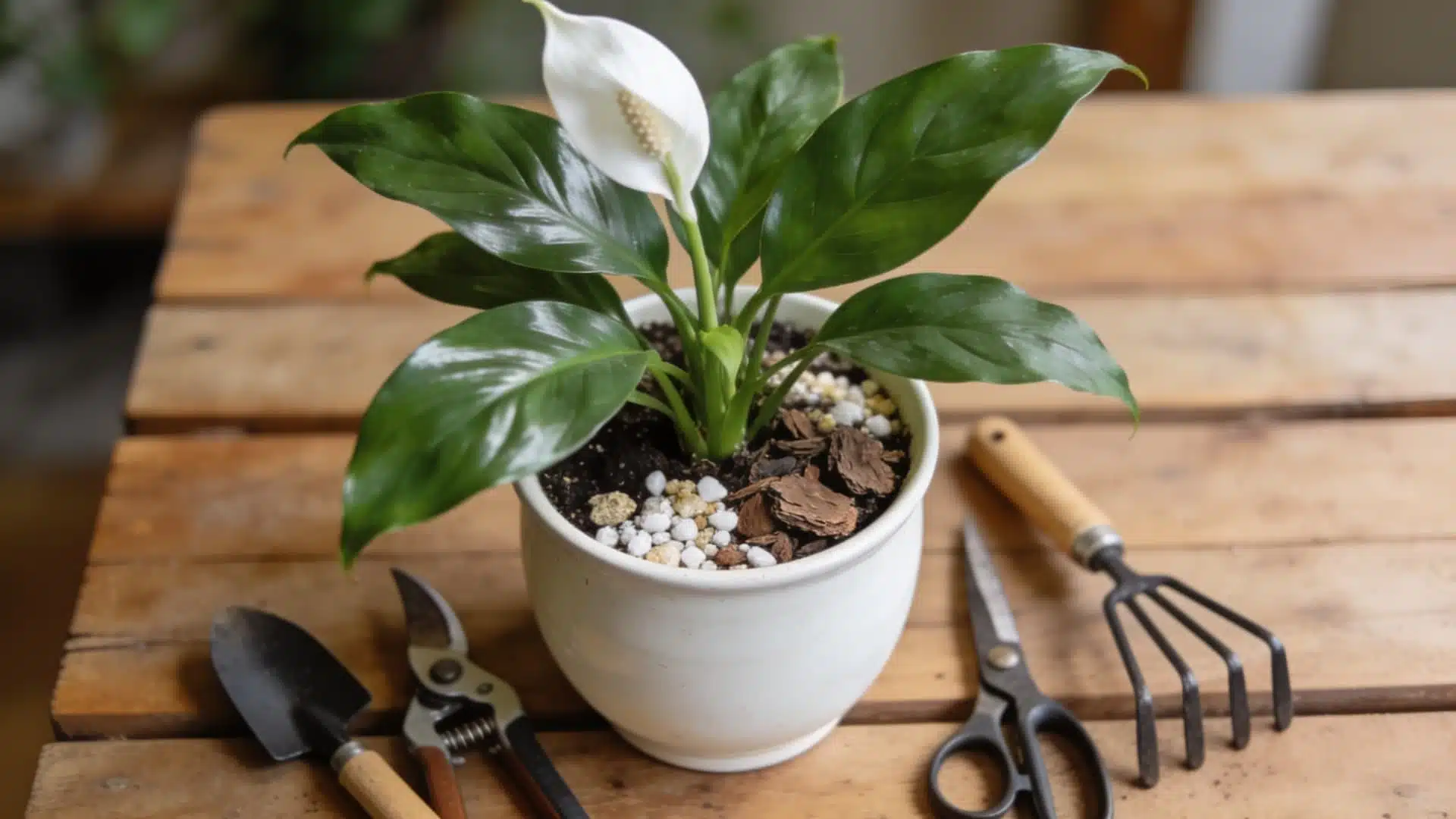
Soil is what keeps the roots healthy, so choosing the right mix makes watering and long-term care much easier.
What Soil Works Best
I use a loose, well-draining mix for my peace lily. A good combination is:
- Regular potting soil as the base
- Perlite for drainage
- Peat moss or coco coir to hold some moisture
- A bit of orchid bark for extra airflow around the roots
Choosing the Right Pot
Always pick a pot with drainage holes. Without them, water pools at the bottom and the roots start to rot, no matter how careful you are with watering.
The Real Reason Roots Rot
Roots need oxygen just as much as they need water. When a pot has no way for extra water to escape, the soil stays saturated, air pockets disappear, and the roots slowly suffocate.
This is one of the most common reasons a peace lily looks sick, even when the owner is watering carefully and on schedule.
If you already have a pot without holes that you love, keep using it. I just keep the plant in a plain nursery pot with drainage, then slip it into the decorative one.
Signs It’s Time to Repot
It may be time to repot your peace lily if you notice:
- Roots poking out of the drainage holes
- Water running straight through without soaking in
- The plant looks too big for its pot
- Growth is slowing down even with good care
I usually repot my peace lily every 1 to 2 years, moving it up just one pot size at a time. With soil sorted, the next thing to get right is the air around the plant, which brings us to humidity and temperature.
Humidity and Temperature Needs
Humidity and temperature work together to keep a peace lily comfortable indoors, so it helps to get the air around the plant right first.
How Much Humidity does it Need
Peace lilies come from tropical rainforests, so they love humidity above 50 percent. If your home is dry, especially in winter, your plant will let you know with crispy brown tips.
Best Temperature Range
Keep your peace lily between 65 and 85°F, or 18 and 29°C. Avoid cold drafts near windows and doors, and keep it away from heating vents that blow hot, dry air directly on the leaves.
According to the University of Florida IFAS Extension, peace lilies prefer warm, tropical conditions of 75–85°F and are only moderately tolerant of temperatures below 55°F, with some cultivars suffering injury as low as 35°F.
The Moisture Mismatch Problem
A peace lily loses moisture through its leaves faster than it can pull it back up through its roots when the air around it is too dry.
That mismatch is what causes those crispy, brown edges, even when the soil itself is perfectly moist. Central heating and air conditioning are usually the biggest culprits indoors, since both pull moisture out of the air.
I noticed my own plant’s tips started browning the same month I started running the heater every night, and that was not a coincidence.
Easy Ways to Boost Humidity
You can boost humidity by:
- Grouping it with other plants to create a mini humid zone
- Setting the pot on a tray of pebbles and water
- Running a small humidifier nearby
- Misting the leaves a few times a week
| Condition | Ideal Range | Why It Matters |
|---|---|---|
| Humidity | 50% or higher | Prevents brown, crispy leaf tips. |
| Temperature | 65 to 85°F | Keeps growth steady and healthy. |
Once the air feels right, feeding your peace lily is the next piece of the puzzle.
Fertilizing Your Peace Lily
Feeding is the one step people either skip entirely or overdo, so it helps to know exactly how much your peace lily actually needs.
What Fertilizer to Use
I stick with a balanced liquid fertilizer, something like a 20-20-20 mix, diluted to half strength.
How Often to Feed
Feed your peace lily every 6 to 8 weeks during spring and summer, when it is actively growing. In fall and winter, I skip fertilizing completely since the plant slows down.
Why Less is More with Feeding
It is tempting to think that feeding more often means faster growth, but peace lilies are actually light feeders. Their roots are sensitive to salt buildup, and too much fertilizer does more harm than good.
I would rather underfeed slightly and watch the plant grow at a steady, healthy pace than push it with frequent feeding and end up dealing with burned leaf tips.
Think of fertilizer as a small boost during the growing season, not a requirement every time you water.
Signs You Overdid the Feeding
You may have used too much fertilizer if you see:
- White, crusty buildup on top of the soil
- Brown, burned-looking leaf tips
- Leaves that look scorched even without direct sun
- If you notice any of these, flush the soil with plain water to wash out the extra salts, and hold off on feeding for a while.
Feeding is only part of the routine. Regular upkeep keeps the plant looking its best, too.
Why Isn’t My Peace Lily Blooming?
This is one of the most common frustrations I hear about, so it earns its own section. A healthy peace lily with no flowers almost always comes down to one of three things:
| Cause | What’s Happening | Fix |
|---|---|---|
| Not enough light | Leaves grow fine, but the plant has no energy left over for flowers | Move it closer to a bright, indirect light source |
| The plant is too young | New divisions or small plants need time to mature | Give it 6 to 12 months of consistent care before expecting blooms |
| Rootbound or overcrowded | Roots have no room left to support new growth | Repot into a slightly larger container |
If your peace lily has glossy, healthy leaves but hasn’t flowered in months, light is almost always the first thing to check.
Common Pests To Watch For
Peace lilies are fairly pest-resistant, but they aren’t immune. Catching a problem early makes it much easier to fix.
| Pest | Signs | Fix |
|---|---|---|
| Mealybugs | White, cottony clusters near leaf joints | Wipe with a cloth dipped in rubbing alcohol |
| Spider mites | Fine webbing and speckled, pale leaves | Rinse leaves under water and raise humidity |
| Scale | Small brown bumps that don’t rub off easily | Scrape off gently and treat with insecticidal soap |
Wiping the leaves regularly, which you should already be doing to keep them dust-free, also helps you catch pests before they spread.
Is A Peace Lily Safe Around Pets And Kids?
This question comes up constantly, and it deserves a straight answer instead of a single throwaway line.
Peace lily leaves contain calcium oxalate crystals. If a cat, dog, or small child chews on the leaves, it can cause oral irritation, drooling, and mild swelling of the mouth and throat.
According to the ASPCA, peace lilies are toxic to both dogs and cats, though symptoms are usually limited to discomfort rather than anything life-threatening.
If your pet or child does chew on a leaf:
- Rinse the mouth out with water
- Watch for excessive drooling or difficulty swallowing
- Call your vet or a poison control line if symptoms seem severe
To stay safe, keep the plant on a high shelf, in a hanging planter, or in a room pets and toddlers can’t easily reach.
Routine Maintenance Checklist
I think of this part as the easy, relaxing side of peace lily plant care. It only takes a few minutes here and there, and none of it requires special tools or expertise.
What I like about these habits is that they also serve as a check-in on the plant’s overall health, since you naturally notice new problems as you do them.
Use this simple checklist as you build the routine:
- Wipe the leaves with a damp cloth every couple of weeks so dust does not block the light.
- Prune yellow leaves and spent blooms at the base to keep the plant looking fresh.
- Rotate the pot a quarter turn every week or two for even growth.
- Check the soil moisture with a finger test before every watering.
One more habit worth building in: keep the plant out of reach of curious pets and small children.
UF/IFAS Extension Charlotte County notes that peace lilies are mildly toxic if eaten, so it’s worth placing them somewhere pets and kids can’t easily nibble on the leaves.
With the day-to-day care covered, here is how long a well-cared-for peace lily can actually live.
How Long do Peace Lilies Live?
This is the question I get asked the most, so let me answer it clearly. A peace lily can live for many years, often 3 to 5 years in average conditions, and much longer, sometimes decades, when it gets consistent peace lily plant care.
What Changes How Long it Lives
Several things can affect how long your peace lily lasts:
| Factor | Why It Matters |
|---|---|
| Light | Consistent, bright indirect light keeps it strong for years. |
| Watering habits | Avoiding both overwatering and long dry spells adds years to its life. |
| Repotting | Giving the roots room to grow prevents the plant from getting stuck and declining. |
| Division | Splitting an overcrowded plant every few years can reset its growth and extend its life. |
Simple Habits that Add Years
To help your peace lily live longer:
- Stick to a consistent watering routine instead of random splashes.
- Keep it out of cold drafts and direct sun.
- Repot every 1 to 2 years.
- Divide the plant when it gets crowded, and you basically get a fresh start.
Consistency Beats Perfection
I have noticed that the plants people describe as short-lived almost always had one thing in common: inconsistent care rather than one big mistake.
A peace lily can usually recover from a single missed watering or one stretch in low light.
What actually shortens its life is a pattern of stress repeated over months or years, since the plant never gets a real chance to recover between setbacks.
The peace lilies I have kept alive the longest were never perfectly cared for. They were just cared for consistently.
Reliable, long-lasting performance is a key trait of this plant when its basic needs are met.
The NC State Extension Gardener Plant Toolbox describes peace lilies as low-maintenance plants that bloom freely under the right conditions, which aligns with my experience over the years.
Even with good care, peace lilies can run into a few common problems, so I built a quick tool below to help you spot and fix them.
Peace Lily Troubleshooting Guide
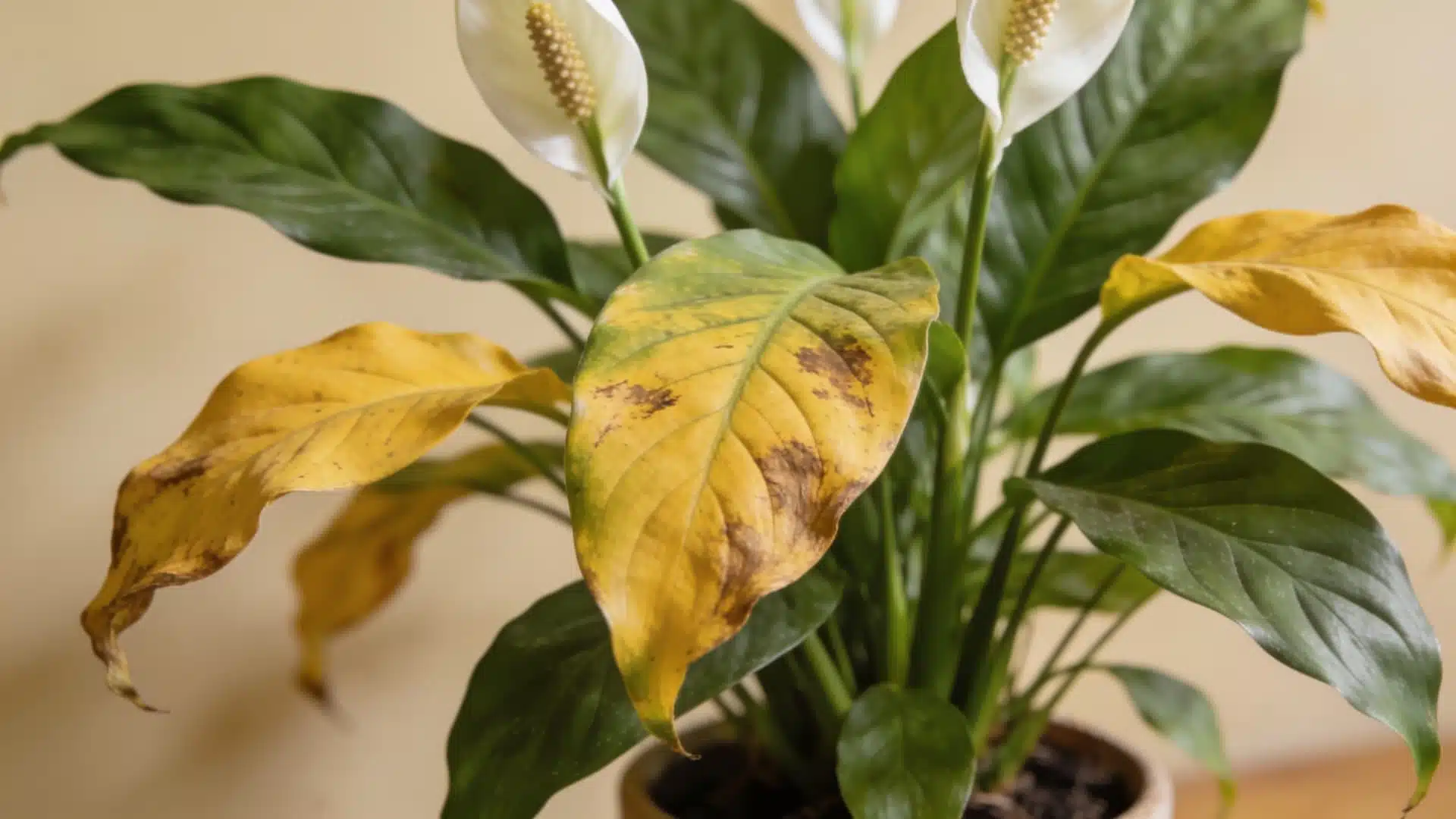
Peace lily problems tend to repeat themselves, so once you know the usual causes, fixing them gets a lot faster.
| Symptom | Likely Cause | Fix |
|---|---|---|
| Yellow leaves | Overwatering, or occasionally underwatering | Check soil moisture and adjust your schedule |
| Brown, crispy tips | Low humidity or fertilizer buildup | Raise humidity, flush soil if over-fertilized |
| No blooms | Not enough light, or the plant is too young | Move to brighter indirect light, be patient |
| Drooping leaves | Usually underwatering, sometimes overwatering | Check the soil first, then water or let it dry accordingly |
| Leggy, stretched growth | Not enough light | Move closer to a bright window |
Once you understand these fixes, peace lily plant care starts to feel more like second nature than a chore.
Final Thoughts
Looking back at that first sad, drooping peace lily I owned, I am glad I stuck with it instead of giving up.
Once I understood what it actually needed, it turned into one of the easiest, most rewarding plants I have ever grown.
Peace lily plant care really comes down to a few steady habits. Bright indirect light, a watering routine you actually stick to, and a little attention here and there.
Do that, and your plant will reward you with glossy leaves and blooms for years to come.
You do not need a green thumb or years of practice to keep one of these plants alive. You just need to pay attention, and this plant makes that easy by telling you exactly what it needs before things get serious. Every drooping leaf is really just a note passed your way, not a failure on your part.
If you try even one tip from this guide today, I would love to hear how your peace lily responds. Small changes really do make a big difference
Frequently Asked Questions
How to Care for a Peace Lily Indoors?
To care for a peace lily indoors, place it in bright, indirect light, water when the top inch of soil feels dry, and keep in a warm, humid room. A loose, well-draining potting mix and light feeding in spring and summer help it grow.
How to Care for a Peace Lily that is Dying?
Start by checking light, soil moisture, drainage, and temperature. Yellow leaves indicate overwatering, dry drooping leaves suggest underwatering, and brown tips often result from dry air. Fix issues one at a time.
What Homemade Fertilizer is Good for Peace Lily?
Use mild compost tea or diluted banana peel water occasionally, but avoid overdoing it. Peace lilies are light feeders, so excessive fertilizer can burn leaf tips. Use homemade fertilizer only in spring or summer and keep it very weak.

Jordan Mathews, who has a degree in horticulture from Texas A&M University, has been a guiding force in plant health and sustainable gardening for over 16 years. His career began with a role at a renowned botanical garden, where he deepened his understanding of plant physiology and eco-friendly cultivation methods. Jordan joined our website as a freelancer in 2020, becoming a go-to expert for readers seeking advice on nurturing diverse plant species apart from offering insights grounded in scientific knowledge and practical experience. Beyond his professional achievements, Jordan is a keen nature photographer, capturing the beauty of flora in its immensely diversified forms.