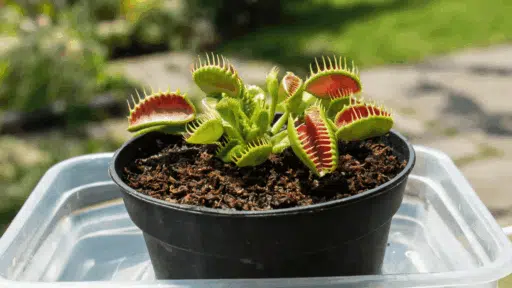
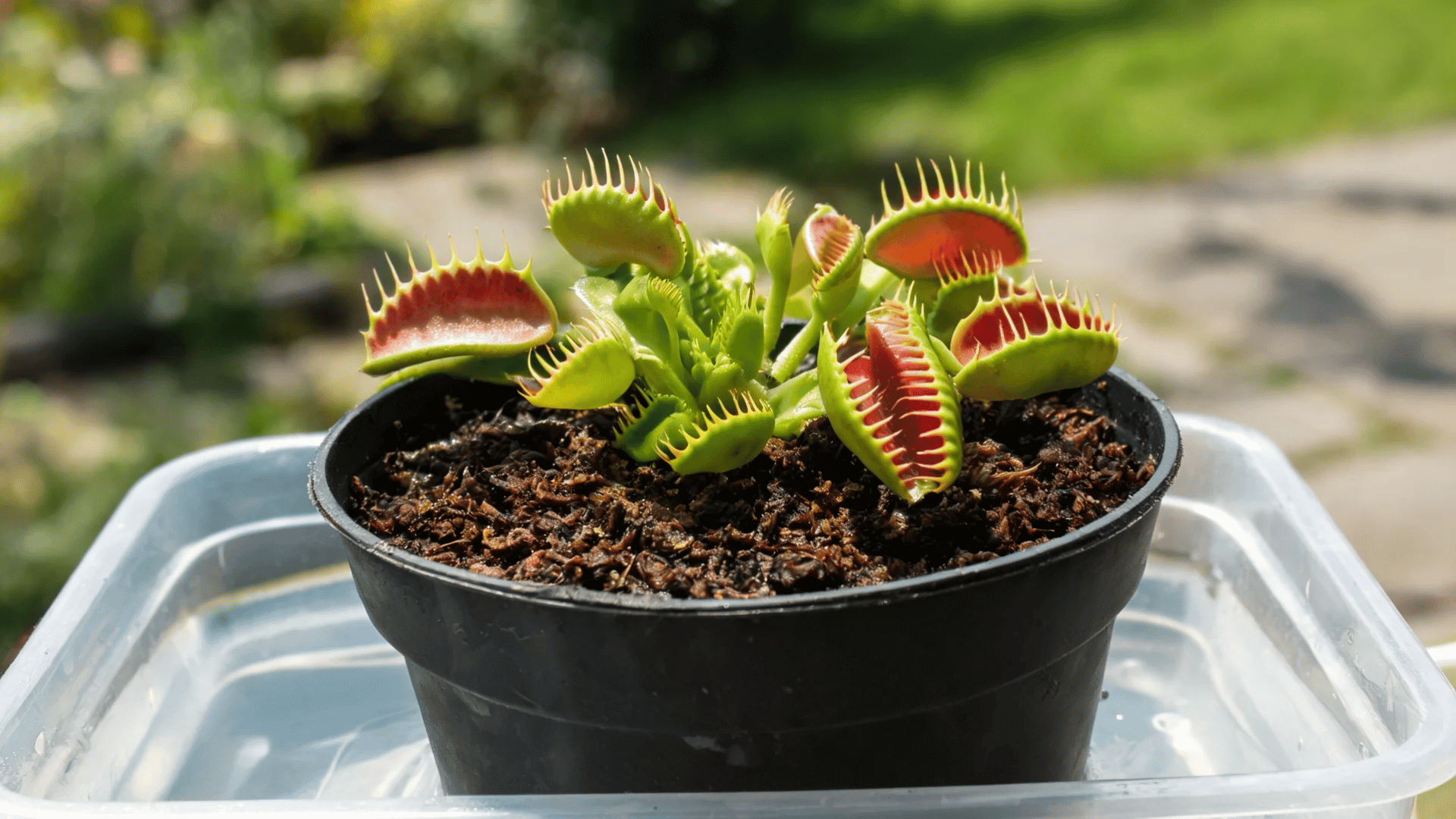

Venus flytraps often fail because they are treated like ordinary houseplants. Their care becomes easier once you understand what the roots, traps, and seasonal growth need.
In my horticulture work, I have found that correct water, strong light, and suitable soil matter far more than frequent feeding.
This guide explains Venus flytrap care from the first day home through watering, feeding, repotting, dormancy, and common problems.
You will learn why traps turn black, when insects help, and how to separate normal seasonal decline from a plant in trouble. Small mistakes can build slowly, so knowing what to check first may save the plant before its condition worsens.
Start with the first-day steps that protect a newly purchased Venus flytrap.
What to Do on the First Day
Remove any sealed packaging, check the soil moisture, and place the plant in strong but gradually increased light. A newly purchased Venus flytrap needs stable conditions more than feeding or immediate repotting.
If the growing medium feels dry, add distilled, reverse osmosis, or collected rainwater to a shallow tray beneath the pot. Avoid tap water unless its mineral level has been tested.
Do not feed the plant while it adjusts to its new location. Shipping stress may cause a few older traps to darken or die, but this does not always mean the plant is failing.
Check the center for firm green growth. Leave the plant in its nursery pot unless the soil is clearly unsuitable or contaminated.
Once the plant has settled, follow a simple checklist for its daily care.
Quick Care Checklist
Successful Venus flytrap care depends on meeting a few basic needs consistently. Use this checklist to review the plant’s setup before changing its feeding routine or repotting it.
- Light: Provide strong direct sunlight outdoors or a suitable grow light indoors.
- Water: Use distilled water, collected rainwater, or reverse osmosis water.
- Moisture: Keep the growing medium damp without letting it dry completely.
- Soil: Choose nutrient-poor carnivorous plant soil without added fertilizer.
- Feeding: Offer small insects only during active growth when natural prey is limited.
- Pot: Use a deep container with drainage holes.
- Dormancy: Expect slower growth and trap loss during winter rest.
- Maintenance: Trim only fully black leaves and traps.
These need to work together, so correct the growing conditions before focusing on feeding.
Step-by-Step Care
Healthy growth starts with the environment, not feeding. Complete the main care steps in order because extra insects cannot correct weak light, mineral-heavy water, or unsuitable soil.
Begin with the growing location because light affects leaf strength and trap production.
1. Choose the Right Location
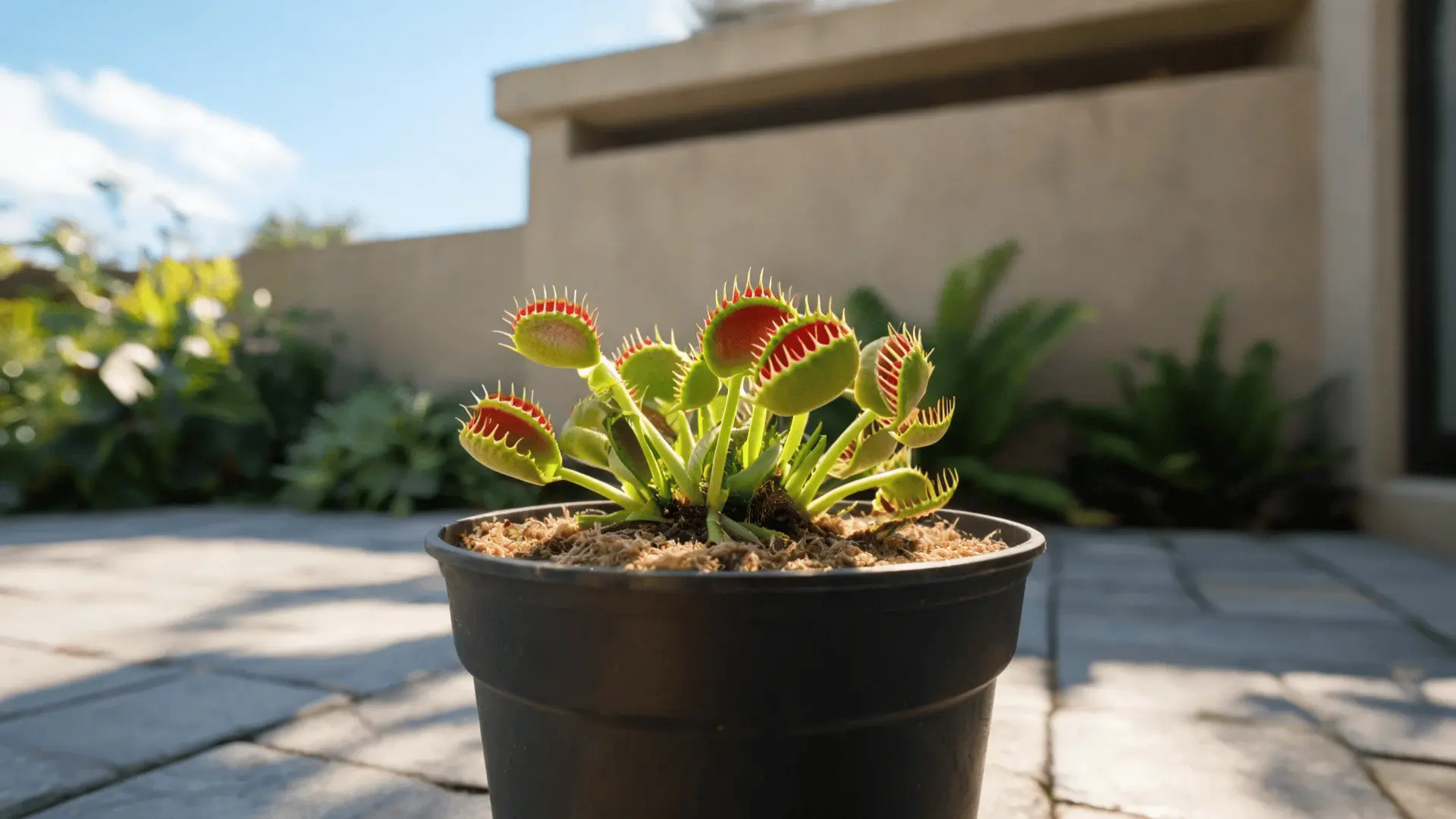
Place the Venus flytrap outdoors when your space and climate allow. A sunny patio, open balcony, deck, or protected garden position usually provides stronger light and better airflow than a typical indoor windowsill.
Choose a spot where the pot will not be knocked over by pets, children, or strong wind. Plants moved from dim shop conditions should adjust gradually before receiving intense midday sun.
After choosing the location, check how much useful light reaches the leaves each day.
2. Provide Strong Light
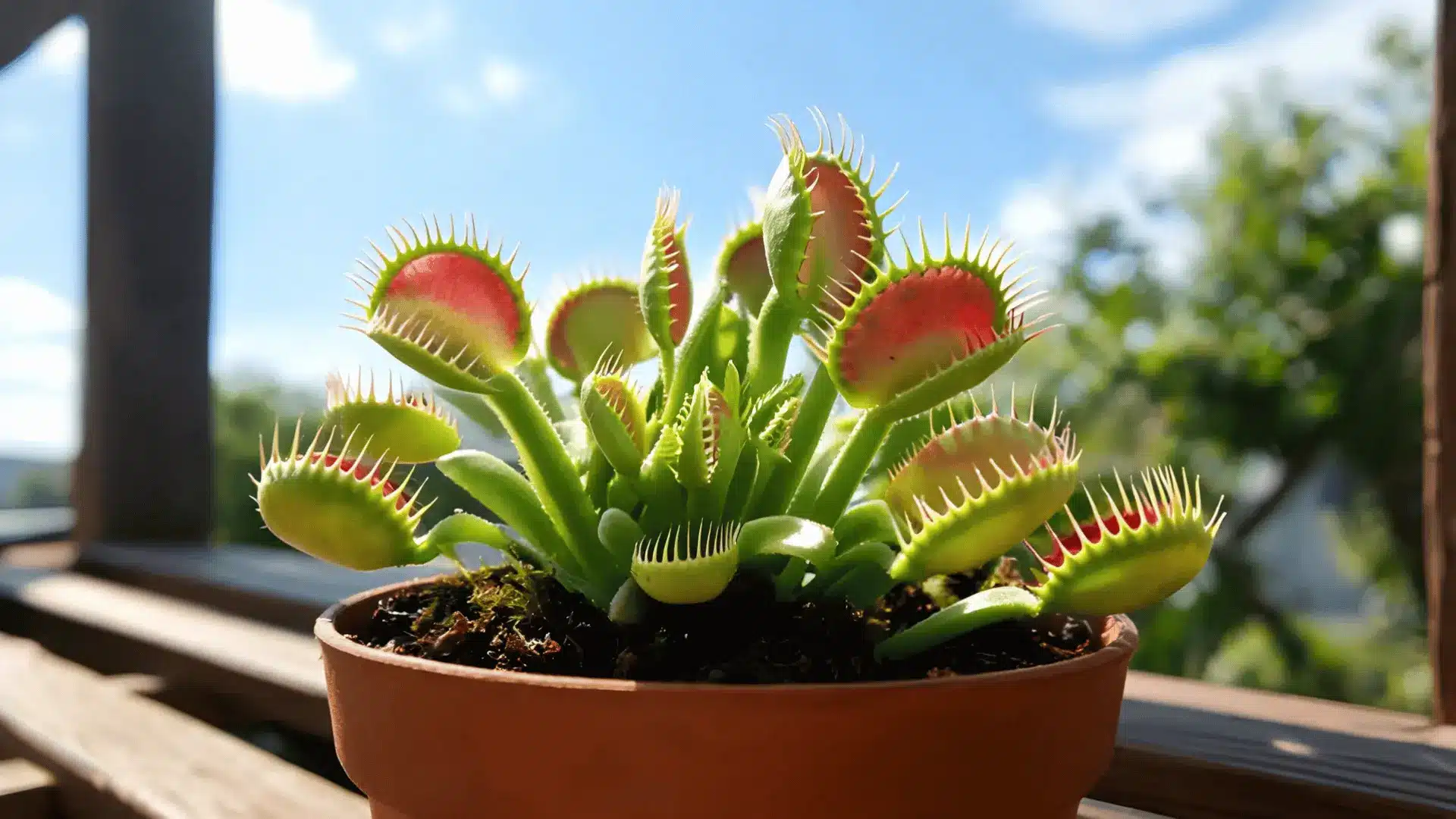
Venus flytraps need stronger light than most common houseplants. Outdoors, introduce direct sunlight gradually over several days to reduce leaf scorching after nursery or shipping conditions.
Healthy plants usually produce firm leaves, regular new traps, and compact growth. Red coloring inside the traps can appear under strong light, but it varies by plant type. Do not judge health by color alone.
Strong light supports growth only when the roots receive low-mineral water.
3. Use the Correct Water
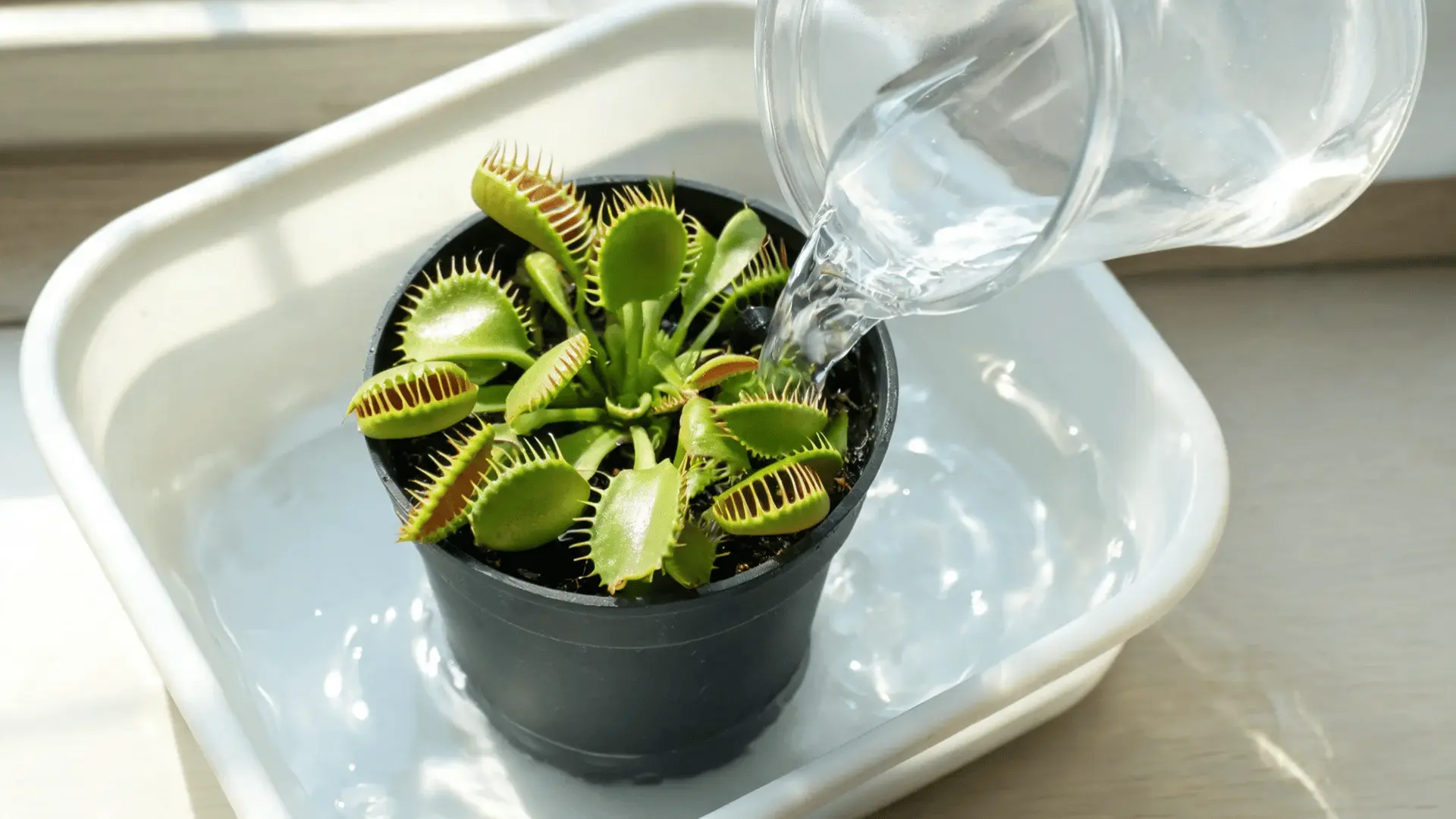
Use distilled water, collected rainwater, or reverse osmosis water whenever possible. These options contain fewer dissolved minerals that can collect in the growing medium and damage sensitive roots.
Tap water quality differs between locations, so do not assume it is safe based on taste or appearance. Test its dissolved mineral level before regular use.
Bottled drinking water may also contain added minerals and should not automatically replace distilled water. Once the water source is correct, manage how much reaches the pot.
4. Keep the Soil Moist
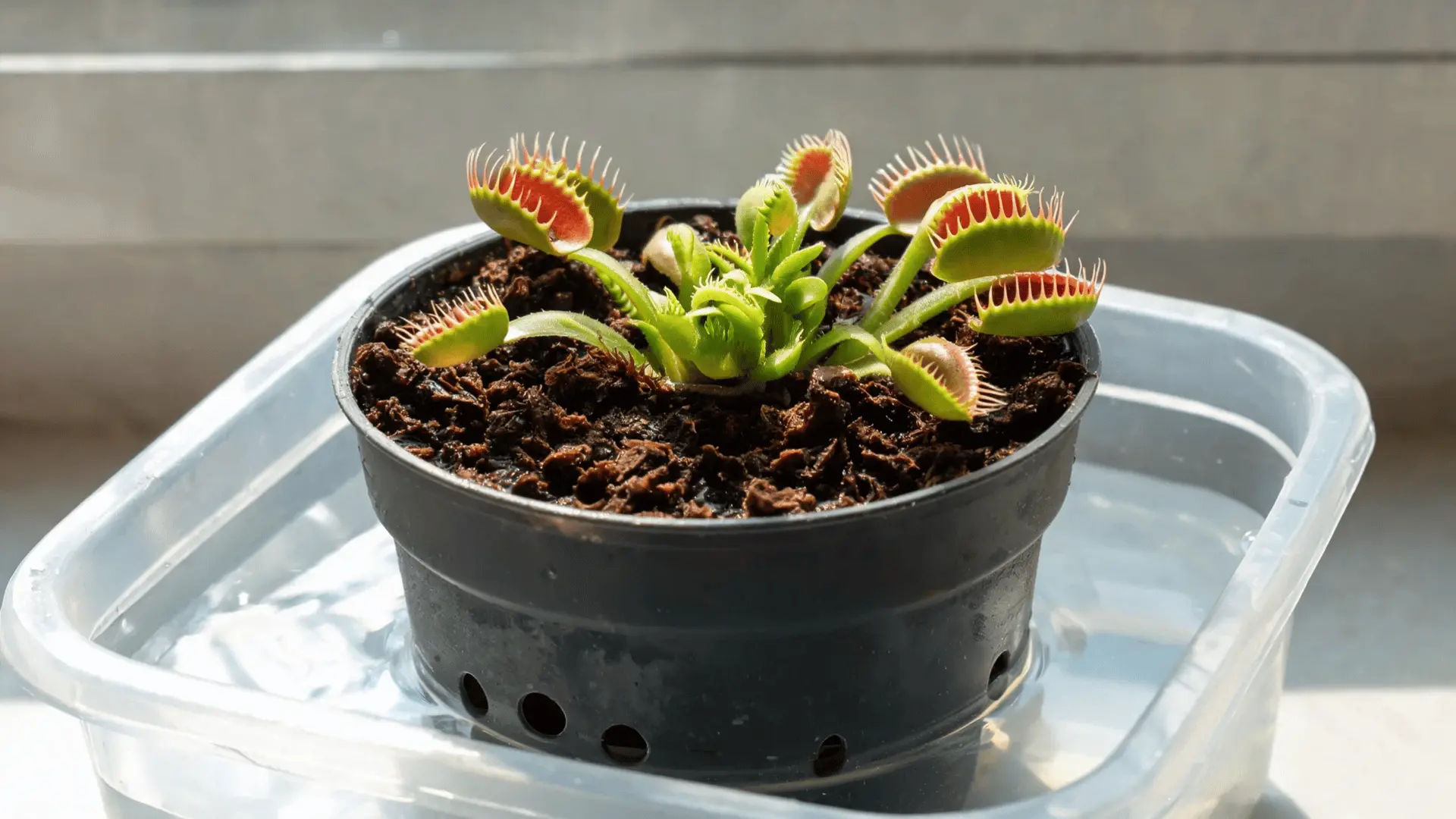
Keep the growing medium consistently damp during active growth. Place the pot in a shallow tray of suitable water so moisture can rise through the drainage holes from below.
Refill the tray more often during hot, sunny, or windy weather. Reduce deep standing water when temperatures cool and growth slows.
The root area should never become completely dry, but it should not smell stale or remain buried in muddy water. Moisture control also depends on the soil mixture and container.
5. Use Suitable Soil and a Safe Pot
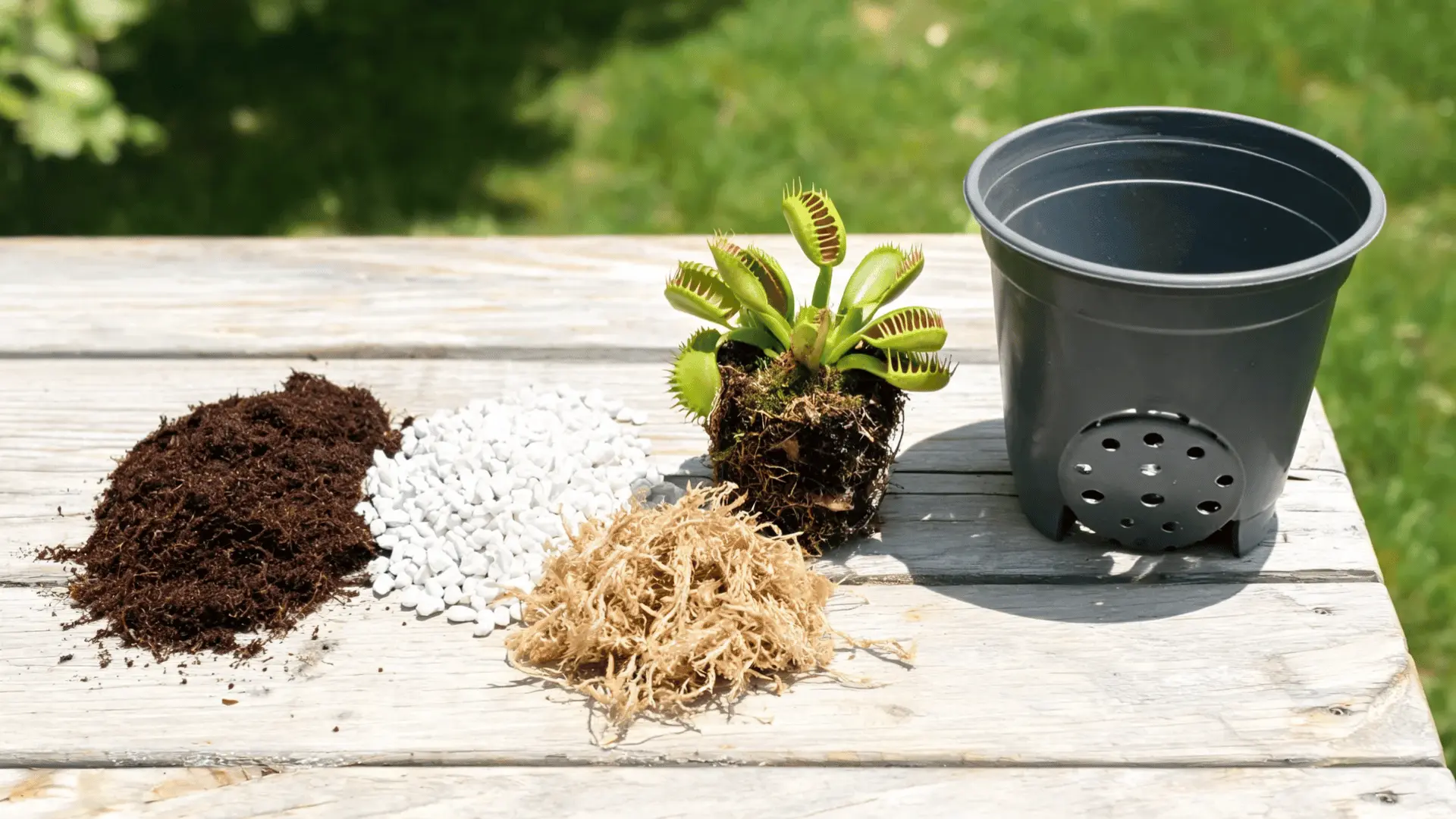
Plant the flytrap in nutrient-poor material made for carnivorous plants. Common options include unfertilized peat mixed with perlite or clean long-fiber sphagnum moss.
Avoid ordinary potting soil, compost, manure, and fertilizer-treated mixes because their nutrients can harm the roots. Use a deep plastic or fully glazed pot with drainage holes. Unglazed clay may release minerals into the soil and create problems over time.
With the roots protected, feeding becomes a smaller part of plant care.
6. Feed Only When Needed
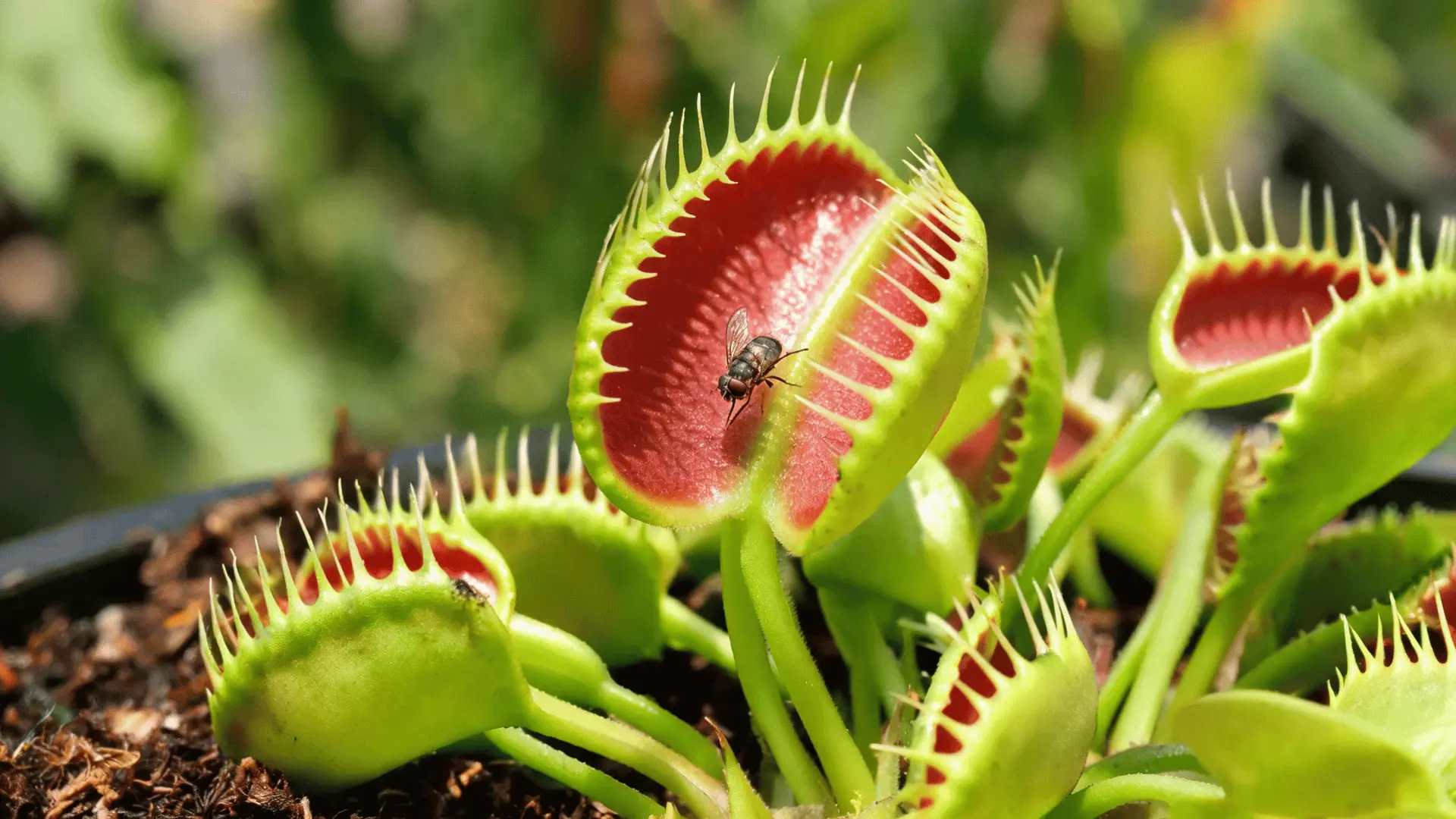
Outdoor Venus flytraps normally catch enough insects without help. Indoor plants can receive an occasional small insect during active growth, but extra feeding cannot replace strong light.
Choose prey that fits fully inside the open trap so its edges can close together. Never offer cooked meat, cheese, pet food, oversized insects, or plant fertilizer.
Avoid feeding plants that are dormant, recently shipped, or showing clear signs of stress. Because trap movement uses energy, handling should remain limited.
7. Avoid Closing Traps for Fun
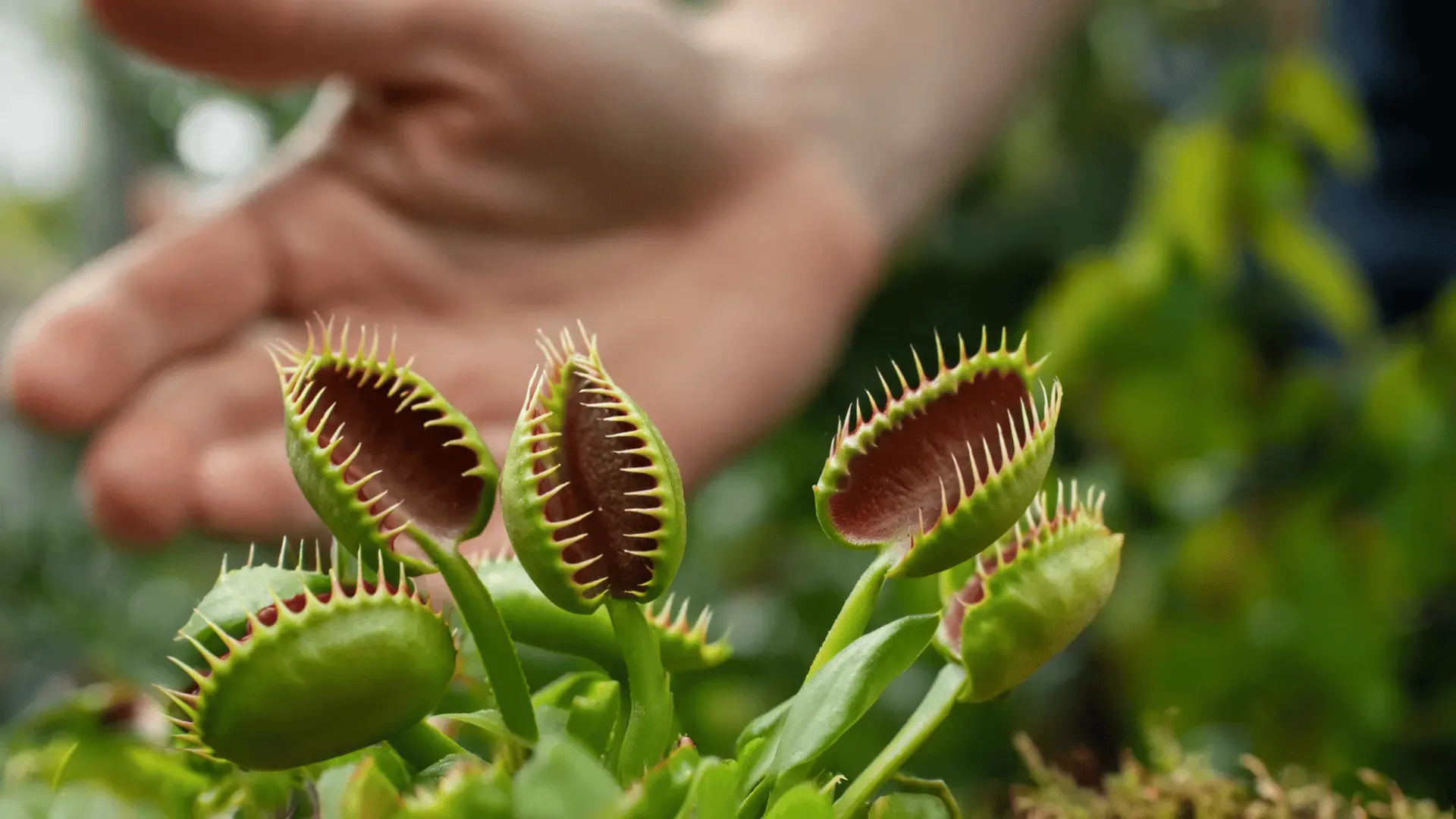
Do not trigger traps repeatedly with fingers, pencils, or other objects. Each closure requires energy and may shorten the working life of that individual trap.
A trap may stay open because it is old, recently fed, damaged, dormant, or not touched in the correct pattern. One unresponsive trap does not show that the whole plant is dying.
Firm new growth at the center provides a more useful sign of health. Location affects how these steps are managed, especially for plants grown indoors.
Indoor or Outdoor Growing
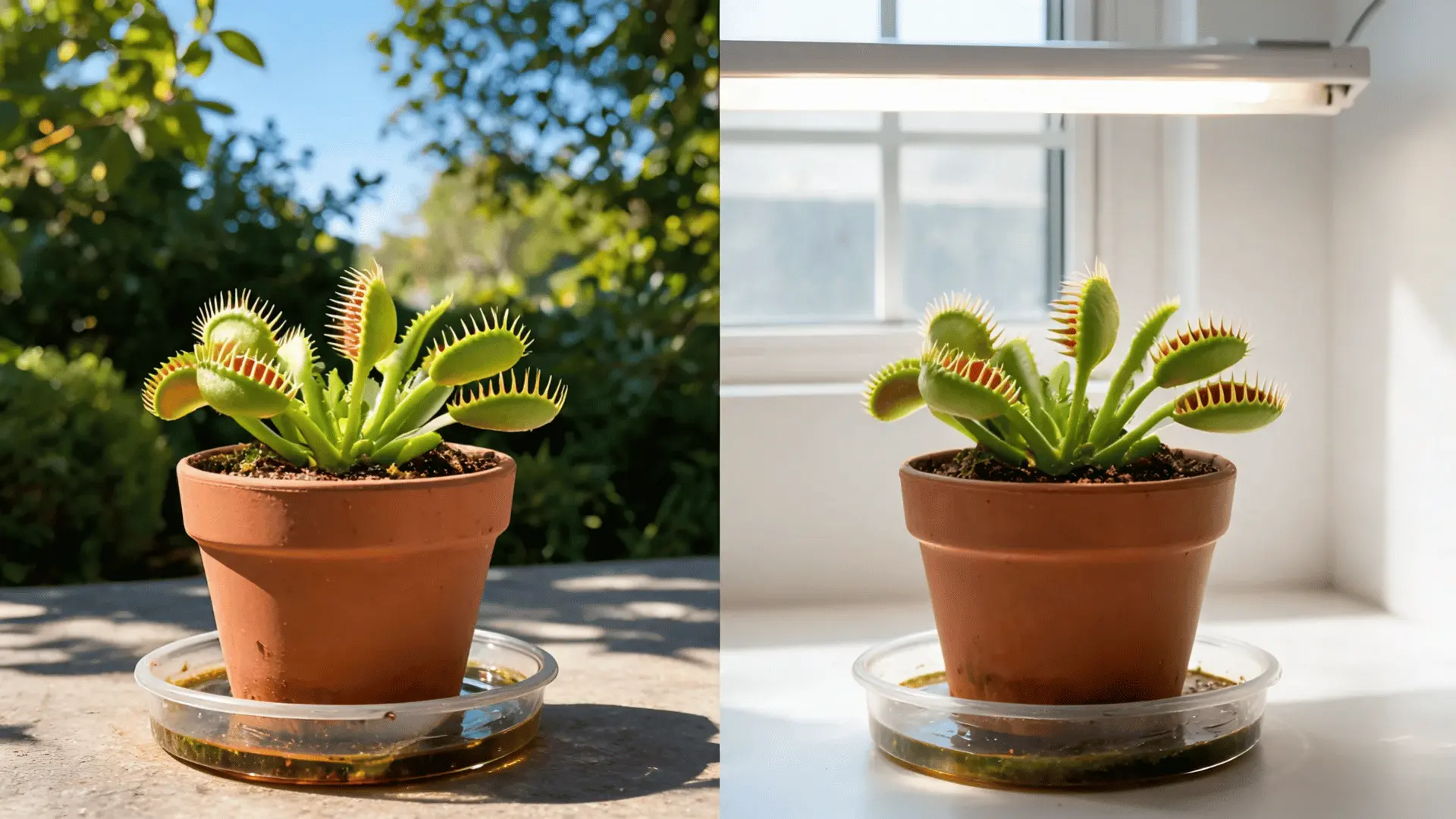
Outdoor growing is often easier because Venus flytraps receive direct sunlight, natural airflow, insects, and seasonal temperature changes.
Indoor growing can also work, but it usually requires a strong grow light and closer moisture checks.
Compare the main requirements before selecting a permanent growing location.
| Care Factor | Outdoor Growing | Indoor Growing |
| Light | Direct sunlight after gradual adjustment | Strong grow light or very bright sun exposure |
| Airflow | Natural air movement around leaves | Open space with gentle room airflow |
| Feeding | Usually catches insects without help | May need an occasional small insect |
| Water Checks | Check often during heat and wind | Monitor tray levels and indoor drying |
| Temperature | Follows natural seasonal changes | Requires planned seasonal temperature changes |
| Weather Risks | Protect from hard freezes and severe heat | Protect from heating vents and hot windows |
| Placement | Patio, balcony, deck or bog container | Open shelf or windowsill under a grow light |
| Terrarium Use | Not needed | Avoid sealed containers that trap heat |
| Best For | Growers with safe sunny outdoor space | Growers who can provide strong artificial light |
Choose the growing method that delivers steady light, airflow, moisture, and seasonal care throughout the year.
Feeding Rules
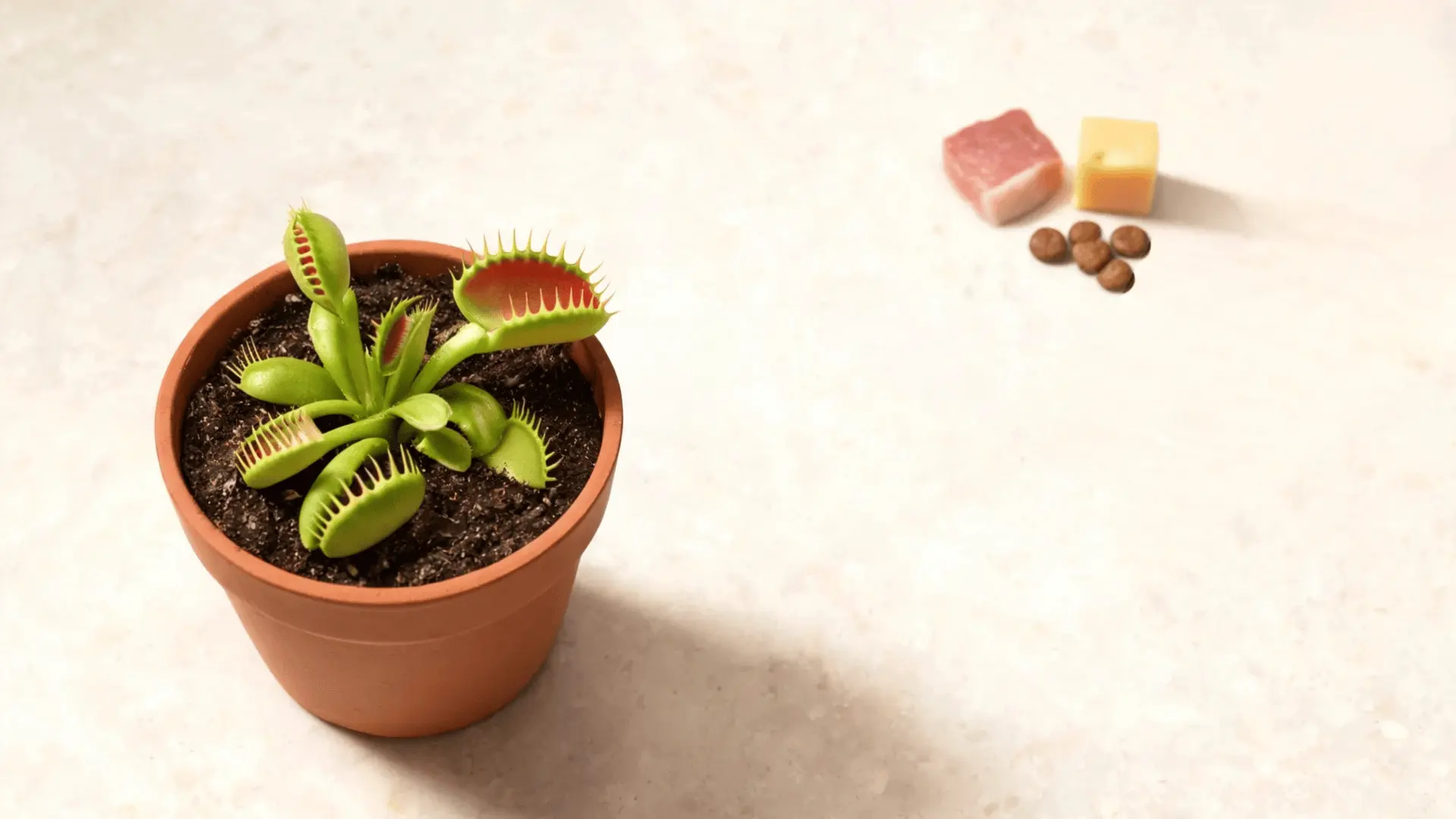
Insects provide nutrients that support healthy growth, but sunlight remains the plant’s main energy source. Outdoor Venus flytraps often catch enough prey naturally and may never need hand-feeding.
Indoor plants may need occasional help, but feeding should remain a minor part of the routine. Begin by choosing prey that fits comfortably inside the trap.
1. What to Feed: Offer small flies, ants, spiders, or other insects that are clearly smaller than the open trap. The trap edges must meet after closing so digestion can begin properly.
The correct prey can still cause problems when the plant is fed too frequently.
2. How Often to Feed: Feed one healthy trap at a time, then allow the plant to finish digesting before offering another insect. There is no need to follow a strict weekly schedule.
Knowing which foods to avoid helps prevent damaged or rotting traps.
Foods and Products to Avoid
These materials may prevent the trap from sealing, encourage decay, or damage sensitive roots. Avoid offering:
- Hamburger or cooked meat
- Cheese and processed food
- Pet food
- Insects larger than the trap
- Liquid plant fertilizer
- Fertilizer granules
- Household food scraps
- Repeated water spraying into closed traps
- Insects collected from areas treated with pesticides.
One trap may blacken after an unsuitable meal without killing the entire plant. Feeding naturally slows as the plant prepares for winter dormancy.
Seasonal Maintenance
Seasonal maintenance helps you adjust watering, light, and cleanup without repeating the same routine all year. Venus flytraps naturally change their growth rate as temperatures and daylight shift.
Avoid making sudden changes between seasons. Gradual adjustments reduce stress and help the plant move naturally between active growth and dormancy. Start the yearly routine when fresh spring growth appears.
1. Spring
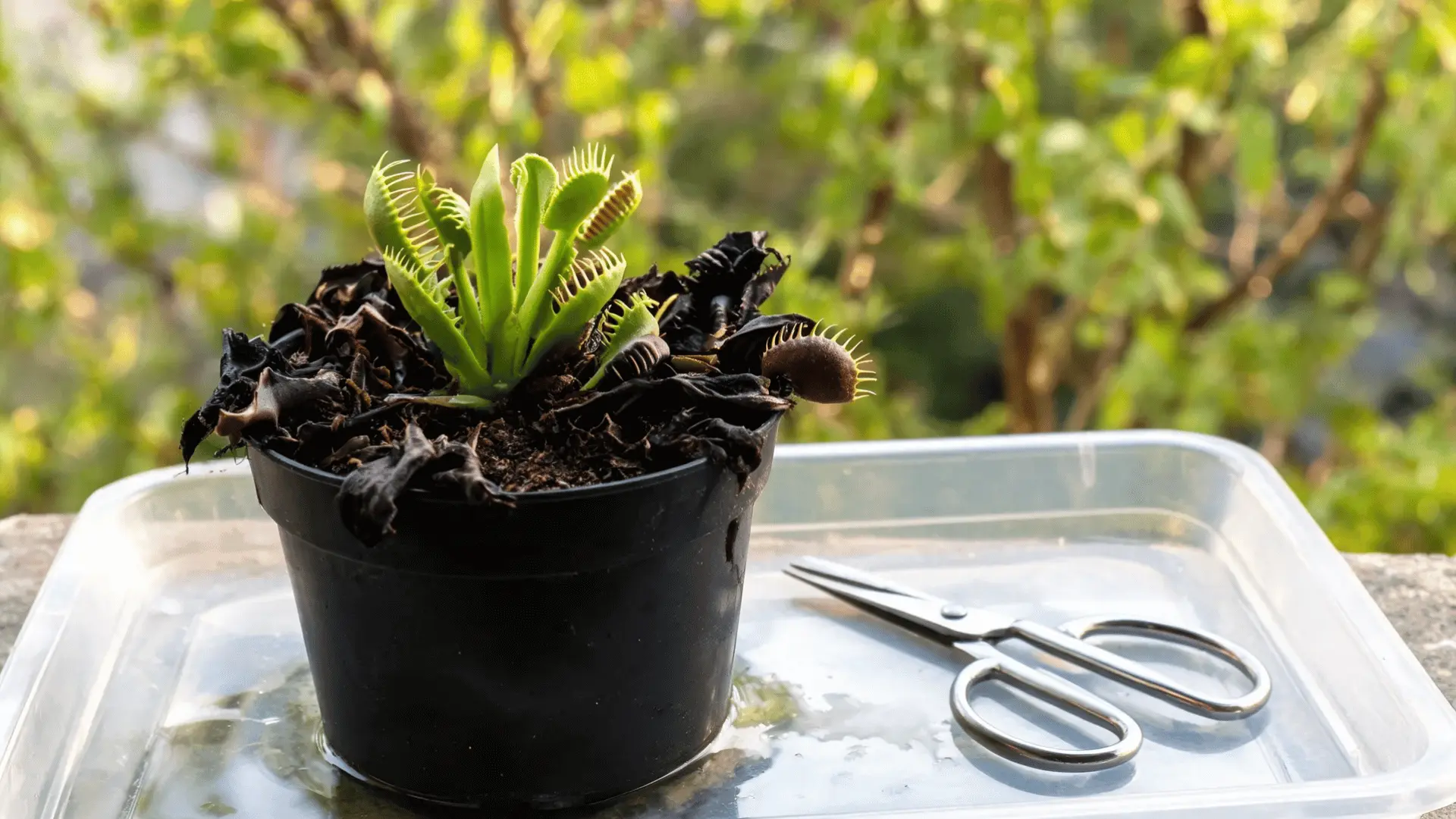
Increase light exposure gradually as new leaves begin emerging from the center. Resume regular tray watering and remove fully black winter growth with clean scissors.
Spring is a practical time to repot if the growing medium is compacted, contaminated, or crowded. Check new leaves for aphids or distorted growth.
Small or weak plants may benefit from having an early flower stalk cut near the base so more energy remains available for roots and traps.
Warmer summer conditions require closer moisture and temperature checks.
2. Summer
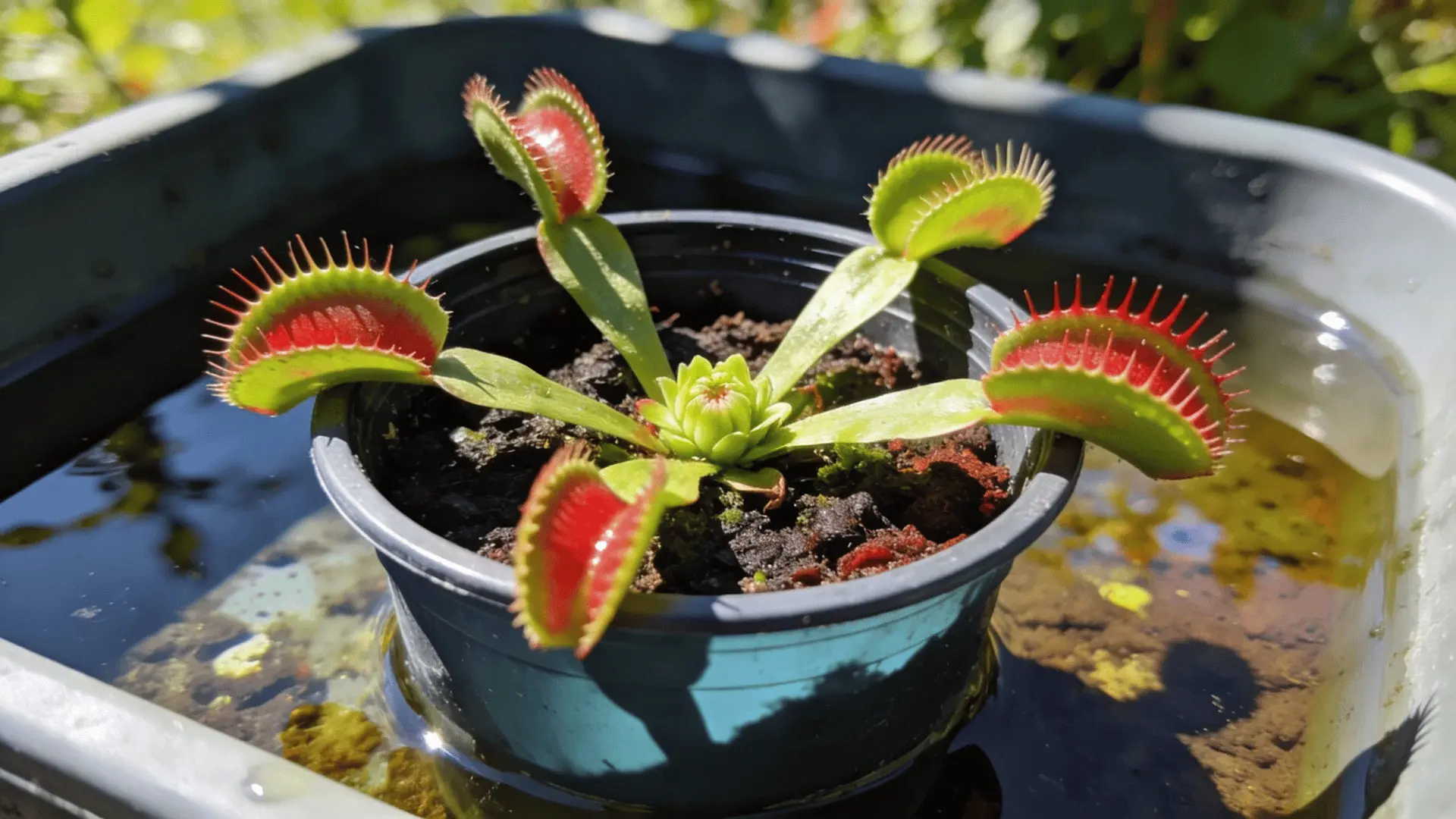
Check the watering tray often because strong sunlight, wind, and heat can dry the pot quickly. Keep the growing medium damp and maintain steady airflow around the leaves.
Outdoor plants normally catch enough insects without assistance. Indoors, watch for heat building around windows or grow lights.
Inspect the tray for algae, unpleasant odors, or stagnant water during long warm periods. Dark containers may absorb extra heat, so shade the pot while keeping the leaves in strong light.
Growth begins slowing as daylight and temperatures fall.
3. Fall
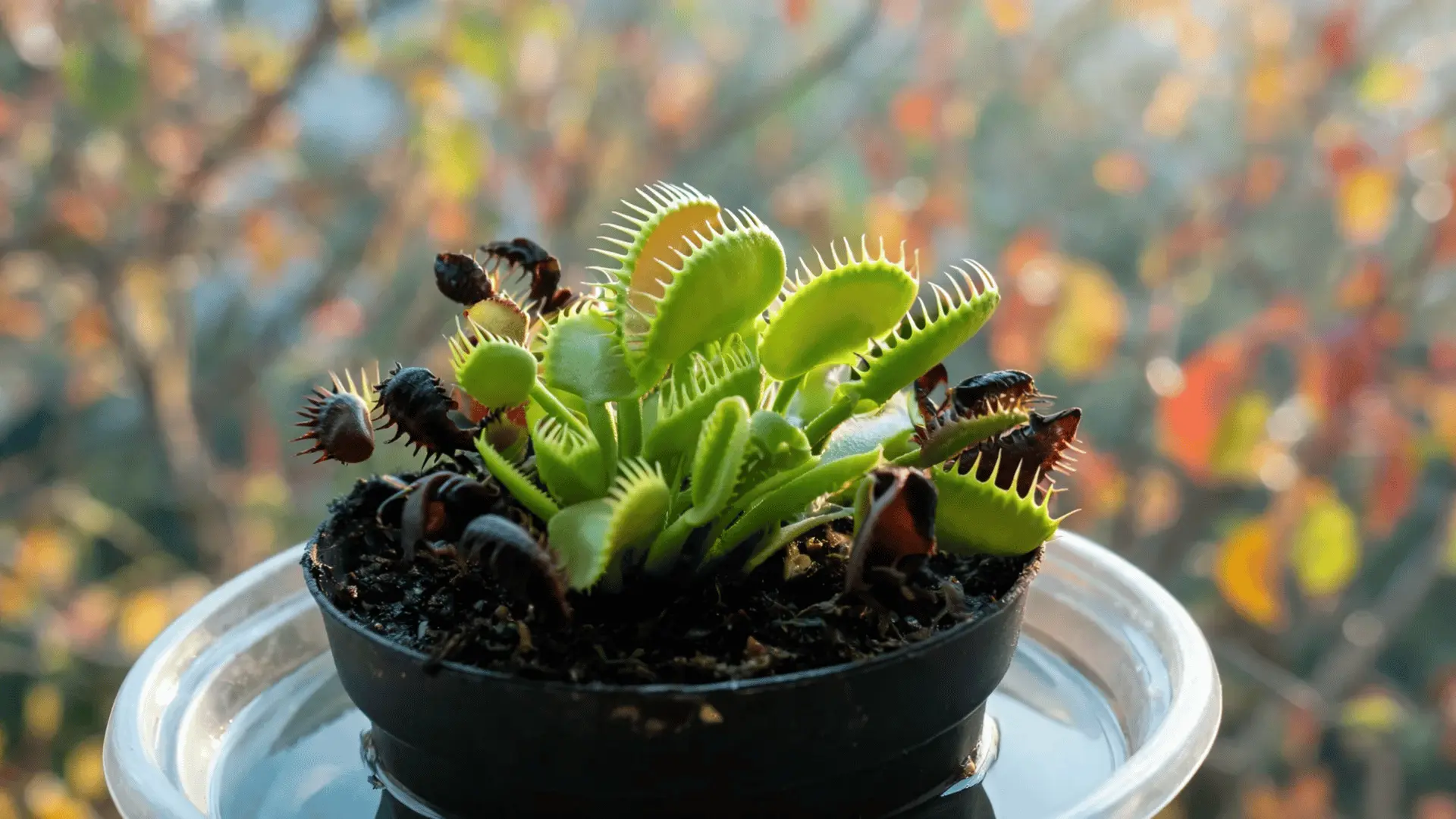
Reduce watering gradually as the plant uses less moisture, but never allow the growing medium to dry completely. Shorter leaves and slower trap production may signal the beginning of dormancy.
Stop feeding when traps become less active. Continue providing strong light while preparing the plant for cooler seasonal conditions.
Do not move an outdoor plant suddenly from bright sunlight into a dark room. Any location change should preserve light and allow temperatures to fall gradually.
Winter care focuses on protecting the resting crown.
4. Winter
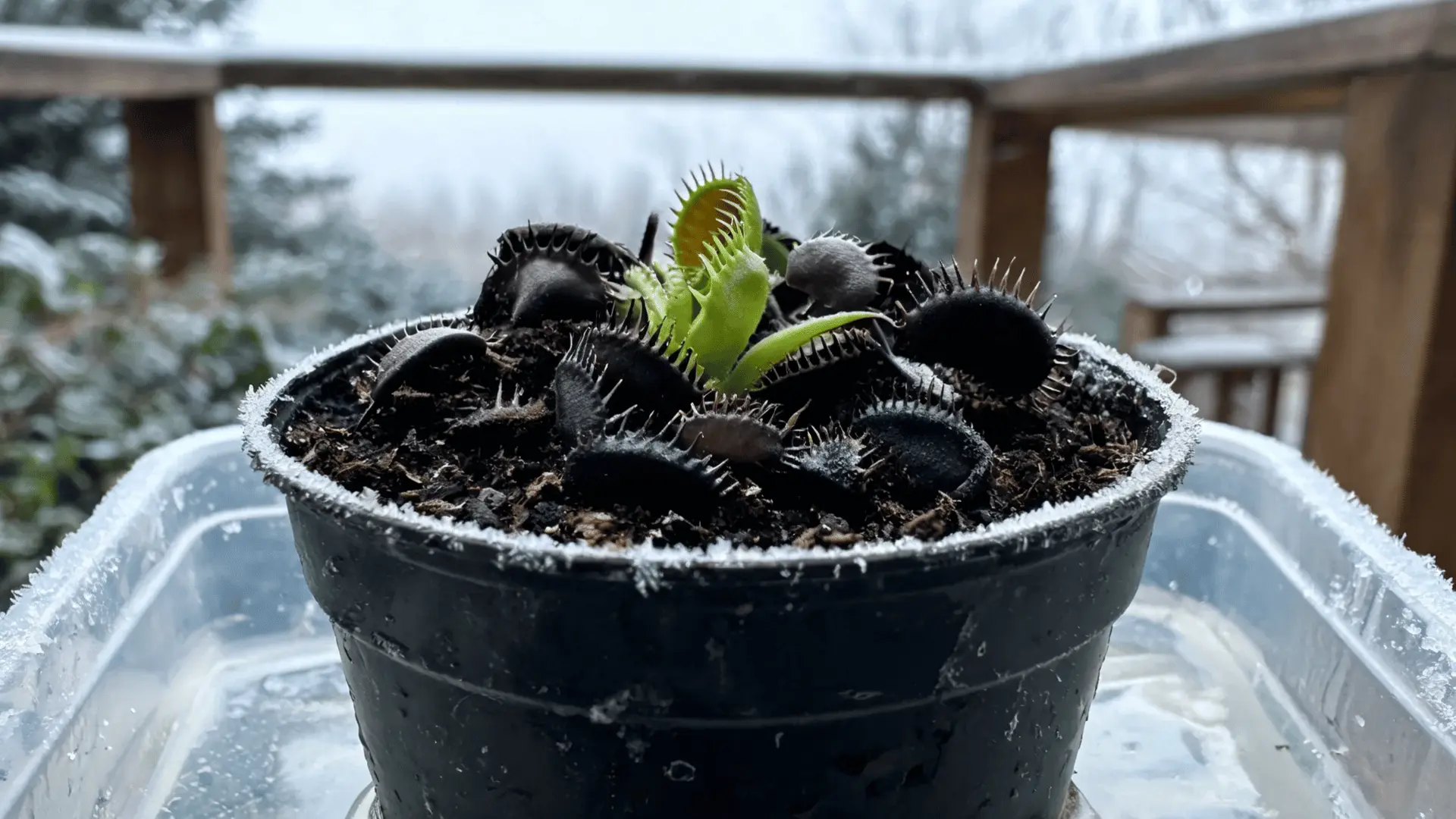
Keep the growing medium damp rather than deeply flooded during winter dormancy. Remove fully black leaves when they begin holding moisture or developing mold.
Protect small pots from repeated hard freezing and drying wind. Indoor plants should remain in a bright, cool location away from heating vents.
Do not fertilize or force-feed the plant during this period. Before assuming it has died, check whether the crown remains firm and shows pale or green living tissue.
When growth looks unusual, diagnose the symptom before changing several conditions at once.
Problems and Fixes
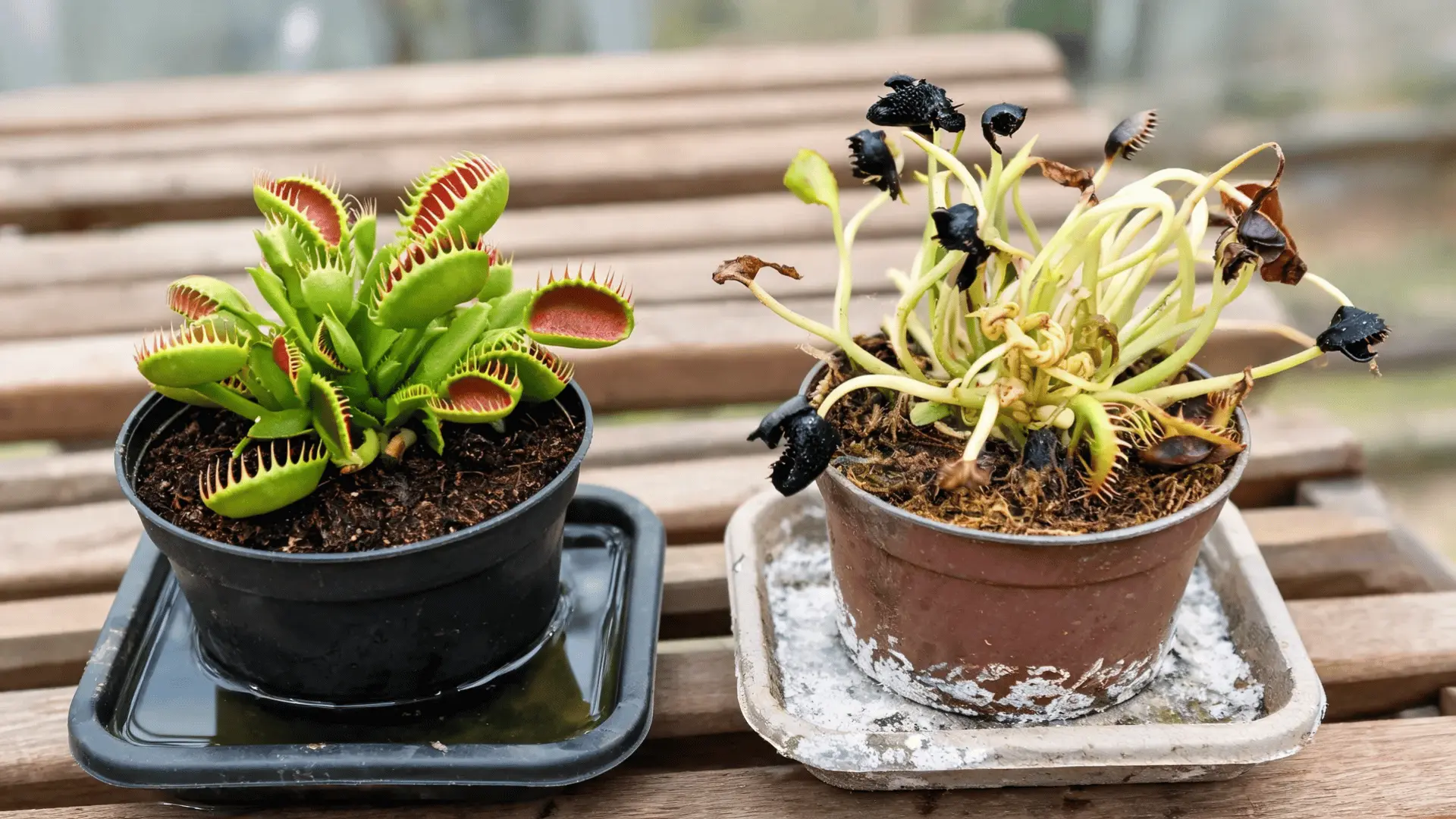
One black trap is usually less concerning than widespread decline. Before changing the routine, check the newest center growth, water source, light level, and soil condition.
Use the table to match visible symptoms with the first condition to inspect:
| Problem | Possible Cause | First Check |
| One trap turns black | Normal aging or recent feeding | Look for healthy center growth |
| Many traps turn black | Dormancy stress or root trouble | Check the season and crown |
| Long pale leaves | Insufficient light | Review daily light strength |
| Traps stay green inside | Plant type or weaker light | Check overall growth |
| Traps do not close | Old trap dormancy or repeated triggering | Inspect newer traps |
| Soil smells unpleasant | Stale water or poor airflow | Check drainage and tray water |
| Leaf edges look dry | Dry soil, heat, or mineral buildup | Check moisture and water source |
| New growth is twisted | Aphids or environmental stress | Inspect young leaves closely |
| White or gray growth appears | Mold and poor airflow | Remove dead tissue and improve airflow |
If the main growing conditions are correct, repotting and routine upkeep may support healthier future growth.
Final Thoughts
Healthy Venus flytraps depend on consistent growing conditions more than frequent feeding or constant handling. Provide strong light, use low-mineral water, and keep nutrient-poor soil evenly damp without allowing the roots to dry out.
Feed only healthy traps during active growth, and let outdoor plants catch insects naturally. Adjust watering and maintenance as the plant enters dormancy, then watch for fresh center growth when warmer conditions return.
I recommend checking light and water before changing anything else because those two conditions affect nearly every part of the plant.
Good Venus flytrap care also means correcting the environment before repotting or offering extra food.
Before making your next care change, check your current water source, growing medium, and the amount of useful light the plant receives each day.
Frequently Asked Questions
Is Venus Flytrap Care Hard for Beginners?
It becomes manageable once the grower uses safe water, strong light, nutrient-poor soil, and suitable seasonal care.
Can a Venus Flytrap Live Indoors?
Indoor growing is possible with sufficient artificial or natural light, suitable water, airflow, and a clear plan for seasonal care.
How Often Should a Venus Flytrap be Watered?
Watering depends on temperature, light, pot size, and season. The growing medium should remain damp rather than follow a fixed weekly schedule.
Can Bottled Water be Used?
The label must be checked. Distilled water is suitable, while drinking or mineral water may contain dissolved minerals.

Jordan Mathews, who has a degree in horticulture from Texas A&M University, has been a guiding force in plant health and sustainable gardening for over 16 years. His career began with a role at a renowned botanical garden, where he deepened his understanding of plant physiology and eco-friendly cultivation methods. Jordan joined our website as a freelancer in 2020, becoming a go-to expert for readers seeking advice on nurturing diverse plant species apart from offering insights grounded in scientific knowledge and practical experience. Beyond his professional achievements, Jordan is a keen nature photographer, capturing the beauty of flora in its immensely diversified forms.