
Yes, but it only kills the plant tissue the hot water reaches.
I started pouring kettles over patio weeds last summer because I wanted to avoid buying another bottle of spray.
Boiling water acts as a contact treatment. It kills the plant parts it touches, but established roots can survive and resprout.
The method works best on young weeds growing in pavement cracks, gravel paths, and other areas away from valued plants.
The difference between leaf damage and root death mattered more than I expected.
I researched weed control beyond kitchen advice, limiting boiling water to cracks, gravel paths, and areas away from plants I want to keep.
Quick Answer: Boiling water kills visible weed growth within hours. Established roots may survive, so some weeds need several applications or root removal.
How does Boiling Water Kill Weeds?
Boiling water kills weed leaves by heating plant cells beyond their function, causing rapid tissue damage where it lands.
Thermal weed-control research places lethal plant damage near 58°C, depending on exposure time and tissue mass. Water boils at 100°C at sea level, so it carries more than enough heat to injure leaves.
At the cell level, three changes happen quickly:
- Cell membranes rupture and leak fluid.
- Proteins and enzymes lose their normal function.
- Chlorophyll and cell structures break down, stopping photosynthesis.
The gap between lethal temperature and boiling point explains the rapid collapse after a direct pour.
Where Boiling Water Works Best (and Where It Fails)
Boiling water works best on small weeds growing away from valued plants. It works poorly on established weeds or growth beside grass and flowers.
These three situations show why the same kettle can produce very different results.
Per UC IPM’s WeedCUT, one study found weeds almost twice as sensitive to hot water treatment in late afternoon versus morning.
1. Why Boiling Water Works Well on Patio Cracks
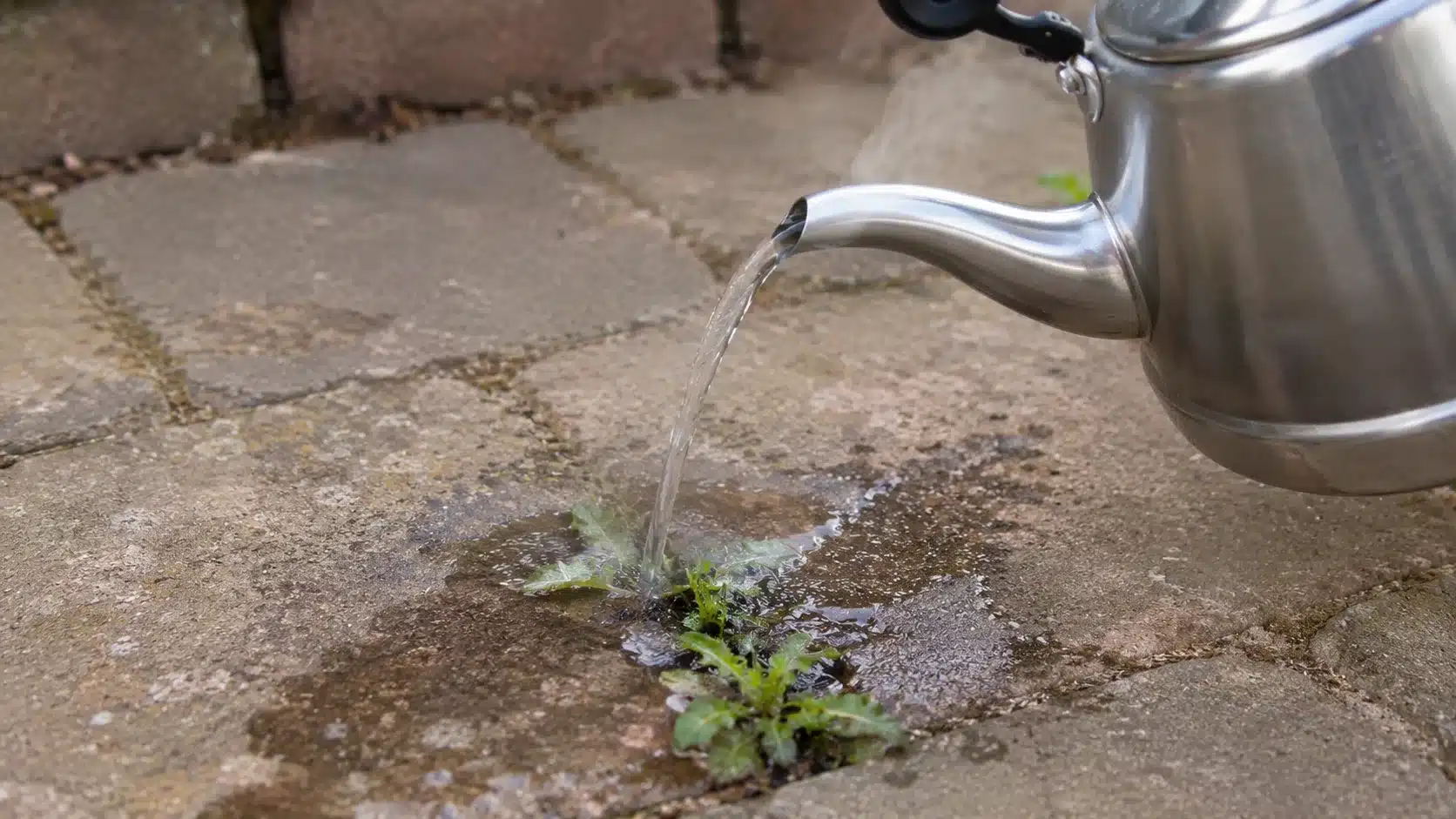
Boiling water performs best in cracks, patios, driveways, and gravel paths. Nearby plants are less likely to receive accidental heat damage.
Weeds in cracks are often young and shallow-rooted. I recommend it because boiling water kills only the tissue it reaches.
I have had my clearest results on small patio weeds before they developed strong roots.
2. Why Boiling Water Can Damage Garden Beds and Lawns
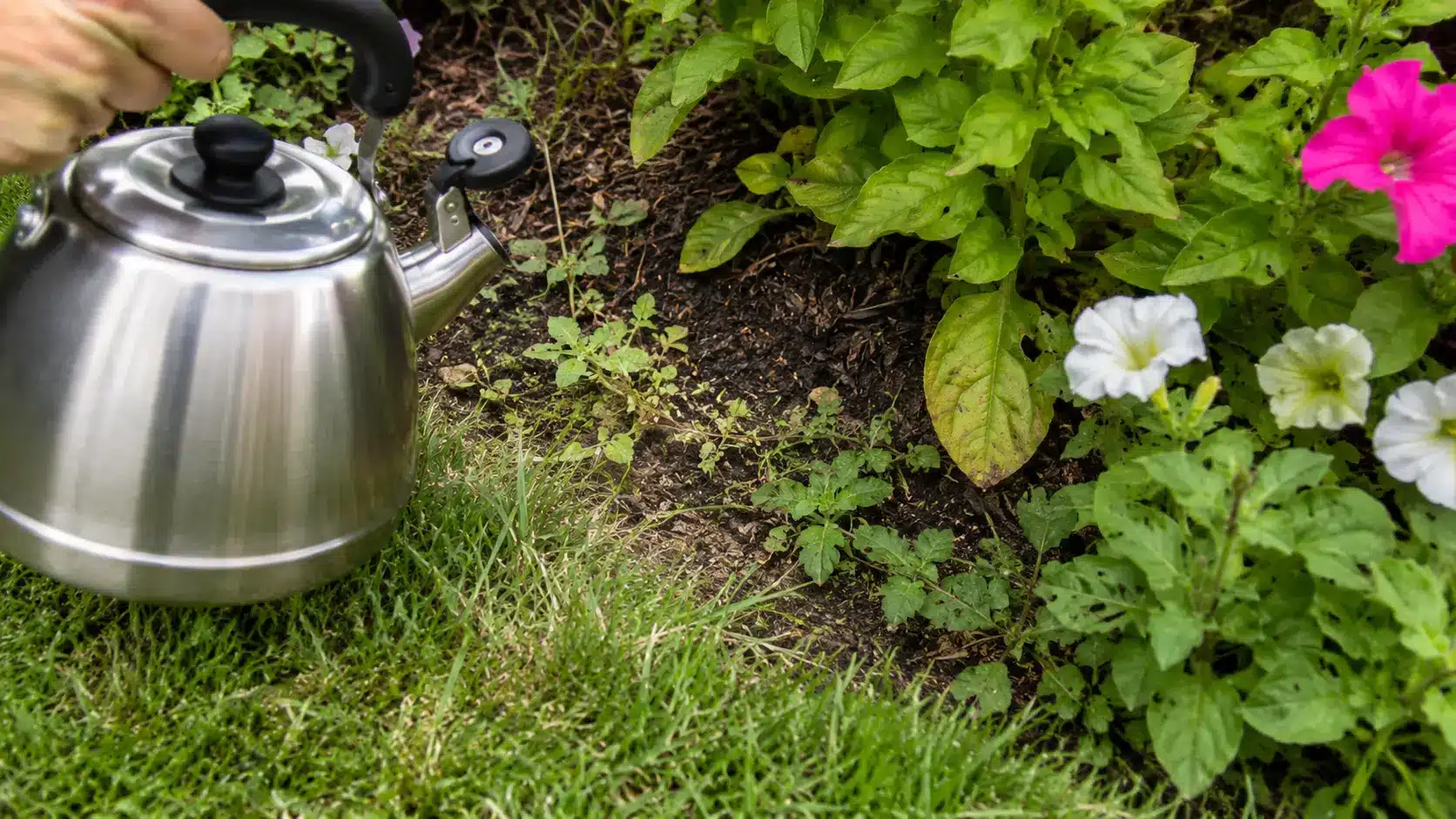
Boiling water kills grass, flowers, and vegetables as readily as it kills weeds. Any green tissue or shallow root touched by the water can be injured.
Avoid using it near lawn edges and crowded garden beds. The stream can spread across soil or splash onto nearby leaves.
Hand-pulling gives me more control when desirable plants grow close to the weed.
3. Why Boiling Water Struggles with Deep-Rooted Weeds
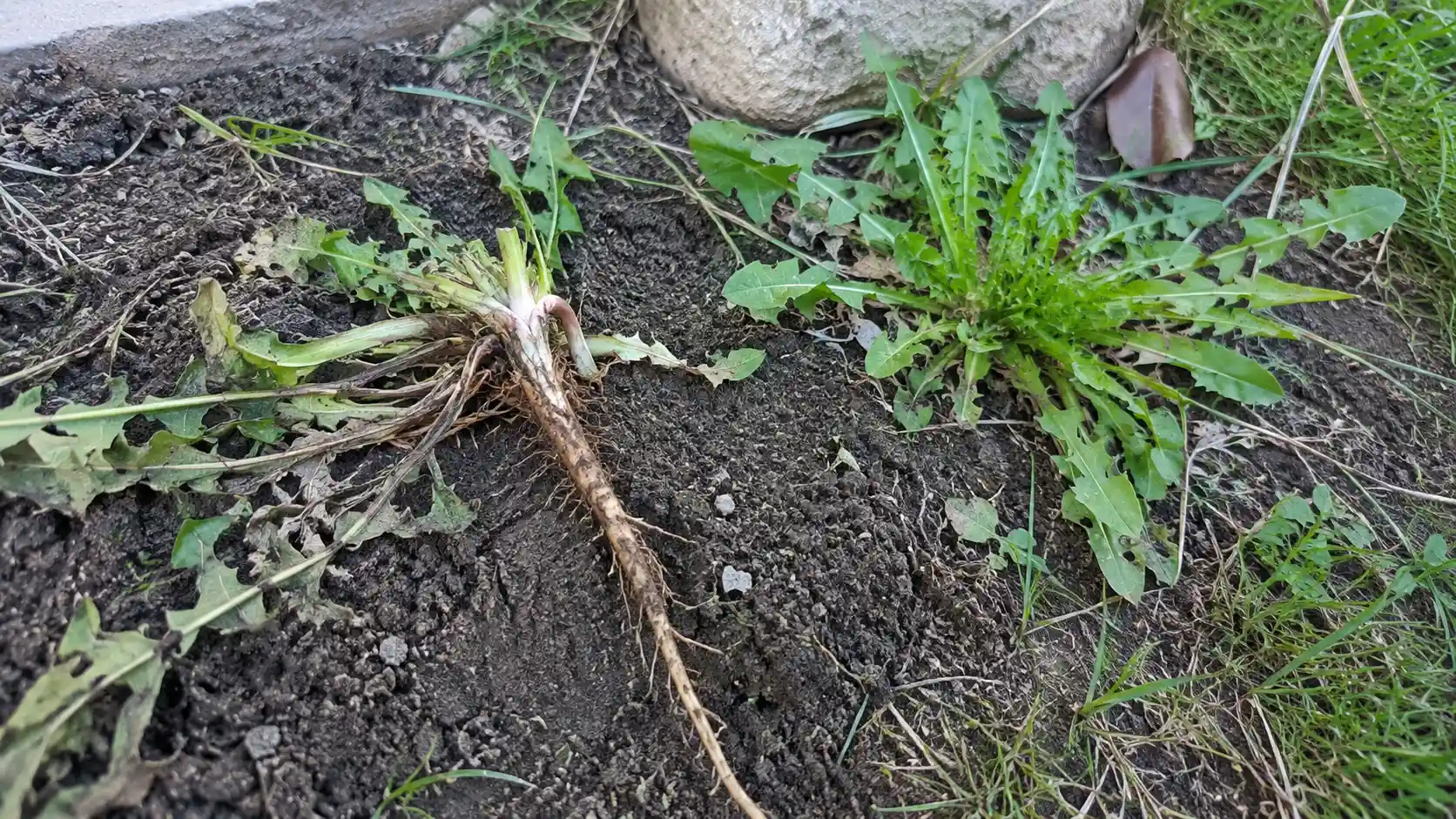
Deep-rooted weeds often return because one pour may kill the leaves without heating the complete root. Dandelions can regrow from stored energy below the surface.
I treat visible regrowth only when the weed stands in an isolated hardscape crack. In lawns or beds, I remove the taproot instead.
Repeated hot-water treatment can damage surrounding grass and soil without reaching every part of the root.
Does Boiling Water Kill Weeds, Roots, and Seeds?
Boiling water can quickly kill weed leaves and stems, but roots and seeds are much harder to destroy. A single kettle may damage shallow roots near the surface, yet it rarely heats an established root system evenly.
Soil absorbs and spreads the heat, allowing deeper roots to survive and produce new growth.
Weed seeds can also remain alive because they often need longer exposure to high temperatures than a quick pour provides.
Boiling Water and Weed Roots
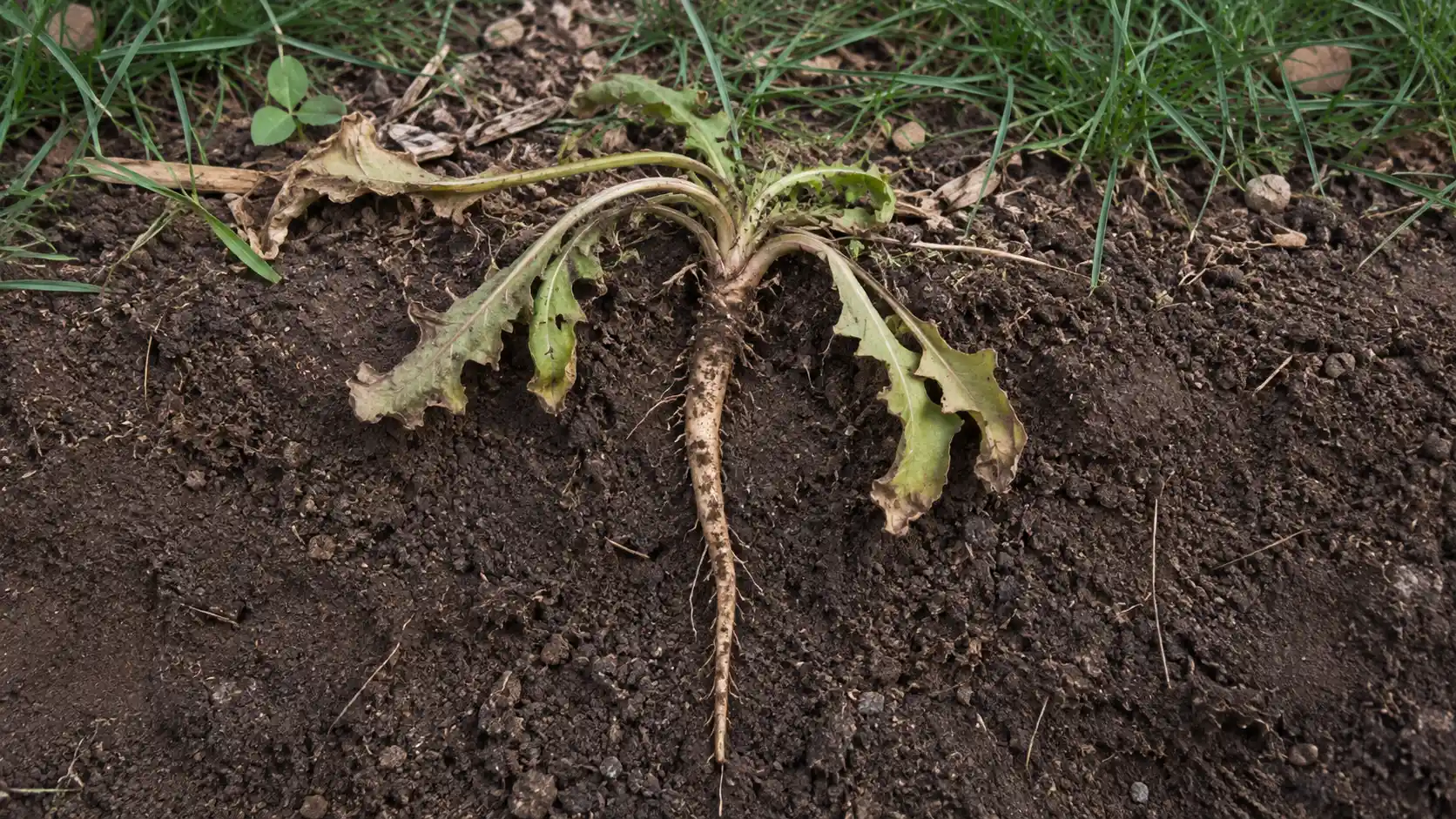
Heat moves into soil but loses strength quickly as the soil absorbs it.
This means several things can happen below the surface:
- Shallow roots may suffer heat damage.
- Deeper roots may receive too little heat to die.
- Established roots may resprout after several days.
- Taprooted weeds may return from stored energy.
I now judge success by new growth, not by the first wilted leaves. A brown top does not always mean a dead root.
Boiling Water and Weed Seeds
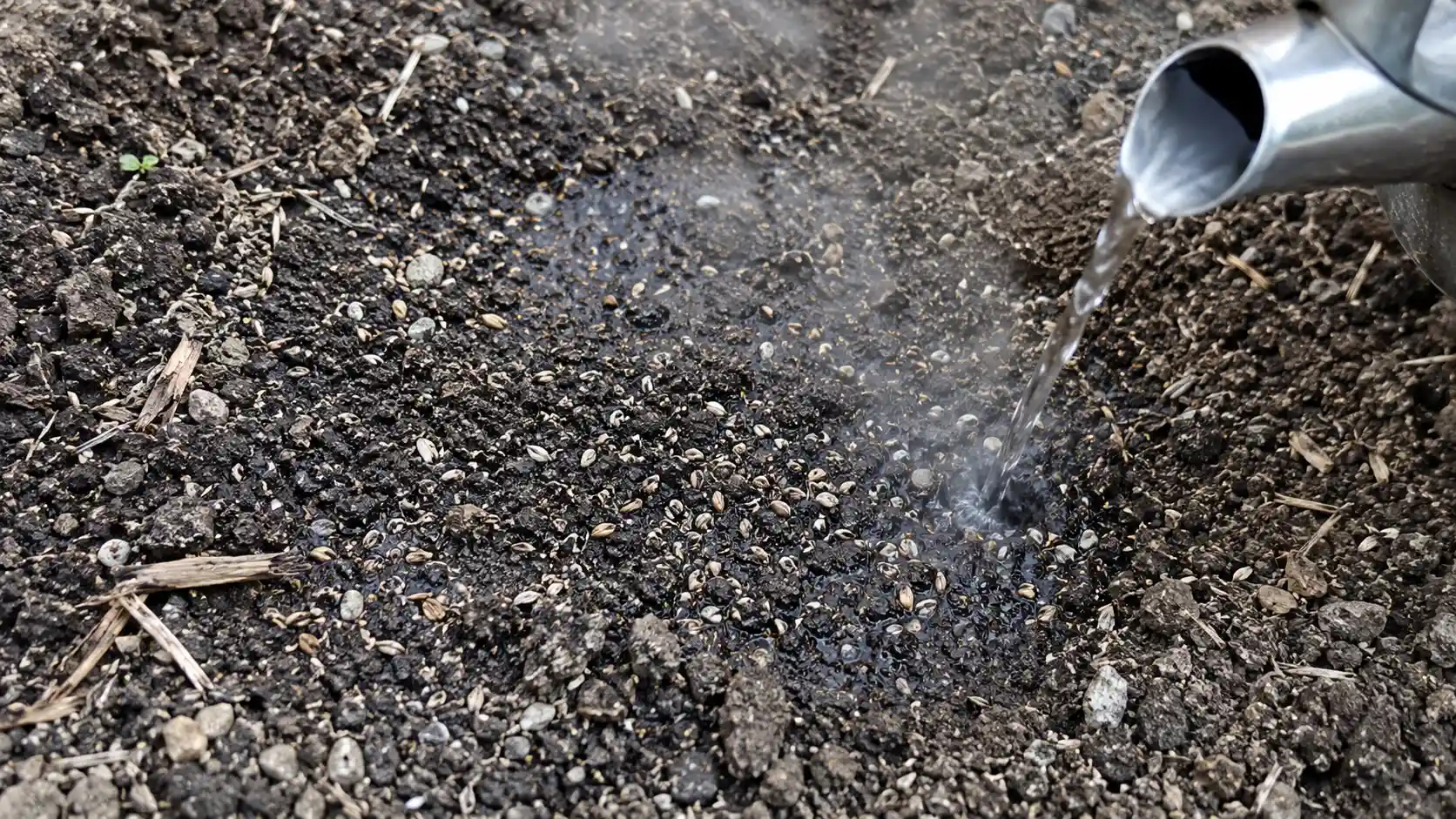
Weed seeds can tolerate heat differently from green plant tissue. Their survival depends on several factors:
- Temperature
- Exposure time
- Seed species
- Soil moisture
- Seed dormancy
A peer-reviewed Weed Science study tested six species at temperatures from 39°C to 70°C.
Some seeds required extended heating for substantial mortality. A brief kettle pour does not provide the same controlled exposure.
How Long I Wait for Boiling Water to Kill Weeds
Boiling water begins damaging weeds immediately, but the visible result develops over several days. Wilting can appear within hours, followed by browning.
Treated plants wilt almost immediately. Tissue in contact with the water usually browns after one or two days. When I ask, “Does boiling water kill weeds for good?” I wait at least one week before judging the result.
| Time After Treatment | What I Look For |
| Within a few hours | Leaves wilt and lose firmness |
| One to two days | Treated tissue turns brown |
| Three to seven days | Small annual weeds may die |
| Seven to ten days | Established weeds may produce new growth |
How to Apply Boiling Water to Weeds
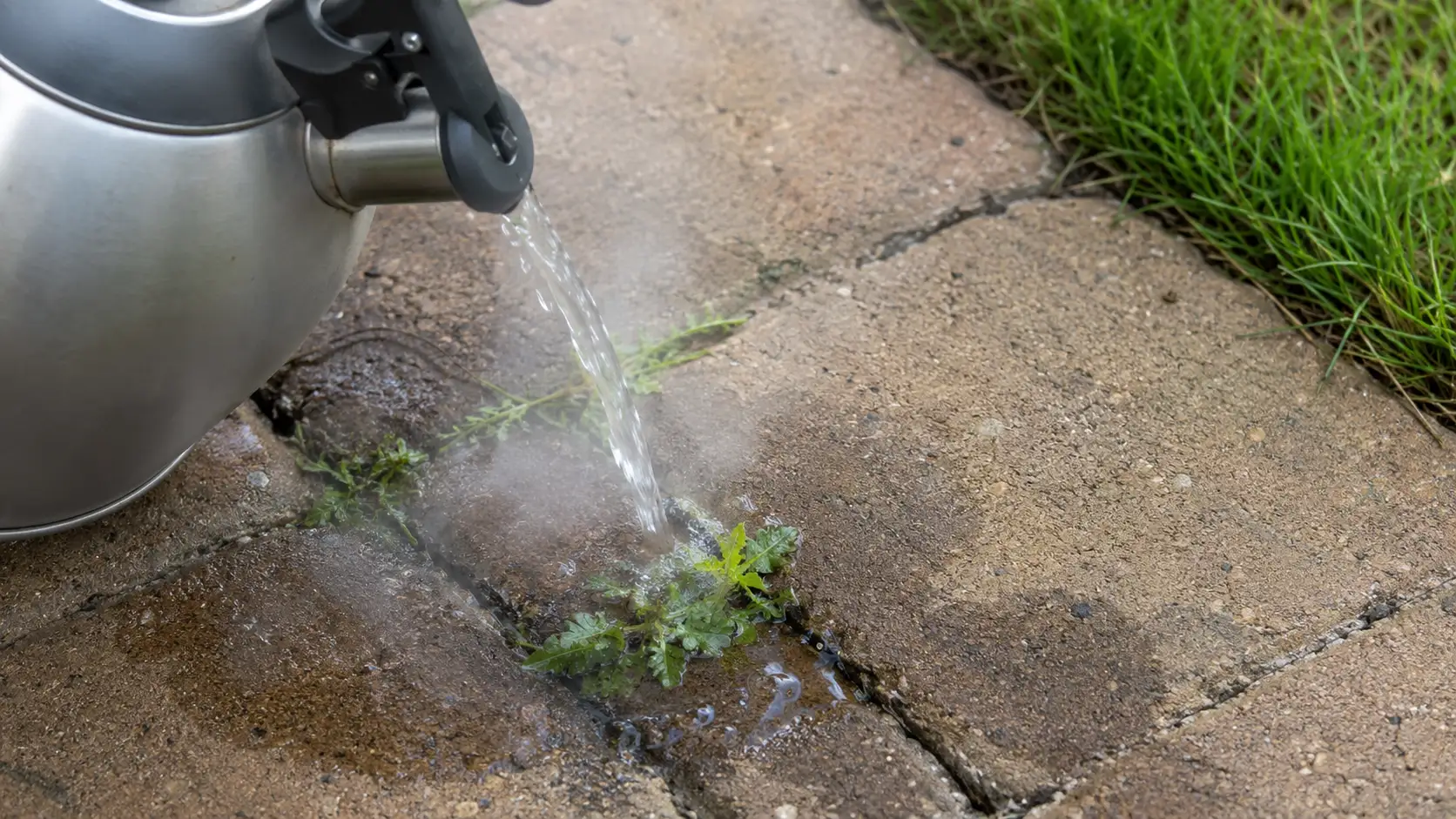
Use boiling water only for isolated weeds on hard surfaces. A controlled pour protects nearby plants and reduces dangerous splashing.
These steps keep the process simple and focused:
- Use a secure kettle (available on Amazon) with a covered top and heat-resistant handle.
- Clear the route to the treatment area.
- Bring the water to a rolling boil.
- Pour slowly over the leaves, crown, and surrounding soil.
- Keep the water away from grass, flowers, and exposed roots.
- Check for regrowth after seven to ten days.
I use only enough water to wet the target thoroughly without creating runoff.
How Boiling Water Compares with Other Natural Weed Killers
Does boiling water kill weeds more effectively than other non-herbicide methods? It can work well on hard surfaces, but root removal remains more dependable for isolated perennials.
A 2008 traffic-island study compared hot water, flame, steam, hot air, and brushing.
Hot water reduced weed cover effectively, although repeated visits were still required.
| Method | Effort | Regrowth Risk | Best Use |
| Boiling water | Low but repetitive | High for deep roots | Cracks, patios, and gravel |
| Vinegar spray | Low | High for perennials | Small annual weeds |
| Flame weeding | Moderate | Moderate | Larger open hard surfaces |
| Hand-pulling | High and physical | Low when the root comes out | Garden beds and isolated weeds |
These methods avoid conventional herbicides, but each carries limits.
How to Use Boiling Water Safely on Weeds
Boiling water can cause severe burns within seconds. Treat safe handling as part of weed control, not as an optional extra.
The U.S. Consumer Product Safety Commission states that 150°F water can cause third-degree burns in about two seconds. Boiling water reaches 212°F at sea level.
Expert Note: Water does not need to reach boiling point to cause a serious scald. Controlled carrying and pouring matter every time.
Follow these precautions:
- Use a kettle with a covered top and narrow spout.
- Wear closed shoes and long trousers.
- Keep children and pets away until the area cools.
- Pour close to the weed to reduce splashback.
- Avoid windy days and unstable walking surfaces.
- Carry only as much water as you can handle safely.
Also, avoid open pots. A secure kettle gives me better control over both the water and the treatment area.
The Final Answer on Boiling Water and Weeds
The practical answer to “does boiling water kill weeds?” is yes, but surface damage does not always mean the entire plant is dead.
It works well on young weeds in cracks, patios, and gravel. These areas let me target growth without harming nearby grass or flowers.
It works poorly in lawns, crowded beds, and weeds with deep taproots. Those plants may need repeated treatment or complete root removal.
Research also shows why weed seeds are less predictable. Many require longer heat exposure than a quick kettle pour provides.
Start with one isolated weed, pour carefully, and check the same spot after one week.
Have you tried boiling water on weeds in your yard? Share what worked, what grew back, and where you used it in the comments below.
Frequently Asked Questions
Does Boiling Water Kill Weeds Permanently?
A single pour may kill young annual weeds, but established perennials can return from surviving roots and need further treatment or removal.
Does Boiling Water Kill Grass Too?
Yes, boiling water damages grass on contact, so keep the stream away from lawn edges and any green areas you want to retain.
How Much Boiling Water do I Need per Weed?
Use enough water to wet the leaves, crown, and immediate growing area without causing splashback, nearby plant damage, or hot runoff.
Can I Use Boiling Water on Weeds in My Lawn?
Use it only where losing surrounding grass is acceptable. The hot water can leave a dead patch around the treated weed.
How Often Should I Repeat the Treatment?
Check after seven to ten days and treat new growth again only where nearby plants, people, pets, and surfaces remain protected.
Jordan Mathews, who has a degree in horticulture from Texas A&M University, has been a guiding force in plant health and sustainable gardening for over 16 years. His career began with a role at a renowned botanical garden, where he deepened his understanding of plant physiology and eco-friendly cultivation methods. Jordan joined our website as a freelancer in 2020, becoming a go-to expert for readers seeking advice on nurturing diverse plant species apart from offering insights grounded in scientific knowledge and practical experience. Beyond his professional achievements, Jordan is a keen nature photographer, capturing the beauty of flora in its immensely diversified forms.