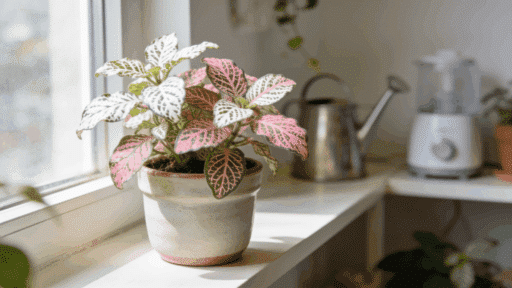
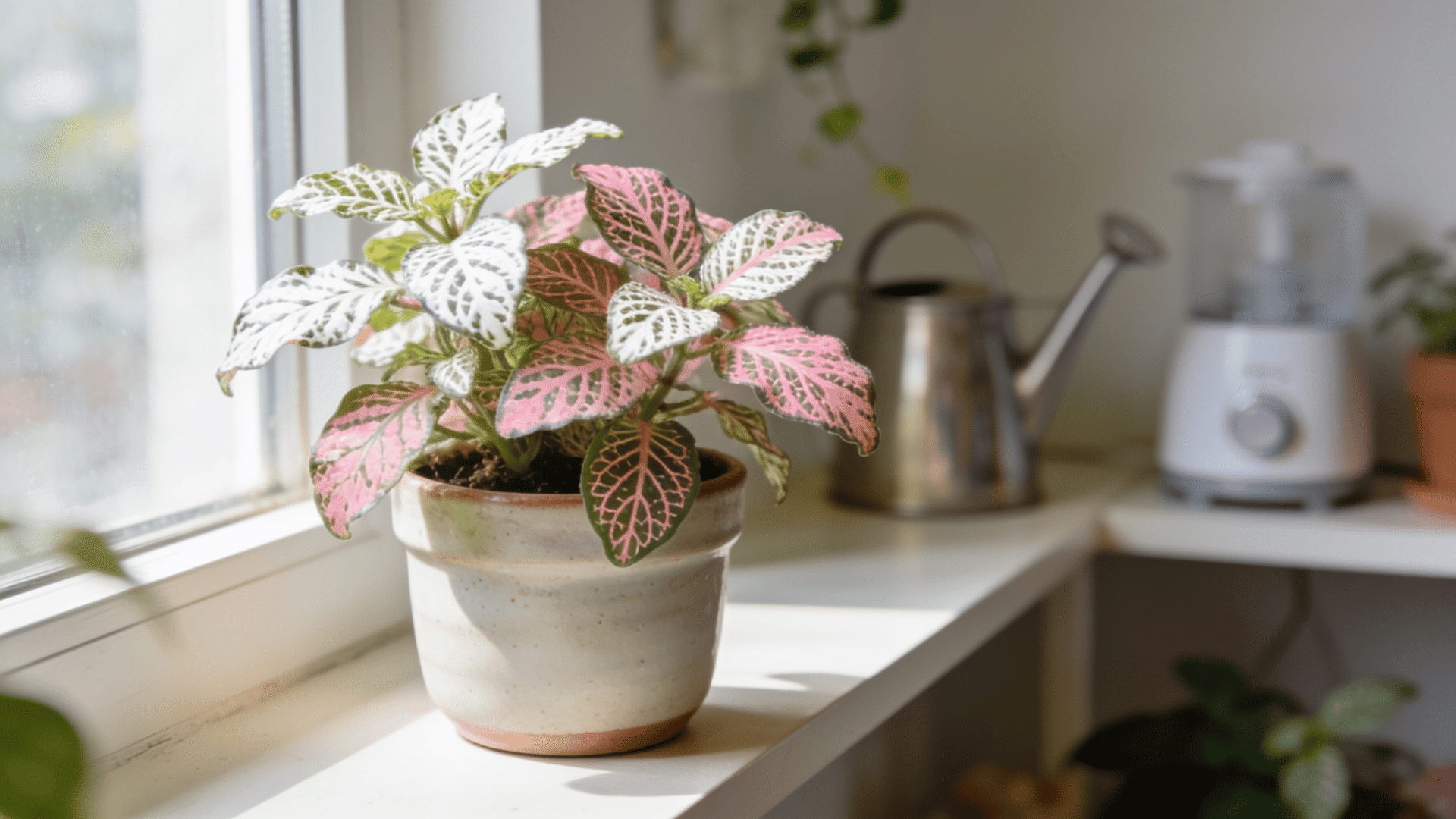

Nerve plants are small, colorful, and easy to keep indoors once you understand their basic needs.
They do not like dry soil, harsh sunlight, or overly dry air. In my work with indoor plants, I have found that Fittonia usually responds best to consistent care rather than excessive attention.
Keep the soil lightly moist, place the plant in bright indirect light, and use a loose potting mix that drains well. A little extra humidity also helps the leaves stay fresh and full.
This blog covers simple nerve plant care tips for regular Fittonia, mini white Fittonia, and Juanita Fittonia, especially if you are growing them in small indoor spaces.
How do You Care for a Nerve Plant?
Nerve plant care is simple when you keep the routine steady.
- Place Fittonia in bright, indirect light, keep the soil lightly moist, and use a small pot with drainage.
- It likes warm indoor rooms and does better when the air is not too dry.
- Do not let the roots sit in soggy soil, but do not let the pot dry out fully either.
- Wilting is often a sign that the plant needs water, but repeated wilting can weaken the leaves over time.
In my experience, this plant grows best when you check it often and make small adjustments before it starts to look stressed.
Use this table as the fast care check before adjusting your plant’s light, watering, or humidity routine.
| Care Factor | Best Setting | What To Avoid |
|---|---|---|
| Light | Bright, indirect light | Direct afternoon sun |
| Water | Keep soil lightly moist | Bone-dry soil or soggy roots |
| Humidity | Medium to high humidity | Dry air near vents |
| Soil | Loose, well-draining mix | Heavy compact soil |
| Temperature | Warm indoor room | Cold drafts |
| Pruning | Pinch leggy stems | Letting stems stretch too far |
Nerve Plant Basics and Light Needs
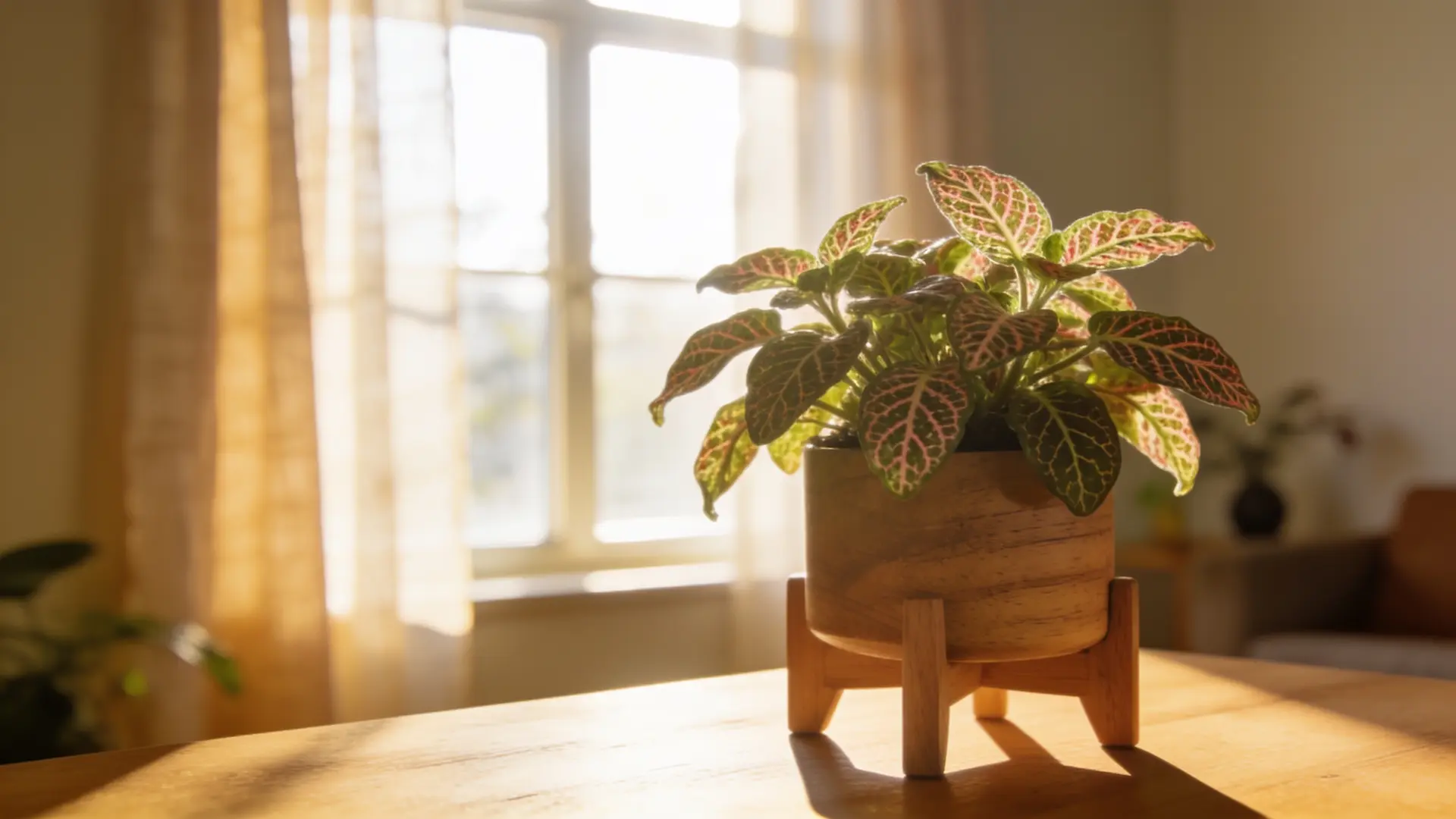
A nerve plant is the common name for Fittonia, also called mosaic plant.
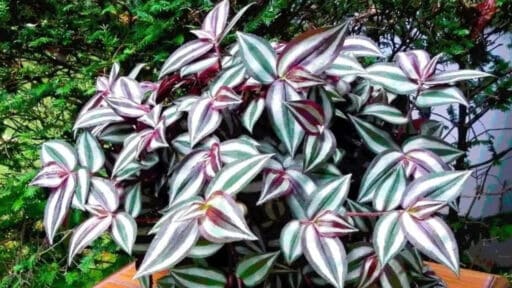
It is a small, creeping houseplant grown mainly for its patterned leaves rather than its flowers. The leaves usually have clear white, pink, or red veins, which is what gives the plant its bold look.
Because it stays compact, Fittonia works well on desks, shelves, bathroom counters, and plant stands. A small Fittonia in a 4-inch pot can look full without taking over a windowsill.
Mini white fittonia and Juanita fittonia share the same basic care needs, but their leaf color may show stress more quickly when light, water, or humidity is off.
Signs Your Nerve Plant Needs More or Less Light
Light problems usually show up in the leaves and stems before the whole plant looks weak.
- Long stems, small leaves, and dull veins often mean the plant needs brighter indirect light.
- Crispy patches, curled edges, faded color, or soil drying too fast usually mean the light is too strong.
Move the plant slowly, not suddenly, so it has time to adjust.
These symptoms help you adjust the plant’s location before leaf damage becomes severe.
| Symptom | Likely Cause | Quick Fix |
|---|---|---|
| Leggy stems | Too little light | Move closer to indirect light |
| Dull veins | Weak light | Try brighter filtered light |
| Faded leaves | Strong sun or stress | Shift the pot back slightly |
| Crispy patches | Direct sun | Move away from the window glass |
| Leaning plant | Uneven light | Rotate weekly |
Best Indoor Spot for Fittonia
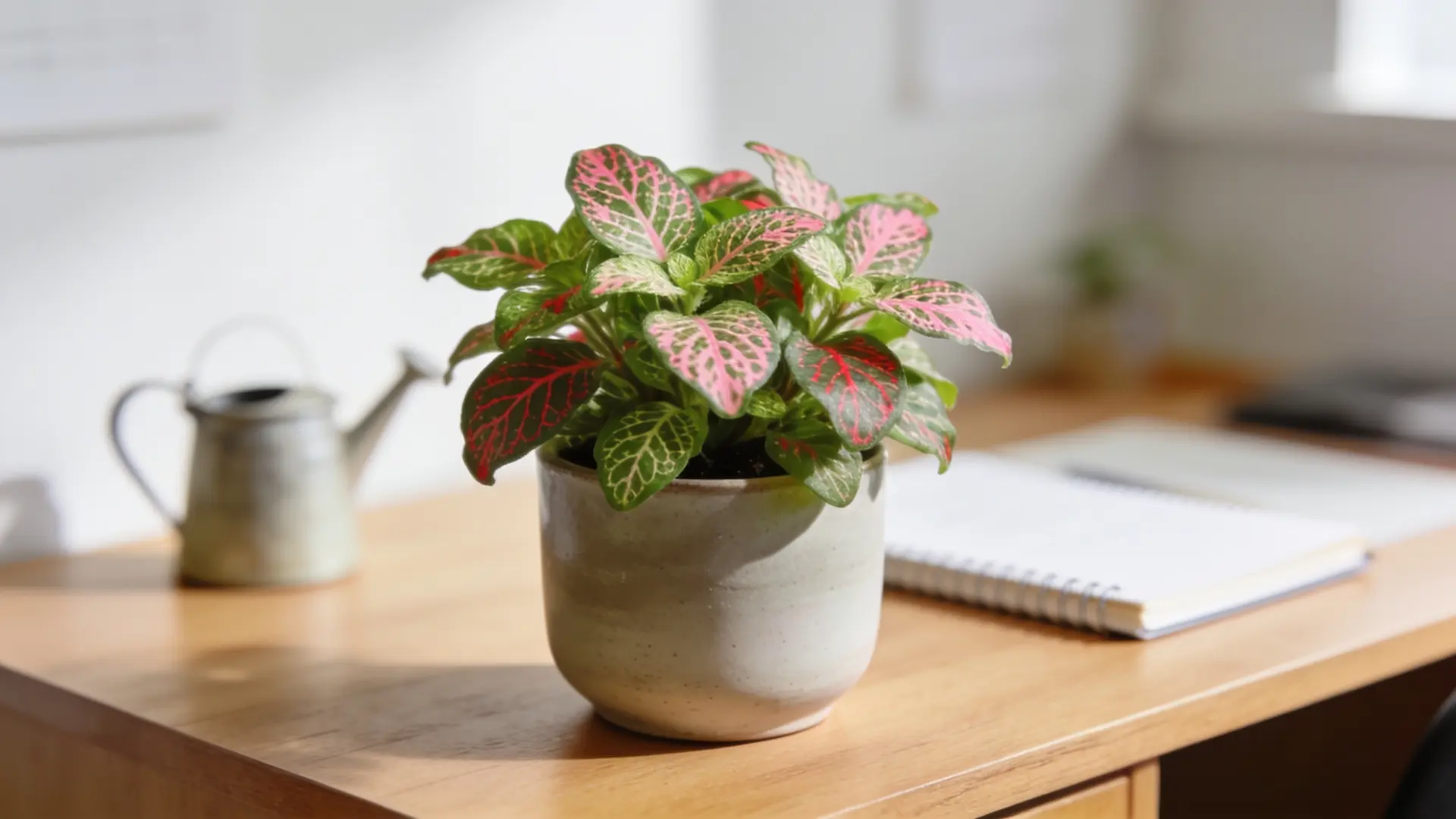
A good indoor spot is near an east-facing window, a few feet from a bright window, or under a grow light.
Bathrooms and kitchens can also work well if they get filtered light and hold a little more humidity. Rotate the pot once a week so the plant grows evenly. If it leans toward the window, rotate it instead of moving it into harsher sun.
Keep it away from heating vents and cold drafts, since sudden temperature changes can stress the leaves.
How Often Should You Water a Nerve Plant?
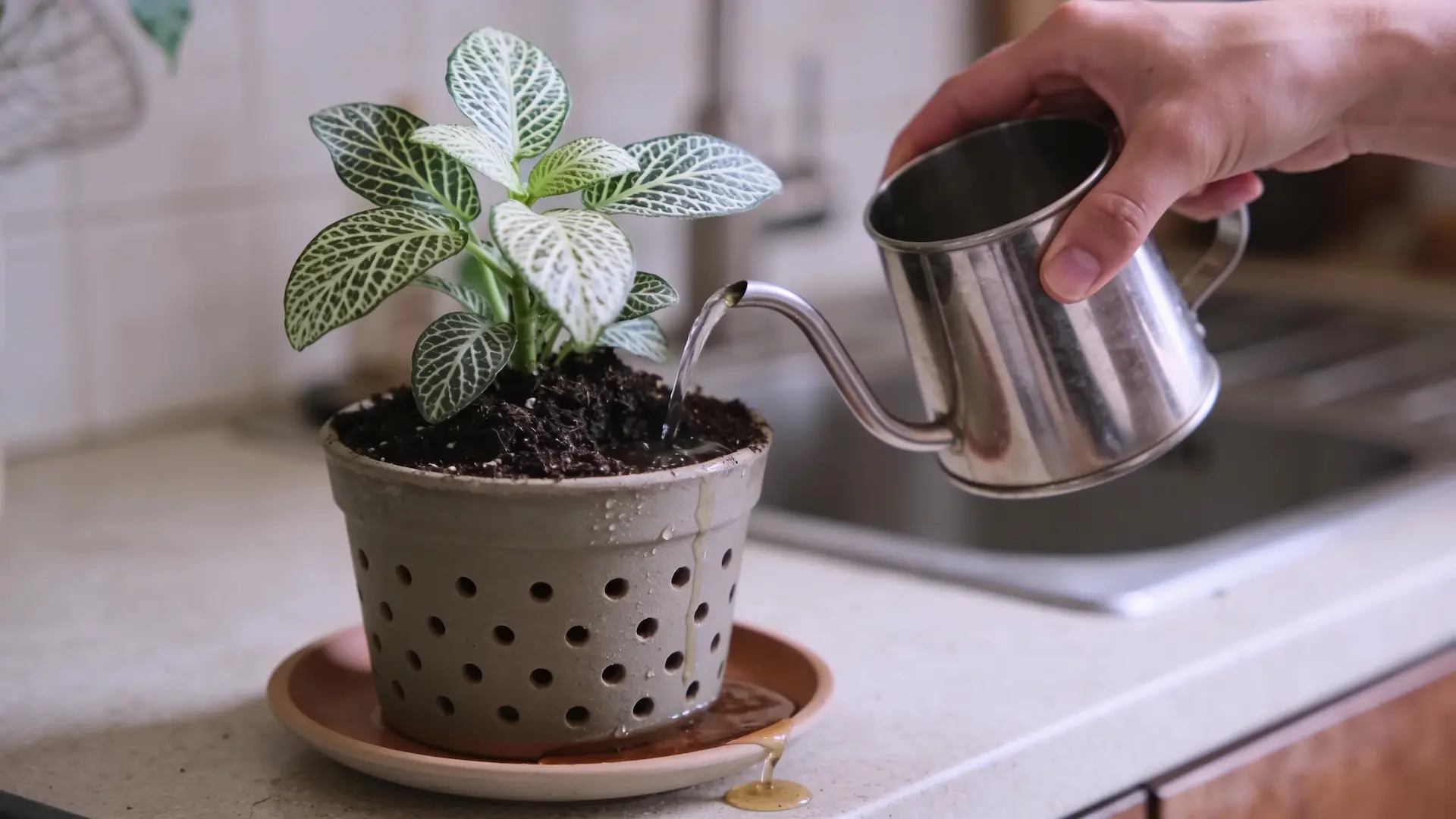
Water a nerve plant when the top half-inch of soil feels dry.
- Do not follow a fixed calendar, because the pot size, room heat, light, and season all change how fast the soil dries.
- The top layer can feel slightly dry, but the soil around the roots should stay lightly moist.
Fittonia is known for wilting when it gets too dry, and it may perk up after watering. Still, do not let this happen often. Repeated wilting can lead to stunted growth, brown tips, and leaf drop.
Always use a pot with drainage, and never let the pot sit in standing water.
RHS also recommends careful watering as part of Fittonia indoor care.
How to Water Without Causing Root Rot
Watering Fittonia is simple, but the pot needs time to drain properly after each watering.
- Check the top half-inch of soil with your finger. Water only when it feels slightly dry.
- Pour water slowly over the soil, not directly on the leaves.
- Keep watering until extra water comes out of the drainage holes.
- Let the pot sit for 10 to 15 minutes so the extra water can drain.
- Empty the saucer so the roots are not sitting in water.
- Use room-temperature water when possible, as very cold water can stress indoor plants.
A 4-inch pot may need water more often than a larger glazed planter because small pots dry faster.
Humidity, Soil, and Pot Setup for Nerve Plants
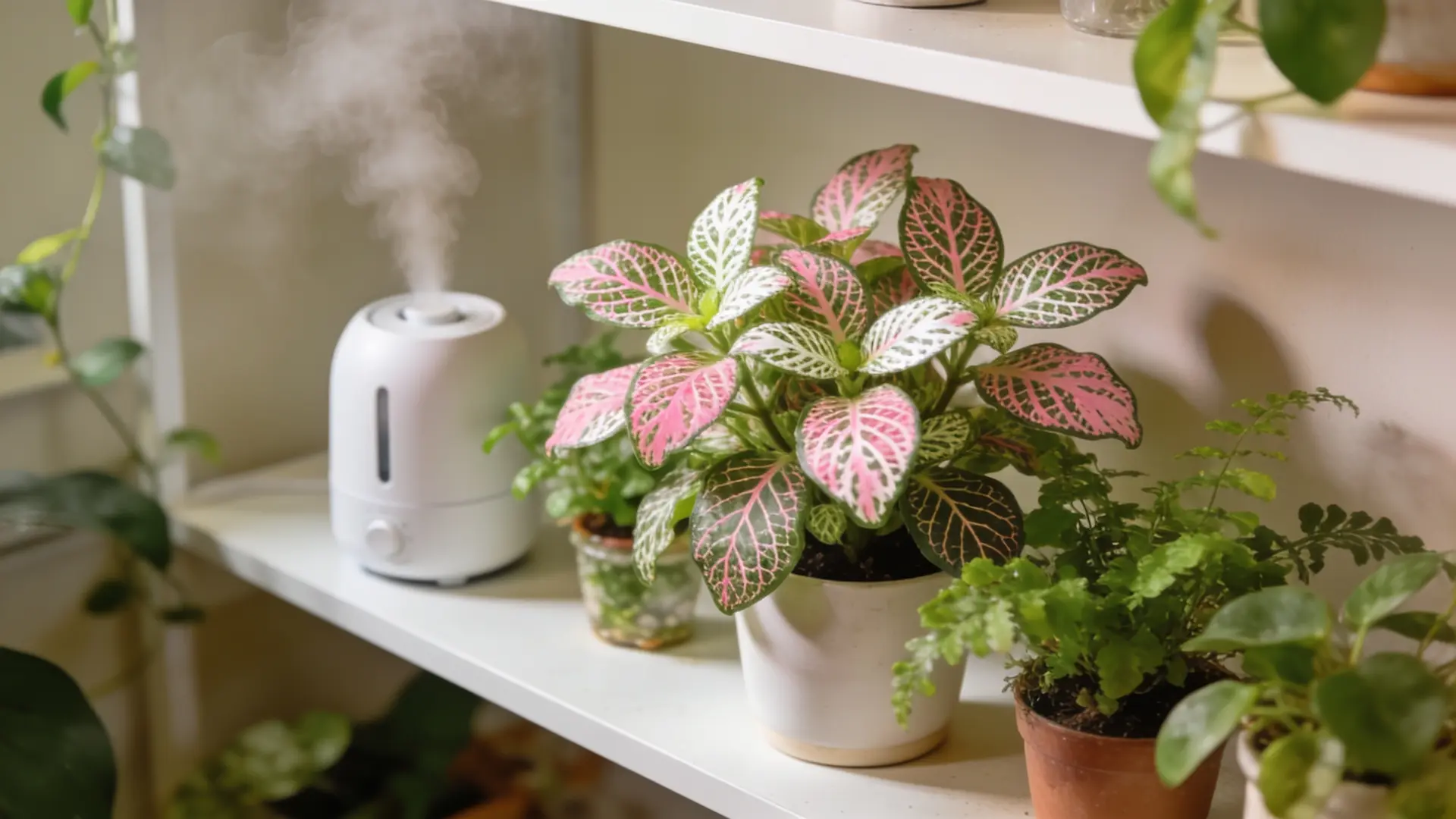
Nerve plant care gets easier when the air and soil stay evenly moist.
- Fittonia does not like dry air, heavy soil, or pots that hold water for too long.
- Crispy tips often mean the air is too dry, while yellow leaves or soft stems can mean the roots are staying too wet.
- The right setup also reduces how often you need to correct sudden watering of leaf problems.
I prefer keeping Fittonia in a small pot with drainage, a loose mix, and a spot with steady humidity. Misting can help for a short time, but it does not replace proper humidity.
Use this table to set up the right balance before changing your care routine.
| Setup Factor | Best Choice | What to Avoid |
|---|---|---|
| Humidity | Group plants, use a humidifier, or try a pebble tray | Dry air near vents |
| Soil | Light indoor mix with perlite | Dense garden soil |
| Pot | Small pot with drainage | Oversized pot with no drainage |
| Terrarium | Bright indirect light and careful watering | Direct sun or soggy soil |
| Repotting | Move up only one pot size | Repotting too early |
Best Humidity Setup for Fittonia
Fittonia likes medium to high humidity, especially in small pots that dry quickly.
You can place it near other houseplants, use a small humidifier, or keep it in a bright bathroom with filtered light.
A pebble tray can also help, but the pot should sit above the water, not inside it. Keep some airflow around the plant so damp air does not become stale.
Simple Soil and Pot Mix
Use soil that holds light moisture but still drains well.
- A simple mix is 2 parts indoor potting mix and 1 part perlite.
- Add a small handful of coco coir if your home is very dry.
- Choose a small pot with a drainage hole, and repot only when roots crowd the pot or the soil dries out too fast.
NC State notes that Fittonia grows well indoors in medium humidity, while the Missouri Botanical Garden describes it as a low, spreading tropical plant suited to compact containers.
Pruning, Propagation, and Fittonia Variety Care
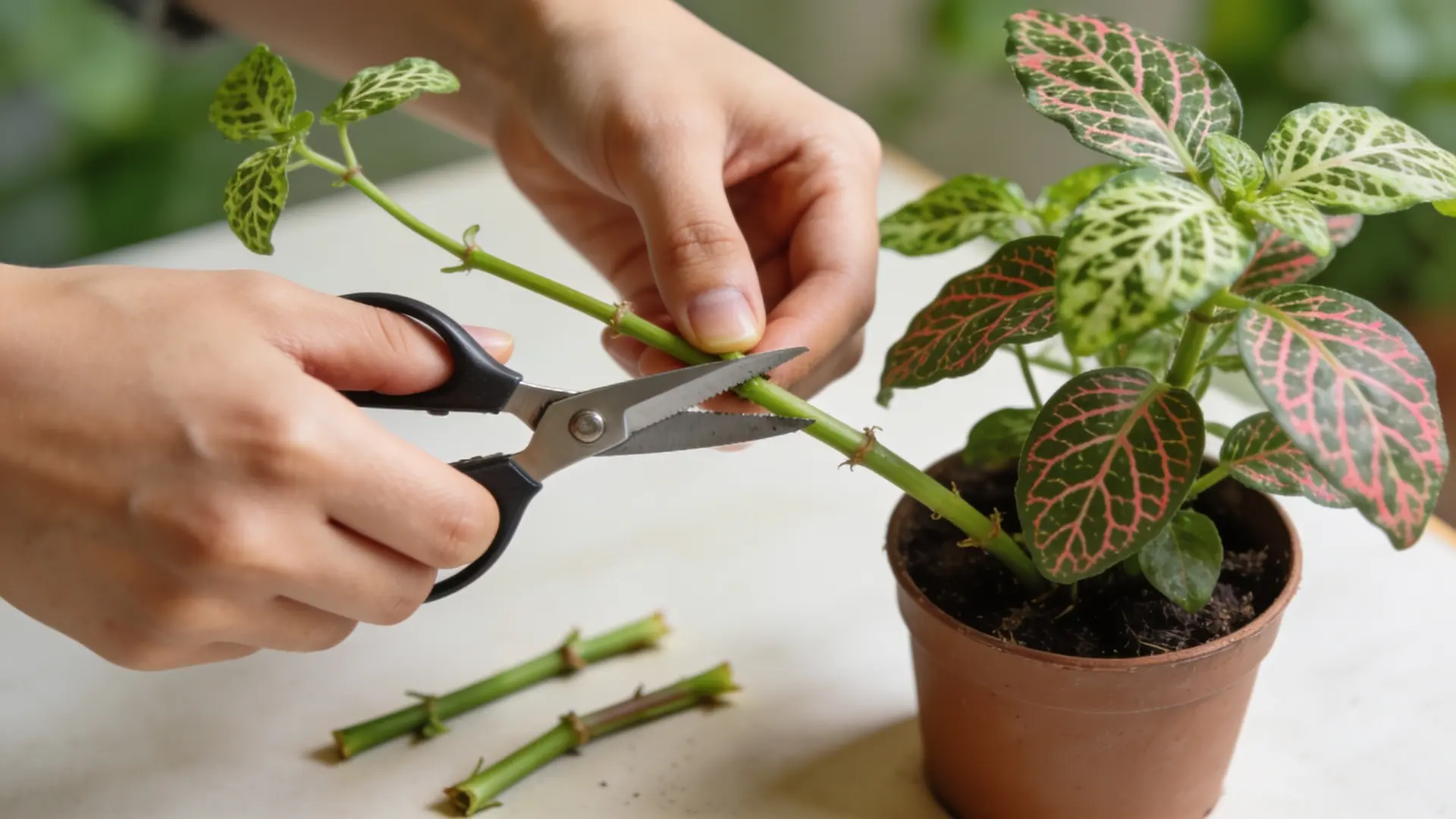
Pruning keeps Fittonia full and neat. Pinch long stems just above a leaf node, and remove yellow, faded, or weak leaves when you see them.
- If your plant grows flower spikes, you can trim them off too.
- Fittonia is mainly grown for its patterned leaves, not its flowers, so this helps the plant focus on fresh foliage.
- Regular pinching also directs growth toward the lower stems, helping the plant maintain its compact shape.
- Clean your scissors before cutting to prevent the transfer of damaged tissue or pests between plants.
The same basic care works for regular Fittonia, mini white Fittonia, and Juanita Fittonia.
1. How to Fix a Leggy Nerve Plant
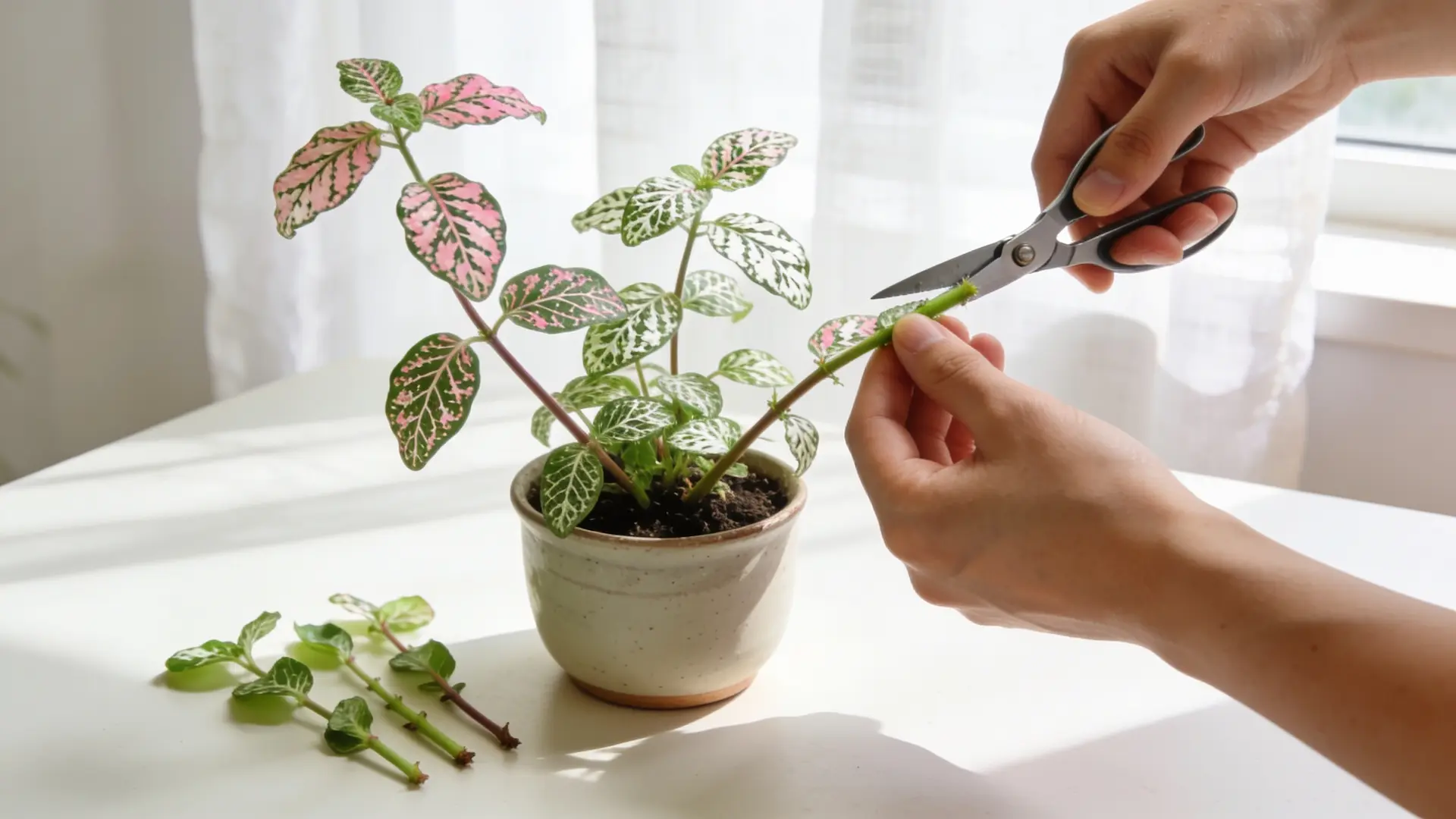
A leggy nerve plant usually needs:
- Brighter indirect light
- More regular pinching
- Or both.
Move it closer to soft light, then trim the longest stems slowly. Do not cut too much at once, especially if the plant already looks weak.
Continue rotating the pot weekly so new stems receive even light from every side.
In my experience, Fittonia fills out better when you fix the lighting first and prune afterward.
2. Can You Propagate Nerve Plant Cuttings?
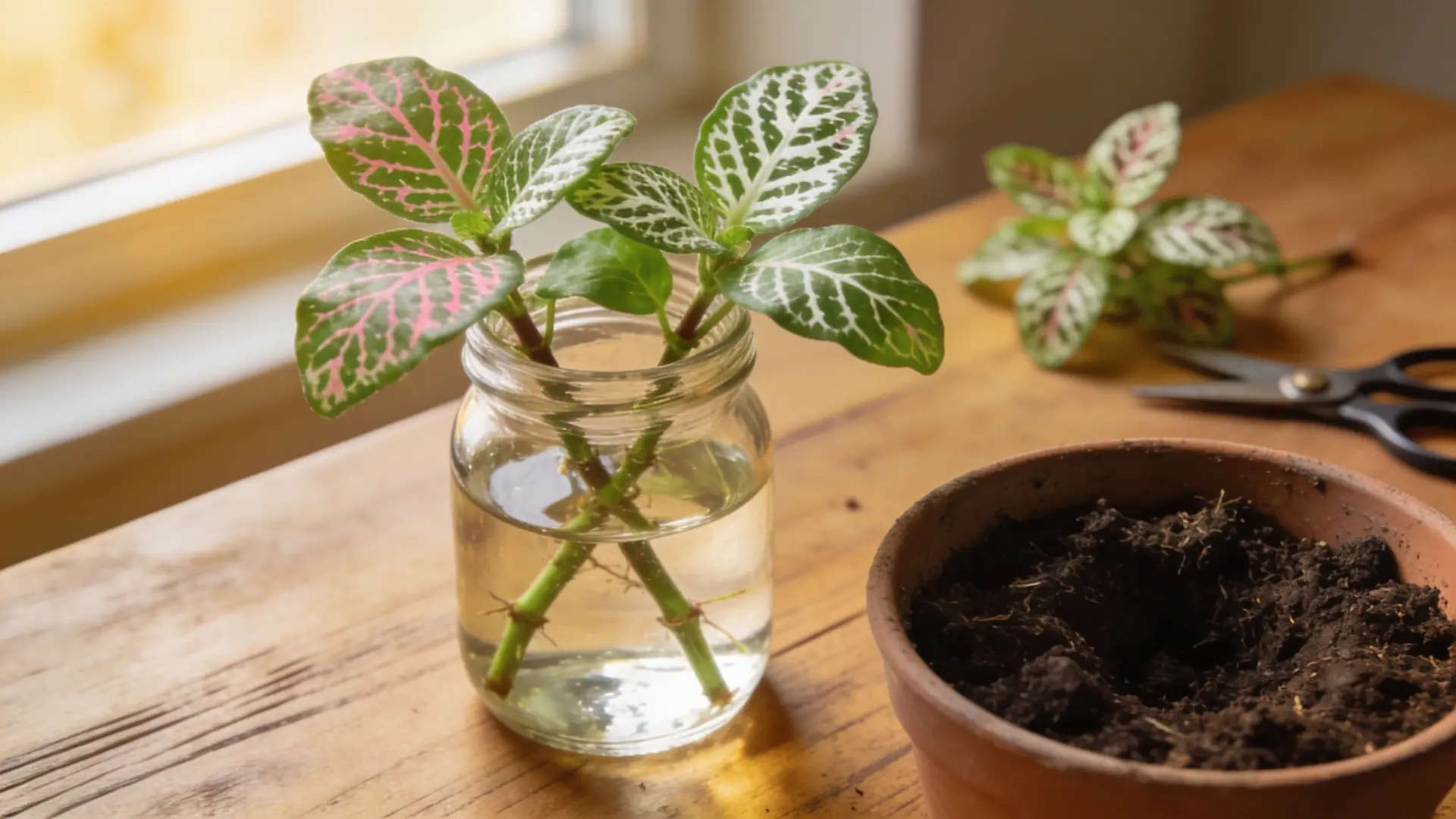
Yes, Fittonia can grow from stem cuttings.
- Cut a healthy stem just below a node
- Remove the lower leaves
- Place the cutting in moist soil or water.
- Keep it warm, humid, and out of direct sun while the roots grow.
This is a simple way to reuse healthy pieces after pruning. New roots may take several weeks to develop, so keep the growing medium lightly moist during this period.
3. Mini White Fittonia and Juanita Fittonia Care Notes
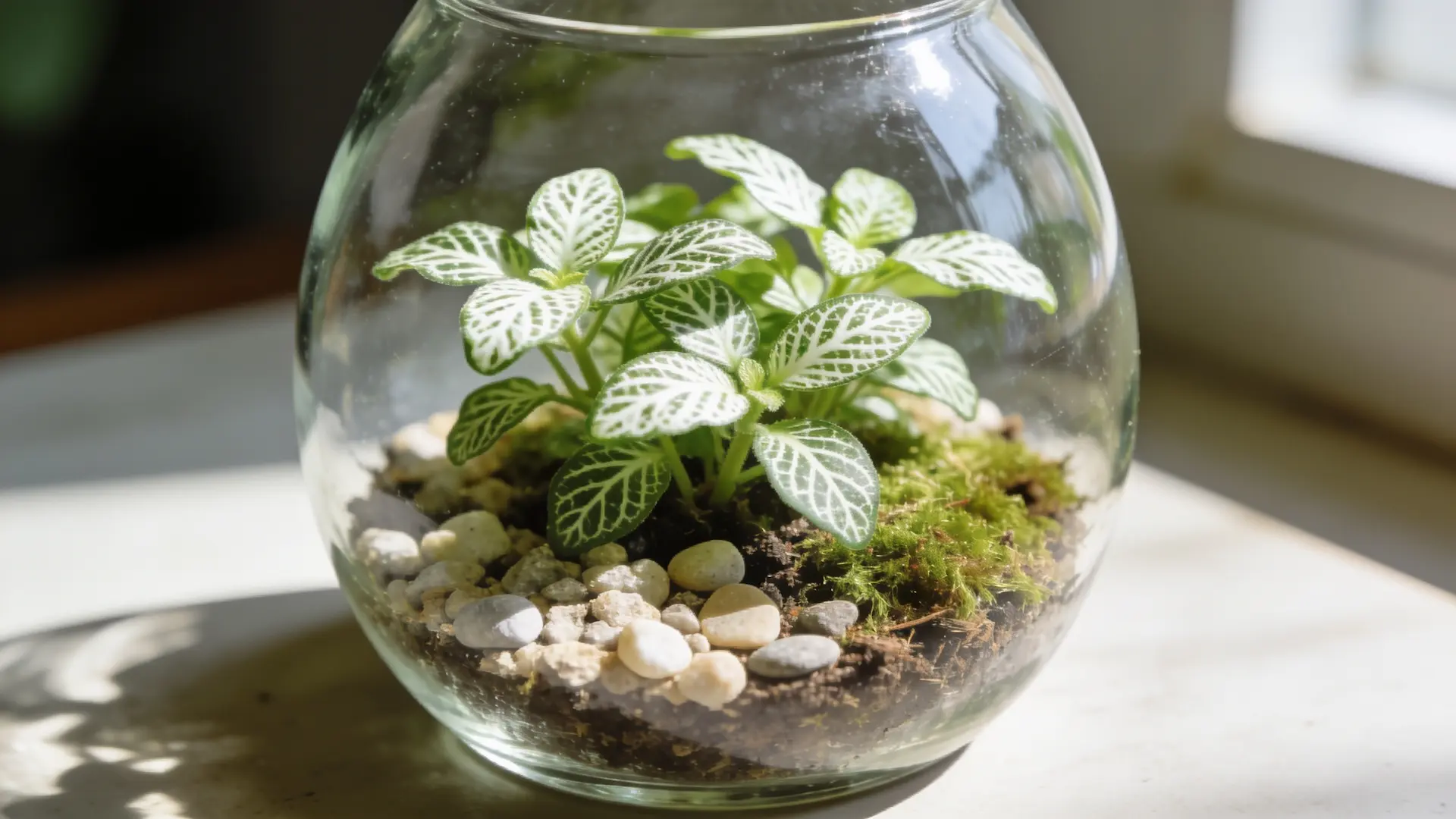
Fittonia flowers are not very showy; many growers pinch off buds, and stem cuttings are used for propagation.
- Mini white fittonia: Best for small pots and terrariums. Keep it in bright indirect light, not direct sun.
- Juanita fittonia: Needs steady moisture and soft light to keep its pink or red-toned veins looking clear.
- Care note: Both types follow the same routine, but lighter or brighter leaves may show signs of stress more quickly.
Common Nerve Plant Problems and Seasonal Care
Most nerve plant problems come from uneven watering, dry air, weak light, cold drafts, or soil that stays too wet.
In my experience, Fittonia shows signs of stress quickly, so it is better to fix one thing at a time rather than change the whole routine.
- Start by checking the soil, then look at light, humidity, and temperature.
- Wilting, yellow leaves, brown tips, faded veins, and leaf drop usually point to a clear care issue.
- Seasonal changes matter too.
- In warmer months, the plant may drink faster.
- In winter, slower growth and dry indoor air make careful watering more important.
Match your plant’s symptom to the likely cause before changing every part of the care routine.
| Problem | Likely Cause | What To Do |
|---|---|---|
| Sudden wilt | Dry soil | Water deeply and check more often |
| Yellow leaves | Overwatering | Check drainage and let the soil breathe |
| Brown tips | Dry air or uneven watering | Raise humidity and water steadily |
| Faded veins | Low light | Move to brighter indirect light |
| Leaf drop | Stress or cold draft | Keep care and location steady |
| Sticky leaves | Pests | Check the undersides and isolate the plant |
How to Save a Wilting Nerve Plant
To save a Wilting Nerve Plant:
- Check the soil first. If it feels dry, water slowly until extra water drains out, then empty the saucer.
- Move the plant away from direct sun and wait a few hours. If the soil is already wet but the plant is still drooping, check the roots.
- Avoid adding fertilizer until the leaves recover and the plant begins holding itself upright again.
Wet soil with wilting can mean root stress, not thirst.
Pests to Watch for on Fittonia
For pests:
- Look for mealybugs, aphids, spider mites, and fungus gnats around soft stems, leaf joints, and the undersides of leaves.
- High humidity helps Fittonia, but stale wet soil can attract pests.
- Gently wipe the affected leaves and check nearby plants before returning the Fittonia to its usual position.
I like to isolate new plants for a few days before placing them near other houseplants. It is a simple habit that prevents bigger problems later.
Seasonal Nerve Plant Care Routine
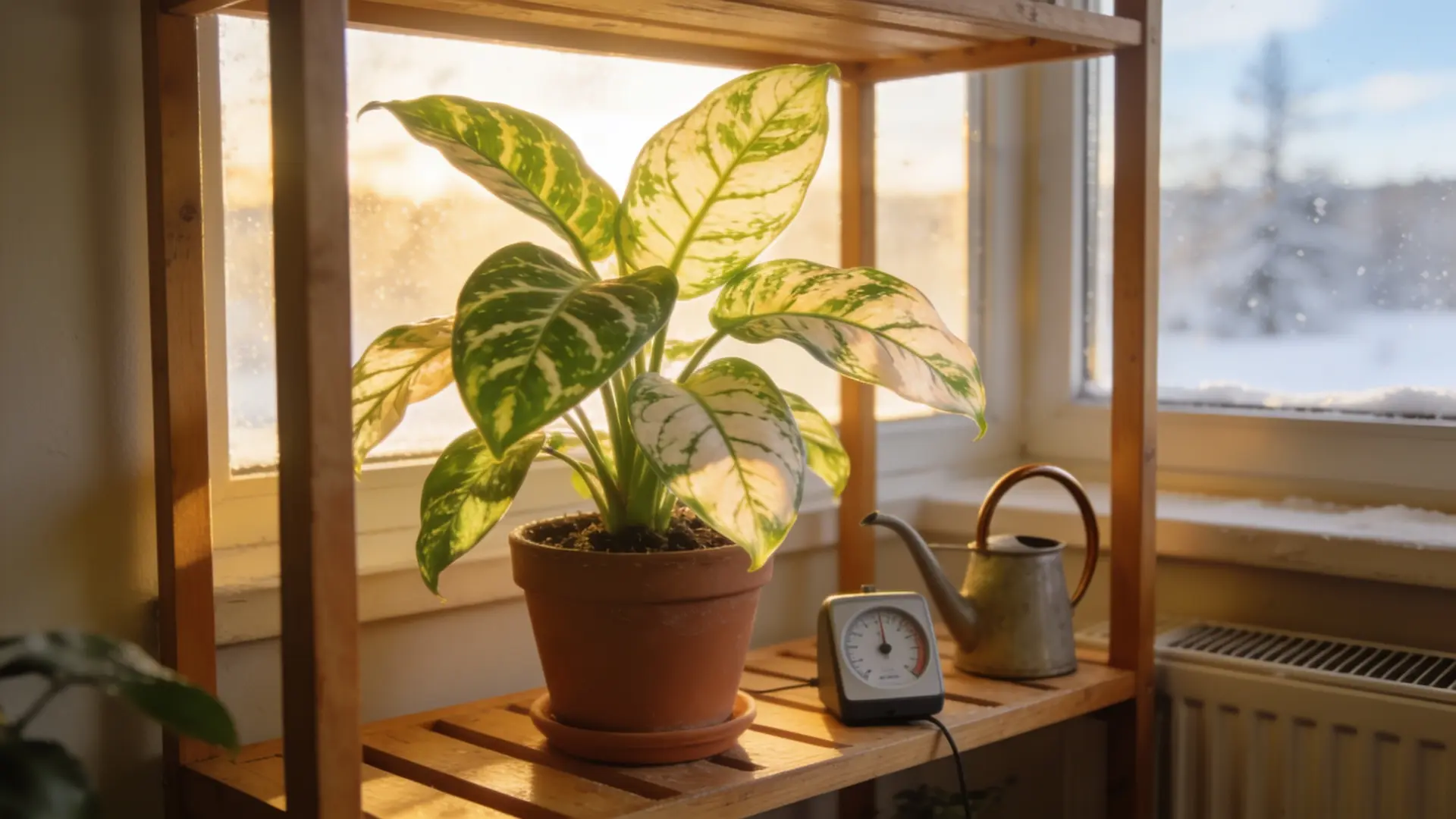
In spring and summer, Fittonia may grow faster, require more frequent watering, and respond well to light pruning or propagation.
In fall and winter, growth slows, so reduce feeding and water more carefully. Keep it away from heaters and cold windows.
If the topsoil stays damp for several days in winter, wait before watering again.
RHS covers Fittonia watering and indoor care, while NC State notes that Fittonia grows well in bright to medium light and medium humidity.
Final Thoughts
Fittonia is not a hard plant, but it does notice changes in care.
The best routine is simple: give it bright indirect light, keep the soil lightly moist, raise humidity when the air feels dry, and use a loose, well-draining mix.
Pinch back long stems when needed, and check problems early before the plant gets weak.
Mini white fittonia and Juanita fittonia follow the same routine, and their leaf colors usually stay stronger when light, water, and humidity are steady.
In my experience, small changes work better than overcorrecting. Start with one habit this week, such as checking the soil before watering or moving the plant away from harsh sun.
Which Fittonia problem are you trying to fix first: wilting, crispy leaves, fading color, or leggy growth?
Frequently Asked Questions
How Big Does a Nerve Plant Get Indoors?
Most nerve plants stay small indoors, usually around 3 to 6 inches tall with a wider spreading shape. This makes them good for shelves and desks.
Can a Nerve Plant Grow in Water Permanently?
A nerve plant cutting can root in water, but it usually grows better long-term in soil. Soil gives the roots better support and nutrients.
Is Nerve Plant Safe for Cats and Dogs?
Nerve plant is listed as non-toxic to cats and dogs, but chewing leaves may still upset a pet’s stomach. Keep it away from nibblers.

Jordan Mathews, who has a degree in horticulture from Texas A&M University, has been a guiding force in plant health and sustainable gardening for over 16 years. His career began with a role at a renowned botanical garden, where he deepened his understanding of plant physiology and eco-friendly cultivation methods. Jordan joined our website as a freelancer in 2020, becoming a go-to expert for readers seeking advice on nurturing diverse plant species apart from offering insights grounded in scientific knowledge and practical experience. Beyond his professional achievements, Jordan is a keen nature photographer, capturing the beauty of flora in its immensely diversified forms.