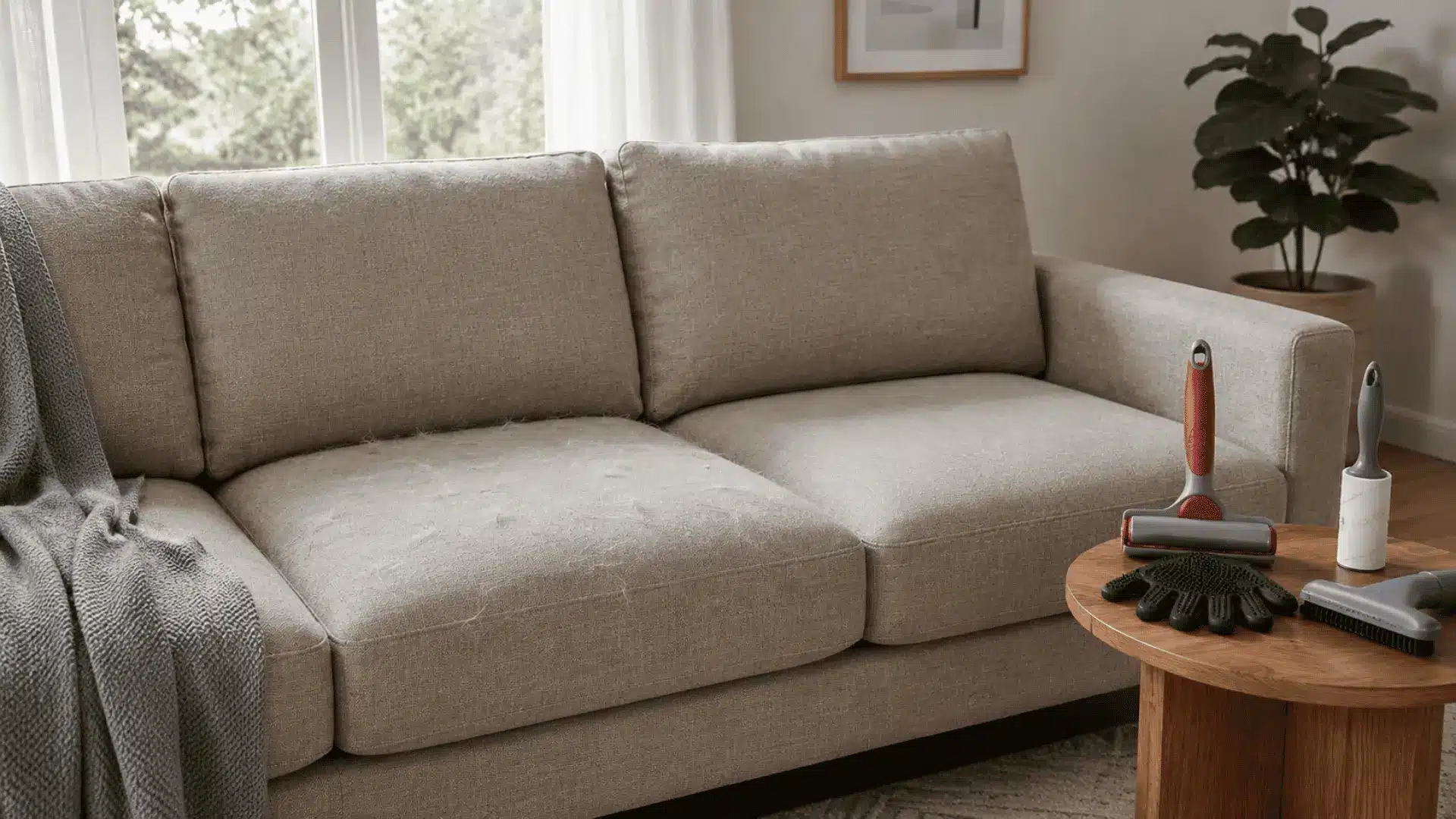
Pet hair has a way of settling into seams, cushions, and corners of a sofa. I know how frustrating it can feel when vacuuming barely lifts fur, and a lint roller runs out after one seat.
In this guide, I’ll show you how to remove pet hair from a couch using simple tools you may already have at home. You’ll get steps for loose hair, deeply stuck fur, cushion gaps, and different couch fabrics.
The advice is based on practical upholstery care and safe cleaning practices, with a reminder to check the fabric label first.
By the end, you’ll have an easy cleaning routine that saves time, protects your couch, and helps keep pet hair under control.
Tools Needed to Remove Pet Hair From a Couch
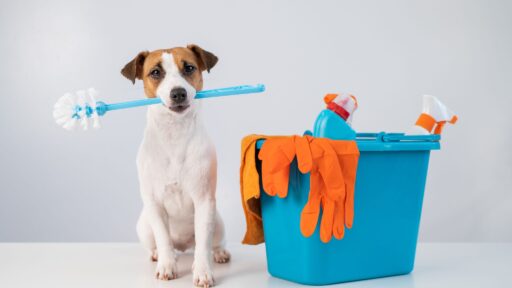
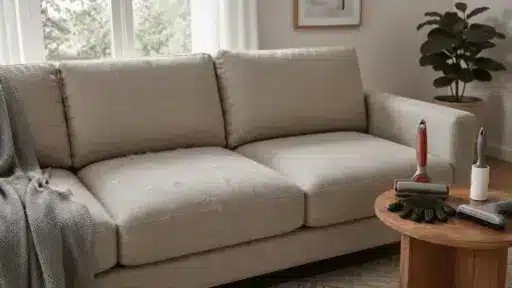
You do not need expensive equipment to clean pet hair from a couch. A few basic tools can loosen, collect, and remove fur from cushions, seams, and corners.
- Vacuum with upholstery attachment
- Rubber cleaning gloves
- Silicone brush or Rubber Squeegee
- Reusable pet hair roller
- Lint roller
- Microfiber cloth
Check the couch care label before using moisture or firm brushing.
How to Remove Pet Hair From a Couch Step by Step
Removing surface hair first makes the deeper cleaning process easier. Follow these nine steps in order, and always use tools that are safe for your couch material.
Step 1: Read the Couch Care Label
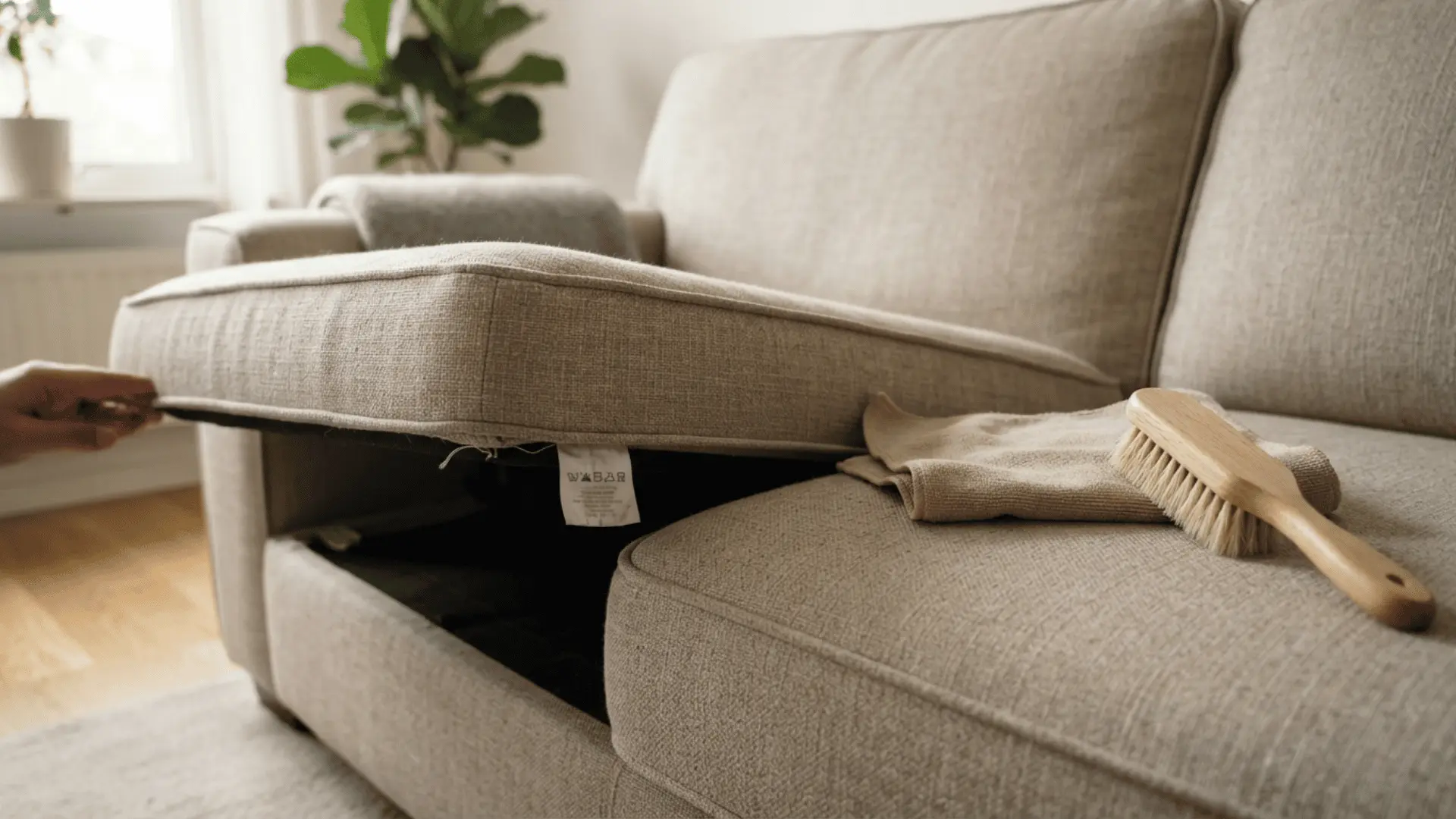
Start by checking the care label under the cushions or frame. The label tells you which cleaning methods are safe for the upholstery.
A “W” usually indicates water-based cleaning, while an “S” indicates solvent-based products. “X” often means vacuuming only. Test every damp cloth, glove, or brush on a hidden spot before using it across the couch.
This small step can prevent water marks, fading, pulled threads, or changes in texture.
- Read the fabric code carefully.
- Test tools on a hidden area.
- Avoid moisture on sensitive upholstery.
Step 2: Remove Cushions, Throws, and Pillows
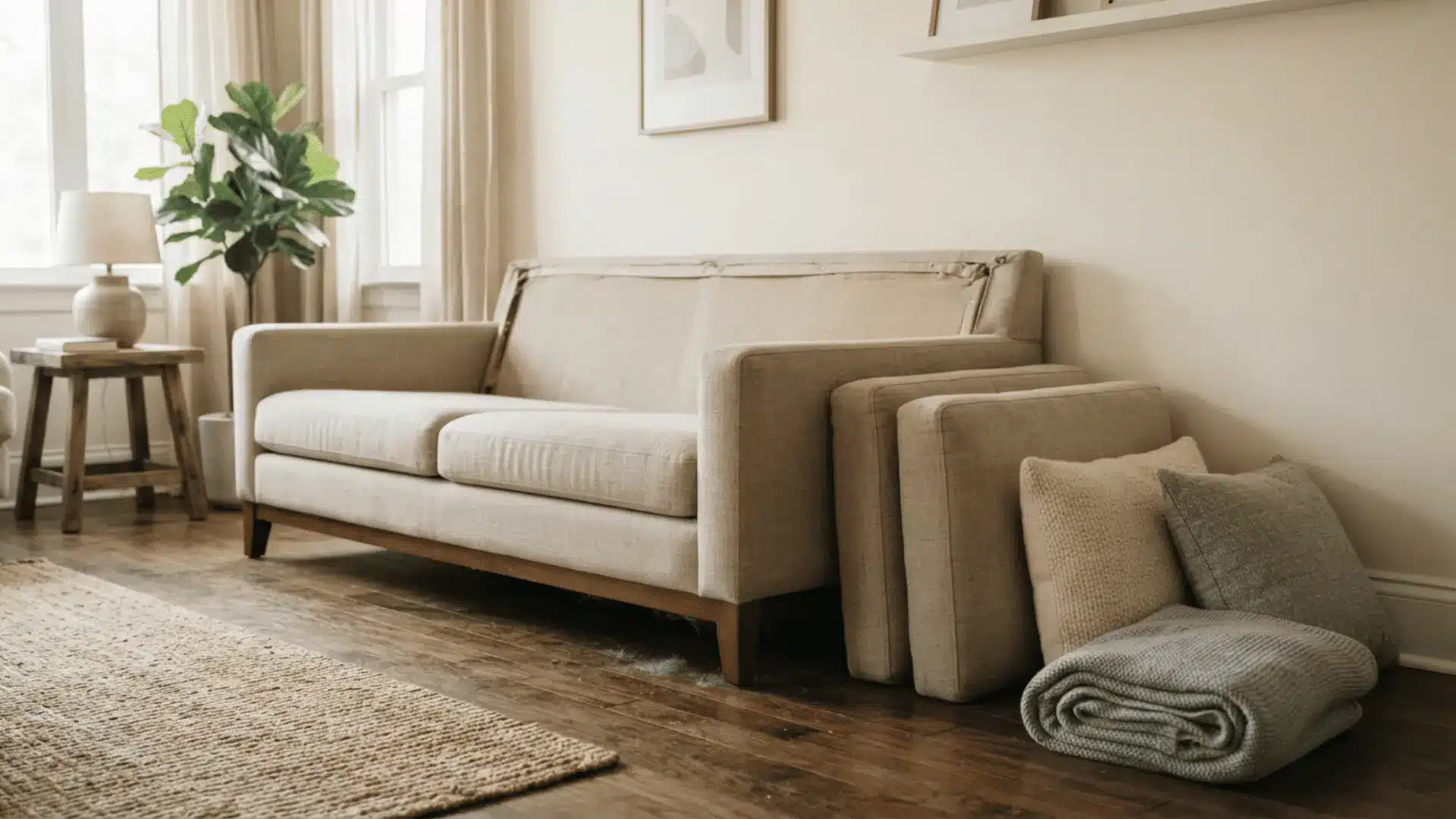
Remove all loose cushions, blankets, throws, and decorative pillows before cleaning. Shake washable items outdoors to release surface hair, then place them aside.
Lift each cushion and inspect the couch base, back edge, armrest gaps, and frame corners. Pet hair often collects in these hidden spaces and may be missed during a quick clean.
Clearing the couch also gives you better access to seams and narrow areas.
- Take off every removable item.
- Shake fabric pieces outside.
- Inspect beneath and behind cushions.
- Separate washable covers for later cleaning.
Step 3: Vacuum the Loose Pet Hair
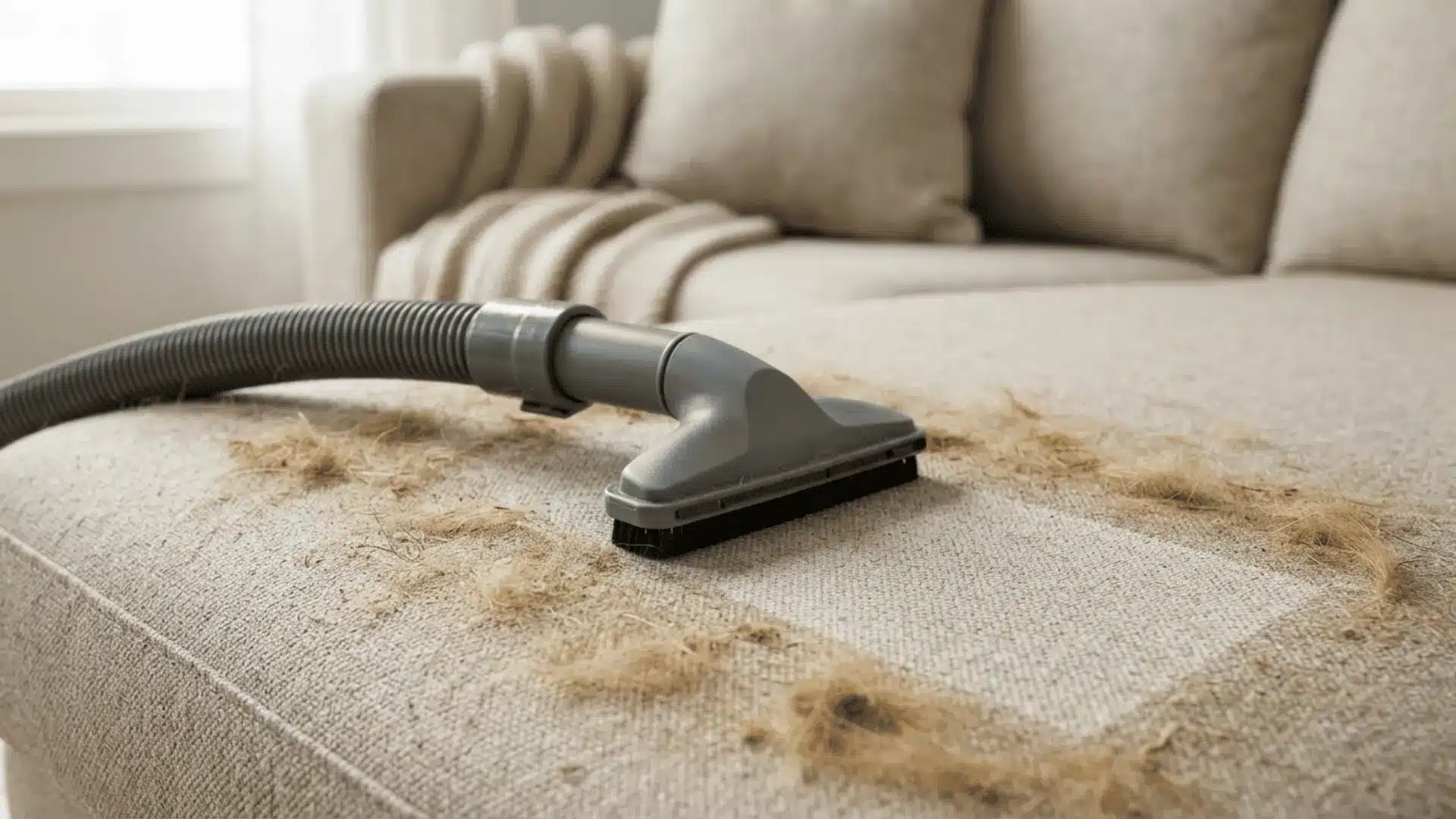
Use a vacuum with an upholstery attachment to remove loose fur, dust, crumbs, and dirt. Start at the top of the backrest and work downward in slow, overlapping passes.
Move across each cushion in multiple directions so the suction can lift hair caught in the fabric weave. Avoid rushing, because fast passes often leave fur behind.
Empty the vacuum bin or bag first if it is already full.
- Vacuum from top to bottom.
- Move slowly across the fabric.
- Repeat passes in another direction.
- Clear the vacuum before starting.
Step 4: Clean Seams and Cushion Gaps
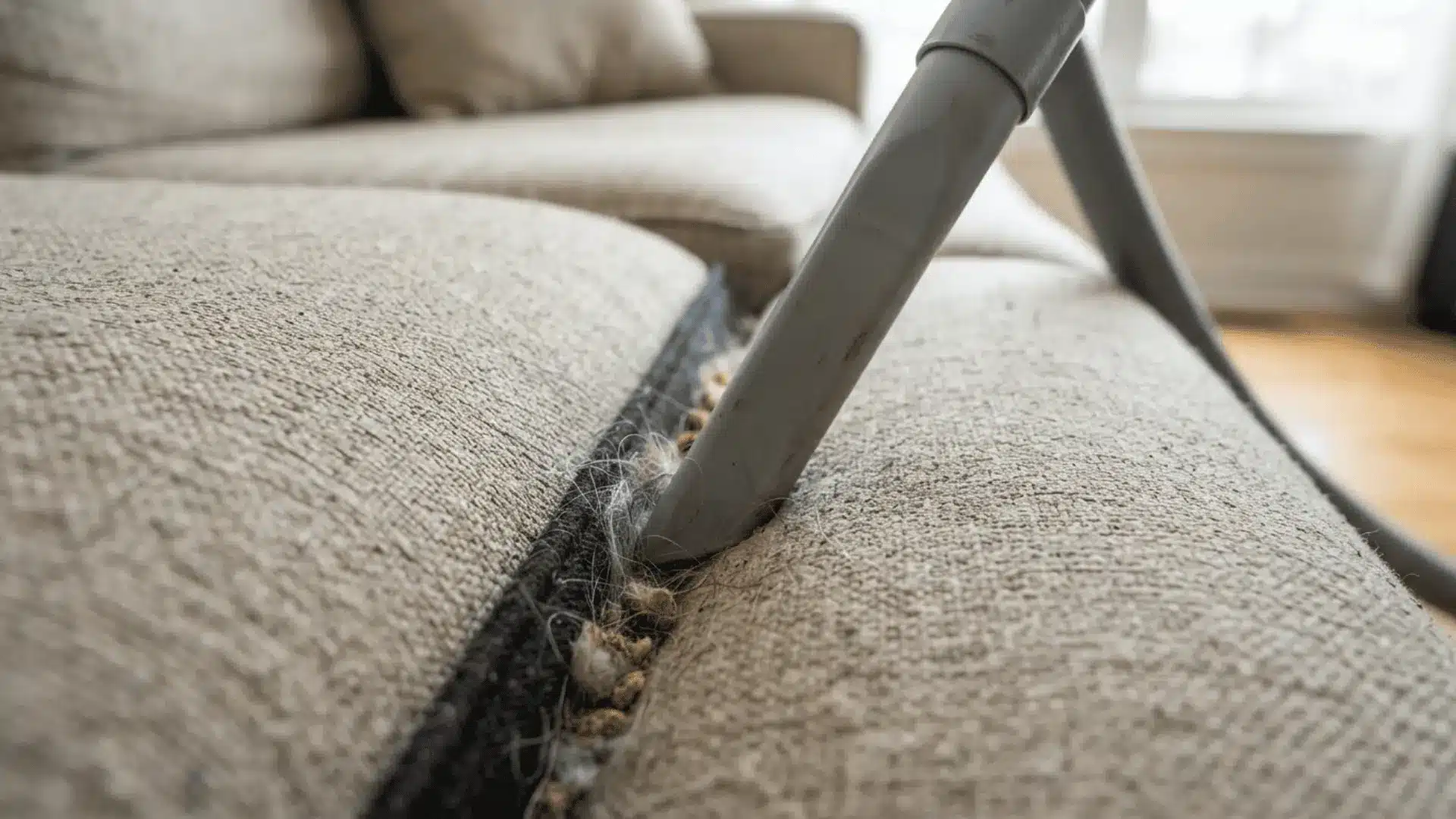
Switch to the crevice attachment for seams, piping, folds, and narrow spaces around the couch frame. Push the tool gently into the gaps between cushions, along armrests, and where the seat meets the backrest.
Use short passes from different angles to pull out trapped clumps. On sectionals or recliners, clean connection points and moving areas carefully.
Do not force the tool into sensitive seams or near exposed mechanisms.
- Focus on cushion gaps and corners.
- Clean around piping and folds.
- Approach recliner parts with care.
- Repeat from a second angle.
Step 5: Gather Hair With a Rubber Glove
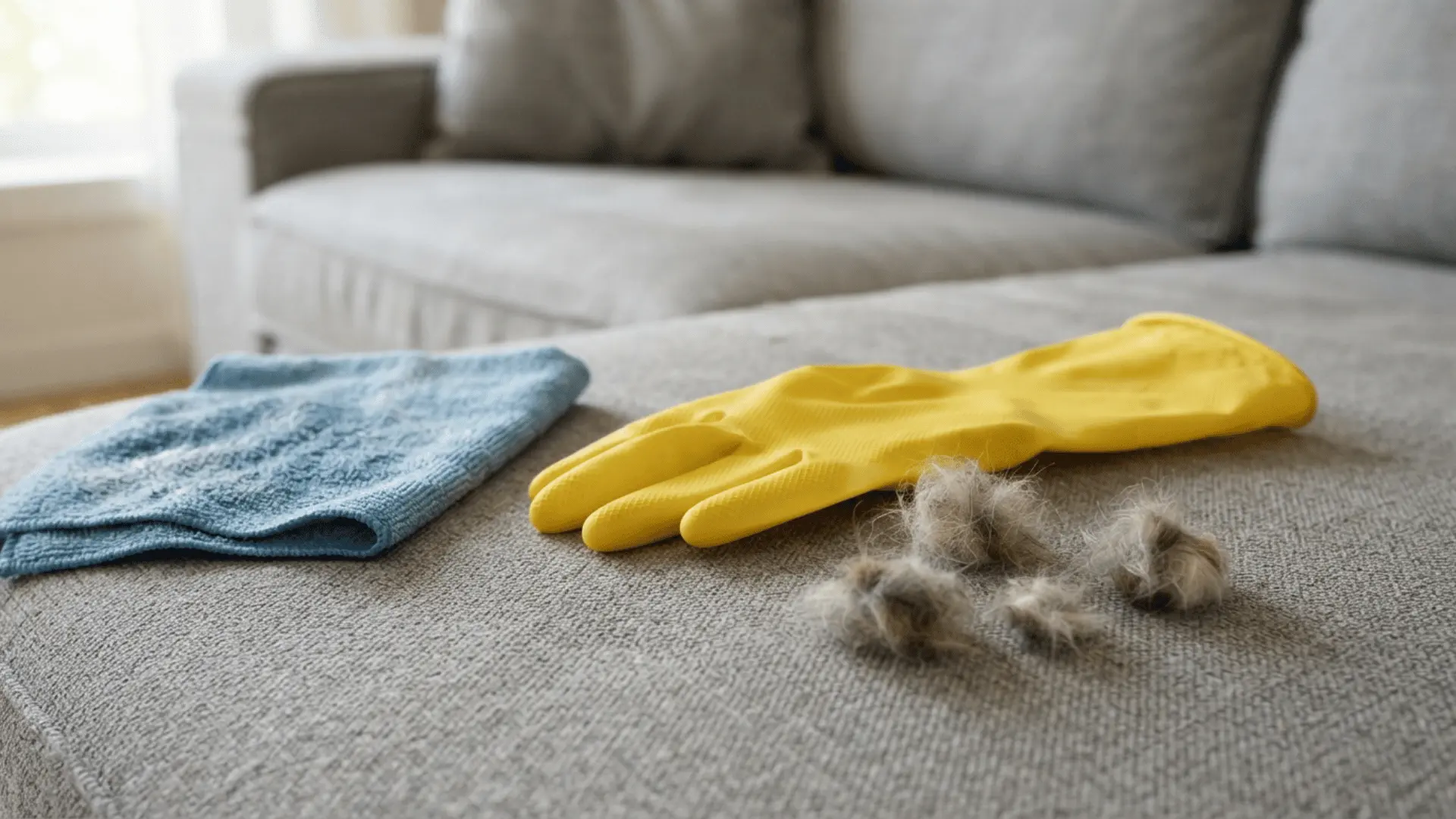
Put on a clean rubber cleaning glove and dampen it very lightly with water. Run your hand across the couch using short strokes in one direction.
The rubber creates friction, causing loose and embedded fur to gather into small clumps. Pick up the clumps as they form instead of pushing them into seams.
Re-dampen the glove only when needed, as excessive water may leave marks or slow the upholstery’s drying.
- Use only a little moisture.
- Wipe in one steady direction.
- Collect clumps as they form.
- Test first on sensitive fabric.
Step 6: Loosen Embedded Hair With a Rubber Tool
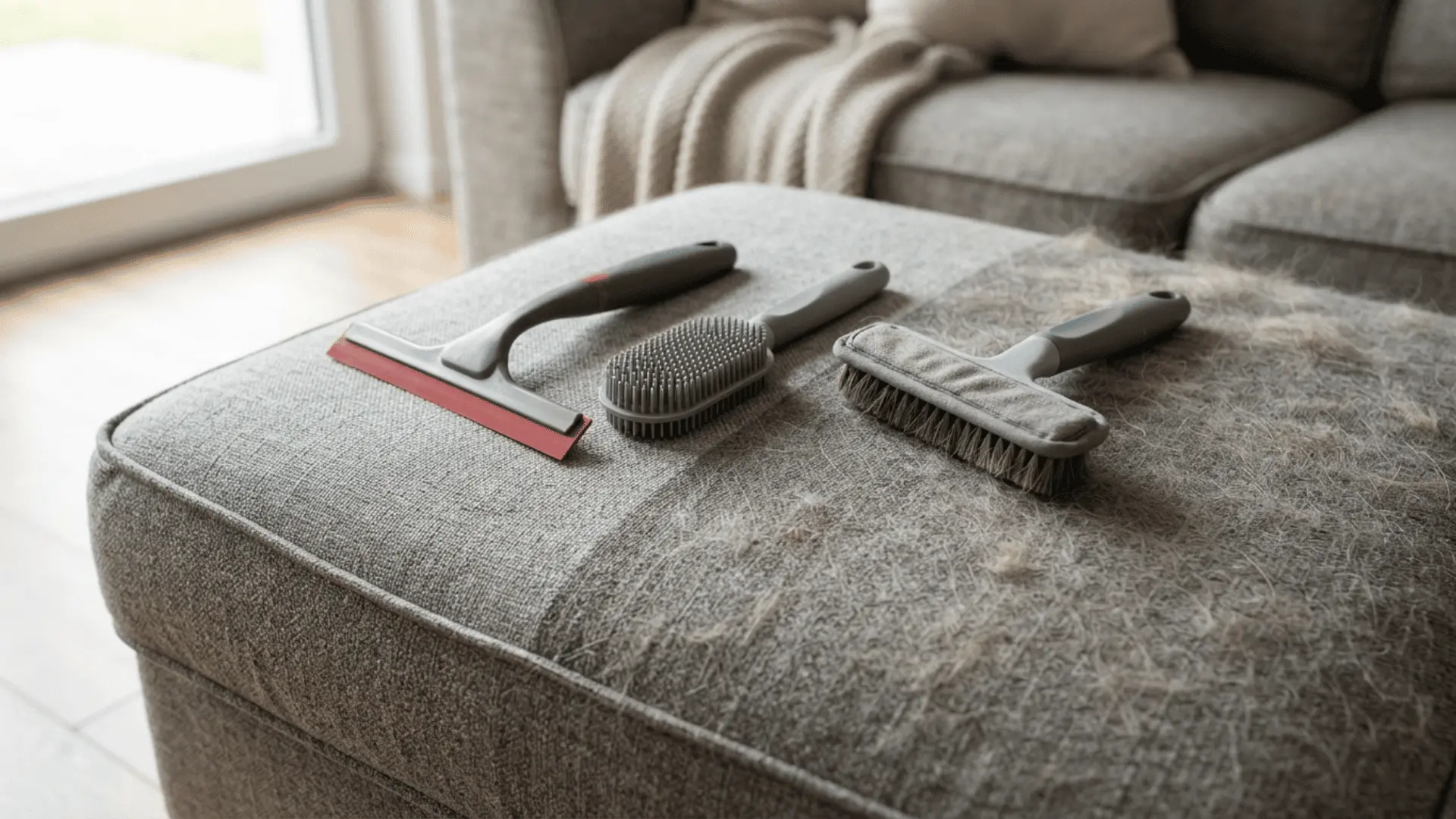
For hair that remains stuck, use a rubber squeegee, silicone brush, or reusable pet-hair tool. Work on one small section at a time and pull the tool toward you with light, even pressure.
Repeat from another direction if the fabric holds hair tightly. These tools work well on flat cushions and textured upholstery, but they may be too rough for velvet, chenille, or loose weaves.
Stop if the surface starts to pill or snag.
- Work in small sections.
- Use light, controlled pressure.
- Change direction for stubborn hair.
- Avoid rough tools on sensitive fabric.
Step 7: Vacuum the Couch a Second Time
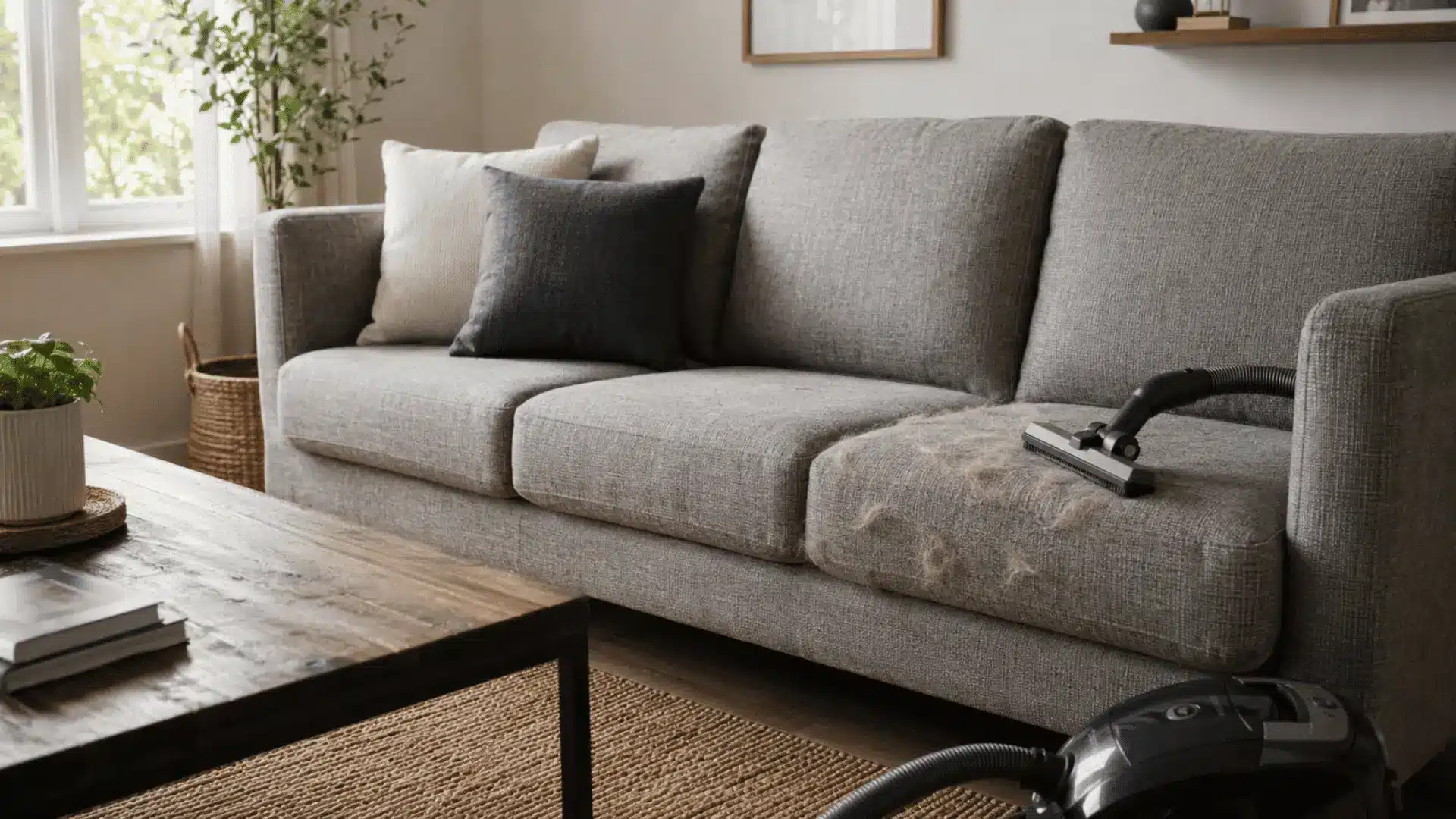
Vacuum the entire couch again after loosening the embedded hair. This second pass collects the clumps created by the glove, brush, or squeegee.
Use the upholstery attachment on broad areas and the crevice tool around edges and seams. Move slowly and inspect the fabric from different angles, since fine pet hair can blend into the couch color.
Repeat any section that still feels rough or looks fuzzy.
- Collect loosened fur with suction.
- Revisit seams and cushion edges.
- Inspect the fabric under good light.
- Repeat only where hair remains.
Step 8: Remove Small Patches With a Lint Roller
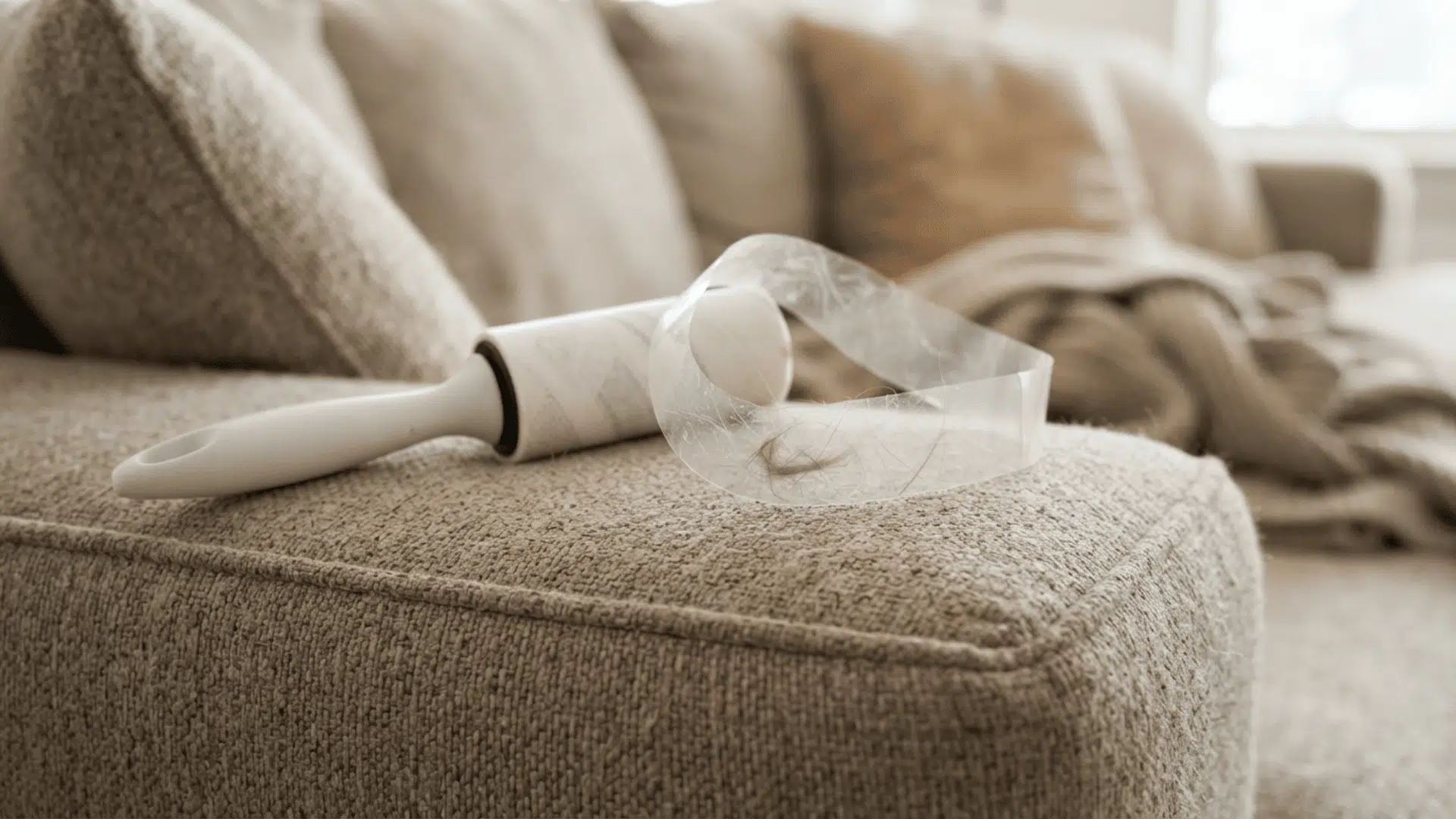
Use a lint roller or wide sticky tape for the final small patches. Roll gently over armrests, cushion fronts, and areas where your pet usually rests.
When using tape, wrap it around your hand with the sticky side facing outward and press it onto the fabric. Replace the sheet or tape once it loses grip.
Adhesive tools are useful for touch-ups, but they are less practical for cleaning a full sofa.
- Target small leftover patches.
- Press instead of rubbing hard.
- Replace tape when it stops sticking.
- Save adhesive tools for finishing work.
Step 9: Wash Covers and Prevent New Buildup
Clean removable covers according to their care labels, then allow every piece to dry fully before putting the couch back together. Remove loose fur before washing so it does not collect inside the machine.
Once the couch is clean, place a washable throw over your pet’s favorite spot and vacuum the upholstery each week. Regular brushing can also reduce the amount of loose hair that reaches the sofa.
- Follow washing and drying instructions.
- Remove hair before machine washing.
- Use a washable protective throw.
- Vacuum weekly to prevent buildup.
How to Remove Embedded Pet Hair From Couch Fabric
Deeply trapped fur usually needs friction before suction can lift it away. The steps below show how to remove pet hair from couch fabric without using harsh or damaging tools.
- Work in Small Sections: Clean one cushion area at a time so you can loosen and collect the hair before it spreads.
- Use a Damp Rubber Glove: Lightly dampen the glove and rub the fabric in short strokes to gather stuck hair into clumps.
- Try a Silicone Brush: Gently move the brush across textured fabric to lift fur from deep within the weave.
- Change Cleaning Directions: Brush or wipe the surface from multiple angles, as hair may be trapped between crossed fabric fibers.
- Vacuum Slowly After Brushing: Use an upholstery attachment and make overlapping passes to collect the loosened hair and fine debris.
- Clean Seams With a Crevice Tool: Run the narrow attachment along piping, cushion edges, and gaps where compacted fur tends to collect.
- Finish With a Lint Roller: Press the roller over small remaining patches after most of the embedded hair has been removed.
- Avoid Sharp Scraping Tools: Razors, metal scrapers, and rough stones may pull threads, cause pilling, or damage sensitive upholstery.
Best Pet Hair Removal Method for Different Couch Materials
Each upholstery type holds fur differently, so the safest tool can change from one couch to another. Use this chart to decide how to remove pet hair from couch fabric without leaving marks or wear.
| Couch Material | Best Method | Avoid |
|---|---|---|
| Microfiber | Rubber glove, then vacuum | Too much water |
| Cotton | Reusable roller or vacuum | Rough scraping |
| Linen | Gentle rubber brush | Heavy pressure |
| Velvet | Vacuum in the fabric direction | Brushing against the nap |
| Chenille | Silicone brush with light strokes | Stiff brushes |
| Leather | Dry microfiber cloth | Sharp tools |
| Faux leather | Slightly damp cloth | Abrasive cleaners |
Pet Hair Removal Methods Recommended by Pet Owners
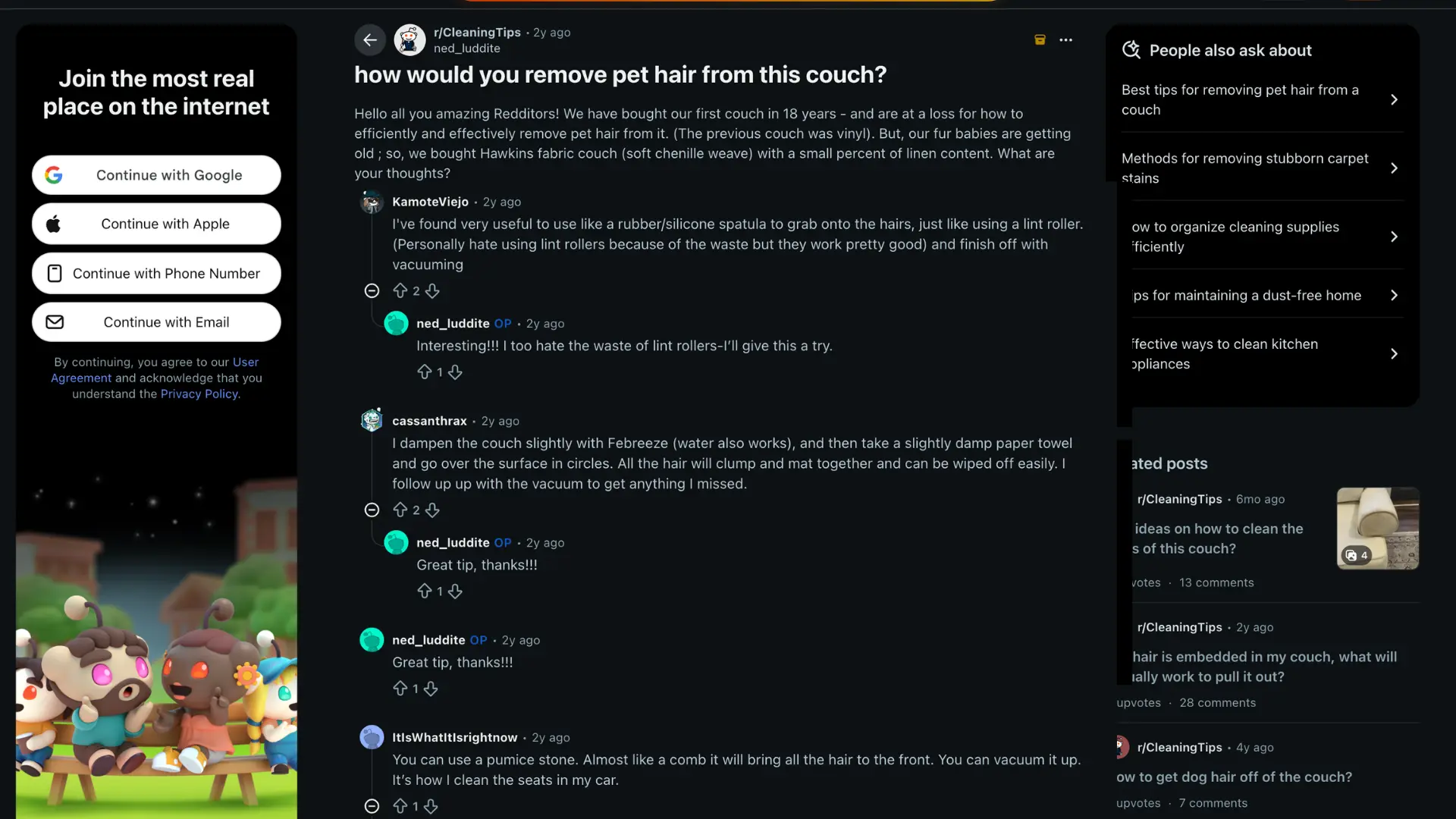
Reddit users favor tools that loosen fur before the final vacuuming pass. One pet owner uses a rubber or silicone spatula to collect hair without creating the waste associated with disposable lint rollers.
Another user lightly dampens the couch and wipes it in circles with a damp paper towel. This makes loose hair form clumps that are easier to collect. They then vacuum the surface to pick up anything left behind.
A third commenter recommends starting with a rubber-edged tool, followed by a reusable ChomChom-style roller. A sticky lint roller can remove the last stubborn strands when a spotless finish is needed.
The shared advice is simple: lift embedded hair with friction, gather it into piles, and vacuum afterward. Test each method on a hidden spot first, especially on chenille or loosely woven upholstery.
Best Pet Hair Removers for Couches Compared
The Right Tool Depends on Your Couch Fabric, the Amount of Shedding, and How Deeply the Fur Is Stuck. This Comparison Can Help You Choose how To Safely and Quickly Remove Pet Hair from Couch Surfaces.
| Pet Hair Remover | Best For | Main Benefit | Limitation |
| Rubber Cleaning Glove | Armrests, Corners, and Curved Areas | Gathers Embedded Hair Into Easy-To-Remove Clumps | Takes Longer on Large Couches |
| Rubber Squeegee | Flat Cushions and Backrests | Pulls Stubborn Fur from Textured Fabric Quickly | Hard to Use Around Seams |
| Silicone Pet Hair Brush | Thick and Deeply Trapped Hair | Creates Strong Friction without Sticky Sheets | Needs Regular Cleaning During Use |
| Reusable Pet Hair Roller | Weekly Couch Cleaning | Covers Large Areas and Creates No Waste | Works Poorly on Loose Fabric |
| Vacuum Upholstery Tool | Loose Hair, Dust, and Dander | Cleans Large Surfaces with Less Effort | May Miss Deeply Embedded Fur |
| Motorized Pet Attachment | Heavy Shedding and Dense Upholstery | Uses Rotating Bristles to Lift Packed Hair | Can Be Rough on sensitive Fabric |
| Lint Roller | Small Patches and Quick Touch-Ups | Simple, Fast, and Easy to Store | Disposable Sheets Run out Quickly |
| Sticky Tape | Emergency Spot Cleaning | Works when No Special Tool Is Available | Slow and Wasteful for Large Areas |
| Microfiber Cloth | Leather and Faux Leather Couches | Wipes Loose Hair from Smooth Surfaces | Not Useful on Textured Upholstery |
A Simple Couch Cleaning Schedule for Pet Owners
Remove visible pet hair from your couch daily with a reusable roller or rubber glove, especially around your pet’s favorite spot. Every few days, shake out throws and vacuum areas with heavy buildup.
Once a week, clean the cushions, armrests, backrests, seams, and spaces underneath removable cushions. Use a silicone brush or rubber tool every two weeks to lift embedded fur from textured fabric.
Wash removable covers, blankets, and pillowcases once a month according to their care labels. Every three to six months, clean the couch frame, deep gaps, and floor underneath.
During shedding season, brush your pet more often and increase couch cleaning to several times a week.
Tips to Prevent Pet Hair from Building Up on Your Couch
Small daily habits can keep loose fur from settling deep into cushions, seams, and fabric. They also show how to remove pet hair from couch surfaces faster during regular cleaning.
- Use a Washable Throw: Cover your pet’s favorite seat, and wash the throw once hair starts to collect.
- Brush Your Pet Often: Regular grooming removes loose fur before it reaches the couch and other furniture.
- Vacuum Every Week: Clean cushions, armrests, backrests, and seams before hair becomes pressed into the fabric.
- Keep a Roller Nearby: Use a reusable pet hair roller for quick touch-ups after your pet leaves the couch.
- Wash Pet Bedding Regularly: Clean beds and blankets to prevent loose fur from spreading back onto nearby furniture.
- Create a Pet Only Spot: Place a soft bed beside the couch so your pet has another comfortable place to rest.
- Clean During Shedding Season: Increase grooming and vacuuming when your pet naturally loses more hair.
- Rotate Couch Cushions: Turn and switch cushions so fur and wear do not build up in one area.
Common Mistakes to Avoid when Removing Pet Hair
The wrong method can push fur deeper or damage upholstery. Knowing how to safely remove pet hair from couch fabric yields better results.
| Mistake | Problem | Better Method |
|---|---|---|
| Vacuuming too fast | Leaves hair behind | Use slow, overlapping passes |
| Using too much water | May stain the fabric | Use a lightly damp glove |
| Scrubbing hard | Can damage fibers | Apply gentle pressure |
| Ignoring seams | Hidden hair remains | Use a crevice tool |
| Using sharp tools | May cut upholstery | Choose rubber or silicone |
| Washing covers first | Hair can clog the washer | Remove loose fur beforehand |
Final Thoughts
Keeping pet hair under control does not require expensive tools. A simple routine with a vacuum, a rubber glove, a reusable roller, or a silicone brush can make your couch feel cleaner and more comfortable.
The key is to remove loose fur often, clean seams before buildup gets heavy, and use methods that suit your couch fabric. Small habits, such as brushing your pet and washing throws, can save you time.
Your couch does not need to stay perfect every day. It only needs a routine that works for your home, your pet, and your schedule. Try one method, adjust it as needed, and keep the tools that give you the best results.
What has worked best on your couch? Share your experience and favorite pet hair removal tip in the comments below.
Frequently Asked Questions
Can Pet Hair Cause Odors in Couch Cushions?
Yes, trapped fur can hold dander, body oils, saliva, and moisture that create lingering odors.
Does Static Electricity Make Pet Hair Harder to Remove?
Yes, static charge makes light strands cling more firmly to dry upholstery and fabric fibers.
Why Does My Couch Still Look Hairy After Vacuuming?
Hair may be embedded in the weave, so loosen it with a rubber tool before vacuuming slowly again.
Can Pet Hair Affect People with Allergies?
Fur can carry dander, pollen, mold, and dust that may trigger allergy or asthma symptoms.

Certified Veterinary Technician Ethan Brooks has cared for companion animals in clinics and shelters for 13 years. Joining us in 2025, he shares health advice, training hacks, and product reviews that keep pets happy and owners informed. Off duty, Ethan rehabilitates injured wildlife and competes in agility trials with his border collie, Scout.