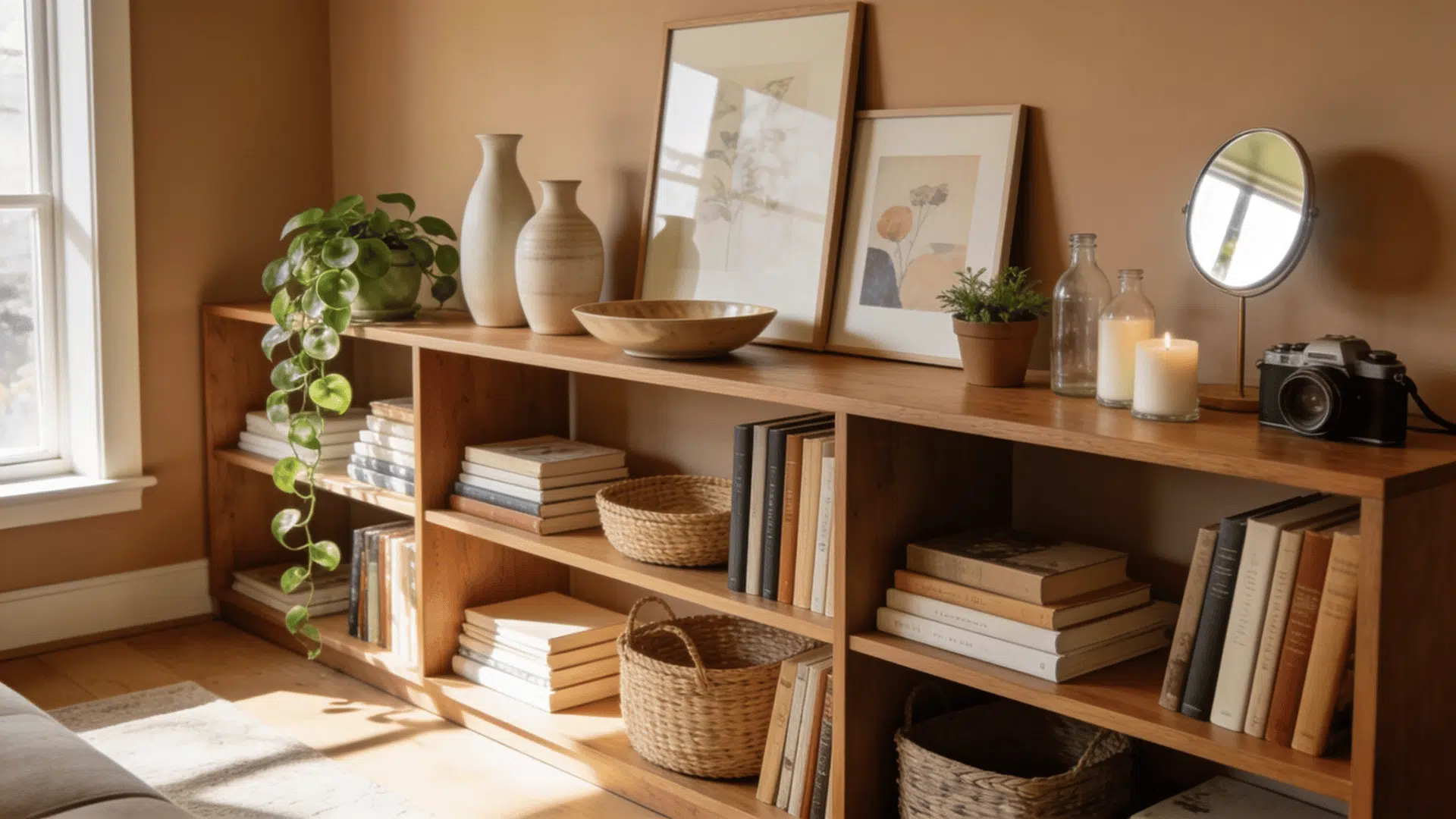

Do your shelves feel a little bare, or maybe a bit cluttered and random? I’ve been there. A shelf can go from awkward to one of my favorite spots in a room with the right pieces and a little know-how.
The good news is you don’t need a designer or a big budget to get there.
In this guide, I’m sharing 21 shelf decor ideas you can mix and match, plus quick styling tips, room-by-room picks, and the small mistakes that trip most of us up.
Open shelves, floating shelves, or a full bookcase; you’ll find something here to make your space feel more like you. And if you’re renting, don’t skip the styling section below; every idea here works without putting a single hole in the wall.
Shelf Decor Ideas
From practical book arrangements to personal accents, these shelf decor ideas will help you create balanced displays that feel stylish, organized, welcoming, and uniquely yours.
Books and Bookish Touches
Books are the foundation of any great shelf, adding color, shape, and personality to your space.
1. Stacked Books (Mix Horizontal and Vertical)
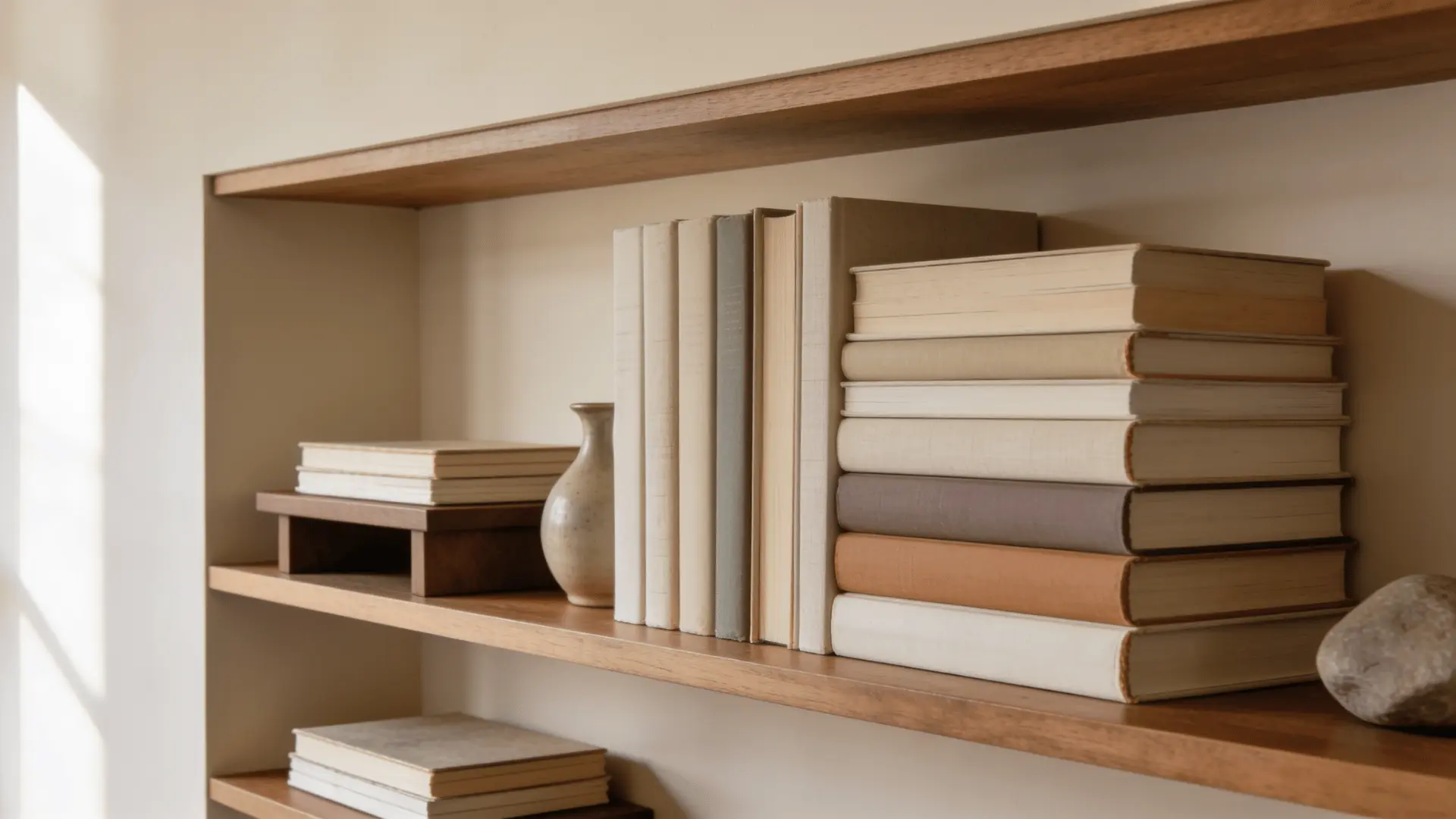
Books are my absolute favorite starting point for any shelf setup. I always recommend using a mix of horizontal and vertical stacks to keep the eye moving.
Laying three or four books flat creates a sturdy base for small decorative pieces, such as a bowl or a plant. Then, standing a few books upright right next to them breaks up the straight lines.
This simple trick adds volume and makes your shelves look full without feeling messy.
2. Hardcovers Turned Spine-in or Spine-out for Color
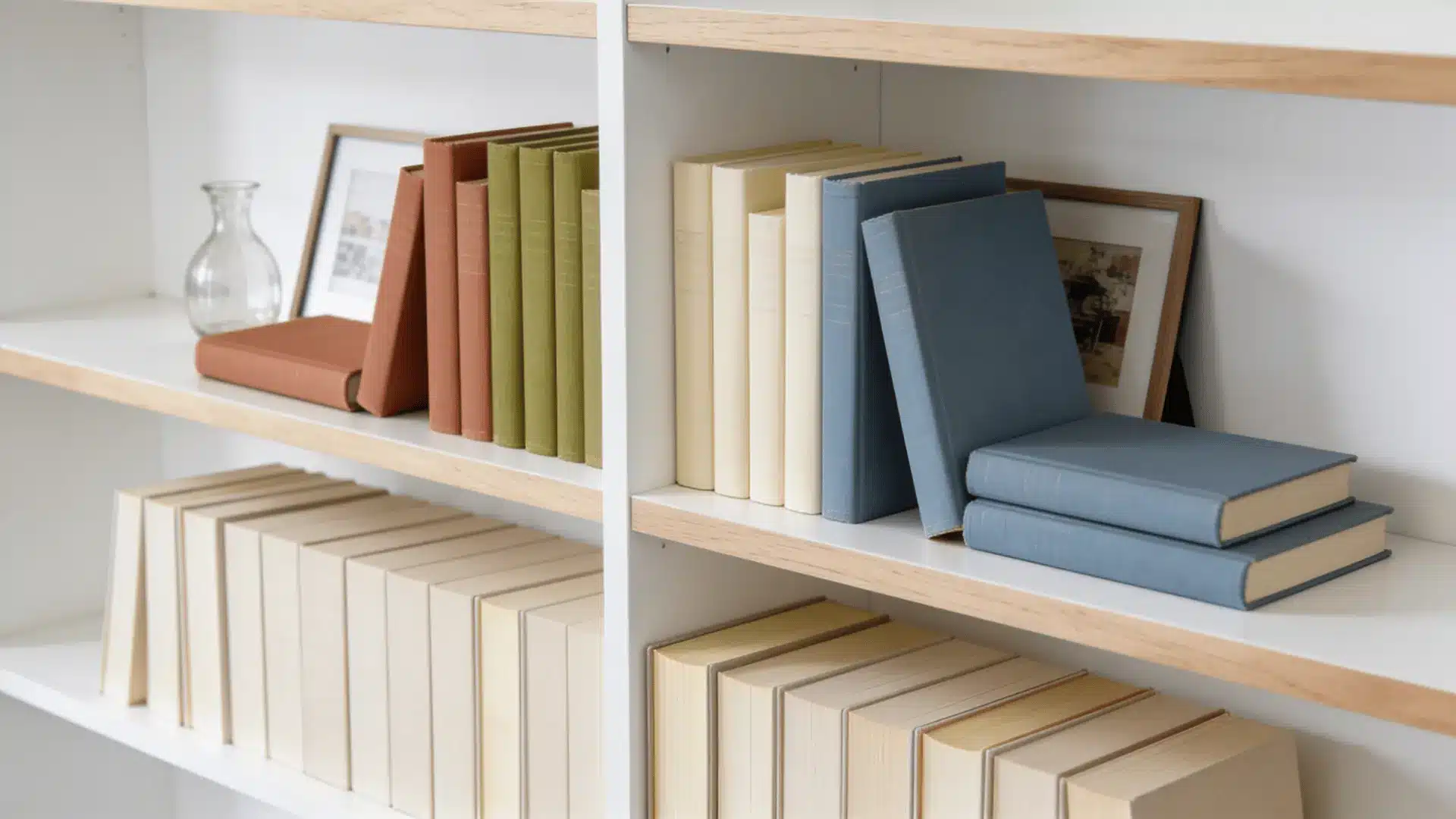
You can easily use books to control the color scheme of your entire room. If you want a bright and playful space, face the colorful spines out to show off your favorite titles.
When I need a calmer, more neutral look, I turn the books around so the creamy paper pages face the front. This spine-in method strips away visual clutter and gives your shelves a clean, fresh feel using things you already own.
3. Sculptural Bookends
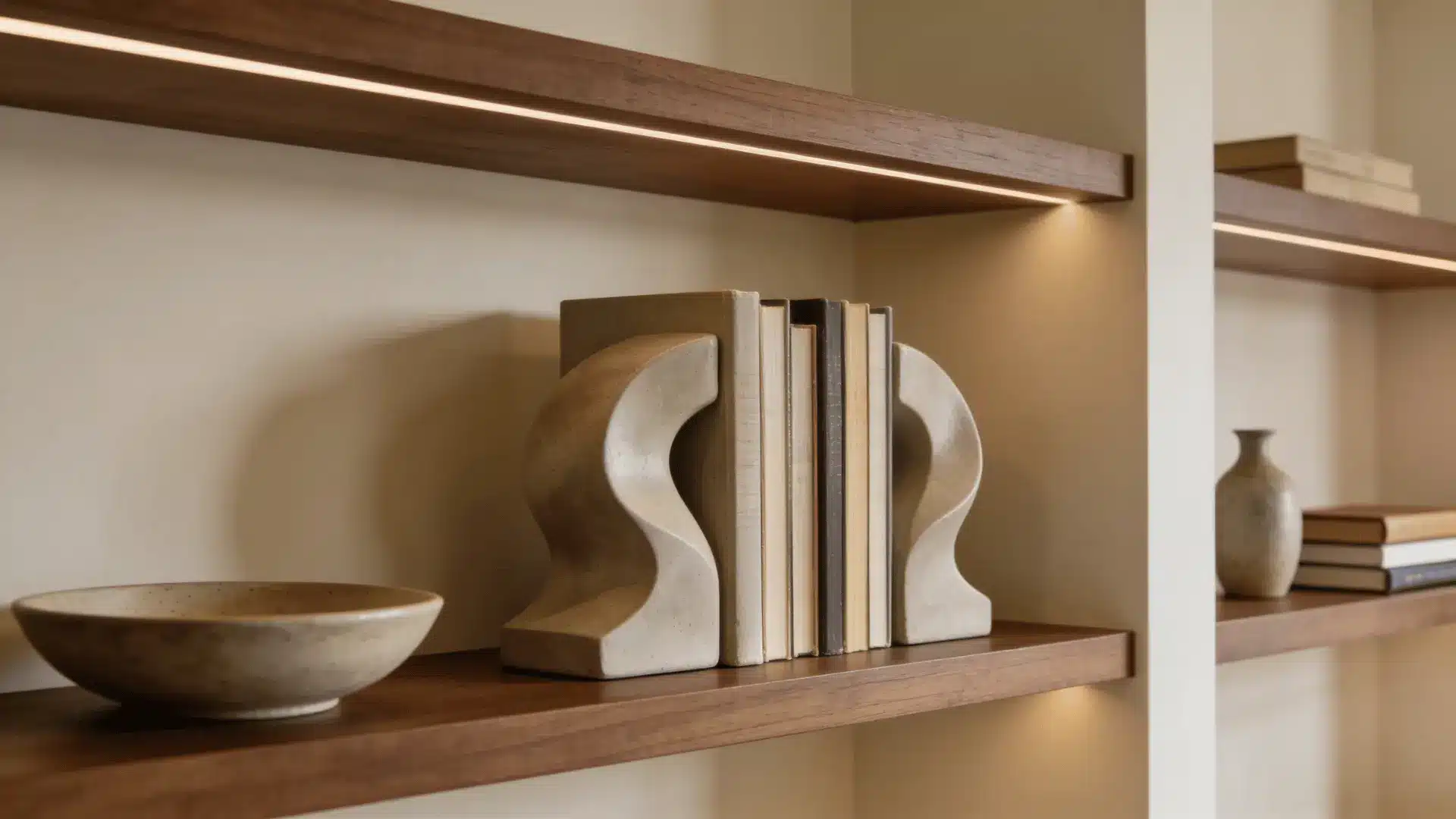
You obviously need something to hold your vertical books in place, but bookends do not have to be boring. I love using heavy, sculptural bookends made of marble, concrete, or raw wood.
They act as standalone art pieces while also serving a practical purpose. A unique shape breaks up the rectangular lines of the books and adds a touch of personality.
Try using two completely different objects as bookends to make the setup feel more collected.
4. Framed Art Prints or Photos (Leaning, Not Hung)
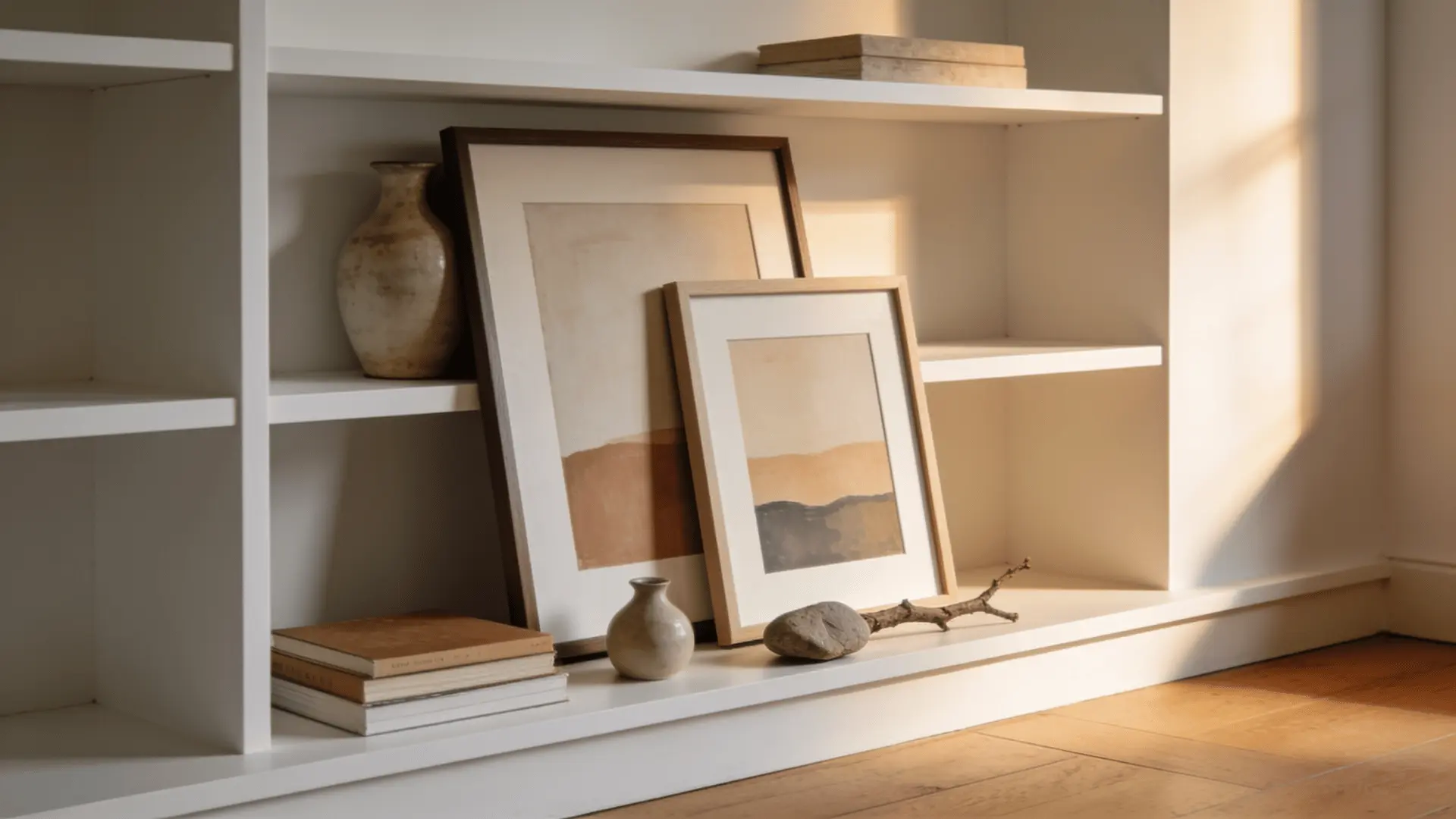
Shelves are a great place to display art without having to deal with nails and hammers. I prefer to lean framed prints or family photos against the back wall of the shelf. It creates a relaxed, casual feel that looks very intentional.
Pushing a frame to the back also adds depth, giving you room to place a small candle or a plant right in front of it. It is an easy way to fill empty vertical space.
5. A Small Standing Print or Flip Calendar
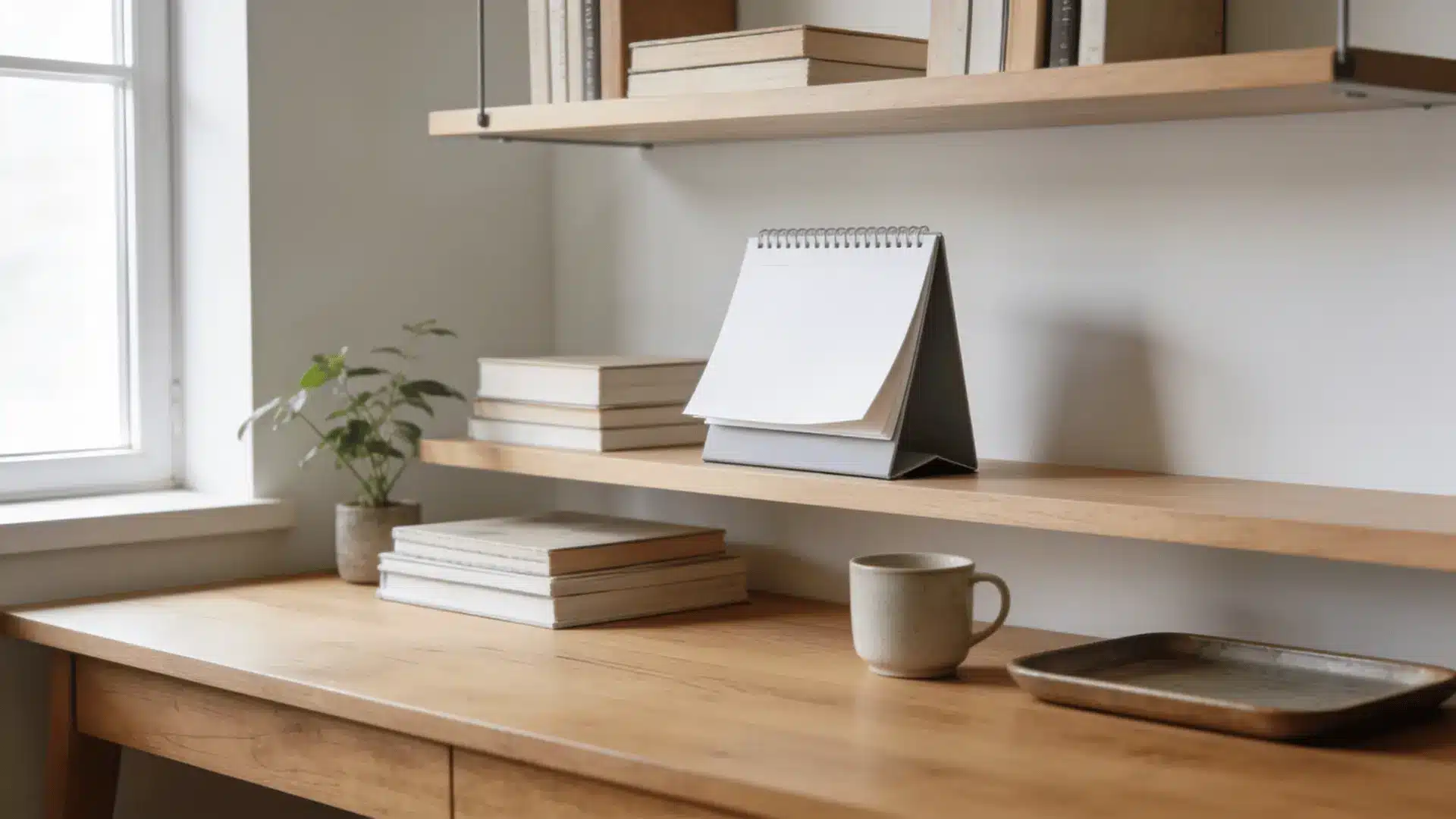
Little details make a big difference when filling in the small gaps on your shelves. A small standing art print or a daily flip calendar is perfect for those tiny, awkward spots that need a little something extra.
I like placing these right on top of a flat stack of books or tucking them next to a tall vase. They give your guests something interesting to look at up close and keep the display feeling personal.
Vases, Bowls, and Vessels
These pieces bring different shapes and practical storage to your display.
6. Ceramic or Glass Vases in Varied Heights
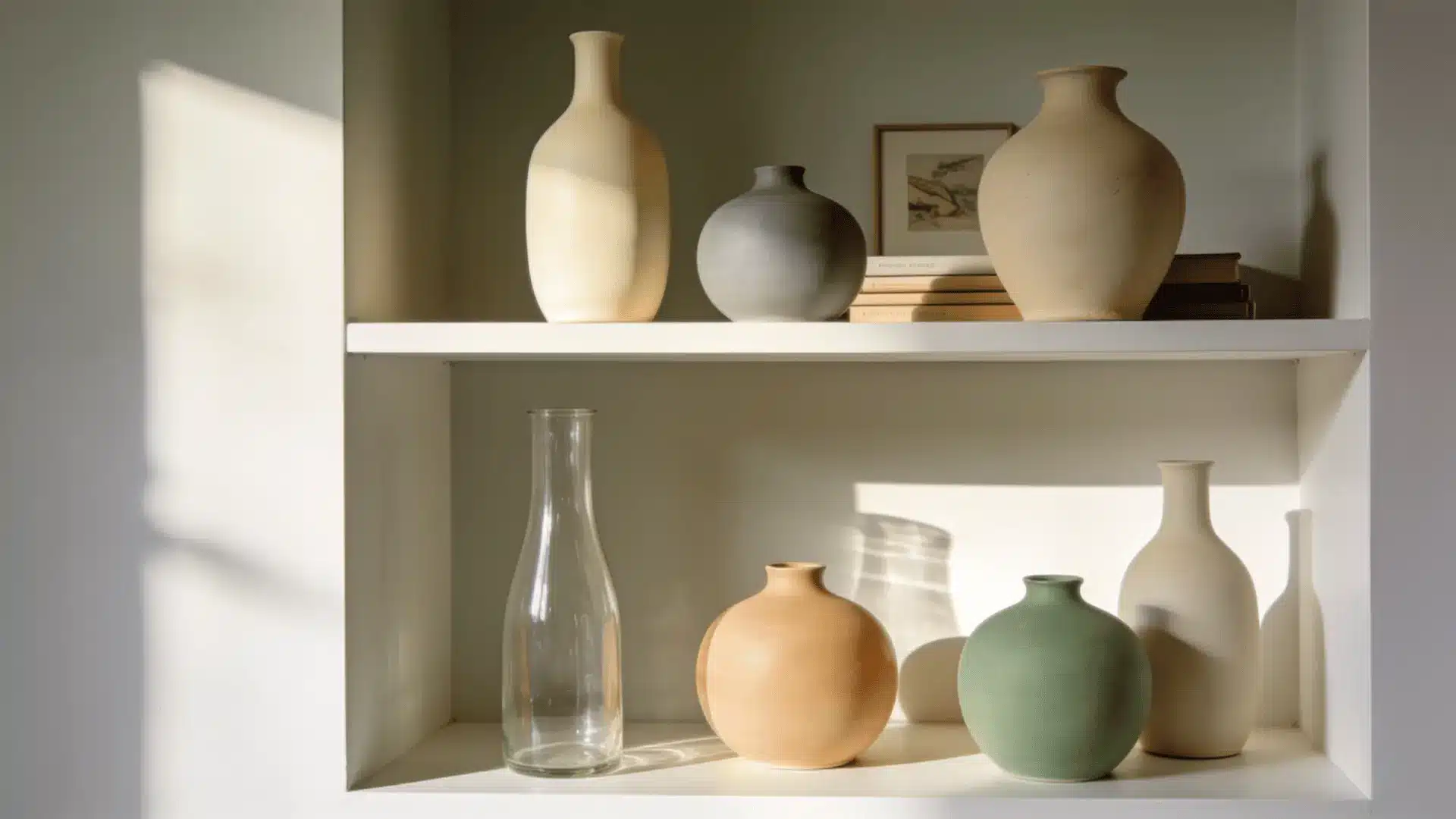
Vases are essential for adding variety in height to your shelves. I like to group two or three ceramic or glass vases, making sure they are not all the same size.
A tall, slender glass vase pairs perfectly with a short, round ceramic one. This contrast keeps the display from looking flat.
You do not even need to put flowers inside them; the shapes and materials alone add enough texture and visual interest to the space.
7. A Shallow Catchall Bowl for Small Bits
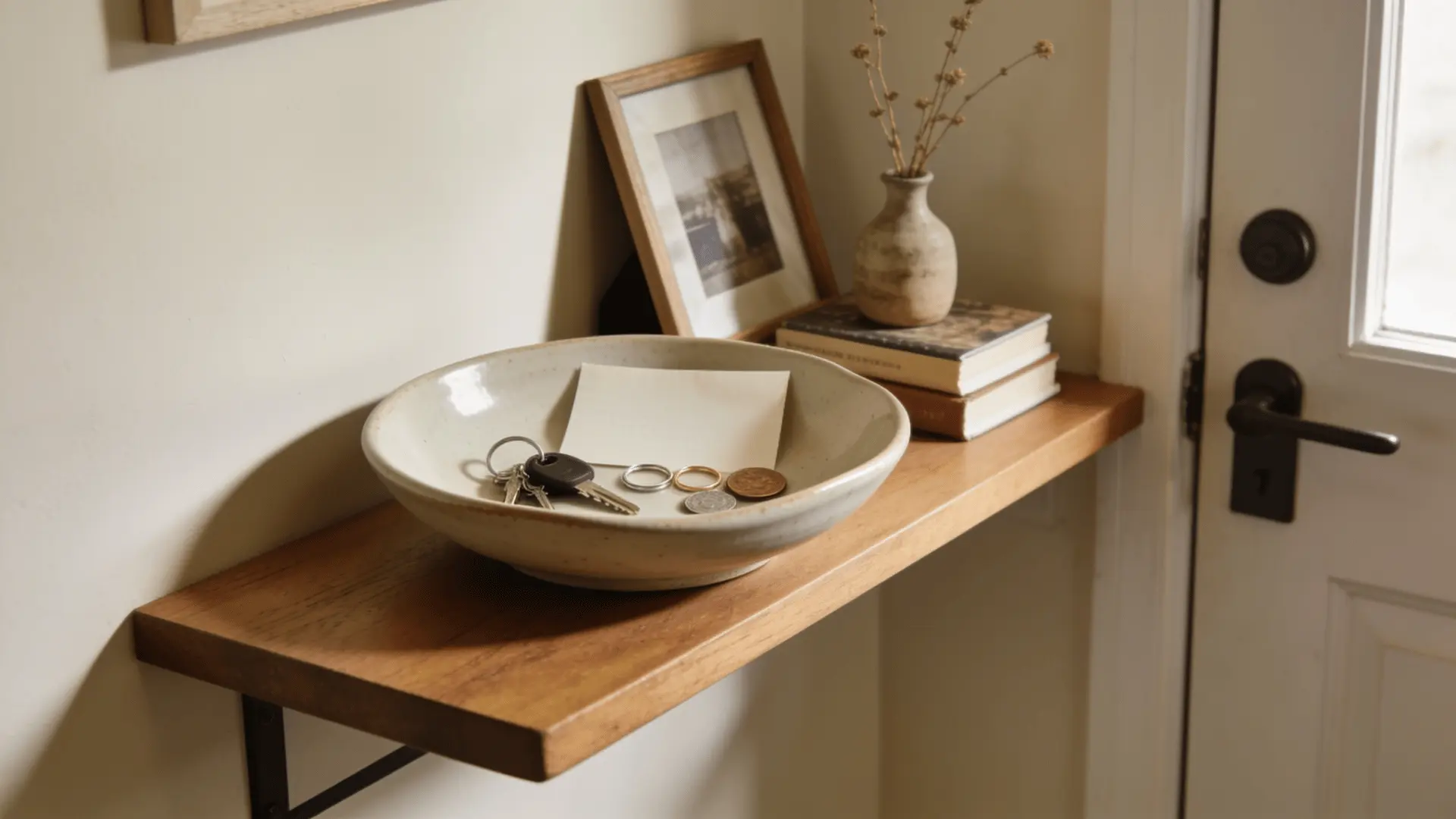
A shallow catchall bowl is both highly practical and highly decorative. I always place one on a lower shelf to hold small bits like loose keys, matches, or random coins.
It keeps those tiny items from creating a mess across your surfaces. Even when it is empty, a textured clay bowl or a smooth wooden bowl looks great sitting on top of a stack of books.
It brings a nice, soft curve to balance out straight edges.
8. Woven Baskets or Fabric Bins
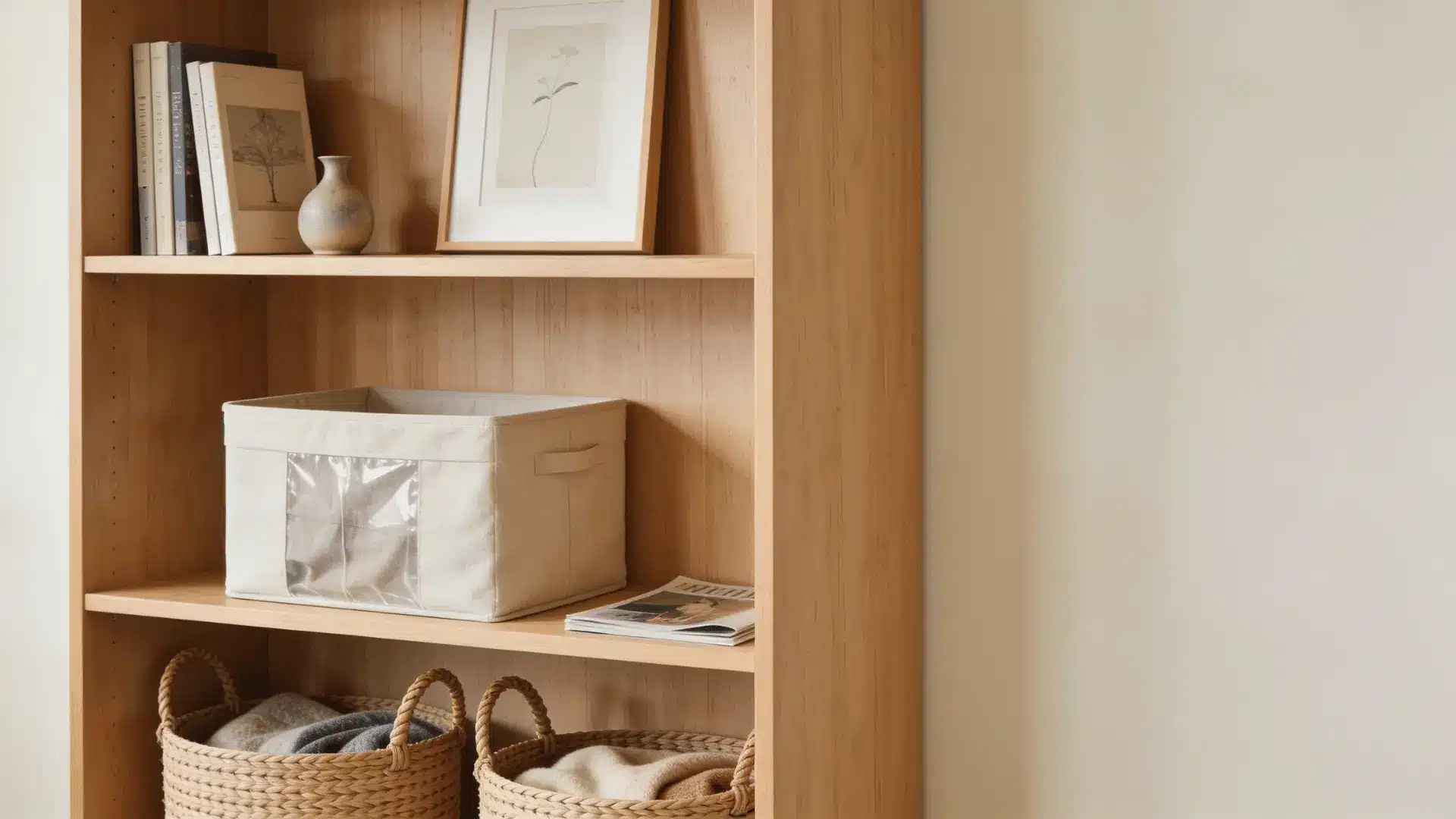
When you have too many small things to display, woven baskets or fabric bins are your best friend. They easily hide the items you do not want to see, like charging cables or extra remotes.
I love the warm, natural texture that a wicker or rattan basket brings to a cold metal or wood shelf. They quickly fill larger empty gaps and make the whole room feel much more organized and comfortable.
9. A Tray to Corral Loose Pieces Into a Set
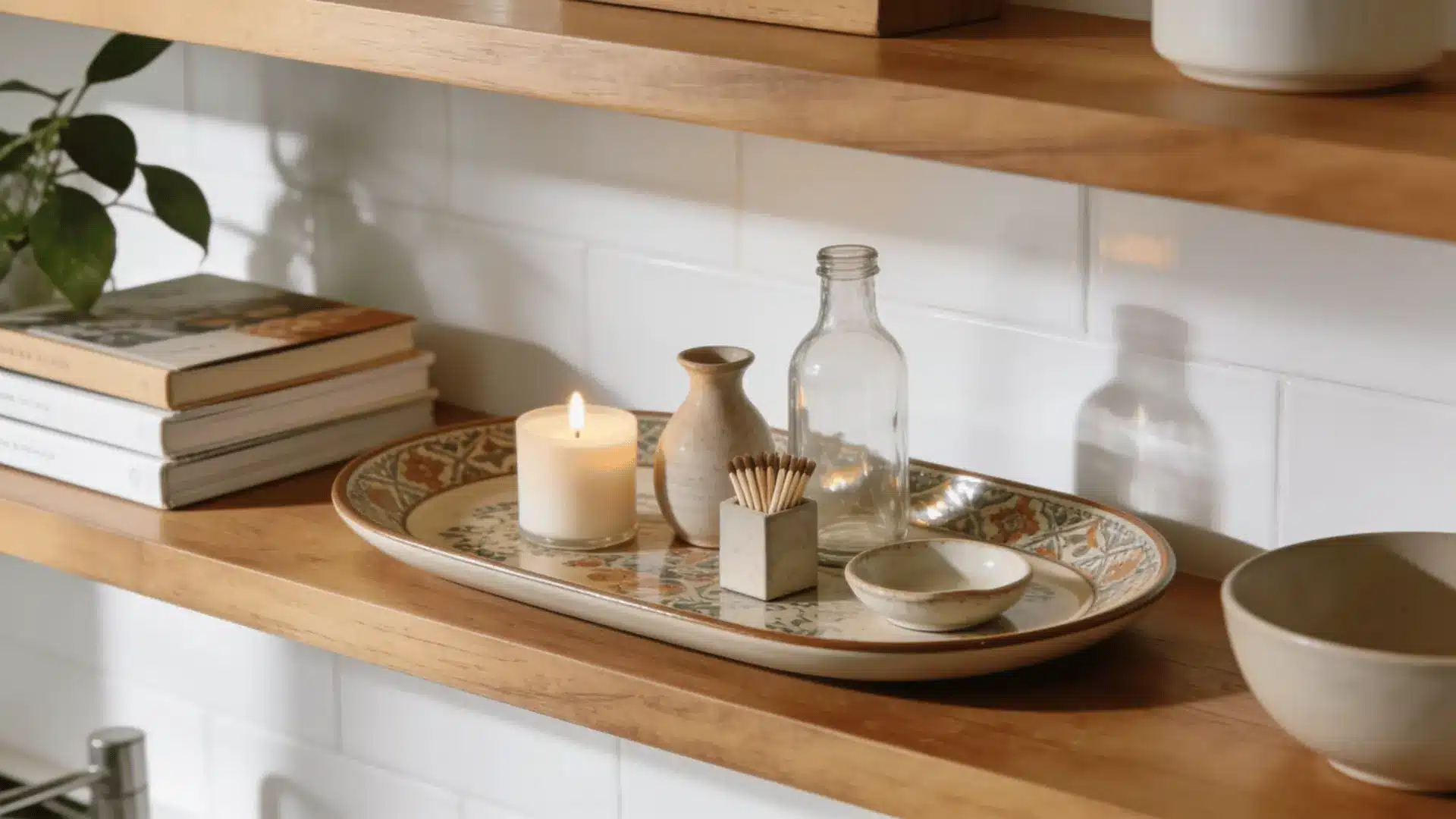
If you have a few small decor pieces that look messy on their own, a simple tray solves the problem immediately. I use a shallow metal or wooden tray to gather random items, like a small candle, a box of matches, and a tiny plant.
Setting them in the tray makes them look like a planned collection rather than clutter. It acts as an anchor, giving your smaller objects a specific home on the shelf.
10. Apothecary Jars or Glass Bottles
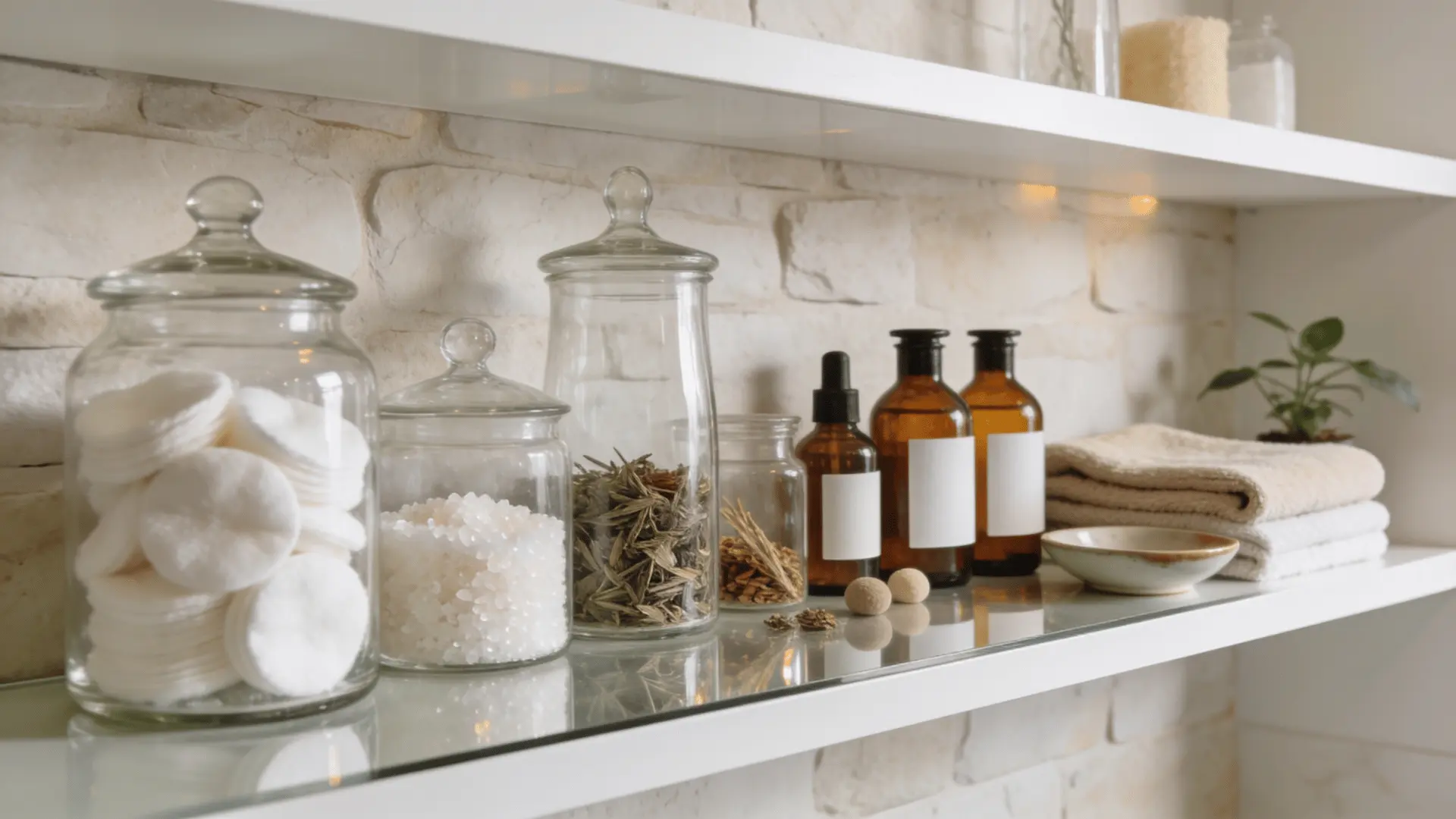
Apothecary jars and old glass bottles add a really fun, classic feel to any room. You can fill clear jars with useful things like cotton swabs in the bathroom or coffee beans in the kitchen.
In a living room, I prefer to group a few empty, colored glass bottles where the sunlight can catch them.
The glass bounces light around the space, making your shelves feel brighter and much more open without adding heavy weight.
Plants and Natural Accents
Adding a little life and nature softens straight lines and brings fresh energy indoors.
11. Small Potted Plants or Succulents
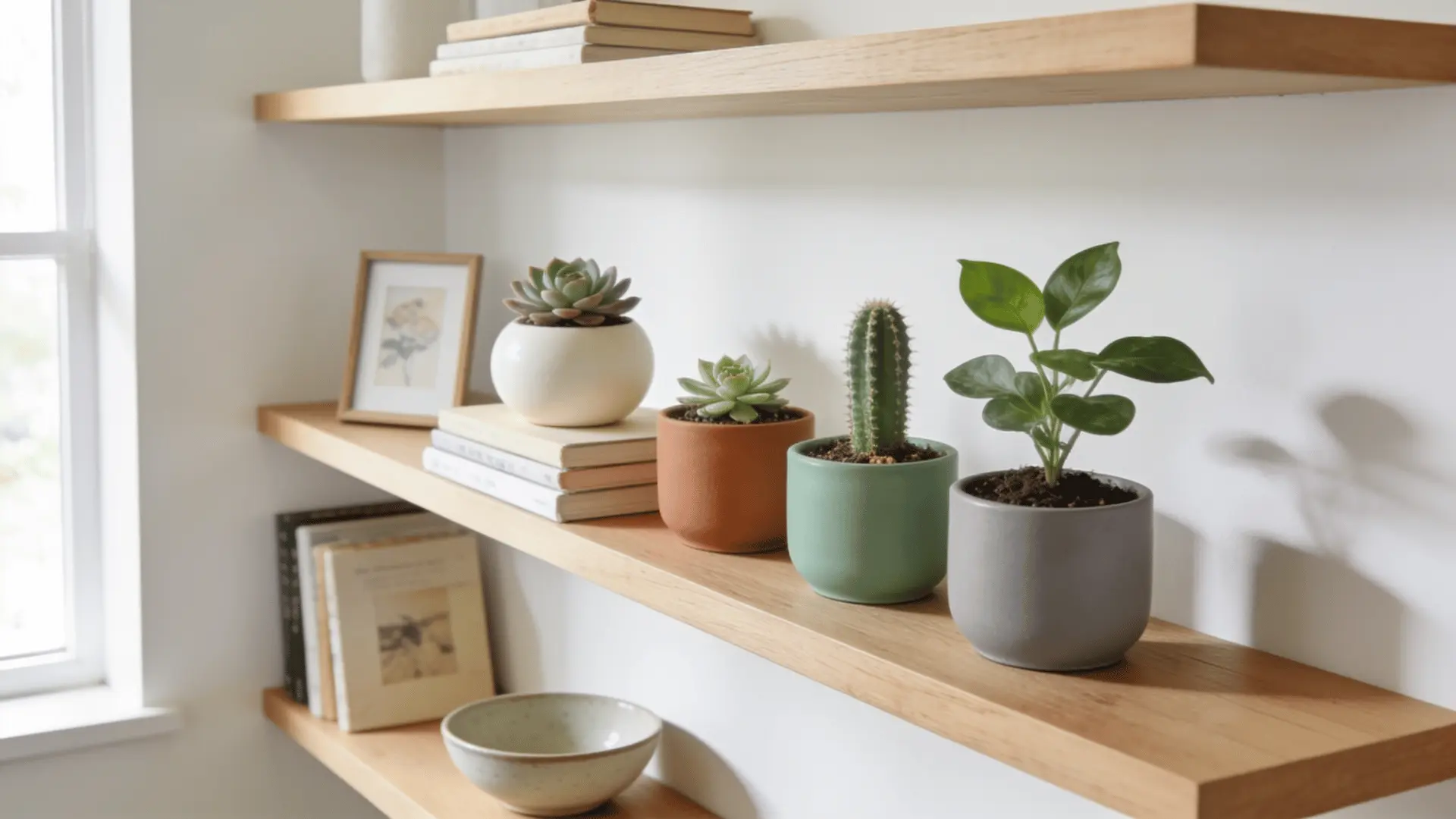
Adding a little greenery completely changes how a shelf feels. I always reach for small potted plants or succulents to fill awkward empty spaces. They bring life and a fresh pop of color to any room.
Succulents are incredibly easy to care for, making them perfect if you sometimes forget to water. I like to place them in textured clay pots to add a soft, natural touch next to heavy books or metal frames.
12. Faux Stems or Dried Grasses
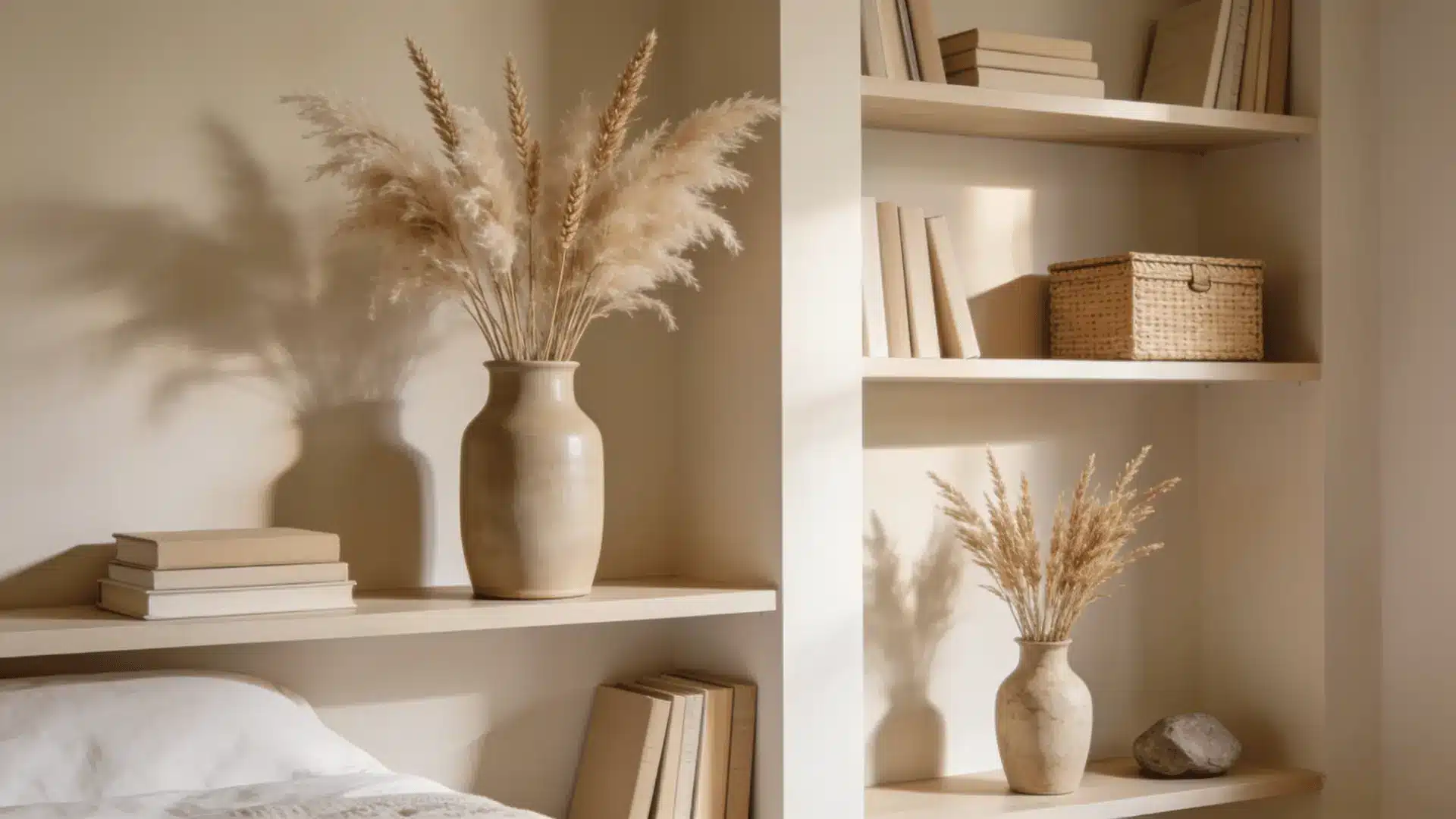
If your room does not get much sunlight, faux stems or dried grasses are the perfect solution. You get the soft, natural look of real plants without any of the maintenance.
I love using tall dried pampas grass in a ceramic vase to add height to the top shelf. Faux eucalyptus or olive branches also work well to fill out dark corners.
Just make sure to bend the stems a little so they look relaxed and organic.
13. A Trailing Plant (Like Othos) for Soft Movement
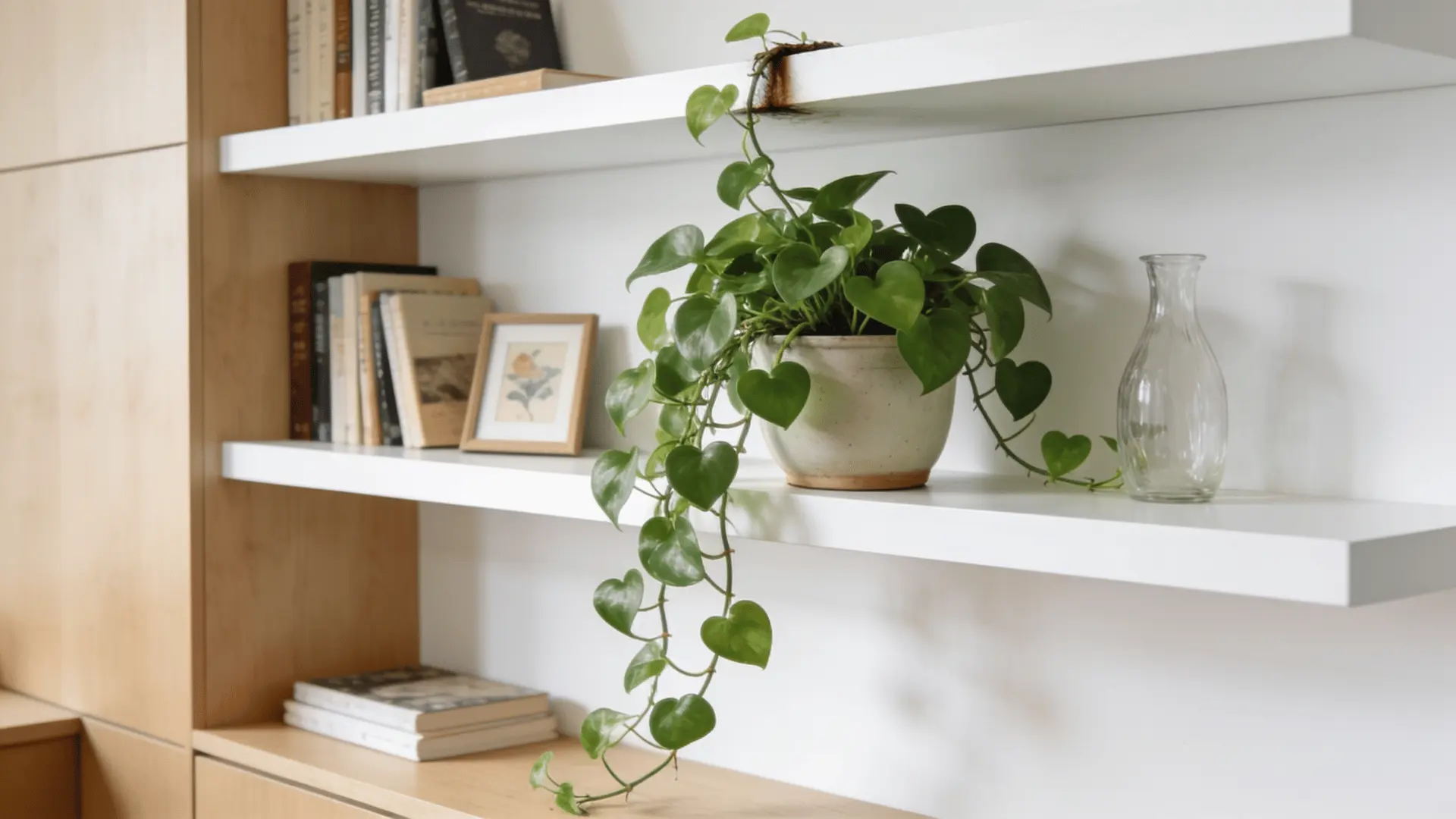
Straight shelves and square books can sometimes feel too rigid. I love placing a trailing plant, like a pothos, on an upper shelf to break up those hard lines.
As the green leaves spill over the edge, they create a soft, downward movement that draws the eye. Pothos plants grow quickly and survive in almost any lighting condition.
You can even let the vines drape across the front of a stack of books for a relaxed, lived-in feel.
14. Natural Finds: Stones, Coral, Driftwood
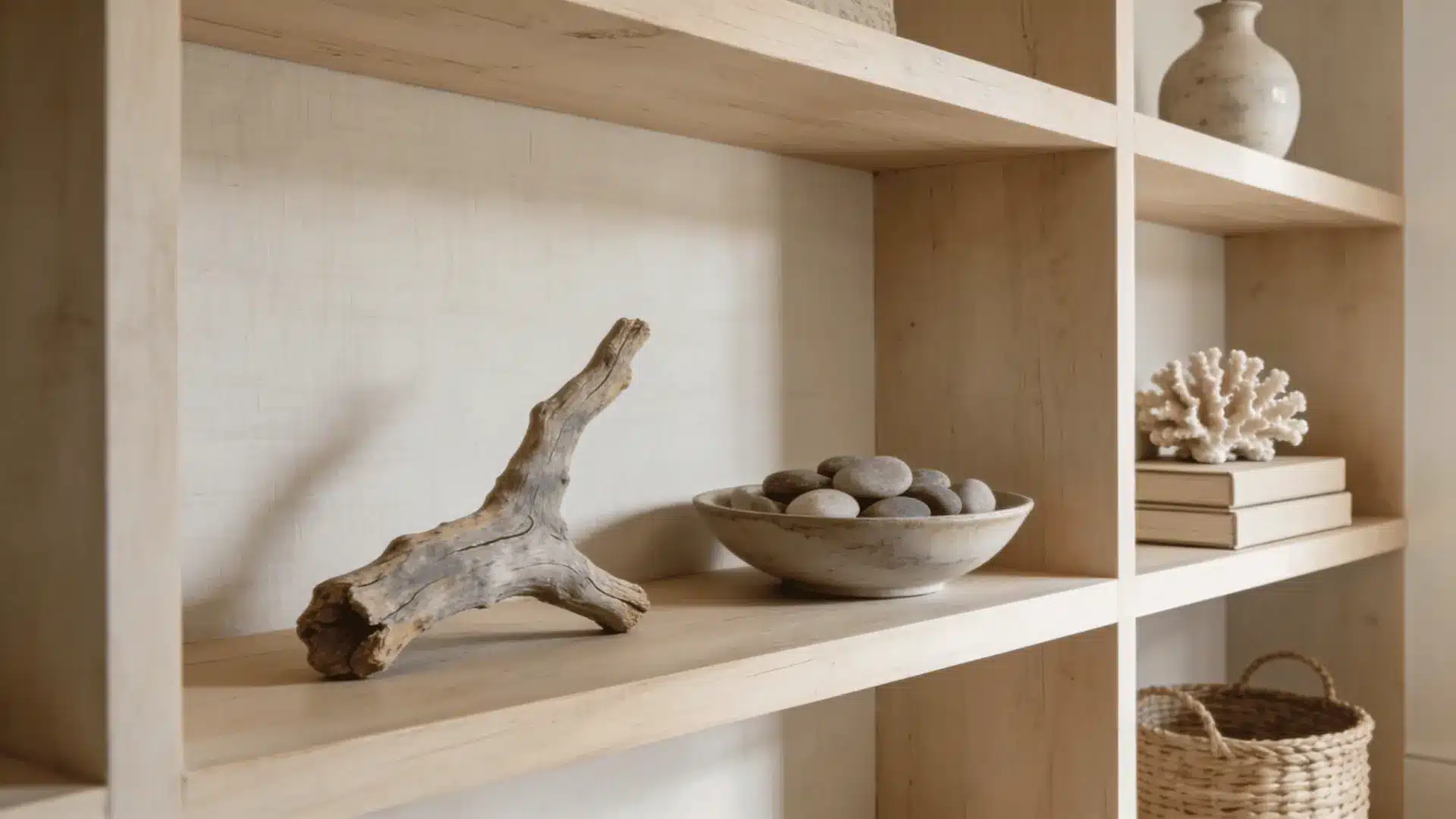
Bringing elements from outside gives your shelves a grounded, earthy look. I always try to include a few natural finds like smooth river stones, a piece of coral, or weathered driftwood.
These objects carry unique shapes and rough textures that you cannot find in store-bought items.
I usually rest a small piece of driftwood on top of a flat stack of books or place a bright white piece of coral next to a dark frame for high contrast.
15. A Bowl of Citrus or Seasonal Fruit (Kitchen Shelves)
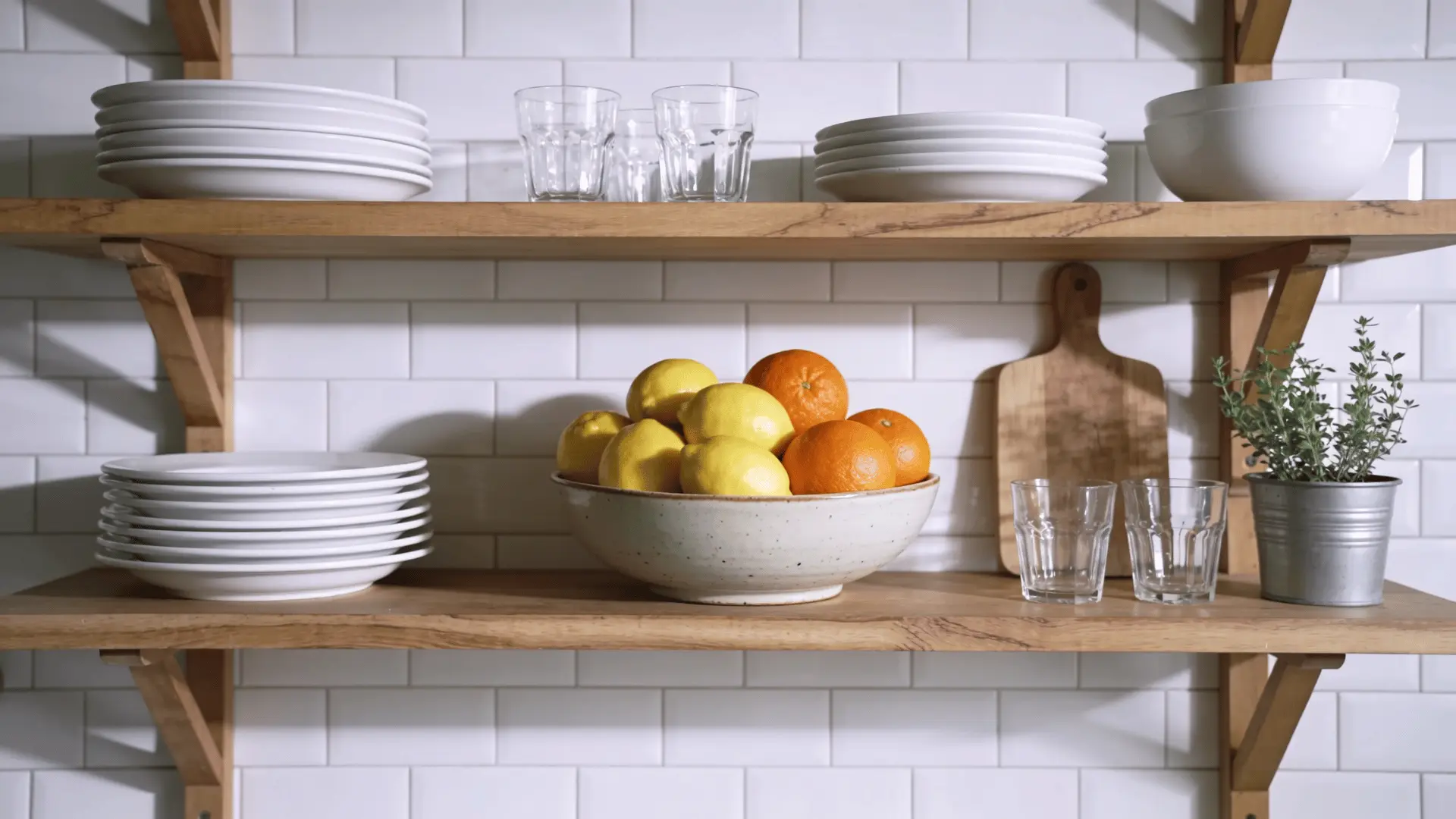
Kitchen shelves need to balance good looks with everyday function. A bowl of citrus or seasonal fruit is my favorite way to bring bright color to open kitchen shelving. The bright yellows and greens instantly warm up the space.
I like to use a simple wooden or white ceramic bowl so the fruit really stands out. Plus, keeping lemons or apples out in the open makes them easy to grab while you cook, mixing practical storage with fresh decor.
Personal and Sentimental Pieces
This is how you make a space truly yours: by adding items that tell your story.
16. Travel Souvenirs and Collected Trinkets
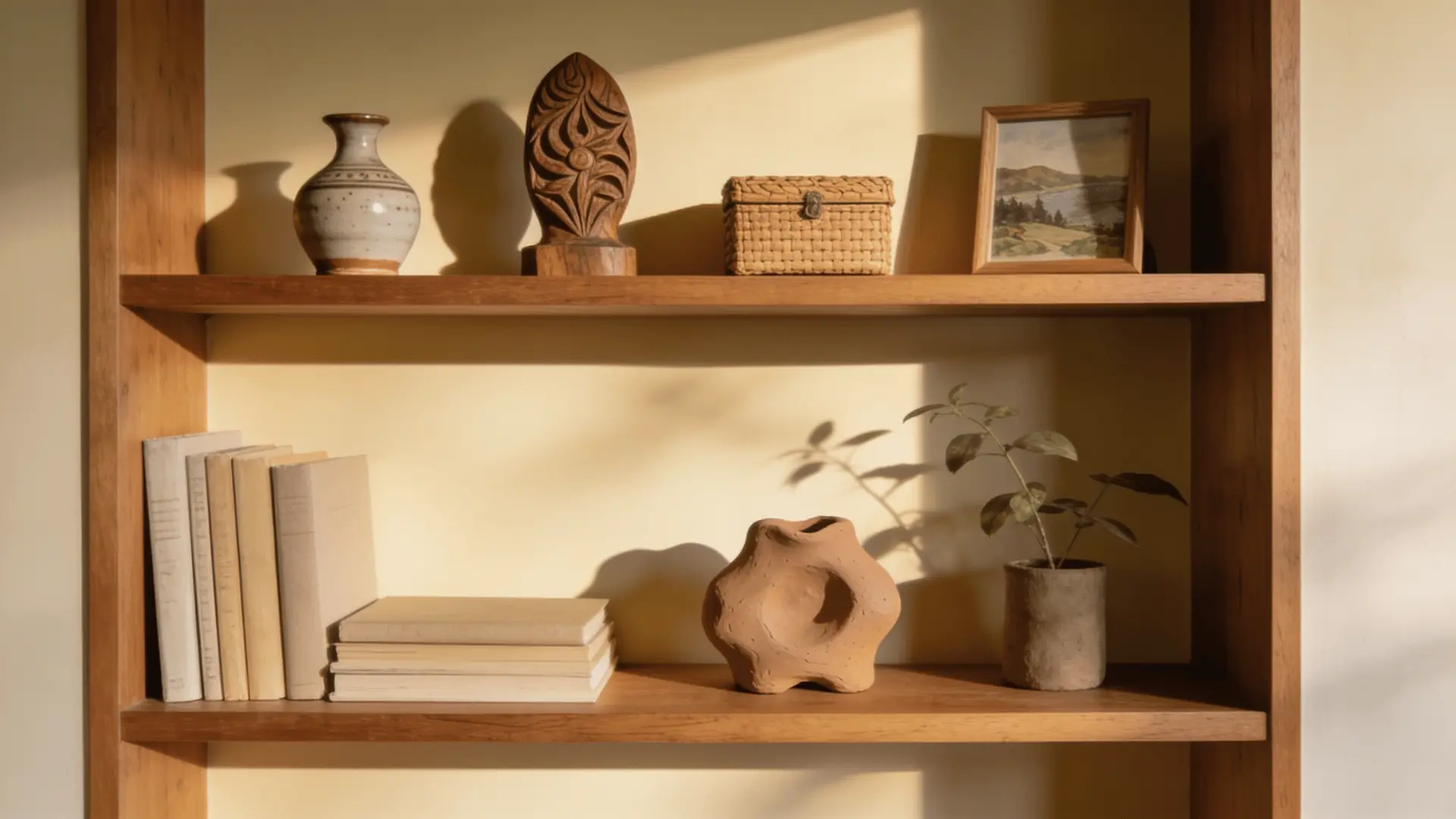
I love adding a personal touch to shelves with travel souvenirs and collected trinkets. These small pieces tell your unique story and bring back great memories.
Instead of grouping all your items, spread them out across different shelves. I like to rest a small brass bell from a trip on top of a stack of books or set a handmade clay bowl next to a vase.
It gives your space character and keeps your display feeling warm and lived-in.
17. Figurines Tied to a Hobby or Passion
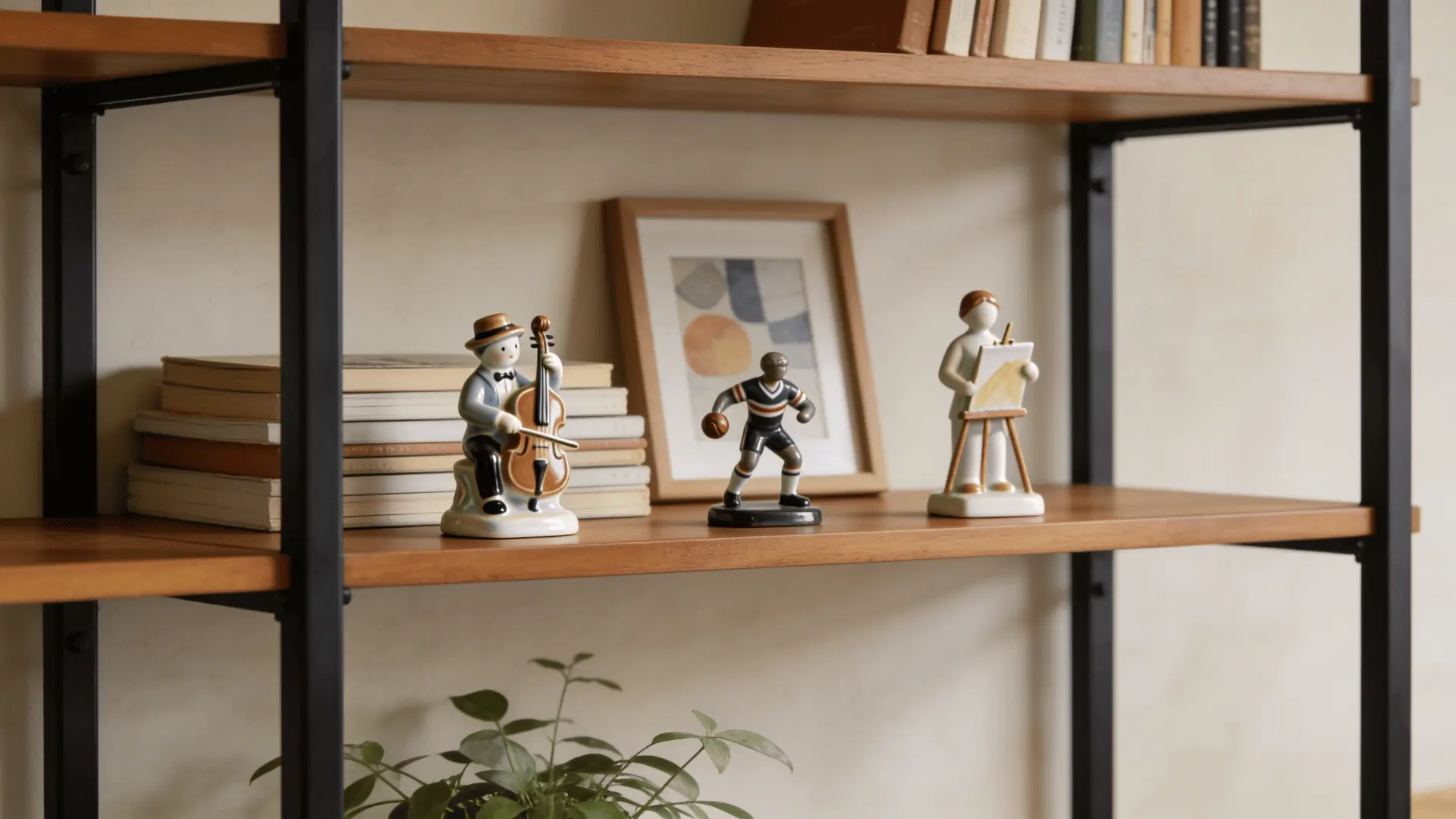
Your shelves should reflect what you love doing. Adding a few figurines tied to a hobby or passion makes the room feel much more like you. If you love music, a small brass guitar or a carved wooden bird works perfectly.
I always place these pieces next to something simple, like a solid vase or a stack of neutral books. This keeps the shelf from looking too busy while still showing off your personal interests to your guests.
18. A Vintage Find
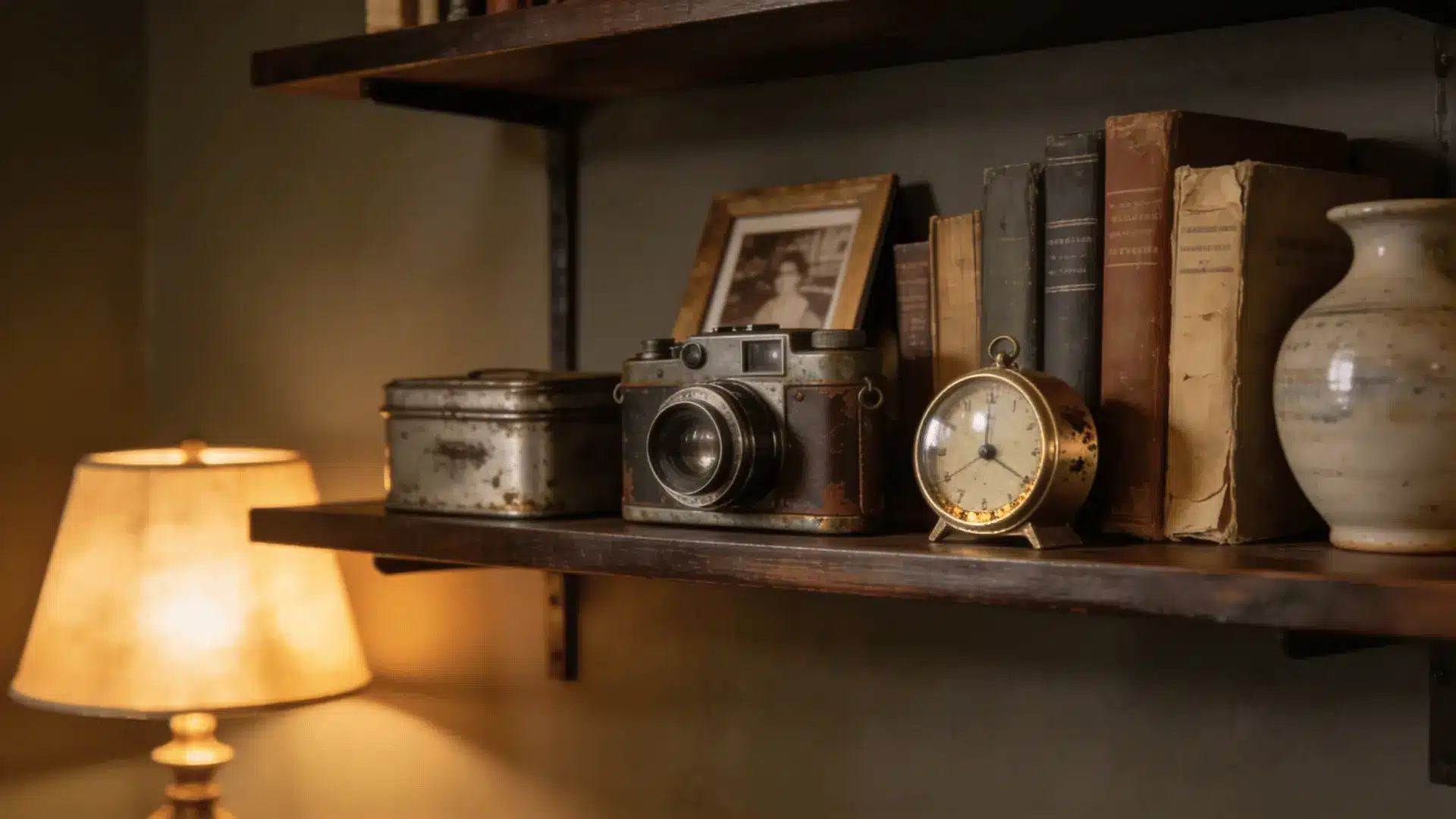
I always look for ways to add history to a room. A vintage find like an old film camera, a brass clock, or a faded metal tin brings instant charm to any shelf.
These older items add a rough texture that balances perfectly against smooth glass vases or new book covers. I like to place an old clock right in the middle of a shelf to act as an anchor.
It makes the whole setup feel as if it were gathered over time.
Candles, Light, and Shine
A bit of glow and reflection makes your display feel warm and inviting, especially in the evening.
19. Candles with Holders at Staggered Heights
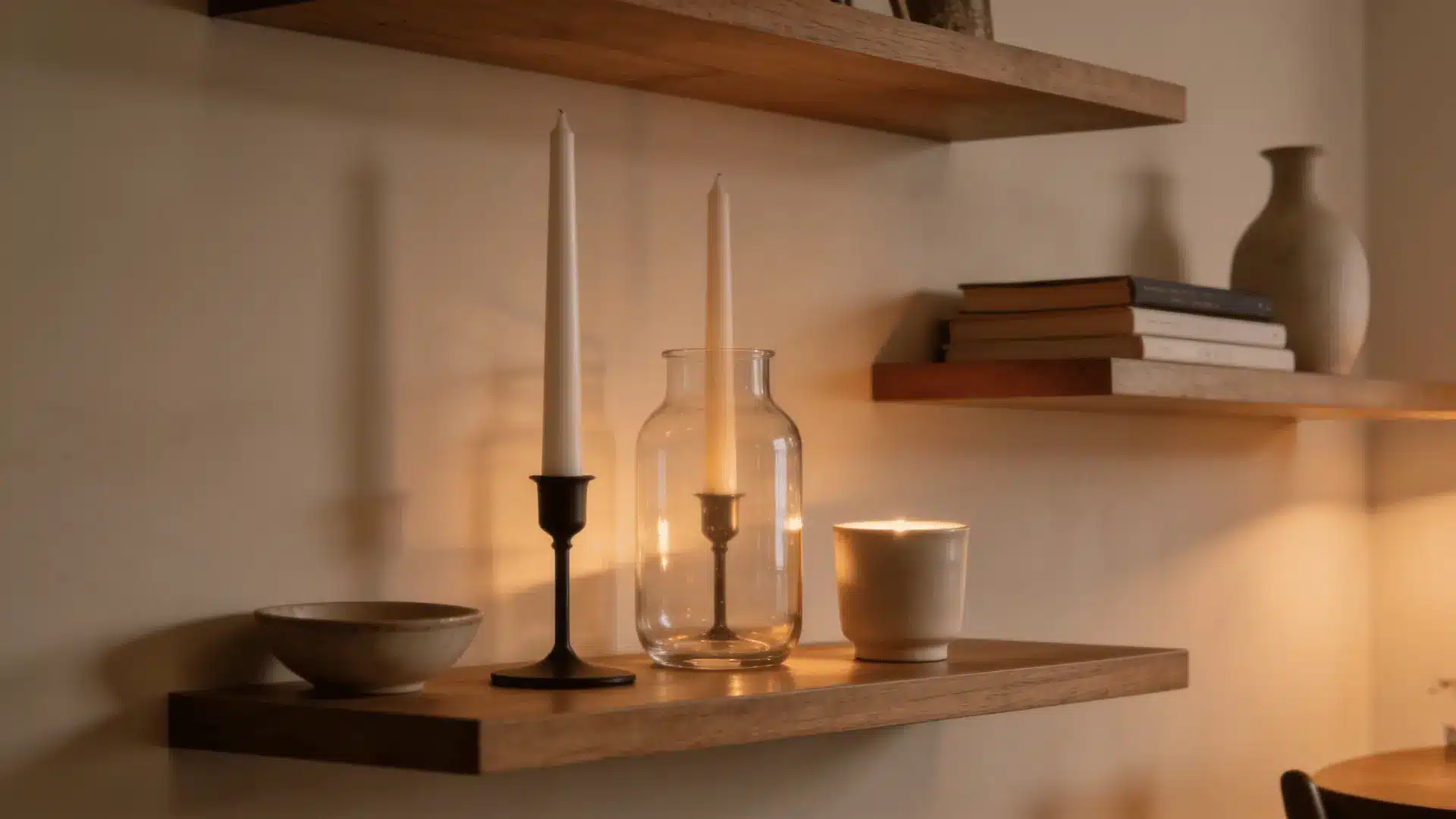
Candles bring a warm glow to your shelves, but placing them flat can look a little plain. I always use candle holders in staggered heights to fix this. Putting a tall brass holder next to a short wooden one creates a nice high-low effect.
This setup draws the eye upward and easily fills empty vertical space. It makes the arrangement feel much more collected and thoughtful instead of stiff.
20. A Small Mirror or Metallic Object to Bounce Light
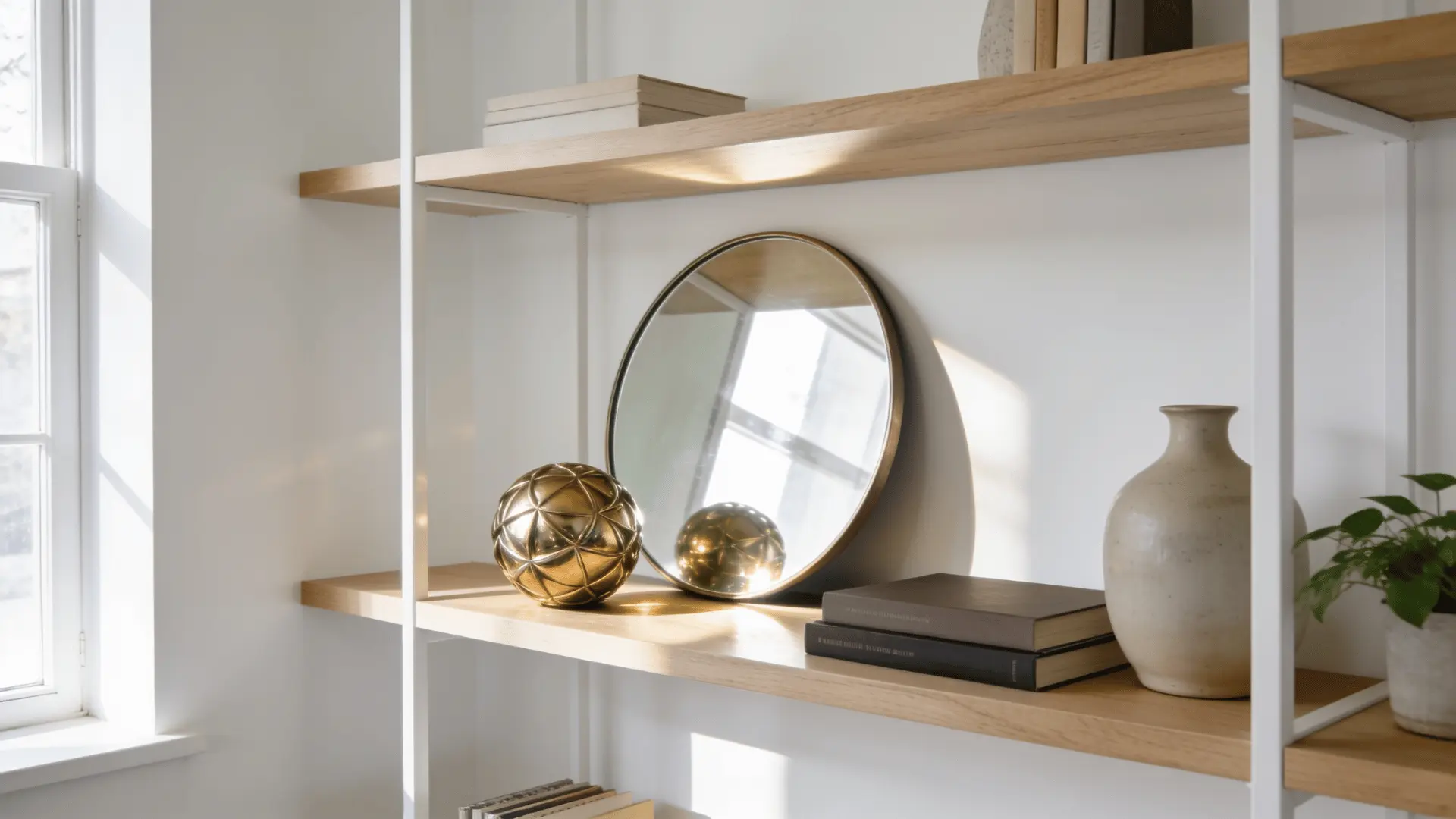
Dark corners on a shelf can make your room feel heavy. To fix this, I love adding a small mirror or a shiny metallic object.
A brass tray or a gold frame catches the light from your windows and bounces it right back into the room. This simple trick makes deep shelves look much brighter and wider.
It also adds a nice bit of contrast against dull book covers or matte pottery.
21. Battery String Lights or a Mini Lamp
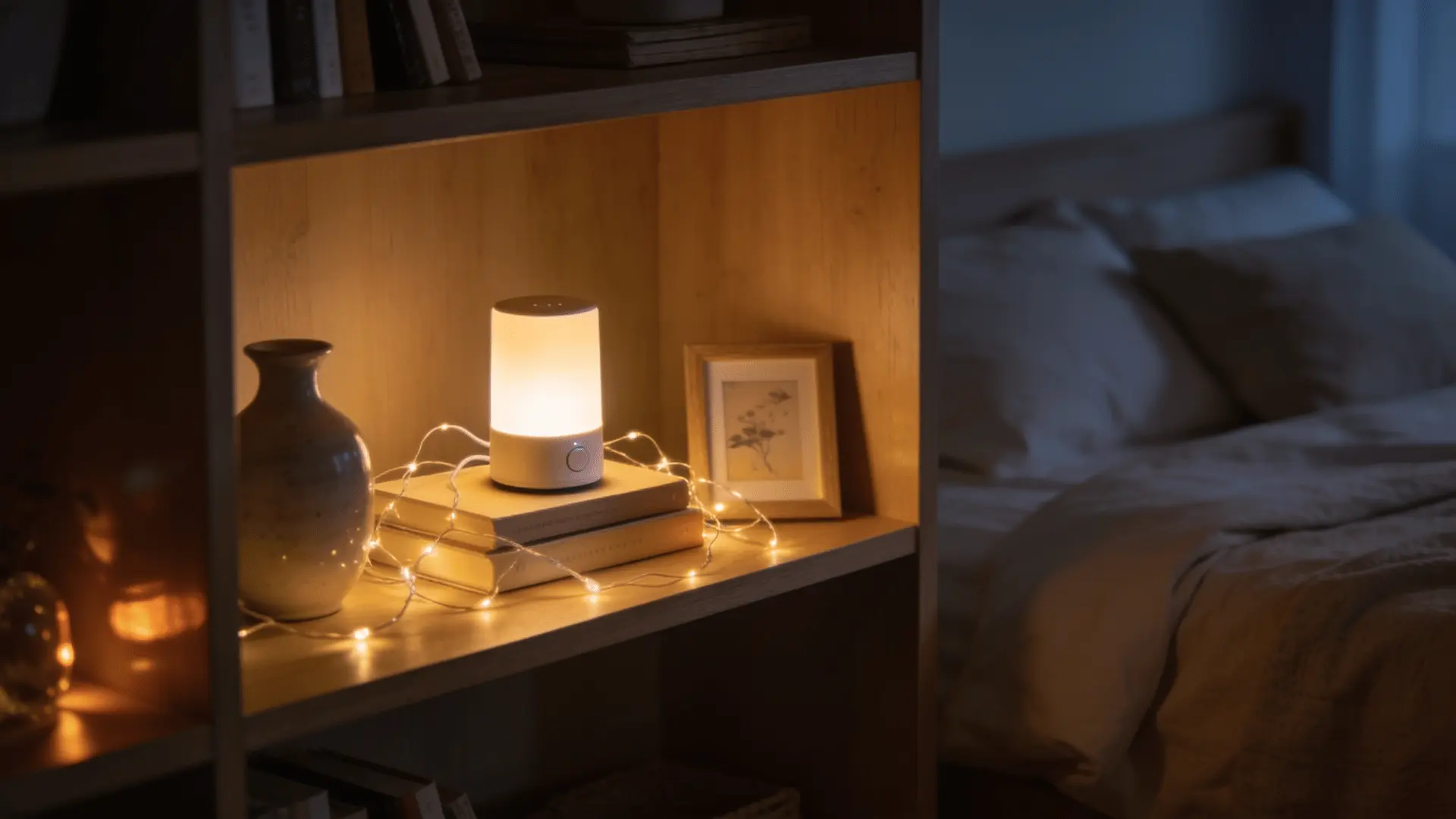
You do not need to rely only on ceiling lights to show off your decor. Adding a tiny, battery-powered lamp right onto the shelf brings a soft glow to your favorite pieces.
If a lamp feels too bulky, I like to run a short string of battery lights behind a row of books or inside a glass jar. It creates a cozy, inviting mood for the evening without ugly wall cords.
Shelf Decor Ideas by Room
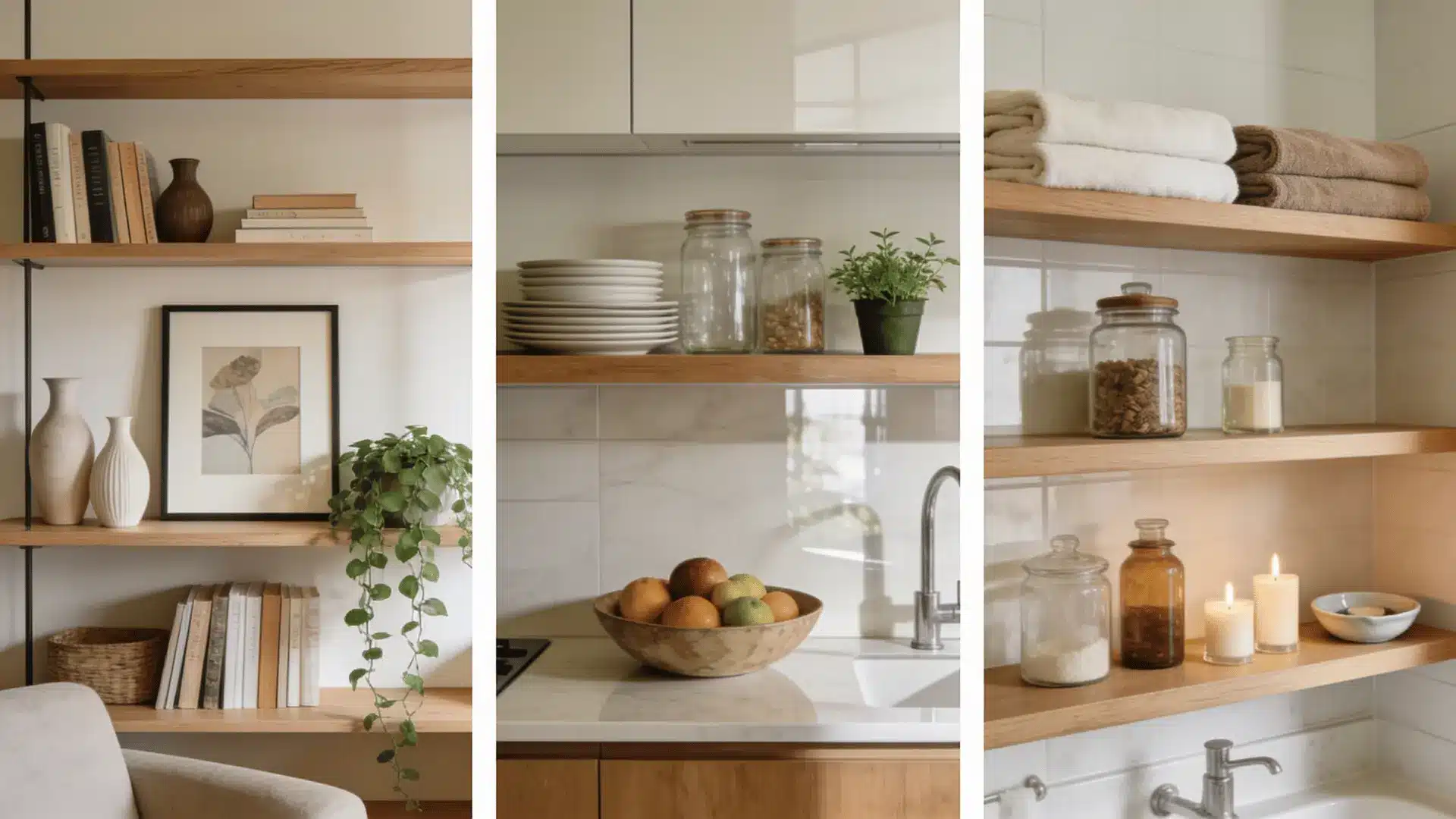
The same pieces look different depending on the room, so here’s a quick cheat sheet to match your shelf decor ideas to the space.
| Room | Go-To Pieces | Quick Tip |
| Living Room | Books, art, sculptural objects, plants | Anchor with one larger piece per shelf |
| Kitchen | Ceramics, jars, cutting boards, a fruit bowl | Keep everyday items pretty and reachable |
| Bathroom | Rolled towels, glass jars, a small plant | Choose moisture-friendly materials |
| Bedroom | Frames, candles, a small stack of books | Lean, personal, and calm, not busy |
| Home Office | A clock, a plant, a framed quote | Limit clutter so it stays a work zone |
Common Shelf Styling Mistakes to Avoid
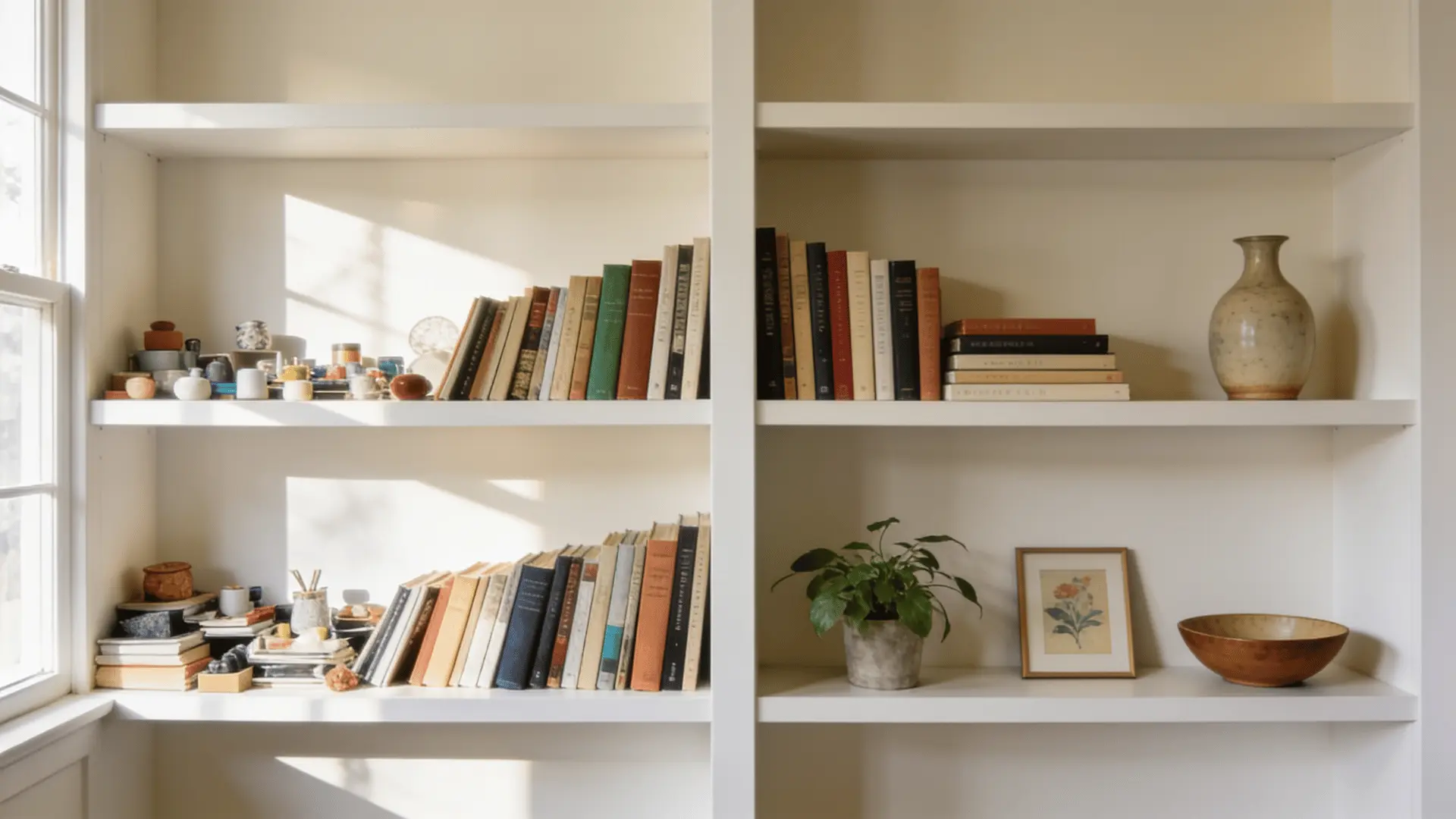
I have made every one of these styling mistakes myself, so consider this your quick shortcut past the usual trial and error.
- Overcrowding: Packing a shelf too full hides your favorite items and leaves the eye unsure where to look. To fix this, empty the space and return only pieces you truly love. Give everything room to breathe and store the rest.
- Alignment: Placing items in a straight line makes your styling look stiff. Instead, layer pieces by pulling some forward and pushing others back. Try leaning a frame against the wall, with a candle right in front of it.
- Scale: Using pieces of the same size makes shelves fall flat. Mix large anchor items with smaller accents to add visual interest. Repeat a specific color across the shelves to connect mismatched items for a balanced look.
Budget Ways to Source Shelf Decor
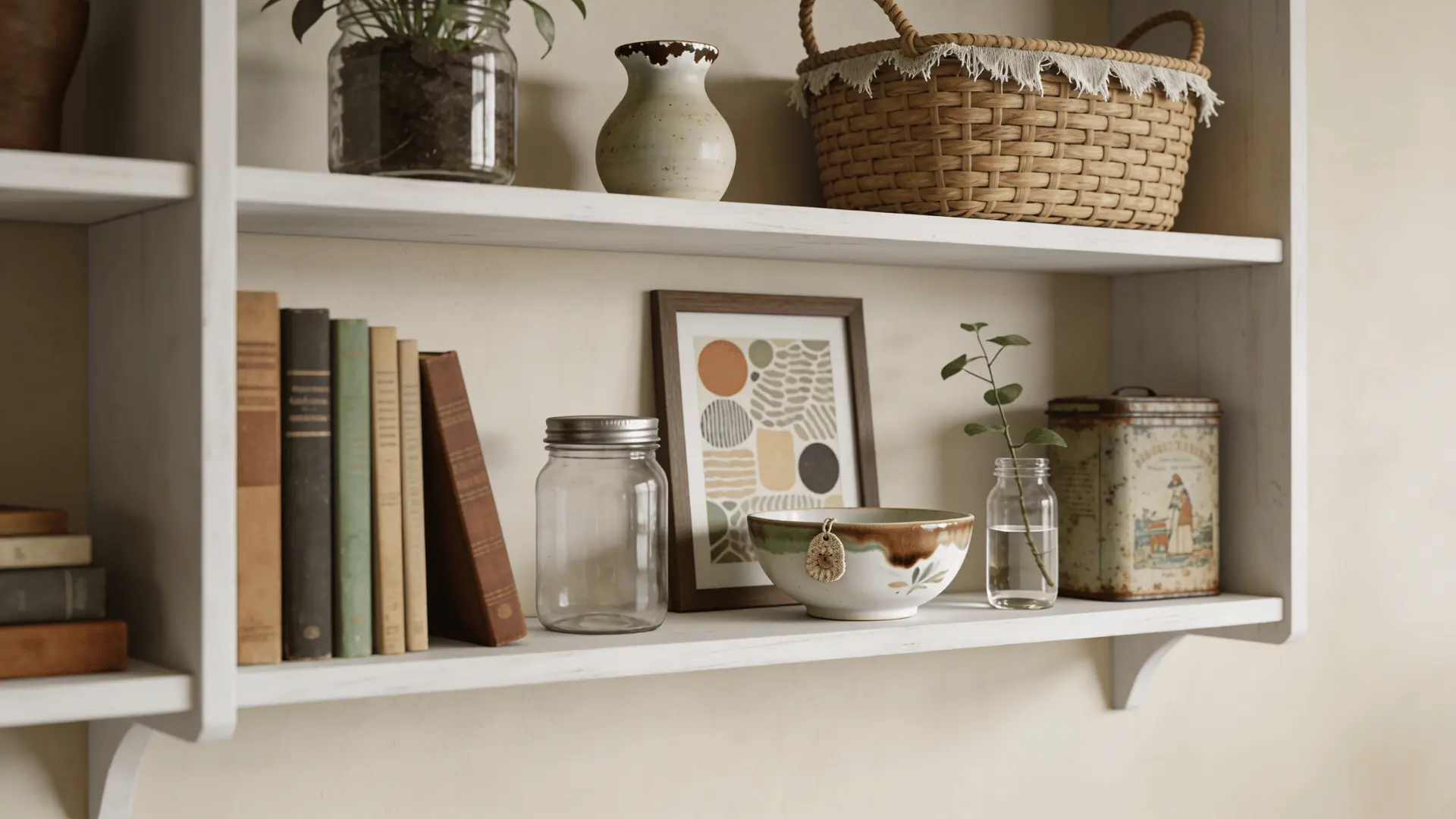
You don’t have to buy a single new thing to restyle a shelf. Here’s where I look first.
1. Shop Your Own Home
Before you head to the store, take a quick walk through your own house. You probably already have great shelf decor ideas sitting in other rooms.
Grab a forgotten vase from the kitchen, a stack of books from the bedroom, or a small plant from the windowsill. Moving items to a new spot gives them a completely fresh feel without spending a dime.
2. Thrift and Secondhand Finds
When I need a few extra pieces, thrift stores and yard sales are my first stops. You can easily find unique ceramic vases, brass trays, or wooden image frames for just a few dollars.
Do not worry if the color is slightly off. A quick coat of spray paint or a little sanding resets almost any secondhand item to match your room perfectly.
3. Simple DIY Refreshes
Sometimes, a quick project is all it takes to make your shelves look new. You can paint old glass jars to look like expensive pottery or cover a worn-out shelf bottom with contact paper.
Even something as simple as taking the paper jackets off your hardcovers and stacking them by color creates a custom, put-together look in just a few minutes.
How to Style Shelves Like a Pro
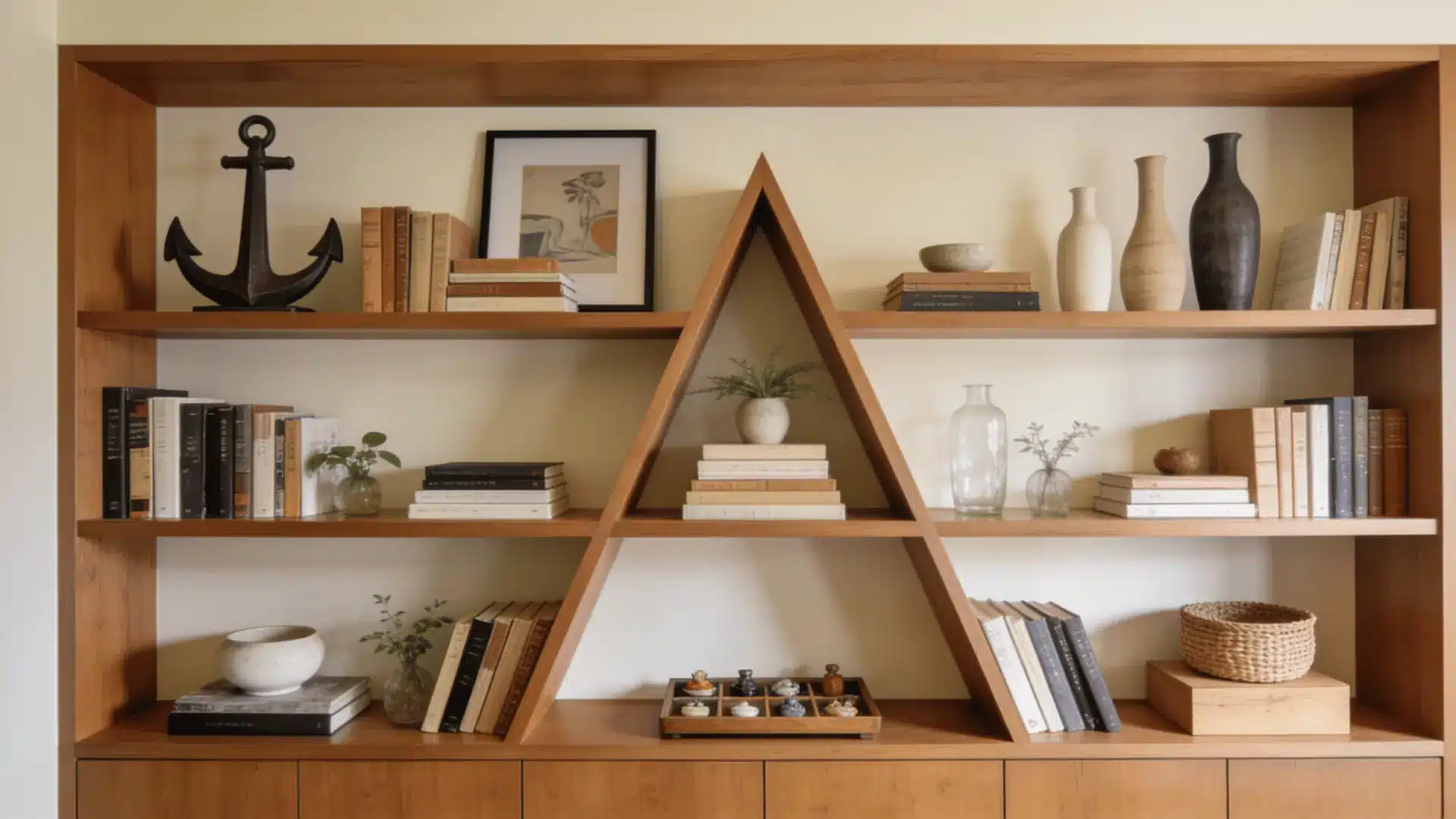
Those 21 ideas give you the what. These four habits are the how; they do most of the heavy lifting and are what make a shelf look intentional instead of thrown together, no matter which pieces you choose.
| Styling Habit | The Strategy | Quick Tip |
| Group in Odd Numbers | Grouping items in threes, fives, or sevens reads as much more natural to the eye than grouping them in pairs. | Instead of a straight line, create small clusters. Pair a stack of books with a small bowl and a plant. |
| Vary Height and Texture | Mixing tall and short items creates good flow. Combining smooth glass with rough stone adds warm contrast. | Lay a few books flat, add a tall ceramic vase, and lean a wooden picture frame behind them. |
| Leave Breathing Room | Leaving empty areas (negative space) stops a shelf from feeling stuffed, giving favorite pieces room to stand out. | Do not fill every single inch of space. If a shelf starts looking too busy, take one or two things away. |
| Stick to a Color Palette | Using too many random colors looks confusing. A simple palette makes completely different items look connected. | Choose two or three repeating tones. If your room has blues and warm woods, use those same shades on your shelves. |
Final Thoughts
Styling a shelf really comes down to a few simple moves. Group your pieces in odd numbers, mix up heights and textures, and leave a little space so everything can breathe.
Once you have those basics down, the 21 shelf decor ideas above give you plenty to pull from.
Remember, you can start with what you already own, shop secondhand, and skip the pieces that do not feel like you.
A shelf is one of the easiest spots in a home to make your own, and it is forgiving: you can rearrange it any time. Try a few of these tips this weekend, then tell me in the comments which shelf you tackled first!
Frequently Asked Questions
How do I Decorate Deep Shelves Without Clutter?
Layer your items from front to back. Place taller pieces behind and shorter ones in front. Add a small light toward the back so the depth feels used rather than messy.
Can I Mix Metals and Finishes on a Shelf?
Yes, mixing metals looks collected rather than matchy. Just repeat each finish at least twice across the shelf so it reads as intentional, keeping one metal dominant for balance.
How Much Weight Can Floating Shelves Hold?
It depends on the wall anchors, but many floating shelves safely hold around 25 to 50 pounds when mounted into studs. Always check your product’s rating before loading heavy books.
Should Shelf Decor Match the Rest of the Room?
It should relate, but not match exactly. Pull one or two colors from the room’s existing palette so the shelf connects, then add contrast through shape and texture.

With a Master in Architectural Studies from University of Pennysylvania, Marwa Haydar has pioneered living spaces since 2005. Her expertise, initially honed in a prestigious architectural firm, is evident in her approach to creating environments. Marwa became part of our team in 2019 and has since been a driving force in our home improvement section, known for her practical yet stylish solutions. She’s been spearheading our design workshops since then, infusing her passion for teaching into her work. In her leisure time, Marwa enjoys exploring historic architecture and is an enthusiastic pottery hobbyist, further enriching her understanding of form and texture.