
Mid-Century Modern (MCM) furniture has stayed popular for decades because it combines simple design, practical use, and a warm, welcoming look.
If you have ever searched for a vintage chair, low sofa, teak credenza, or tapered-leg table, you have probably come across the term MCM.
I find this style especially useful for modern homes because it can add character without making a room feel crowded or overly decorated.
However, knowing what counts as true MCM furniture can make shopping and styling much easier.
In this blog, I explain what MCM stands for, when the style became popular, its main design features, famous designers, common furniture types, buying tips, styling ideas, and the pros and cons to consider before adding it to your home.
What does MCM Stand For in Furniture?
MCM stands for Mid-Century Modern, a furniture and design style that became popular between the 1940s and late 1960s.
It is known for clean lines, simple shapes, tapered legs, warm wood tones, and practical designs made for everyday use.
You will often see the term MCM in furniture stores, resale listings, and interior design posts. It is simply a shortened form of Mid-Century Modern.
The style became popular after World War II, when designers focused on making furniture that looked modern, felt comfortable, and worked well in smaller homes.
Today, MCM can describe both original vintage furniture and newer pieces inspired by the same classic design style.
When did the Mid-Century Modern Era Begin and End?
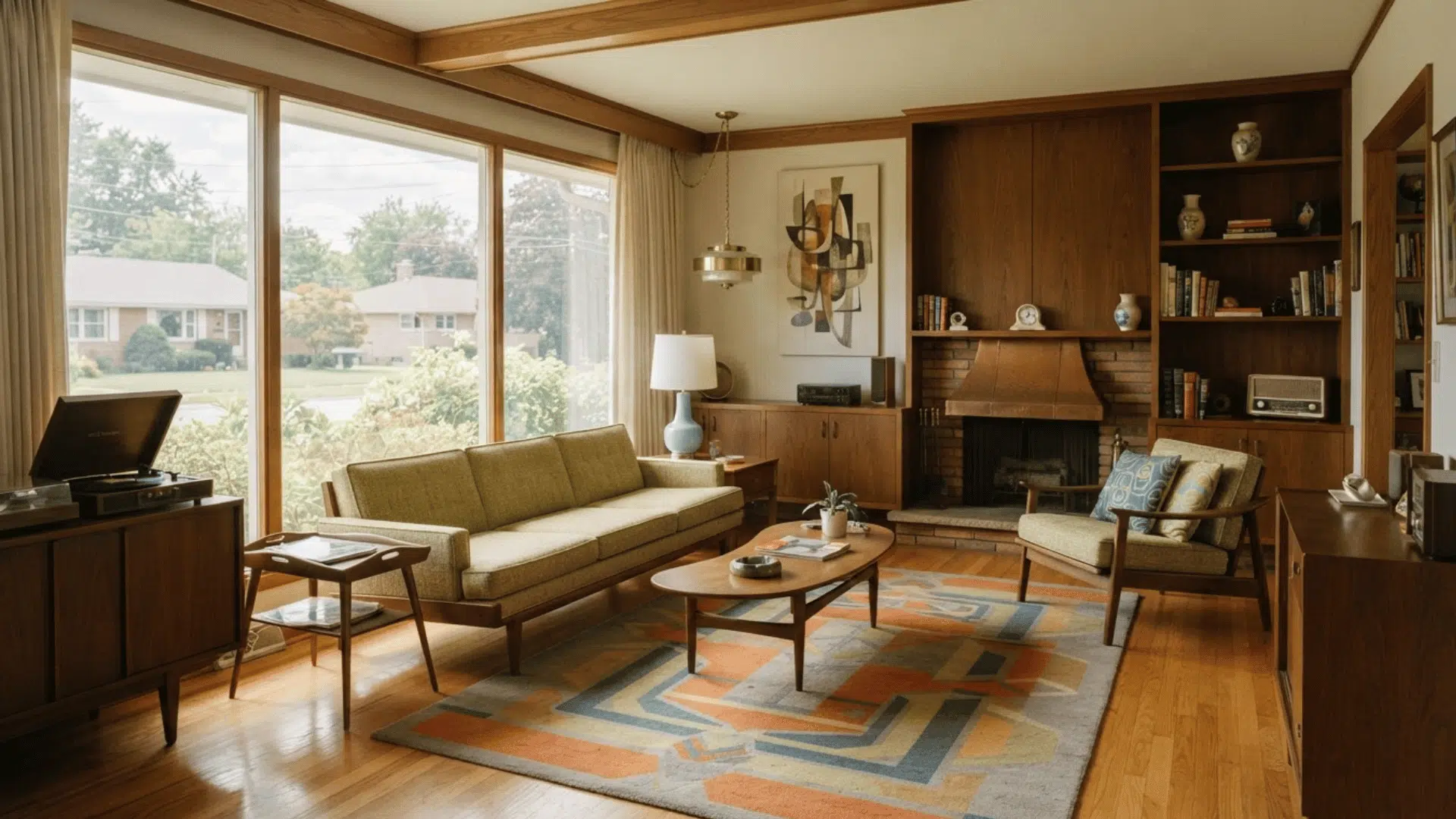
The Mid-Century Modern era is generally linked to the years from about 1945 to 1969, when postwar life changed how people lived and furnished their homes.
New suburbs, smaller rooms, and open floor plans created demand for furniture that felt lighter and took up less visual space.
American designers also drew ideas from European movements such as Bauhaus and Scandinavian design, which favored simple forms and practical materials.
By the 1970s, 1970s interior design trends began to take over, but Mid-Century Modern never fully disappeared. Its popularity rose again after 2000 through television, furniture reissues, vintage stores, and online resale platforms.
Why Did Mid-Century Modern Design Become Popular?
Mid-Century Modern design became popular after World War II, when families were moving into new suburban homes and wanted furniture that felt practical, modern, and easy to use.
Designers focused on clean shapes, lighter frames, and simple layouts that worked well in smaller spaces. New manufacturing methods also made materials such as molded plywood, fiberglass, plastic, and metal easier to use in furniture production.
At the same time, open floor plans and larger windows encouraged a stronger connection between indoor and outdoor spaces. The style offered a fresh look that balanced comfort, function, and simple design for everyday living.
What Were the Core Ideas Behind the Mid-Century Modern Movement?
Mid-Century Modern design focused on making furniture simpler, more useful, and better suited to everyday life after World War II.
- Function Ahead of Decoration: Designers removed heavy details and focused on comfort, purpose, and clean shapes that were easy to use.
- Indoor and Outdoor Connection: Low furniture, open layouts, and large windows helped rooms feel brighter and more connected to outdoor spaces.
- Affordable Good Design: Many designers wanted well-made furniture to be available to regular families, not only wealthy buyers.
- New Manufacturing Methods: Wartime advances in molding, bending, plywood, plastics, and mass production made new furniture shapes possible.
These ideas helped create a style that felt modern, practical, and easy to live with.
What are the Defining Characteristics of MCM Furniture?
Mid-Century Modern furniture is easy to recognize once you know which design details to look for.
| Trait | What to Look For | Example Piece |
|---|---|---|
| Clean Lines | Straight edges and soft curves | Lounge chair |
| Tapered Legs | Slim angled legs and raised frames | Sideboard |
| Warm Woods | Teak, walnut, rosewood, or oak | Dining table |
| New Materials | Plywood, fiberglass, plastic, steel | Molded chair |
| Signature Colors | Mustard, avocado, orange, teal | Armchair |
| Minimal Hardware | Simple pulls and hidden storage | Credenza |
| Low Proportions | Long, low shapes | Sofa |
Together, these features give MCM furniture its light, practical, and uncluttered appearance.
Who Were the Most Iconic Mid-Century Modern Furniture Designers?
Several designers helped shape Mid-Century Modern furniture with pieces that combined comfort, simple forms, and new materials.
- Charles and Ray Eames: Known for molded plywood and fiberglass chairs that made modern design more practical and widely available.
- George Nelson: Created functional storage pieces and playful designs, including the Marshmallow Sofa and Nelson benches.
- Eero Saarinen: Designed the Tulip Chair and Pedestal Table to remove the visual clutter of traditional table and chair legs.
- Hans Wegner and Arne Jacobsen: Brought strong Scandinavian influence through smooth woodwork, curved forms, and carefully shaped seating.
- Florence Knoll: Focused on clean, structured furniture that worked especially well in offices and modern interiors.
Their work still influences furniture design and remains closely linked with the MCM style today.
What are the Common Types of MCM Furniture Room by Room?
Mid-Century Modern furniture can work across the whole home, with each room using different pieces that share the same clean, practical style.
1. Living Room: Lounge Chairs, Low Sofas, and Credenzas
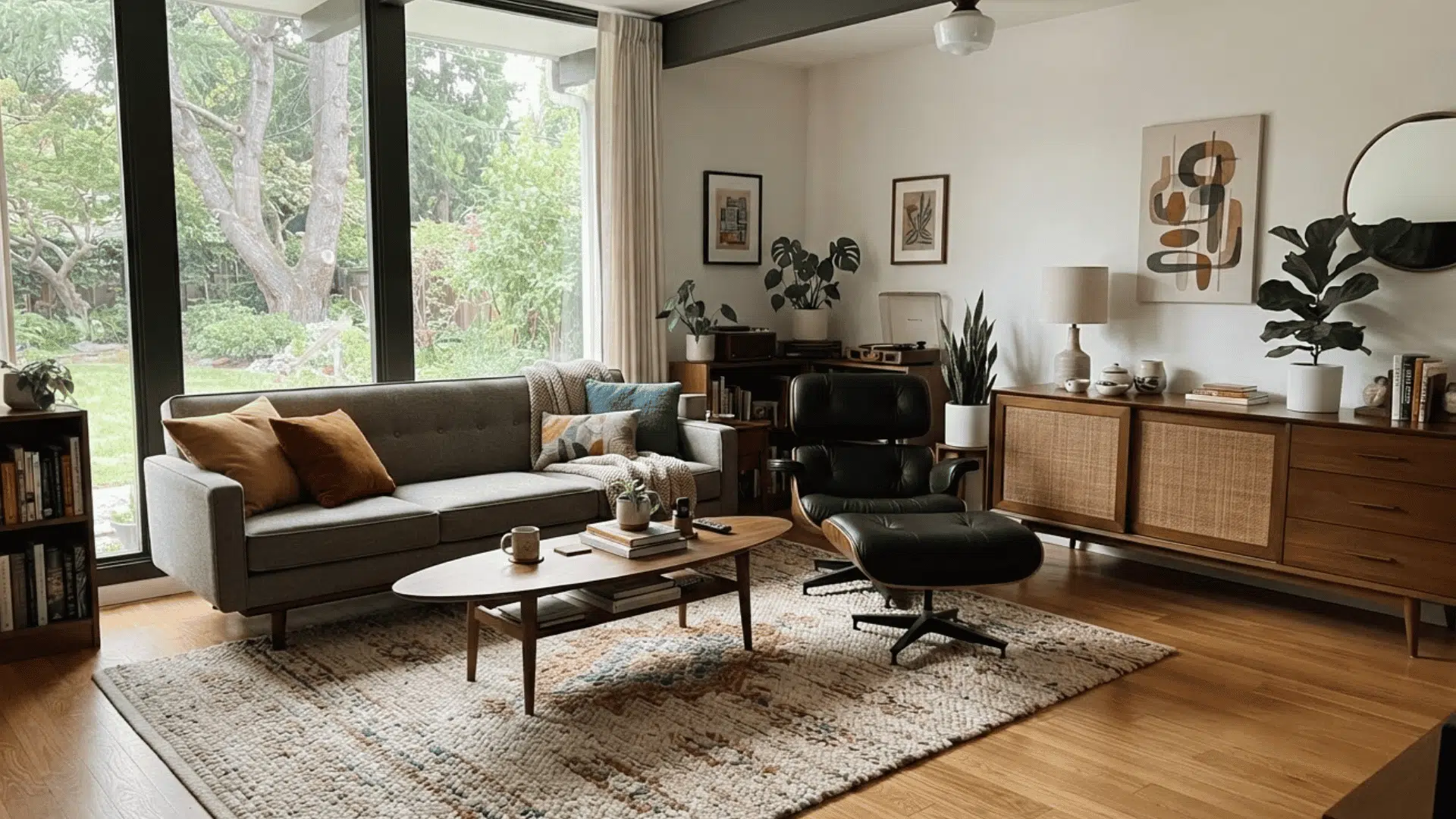
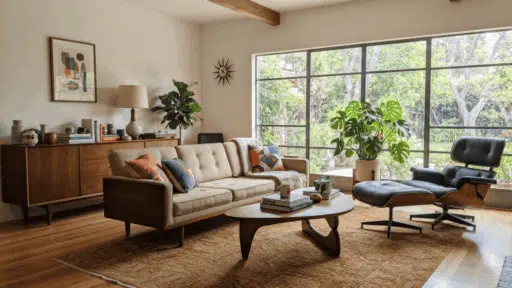
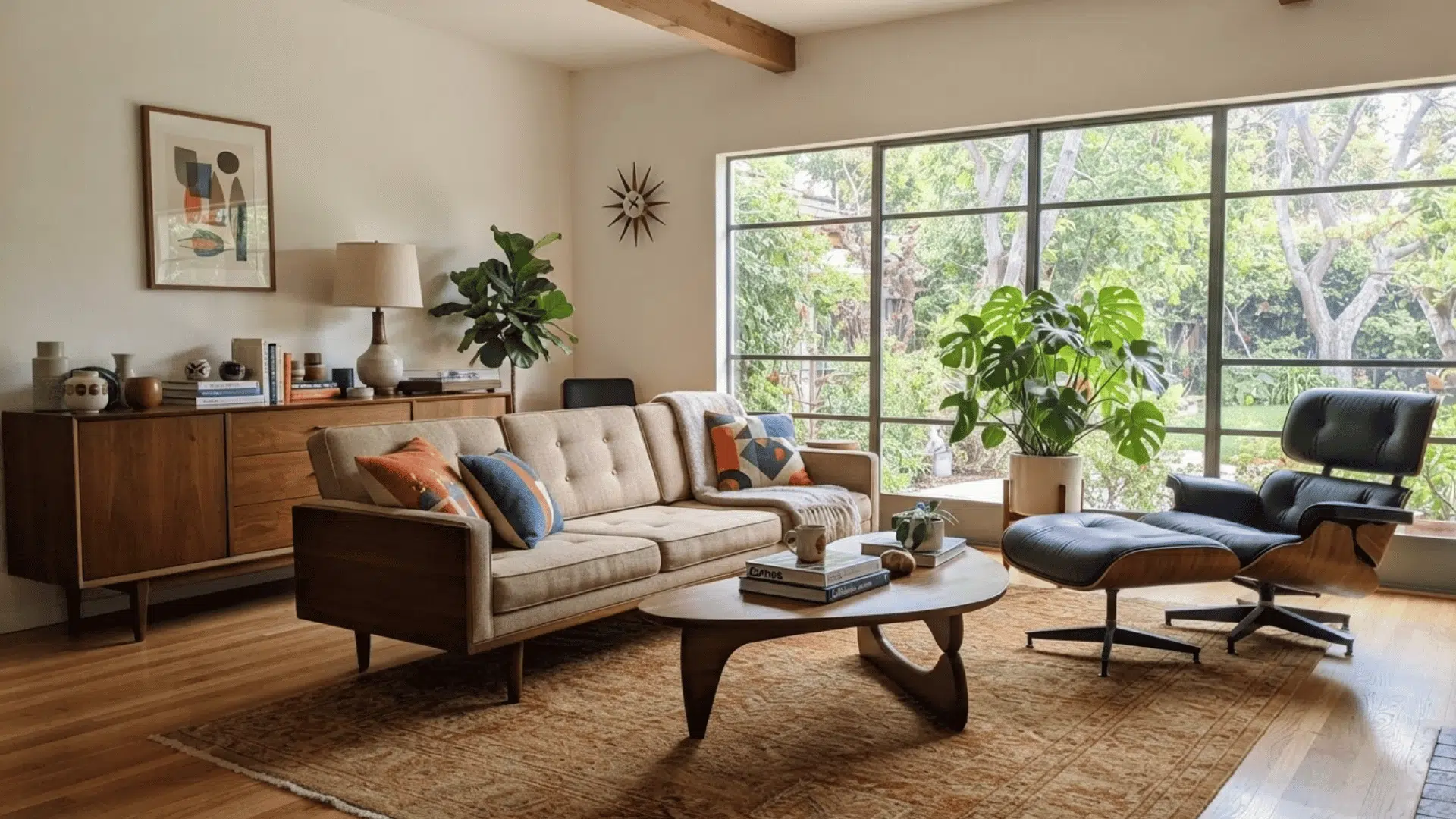
MCM living rooms often make choosing the right sofa design important, alongside sculpted lounge chairs and long credenzas with raised legs. These pieces keep sightlines open and help the room feel less crowded.
Warm wood finishes, slim frames, and simple upholstery are common. Credenzas also add practical storage without making the space feel heavy.
2. Dining Area: Pedestal Tables and Molded Shell Chairs
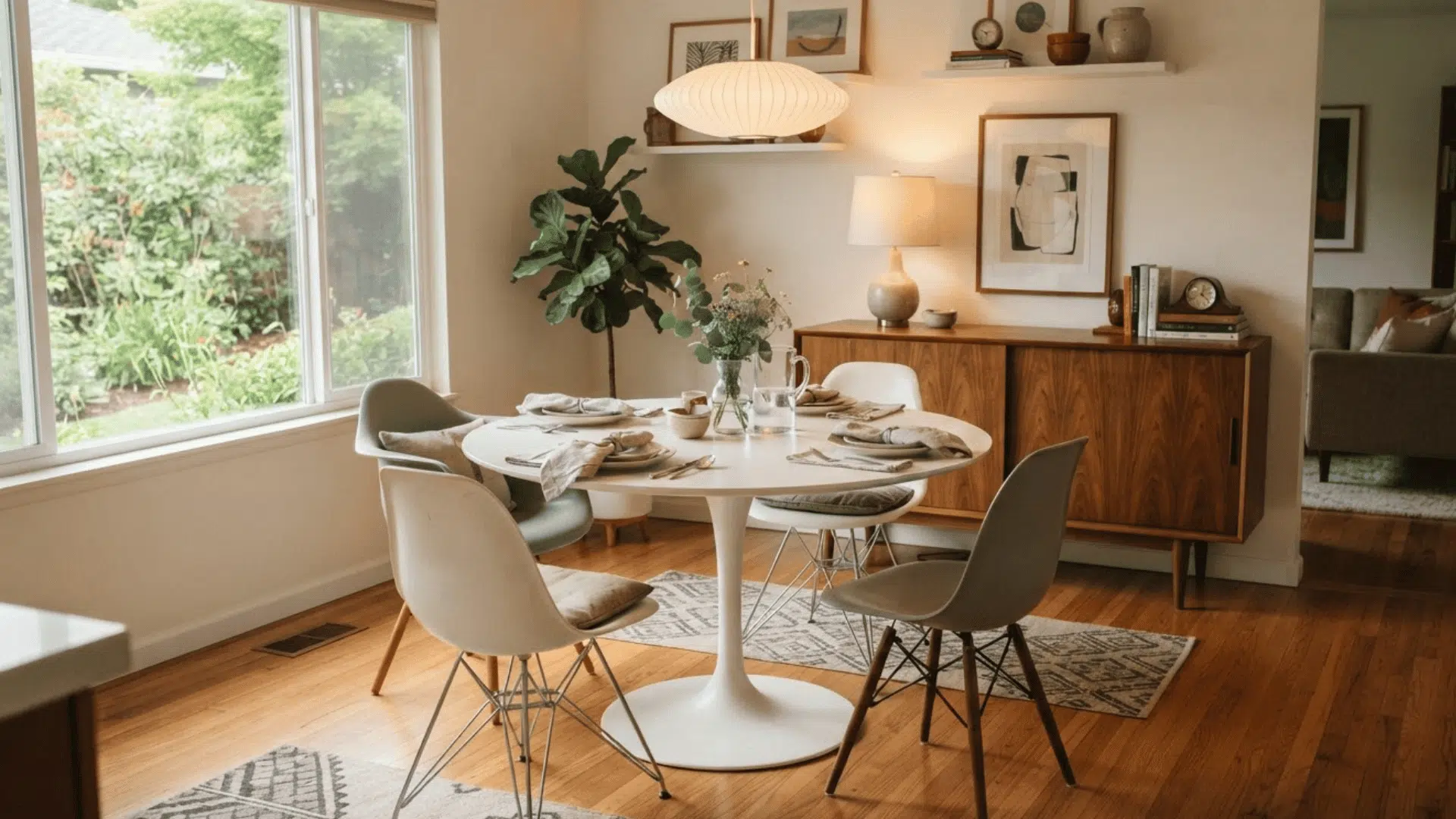
Dining spaces often use pedestal tables because their single central base creates more legroom and a cleaner look. Molded shell chairs made from fiberglass, plastic, or plywood are also common.
Their curved shapes add comfort without extra decoration. Many MCM dining sets combine simple forms with wood, metal, and smooth molded materials.
3. Bedroom: Long Dressers and Platform Beds
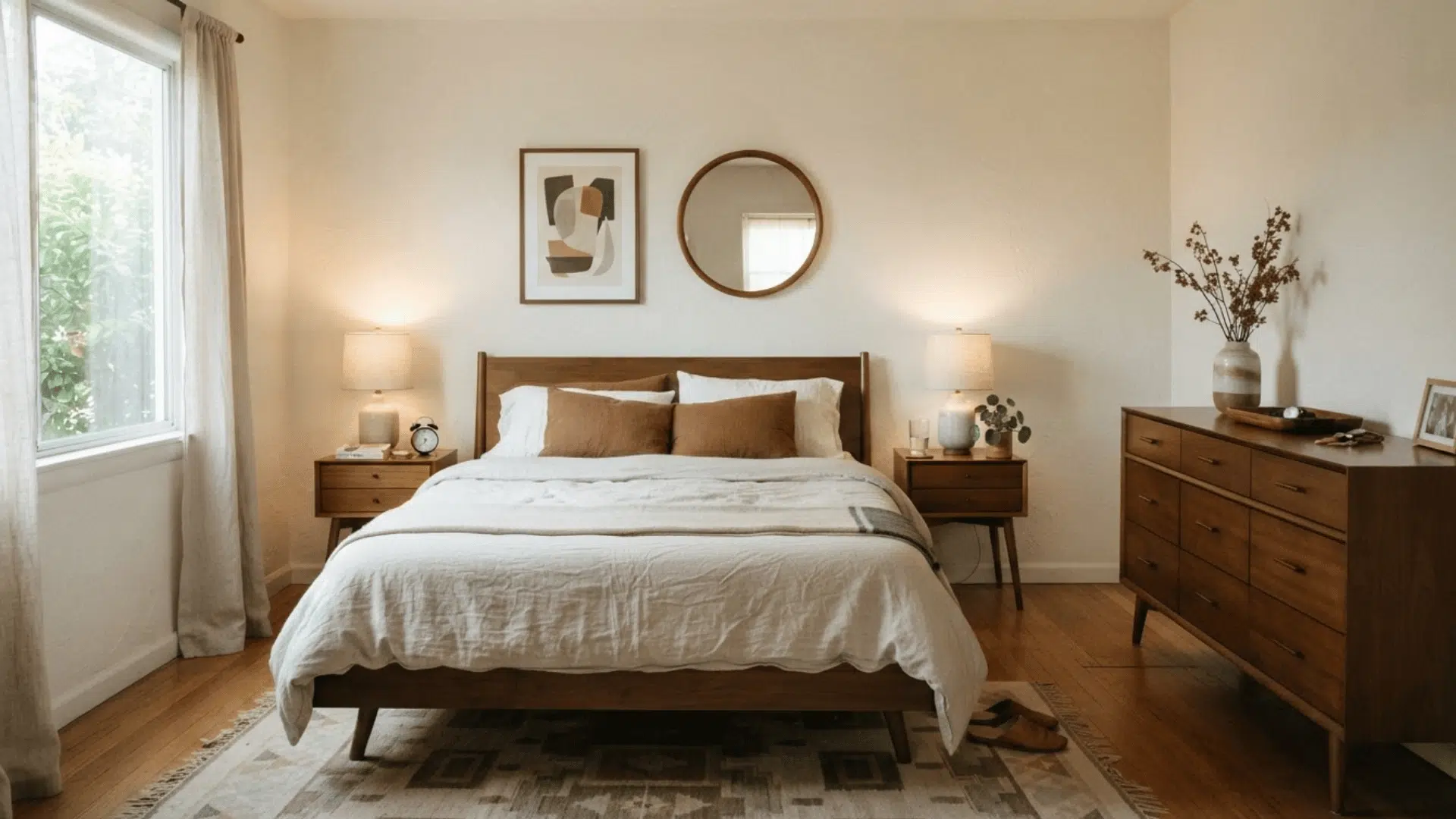
MCM bedrooms usually include long, low dressers, simple nightstands, and platform beds with minimal frames.
Tapered legs and warm woods such as walnut or teak are common. These pieces keep the room feeling open while still offering useful storage. Hardware is often small, subtle, or built into drawers to maintain a clean appearance.
4. Home Office and Entryway Pieces
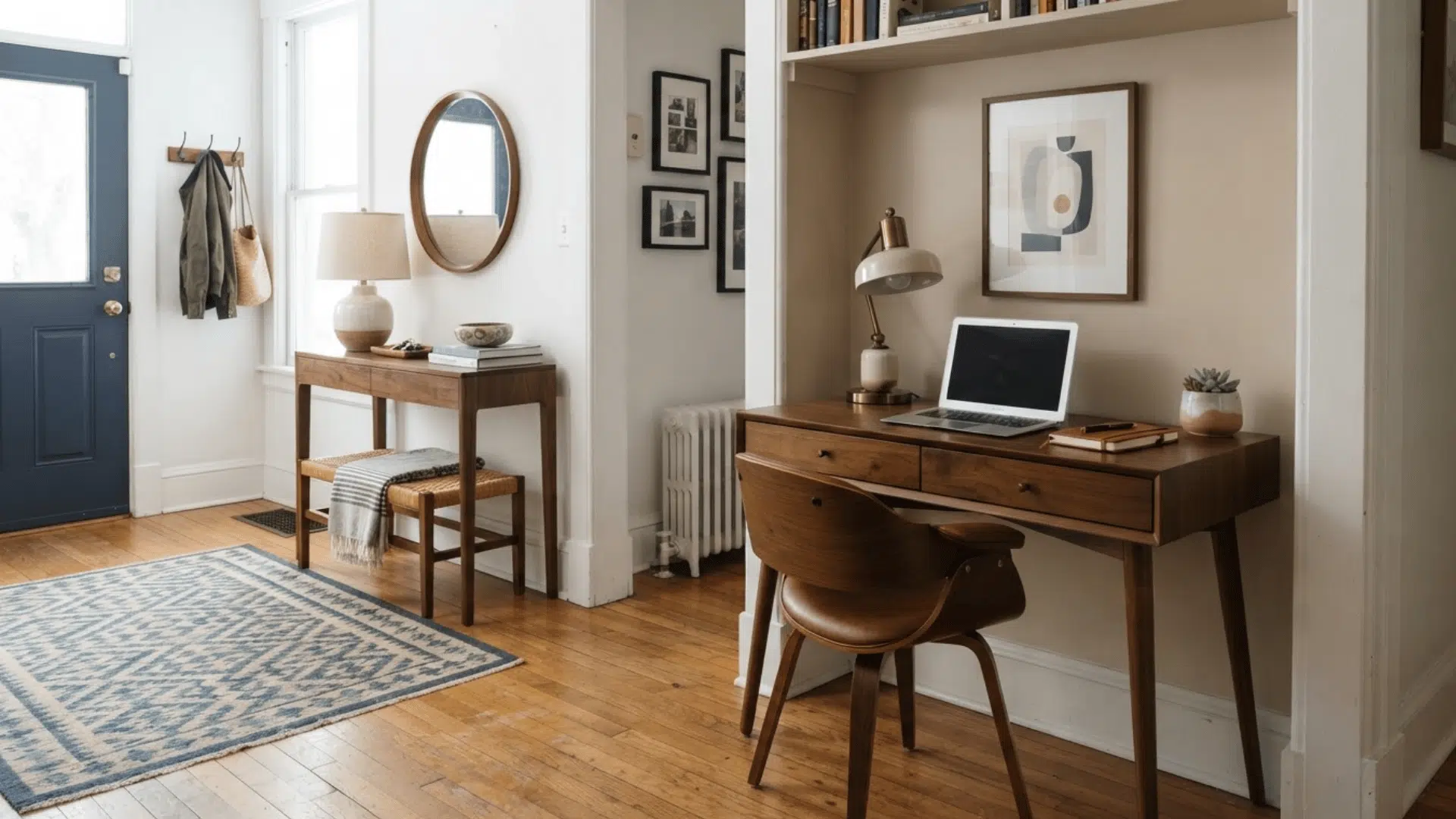
Home offices often use compact desks with slim legs, simple drawers, and warm wood finishes. Entryways may include narrow consoles, benches, or small storage cabinets that fit against a wall without taking up much floor space.
These pieces reflect the MCM focus on practical furniture that looks light and works well in smaller areas.
5. Lighting and Accent Items
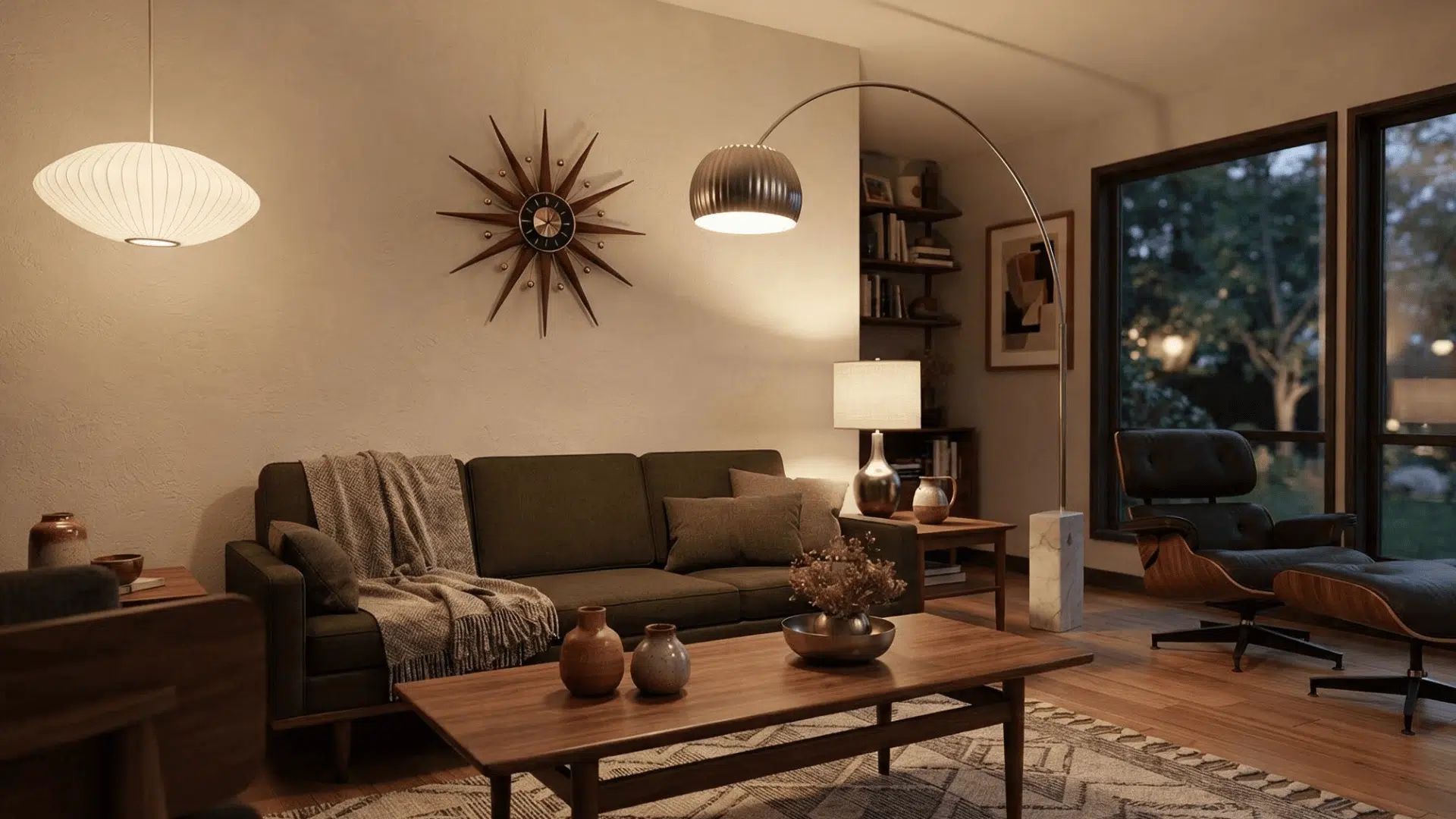
MCM rooms are often completed with arc lamps, Sputnik light fixtures, starburst clocks, and simple ceramic or metal accents. These items are not furniture, but they support the overall style.
Their bold shapes add visual interest while still fitting the clean design approach. They are often used as small statement pieces in otherwise simple rooms.
How does Mid-Century Modern Compare With Other Popular Styles?
Mid-Century Modern shares some features with other styles, but its period, materials, and shapes make it distinct.
| Style | Time Period | Main Materials | Key Visual Difference |
|---|---|---|---|
| MCM | 1945–1969 | Wood, steel, plastic | Low profiles and tapered legs |
| Modern | 1900s | Glass, wood, steel | Fixed historical design movement |
| Contemporary | Current | Mixed materials | Reflects present trends |
| Scandinavian | 1930s onward | Light wood, textiles | Softer, brighter look |
| Industrial | 1900s onward | Metal, brick | Raw finishes |
| Minimalist | 1960s onward | Simple materials | Very little decoration |
| Art Deco | 1920s–1930s | Brass, glass | Bold, decorative geometry |
Knowing these differences makes MCM furniture easier to identify.
How Can You Spot Authentic Vintage MCM Furniture?
A few simple checks can help you separate authentic vintage furniture from reproductions.
- Check Labels and Marks: Look for maker stamps, labels, model numbers, or production tags.
- Inspect Construction: Dovetail joints, solid wood drawers, dowels, and older screws often suggest vintage craftsmanship.
- Study the Wood: Real wood and veneer usually show natural, uneven grain patterns.
- Watch for Warning Signs: Particleboard, printed laminate, plastic edging, and heavy stapling often point to newer pieces.
- Understand Pricing: Originals, licensed reissues, and inspired designs can vary in value based on age, maker, materials, and condition.
Checking several details together gives you a clearer answer.
Where Can You Shop for MCM Furniture in the U.S.?
You can shop for mid-century modern furniture through vintage marketplaces, auction sites, and original manufacturers. Before buying, check the maker, materials, dimensions, condition, shipping costs, and return policy.
Popular websites include:
These options make it easier to compare vintage pieces, collectible designs, and licensed reproductions that suit your space and budget.
How to Style MCM Furniture in a Modern Home
Mid-century modern furniture works best when you mix its clean shapes and warm wood tones with comfortable, current decor.
- Begin With One Statement Piece: Start with a lounge chair, credenza, coffee table, or sofa, then build the room around it.
- Mix Different Eras: Pair MCM furniture with sofa table designs for modern living rooms so the space feels collected rather than stuck in the 1950s or 1960s.
- Layer Rugs, Textiles, and Lighting: Add soft rugs, cushions, curtains, and modern lamps to balance simple furniture lines.
- Make Small Spaces Feel Open: Choose slim legs, smaller tables, and low-profile furniture that leaves more visible floor space.
- Avoid a Movie-Set Look: Skip full matching sets, repeated wood finishes, and oversized pieces that make the room feel staged.
The goal is to let MCM furniture add character while keeping the overall space relaxed, practical, and modern.
Pros and Cons of MCM Furniture
Mid-century modern furniture can be a great choice if you like clean lines, warm wood, simple shapes, and pieces that work well with modern interiors.
| Pros | Cons |
|---|---|
| Clean designs fit many modern homes | Some chairs and sofas have firm cushions |
| Slim legs can make rooms feel more open | Low seat heights may not suit everyone |
| Wood tones add warmth without looking heavy | Credenzas and cabinets may have limited storage depth |
| Easy to mix with contemporary furniture | Authentic vintage pieces can take time to find |
| Quality vintage pieces can last for decades | Original designer pieces can be expensive |
| Works especially well in small spaces | Older furniture may need repairs or refinishing |
MCM furniture suits people who value simple design and character over maximum storage or plush seating. Consider your comfort, available space, budget, and patience for sourcing before choosing it for your home.
Final Thoughts
MCM furniture is a practical choice for anyone who likes clean lines, warm wood, simple shapes, and furniture that does not feel visually heavy. From lounge chairs and credenzas to dining tables and platform beds, these pieces can work in both large homes and small apartments.
I would suggest starting with one well-chosen piece rather than buying a complete matching set. Check the materials, construction, size, comfort, and seller information before spending money on vintage furniture.
Authentic originals can be valuable, but licensed reissues and well-made MCM-inspired pieces can also give you the same overall look. Most importantly, choose furniture that works for your daily needs and available space.
Do you have a favorite MCM furniture piece or designer? Comment below and share your thoughts.
Frequently Asked Questions
Is MCM Furniture Always Made from Solid Wood?
No. Many authentic MCM pieces use wood veneer, plywood, fiberglass, metal, or plastic. Material choice depends on the designer, manufacturer, furniture type, and production period.
Can MCM Furniture Work With Bold Wall Colors?
Yes. MCM furniture pairs well with muted or bold walls. Deep green, navy, terracotta, mustard, and warm neutrals can complement walnut, teak, and lighter wood finishes.
Does MCM Furniture Need Special Maintenance?
Usually not. Dust wood regularly, avoid harsh cleaners, protect surfaces from moisture and heat, and check older joints, upholstery, and hardware occasionally for wear or looseness.
Are MCM Furniture Pieces Comfortable for Everyday Use?
Many are comfortable, but comfort varies by design. Some vintage sofas and chairs have firmer cushions, lower seats, or narrower proportions than many modern furniture pieces.
Can You Mix Different Wood Tones With MCM Furniture?
Yes. Mixing walnut, teak, oak, or other wood tones can create a natural look. Keep a few repeated colors or finishes nearby so the room still feels connected.

With a Master in Architectural Studies from University of Pennysylvania, Marwa Haydar has pioneered living spaces since 2005. Her expertise, initially honed in a prestigious architectural firm, is evident in her approach to creating environments. Marwa became part of our team in 2019 and has since been a driving force in our home improvement section, known for her practical yet stylish solutions. She’s been spearheading our design workshops since then, infusing her passion for teaching into her work. In her leisure time, Marwa enjoys exploring historic architecture and is an enthusiastic pottery hobbyist, further enriching her understanding of form and texture.