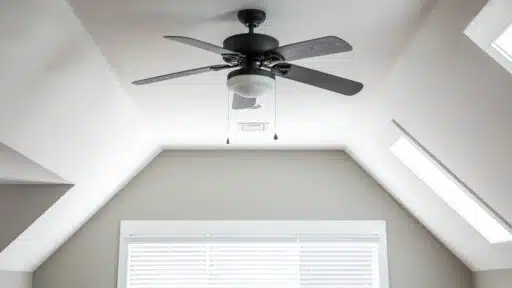
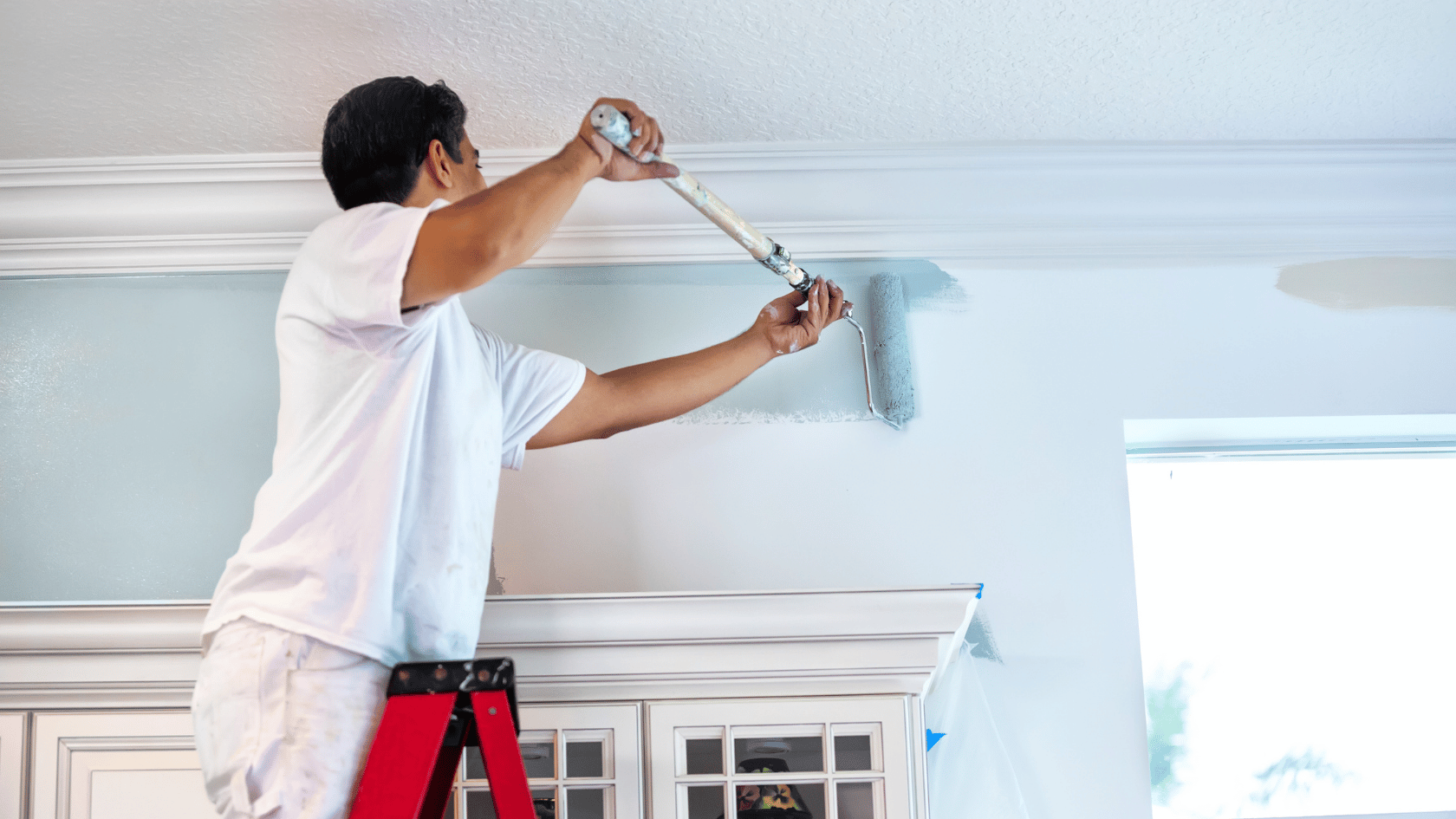

Painting a ceiling sounds simple until the first coat dries and you notice roller lines, dull patches, missed areas, or splatter across the floor.
I have found that ceiling paint quality matters much more than many people expect, especially on large ceilings where light exposes every uneven section.
When I look for the best ceiling paint, I focus on coverage, whiteness, finish, splatter resistance, and how evenly the paint dries. I also pay attention to what homeowners and painters report after actually using a product.
Some ceiling paints deliver a bright white finish, while others focus on hiding flaws or making application easier.
Here, I compare the best ceiling paint options based on different needs so you can choose what makes sense for your room and budget. Let’s start!
Best Ceiling Paint Options in Brief
Here are the best ceiling paint options you can look at before buying:
Ceiling Paint | Best For | Finish | Main Benefit |
|---|---|---|---|
Benjamin Moore Waterborne Ceiling Paint | Best overall | Ultra-flat | Smooth finish and strong hiding |
Sherwin-Williams Premium Ceiling Paint | Bright white ceilings | Ultra-flat | Bright, even finish |
BEHR ULTRA Ceiling Paint & Primer | Value | Flat | Good coverage and stain blocking |
Glidden Pink to White Ceiling Paint | Beginners | Flat | Makes missed spots easier to see |
INSL-X Color-Changing Ceiling Paint | White-on-white painting | Flat | Helps track coverage |
Moisture-resistant interior paint | Bathrooms | Matte or flat | Better for humid rooms |
Author’s note: I would choose based on the room, ceiling condition, finish, and budget rather than brand alone.
The Best Ceiling Paints
I compared these ceiling paints based on finish, coverage, ease of application, and where each one works best.
1. Benjamin Moore Waterborne Ceiling Paint – Best Overall
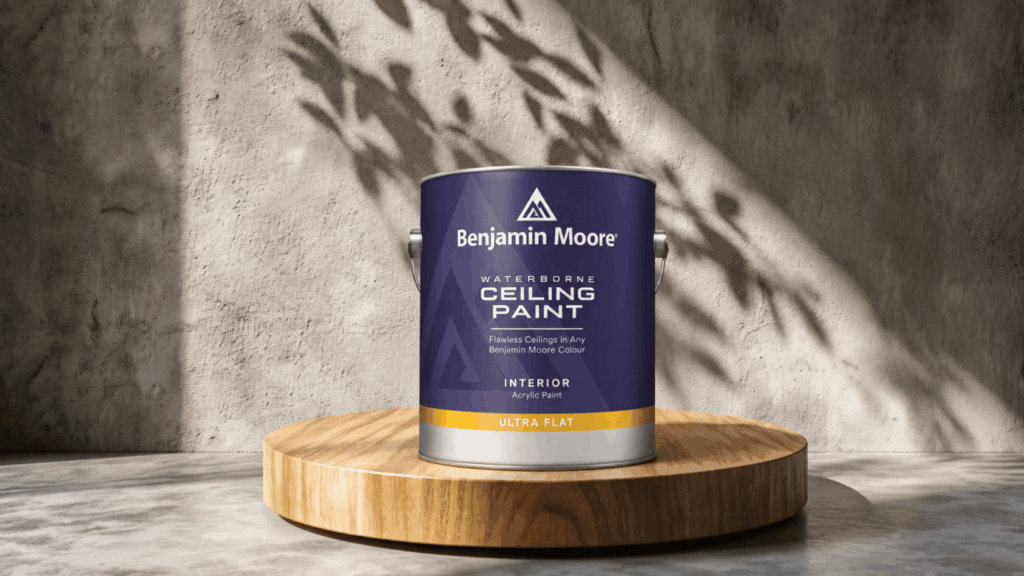
Benjamin Moore Waterborne Ceiling Paint has an ultra-flat finish that helps hide imperfections, reduce glare, and limit visible lap marks. Its low-splatter formula also makes overhead painting easier.
I would use it in living rooms, bedrooms, and hallways where a smooth finish matters most.
- Best for: high-quality interior finishes
- Possible drawback: higher price
2. Sherwin-Williams Premium Ceiling Paint – Best for Bright White Ceilings
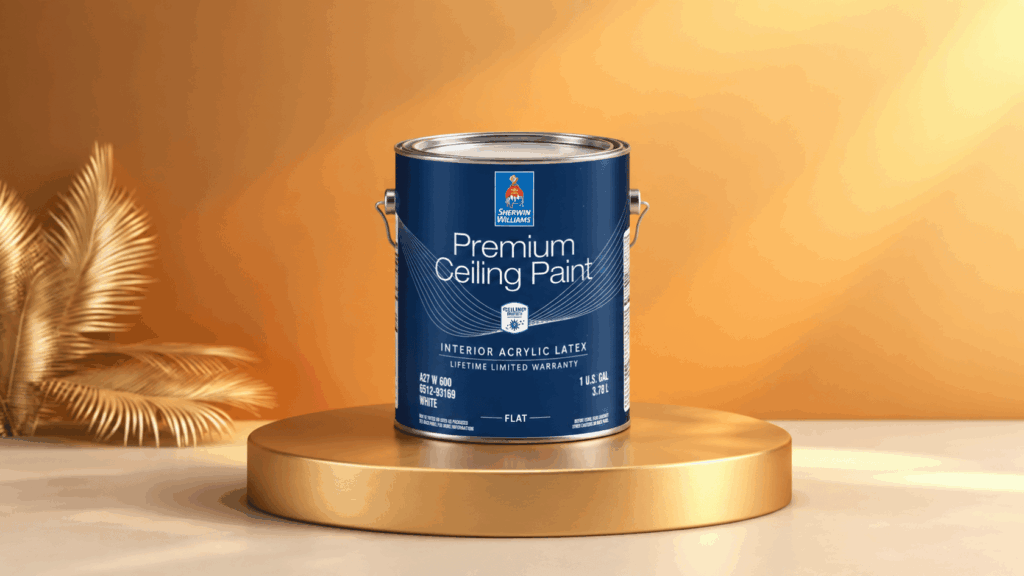
Sherwin-Williams Premium Ceiling Paint is a strong option if I want a clean, bright white ceiling. Its ultra-flat finish helps create an even look while reducing the appearance of small surface flaws.
It also offers splatter and mildew resistance.
- Best for: bright white ceilings and large rooms
- Possible drawback: price can vary by store
3. BEHR ULTRA Ceiling Paint & Primer – Best for Value
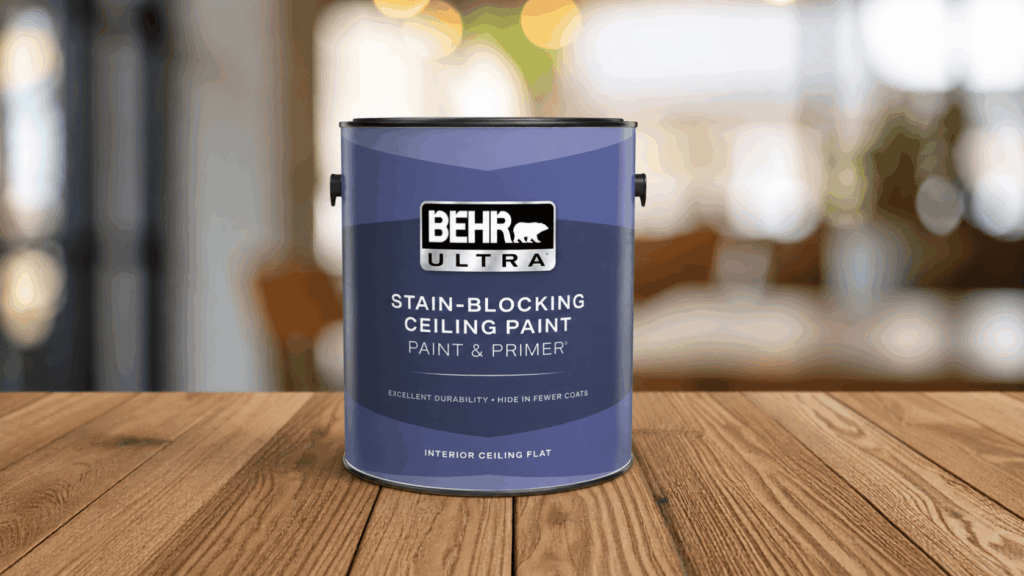
BEHR ULTRA Ceiling Paint & Primer combines a flat finish with stain-blocking properties. It is also widely available and works well for general DIY projects.
I would consider it for bedrooms, hallways, rental properties, or multi-room painting jobs.
- Best for: budget-conscious DIY projects
- Possible drawback: some surfaces may still need primer or a second coat
4. Glidden Pink to White Ceiling Paint – Best for Beginners
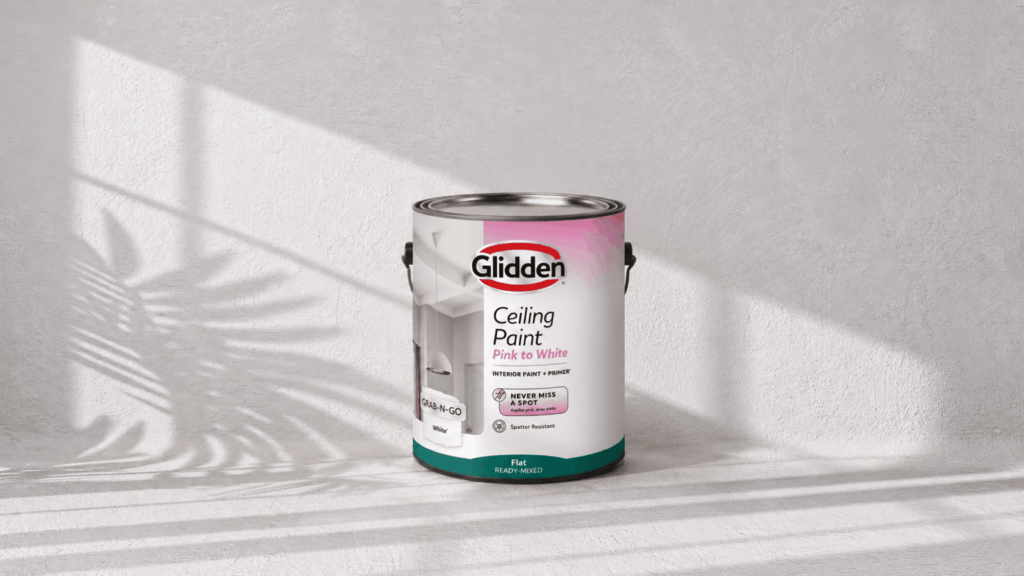
Glidden Pink to White Ceiling Paint goes on pink and dries white. I find this useful because it makes painted and unpainted sections easier to see.
It also includes primer and dries to a flat finish.
- Best for: beginners and white-on-white painting
- Possible drawback: focused more on easy application than premium finish quality
5. INSL-X Color-Changing Ceiling Paint – Best for Avoiding Missed Spots
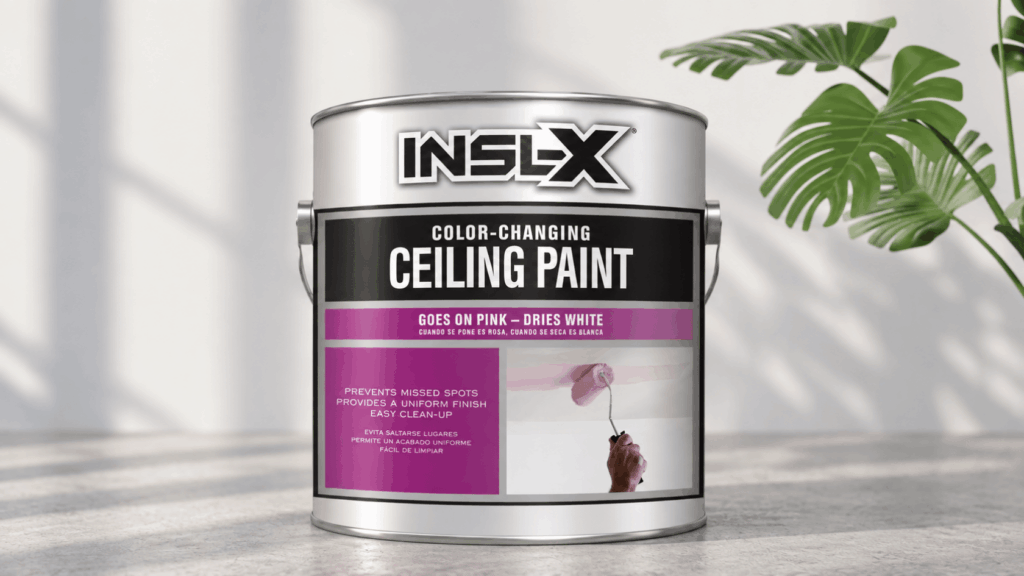
INSL-X Color-Changing Ceiling Paint applies light pink and dries flat white. The temporary color helps me track coverage, especially on ceilings that are already white.
It can be used on smooth or textured ceilings and is designed to reduce splatter.
- Best for: repainting white ceilings
- Possible drawback: limited color flexibility
My tip: I would also make sure the room has proper ventilation, since paint alone will not fix excess moisture.
What are the Common Mistakes When Buying a Ceiling Paint?
These are the mistakes that, as a buyer, you should avoid:
Mistake | Why I Avoid it |
|---|---|
Choosing glossy paint | It can highlight imperfections |
Buying only by price | Extra coats may cancel the savings |
Ignoring humidity | Basic flat paint may not suit bathrooms |
Expecting guaranteed one-coat coverage | Surface conditions affect hiding |
Choosing white without checking undertones | It may clash with walls or trim |
Using ordinary wall paint automatically | It may not perform as well overhead |
Avoiding these mistakes can save both time and money.
Suggestion: Check the finish, coverage, room conditions, and color before buying.
What Do I Look for in the Best Ceiling Paint?
Whenever I compare ceiling paint, I look past marketing terms and focus on how the paint will behave during and after application.
1. Coverage and Hiding Power
Good hiding power matters because ceilings often have patches, old stains, repairs, or slight color differences.
I prefer a paint that covers evenly without making me fight through several thin coats. However, I never assume that “one-coat coverage” means one coat will work in every situation.
Surface condition, primer, old color, and roller technique can all affect the final result.
2. Flat or Ultra-Flat Finish
For most ceilings, I choose flat or ultra-flat.
Glossy surfaces boost the home’s ambiance, but they can also reveal drywall joints, roller lines, dents, and texture differences. A flatter paint usually makes these defects less obvious.
Benjamin Moore specifically states that its ultra-flat ceiling finish helps hide imperfections and reduce glare.
3. Low Splatter
Splatter is one of the first things I consider when working overhead. A paint that sprays tiny droplets every time I roll can make the entire job messier, even when the floor and furniture are covered.
That is why I value formulas specifically designed to reduce splatter.
4. Even Drying
I also look for paint that levels and dries evenly. A ceiling may look fine while wet but develop stripes, flashing, or obvious roller sections once dry.
I try to maintain a wet edge and avoid repeatedly rolling over areas that have already started drying. Benjamin Moore also recommends maintaining a wet edge to reduce lap marks.
5. Whiteness
Not every white looks the same.
I may choose a bright white when I want a crisp contrast against darker walls. In warmer rooms, I sometimes prefer a softer white so the ceiling does not look blue or harsh.
Whiteness and sheen are also different. A bright white can still have an ultra-flat finish.
Flat vs Matte: Which Ceiling Paint is Better?
Flat or ultra-flat paint is usually the better choice for most ceilings because its low sheen helps reduce the visibility of surface flaws.
The Painting Contractors Association states that flat or matte finishes minimize the visibility of surface blemishes, making them useful on large smooth or textured surfaces.
I prefer flat finishes for bedrooms, living rooms, and hallways where appearance matters most. Matte paint can be slightly more durable, but it may reflect more light than a dead-flat finish.
For bathrooms, I am more flexible. I would choose a moisture-resistant matte paint if it offers better protection against steam and humidity, even if the finish has slightly more sheen.
Last Words
The best ceiling paint should provide even coverage, low splatter, strong hiding power, and a finish that suits the room. For most living rooms, bedrooms, and hallways, I prefer flat or ultra-flat paint because it hides imperfections and reduces glare.
In bathrooms and other humid spaces, moisture and mildew resistance matter more.
Good surface preparation, the right roller nap, and consistent application also help produce a cleaner finish.
Have you used any of the ceiling paints I discussed above? Share your experience in the comments below.
Frequently Asked Questions
How Much Ceiling Paint Do I Need?
One gallon of paint commonly covers around 350–400 square feet, but coverage can vary by product and surface. Measure the ceiling area and check the manufacturer’s stated coverage before buying.
Do I Need to Prime a Ceiling Before Painting?
Not always. Primer is useful on new drywall, repaired areas, water stains, or surfaces with uneven color. A clean, previously painted ceiling in good condition may not need separate primer.
What Roller Nap Should I Use for Ceiling Paint?
A 3/8-inch nap works well for many smooth ceilings. For lightly textured surfaces, a 1/2-inch nap can help reach uneven areas. Heavier textures may require a thicker roller nap.
How Long Should Ceiling Paint Dry Between Coats?
Drying and recoat times vary by product, temperature, and humidity. Many latex ceiling paints can be recoated after a few hours, but always follow the instructions on the paint label.
Should I Paint the Ceiling Before or After the Walls?
I prefer painting the ceiling first. Any drips or splatter can then be covered when the walls are painted, making the overall process easier and cleaner.

With a Master in Architectural Studies from University of Pennysylvania, Marwa Haydar has pioneered living spaces since 2005. Her expertise, initially honed in a prestigious architectural firm, is evident in her approach to creating environments. Marwa became part of our team in 2019 and has since been a driving force in our home improvement section, known for her practical yet stylish solutions. She’s been spearheading our design workshops since then, infusing her passion for teaching into her work. In her leisure time, Marwa enjoys exploring historic architecture and is an enthusiastic pottery hobbyist, further enriching her understanding of form and texture.