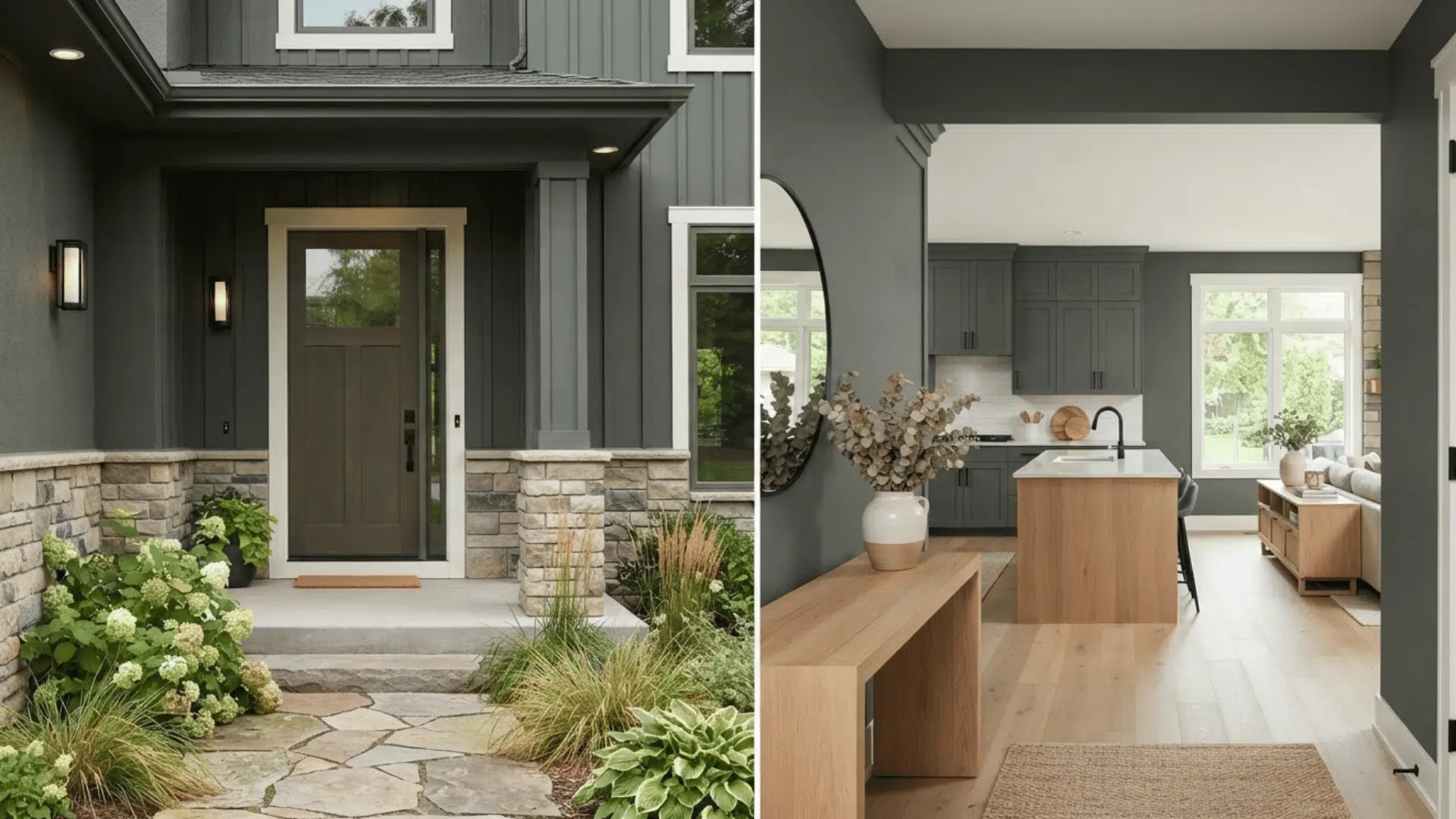

Rock Bottom SW 7062 is a deep green-gray paint color that can look mossy, charcoal, or nearly black as lighting changes.
Its muted depth makes it useful for walls, cabinets, doors, trim, siding, shutters, and other interior or exterior surfaces.
The shade works especially well with warm white, light gray, natural wood, stone, brick, beige, and aged metal finishes.
However, its appearance can shift greatly based on room direction, bulb temperature, sheen, surface texture, and nearby materials.
Use these details to decide if Rock Bottom suits your home and planned project with greater confidence today.
What is Rock Bottom Sherwin-Williams?
Rock Bottom Sherwin-Williams SW 7062 is officially classified as a dark green color for interior and exterior use.
It is a color choice, not a specific paint product or finish. At first glance, Rock Bottom may look like charcoal, deep gray, or even black because of its strong depth and muted tone.
Its green base becomes easier to see beside true black, cool gray, bright white, or natural wood. The final look can change with wall size, daylight, bulb temperature, nearby colors, and surface texture.
In bright light it may appear greener, while shaded areas can make it look almost black.
Rock Bottom SW 7062 Undertones
Rock Bottom SW 7062 has several undertones that can change based on lighting, nearby colors, and the materials used in the space.
- Mossy green undertones: The mossy green base gives Rock Bottom an earthy look. It becomes easier to notice beside warm wood, stone, beige, cream, and other natural colors.
- Cool gray undertones: Gray softens the green and keeps the color from looking too bright. This gives Rock Bottom a calm, muted appearance.
- Possible blue undertones: Cool northern light, white LED bulbs, blue-gray floors, or nearby cool shades may make the color look slightly blue.
- Near-black appearance: In shaded rooms, narrow hallways, covered porches, or dim exterior areas, Rock Bottom can appear almost black.
Testing a sample in different lighting conditions is the best way to see which undertones will stand out.
How Rock Bottom Changes With Lighting
Lighting can change how Rock Bottom SW 7062 looks throughout the day, so testing a sample before buying several gallons is important.
1. North-Facing Rooms
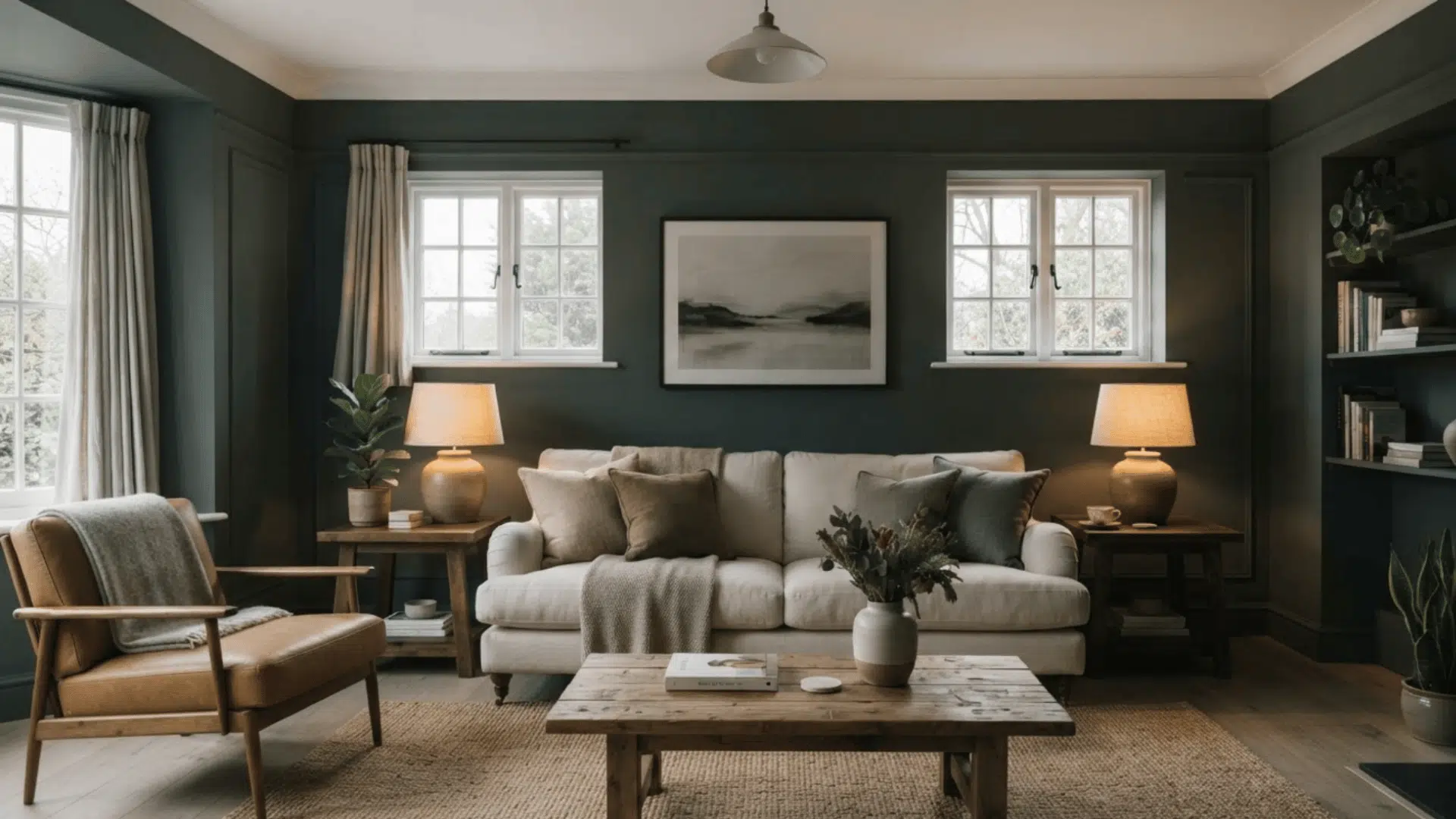
North-facing rooms usually receive cooler and softer daylight. In these spaces, Rock Bottom may show more of its gray side and appear deeper than expected.
The green can become less noticeable, especially in corners or rooms with small windows.
Light flooring, pale furniture, and warm lamps can help keep the room from feeling too dark or closed.
2. South-Facing Rooms
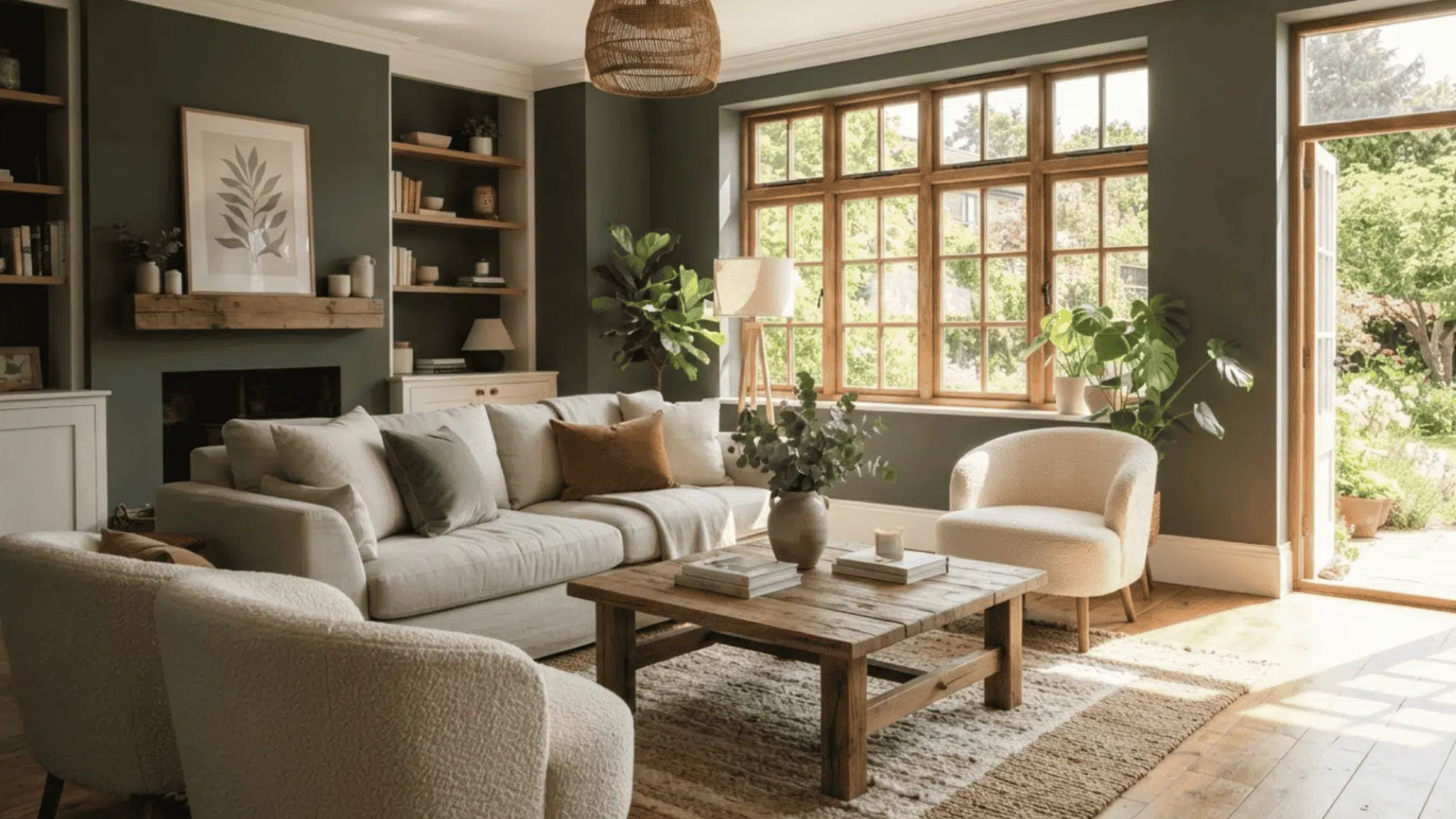
South-facing rooms receive stronger, warmer daylight for much of the day.
This light can bring out the mossy green base in Rock Bottom and make the gray undertones feel softer.
The color may appear more balanced and earthy in these rooms.
Large windows can also help the shade feel less heavy, especially when paired with light trim.
3. East-Facing Rooms
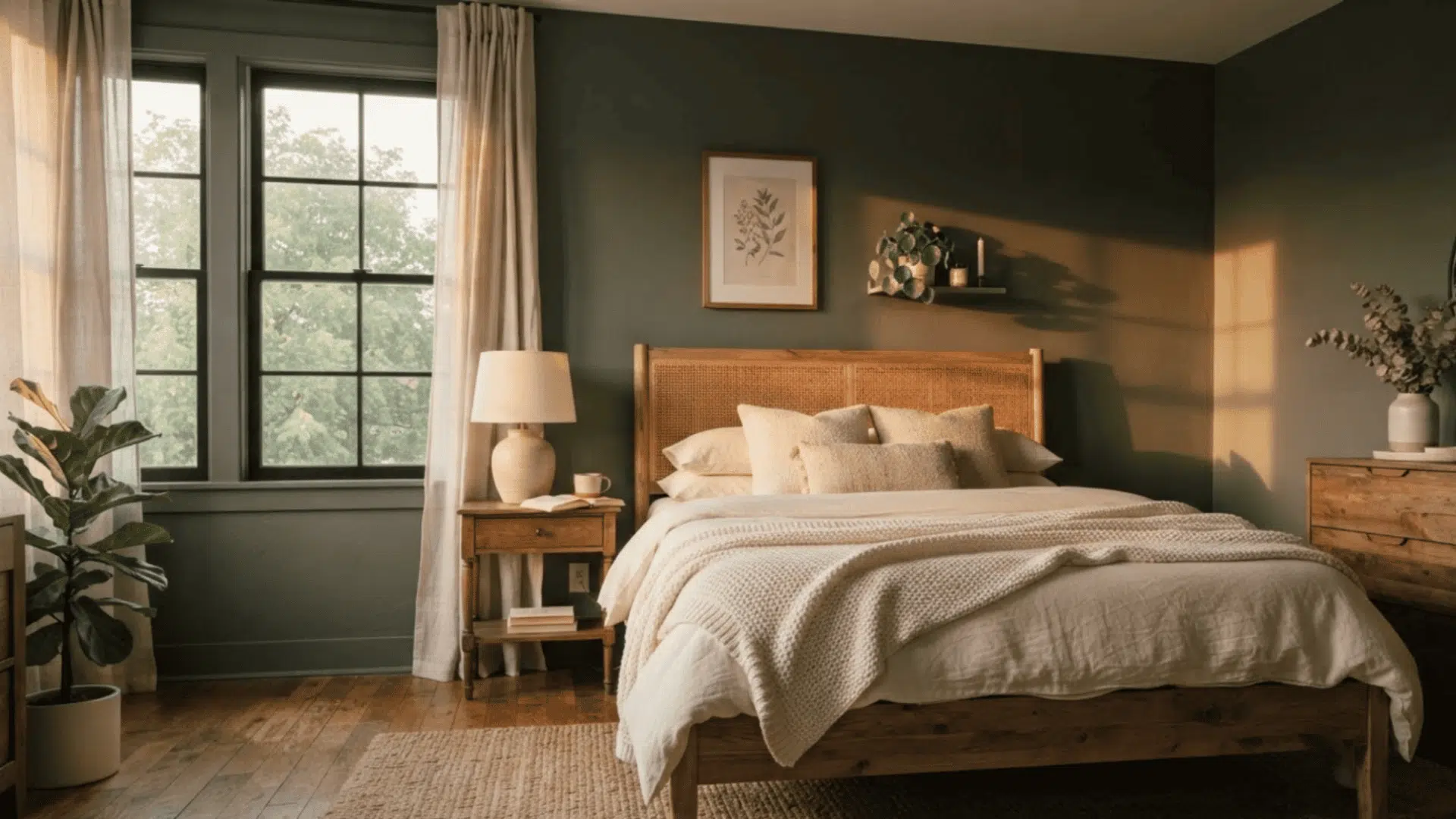
East-facing rooms receive warm morning sunlight, which can make Rock Bottom appear greener and slightly warmer early in the day.
As the sunlight moves away, the shade may become cooler, darker, and more gray during the afternoon.
Check the paint at different times because its morning appearance may be quite different from how it looks in the evening.
4. West-Facing Rooms
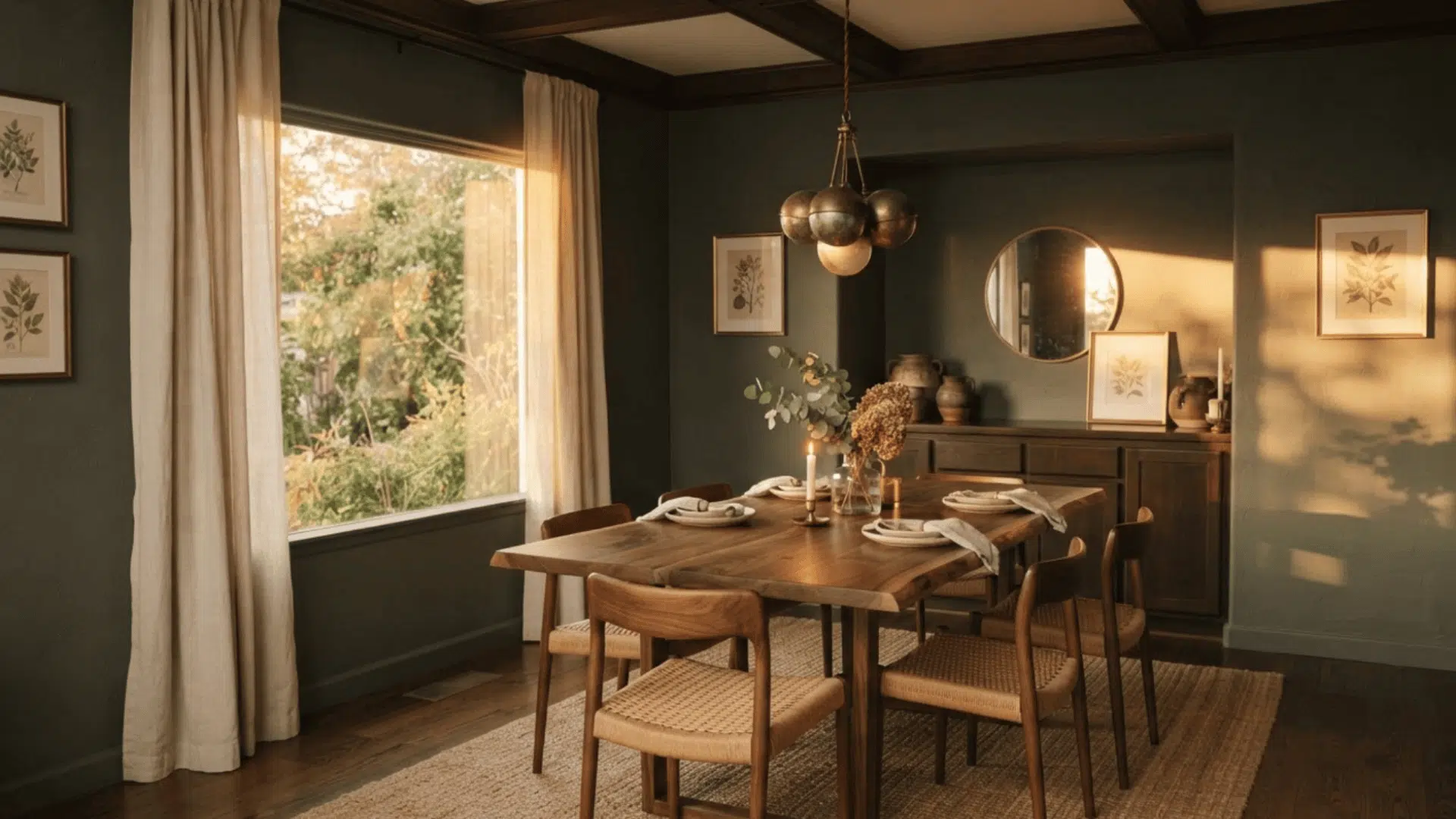
West-facing rooms can make Rock Bottom look deep and muted during the morning when natural light is limited.
Later in the day, warm afternoon sunlight may reveal more green and soften its darker appearance.
The color may feel warmer near sunset, especially beside wood, cream, or beige. Testing it on more than one wall helps show these changes.
5. Artificial Lighting
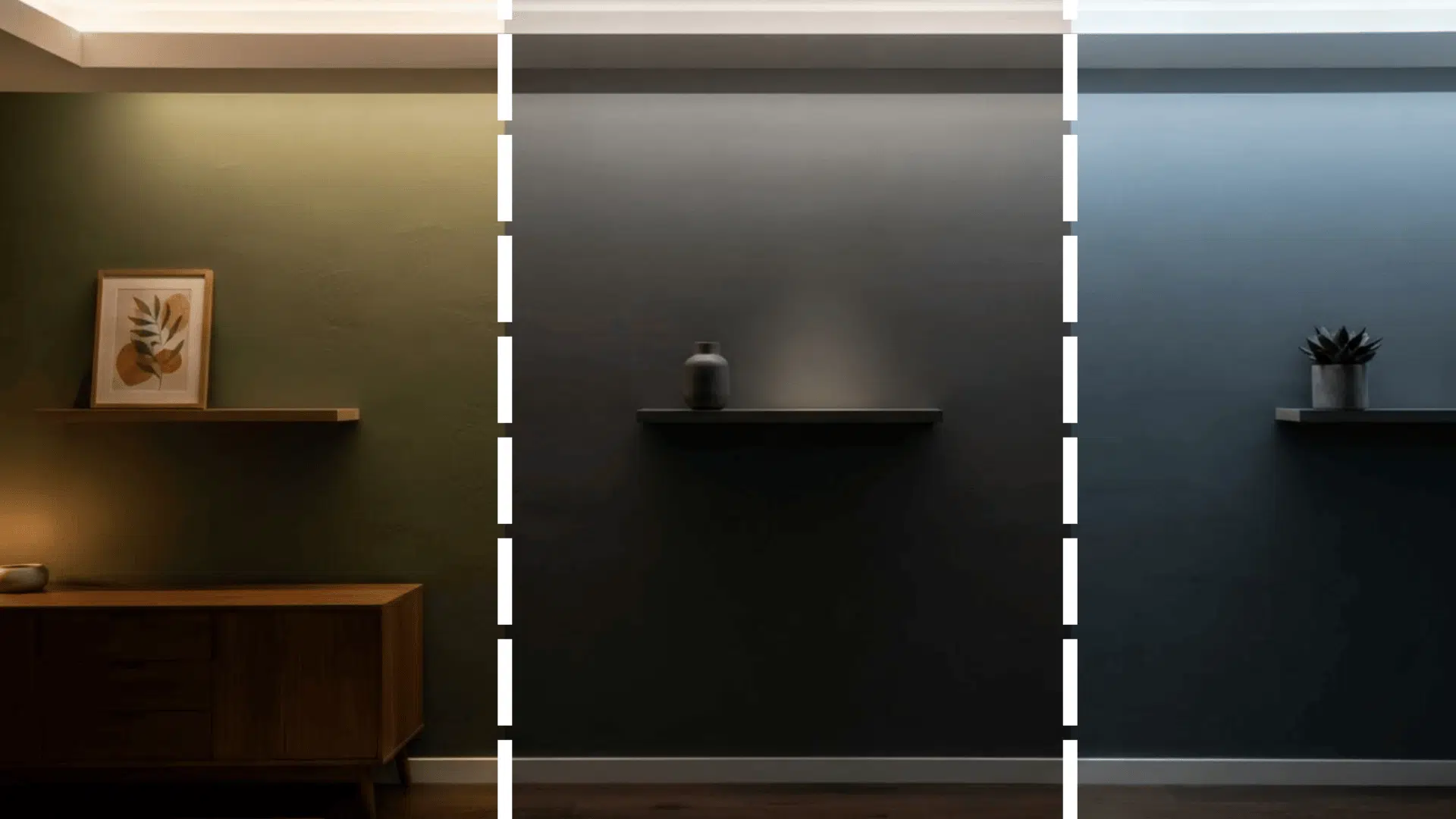
Warm bulbs may bring out the mossy green side of Rock Bottom, while neutral white bulbs can show a more balanced green-gray appearance.
Cool LED lighting may strengthen the gray or slightly blue tones. Bulb brightness also affects how dark it feels.
View the sample during daylight and again at night before choosing the final paint and finish.
How Rock Bottom Looks in Interior Spaces
Rock Bottom SW 7062 changes with room size, lighting, furniture, and how much of the surface is painted.
- Living rooms: Use it on feature walls, fireplaces, shelving, or full walls with light furniture.
- Bedrooms: Pair it with cream bedding, warm fabrics, and wood furniture for a calm look.
- Kitchens: It suits cabinets, islands, and pantry doors with brass, chrome, or black hardware.
- Bathrooms: Use moisture-resistant paint and balance it with white tile and mirrors.
- Offices and dining rooms: Add task lighting, pale ceilings, and wood accents.
- Small spaces: Limit it to doors, trim, or one wall.
Lighter finishes help balance its dark depth.
Sherwin-Williams Rock Bottom Exterior Review
Sherwin-Williams Rock Bottom exterior paint can look lighter outdoors than it does inside because natural daylight reveals more of its green base.
Rooms with larger windows and more natural daylight may show Rock Bottom’s green undertones more clearly than dim spaces.
Weather, shade, landscaping, and the direction a home faces can still make SW 7062 appear darker or grayer.
On siding, brick, stucco, shakes, and fiber cement, larger areas often show its muted green tone more clearly.
It also works well on front doors, shutters, trim, and garage doors. Rock Bottom pairs nicely with white, cream, gray, natural wood, red brick, and stone.
Always test a sample beside existing materials before making a final choice.
Best Colors to Pair With Rock Bottom SW 7062
Rock Bottom SW 7062 works best with colors and materials that either soften its depth or bring out its green-gray undertones.
- White and off-white: Clean white creates strong contrast, while soft white gives a gentler look. Creamy white adds warmth, and muted off-white can help the color feel less sharp.
- Light gray: Silver Strand is an official coordinating suggestion from Sherwin-Williams. Its lighter gray-green tone creates a smooth transition without making the palette feel too cold.
- Warm neutrals: Beige, taupe, tan, mushroom, and warm greige can balance the cooler side of Rock Bottom and make the overall space feel more comfortable.
- Natural wood tones: Oak, walnut, cedar, and medium brown stains bring out the mossy green undertones and add natural warmth.
- Accent colors: Muted rust, clay, brass, aged gold, soft blue-gray, and subdued brown can add contrast without overpowering the main color.
The best pairing depends on the lighting, room size, and existing finishes, so test the colors together before making a final choice.
Rock Bottom Compared With Similar Colors
These comparisons show how Rock Bottom differs from other dark Sherwin-Williams shades.
| Comparison | Main Difference | Best Use |
|---|---|---|
| Ripe Olive | Warmer, greener, and earthier | Warm rooms and cabinets |
| Pewter Green | Softer, lighter, and clearly green | Large interior walls |
| Cascades | Stronger blue-green and teal tones | Bold cabinets and accents |
| Andiron | Warmer and more olive | Wood and stone exteriors |
| Thunder Gray | Lighter and greener in daylight | Broad walls and siding |
| Tricorn Black | A direct neutral black | Sharp doors and trim |
Rock Bottom is the better choice for a deep green-gray look with softer contrast.
Best Paint Finishes for Rock Bottom
Rock Bottom SW 7062 can look different depending on the sheen, so choose the color and paint finish as separate decisions.
- Flat or Matte: Flat and matte finishes reduce glare and show the deepest, richest version of Rock Bottom.
- Eggshell: Eggshell has a soft glow that adds slight depth without looking shiny.
- Satin: Satin reflects more light and may make Rock Bottom look slightly lighter or greener.
- Semi-Gloss: Semi-gloss creates a brighter, more reflective finish that highlights edges and architectural details.
Testing Rock Bottom in the planned sheen is important because added reflection can change how dark, green, or gray the color appears.
How to Test Rock Bottom Before Painting
Testing Rock Bottom SW 7062 in the actual space helps you see its green, gray, and near-black qualities before covering a full wall or exterior.
Step 1: Order an Official Sample
Order a physical sample through the Sherwin-Williams color page or its sample-ordering service. Computer and phone screens may not show paint colors accurately because display settings and lighting differ.
A real sample gives you a better view of Rock Bottom’s depth, undertones, and overall appearance before you purchase several gallons of paint.
Step 2: Paint More than One Test Area
Apply the sample in several parts of the space instead of using one small patch. Test it near windows, dark corners, doors, cabinets, flooring, and trim.
For exteriors, place samples beside brick, stone, siding, and other fixed materials. Different locations can make Rock Bottom appear greener, grayer, darker, or closer to black.
Step 3: Check the Color at Different Times
View each sample during the morning, afternoon, and evening. Also check it on bright and cloudy days when possible. Natural and artificial light can change how the color appears.
Rock Bottom may look more green in strong daylight, more charcoal in shaded areas, and almost black under weak or warm evening lighting.
Step 4: Compare it With Nearby Finishes
Place the sample beside every major finish that will remain in the room or on the exterior. Check it with countertops, flooring, roofing, stone, brick, furniture, and trim.
This step helps reveal undertone conflicts. Rock Bottom often pairs well with natural materials, but some cool grays, creamy whites, or warm finishes may change its appearance.
Homes built before 1978 may contain lead-based paint . Avoid sanding or disturbing old coatings until you have reviewed EPA lead-safe guidance.
Step 5: Test the Planned Sheen
Use the same paint finish planned for the final surface whenever possible. Flat and matte finishes absorb more light, making Rock Bottom look deeper and softer.
Satin and semi-gloss finishes reflect more light, which may make the shade appear slightly lighter or greener.
Testing the correct sheen gives a more accurate view of the final result.
Where to Buy Rock Bottom Sherwin-Williams Paint
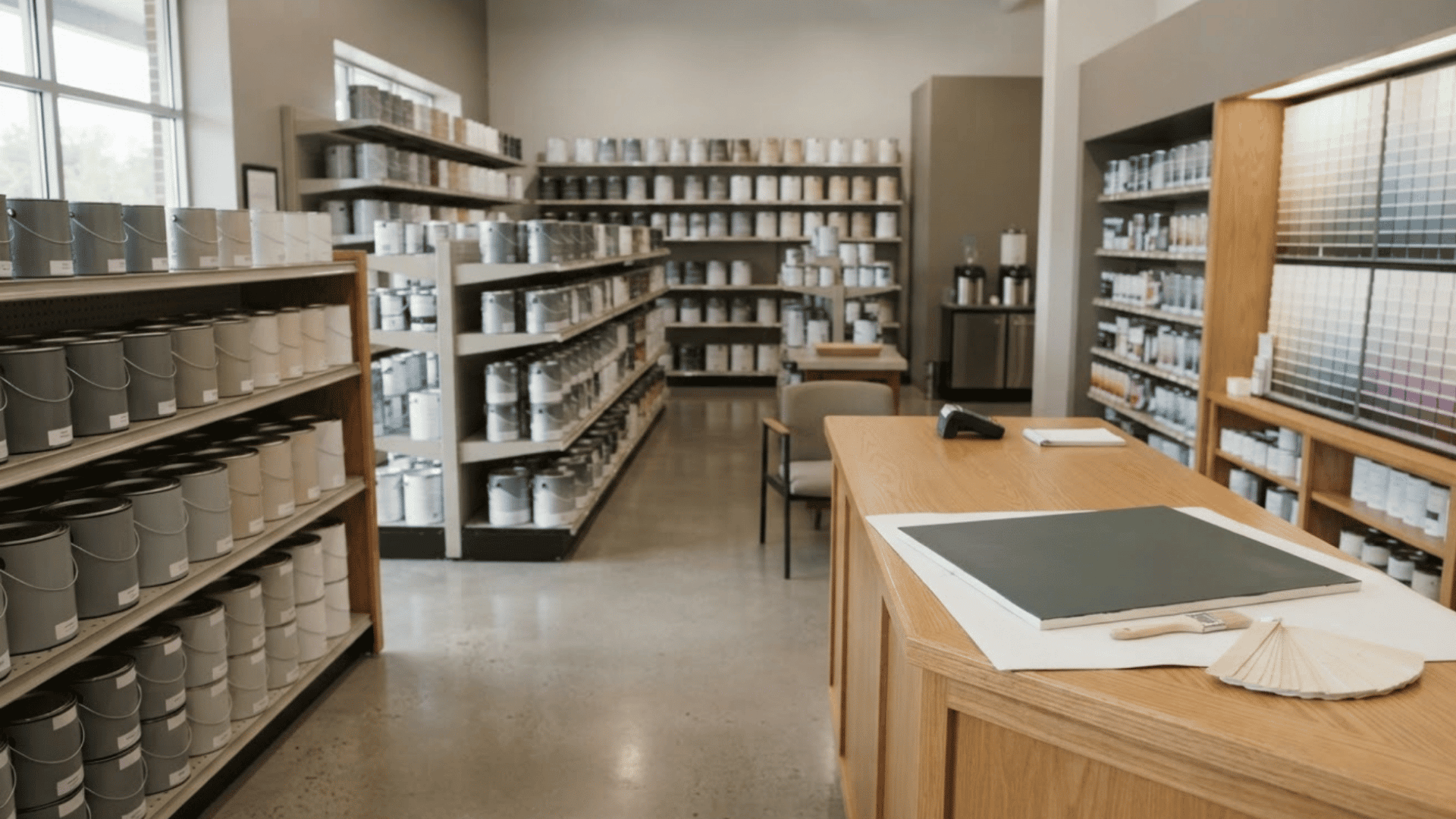
Rock Bottom SW 7062 is available through the official Sherwin-Williams color page and local Sherwin-Williams stores.
The online listing lets shoppers view the shade, save it, explore coordinating colors, use visualization tools, and order available samples.
Local stores can confirm paint lines, finishes, sample types, stock, and current prices.
Rock Bottom is a color formula, not one specific paint product, so it may be mixed into suitable interior or exterior paints.
For work that may disturb paint in a pre-1978 home, use the EPA locator to find a lead-safe certified professional.
Before ordering, confirm the surface, application area, paint line, sheen, primer needs, expected coats, required quantity, store price, and sample availability for the planned project.
How Much Rock Bottom Paint do You Need?
The amount of Rock Bottom paint you need depends on the area size, surface condition, texture, number of coats, paint product, and application method.
- Measure the Painting Area: Multiply each wall’s length by its height, then add the totals together. Subtract large windows and doors to get a more accurate estimate.
- Plan for Two Coats: Rock Bottom may need two even coats, especially over light colors, patched areas, glossy paint, or uneven surfaces. Primer may also be needed for better coverage.
- Consider Exterior Texture: Brick, stucco, masonry, and rough wood absorb more paint than smooth drywall or siding. Spraying can also use more paint than brushing or rolling.
Check the paint can’s coverage rate and confirm the final quantity with a Sherwin-Williams store before ordering.
Common Mistakes to Avoid With SW 7062
Rock Bottom can shift with light, sheen, and nearby finishes, so a careful testing process gives better results.
| Common Mistake | Better Approach |
|---|---|
| Choosing from a phone screen alone | Order a physical sample and view it in the actual space. |
| Testing one small swatch | Paint larger samples in several areas. |
| Ignoring permanent materials | Compare it with brick, stone, flooring, roofing, tile, and countertops. |
| Using cool LEDs without testing | Check the color under both natural and artificial light. |
| Selecting the finish after buying | Choose the sheen before ordering paint. |
| Copying another home exactly | Consider your own daylight, architecture, and surroundings. |
Testing first helps prevent costly color and finish mistakes.
Final Thoughts
Rock Bottom SW 7062 is a good choice for homeowners who want a dark color with more character than plain black. Its cool green-gray base can appear mossy in warm daylight, charcoal in shade, or almost black in dim areas.
It works on walls, cabinets, doors, siding, shutters, trim, and built-ins, but careful testing is important before buying paint.
Compare a physical sample with flooring, brick, stone, roofing, countertops, furniture, and trim throughout the day. Also test the sheen because reflection can change the color’s depth and undertones.
When paired with suitable lighting and lighter finishes, Rock Bottom can feel grounded, balanced, and comfortable.
Where would you use SW 7062? Share your plans or color pairing ideas in the comments.
Frequently Asked Questions
Does Rock Bottom work with Red Brick?
Yes. Its muted green-gray tone can complement many red brick shades, especially when paired with warm white trim, natural wood, or soft beige details for balance outdoors and indoors too.
Can Rock Bottom be Used on Ceilings?
It can work on ceilings in bright rooms or dramatic spaces, but its depth may lower the visual height. Test it with wall color and lighting first before painting everything.
Does Rock Bottom Suit Open Floor Plans?
Yes, but use it carefully. Applying Rock Bottom to one feature wall, cabinets, or built-ins can add depth without making connected rooms feel overly dark or heavy throughout the space.
Which Hardware Looks Good with Rock Bottom?
Brass and aged gold bring out its warmer mossy side, while chrome looks cooler. Matte black creates low contrast, and bronze works well with wood and stone throughout the room.
Does Rock Bottom hide wall imperfections?
Matte finishes may soften minor flaws, but dark paint can also highlight uneven patches under angled light. Prepare, sand, prime, and test the wall before full application for smoother results.

With a Master in Architectural Studies from University of Pennysylvania, Marwa Haydar has pioneered living spaces since 2005. Her expertise, initially honed in a prestigious architectural firm, is evident in her approach to creating environments. Marwa became part of our team in 2019 and has since been a driving force in our home improvement section, known for her practical yet stylish solutions. She’s been spearheading our design workshops since then, infusing her passion for teaching into her work. In her leisure time, Marwa enjoys exploring historic architecture and is an enthusiastic pottery hobbyist, further enriching her understanding of form and texture.