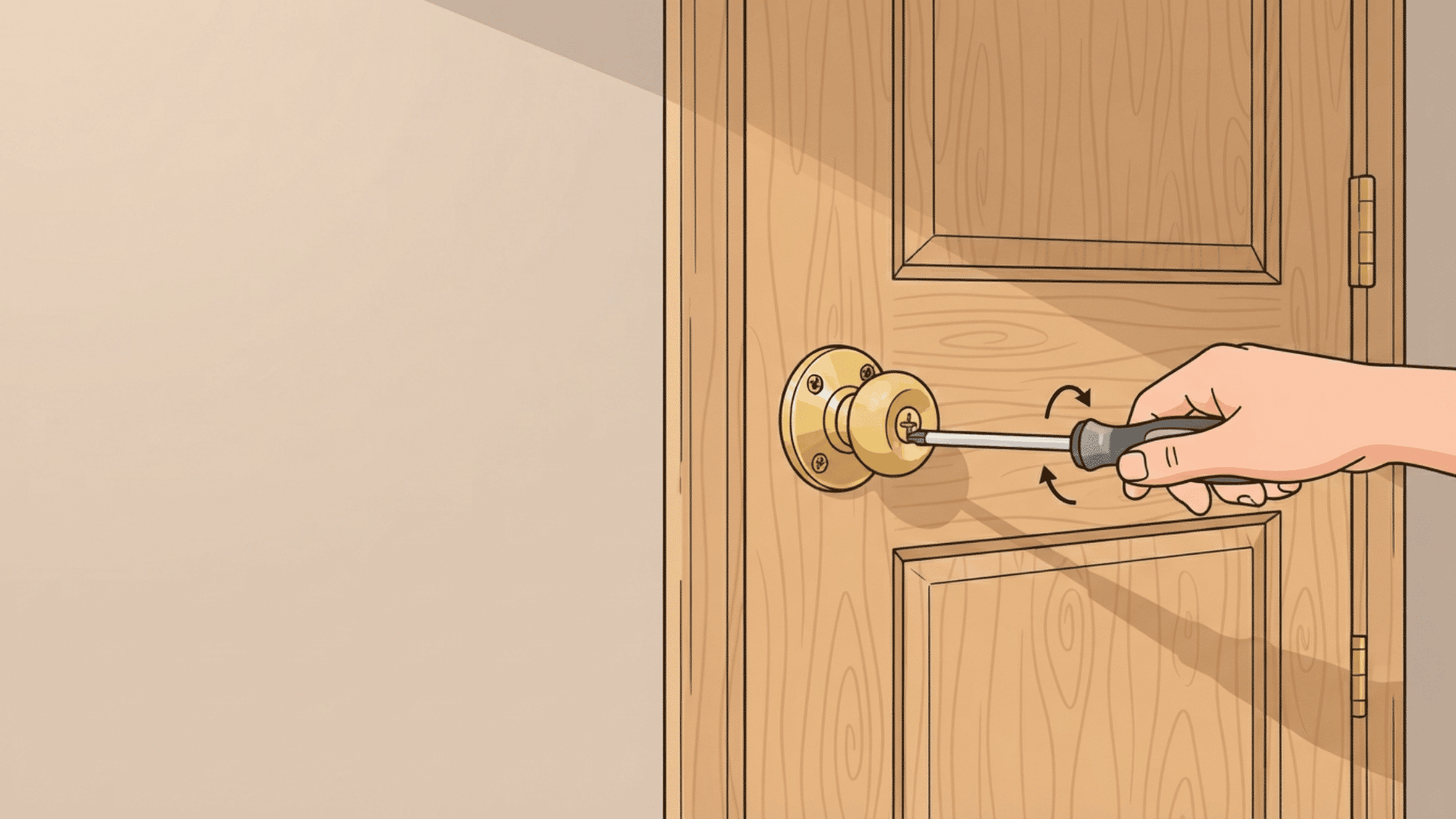

You grab the doorknob, give it a turn, and… it wobbles. Maybe it even spins right around without opening the door at all. Annoying, right?
The good part is, you don’t need to call a locksmith or buy a whole new knob. I’ve fixed plenty of these myself, and a loose doorknob is one of the easiest home fixes there is.
You can probably do it in about 15 minutes with tools you already own.
In this guide, I’ll walk you through the quickest way to fix a standard loose doorknob, step by step. We’ll also cover trickier cases, like old vintage knobs, knobs with no visible screws, lever handles, and pull handles.
Plus, you’ll learn why knobs get loose in the first place, and simple tricks to stop it from happening again. Let’s get that wobble fixed for good.
Tools You’ll Need
Before we start, let’s gather the few basic tools I always keep nearby for this exact job. Chances are, you already own most of these.
- Phillips or flathead screwdriver
- Allen key (hex key)
- Small flathead screwdriver or an awl
- Penetrating oil or lubricant (optional)
That’s really it. No power tools, no trip to the hardware store, and no fancy gear. Once you’ve got these within reach, you’re ready to fix that wobbly knob.
How to Tighten a Standard Doorknob: Step-by-Step
Now that you’ve got your tools ready, let’s fix that wobbly handle together, one simple step at a time.
1. Remove the Front Cover Plate
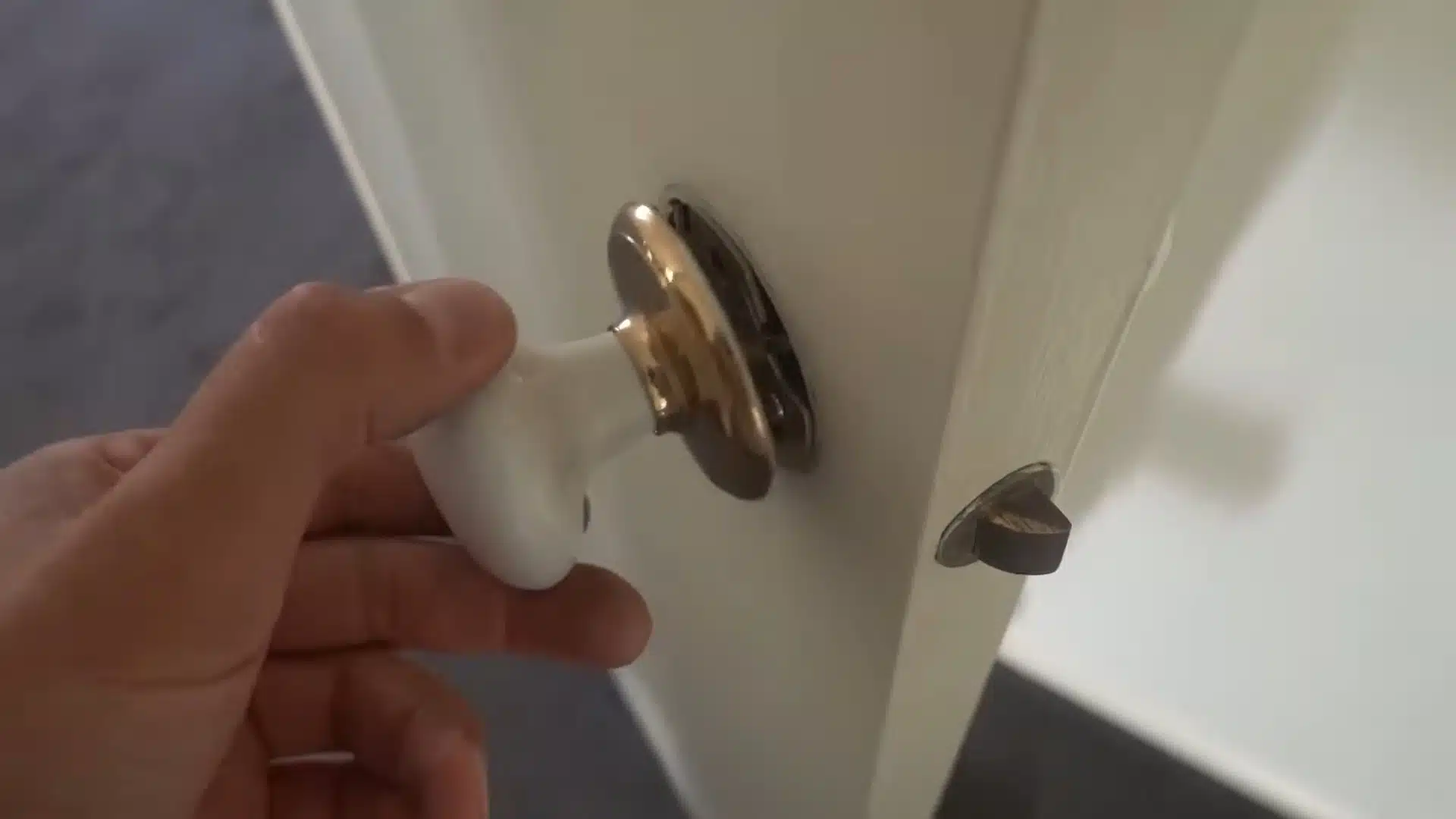
Grab the round cover plate on the front of the handle and hold it as tightly as you can with one hand.
Twist it counterclockwise (to the left) while gently wiggling it up and down at the same time. It may feel stuck at first, so keep turning steadily; I promise it will give.
Threads hold this plate on, and it will pop off once it loosens, revealing the hidden screws underneath.
2. Remove the Back Plate
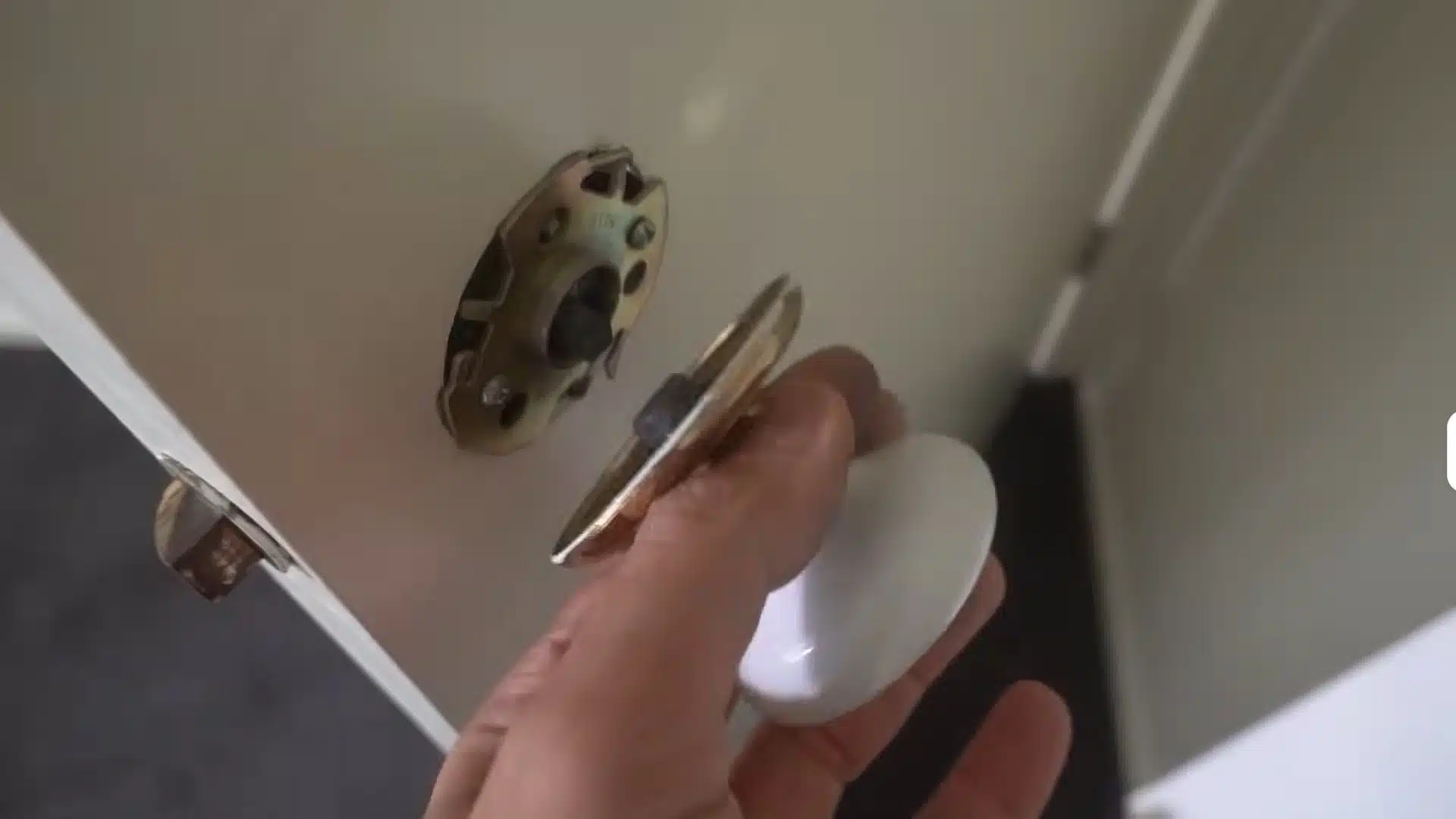
Now repeat the same steps on the other side of the door. I brace my foot against it again for support, grab the back cover plate firmly, and twist it counterclockwise while wiggling it loose.
Once both the front and back plates are removed, you’ll finally see all four screws holding everything together, two on the front side and two more on the back.
3. Tighten the Screws on Both Sides
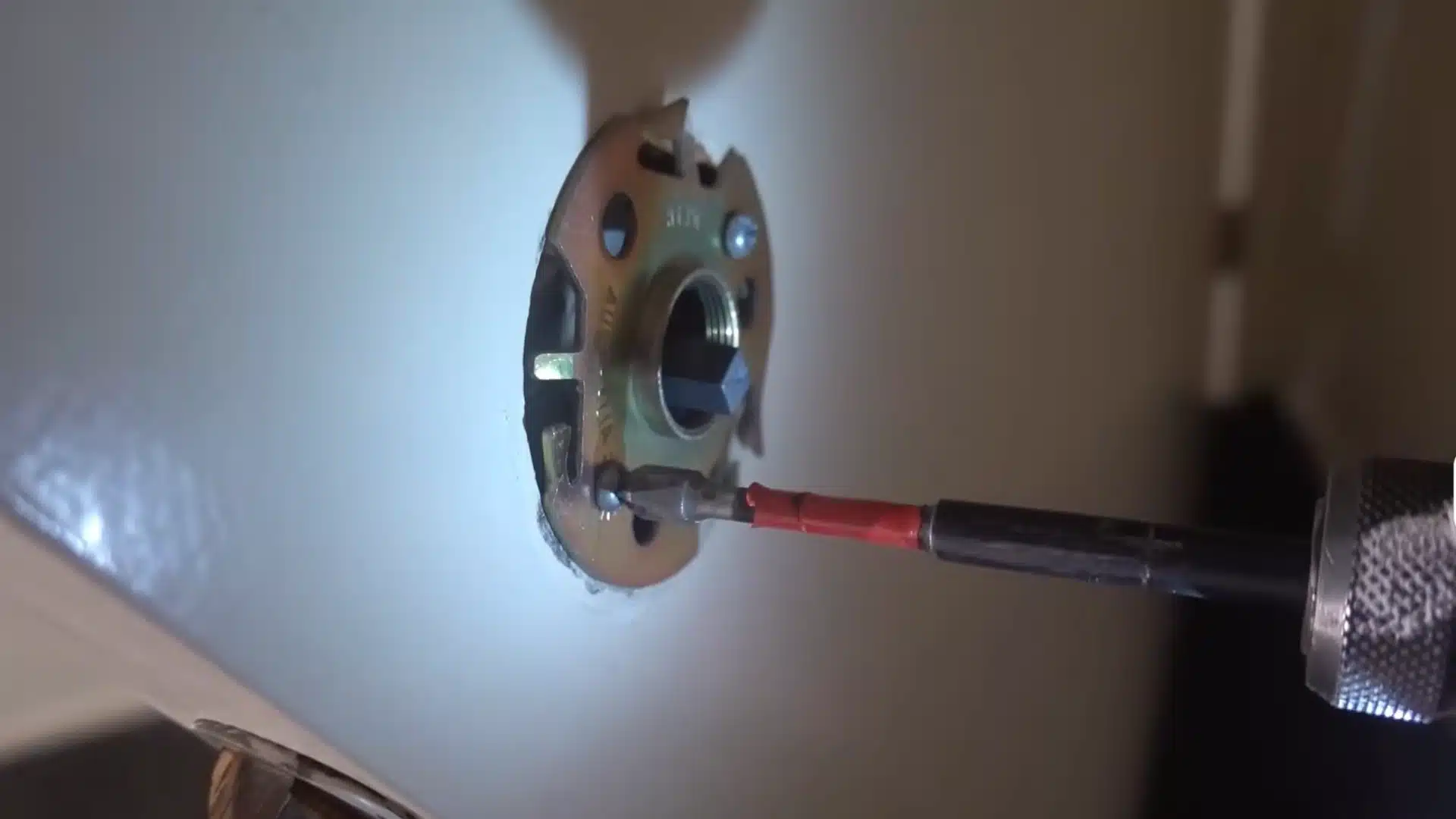
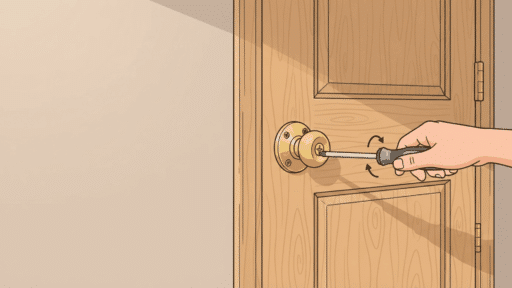
With both cover plates off, I use my screwdriver to tighten each screw one at a time. As you work, make sure the plate stays centered on the door so everything lines up evenly.
Start with the front side, tightening both screws, then move to the back and do the same. Take your time here, since this step is what actually fixes the wobble.
4. Reattach the Front Cover Plate
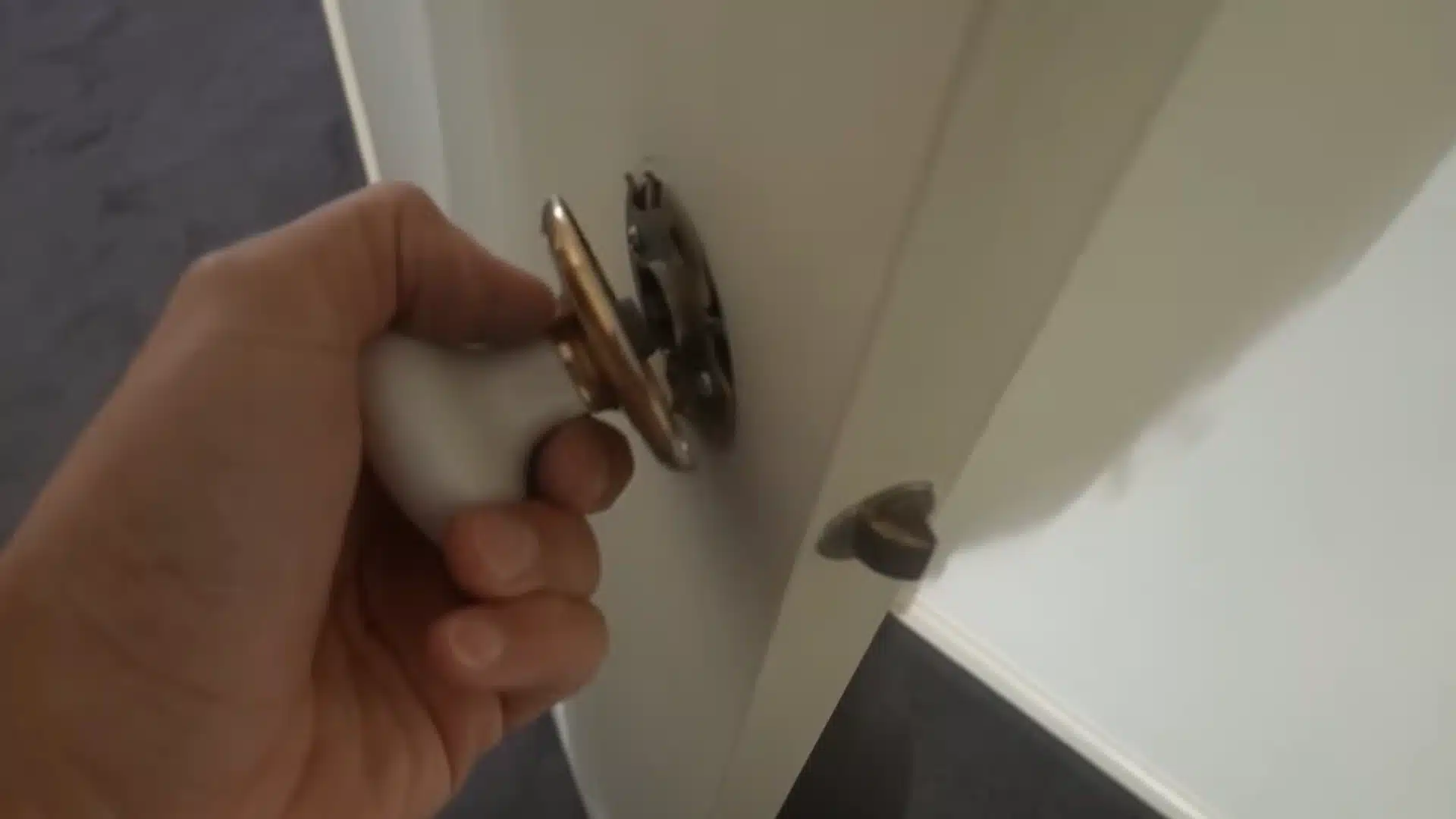
I brace my foot against the door once again for stability. Line up the center of the cover plate with the metal shaft sticking out, and push it straight through until it catches onto the threads.
Once you feel it catch, rotate the plate clockwise (to the right) until it feels snug and tight. This step locks the front side firmly back into place.
5. Reattach the Back Plate and Test It
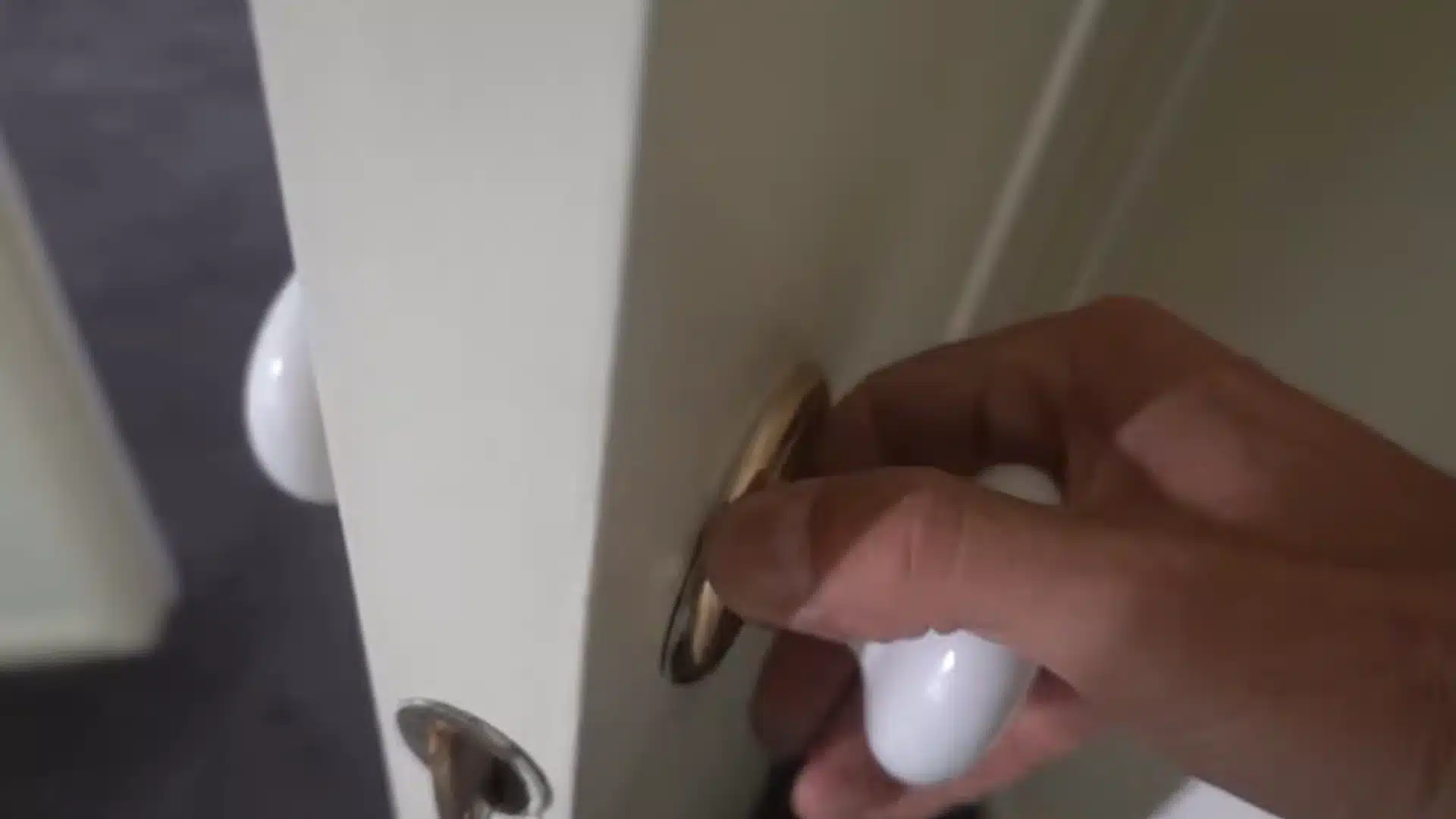
Repeat the same process on the back side of the door. Line it up, push until it catches onto the shaft, and turn it clockwise until snug.
Once both sides feel secure, give the handle a few test turns in each direction. It should feel solid, with no wiggle or wobble at all, and your door handle is ready for everyday use again.
For a clear visual demonstration, watch Bill’s How To video tutorial below and follow along as each part of the repair is shown.
What Real Homeowners Say About Fixing Old Doorknobs
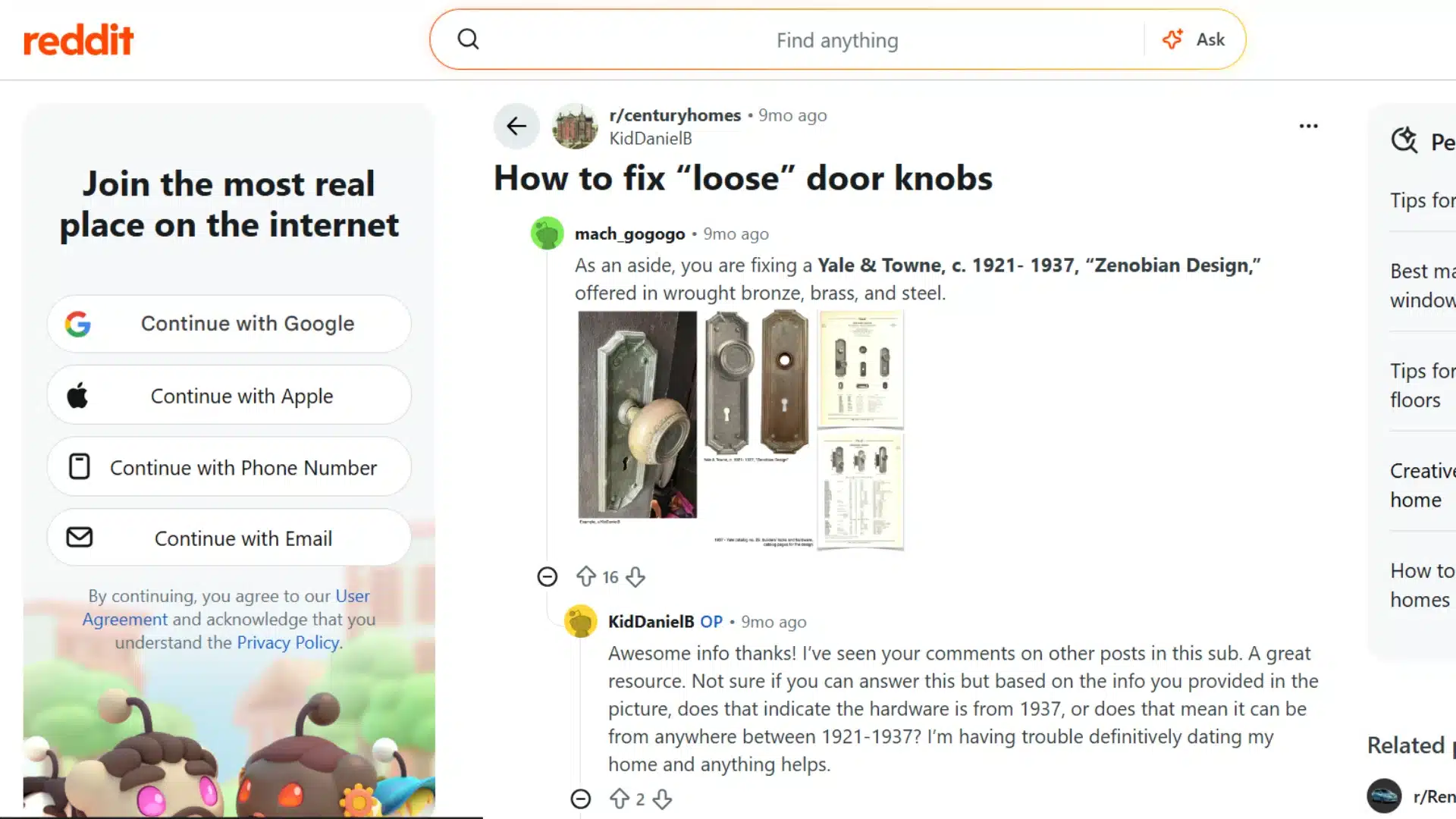
People on Reddit often share fixes you won’t find in a typical guide, since they’re based on real trial and error.
In one thread, someone with a 1920s Yale & Towne knob learned that their knob screws onto a square threaded shaft, and a loose set screw was the real culprit.
Other users pointed out that if the shaft has worn round over the years, hardware stores sell replacement shafts; just bring your old knob to match the fit. If the spindle isn’t threaded, spacer washers can take up the slack instead.
A few people even mentioned using thread locker on a set screw that keeps backing out on its own. One user summed it up well: take the knob off first, so you actually see why it’s loose before guessing at a fix.
Troubleshooting Common Loose-Doorknob Problems
Even after following the steps above, you might run into a few hiccups. Here’s a quick table I use to figure out what’s really going on.
| Problem | Likely Cause | What To Do |
|---|---|---|
| Knob spins, but the latch won’t move | The knob’s connection to the spindle is worn or broken | Replace the knob, spindle, or both |
| Knob loosens again soon after fixing | Screws were overtightened and stripped, or parts are worn | Back off the screws slightly and retighten gently, or replace worn parts |
| Whole handle wobbles even with tight screws | The hinges, not the knob, are loose | Check and tighten the hinge screws on the frame |
| Privacy lock won’t engage after fixing | Latch bolt isn’t lined up with the strike plate | Adjust the strike plate with a screwdriver |
Why do Doorknobs Get Loose in the First Place?
Knowing why this keeps happening helps me stop it before it starts again, and it can do the same for you.
- Everyday Wear and Tear: Doors get used dozens of times a day, and all that pulling and turning adds up. Screws slowly work loose and internal parts wear down, especially on busy doors like entryways and bathrooms.
- Improper Installation: If a doorknob has felt wobbly since day one, it likely was not installed correctly. The screws may not have been tightened all the way, or the spindle may not have been seated properly.
- Excessive Force: Slamming doors or yanking handles puts extra stress on screws and internal parts, wearing them out faster.
- Environmental Factors: Dust, dirt, and humidity can build up inside a doorknob over time, making it turn less smoothly. This is common in older homes or doors that don’t get cleaned often.
Signs You Should Watch For
A loose doorknob rarely happens overnight; it usually gives a few warning signs first. Catching these early means a five-minute fix instead of a bigger repair later on.
| Sign | What You’ll Notice |
|---|---|
| Jiggling or wobbling | Handle moves loosely when turned |
| Unusual noise | Grinding or creaking sound while turning |
| Stiff key | Key is hard to insert or turn |
| Hard to turn | Knob feels tougher to turn than before |
| Visible damage | Screws or parts look misaligned or missing |
| Latch issues | Latch struggles to catch properly |
Preventing Future Loose Doorknobs
A little maintenance now can save me from dealing with this problem again anytime soon, and the same goes for you.
I make it a habit to check screws regularly, giving each doorknob a quick wiggle every few months and tightening anything that feels loose before it gets worse.
I also try to avoid slamming doors, closing them gently instead, since that extra force adds stress to the hardware over time.
A few drops of lubricant once or twice a year keep everything turning smoothly and cut down on wear.
If a knob keeps failing again and again, I would rather upgrade to newer hardware, or even a smart lock, than keep repeating the same repair.
Final Thoughts
And that’s a wrap! Fixing a loose doorknob really doesn’t have to be scary or expensive. If your handle has clear screws, hidden ones, or that tricky no-screw design, you now know exactly where to look and what to do.
Remember, most fixes just come down to finding the right screw and giving it a good, steady turn.
If tightening doesn’t hold, don’t stress; it just might be time for a small replacement part instead of a whole new lock. Keep this guide handy for next time a handle starts feeling wobbly around your home.
Got a doorknob that’s still giving you trouble? Drop your question in the comments below; I’m happy to help you figure it out!
Frequently Asked Questions
Can I Use WD-40 on a Loose Door Handle?
WD-40 can help parts turn smoothly, but it won’t fix looseness. You still need to tighten or replace the actual screws or parts.
When Should You Replace a Loose Doorknob?
Replace it when tightening fails, the spindle or latch is worn, or the knob keeps spinning or loosening. Damaged exterior locksets should be replaced promptly because they may affect security.
What are the Main Types of Doorknobs?
Common types include passage, privacy, keyed-entry, dummy, mortise, and electronic doorknobs. Each type uses different mounting hardware, so the correct repair method may vary.
Can You Fix a Loose Doorknob Yourself?
Yes, most loose doorknobs can be fixed by tightening exposed or concealed screws with basic hand tools. Call a locksmith when parts are broken, or the lock still fails.
How do You Fix a Loose Doorknob With No Visible Screws?
Find the small release hole or set screw, remove the knob, and take off the decorative plate. Tighten the hidden mounting screws evenly, then reinstall the knob and test the latch.

Tommy Hardy, an alumnus of the Georgia Institute of Technology with a degree in Mechanical Engineering, has been a go-to figure in residential upkeep and innovation for over 18 years. His career commenced in a leading home appliance manufacturing company, where he mastered the intricacies of household systems. Joining our platform in 2020, Tommy quickly became a reader favorite for his practical and easy-to-follow guides. He took the helm of our DIY section in 2019, consistently delivering content that empowers homeowners. Beyond his professional pursuits, Tommy is a passionate gardener and enjoys woodworking, skills enhancing his hands-on approach to home care.