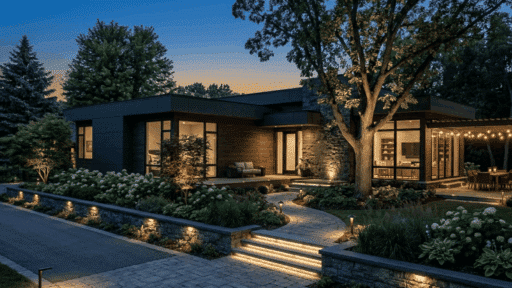
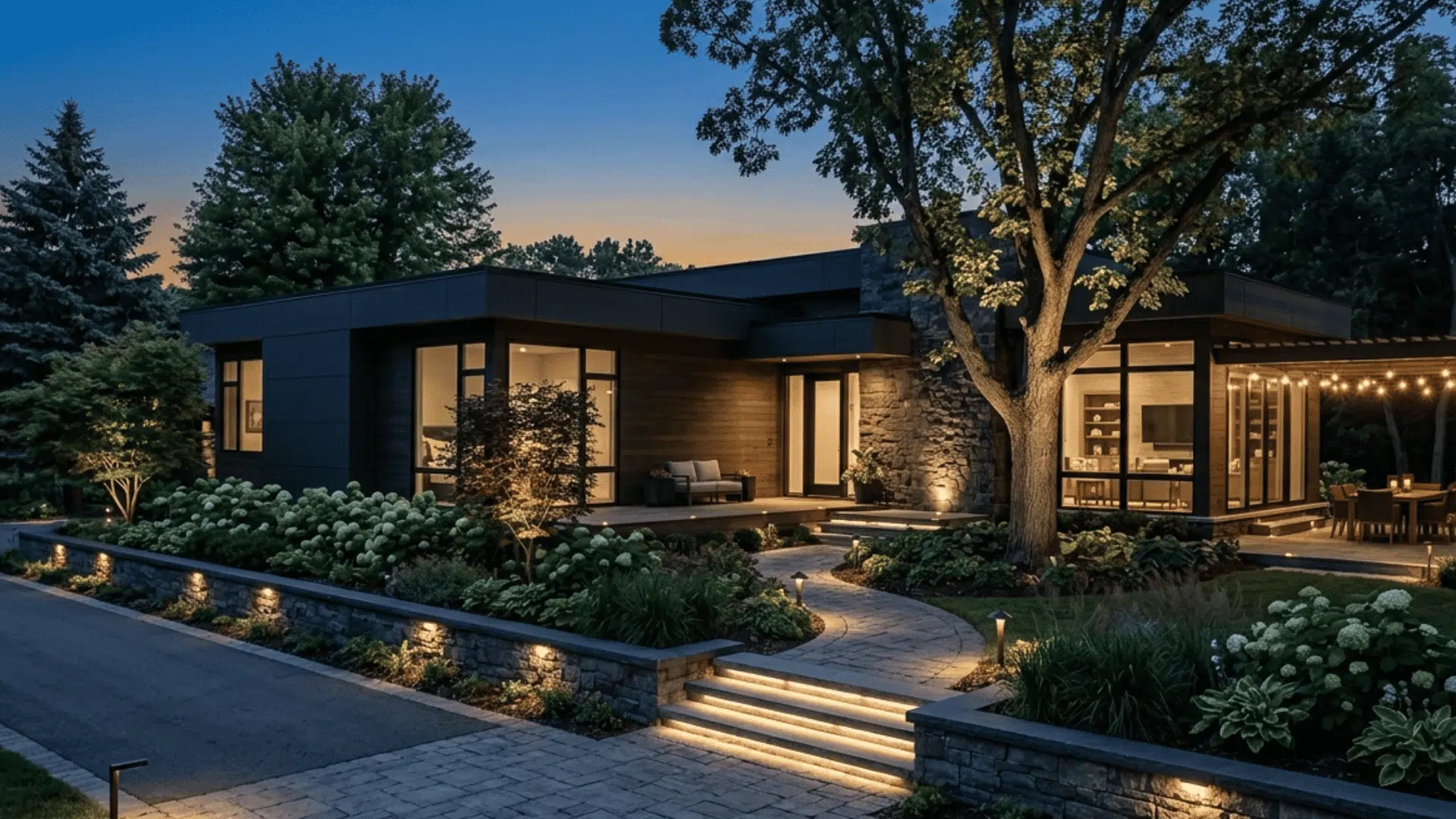

Outdoor lighting design can make a home safer, more useful, and welcoming after sunset.
A good plan does not mean placing bright lights in every corner. It means choosing the fixture, beam direction, brightness, color temperature, and power source for each area.
Paths and steps need clear, low-level light, while patios benefit from softer lighting for dining and conversation.
I prefer outdoor lighting that feels soft and practical rather than making the whole yard overly bright.
This guide covers numerous outdoor light types, prices, key features, planning steps, bulb choices, common mistakes, designer costs, and maintenance tips.
It also explains when work can be handled at home and when wiring, pool lights, or installations should be left to a qualified professional.
What is Outdoor Lighting Design?
Outdoor lighting design is the careful planning of fixtures, brightness, beam direction, and placement around a property.
It differs from landscape lighting because it covers more than trees, plants, and garden features. It also includes entries, paths, steps, patios, garages, walls, and activity areas.
A good plan does more than add several lights around the yard. Each fixture should serve a clear purpose without causing glare or wasting power.
The main goals are safer movement, useful light for outdoor tasks, and a welcoming nighttime appearance.
The U.S. Department of Energy’s exterior lighting guidance also supports choosing efficient fixtures suited to their intended use.
Why Outdoor Lighting Design Matters for Your Home
A well-planned lighting setup helps outdoor areas stay useful, safe, and attractive after dark.
- Patio Use: Soft overhead or wall lighting makes dining, relaxing, and evening gatherings more comfortable.
- Garden Features: Focused lights can draw attention to trees, pathways, flower beds, and stonework.
- Curb Appeal: Balanced lighting gives the home a warm appearance and may support its overall value.
- Safer Movement: Step, walkway, and driveway lights help people notice edges, slopes, and obstacles.
Good lighting should guide movement while keeping the outdoor space calm and welcoming.
Quick Advice: Use shielded fixtures and avoid overly bright bulbs that cause glare.
Types of Outdoor Lighting You Should Know
Outdoor lighting includes fixtures for paths, patios, gardens, structures, water features, and security.
Each type serves a different purpose and requires suitable placement, brightness, beam direction, and weather protection.
1. Path Lights
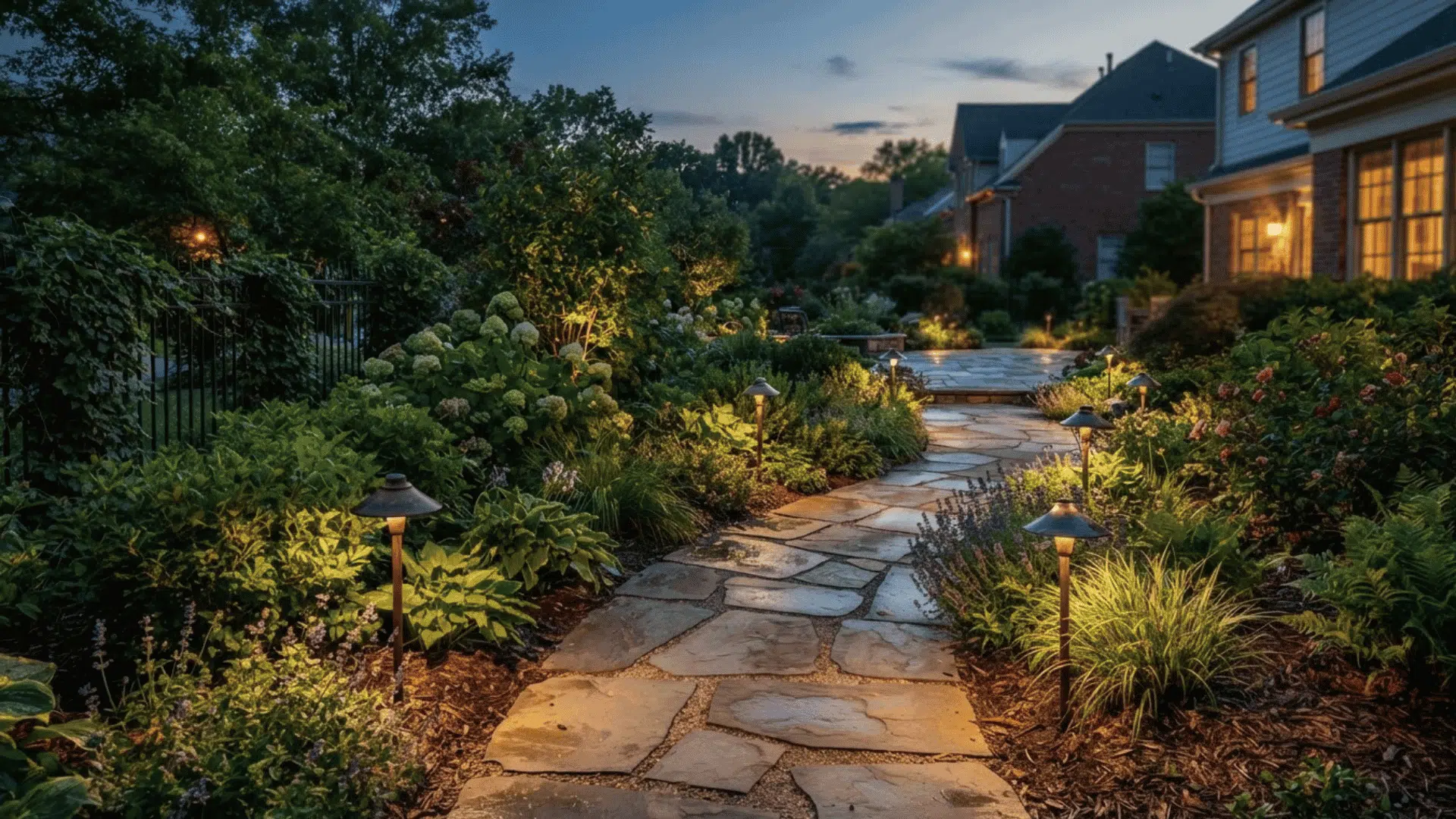
Path lights sit beside walkways and spread low, even light across the ground. They help people see curves, borders, and changes in level without making the yard overly bright.
Proper spacing lets one pool of light gently overlap the next without creating a runway effect.
Price: $50 to $150 per light.
Feature: A shielded downward beam spreads light across the path while limiting glare.
2. Step Lights
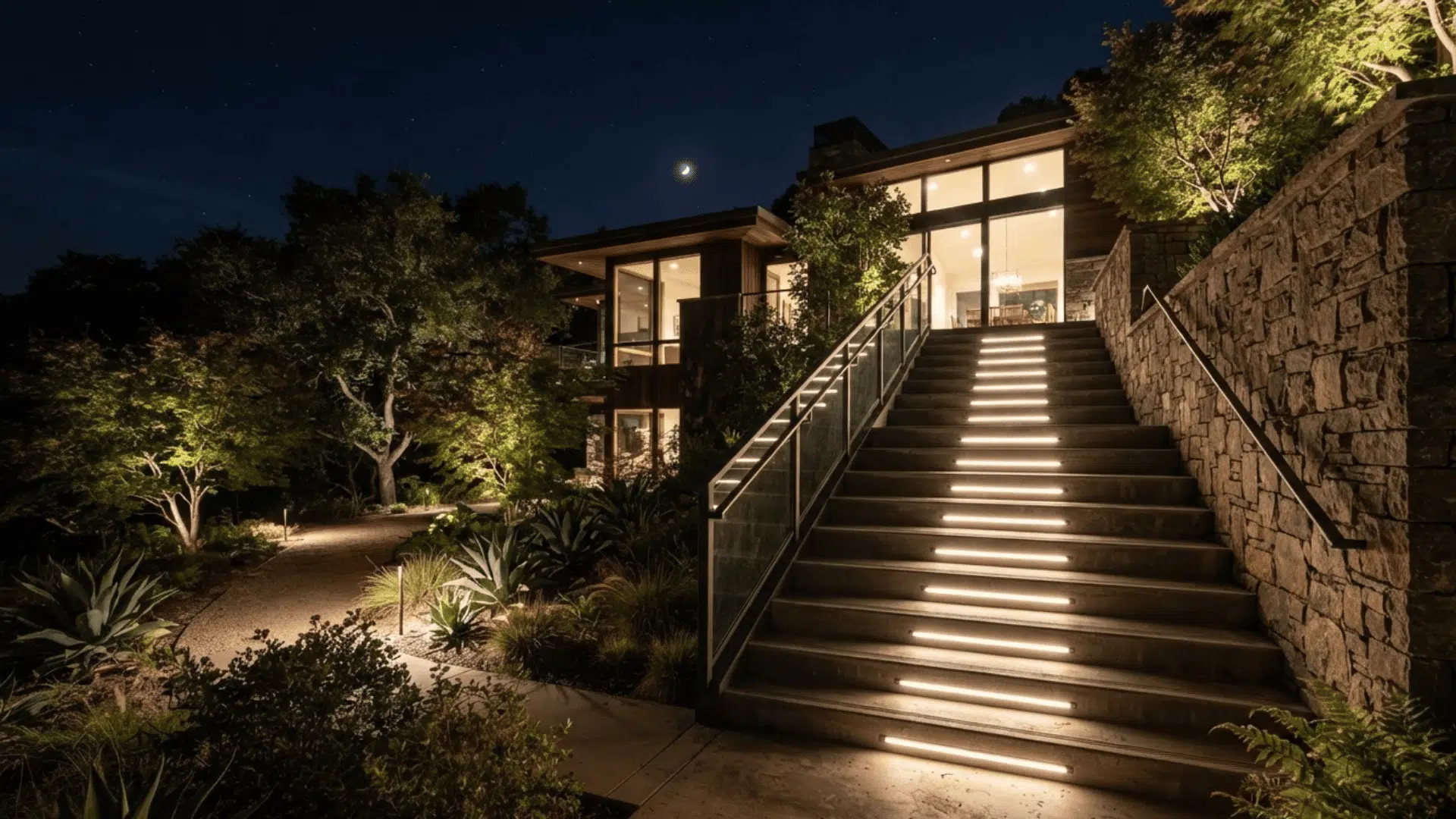
Step lights are fitted into stair risers, walls, or rail posts to make each tread and edge easier to see.
Recessed fixtures are particularly useful because they illuminate the walking surface without placing a bright bulb directly at eye level.
Price: $20 to $100 per light.
Feature: A recessed design clearly shows stair edges without placing bright bulbs at eye level.
Advice: Check the stairs from both directions after sunset. A fixture that works well while walking down may create glare when someone approaches from below.
3. Bollard Lights
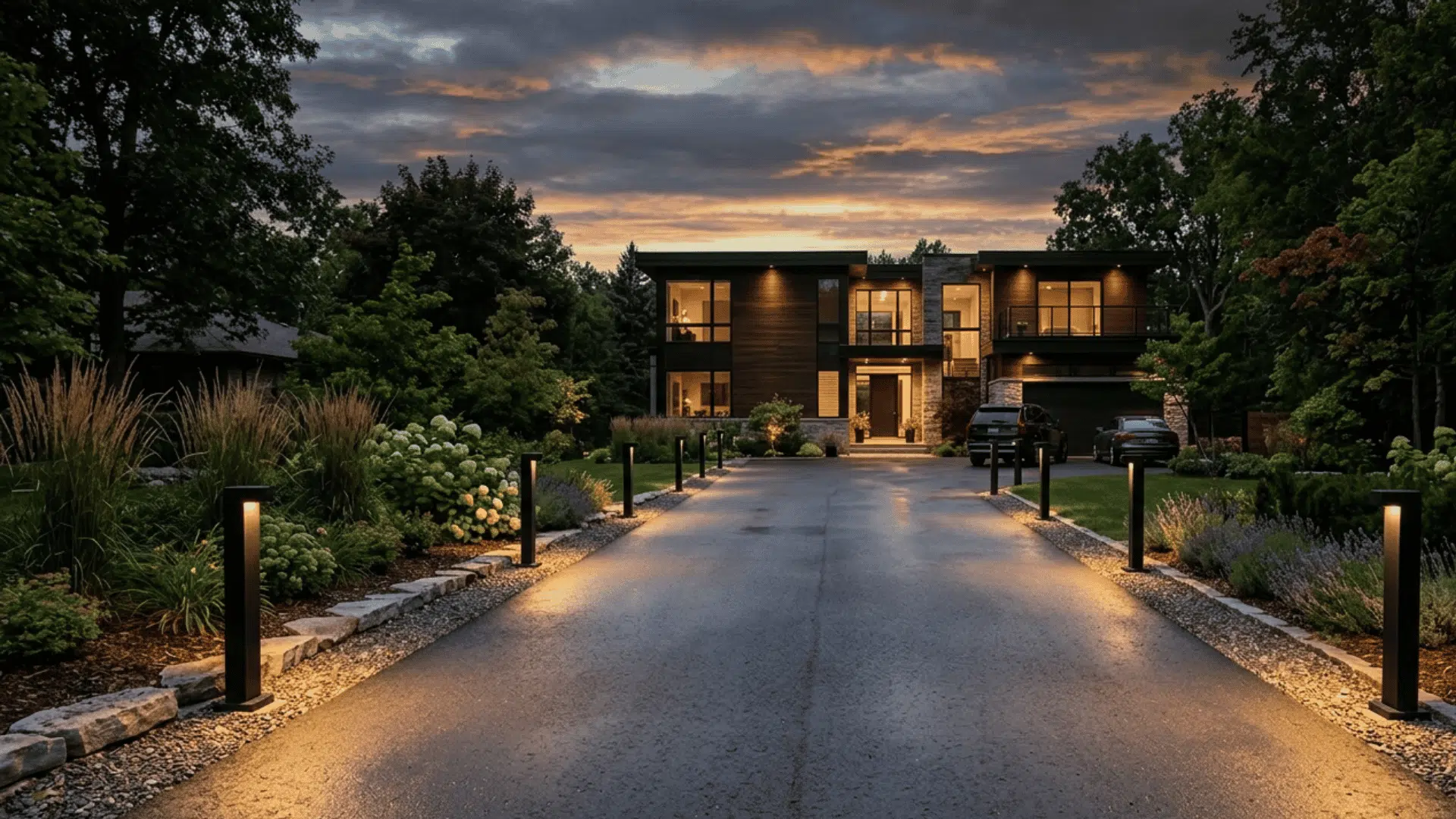
Bollard lights are short, upright fixtures used along paths, driveways, entrances, and larger garden areas.
The Department of Energy includes bollards among exterior fixtures and recommends efficient products suited to the intended setting and operating hours.
Price: $40 to $300 per light.
Feature: Their taller design provides wider ground coverage along paths and driveways.
4. In-Ground Lights
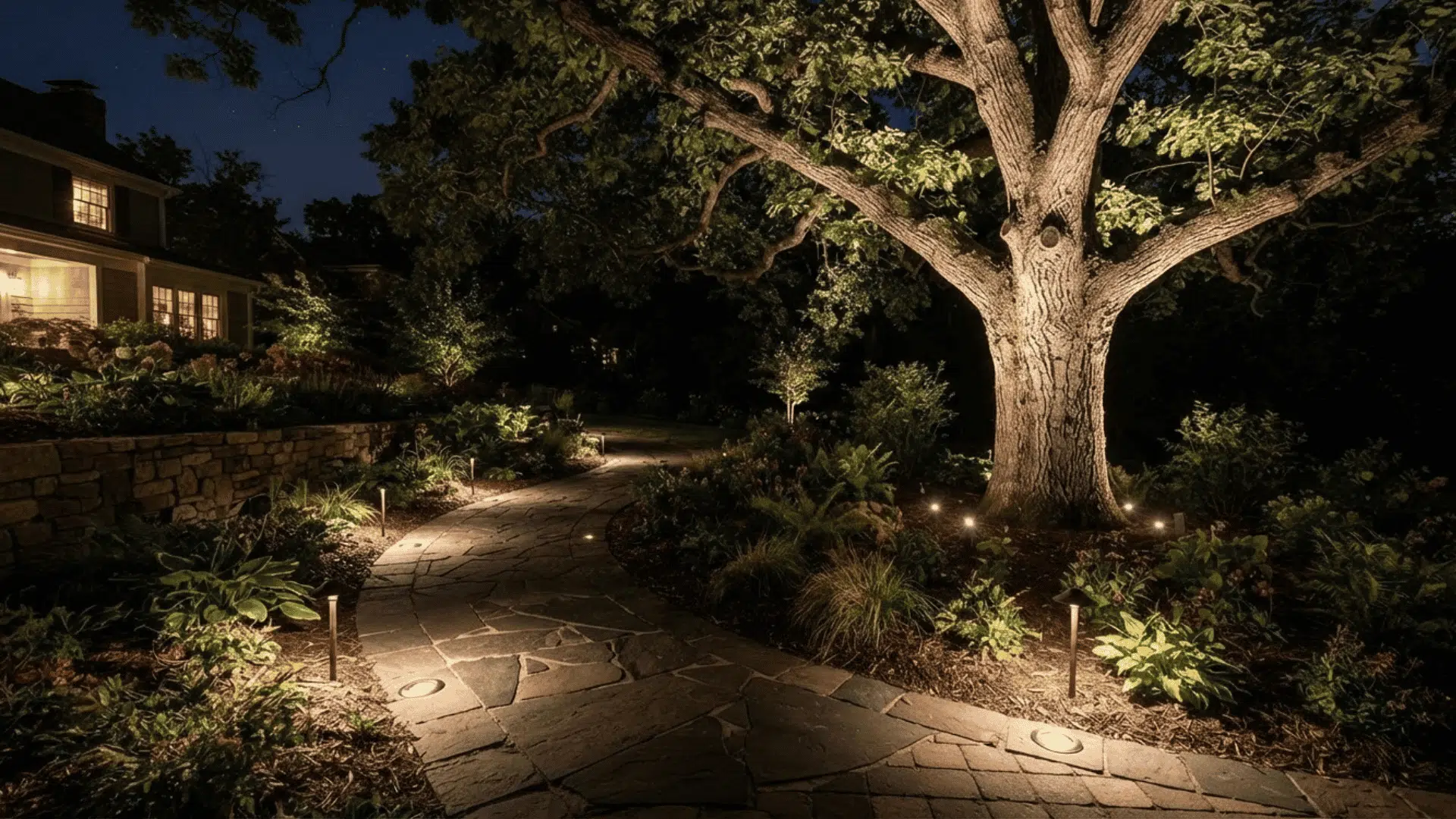
In-ground lights are installed level with paving, gravel, soil, or decking. They can mark path edges, brighten a wall, or light the underside of a tree canopy.
Depending on the beam angle, they can mark path edges or send light upward across trees and walls. Because they face rain, soil, irrigation, and foot traffic, a sealed housing is more important than decorative appearance.
Price: $20 to $150 per light.
Feature: A weather-rated housing protects against moisture and debris; choose a walk-over-rated fixture where foot traffic is expected.
5. Driveway Lights
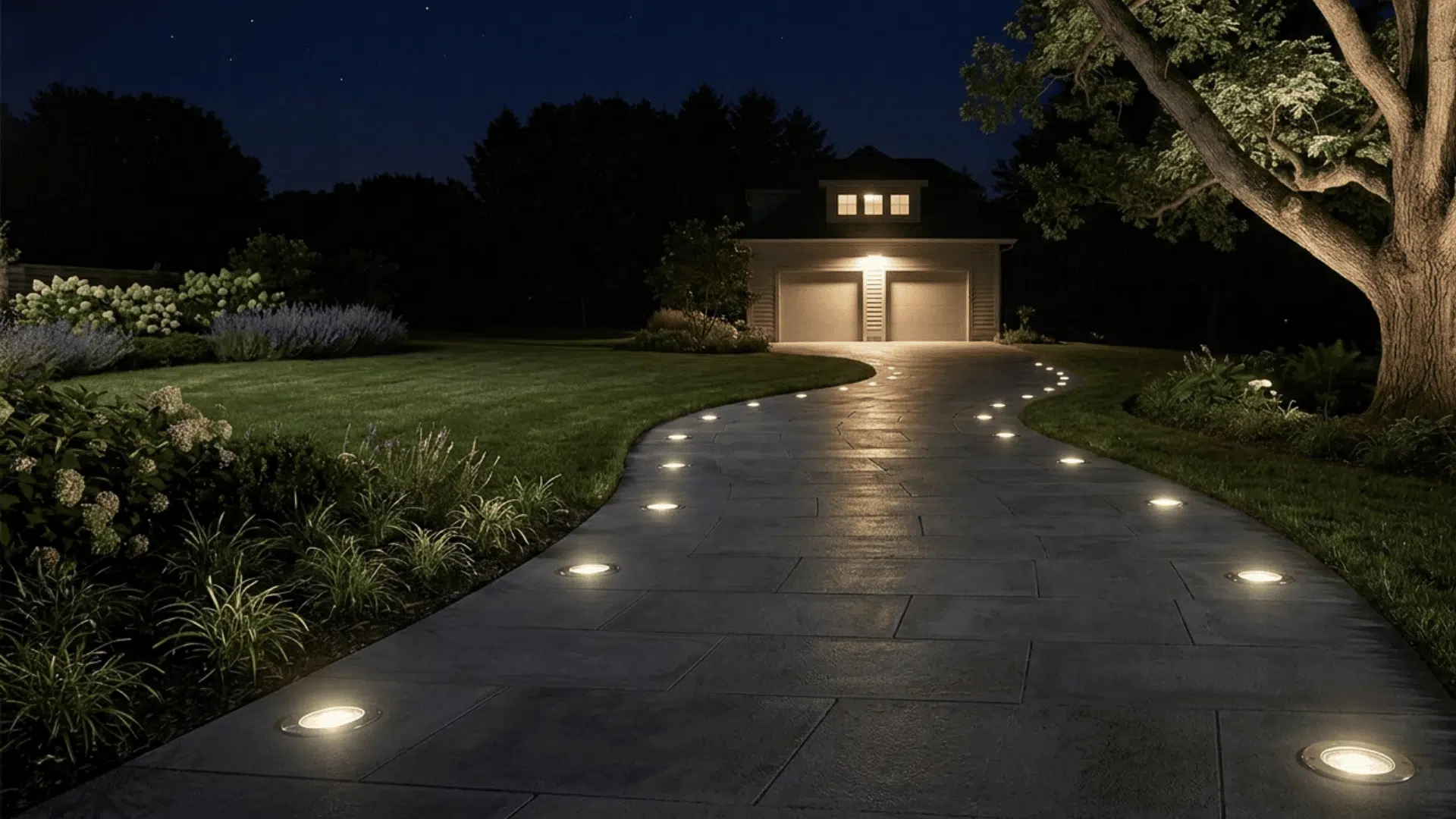
Driveway lights help drivers see edges, turns, gates, parking spaces, and walkways after dark. Fixtures installed within the driveway should be specifically rated for vehicle loads; edge-mounted lights should remain outside normal tire paths
For locations near tires, lawn equipment, or snow removal equipment, housing strength matters.
Price: $20 to $150 per light.
Feature: Impact-resistant construction helps protect the fixture from vehicles and outdoor equipment.
Patio, Deck, and Entertaining Lighting
Patio and deck lighting should provide enough illumination for eating, walking, and conversation without making the area feel like an indoor room.
6. String Lights
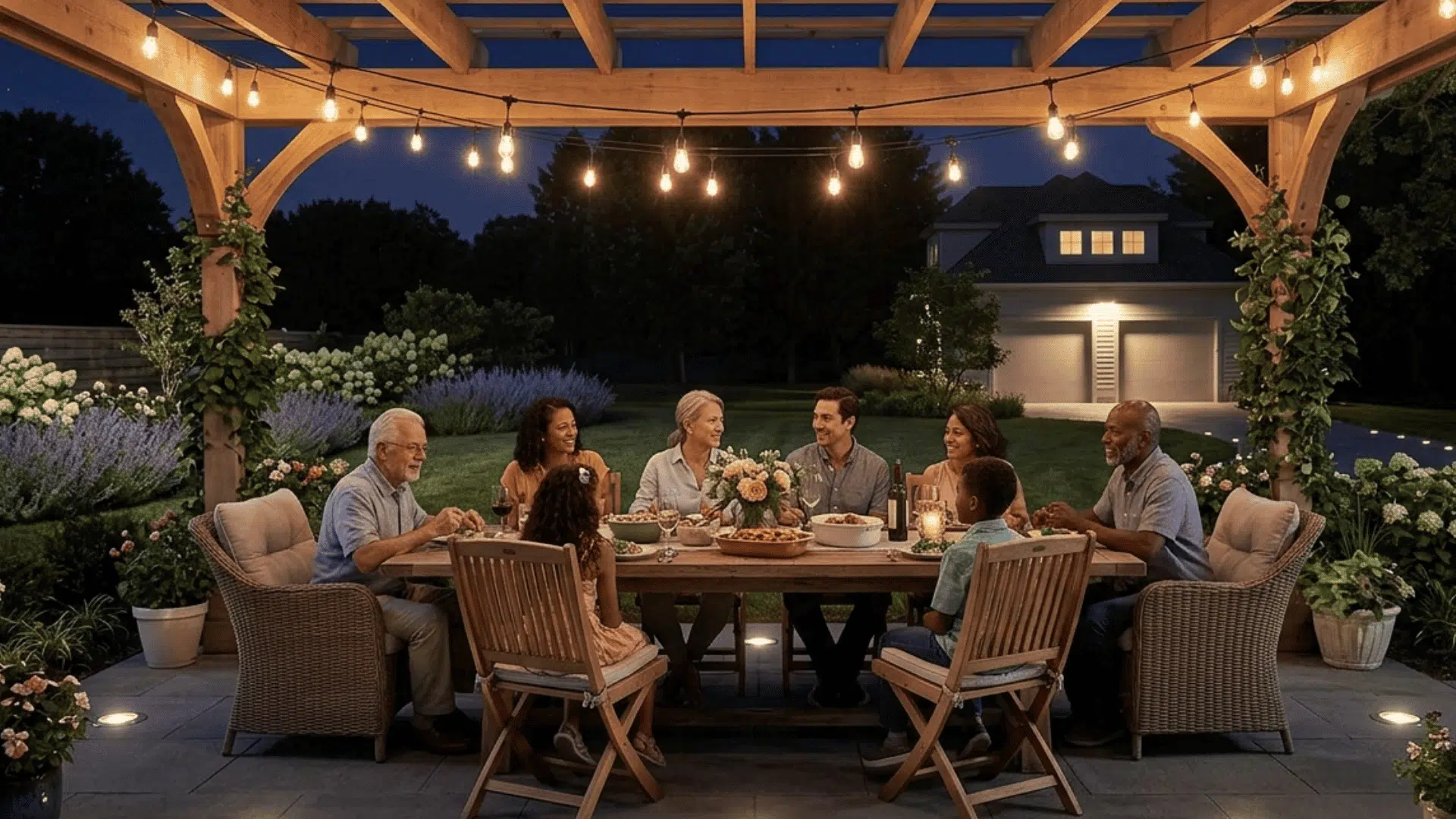
String lights add overhead light to patios, decks, pergolas, and dining areas. Their main strength is soft overhead illumination rather than focused task lighting.
Mount strands high enough to clear people while keeping the cable properly supported.
Price: $20 to $120 per set.
Feature: Outdoor-rated, shatter-resistant bulbs make them suitable for patios, pergolas, and dining areas.
Note: Decorative strands should not replace task lighting near grills or steps. ENERGY STAR explains that efficient decorative light strings use less electricity and are available for outdoor settings.
7. Lanterns
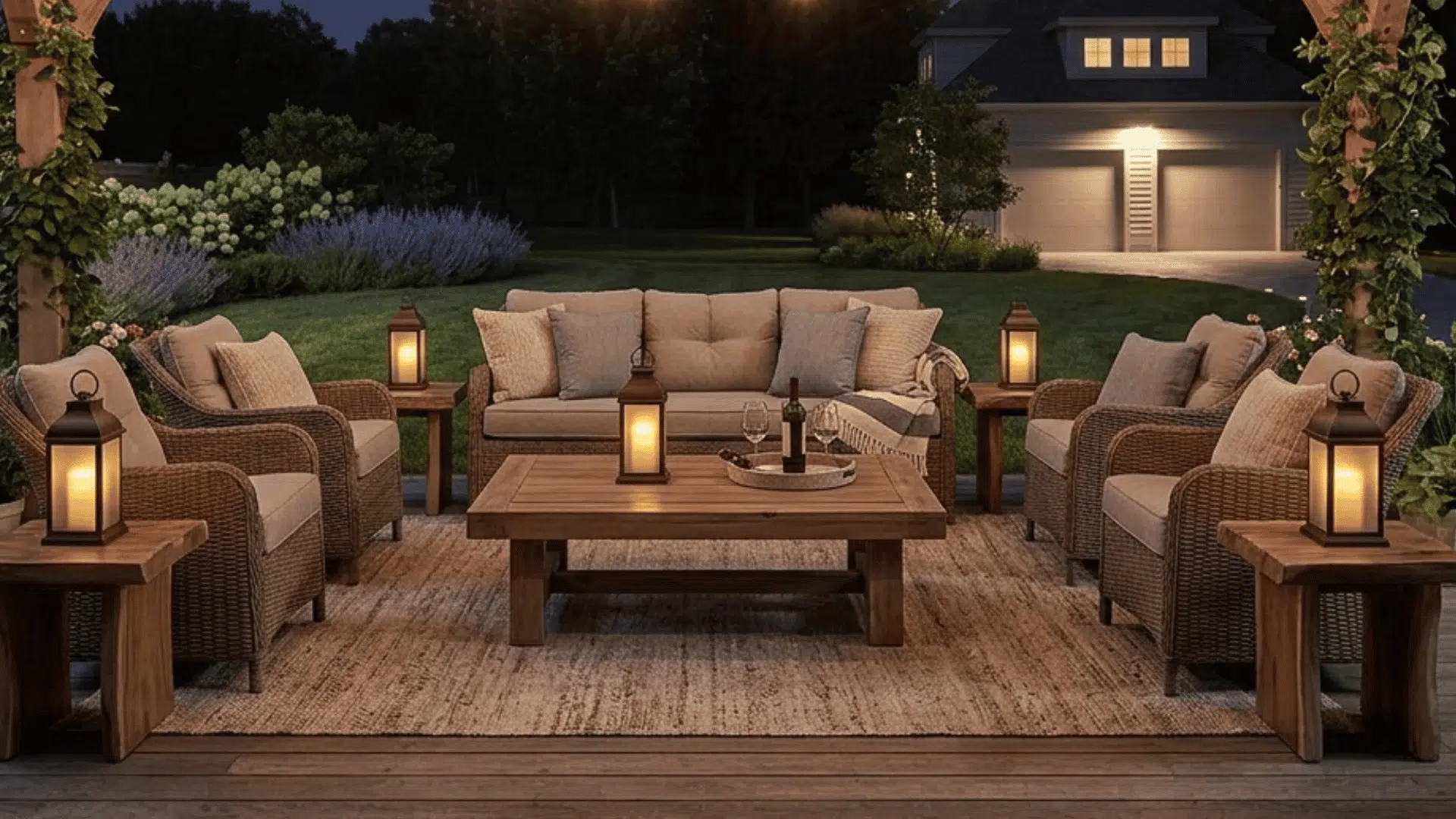
Lanterns give patios and seating areas a relaxed look. They may be wall-mounted, hung from hooks, placed on tables, or powered by batteries or solar panels.
Battery and solar models can be moved as furniture arrangements change, while wall-mounted versions can provide more consistent illumination.
Price: $15 to $150 per lantern.
Feature: Portable models can be moved between tables, seating areas, and garden spaces.
8. Deck Rail Lights
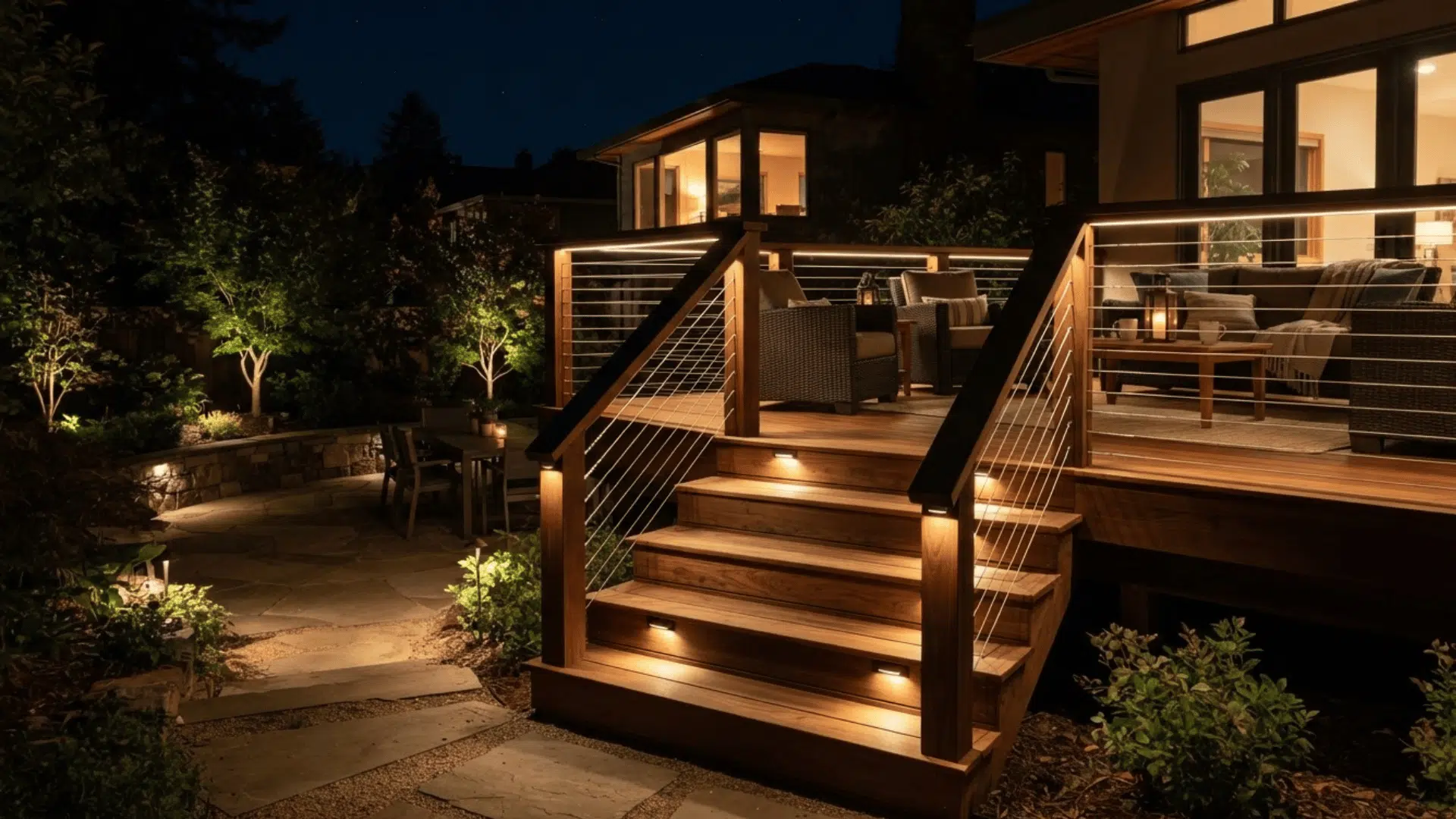
Deck rail lights fit beneath handrails, inside rail posts, or along the outer edge of a deck. They are especially useful on raised decks where the edge may disappear into darkness.
Concealed fixtures also reduce reflections and direct glare, allowing overhead or table lighting to handle the brighter part of the overall deck lighting plan.
Price: $20 to $80 per light.
Feature: Their concealed position marks deck edges without producing strong glare.
9. Post Cap Lights
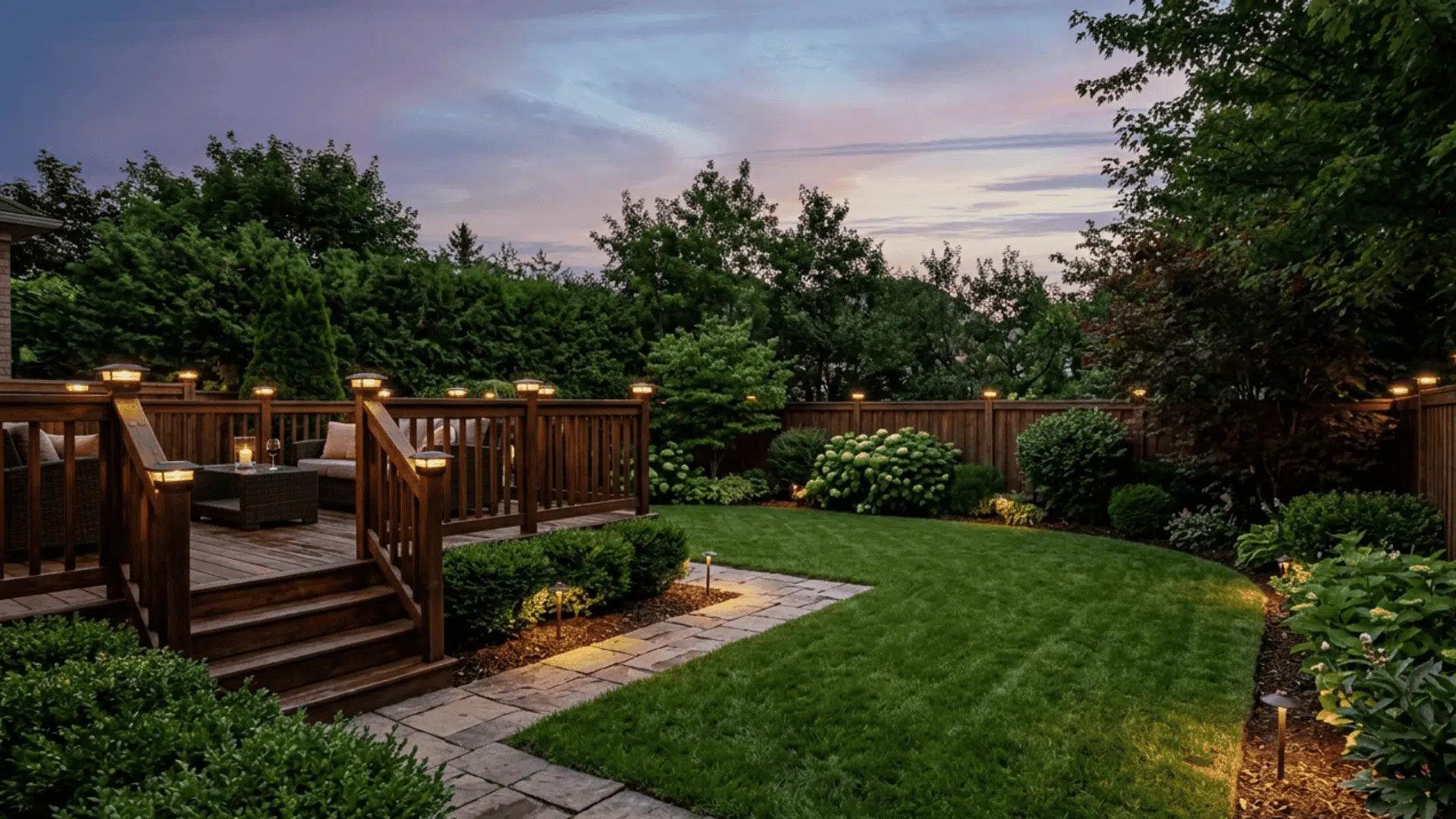
Post cap lights sit on top of deck, fence, gate, or porch posts. They provide marker light and help define the shape of an area.
They can also give a long railing or fence a consistent rhythm without adding separate ground fixtures. Measure the post before purchasing because cap dimensions vary.
Price: $20 to $100 per light.
Feature: The fitted base sits directly on top of deck, fence, or gate posts.
10. Fire Pit Lighting
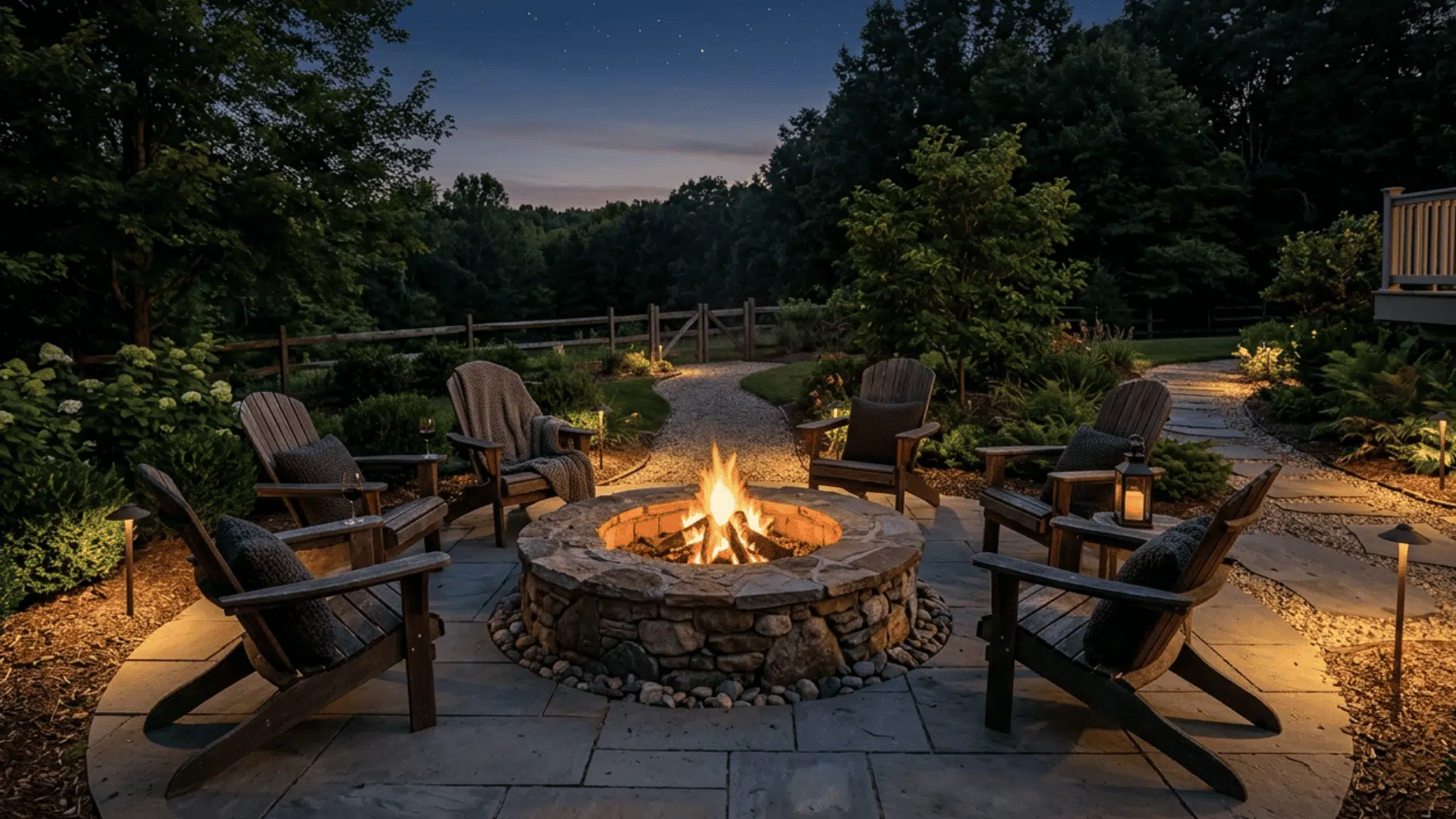
Fire pit lighting should show seating edges, walking routes, and tools without shining directly into people’s faces.
Low-level fixtures positioned outside the immediate heat zone preserve the fire as the visual focus.
Price: $25 to $100 per light.
Feature: Low-level lighting shows seating edges and walking routes without overpowering the fire.
Safety Note: The U.S. Fire Administration advises keeping fire pits at least ten feet from structures and materials that can burn, with children watched whenever the fire is active.
Landscape and Garden Lighting
Landscape lighting works best when it reveals selected trees, plants, walls, and shapes rather than illuminating every part of the yard equally. Beam width and fixture position determine whether the result looks subtle or excessively bright.
11. Up lighting
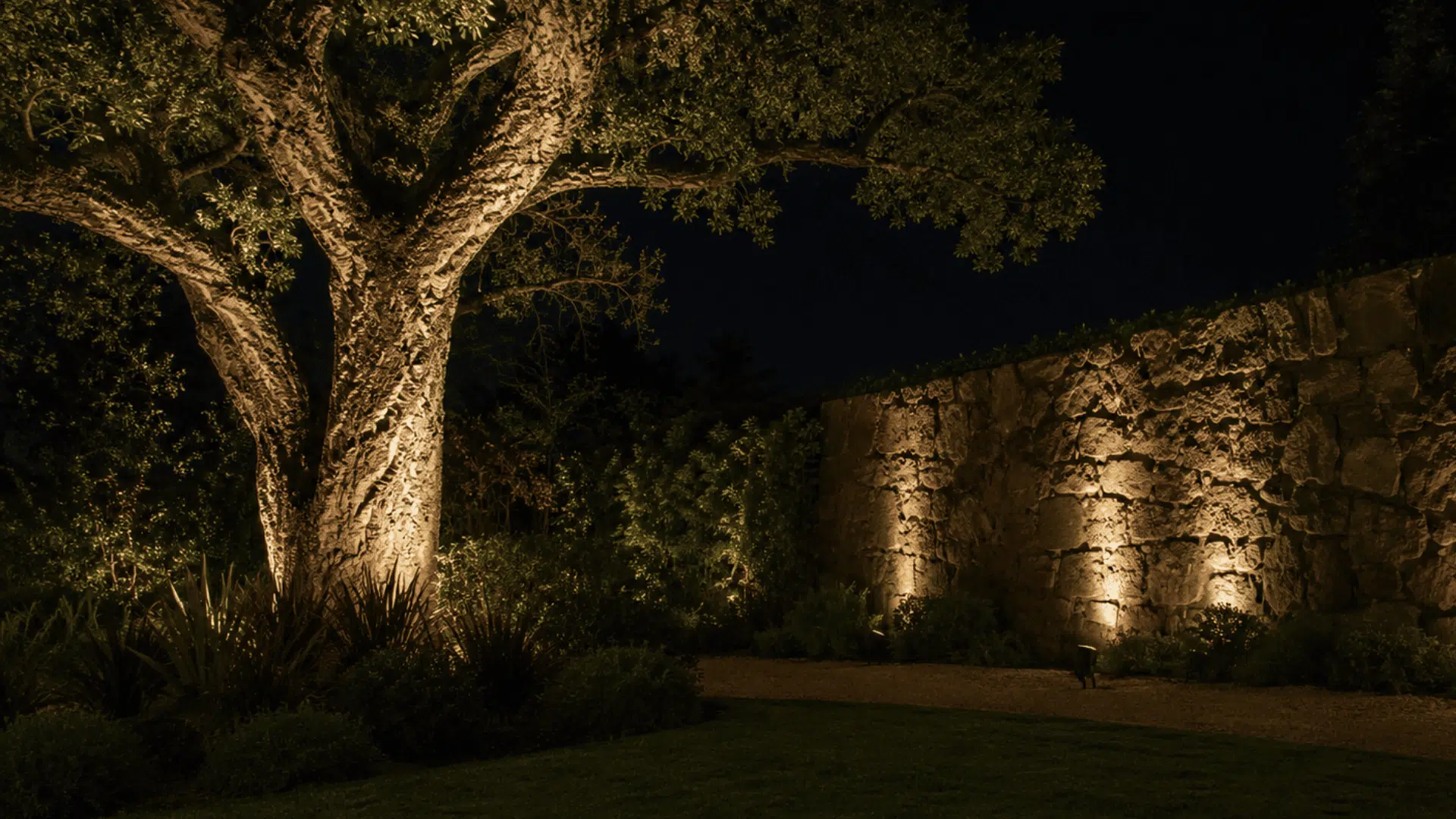
Up lighting places a fixture and aims the beam upward at a tree, column, or textured wall.
Department of Energy guidance recommends reducing light output and limiting up light, especially when the feature can be shown with a controlled downward beam.
Price: $20 to $100 per light.
Feature: An adjustable narrow beam highlights trees, columns, and textured walls.
12. Downlighting or Moonlighting
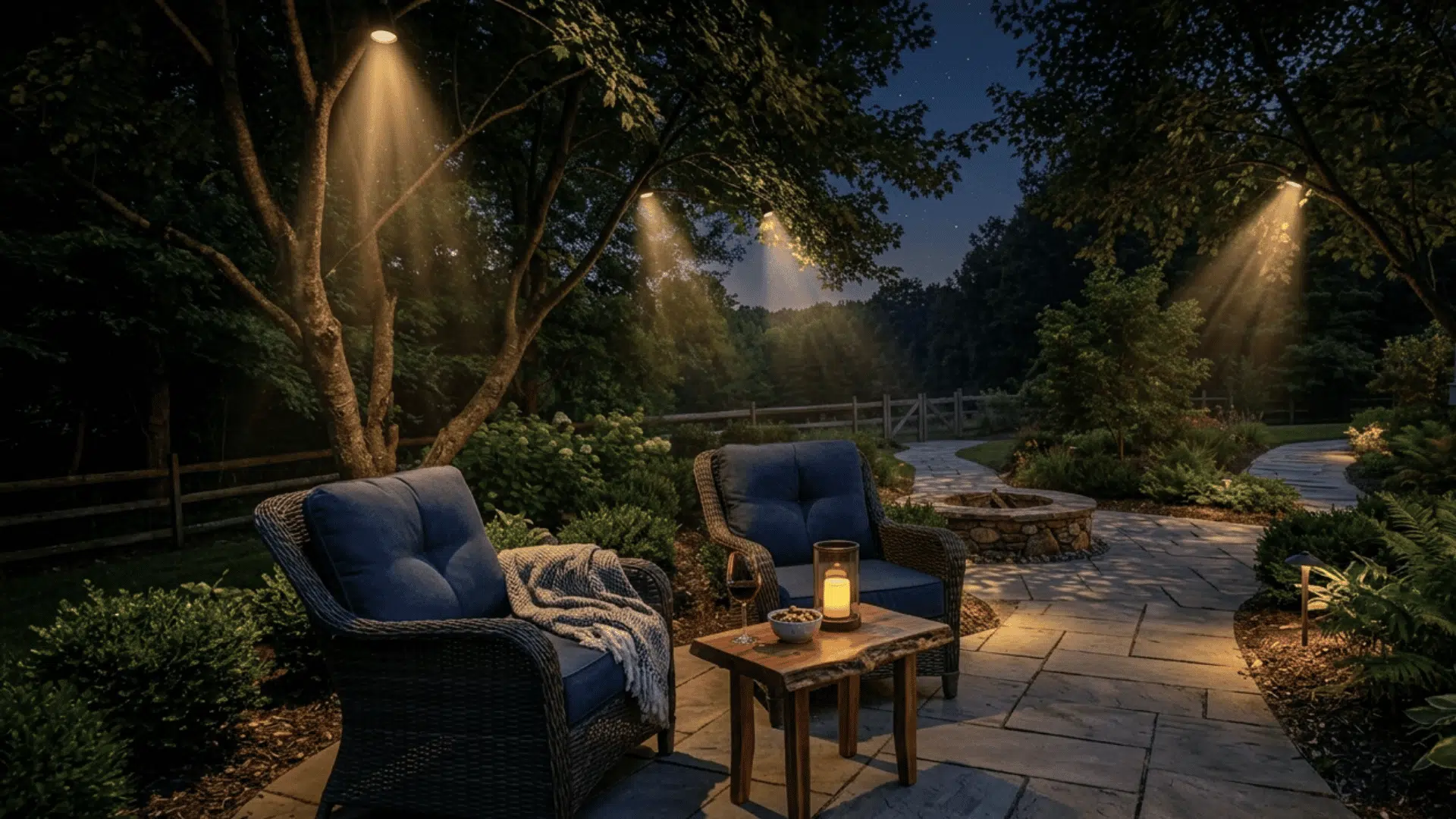
Downlighting places fixtures above the target and directs light toward the ground. Mounting a light high in a tree or under an eave can create soft pools of light over paths, gardens, or patios.
When branches interrupt the beam, their shadows create a more natural pattern than a fixture mounted close to the ground.
Price: $30 to $150 per light.
Feature: A shielded downward beam creates soft light beneath trees, eaves, or pergolas.
Fun Fact: When a beam filters through branches, the pattern may look like moonlight. Use secure mounts, shield the bulb, and avoid damaging tree growth when installing or maintaining the fixture.
13. Spotlights
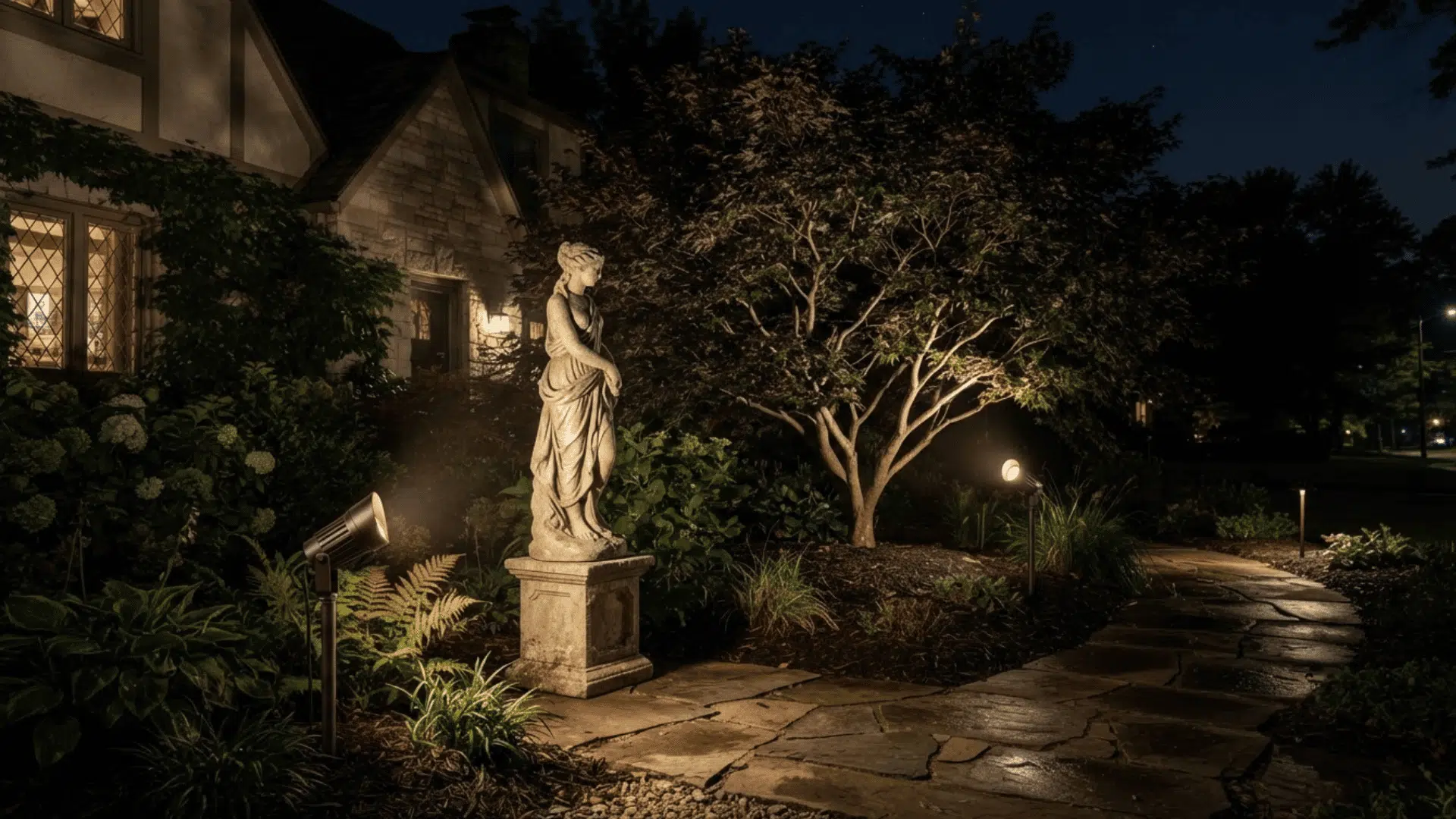
Spotlights produce a concentrated beam that works well on specimen trees, statues, flags, columns, signs, and other individual focal points.
Beam width should match the object: a narrow beam suits a tall trunk, while a broader setting may suit a large wall.
Price: $15 to $100 per light.
Feature: An adjustable beam angle allows accurate lighting of trees, statues, and building details.
14. Well Lights
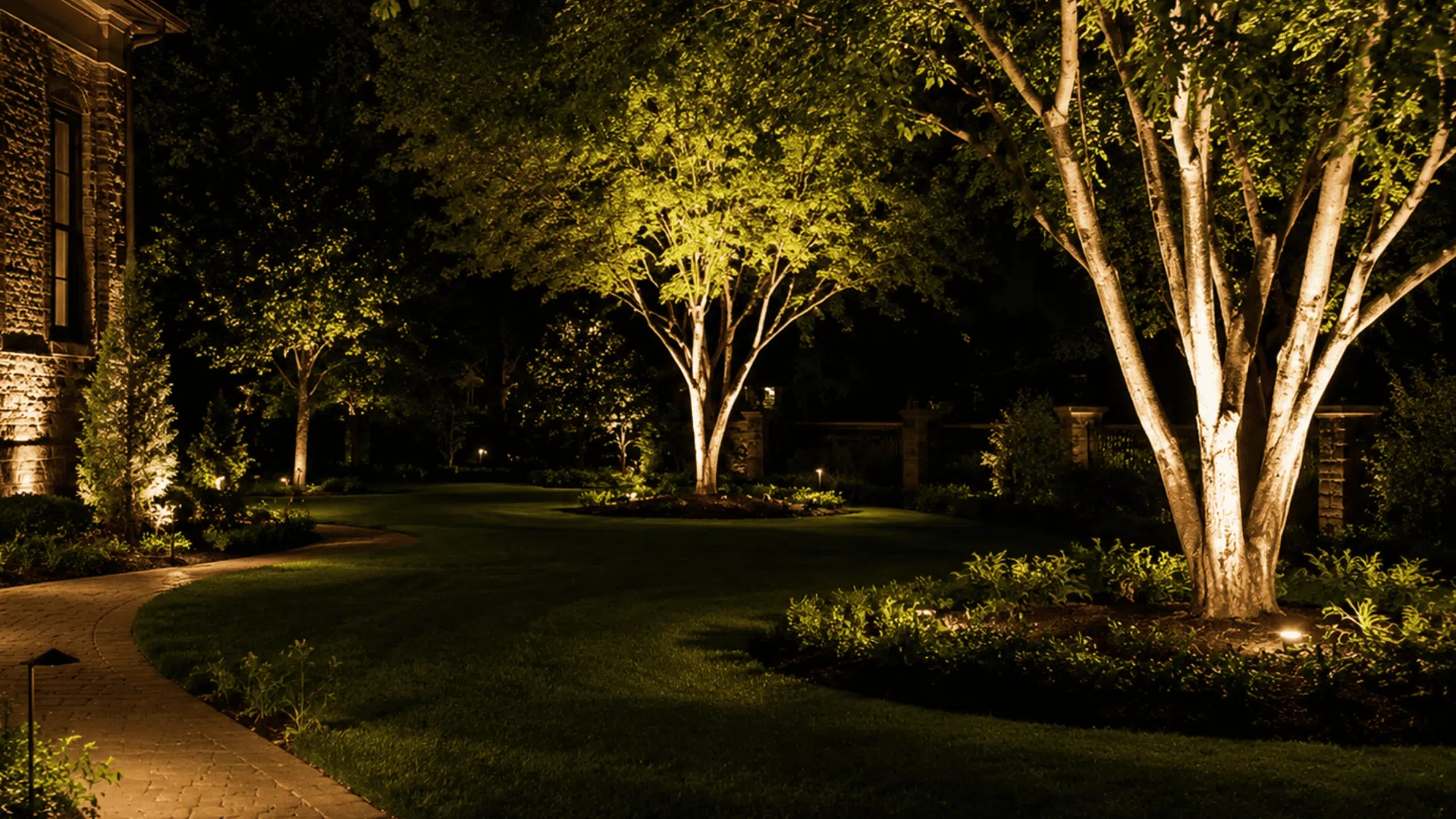
Well lights are recessed into the ground so the fixture stays mostly hidden while directing illumination upward.
They are useful beneath trees, near stone walls, or in areas where visible stakes would interrupt landscaping.
Price: $25 to $150 per light.
Feature: The recessed housing keeps the fixture hidden while directing light upward.
15. Silhouette Lighting
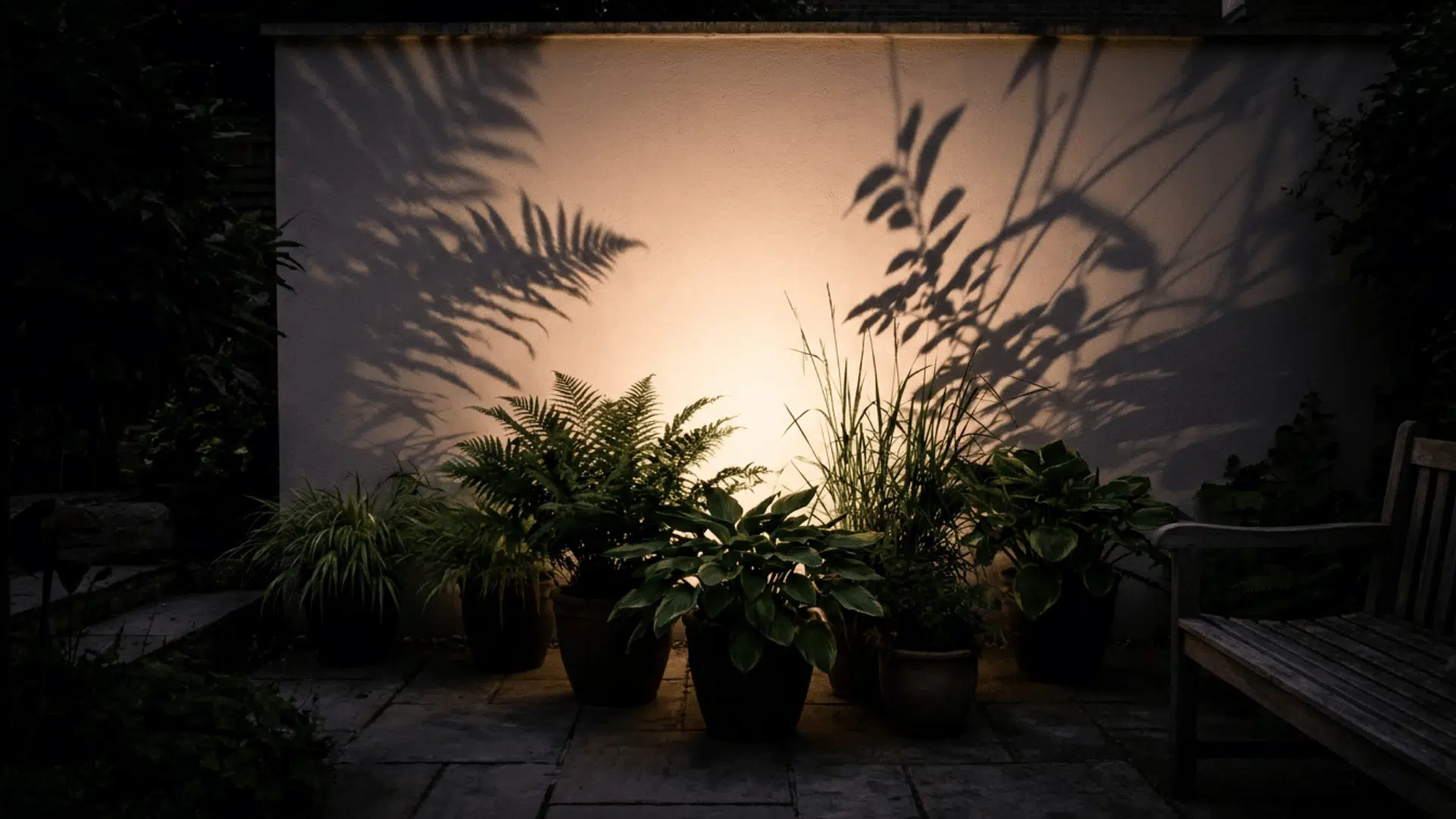
Silhouette lighting works by placing the fixture behind a plant, sculpture, or decorative screen and directing the beam toward a wall or another flat background.
The illuminated surface makes the subject appear as a dark outline. Plants with distinctive branching or leaf shapes produce the strongest effect.
Price: $20 to $100 per light.
Feature: A wide beam creates an evenly lit background behind plants or sculptures.
Architectural and Wall Lighting
Architectural lighting can improve entry visibility while also emphasizing walls, rooflines, columns, and other exterior details. Fixtures should complement the building rather than compete with it through excessive brightness.
16. Wall Sconces
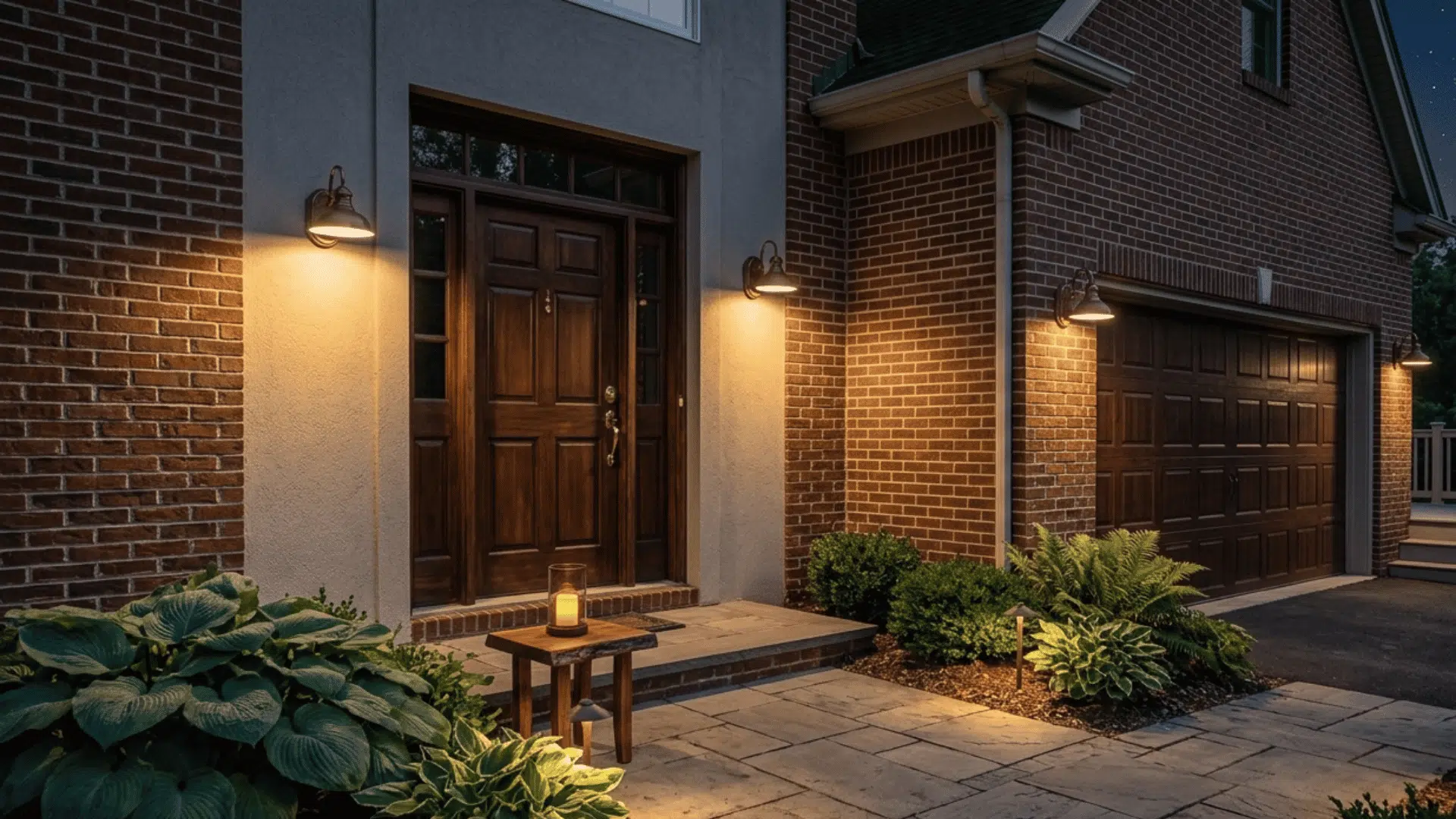
Wall sconces mount beside doors, garages, patios, and living areas. They can provide entry light, general wall light, or a decorative accent.
Downward-facing or diffused designs are useful near windows, while paired sconces can create balanced lighting around a main entrance.
Price: $30 to $250 per light.
Feature: A shielded bulb provides entry lighting while reducing glare near doors and windows.
17. Eave Lights
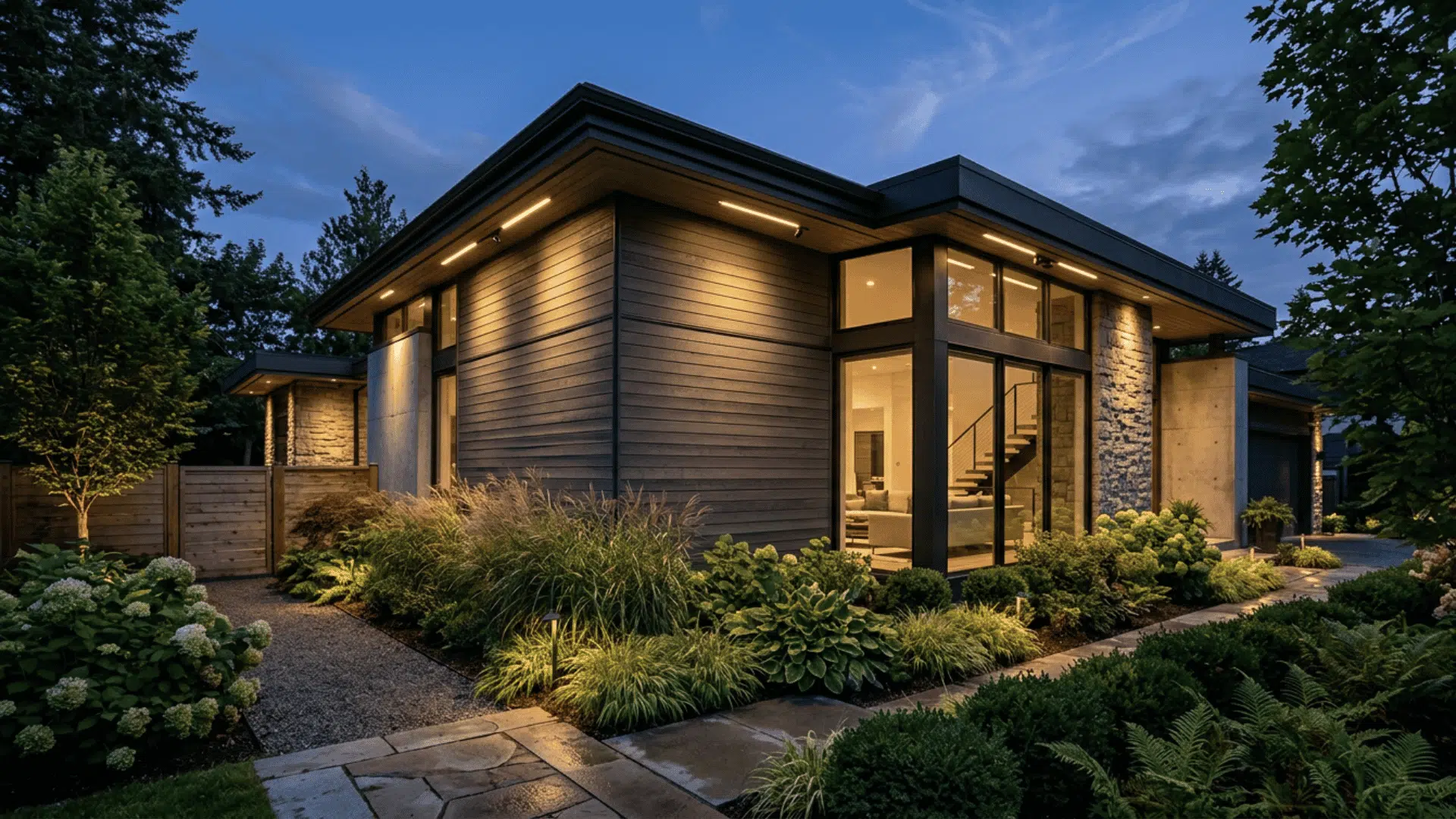
Eave lights mount beneath the outer roof edge and send illumination toward exterior walls, garden beds, paths, or entrances.
Their elevated position allows one fixture to cover more area than many ground lights. Adjustable heads are particularly useful because the beam can be redirected as landscaping changes.
Price: $25 to $150 per light.
Feature: Adjustable heads allow the beam to be aimed toward walls, paths, or planting beds.
18. Soffit Lights
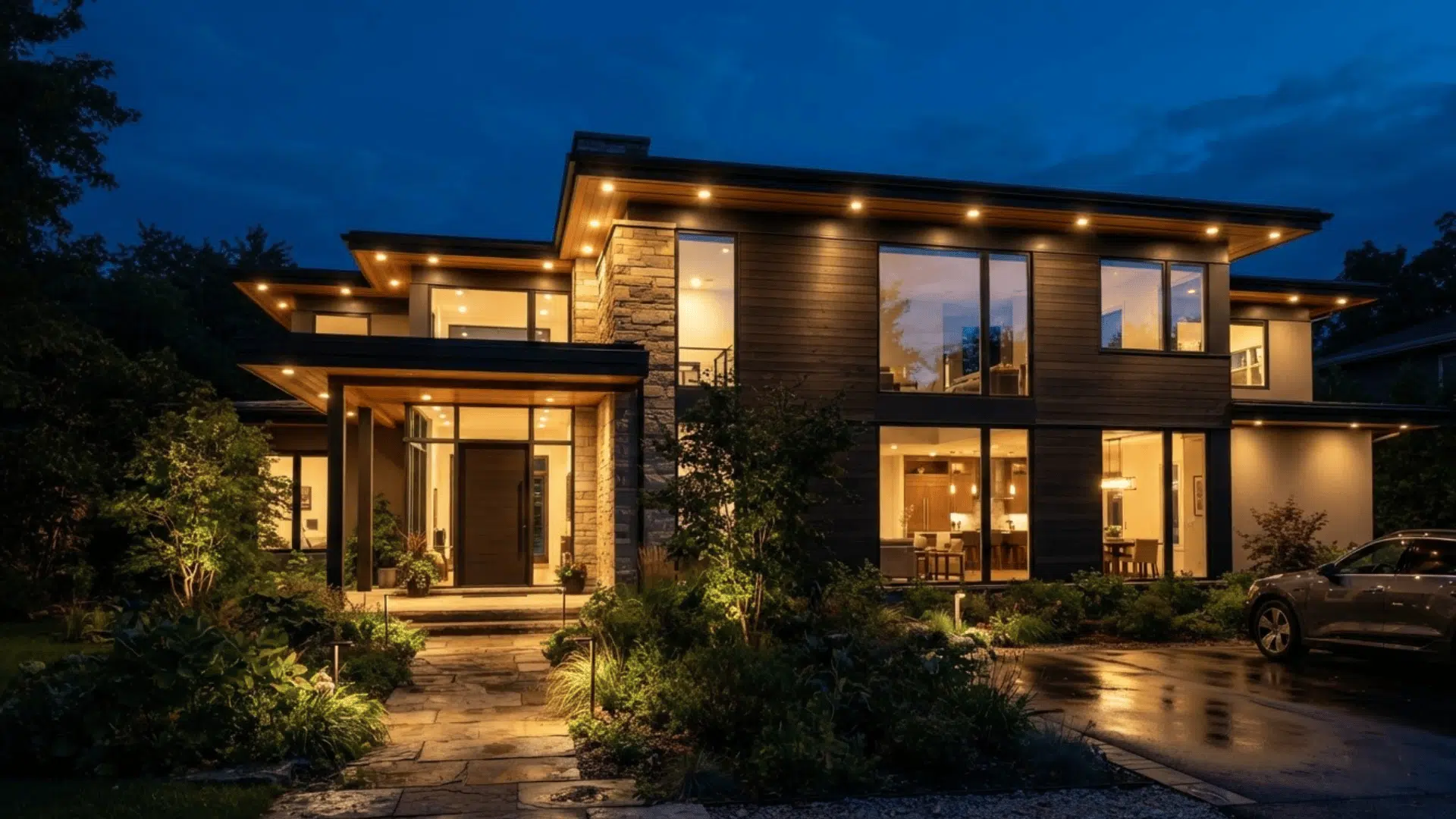
Soffit lights sit beneath roof overhangs and provide clean overhead illumination without visible wall-mounted fixtures. They can wash exterior walls, mark garage bays, or brighten porches and entry areas.
Using selected fixtures above useful areas often produces a more balanced result than lighting every soffit opening.
Price: $20 to $100 per light.
Feature: Their recessed design creates clean lighting beneath roof overhangs.
19. Gate and Entrance Lights
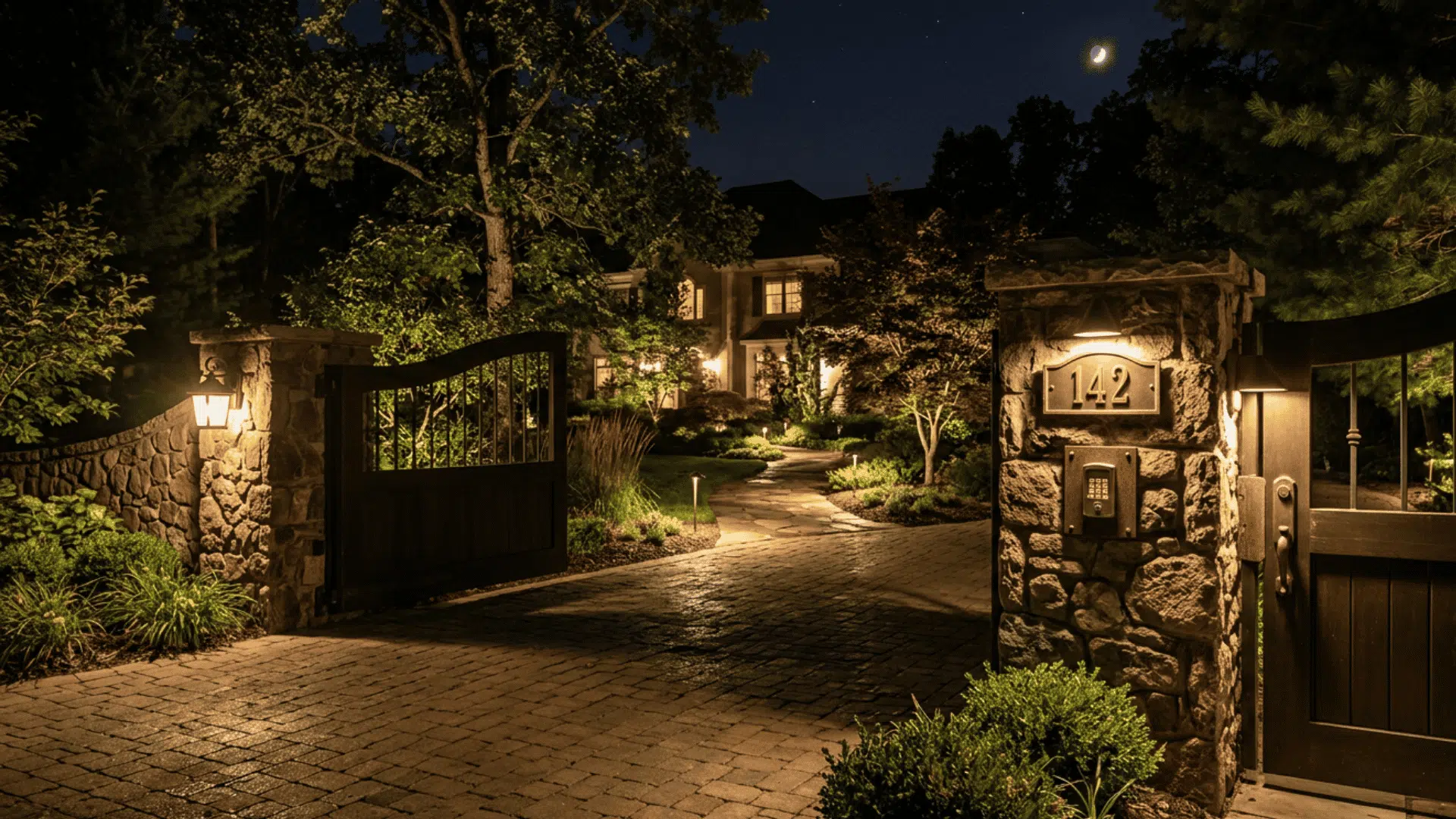
Gate and entrance lights help people identify the driveway opening, pedestrian gate, address, latch, keypad, and route toward the home.
A useful entrance light should illuminate these details without shining directly into a driver’s eyes. Photocells provide automatic nighttime operation, while motion sensors can limit operating time.
Price: $40 to $300 per light.
Feature: Built-in sensors or photocells can provide automatic lighting at entrances.
Structure-Specific Lighting
Pergolas, arbors, gazebos, and docks need fixtures suited to their construction and exposure. Mounting space, moisture, nearby vegetation, and the activities taking place inside the structure should guide the choice.
20. Pergola Lights
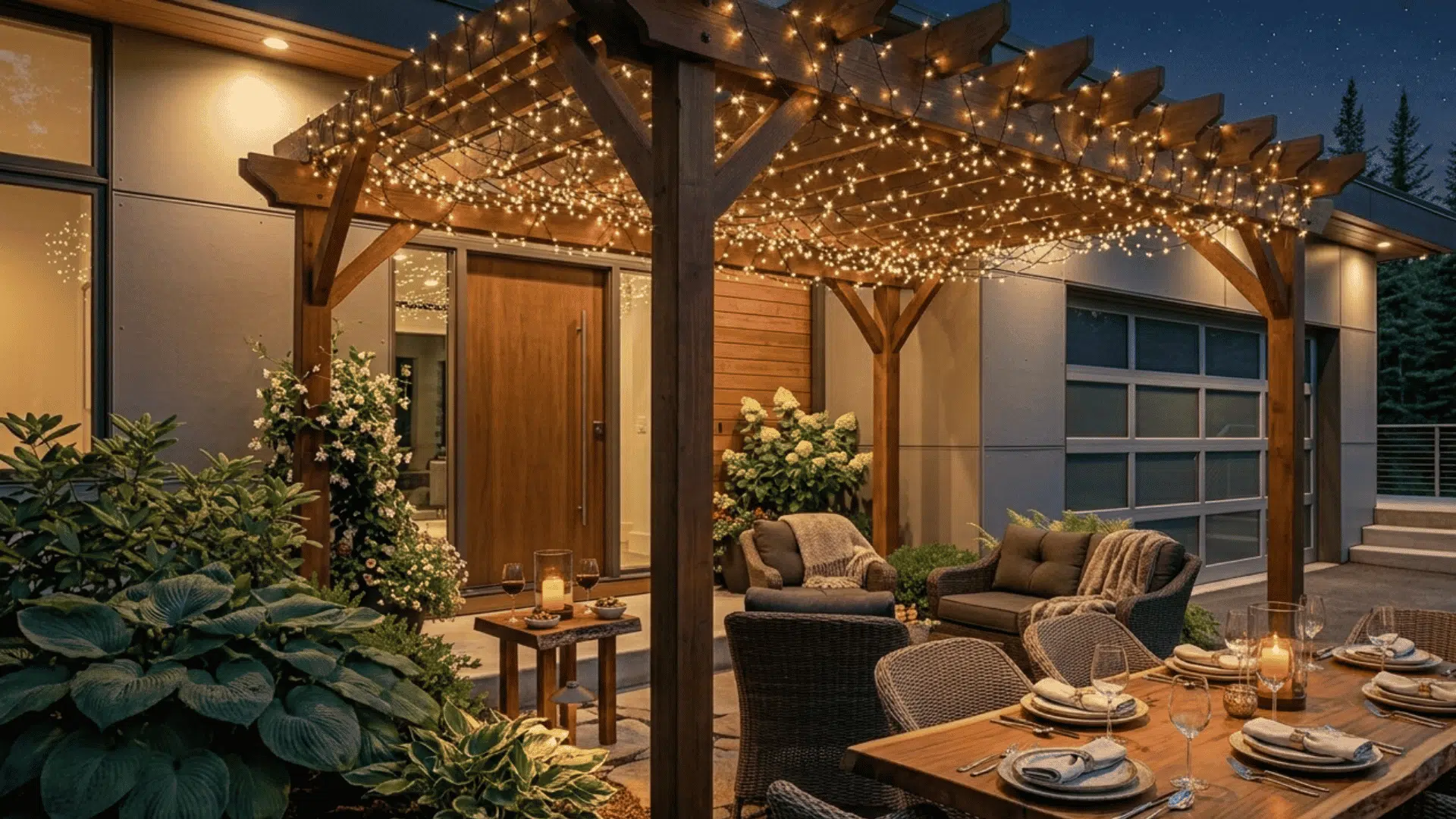
Pergola lights can be mounted along beams, recessed into structural members, wrapped around posts, or suspended over seating and dining areas.
Because a pergola often serves several purposes, dimming is especially useful. Brighter settings can support meals and cleanup, while lower output suits conversation.
Price: $30 to $200 per set or fixture.
Feature: Dimming controls allow the brightness to change for dining, relaxing, or gatherings.
21. Arbor Lights
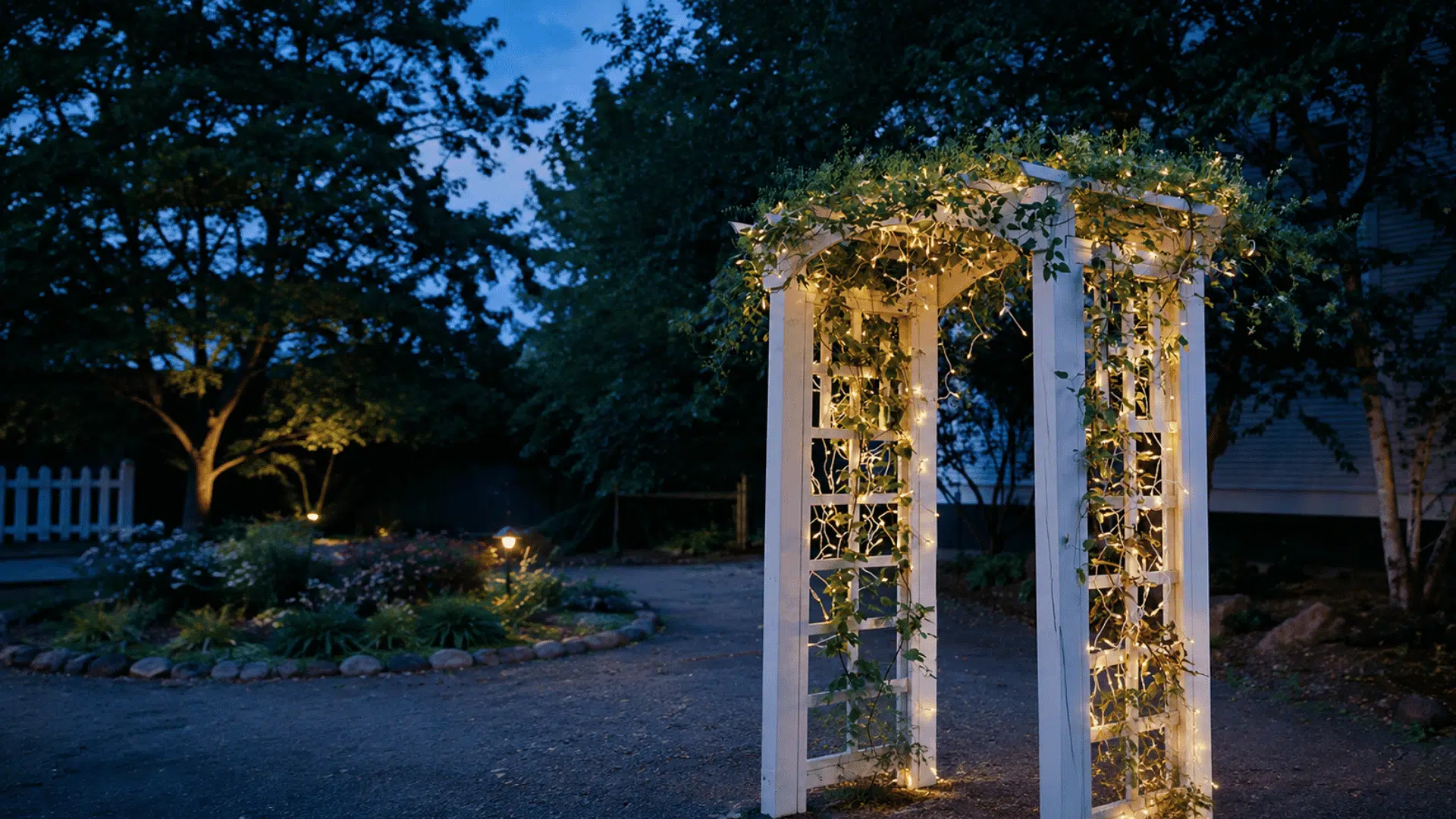
Arbor lights should reveal the entrance and walking surface without overpowering climbing plants or the narrow structure itself.
Leave space around vines and branches because plant growth can cover lenses, pull on wiring, or make future maintenance difficult if the installation is packed too tightly.
Price: $20 to $120 per set or fixture.
Feature: Compact fixtures fit around vines and narrow wooden structures without looking bulky.
22. Gazebo Lights
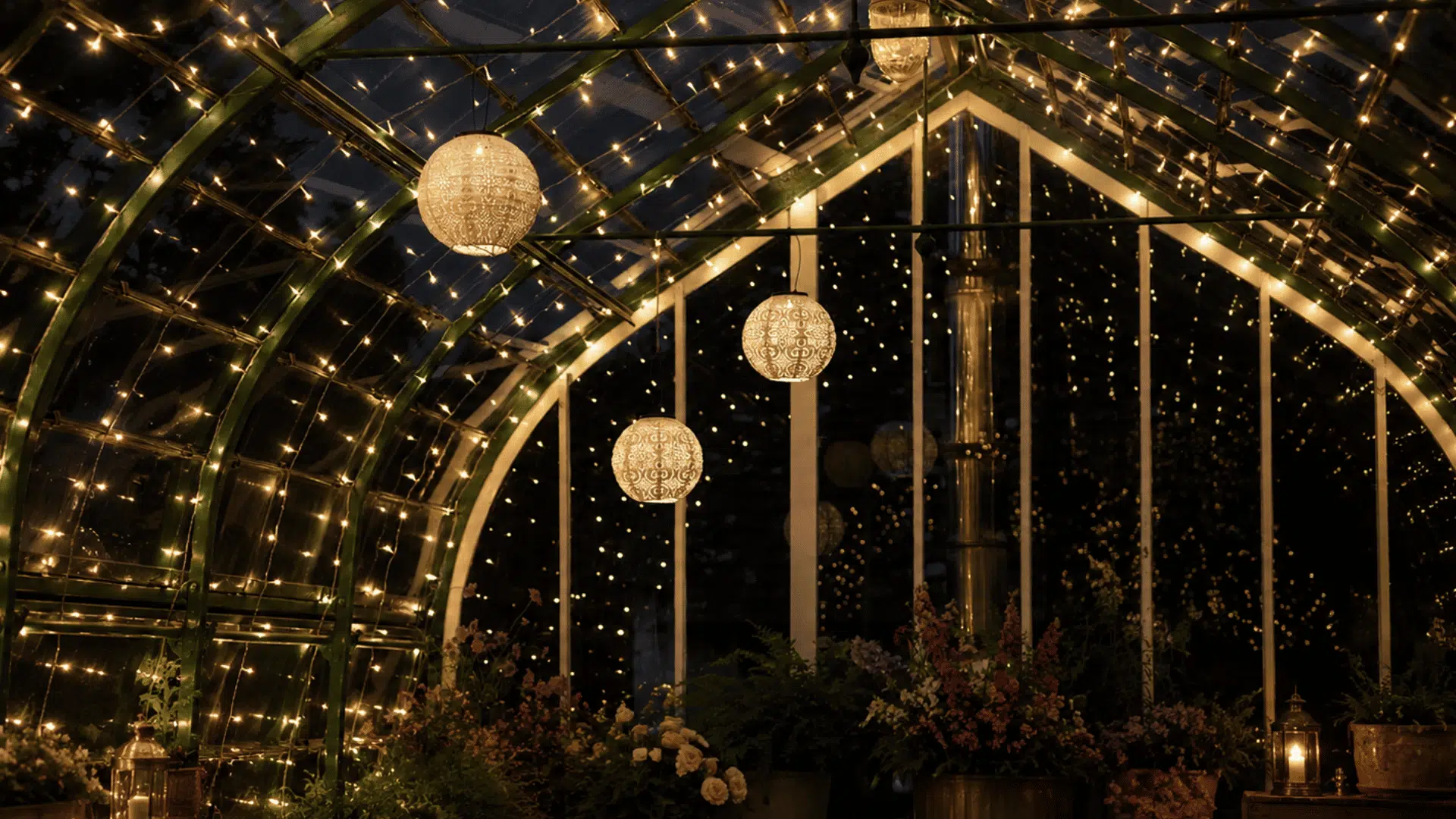
Gazebo lights should reflect how the structure is used. A central overhead fixture works for dining and games, while lights around posts or rails can define edges and entrances.
Because many gazebos have open sides, fixtures may still encounter wind-driven rain and humidity even under a roof.
Price: $40 to $300 per light.
Feature: Damp- or wet-location protection helps the fixture handle moisture in open structures.
23. Dock Lights
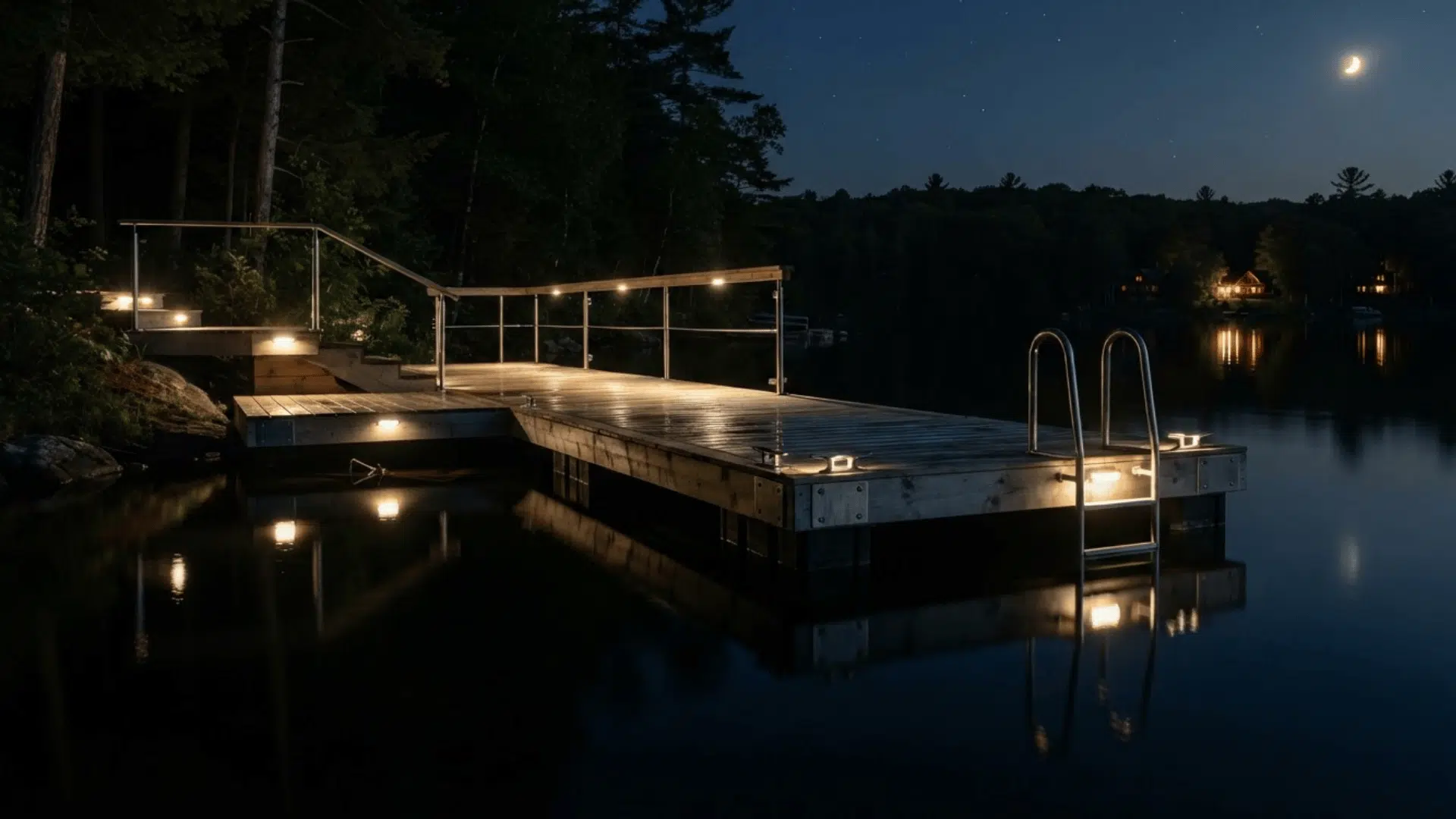
Dock lights mark edges, steps, cleats, ladders, and the route between land and water.
Check U.S. Coast Guard navigation-light guidance so dock lighting does not resemble, overpower, or hide the required lights used by boats near the property at night.
Price: $20 to $200 per light.
Feature: Marine-grade construction protects the fixture from moisture, salt, and corrosion.
Note: Waterfront lighting should not overpower, hide, or visually resemble required boat navigation lights.
Water Feature Lighting
Water reflects and scatters light differently from solid surfaces, so these fixtures benefit from careful placement and moderate brightness.
24. Pool Lights
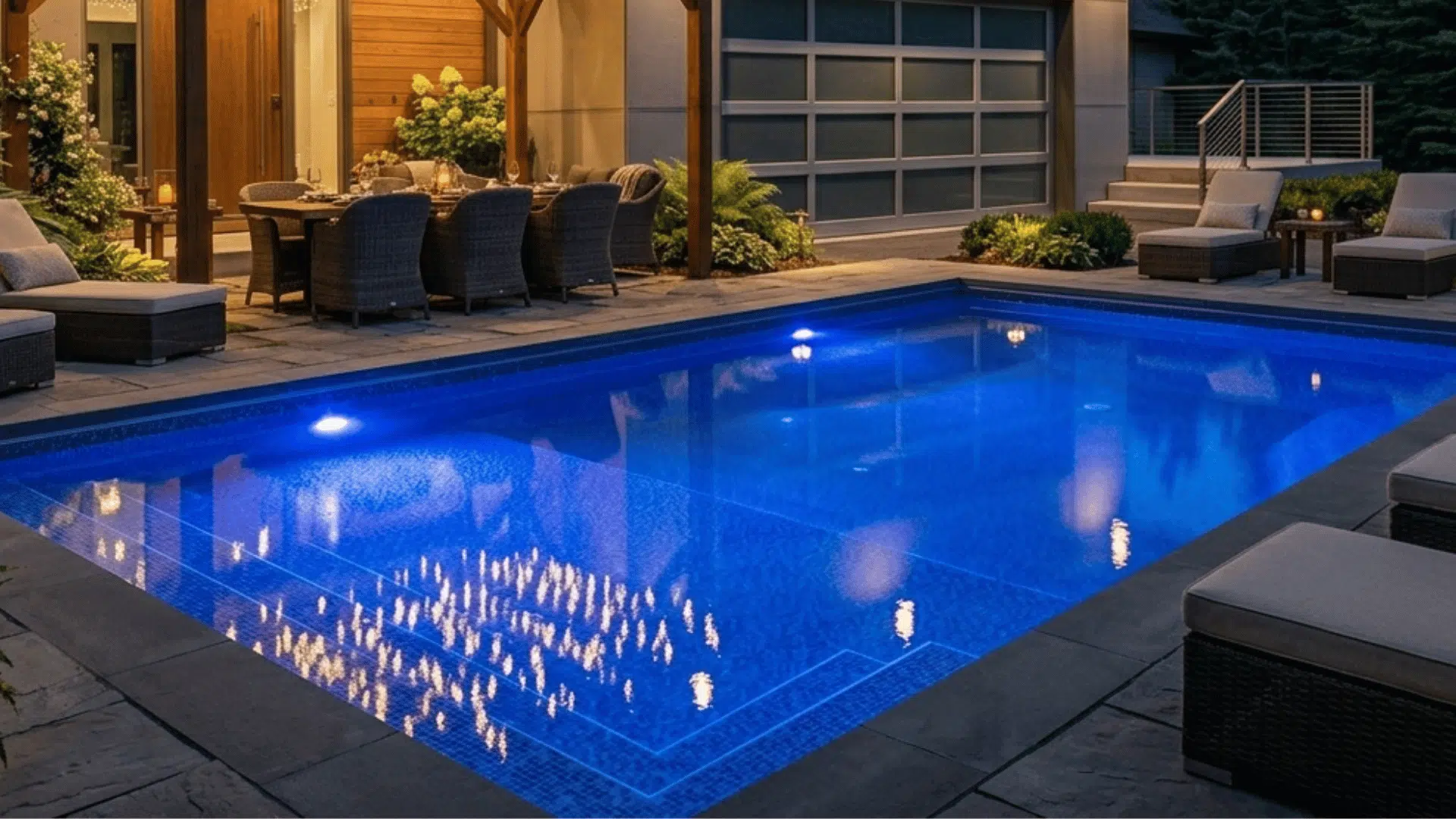
Pool lights improve underwater visibility and can make swimming areas easier to supervise.
The Consumer Product Safety Commission warns that faulty underwater lights or electrical equipment near water may cause shock.
Price: $50 to $1,500 per light.
Feature: A listed underwater-rated housing protects electrical components while the fixture is submerged.
Safety Note: Flickering underwater lights, damaged fittings, or signs of electrical trouble near a pool should never be ignored.
25. Fountain Lights
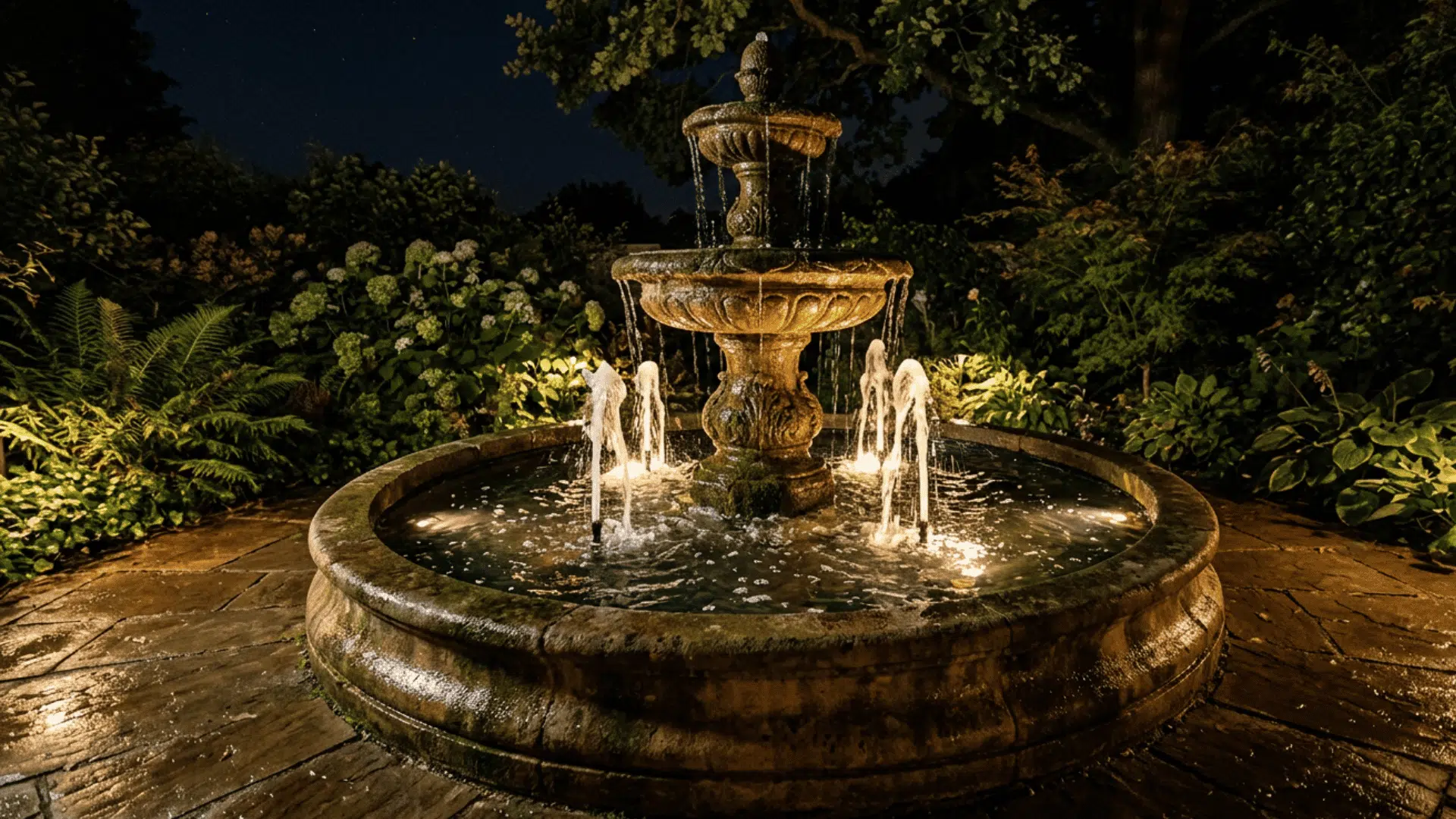
Fountain lights can reveal spray patterns, falling water, basin details, and surrounding stonework that disappear after dark.
Positioning a fixture under or beside the water often produces more depth than simply shining a bright light from the front.
Price: $65 to $270 per light.
Feature: Submersible models can remain underwater while lighting the fountain basin and water spray.
26. Pond Lights
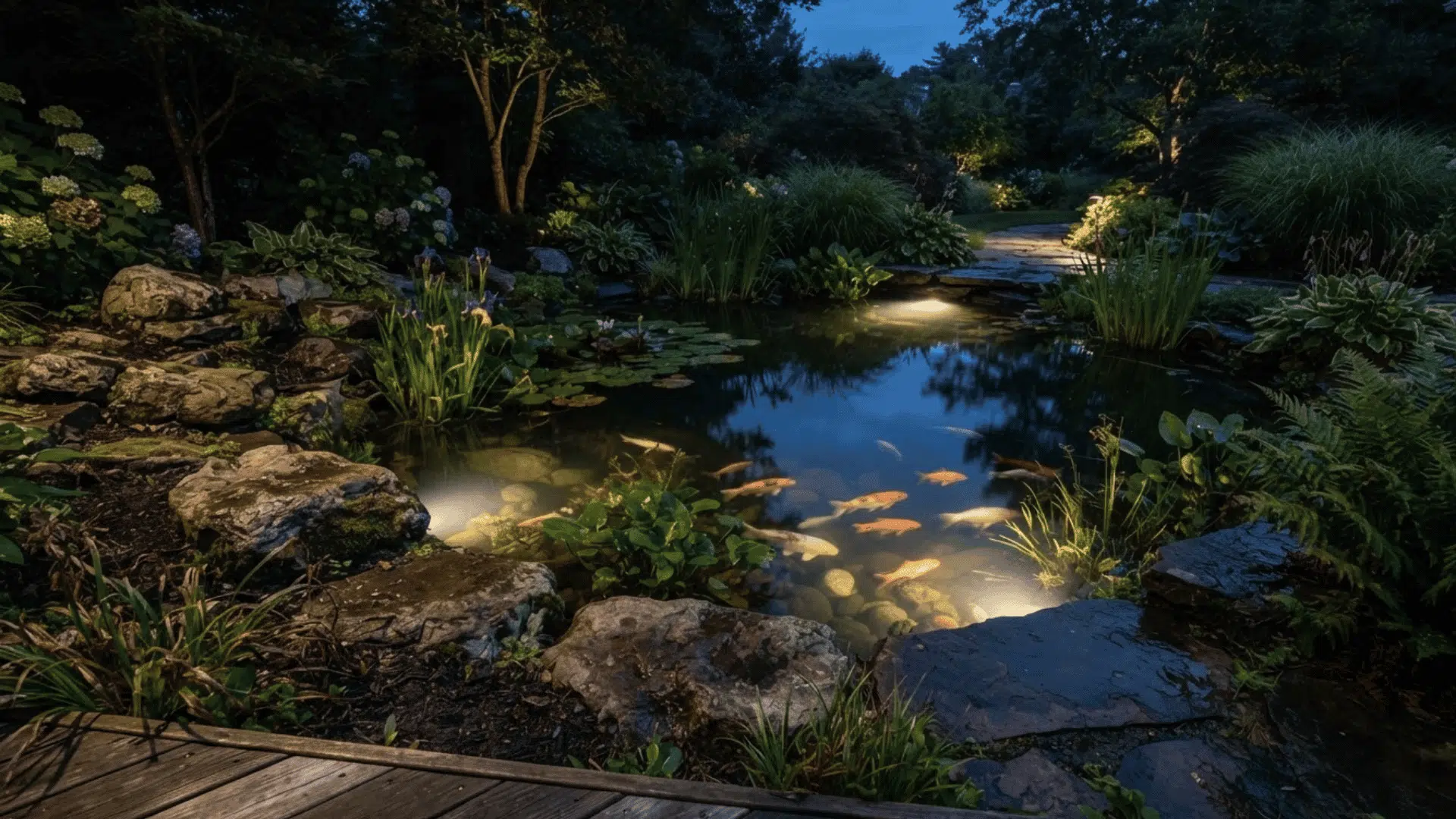
Pond lights can reveal fish, aquatic plants, rocks, and the shoreline without turning the entire water surface into a bright mirror.
Avoid aiming beams directly toward seating areas, where reflections can become distracting. Fixtures should also remain accessible for cleaning and repositioning when needed.
Price: $80 to $330 per light or kit.
Feature: Low-voltage models designed and rated for pond use can illuminate fish, plants, rocks, and pond edges.
27. Waterfall Lights
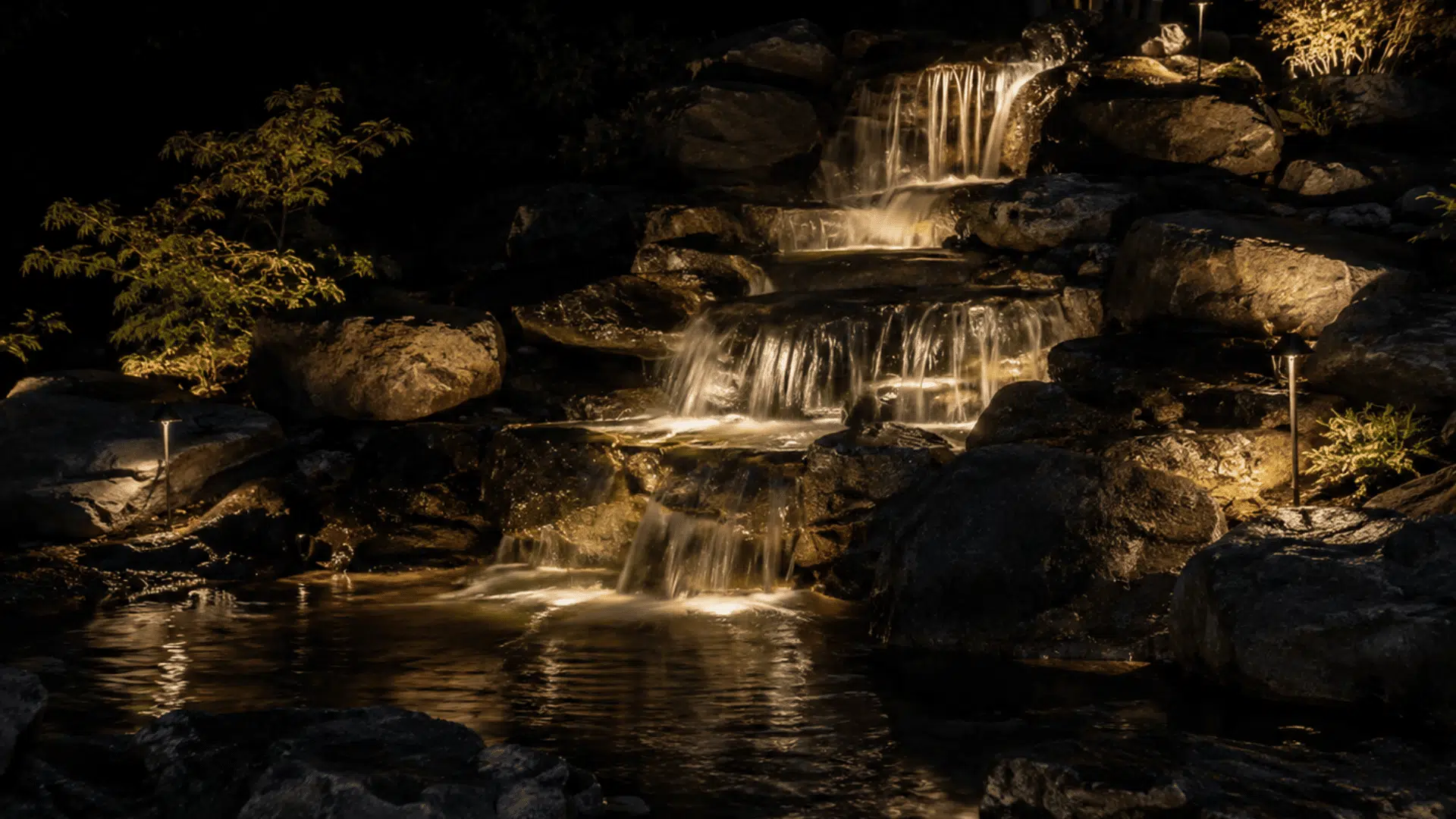
Waterfall lights are most effective when their beam catches moving water from the side, below, or between rocks.
This placement highlights texture and movement while allowing darker areas to create contrast. A narrow beam offers better control than broad floodlighting around the entire feature.
Price: $20 to $430 per light.
Feature: A narrow beam highlights moving water without making the surrounding rocks overly bright.
Security and Smart Lighting
Security lighting works best when it reveals faces, entrances, paths, and activity without creating blinding glare.
Controls such as motion sensors, photocells, schedules, and apps can also prevent fixtures from operating when they are not needed.
28. Motion-Sensor Lights
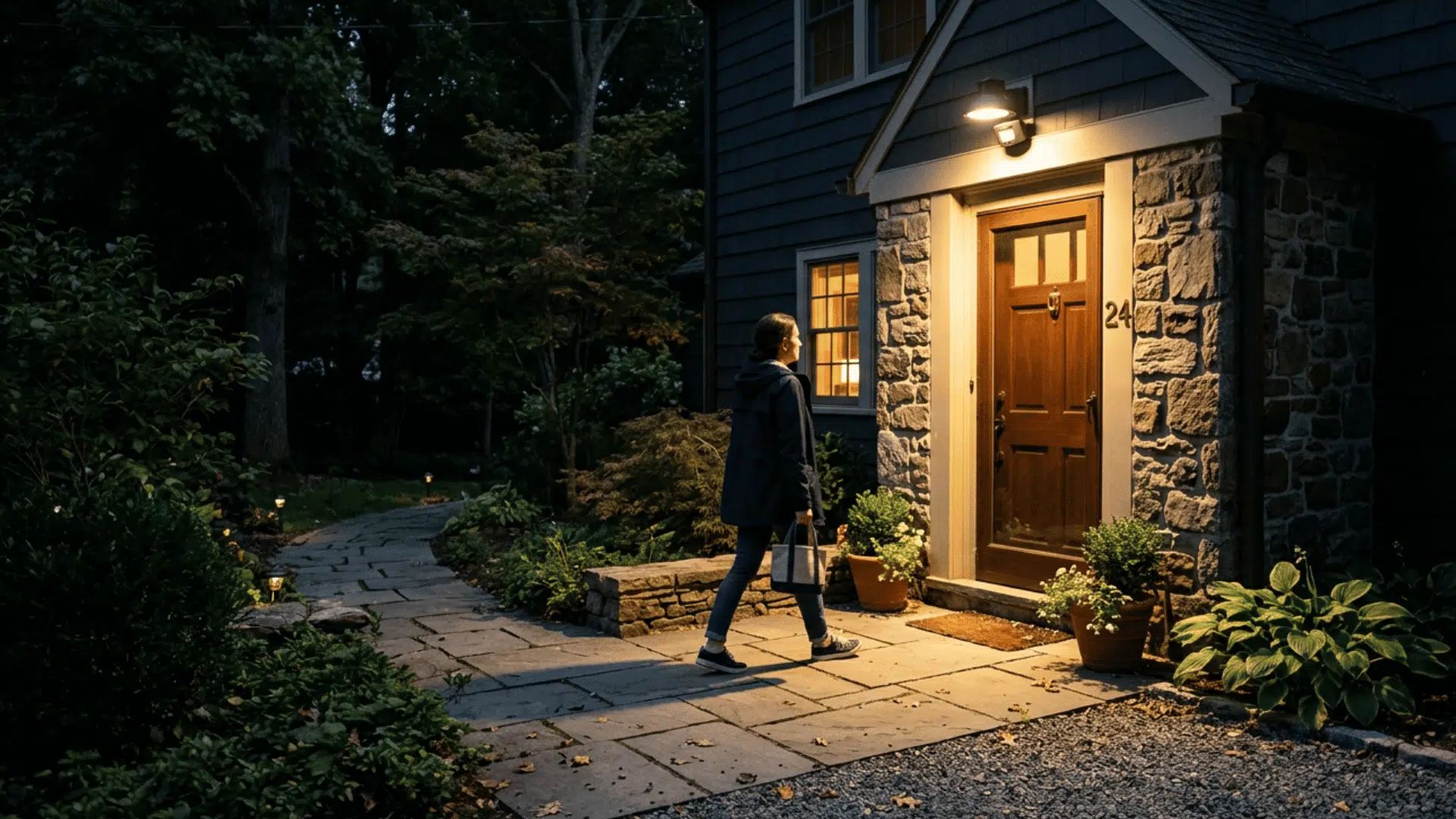
Motion-sensor lights activate when movement enters their detection area, making them useful around garages, side yards, doors, and service paths. Sensor direction matters as much as brightness.
Adjustable sensitivity, range, and operating time allow the light to respond more closely to movement occurring on the property.
Price: $25 to $100 per light.
Feature: Adjustable detection range and timing help reduce unwanted activation from animals or traffic.
Advice: Aim the sensor across the expected path of movement. Department of Energy control guidance notes that occupancy sensors can reduce unnecessary exterior lighting operation.
29. Security Floodlights
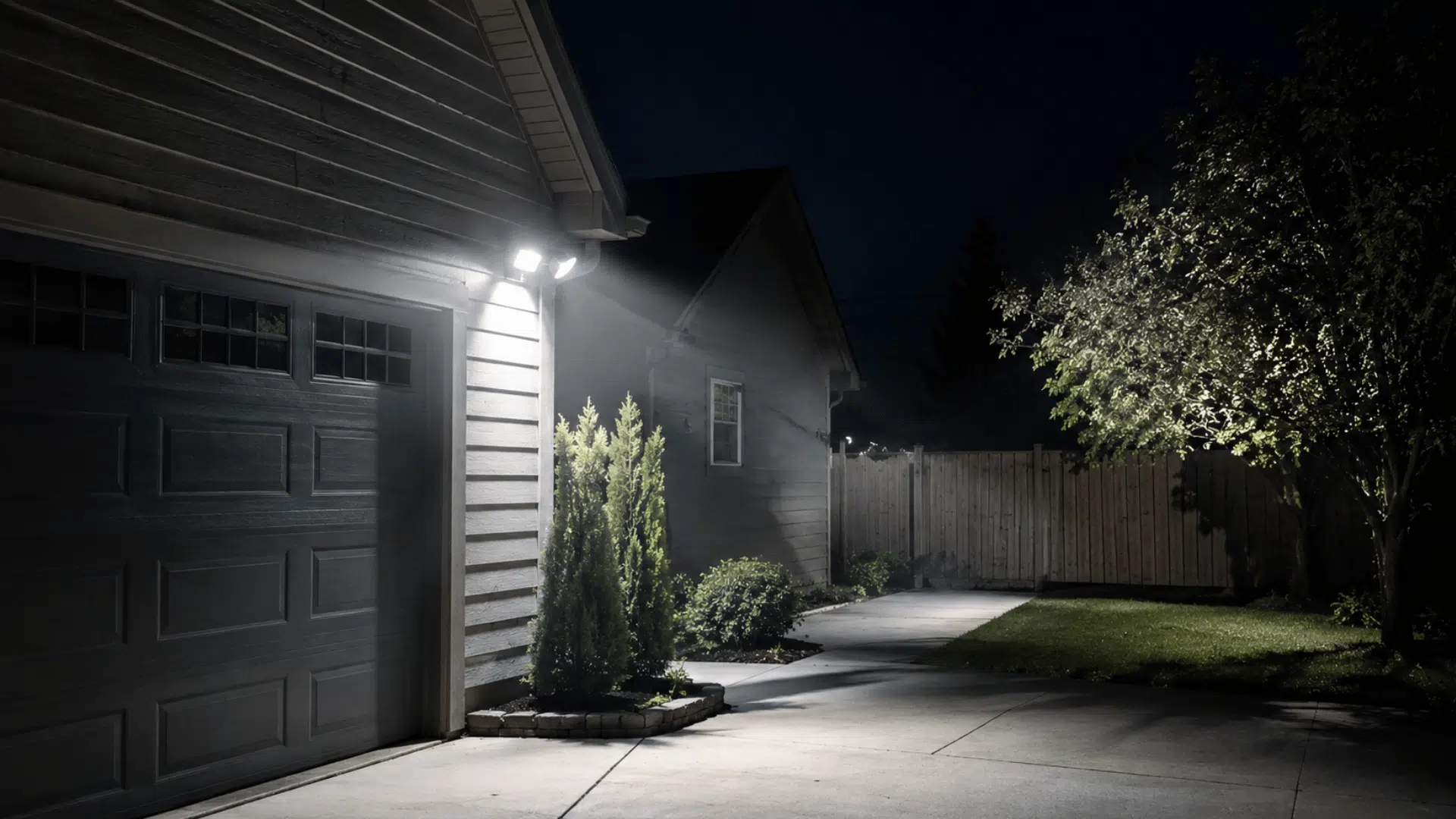
Security floodlights cover larger areas such as driveways, garage fronts, side yards, and work zones.
Adjustable heads make it possible to direct light toward more than one target, but excessive output can create glare and deep shadows that actually hide details.
Price: $20 to $150 per light.
Feature: Adjustable heads provide wide coverage across yards, driveways, and entrances.
30. Smart and Color-Changing Lights
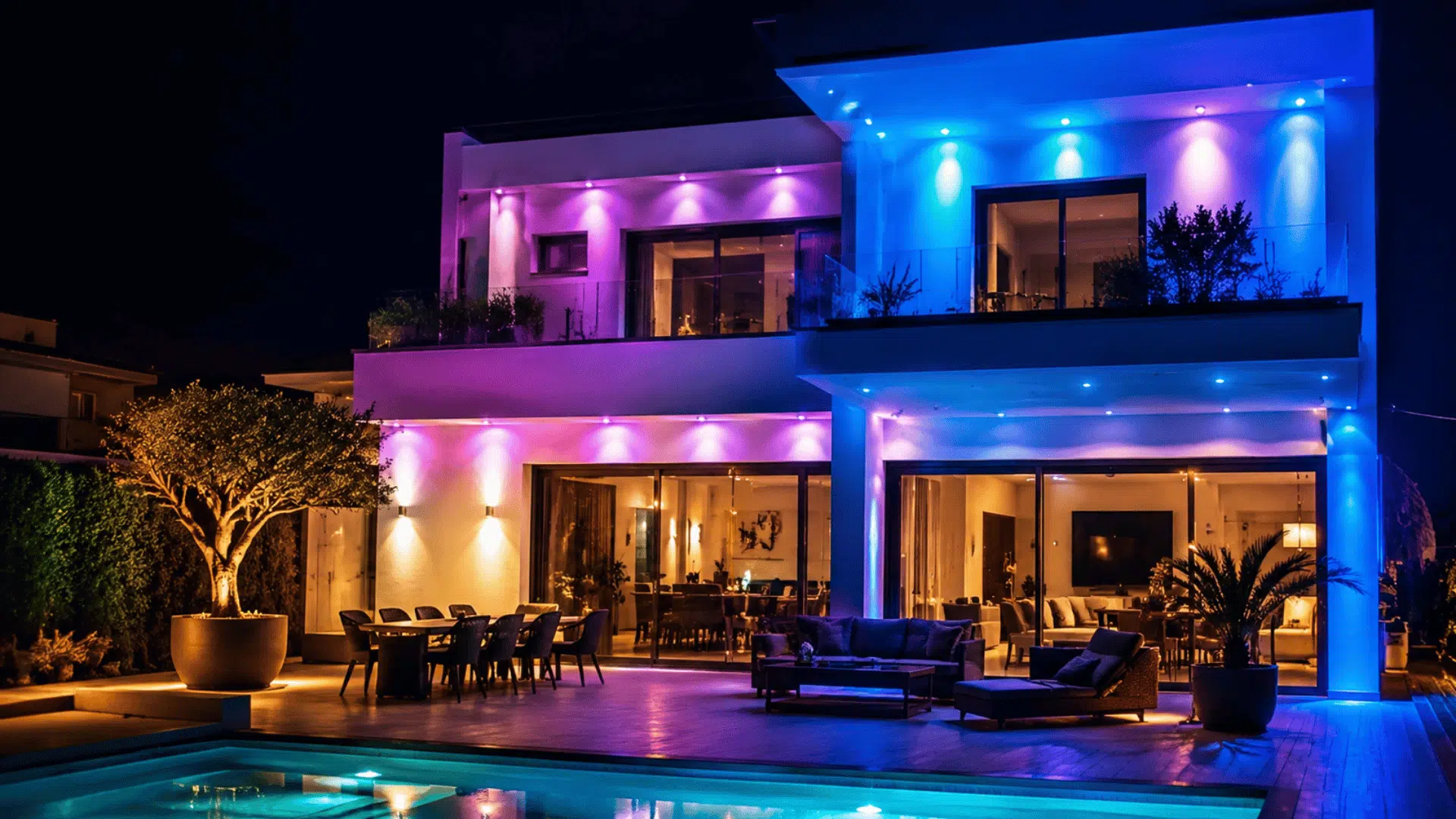
Smart and color-changing lights can combine brightness control, color adjustment, schedules, timers, sensors, and app or voice operation. The most useful feature depends on the location.
Scheduling may matter more for entry lights, while color control may suit patios or entertaining areas.
Price: $30 to $200 per light or set.
Feature: App controls allow users to change brightness, colors, schedules, and operating times.
31. Dusk-to-Dawn Lights
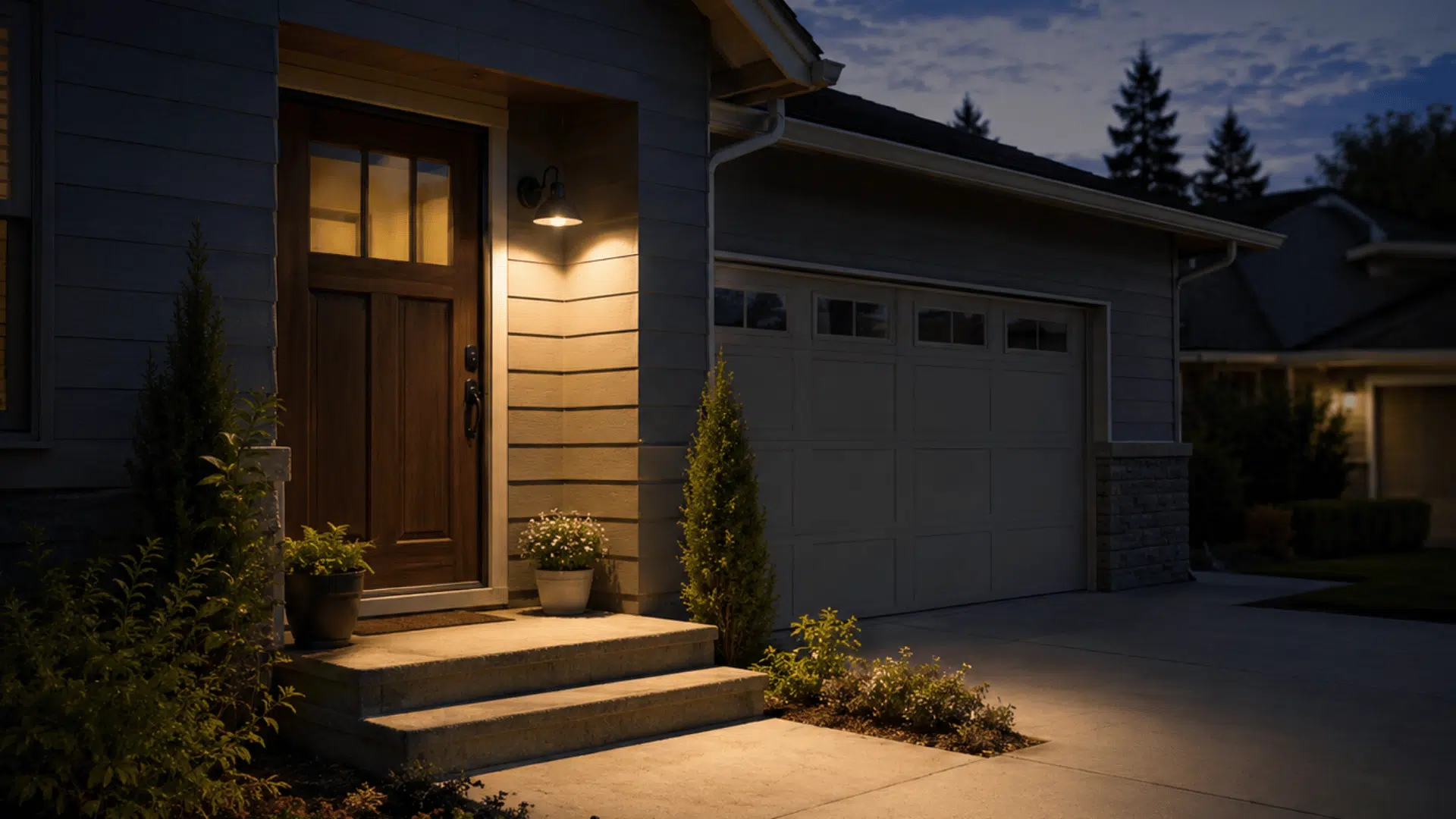
Dusk-to-dawn lights contain a photocell that detects surrounding light levels, automatically switching the fixture on after sunset and off when daylight returns.
They suit areas needing consistent nighttime illumination, such as entrances, garages, and walkways.
Price: $25 to $120 per light.
Feature: A built-in photocell automatically switches the light on at night and off during daylight.
How to Plan Your Outdoor Lighting Design: Step by Step
A clear outdoor lighting plan helps improve safety, comfort, and nighttime appearance. Follow these steps before purchasing fixtures or starting installation.
Step 1: Walk Your Property and Note Focal Points
Walk around the property during the day and after dark. Mark paths, steps, doors, seating areas, trees, walls, water features, and dark corners.
I find it helpful to check the yard after sunset because dark spots and glare are much easier to notice at night.
Advice: Take photos from indoor windows as well. This helps prevent outdoor lights from shining into bedrooms or living spaces.
Step 2: Decide on Layers: Ambient, Task, and Accent Lighting
Use three lighting layers to create a balanced result. Ambient lighting gives general brightness across patios and gathering areas.
Task lighting supports activities near steps, grills, doors, and workspaces. Accent lighting highlights trees, walls, or sculptures.
Fun Fact: A yard often looks more attractive when some areas remain softly lit instead of making every space equally bright.
Step 3: Choose Fixture Styles that Match Your Home
Select fixtures that suit the home’s shape, materials, and exterior finish. Simple black fixtures work well with many modern homes, while lantern-style lights may complement traditional designs.
Check each fixture’s wet- or damp-location rating. Matching the fixture size to the wall, post, or pathway prevents an awkward appearance.
Step 4: Map Out Power Sources and Wiring Needs
Decide which lights will use line voltage, low voltage, solar power, or batteries.
Mark outlet locations, transformer placement, cable routes, switches, timers, and smart controls. Keep connections protected from water and easy to reach for future maintenance.
Safety Note: A licensed electrician should handle permanent wiring, pool lighting, or circuits near water according to local electrical requirements.
Step 5: Test Placement Before Final Installation
Place temporary markers or fixtures in the planned positions before installing them permanently.
Test the lighting after dark to check beam direction, spacing, glare, shadows, and brightness. Adjust fixtures until paths and features look clear without excessive light.
Choosing the Right Lighting Fixtures and Bulbs
The right fixture and bulb should match the location, lighting purpose, power source, and local weather conditions.
- LED vs. Solar vs. Low-Voltage Options: LED bulbs use less energy and provide steady brightness. Solar lights work well in sunny areas without wiring.
- Choosing the Right Color Temperature: Warm white light, around 2700K to 3000K, creates a soft and welcoming look. For patios and entry areas, I usually prefer warm white lighting because it gives the space a softer, more welcoming feel.
- Weatherproof and Durable Fixture Materials: Choose outdoor-rated fixtures made from brass, copper, stainless steel, aluminum, or durable composite materials.
Careful fixture and bulb selection can improve visibility, lower energy use, and reduce future repair or replacement costs.
DIY Outdoor Lighting vs. Hiring a Landscape Lighting Designer
DIY lighting suits small updates, while larger projects need trained support.
| Topic | DIY | Professional |
|---|---|---|
| What You Can Do | Add solar lights, replace bulbs, and place low-voltage fixtures. | Creates a balanced plan for the property. |
| When Help Is Needed | Complex wiring, trenching, transformers, and roof fixtures can be risky. | Handles wiring, permits, safety, and placement. |
| Cost Comparison | Lower starting cost, though mistakes may increase repairs. | Higher upfront cost, with stronger planning and reliable installation. |
Choose based on safety, project size, budget, and lighting effect needed.
How to Choose the Right Landscape Lighting Designer
A skilled designer should understand outdoor safety, fixture placement, wiring needs, maintenance, and the look you want for your property.
- Questions to Ask Before Hiring: Ask about experience, licenses, insurance, warranties, lighting controls, fixture brands, maintenance, and how the final design will meet your needs.
- Checking Portfolios and Past Projects: Review completed projects that match your home style, yard size, and lighting goals. Look for balanced brightness, limited glare, and safe path lighting.
- Understanding Pricing and Project Timelines: Request a written estimate showing design fees, fixtures, wiring, labor, permits, and completion dates.
- Red Flags to Watch For: Avoid designers who offer unclear prices, use poor-quality fixtures, skip property inspections, or cannot provide references.
Careful checks before hiring can prevent hidden costs, weak results, and future repair problems.
Common Outdoor Lighting Mistakes to Avoid
Small planning mistakes can cause glare, dark spots, higher costs, and an uneven nighttime look.
| Mistake | Better Approach |
|---|---|
| Overlighting the Entire Yard | Use softer light levels and keep some areas darker for contrast. |
| Ignoring Shadows and Glare | Aim beams away from windows, seating areas, roads, and neighboring homes. |
| Using Mismatched Fixture Styles | Choose fixtures with similar finishes, shapes, and light colors. |
| Skipping a Wiring or Power Plan | Map cables, outlets, transformers, and future fixture locations before installation. |
A clear plan creates safer movement, balanced brightness, and a more comfortable outdoor space.
Simple Maintenance Tips to Keep Your Lighting Looking Great
Regular care keeps outdoor lights bright, safe, and free from avoidable damage.
- Cleaning Fixtures Regularly: Switch off the power, then remove dirt, leaves, insects, and water marks with a soft cloth.
- Checking Wiring and Connections Each Season: Look for loose connections, exposed wires, damaged cables, moisture, or corrosion. Ask a qualified electrician to handle electrical repairs.
- Replacing Bulbs Before They Fully Burn Out: Replace dim, flickering, or discolored bulbs with outdoor-rated bulbs of the correct wattage and color temperature.
A seasonal check can improve light quality and help small problems get fixed early.
Final Thoughts
Outdoor lighting design should make movement safer, support outdoor activities, and create a balanced nighttime look.
For me, the best outdoor lighting plan improves visibility without taking away the calm nighttime feel of the yard.
Start by identifying paths, steps, entries, patios, and features that need light. Choose outdoor-rated fixtures, bulbs, beam angles, and a reliable power source.
Avoid harsh brightness and keep beams away from windows, roads, homes, and the open sky. Test placement after dark before installation.
Clean fixtures seasonally and check wiring for damage. Hire a professional for permanent wiring, pool lighting, roof fixtures, or work near water.
Which outdoor lighting idea would suit your home best? Share your plans, questions, or tips in the comments below.
Frequently Asked Questions
How Far Apart Should Outdoor Path Lights Be?
Spacing depends on fixture height, beam spread, and path shape. Place temporary markers first, then test after dark. Use enough light to show edges without creating a harsh runway effect.
What Color Temperature Works Best Outdoors?
Warm white light from 2700K to 3000K suits patios, entrances, and gardens. Cooler light may support garages or security areas, but strong blue-white light can make spaces feel harsh outside.
Are Solar Lights Bright Enough for Pathways?
Solar lights can mark paths in sunny locations, but brightness and runtime depend on panel exposure, battery quality, and weather. Use wired low-voltage fixtures where dependable nightly light is essential.
Should Outdoor Lights Stay on All Night?
Some entry and security lights may stay on overnight, but timers, photocells, and motion sensors reduce wasted power. Aim fixtures downward and use only the brightness each outdoor area needs.
How Often Should Outdoor Fixtures be Maintained?
Check fixtures each season for dirt, plant growth, corrosion, loose parts, exposed wiring, or moisture. Clean lenses and replace weak bulbs after safely switching off the power at the source.

With a Master’s in Architecture from the University of California, Berkeley, Mitchell Green has spent over two decades dedicated to the study and practical application of home fixture design. His career started in an architectural firm, providing him a strong foundation in the structural and aesthetic aspects of home interiors. Mitchell brought his comprehensive knowledge to our platform, where he has been an influential voice in our home fixtures and fittings section. Since 2018, he has been guiding our readers through the intricacies of selecting and installing fixtures, combining technical know-how with design flair. In his spare time, Mitchell is a keen photographer, capturing architectural details and design elements, an interest that complements his professional focus.