
Quick Answer: The best 110-120V plug in mini split overall is the Zone Air DIY 110V Series, the Cooper & Hunter 115V follows closely for value, in third, MrCool DIY 115V , and finally, the Senville LETO BTU 115V as a budget choice. “Plug in” 110V systems are hard to find, but in 2026 these brands offer great solutions for homeowners looking to DIY install a mini split without the electrical wiring hazards. Of the ductless mini split heat pumps that we tested this year, this guide will break down pros and cons, and hopefully help you make an informed buying decision.
110v plug in mini splits can be great options for homeowners, renters, and anyone trying to add efficient cooling and heating without the difficulty or expense of running a 220-240V circuit. Some common convenient use cases include older homes, apartments, garages, and offices.
Quick Answer: Best 110V Plug-In Mini Split Systems
Most mini split systems on the market require two phase 220-240V power (sometimes referred to as 230V power). Typical air conditioners have compressors that run better on higher frequency and voltage, 110v systems are designed specifically to run on 110V power, without losing efficiency or reliability. The models we list below are the models that we believe best accomplish the 110v goal without sacrificing efficiency or reliability.
Side note: Because 110V circuits deliver less power than 220V, these units are limited to 9,000–12,000 BTU capacity, enough for a single room, garage, office, or small apartment.
Here are the top picks, ranked by overall performance and value:
- Zone Air DIY 110V (Top Pick): 23 SEER2 efficiency, heating down to -13°F, indoor noise as low as ~30 dB(A), R-454B refrigerant. USA testing, inspection and assembly. 7-year compressor / 5-year parts warranty.
- Cooper & Hunter 115V (Best Value): Competitive pricing with SEER2 in the 18–19 range, 2-year warranty extendable to 5 years with registration, wide availability through online retailers.
- MrCool DIY 115V (Best for DIY): Pre-charged Quick Connect line set, 18 dB(A) indoor noise on low, 7-year compressor / 5-year parts warranty honored even with homeowner install.
- Senville LETO 115V (Budget Pick): SEER ~19, basic smart features, lower purchase price, but warranty requires a licensed technician for refrigerant line work.
** “Plug-in” here means the unit uses 110–120V power. You cannot safely run these off extension cords or shared circuits.
What Is a 110V Plug-In Mini Split Air Conditioning System?
The term “plug-in” means that the unit can, if need be, plugged into a regular outlet. This however is likely not code compliant in your area. Regardless, 110V systems, even if plugged into an outlet, should have a dedicated breaker with a capacity of at least 15A. This way if there are electrical issues you can isolate and mitigate them. If you are planning on plugging your unir into an outlet, make sure you also purchase a pigtail plug cable that is rated for at least 15A. And make sure it has 3 wires for the power, neutral, and ground.
A 110v system has the following components:
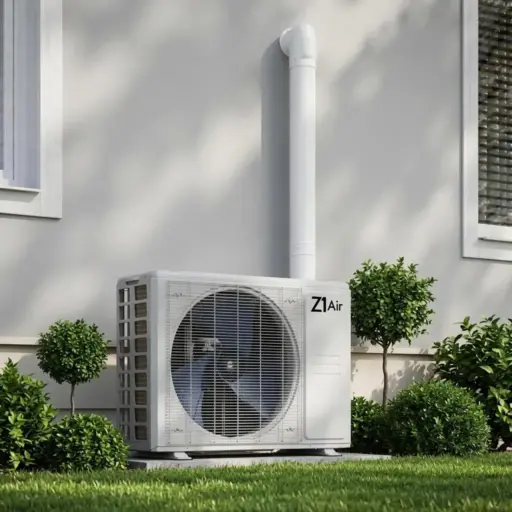
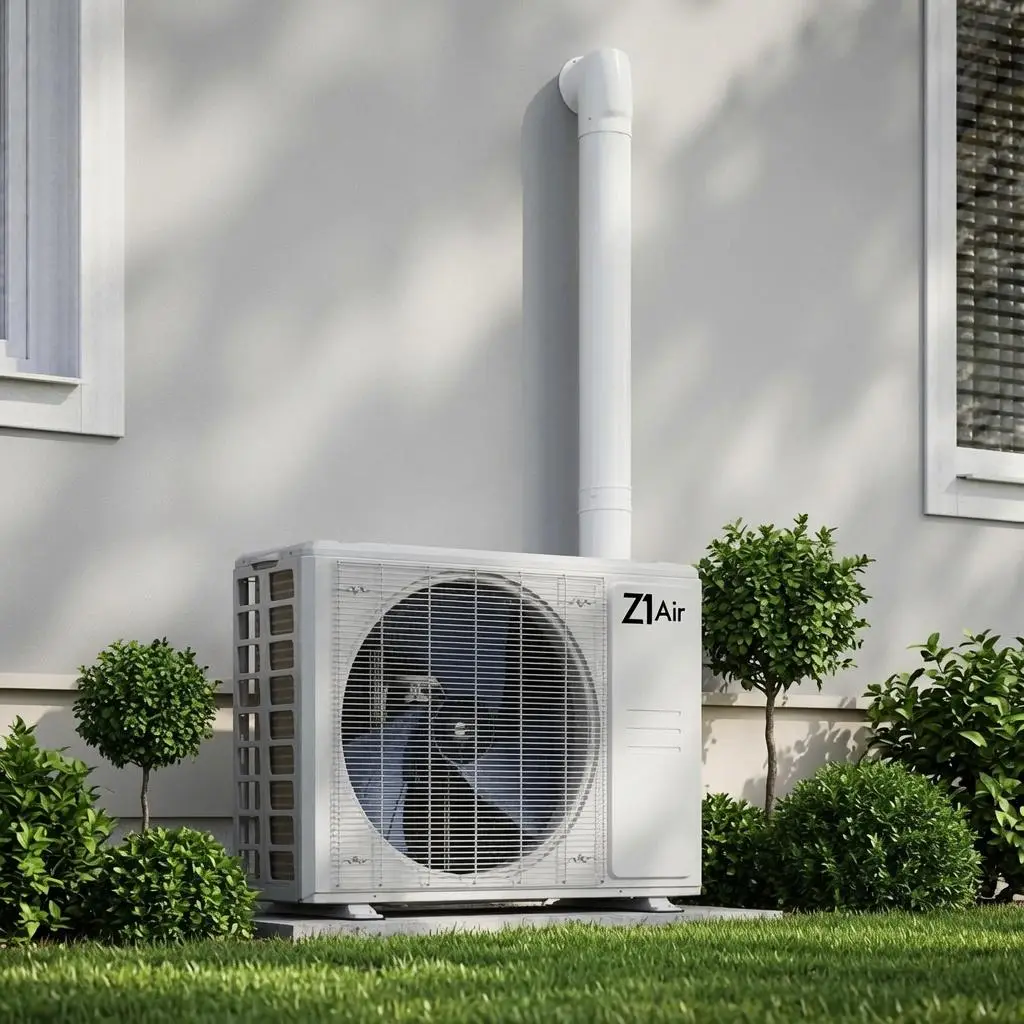
- An outdoor unit (condenser and compressor) that sits outside the house and exchanges heat with outside air.
- One or more indoor units (wall-mounted or ceiling-mounted air handlers) that deliver quiet, room-by-room cooling and heating indoors.
- A refrigerant line, control wire, and condensate drain connecting the two.
Pros and Cons of 110V Mini Split Heat Pumps
110V mini splits trade raw capacity for easier electrical compatibility and lower installation barriers.
What works well:
- Easier power requirements. Many homes already have a 15A, 110V power readily available, which can help reduce contractor install cost by $500–$2,000.
- Ideal for single rooms of 200–550 square footage: bedrooms, offices, garages, tiny homes, basements.
- Far more energy efficient than window ACs and portable units, thanks to inverter compressors and ductless design. Top 110V models reach 23 SEER2.
- Quiet indoor unit operation. Premium 115V models drop to 18–30 dB(A), compared to 50+ dB(A) from typical window units.
- Both cooling and heating in one unit, useful through shoulder seasons and mild winter months.
Where they fall short:
- Limited capacity. Most max out at 12,000 BTU (1 ton) on 115V, which will not condition a large open-plan room or a full house.
- Lower modulation range than equivalent 220V models in cold climates, where heat output drops as temperatures fall.
- Installation still involves mounting units on walls, drilling penetrations, and running refrigerant lines. This is not a window-unit-style plug and go.
In very cold regions, a 240V cold-climate heat pump may be a better primary heating choice. 110V units are best as supplemental or room-specific solutions.
Our Top Pick: Zone Air 115V Mini Split (Best Overall)
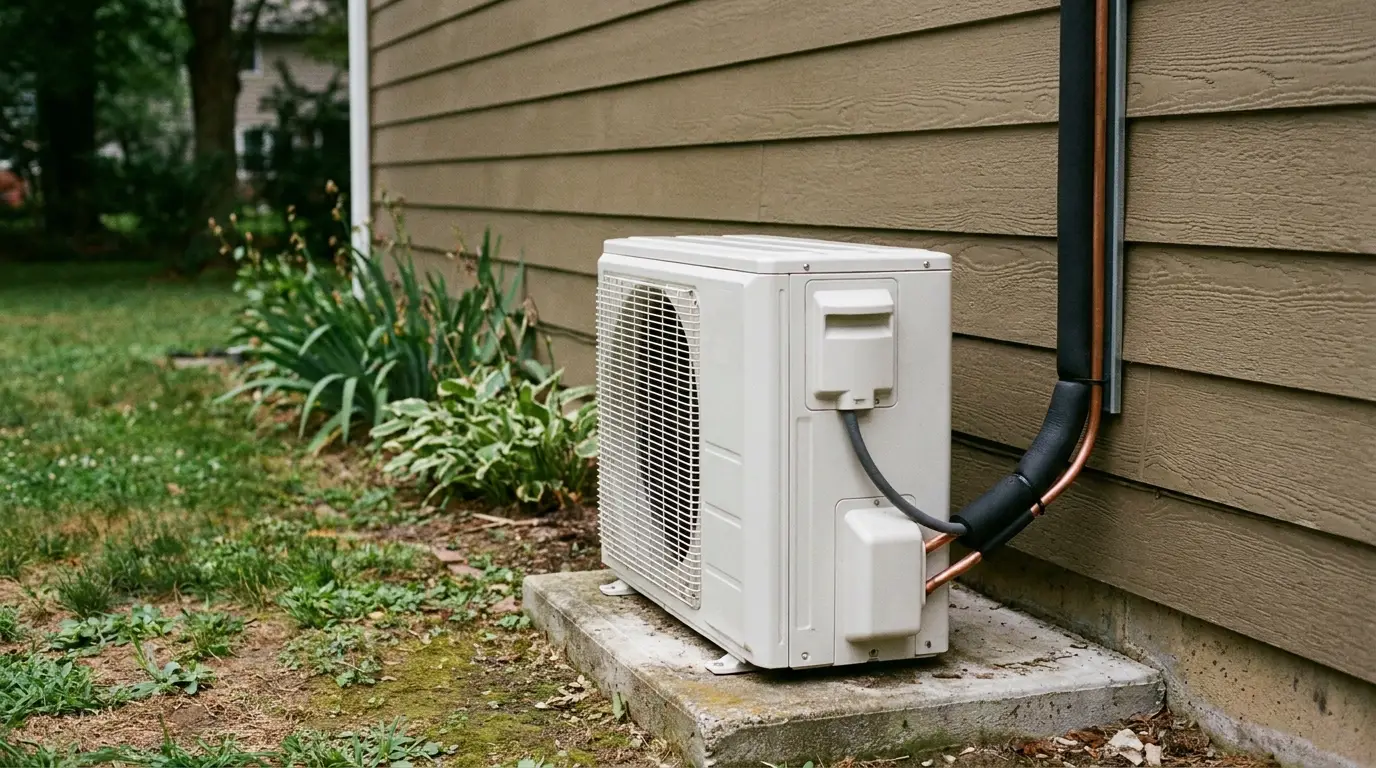
Zone Air earns the top spot for 110V ductless mini split brands for a concrete reason: the Zone Air DIY 110V posts a 23 SEER2 rating, ships with pre-charged “quick connect” line-sets, and is backed by USA assembly, testing, and inspection. A reliability boost no other 110V mini split sold in USA can match.
For 110V users in garages, workshops, older homes, and bedrooms. The 15A single-pole breaker requirement means no panel upgrade. The outdoor unit is compact enough for a balcony or tight side yard. The pre-charged quick-connect line set uses R-454B, a low-GWP refrigerant that qualifies for many state and federal rebates. No vacuum pump or EPA Section 608 license is required.
Zone Air systems come with a 7-year compressor and 5-year parts warranty and provides U.S.-based phone support. At approximately $1,999, the upfront cost is higher than budget brands but roughly half the $4,500–$5,500 a professional install of comparable equipment runs in many markets.
Runner-Up: Cooper & Hunter 115V Mini Splits (Best Value)
Cooper & Hunter (C&H) is a strong second choice for homeowners who want a cost-effective 115V mini split system. The brand’s 115V models deliver SEER2 ratings in the 18–19 range, which is lower than Zone Air’s 23 but still well above window ACs and portable units. HSPF2 falls in the 9–10 range for moderate climates, making C&H a reasonable year-round option in much of the country.
C&H pricing typically undercuts both Zone Air and MrCool by $200–$400 at retail, but the brand is widely available through online marketplaces and local distributors. You can shop for 9,000 and 12,000 BTU 115V models in stock from multiple sellers. The base warranty is 2 years; registering within 60 days extends coverage to 5 years on parts and compressor.
C&H suits homeowners comfortably with an HVAC tech helping out, as they are not fully DIY. You handle mounting and run the line set, then a professional handles electrical hookup and refrigerant testing. This split approach can reduce installation costs while keeping the warranty intact.
Limitations: C&H offers fewer cold-climate-rated 115V models than some manufacturers, and the installer network varies by region. If you live in an area where local HVAC companies are unfamiliar with C&H, sourcing warranty parts or getting a service call could take longer. For buyers where Zone Air is above budget or temporarily unavailable, C&H represents the best bang-for-the-buck among 110V mini split brands.
MrCool 115V DIY
MrCool is a widely recognized name in diy models for mini split systems, and their 115V DIY units are built for homeowners who own basic tools and can follow detailed instructions.
The core appeal: MrCool’s pre-charged Quick Connect line set eliminates the need to pull a vacuum or handle refrigerant directly. The indoor unit and outdoor unit connect via factory-sealed couplers, and the R-454B refrigerant stays sealed throughout diy installation. No brazing torch, no vacuum pump, no EPA Section 608 certification.
The 115V version runs on a dedicated 15A circuit. Many homes already have an available breaker, though an electrician may need to run a new line to the outdoor unit location. On the comfort side, MrCool’s 12K 115V air handler reaches 18 dB(A) on its lowest fan speed, which is quieter than most refrigerators. Wi-Fi control comes built in, and the unit delivers solid cooling and heating performance in mild to moderate climates.
The 7-year compressor and 5-year parts warranty remains valid even with homeowner installation, a policy unique among major mini split brands. Common complaints center on the weight of the outdoor unit (which can require two people to position) and the fact that mistakes in wall penetration, drainage slope, or electrical hookup can cause problems that a professional would catch.
If you are comfortable drilling through walls and following step-by-step instructions, MrCool or Zone Air can save money on labor. If you would rather not risk the install, hiring a contractor to mount a Zone Air or C&H unit may cost less than fixing a botched self-install.
Budget Pick: Senville LETO 115V Mini Split
Senville’s LETO series is the entry point for homeowners who want mini split air conditioning without a premium price tag. The LETO 12,000 BTU 115V model costs $300–$500 less than Zone Air or MrCool at typical retail prices, and it includes a remote control, timer, sleep mode, and basic Wi-Fi control on newer models.
Performance is adequate for moderate climates. The SEER rating is approximately 19, and heating operates down to roughly 4°F, which is useful in mild winter conditions but limited compared to Zone Air’s -13°F floor. Input power for the 12K model is about 1,020W at a rated current of ~8.9A, fitting within a 15A circuit.
Senville fits best in workshops, bonus rooms, and rental units where price sensitivity is high and the space does not need conditioning below freezing. If a local installer is familiar with the brand, warranty service is straightforward.
The trade-offs: The 5-year warranty on compressor and parts requires that a licensed technician perform refrigerant line evacuation and pressure testing; a full self-install can void that coverage. Indoor noise levels in the low-30s dB(A) are acceptable but not as quiet as MrCool’s 18 dB(A) floor. And older LETO models may still use R-410A refrigerant, which could disqualify them from rebate programs that mandate low-GWP refrigerants. Check the spec sheet before you purchase.
Senville absolutely fills a role for budget-conscious buyers, but set expectations accordingly on cold-weather heating and warranty conditions.
110V vs 240V Mini Split Systems: Which Should You Choose?
While 110V mini splits are convenient for single-room use, 220V remains the standard for whole-home and high-performance applications. Here is how they compare:
| Factor | 110V / 120V | 220V / 240V |
|---|---|---|
| Typical capacity | 9,000–12,000 BTU | 18,000–36,000 BTU |
| Coverage | Single rooms, up to ~600 sq ft | Large rooms, up to 1800 sq ft. Multiple indoor units, whole house |
| SEER2 range (top models) | 19–23 | 17–22+ |
| Cold-climate heating | Limited; best models to -13°F | Strong; hyper-heat models to -22°F |
| Electrical needs | 15A dedicated circuit, existing panel usually sufficient | 20–40A dedicated circuit, requires electrician |
| Panel upgrade cost | Often $0 | $500–$2,000+ |
220V systems generally achieve higher efficiency ratings and stronger low-temperature heating, especially cold-climate-rated heat pumps from brands like Mitsubishi or Daikin. 110V units can still be energy efficient versus window ACs, but they have less headroom in extreme weather.
Choose 110V if you are conditioning one or two rooms, have limited electrical capacity, or rent. Choose 220V if you own the home long-term, want zoning with multiple indoor units to replace central air, or live in a very hot or very cold climate.
How to Size a 110V Mini Split for Your Room
Correct sizing can help save you money on your electrical bill and can extend the life of your AC unit
Starting guidelines for well-insulated rooms with standard 8-foot ceilings:
- 9,000 BTU: 250–450 sq ft. A typical bedroom or home office.
- 12,000 BTU: 400–600 sq ft. A large bedroom, living room, or garage.
Measure the room’s length and width to calculate square footage. Then adjust for these factors:
- Climate zone: In hot and humid regions (Florida, Texas, the Southwest), add 15% to the base BTU figure.
- Insulation quality: Poorly insulated walls or single-pane windows can increase load.
- High ceilings: Rooms with 10 or 12 foot ceiling heights hold more air volume; you may need 15% more BTU than a standard-height room.
- Sun exposure and heat gains: Large south-facing windows, electronics, and occupancy all add heat.
For complex layouts, open floor plans, or unique capacity scenarios, get a Manual J load calculation from a professional. This is especially helpful if you plan to use a 110V mini split as a primary heat source in a colder region.
Key Features to Look for in an Energy Efficient 110V Mini Split
Beyond voltage and BTU, a few features separate good 115V mini splits from mediocre ones:
Efficiency and performance:
- Inverter compressor technology. Every model in this guide uses one. Inverter compressors modulate speed rather than cycling on/off, which cuts energy use and reduces noise.
- SEER2 of 20 or higher for cooling. HSPF2 of 8.5 or higher for heating. These thresholds matter for energy efficiency and for qualifying for utility rebates. One example at the high end is the LG Artcool Deluxe series, with SEER2 ratings from 25.5 to 27. Another example is the Fujitsu Altair 500 Series, which falls in the 21 to 26 SEER2 range.
- Cold-climate heating capability if winter use is planned. Zone Air’s -13°F rating is the benchmark in 115V; Senville’s 4°F floor limits its usefulness in northern states.
Comfort:
- Multi-speed indoor fan with a quiet or “night” mode. Look for ratings below 35 dB(A) on low for bedrooms; indoor air handlers on low settings commonly run around 27 to 41 dB.
- Dehumidification mode for muggy climates.
- Programmable timer and sleep curves for overnight temperature control.
Smart control:
- Built-in Wi-Fi or a compatible smart controller for app-based scheduling and voice assistant access.
- A clear, intuitive remote. Some budget models ship with confusing interfaces.
Durability:
- Anti-corrosion coatings on the outdoor unit coil if you live near the ocean or in a humid climate.
- A filter that is easy to remove and clean, since restricted airflow is the most common cause of performance complaints.
- Warranty terms that remain valid when installed by a licensed professional; check whether self-install voids coverage.

Holding a Master’s in Architecture from the University of Texas at Austin, Emily Rodriguez has dedicated more than two decades to the art and science of building renovation. Starting her journey in historic preservation, she developed a profound respect for blending old with new in building design. Emily became a vital part of our team in 2019, renowned for her insightful and innovative renovation tips. She has been leading our DIY home improvement series since ever since, where she shares her wealth of knowledge in turning outdated spaces into modern havens. When not engaged in writing or consulting, Emily is a passionate advocate for heritage conservation and enjoys exploring vintage architecture, a hobby that complements her professional expertise.