
Planning a DIY Hardscaping Project Without Blowing Your Budget
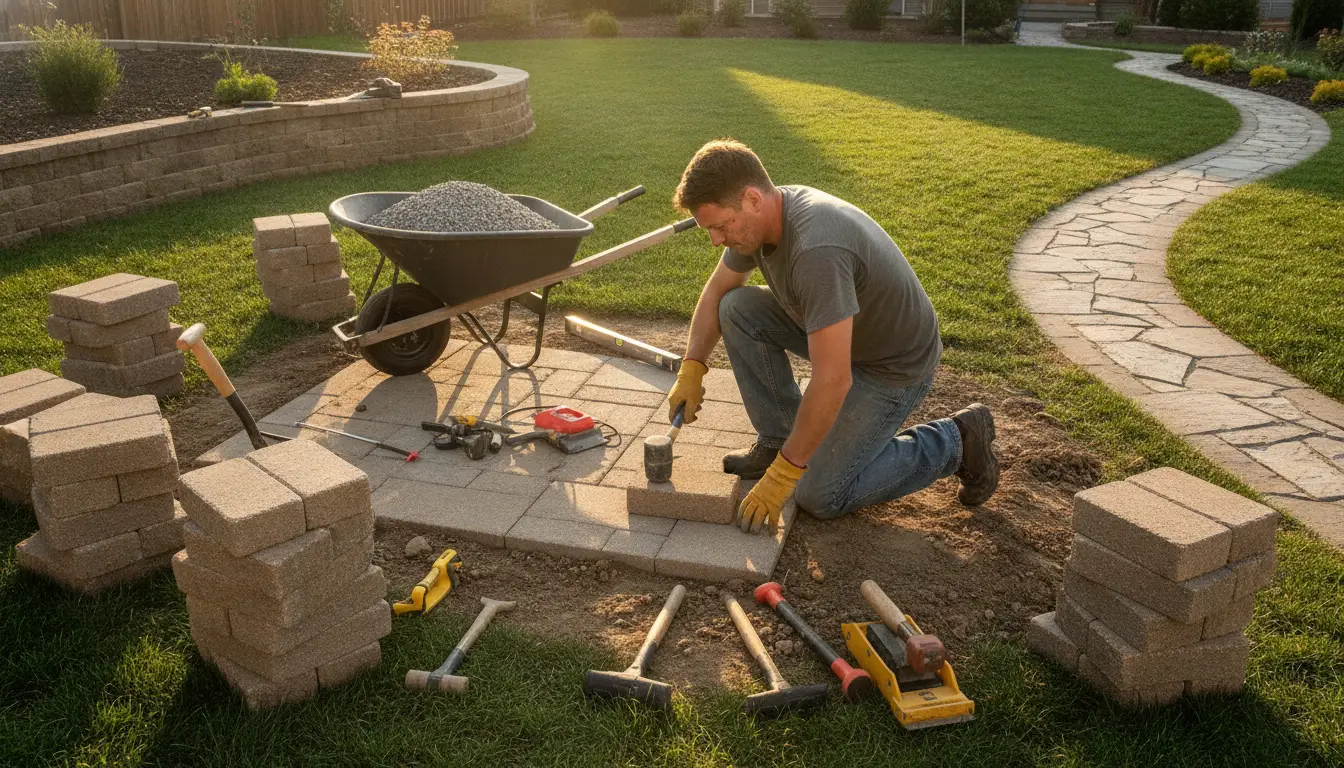
A patio, retaining wall, or walkway sounds like a straightforward weekend project until the first delivery truck shows up and you realize how much material a “small” hardscaping job actually requires. Homeowners routinely start these projects with a number in mind, usually based on a rough price-per-square-foot estimate they found online, and end up 30 to 50 percent over that number by the time the last paver goes down.
The materials themselves are rarely the surprise. What catches people off guard is everything around the materials: delivery, base prep, and the sheer physical work of getting hundreds or thousands of pounds of stone and block from the curb to the backyard.
None of this means DIY hardscaping is a bad idea. It can save a substantial amount of money compared to hiring a contractor for the full job. But going in with a clear picture of where the money and effort actually go makes the difference between a project that finishes on budget and one that stalls out halfway through a driveway full of pallets.
Why Hardscaping Budgets Go Sideways
Most budget overruns on patio and retaining wall projects trace back to the same root cause: homeowners price the visible part of the job and skip the parts that never make it into a glossy photo. A paver calculator will tell you how many square feet of stone you need and what that stone costs per unit.
It will not tell you that you also need four to six inches of compacted gravel base under every square foot, a layer of sand for leveling, geotextile fabric to keep the base from shifting, and edge restraints to keep the whole thing from spreading apart within a year or two.
Retaining walls carry a similar trap. The block itself might run a few dollars per square foot, but a wall taller than a couple of feet needs proper drainage gravel, a perforated drain pipe, and a compacted base trench that often requires more excavation than people expect.
Walkways are the most deceptive of the three because they look simple, but a walkway that isn’t built on a real base will heave, sink, and crack within a few seasons, which means the “cheap” version usually gets rebuilt at full price later.
Where Materials Costs Actually Come From
Pavers, Block, and Stone Pricing
Concrete pavers typically run anywhere from $3 to $10 per square foot depending on style and thickness, while natural stone can run considerably higher.
Retaining wall block generally falls between $10 and $20 per square foot of wall face once you account for the block itself, caps, and adhesive. These numbers are easy enough to find and plan around. The mistake most people make is stopping there.
Base Materials Nobody Budgets For
Gravel base, sand, fabric, and edge restraint typically add another $1 to $3 per square foot on top of the visible material cost, and that’s before delivery. On a 300-square-foot patio, that gap alone can add several hundred dollars to a project that was budgeted using only the paver price.
It’s a small percentage on paper, but it’s exactly the kind of line item that gets left out of an initial estimate and shows up as an unpleasant surprise once the order is placed.
Delivery Fees and the Hidden Costs of Getting Materials on Site
Bulk landscaping materials don’t arrive in a few bags from the trunk of your car. Pavers, block, and bagged base material typically come stacked on pallets, delivered by a flatbed or boom truck that drops them wherever it can legally park, which is often the driveway or curb rather than the backyard where the work is actually happening.
Delivery fees for these loads commonly run $75 to $200 depending on distance and whether the supplier can use a boom to place pallets closer to the work area.
Even a boom delivery has limits. Trucks can’t cross a lawn, squeeze through a side gate, or set a pallet down next to a retaining wall that’s already half built.
That means the final stretch, getting material from the driveway to the actual job site, is almost always left to the homeowner. On a project involving a few tons of block and gravel, that last 50 to 100 feet is where a lot of unplanned time and physical strain shows up.
Labor vs. DIY: What You’re Really Trading
When a contractor quotes a hardscaping job, labor usually makes up 40 to 60 percent of the total price. That labor covers a mix of skilled work and pure physical handling, and it helps to separate the two when deciding what to take on yourself:
- Layout and design — planning drainage, slope, and dimensions correctly the first time
- Excavation and base compaction — the part that determines whether the project lasts
- Material handling — moving pallets, wheelbarrowing gravel, and staging stone near the work area
- Installation — actually setting pavers, block, or stone in place
Material handling is the piece homeowners most often underestimate, both in time and in physical toll. Moving a single pallet of pavers by hand, one or two at a time in a wheelbarrow, can take the better part of a day before you’ve even started laying anything.
The Part Homeowners Underestimate: Moving Heavy Materials on Site
This is where a lot of DIY budgets and backs both take a hit. A pallet of concrete pavers or retaining wall block can weigh anywhere from 2,000 to 3,000 pounds.
Multiply that by the two, three, or four pallets a mid-sized project needs, and you’re looking at several tons of material that has to move from the driveway to wherever the work is actually happening, often across grass, around corners, or up a slope.
Renting Equipment vs. Manual Labor
This is the point where a lot of homeowners either hire extra help they hadn’t budgeted for, or spend two extra weekends moving material by hand instead of building anything. A cheaper middle option that a lot of people overlook is renting a compact loader for a day.
Most equipment rental yards carry skid steers, and pairing one with skid steer pallet forks turns a full pallet of pavers or block into a single lift instead of a hundred individual trips.
For the cost of a one-day rental, which typically runs less than what two extra days of hired labor would cost, you can move an entire project’s worth of material in an hour or two and still have most of the day left to actually build.
The math tends to favor equipment rental any time a project involves more than a pallet or two of material, or any time the work site is more than a short, flat carry from where the truck can park.
It’s also worth asking the rental yard whether an attachment like pallet forks is included with the loader or billed separately, since that detail can change the day’s total cost more than people expect.
Smart Ways to Trim Your Hardscaping Budget Without Cutting Corners
A few decisions made early in the planning process tend to have an outsized effect on the final cost:
- Order all materials from one supplier when possible to consolidate delivery fees instead of paying multiple trip charges
- Ask about off-season pricing, since many suppliers and rental yards lower rates outside peak spring and summer demand
- Rent equipment for material handling and heavy lifting rather than hiring extra labor by the hour for the same task
- Buy 5 to 10 percent more base material and pavers than the calculator suggests, since cutting and waste are unavoidable and a second delivery costs more than the extra material would have
None of these require cutting quality out of the finished product. They just shift spending away from the parts of the job that don’t actually improve the result, like paying for extra delivery trips or spending a full day moving material that a rented machine could handle in an hour.
Bringing It All Together
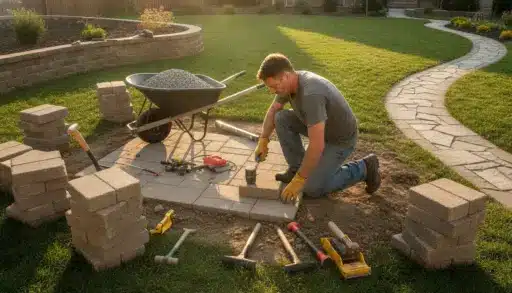
A patio, retaining wall, or walkway built by hand can absolutely come in well under contractor pricing, but only when the budget accounts for the full picture: base materials, delivery, and the physical work of getting everything from the curb to the build site.
The projects that go smoothly are usually the ones where the homeowner planned for that last stretch instead of discovering it the hard way, halfway through unloading a pallet in the driveway.
Get the base right, order enough material the first time, and don’t be afraid to rent the right equipment for a day. It’s often the cheapest hour you’ll spend on the entire project.
James McLaren, with a rich background in architecture from the University of Manchester, has been contributing his expertise to the world of creative construction and home innovation for over 20 years. His journey began as a project manager for a leading construction firm, where he honed his skills in bringing complex designs to life. James joined our platform as a freelancer in 2019, quickly becoming a favorite for his insightful and practical advice. He has been a pivotal force to our wing ever since, bringing our readers a blend of technical know-how and creative flair. Beyond his professional life, James is an avid woodworker and enjoys restoring vintage furniture, a hobby that complements his professional insights beautifully.