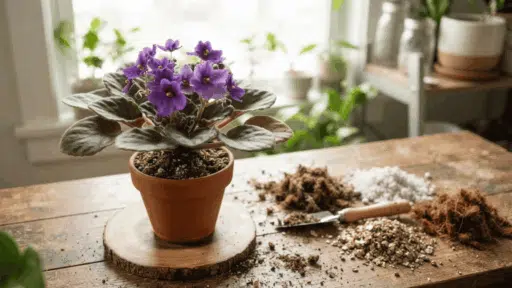
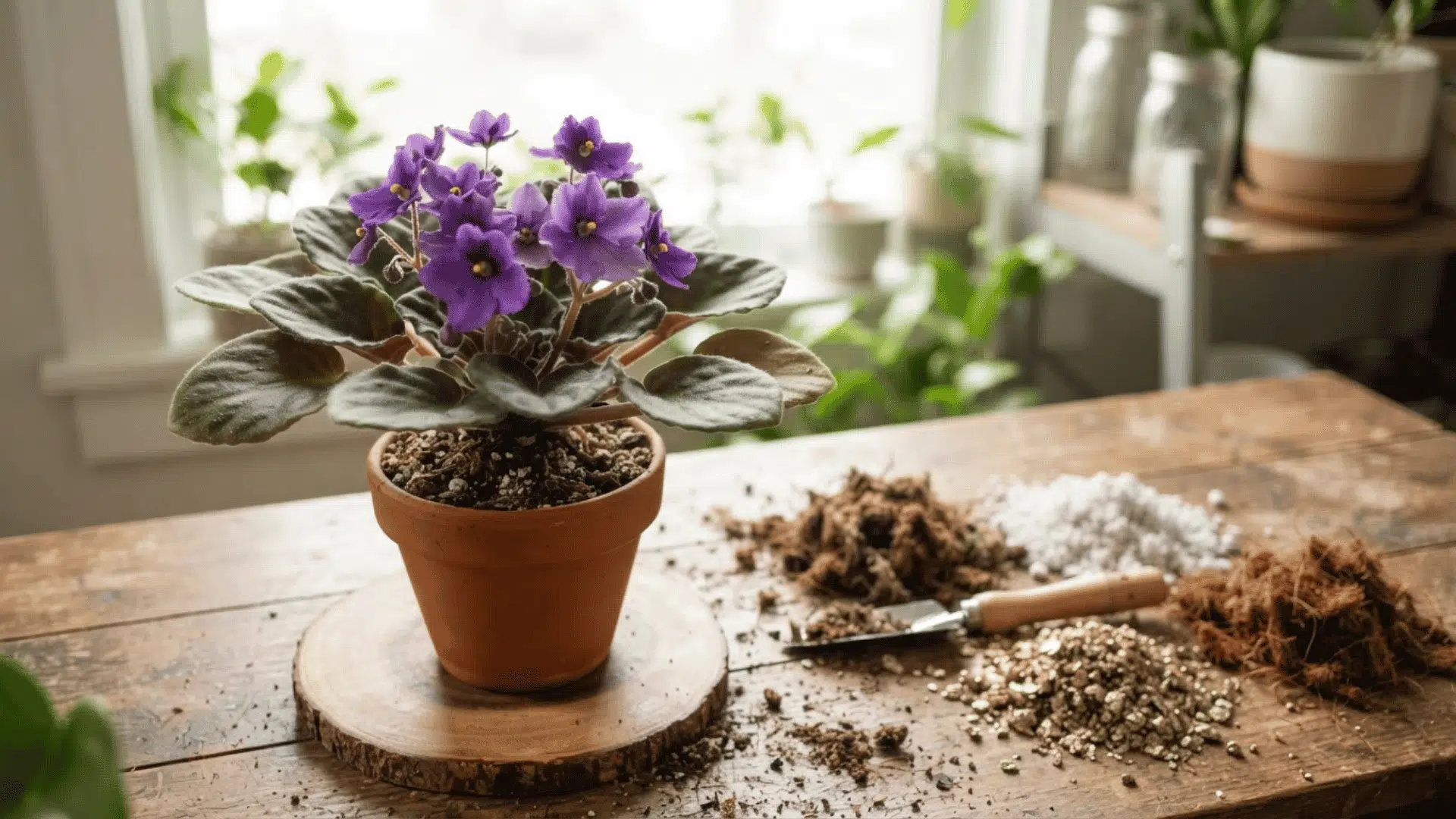

The best soil for African violet plants is a loose, porous, slightly acidic, soilless mix. It should hold moisture around the fine roots while allowing excess water to drain and air to circulate.
You can also make a blend with sphagnum peat moss, perlite, and vermiculite, then adjust it for self-watering pots, humid rooms, or dry homes.
The University of Minnesota Extension recommends a well-drained soilless medium with a pH of about 6.2 to 6.5. Ordinary garden soil and dense all-purpose mixes can compact and stay too wet.
In my experience, African violets respond better to a light mix that appears almost too airy than to a rich mix that stays wet for days.
What is the Best Soil for African Violet?
African violets grow best when their roots have a balance of moisture, drainage, and plenty of airflow.
Peat moss retains moisture, perlite improves drainage and airflow, and vermiculite helps distribute water around the fine roots.
Beginners can also combine equal parts commercial African violet mix and coarse perlite. This adjustment makes packaged soil lighter and reduces the risk of root rot caused by slow drainage.
| Note: Aim for a soil pH between 6.2 and 6.5, and always use a small pot with drainage holes. |
The mix should feel slightly moist after watering but should never remain soggy for several days.
What Makes Soil Suitable for African Violets?
African violets have fine roots that need moisture, oxygen, and enough support to remain stable.
When choosing the best soil for African violet plants, “soil” usually means a clean, soilless potting medium rather than outdoor garden dirt.
A suitable mix feels loose and springy, drains excess water promptly, and retains enough moisture between waterings.
I use these checks to assess any packaged or homemade blend, especially when its ingredient ratios are unclear.
| Soil Quality | What it Does | What to Avoid |
|---|---|---|
| Airy Texture | Supplies oxygen to fine roots | Packed or muddy mix |
| Moisture Retention | Prevents the roots from drying too quickly | Constantly wet conditions |
| Fast Drainage | Moves excess water away from the roots | Water sitting inside the pot |
| Slight Acidity | Supports steady nutrient availability | Strongly alkaline medium |
Why Drainage and Airflow Matter?
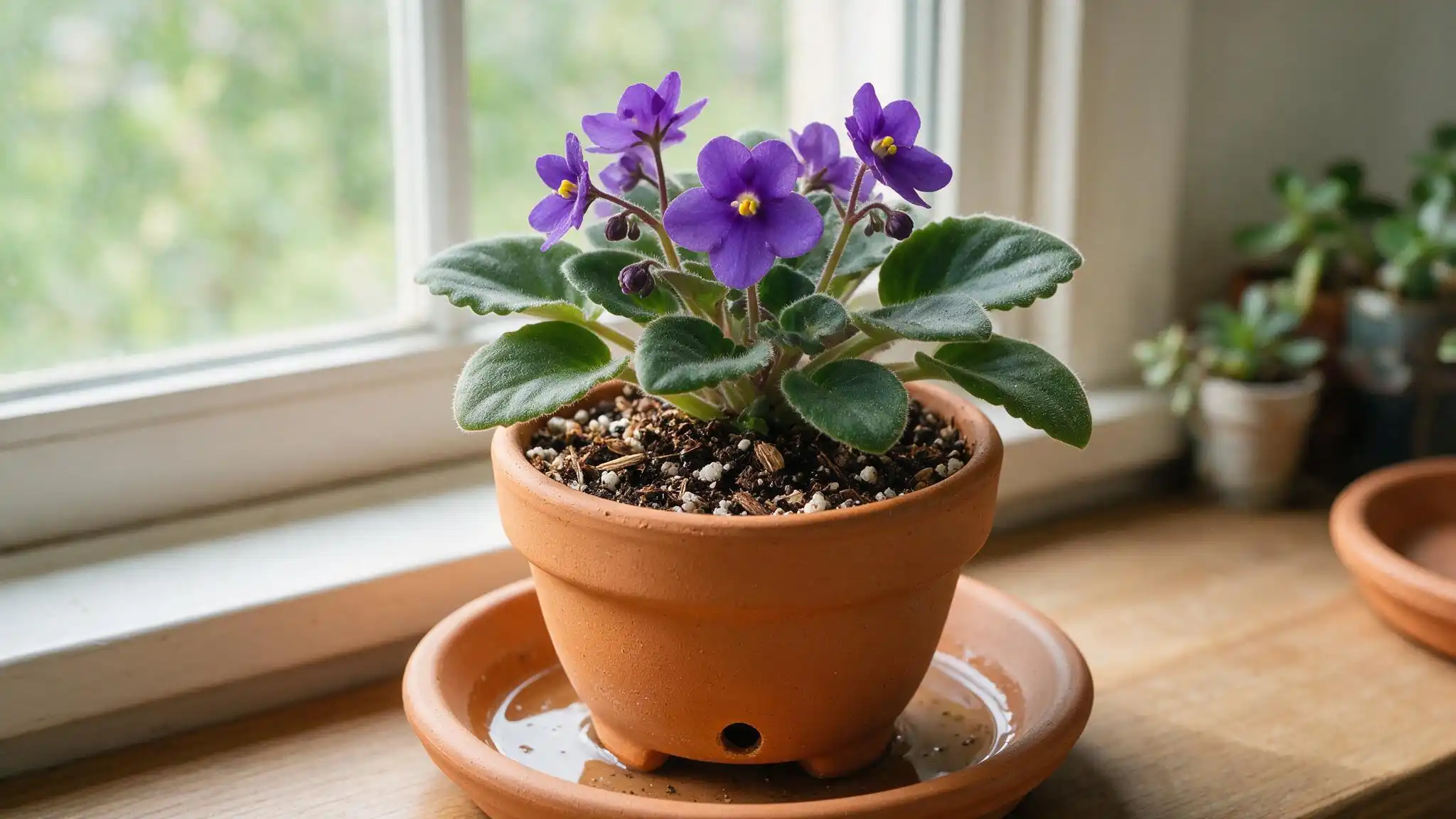
Drainage holes remove water only after it reaches the bottom of the pot. They cannot loosen a medium that has already compressed around the roots.
Coarse perlite and vermiculite create larger channels that let water move downward while fresh air returns.
Think of water passing through a fluffy sponge instead of collecting inside packed clay. In humid rooms or where root rot occurs often, increase the proportion of coarse particles, especially perlite.
The Best pH Range for African Violets
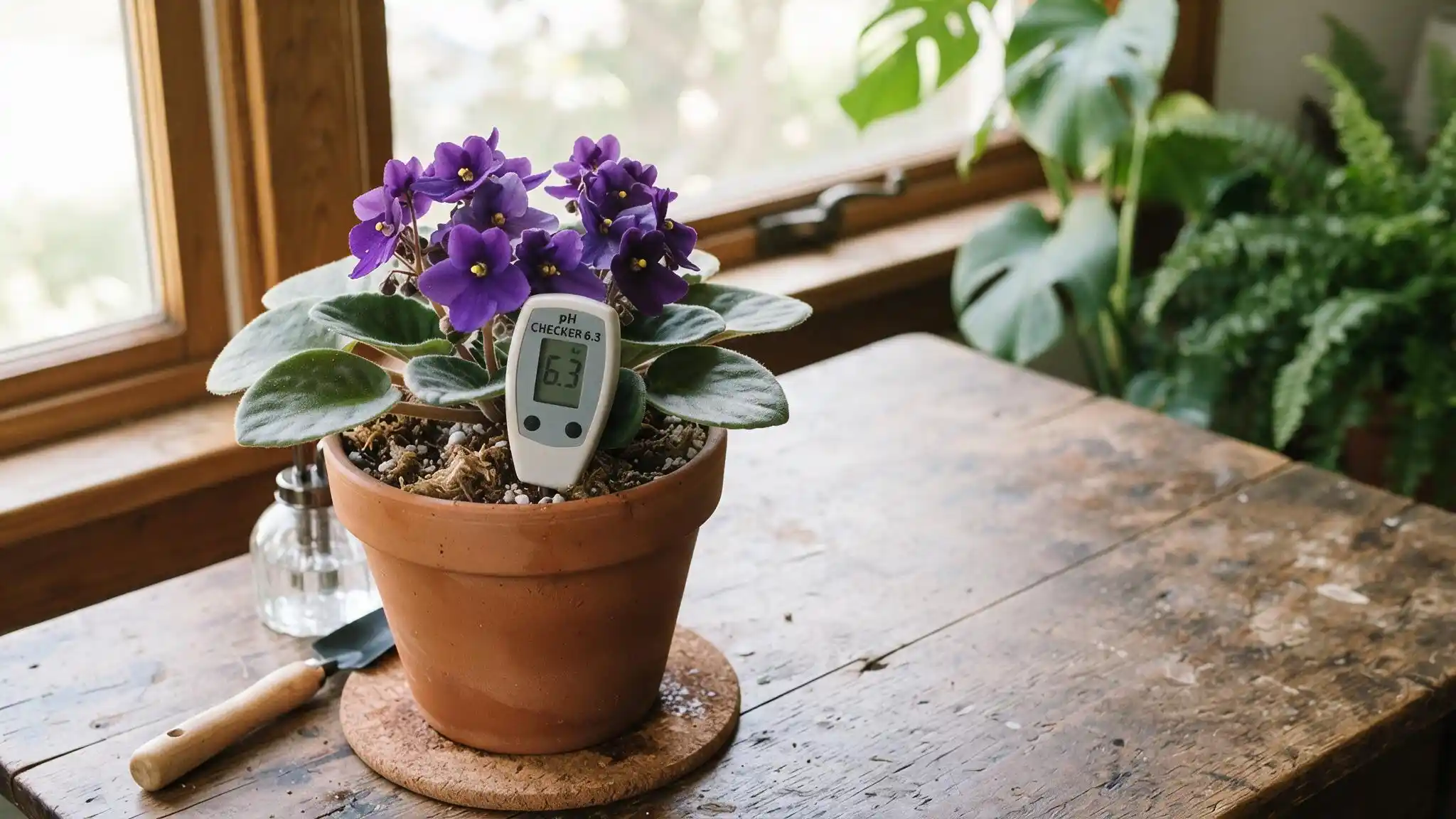
A pH of 6.2 to 6.5 gives African violets a mildly acidic root environment.
pH measures whether a growing medium is acidic, neutral, or alkaline, and it influences how easily roots can absorb nutrients. Beginners do not need to test every new bag.
Check the pH only when yellowing, weak growth, or poor flowering continues after you have corrected light, watering, drainage, and feeding.
What are the best DIY Soil Mixes for African Violets?
| Plastic pots usually keep the mix moist longer than porous terracotta, so use drying time as help when adjusting the amount of perlite or moisture-retaining material. |
No single homemade blend suits every African violet. Humidity, watering habits, pot material, and wick-watering systems affect drying time.
For most indoor growers, the best soil for African violet plants starts with a balanced equal-parts recipe. Use horticultural ingredients, and moisten peat-based materials before potting because dry peat can resist water.
1. Balanced Peat, Perlite, and Vermiculite Mix
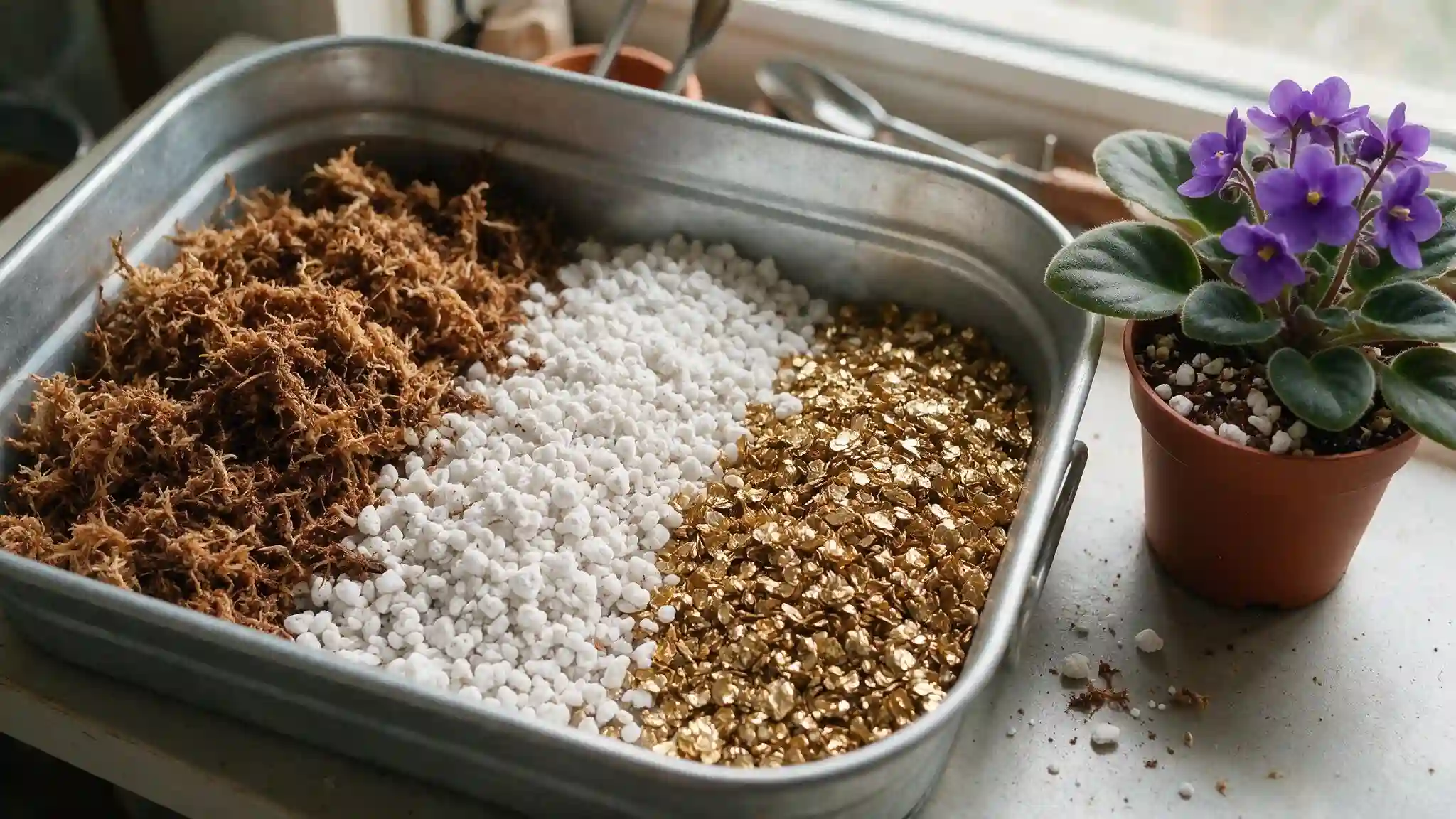
Combine equal parts sphagnum peat moss , coarse perlite , andvermiculite .
Peat moss stores moisture, perlite creates larger air spaces, and vermiculite helps spread water without making the blend heavy.
Some peat products already contain lime to reduce acidity, so do not add more unless you have measured the pH and checked the label.
2. Faster-Draining Mix for Humid Homes
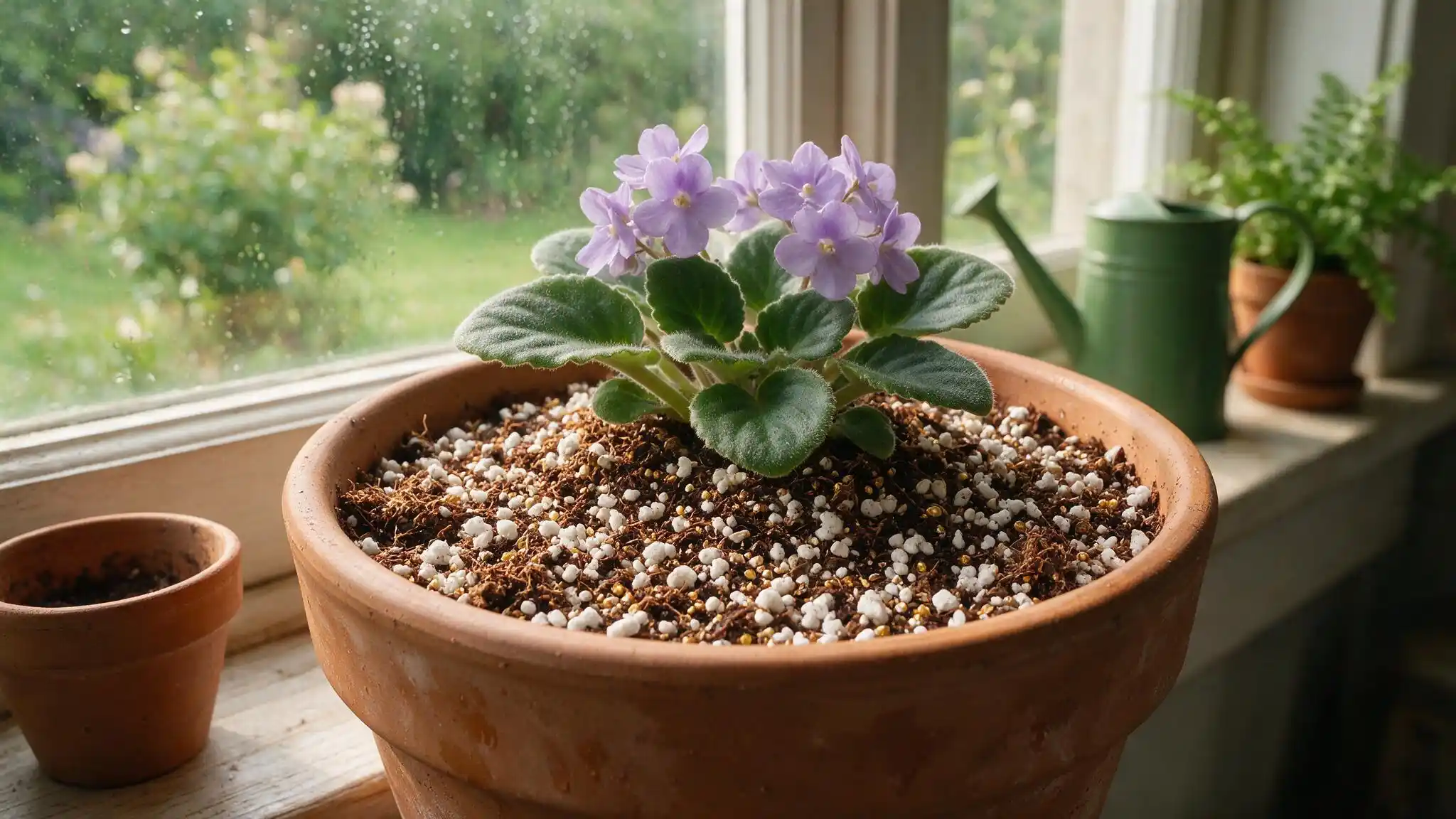
Increase coarse perlite when the mix remains wet for several days, the room is humid, or watering happens frequently.
Start with 1 part peat, 2 parts perlite, and 1 part vermiculite. The goal is better airflow, not instant drying. When a violet remains wet for several days, I adjust the mix before changing the fertilizer.
3. Peat-Free Mix Using Coconut Coir
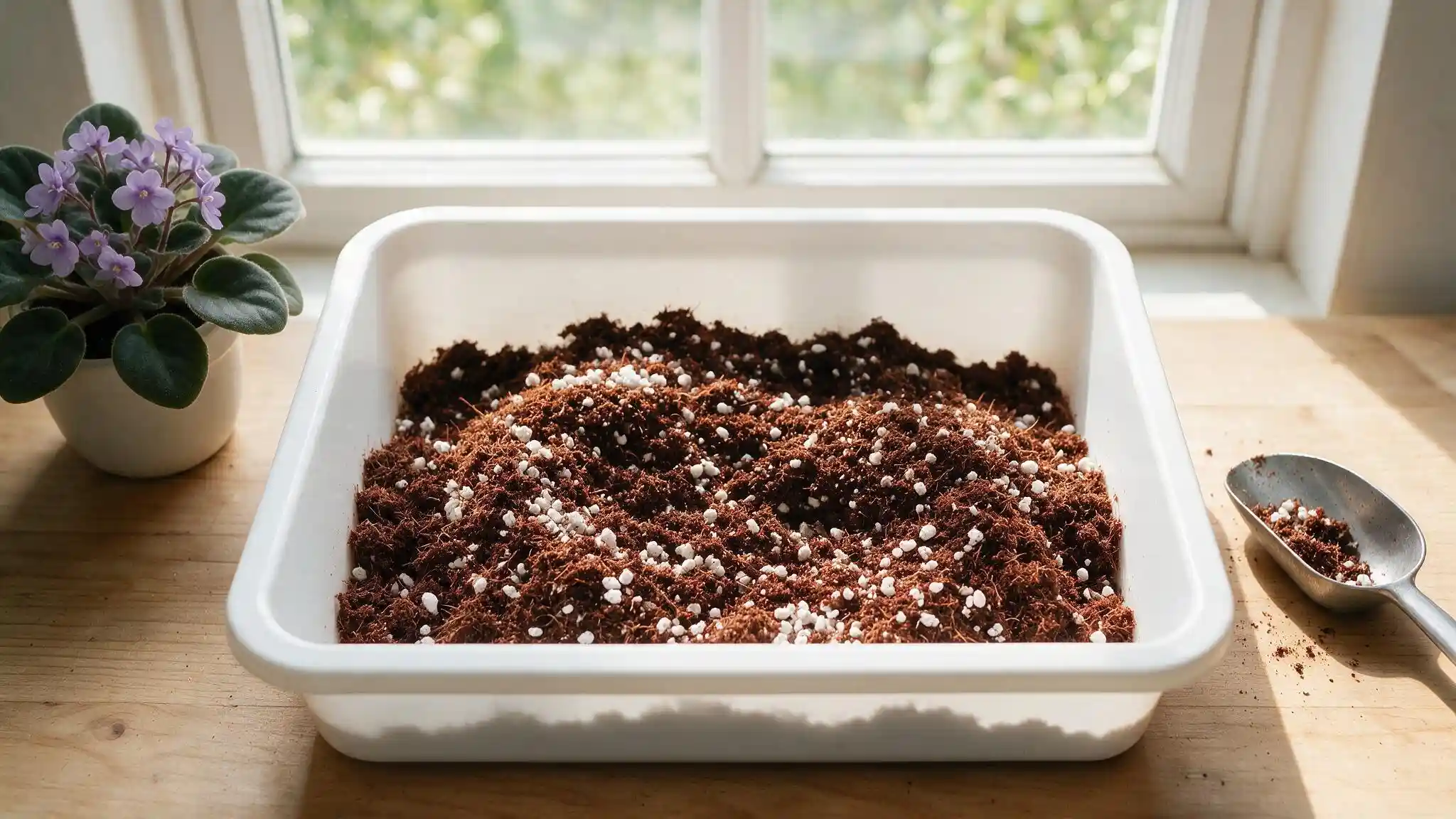
Coconut coir can replace some or all peat in a custom African violet mix. Because it holds moisture well, combine it with coarse perlite instead of using it alone.
The African Violet Society of America lists coir as useful where extra moisture retention is needed. Choose washed horticultural coir, test it on one plant, and watch the drying time before repotting an entire collection.
4. Mix for Wick – Watered African Violets
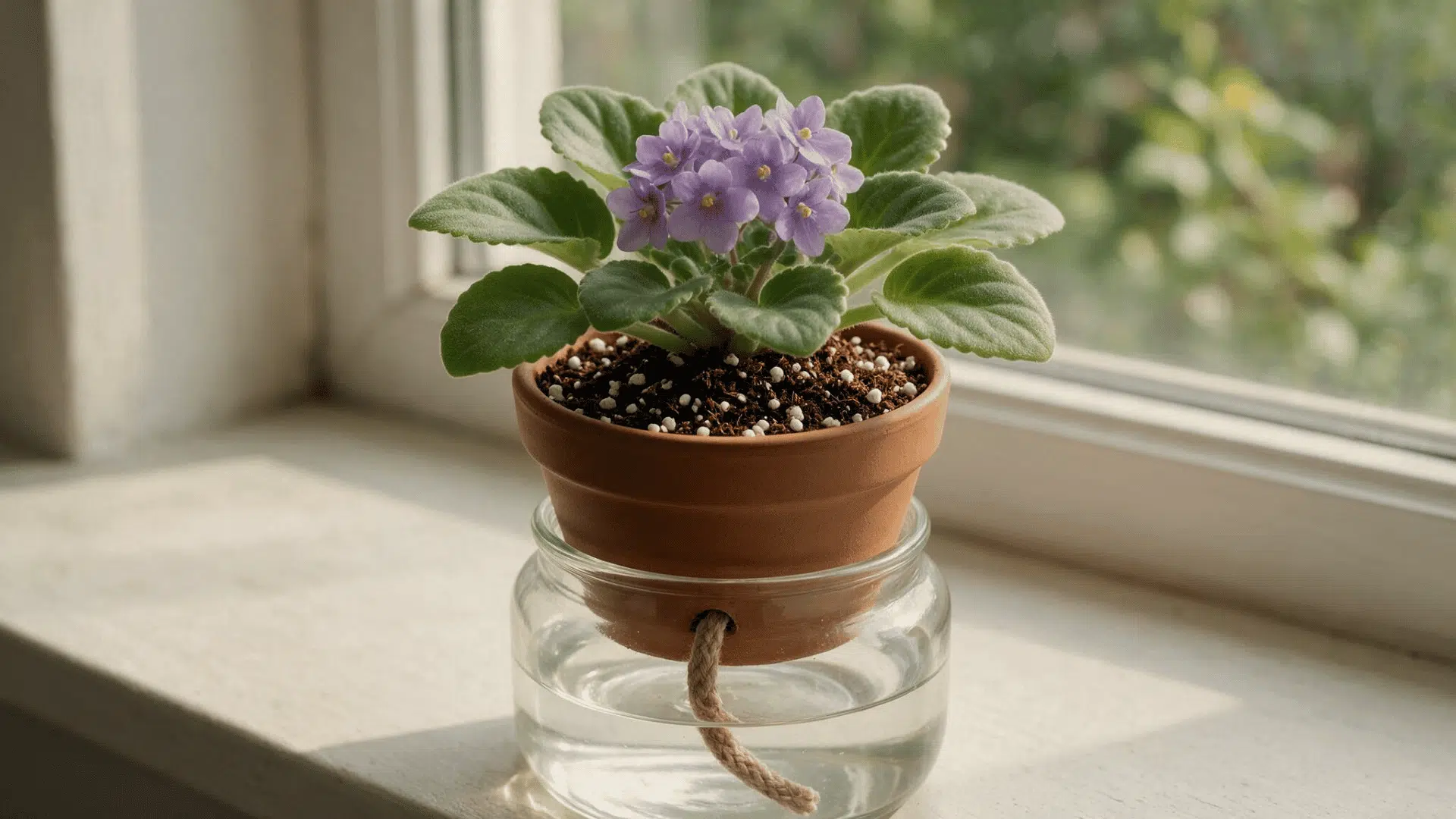
Wick-watering keeps the growing medium consistently supplied with moisture, so the mix needs extra aeration to prevent the roots from staying saturated.
Use peat moss or coir as the moisture-holding base, then increase the amount of coarse perlite.
The African Violet Society of America recommends mixes containing about 40% to 60% perlite for wick or mat watering.
Start with a small batch and monitor how long the medium stays moist, since humidity, wick thickness, and pot size can affect water movement.
How to Choose a Store-Bought African Violet Mix?
When choosing the best soil for African violet plants, check the ingredients and texture, not just the label.
Look for peat moss or coir with perlite or vermiculite. The mix should feel light, airy, and free from mold, insects, or wet clumps.
I add coarse perlite if a packaged mix feels too dense.
Brand formulas vary, so judge the mix by its condition rather than the name:
| Label or Texture Detail | What It Suggests | Recommended Action |
|---|---|---|
| Peat or coir listed first | Provides a moisture-holding base | Check for aeration ingredients |
| Visible perlite | Creates more air spaces | Use it or test the drainage |
| Dense black texture | May remain wet too long | Add coarse perlite |
| Large bark pieces | May create uneven moisture | Choose a finer mix |
| Wet or sour-smelling bag | May indicate poor storage | Do not use it |
How to Repot an African Violet in Fresh Soil?
Using the best soil for African violet plants during repotting restores airflow and gives fine roots a more even moisture supply.
The University of Minnesota recommends renewing the medium yearly, while African Violet Society guidance notes that some growers repot once or twice annually.
Prepare the new medium before removing the plant so its roots are not left exposed.
- Step 1: Pre-Moisten the Mix. Lightly moisten the fresh potting mix.
- Step 2: Remove the Plant. Gently ease the African violet from its pot.
- Step 3: Inspect the Plant. Check the roots, stem, and crown for damage.
- Step 4: Trim Damaged Tissue. Remove dead or rotted tissue with a clean tool.
- Step 5: Prepare the Pot. Reuse the cleaned pot or choose one only slightly larger.
- Step 6: Position the Crown. Keep the crown just above the soil surface.
- Step 7: Add the Mix. Fill around the roots and press the mix lightly.
- Step 8: Water the Plant. Water carefully and allow excess moisture to drain.
General Care Tips for Healthy African Violets
Good soil works best when the rest of the care routine supports steady root and leaf growth.
- Light matters: Keep African violets in bright, indirect light. Too little light can reduce flowering, while harsh direct sun may scorch the leaves.
- Water carefully: Water when the upper layer of the mix begins to feel slightly dry, and avoid leaving the roots constantly wet.
- Feed lightly: Use a fertilizer labeled for African violets or flowering houseplants, following the product directions rather than applying a strong dose.
- Keep conditions stable: Avoid cold drafts, sudden temperature changes, and water sitting on the crown. Remove faded flowers and damaged leaves so the plant stays tidy and easier to inspect.
Common African Violet Soil Problems and Fixes
I first check the soil condition before changing the whole care routine.
Avoid heavy garden soil, fine sand, unfinished compost, compacted old mix, and decorative moss. These can reduce airflow or hold too much moisture.
Match the visible symptom to the likely cause, then use the table below to choose the right fix.
| Symptom | Likely Soil Issue | Practical Fix |
|---|---|---|
| Mix stays wet | Dense medium or oversized pot | Add perlite and check the pot size |
| Water runs off the surface | Peat has dried excessively | Rehydrate slowly or bottom-water briefly |
| Roots appear brown and soft | Prolonged saturation or root decay | Remove damaged roots and repot |
| White crust forms | Mineral or fertilizer residue | Flush the mix or replace it |
| Plant dries every day | Mix or pot loses moisture too quickly | Add peat, coir, or vermiculite |
| Fungus gnats appear | Medium remains consistently damp | Reduce excess moisture and remove debris |
| Plant feels loose | Potting material has decomposed | Repot in fresh, springy mix |
| Few flowers develop | Pot may be too large or light too low | Check the container and lighting first |
Final Takeaway
The best soil for African violet plants is a loose, soilless, slightly acidic mix that balances moisture with airflow.
Equal parts peat moss, perlite, and vermiculite provide a reliable DIY starting point, while half commercial violet mix and half coarse perlite offer a simpler alternative.
Add more perlite when the pot remains wet for several days, or slightly increase peat, coir, or vermiculite when it dries too quickly.
Always match the recipe to the container, humidity, and watering method. Repot before the medium becomes consolidated, crusted, or unable to absorb water evenly.
After caring for African violets in different containers, I have found that drying time is a more useful guide than the recipe printed on the bag.
What soil mix has worked best for your African violets? Share your recipe or experience in the comments so other growers can compare what works in different homes.
Frequently Asked Questions
Can Cactus Soil be Used for African Violets?
Cactus soil can work only after adjustment because it may drain too quickly. Mix in peat moss, coir, or vermiculite, then monitor moisture retention.
Can Old African Violet Soil be Reused?
Reusing old soil is risky when it is compacted, moldy, pest-infested, or linked to root rot. A fresh mix provides better airflow and cleaner growing conditions.
Does African Violet Soil Need Fertilizer?
Yes. African violets need regular, diluted fertilizer unless the fresh potting mix already contains nutrients. Follow the product label and avoid feeding dry roots.
Why does Water Sit on Top of African Violet Soil?
Water may remain on the surface when dry peat becomes water-repellent, or the mix is compacted. Moisten it gradually and improve aeration if needed.
Should African Violet Soil be Packed Firmly?
No. Firm packing removes air pockets, slows drainage, and may stress fine roots. Add the mix loosely, then press only enough to support the plant.

Jordan Mathews, who has a degree in horticulture from Texas A&M University, has been a guiding force in plant health and sustainable gardening for over 16 years. His career began with a role at a renowned botanical garden, where he deepened his understanding of plant physiology and eco-friendly cultivation methods. Jordan joined our website as a freelancer in 2020, becoming a go-to expert for readers seeking advice on nurturing diverse plant species apart from offering insights grounded in scientific knowledge and practical experience. Beyond his professional achievements, Jordan is a keen nature photographer, capturing the beauty of flora in its immensely diversified forms.