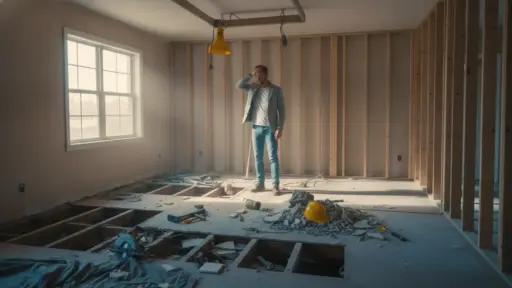
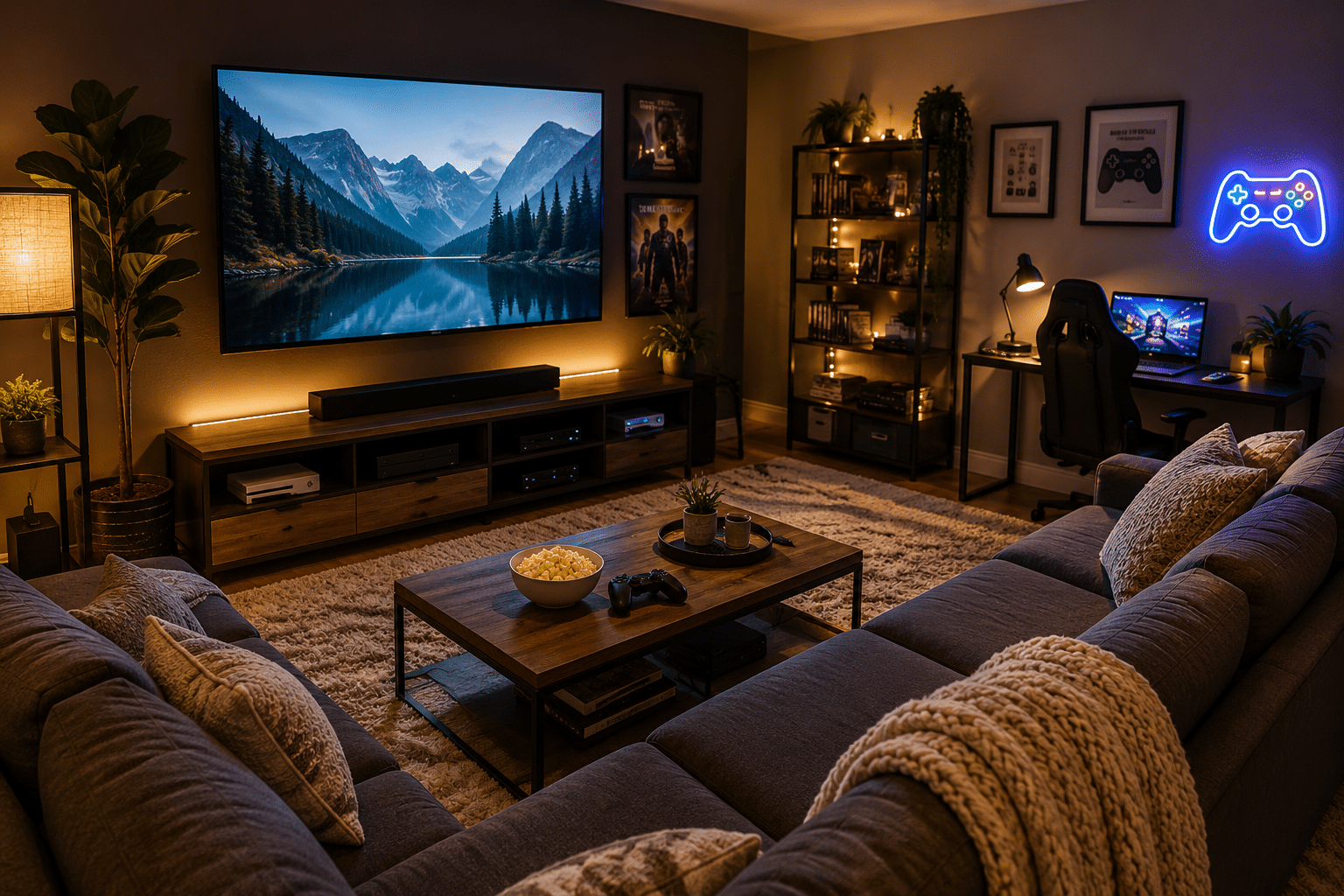

Some rooms earn their keep from the moment you move in. The kitchen feeds people, the bedroom gets slept in, and the living room sees plenty of action. Then there’s that room.
You know the one. It has a chair nobody sits on, a box you’ve been meaning to unpack for six months, and possibly an exercise bike currently serving as an expensive coat rack.
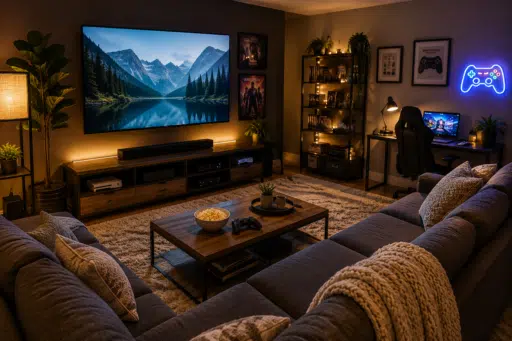
Turning an underused room into a home entertainment space gives it a much better job. And you don’t need rows of cinema seats or a screen the size of a wall to make it work. A sofa you actually want to sit on, decent lighting, good sound, and space for your favorite ways to switch off can completely change how the room feels.
Start with How You Spend Your Free Time
Before shopping for furniture, make a list of what you’ll actually do in the room.
Movie lovers will probably give the screen and sofa top billing. Console gamers need somewhere sensible for controllers, chargers, and headsets. If friends regularly come over, flexible seating and a table could prove much more useful than another enormous piece of technology.
This idea of dividing a room according to how people use it is particularly relevant right now. House Beautiful’s look at 2026 living room trends highlights multifunctional layouts containing distinct areas for activities such as reading, conversation, and gaming.
Think in terms of zones. Your main sofa can face the TV, while an armchair and lamp create a reading spot. A small table can handle cards and board games one night, then drinks and snacks during a movie the next.
Make Room for Digital Entertainment Too
For plenty of us, relaxing at home involves a screen at some point. One person might put Spotify on through the speakers while someone else grabs a controller, watches a movie, or opens a game on their laptop.
Online games can fit particularly well into a multifunctional setup because they don’t require permanent equipment or another large piece of furniture. Someone who likes to play online slots, for example, could use the same laptop or tablet they already keep in the room. Slots come in many visual themes and game formats, so they’re the kind of casual screen-based entertainment that can sit alongside console games, streaming, and music without dictating the design of the whole space.
Comfort matters when you play slots online, or spend time on any other digital game. A supportive chair, side table, accessible charging point, and lighting that doesn’t throw glare across the screen make the setup considerably nicer to use. Keeping the technology portable also means the same corner can serve another purpose when the screen is off.
That’s really the trick with a good entertainment room – give yourself options without filling every available inch.
Get the Seating Right
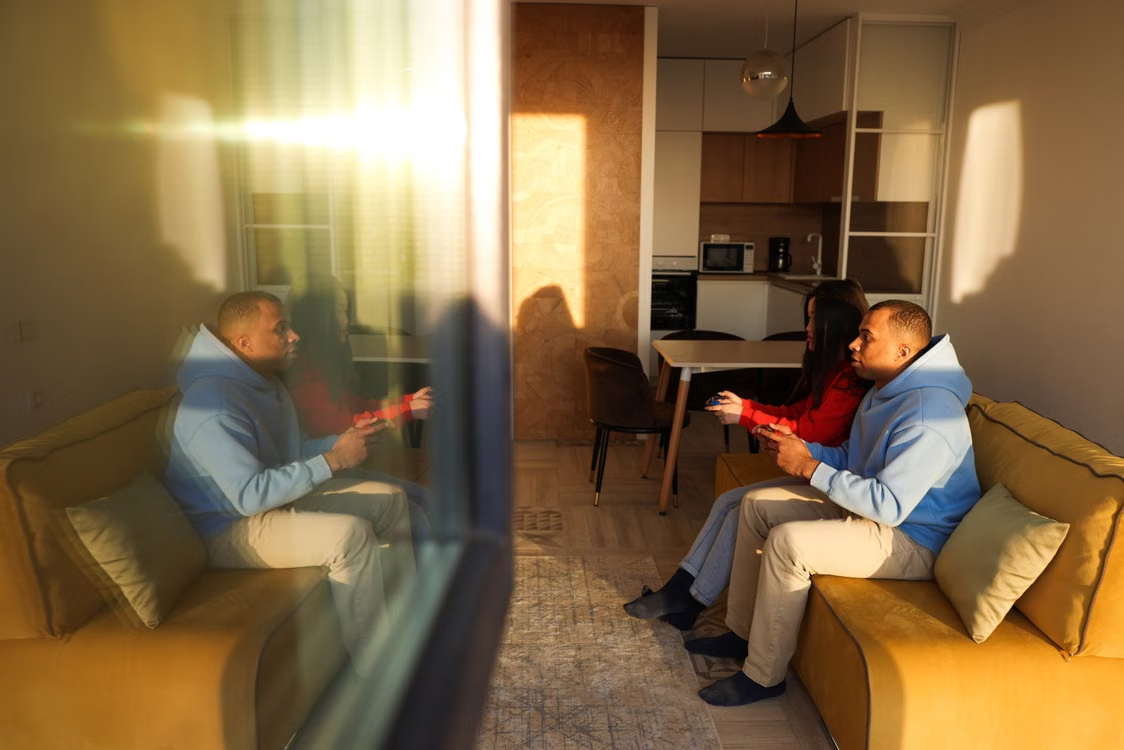
It’s easy to become distracted by screens, speakers, and other gadgets, but seating determines how much you’ll actually enjoy the room.
Start with your main viewing position. Put a temporary chair where you want the sofa to go and look toward the proposed screen location. Is it comfortable? Are you looking straight ahead? Will somebody regularly have to walk between the sofa and the TV?
Once the main sofa is positioned, fill gaps carefully. An ottoman can become a footrest, extra seat, or small table with a tray on top. A lightweight accent chair can move when friends visit. Floor cushions can be stored away when they aren’t needed.
Deep sofas and oversized seating are also appearing prominently in current home theater design, where comfort and a less formal atmosphere have become part of the appeal. Architectural Digest’s 2025 collection of home theater ideas includes everything from deep sectionals to daybeds and recliners.
Leave some empty floor space. A room designed for fun shouldn’t require an obstacle course to reach the door.
Use Lighting to Change the Mood
Lighting may be the easiest upgrade with the biggest visual payoff.
A single bright ceiling fixture can make movie night feel strangely similar to sitting in a dentist’s waiting room. Spread softer sources of light around the space instead.
Try a floor lamp beside the sofa, smaller lamps on side tables, and low lighting around shelving or the media unit. Dimmers are particularly handy because the same room can be bright while you’re cleaning and much softer once a movie starts.
Homes & Gardens recommends layering ambient, task, and accent lighting to make a room adaptable for different activities. That approach makes sense in an entertainment room where the lighting needs for reading, gaming, and watching a screen can be completely different.
Pay attention to reflections too. Sit in the main viewing positions before deciding exactly where lamps should go.
Improve the Sound without Tearing the Room Apart
An empty room full of hard surfaces can sound surprisingly harsh.
Before considering major work, look at what you can soften. A large rug, upholstered furniture, and substantial curtains can all help reduce sound bouncing around the room. Soft, thick rugs and heavy curtains are practical options for reducing unwanted sound.
If echoes are still bothering you, acoustic panels are another option. We have a useful guide to making DIY sound-absorbing panels, including how these panels can reduce echoes and unwanted sound reflections.
Remember that improving acoustics inside the room and preventing noise from traveling elsewhere are different jobs. Start by improving what you hear in the room and decide afterward if further work is worthwhile.
Add the Little Things You’ll Actually Use
This is where the room starts becoming your room.
Put charging points near the seats instead of creating a nest of extension cords across the floor. Give drinks somewhere safe to land. Add a basket for blankets and closed storage for controllers, remotes, cables, and all the other clutter that tends to mysteriously appear around a TV.
If your downtime includes movies, console games, music, or browsing entertainment platforms, such as the mBit Casino, keep the setup flexible. A small side table and accessible power supply may be far more useful than installing furniture dedicated to one activity.
A mini fridge or compact snack station can also be fun if you have room. Just make sure the popcorn is close enough to reach without missing the best part of the movie.
Your Home Entertainment Room Checklist
You can build the room gradually, starting by resolving any issues within the space.
Upgrade | What it helps with | Easy place to start |
Dimmable lighting | Screen viewing and atmosphere | Add a dimmable lamp or smart bulb |
Flexible seating | Movie nights and guests | Add an ottoman or movable chair |
Closed storage | Controllers, cables, and clutter | Use baskets or a media cabinet |
Acoustic treatment | Echoes and sound quality | Start with rugs, curtains, and soft furnishings |
Charging access | Phones, tablets, and controllers | Add chargers beside the main seats |
There’s no reason to buy everything on that list in one weekend. Look at what you already have around your home that you might be able to repurpose. A lamp or rug can make an immediate difference. Storage can come later, once you know what keeps accumulating in the room.
Make it the Room Everyone Chooses
The ultimate entertainment room isn’t necessarily the one with the most technology. It’s the one you automatically head toward when you have a free evening.
Start with the awkward spare room, neglected basement, or unloved den you already have. Clear out what doesn’t belong there, work out where the main seating should go, and fix the lighting. From there, add the sound, storage, and entertainment options that suit how you actually spend your downtime.
That exercise bike might finally need to find somewhere else to store the coats.

Holding a Master’s in Architecture from the University of Texas at Austin, Emily Rodriguez has dedicated more than two decades to the art and science of building renovation. Starting her journey in historic preservation, she developed a profound respect for blending old with new in building design. Emily became a vital part of our team in 2019, renowned for her insightful and innovative renovation tips. She has been leading our DIY home improvement series since ever since, where she shares her wealth of knowledge in turning outdated spaces into modern havens. When not engaged in writing or consulting, Emily is a passionate advocate for heritage conservation and enjoys exploring vintage architecture, a hobby that complements her professional expertise.