
If you’re upgrading your bedroom, your mattress choice affects more than sleep. It can influence comfort, temperature regulation, indoor air quality, and even how polished your space feels. A good mattress has to work hard: support your body, fit your design style, and hold up through years of regular use. If your current bed squeaks, sags, or traps heat like a grumpy space heater, it’s probably time to rethink the setup.
Start With What Your Body Actually Needs
Before you get distracted by trendy fabrics or luxury branding, pay attention to how you sleep now. If you wake up with shoulder pressure, lower back stiffness, or that odd “I slept but somehow lost a fight” feeling, your mattress may be part of the problem.
Think about your sleep position first:
- Side sleepers usually need more pressure relief
- Back sleepers often need balanced support
- Stomach sleepers tend to need a firmer surface
- Combination sleepers need responsive materials that move with them
Body weight matters too. A mattress that feels plush in a showroom can feel completely different after a month of real use. Support, pressure relief, and temperature control are daily considerations, not minor details.
Pay Attention to Materials, Not Just Marketing
Mattress advertising can get weirdly dramatic. Every brand promises cloud-like comfort, revolutionary sleep science, and life-changing mornings. What matters more is the material stack inside the bed.
If you want cleaner, more breathable construction, look closely at organic cotton, natural latex, and wool. These materials are often chosen for their comfort, durability, and reduced reliance on synthetic foams or chemical-heavy treatments. A well-made luxury organic mattress can appeal to you if you want premium comfort with more thoughtful material choices.
Check for practical details such as:
- Certifications for textiles and foams
- Fiberglass-free construction
- Breathable comfort layers
- Strong edge support
- Transparent manufacturing information
A mattress shouldn’t feel like a mystery box. If a brand can’t clearly explain what’s inside, that’s not exactly a glowing endorsement.
Consider Your Bedroom Conditions
Mattress comfort doesn’t exist in a vacuum. Room temperature, humidity, ventilation, home insulation, and airflow all affect how a bed performs.
If your room tends to get warm, dense memory foam may trap more heat than you’d like. Breathable natural fibers and latex can be worth considering when temperature regulation is important. In cooler bedrooms, layered materials may create a more comfortable sleep surface without feeling overly cold.
Also think about your bed frame and room layout:
- Slatted bases can improve airflow
- Platform beds may change how firm a mattress feels
- Smaller bedrooms may benefit from lower-profile designs
- Guest rooms may need broader comfort appeal
Your mattress has to work with your environment, not just your wishlist.
Match the Mattress to Your Bedroom Style
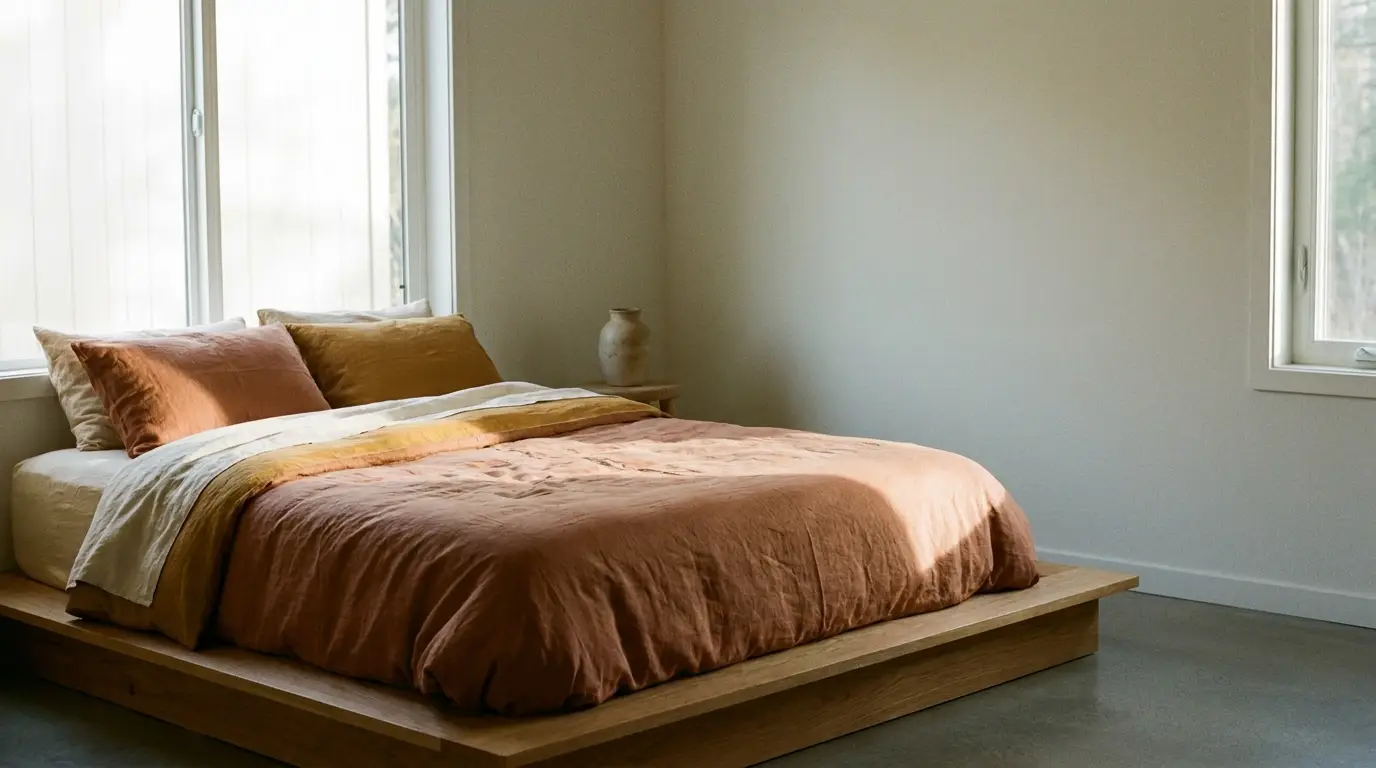
A mattress is usually covered by sheets and duvets, but it still plays a role in your bedroom design. Height, structure, and the kind of foundation it needs all affect the final look of the room.
If your space leans minimalist, a bulky oversized bed can throw off the balance. If your room has a more upscale, layered look, a premium mattress with a substantial profile may fit better.
When planning your bedroom, consider:
- Mattress depth versus headboard height
- Neutral bedding that complements natural materials
- Whether you need storage under the frame
- Ease of rotating or moving the mattress
- How much visual space the bed occupies
Good design isn’t only visual. It also means your bedroom functions smoothly without awkward proportions or daily annoyances.
Test Policies, Delivery, and Setup Matter More Than You Think
A mattress can seem perfect online and still feel wrong after two weeks. That makes trial periods and return policies extremely important.
Read the fine print before buying. You’ll want to know:
- How long the sleep trial lasts
- Whether return pickup is included
- If there are restocking fees
- How warranty claims are handled
- Whether the mattress arrives compressed or full-size
If you live in an apartment or have narrow stairways, ask about package dimensions and delivery access. A king-size mattress meeting a tight staircase is a comedy scene nobody asked for.
White-glove setup can also be worth considering if you’re replacing an old bed and want less hassle.
Look at Long-Term Value, Not Just the Sticker Price
The cheapest mattress often becomes the expensive one once it starts sagging early or affecting your comfort. On the other hand, a high price alone doesn’t guarantee quality.
You’re looking for long-term value: durable materials, reliable support, and comfort that holds up over time.
A smart buying decision weighs:
- Expected lifespan
- Material resilience
- Warranty length and coverage
- Maintenance requirements
- Cost compared with daily use
If you expect to keep a mattress for many years, a higher upfront price may make more sense when the construction and warranty support it. Breaking the cost down over years of use can make comparisons easier.
Make the Bedroom Healthier as a Whole
A better mattress works best when the rest of your bedroom supports healthy sleep too. If your room is cluttered, dusty, overheated, or full of harsh artificial scents, even a premium bed has limits.
Try a few practical upgrades alongside your mattress search:
- Wash bedding regularly using a gentle detergent
- Use a breathable mattress protector
- Vacuum upholstered surfaces and flooring
- Keep humidity at a comfortable level
- Use curtains or blinds that help control light
- Improve airflow when the room feels stuffy
A comfortable bedroom is rarely created by one purchase. It comes together through choices that support cleanliness, temperature control, function, and overall comfort.
Choose a Mattress That Fits Real Life, Not a Showroom Fantasy
The best mattress for your bedroom isn’t the one with the flashiest ad or the most dramatic product name. It’s the one that suits your body, your space, and your daily routine.
Take your time. Read material details. Measure your room. Review trial and warranty policies. Think beyond the first five minutes of comfort and focus on how the mattress will fit into everyday life after months and years of use.
A bedroom should look good, but it should also help you recharge properly. Style matters. So does waking up without feeling like a folded lawn chair.

Holding a Master’s in Architecture from the University of Texas at Austin, Emily Rodriguez has dedicated more than two decades to the art and science of building renovation. Starting her journey in historic preservation, she developed a profound respect for blending old with new in building design. Emily became a vital part of our team in 2019, renowned for her insightful and innovative renovation tips. She has been leading our DIY home improvement series since ever since, where she shares her wealth of knowledge in turning outdated spaces into modern havens. When not engaged in writing or consulting, Emily is a passionate advocate for heritage conservation and enjoys exploring vintage architecture, a hobby that complements her professional expertise.