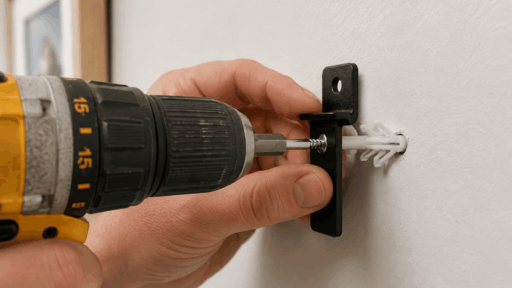

Drywall anchors help a screw grip drywall when there is no stud exactly where you need to hang something.
Learning how to use drywall anchors mostly comes down to choosing the right anchor and installing it without damaging the wall around it.
Before I make any hole in drywall, I check the mounting point, the item’s weight, and the instructions on the anchor package. That small check matters because two anchors that look similar can need different hole sizes.
You will usually need a pencil, level, drill or screwdriver, suitable drill bit, and the screws supplied with your anchors. Check for studs and possible pipes or electrical wiring before you start drilling.
How to Use Drywall Anchors: Step-by-Step
The basic process for using drywall anchors is simple. Mark the location, prepare the hole if your anchor needs one, seat the anchor properly, and tighten the screw without crushing the drywall.
The exact method changes slightly by anchor type, so keep the manufacturer’s instructions nearby while you work.
1. Choose the Right Drywall Anchor
Start with the item you plan to hang and check its weight. Then compare that weight with the rating printed on the anchor packaging.
I prefer an anchor with some capacity to spare rather than one that barely meets the load. Also check the required drywall thickness because some anchors need enough space behind the board to expand or open correctly.
2. Mark and Prepare the Hole
Hold the bracket against the wall and use a level before marking each screw position. Check the area for a stud and possible hidden services before drilling.
Use the drill bit size stated by the anchor manufacturer. Home Depot also recommends checking the anchor package for the correct pilot hole size rather than guessing from the anchor’s width.
Note! Before drilling, check for electrical wiring, plumbing, and studs behind the drywall. Never rely only on the visible wall surface when choosing a drilling point.
3. Insert the Anchor
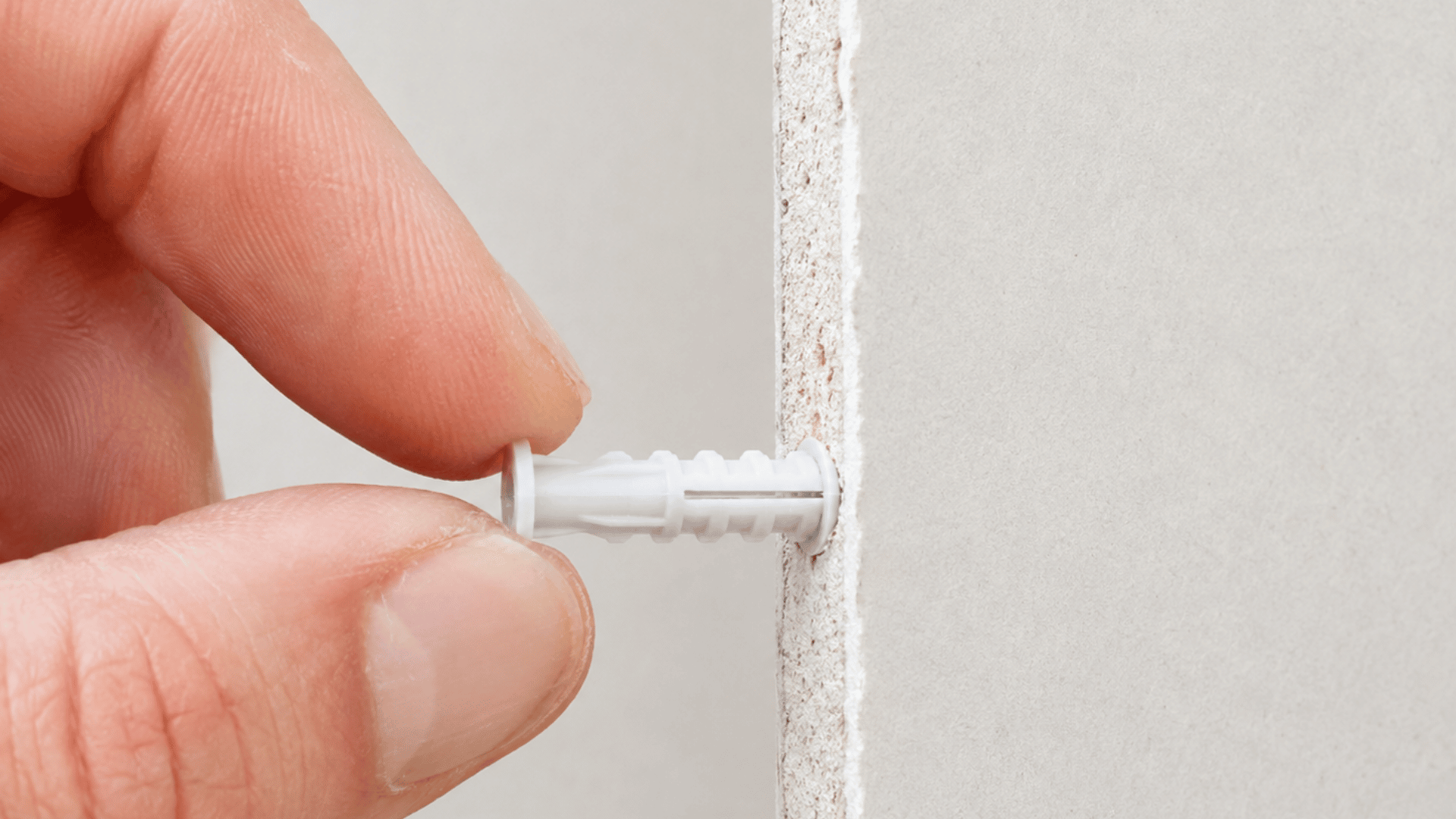
Push the anchor into the prepared hole its designed. A basic plastic expansion anchor should sit straight, with its flange resting flush against the drywall surface.
Do not hammer aggressively if the anchor refuses to enter. Stop and recheck the hole size first. Forcing an anchor into an undersized opening can damage both the fastener and the drywall around it.
4. Drive the Screw and Mount the Item
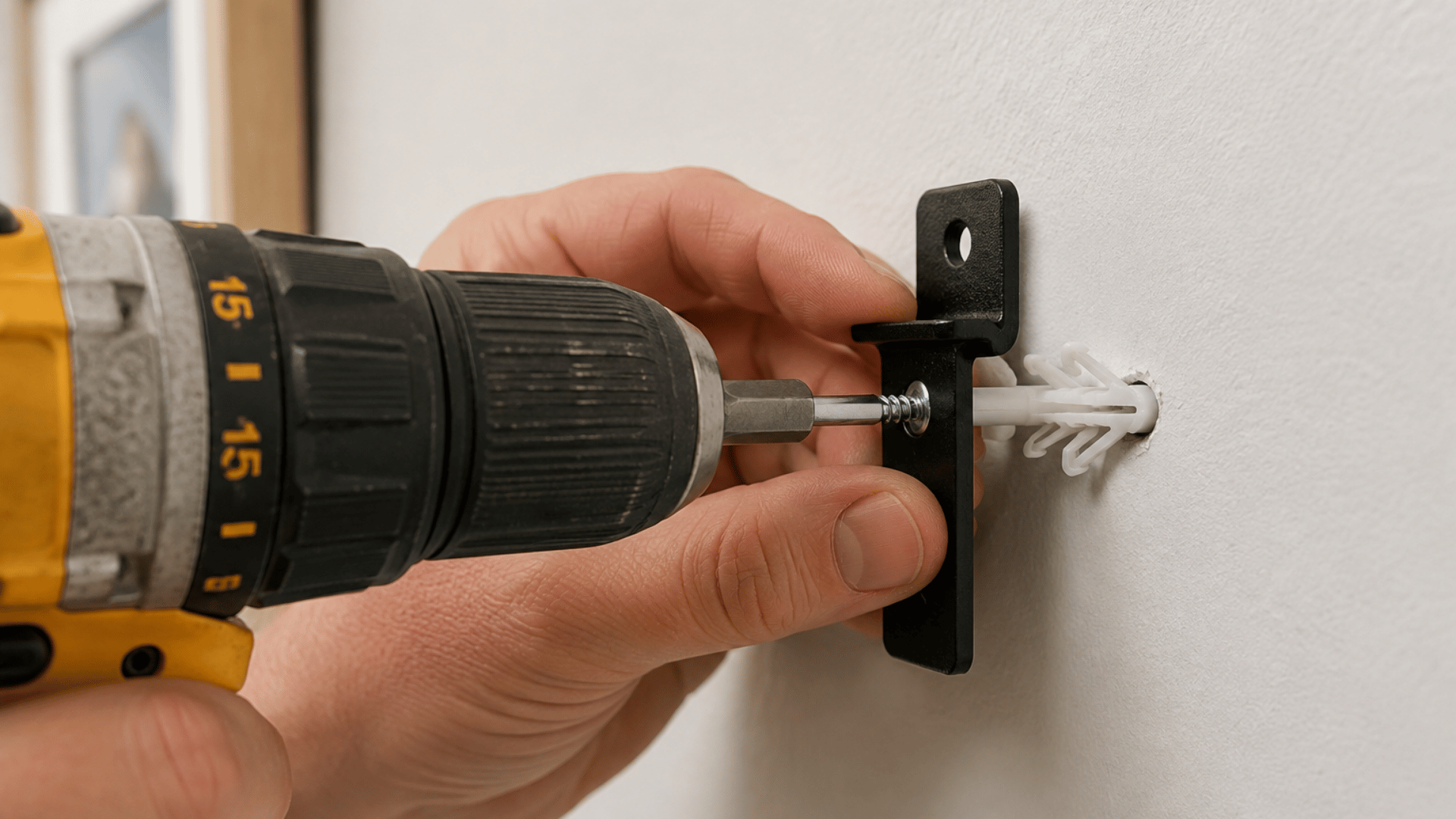
Position the bracket over the anchor and drive the correct screw through it. Tighten until the bracket sits firmly against the wall and won’t move.
Stop once it feels secure. Extra tightening does not mean extra holding strength. Overtightening self-drilling anchors can damage the drywall around the mounting point and reduce how securely the anchor holds.
Types of Drywall Anchors and How to Use Them
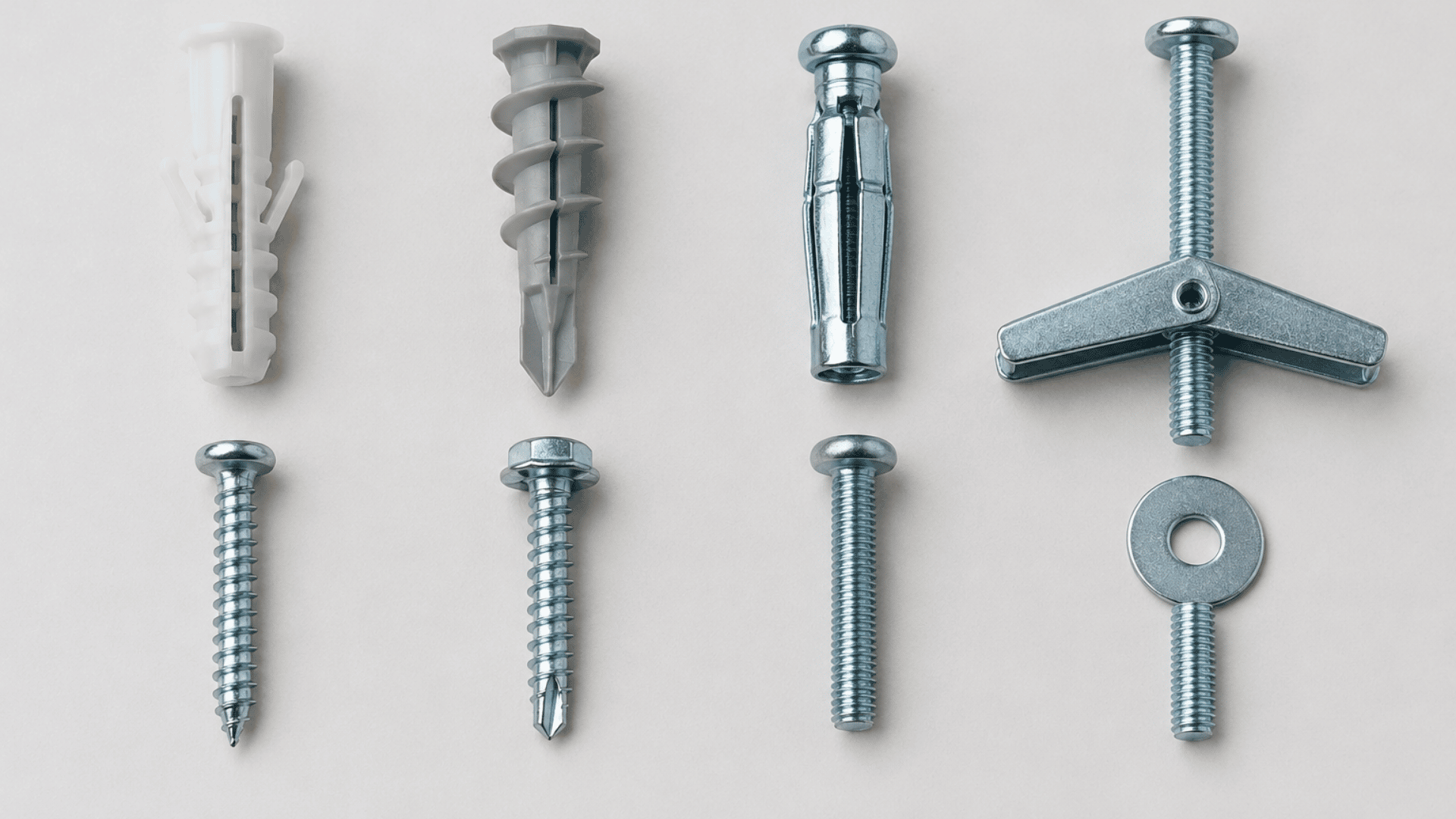
The installation method depends on the anchor type. Before using any, check the package because pilot hole size, wall thickness, screw size, and weight rating can vary between products.
| Anchor Type | Pilot Hole | How to Use It | Suitable For |
|---|---|---|---|
| Plastic Expansion | Yes | Drill the listed hole size, push the anchor in flush, then insert the screw. | Light wall decor |
| Self-Drilling | Usually no | Screw the anchor into drywall until flush, then drive in the screw. | Light to medium items |
| Molly Bolt | Yes | Insert the metal sleeve and tighten so it expands behind the drywall. | Medium loads |
| Toggle Bolt | Yes | Fold the wings, pass them through the hole, then tighten against the back of the drywall. | Heavier hollow wall mounting |
I always treat this table as a starting point, not a replacement for the instructions in the box. Even anchors from the same category can use different hole sizes and carry different load ratings.
Common Drywall Anchor Installation Mistakes
Even a suitable anchor can loosen if the hole or screw is handled incorrectly. When I see an anchor that will not grip properly, I check the hole size and screw tension before assuming the anchor itself is bad.
1. Using the Wrong Hole Size
A hole that is too large gives many anchors less drywall to grip. A hole that is too small can make the anchor difficult to insert and may damage the surrounding board.
Use the drill size listed for your exact anchor. Toggle bolts usually need a larger opening because the folded wings must pass through the drywall before opening behind it.
2. Overtightening the Screw
Tighten the screw only until the mounted hardware sits firmly against the wall. Continuing after that point may strip a plastic anchor or damage the drywall around it.
I prefer using a screwdriver for the last few turns when the anchor feels close to tight. It gives better control than continuing at full speed with a drill.
3. Exceeding the Anchor Weight Limit
Check the rating for the specific anchor instead of assuming that several anchors can support any heavy item. The fixture design and condition of the drywall still affect the mounting point.
Large shelves, cabinets, or other heavy fixtures may require attachment to framing. Follow the fixture manufacturer’s mounting instructions whenever they specify studs or another structural support.
Fixing Loose or Spinning Drywall Anchors
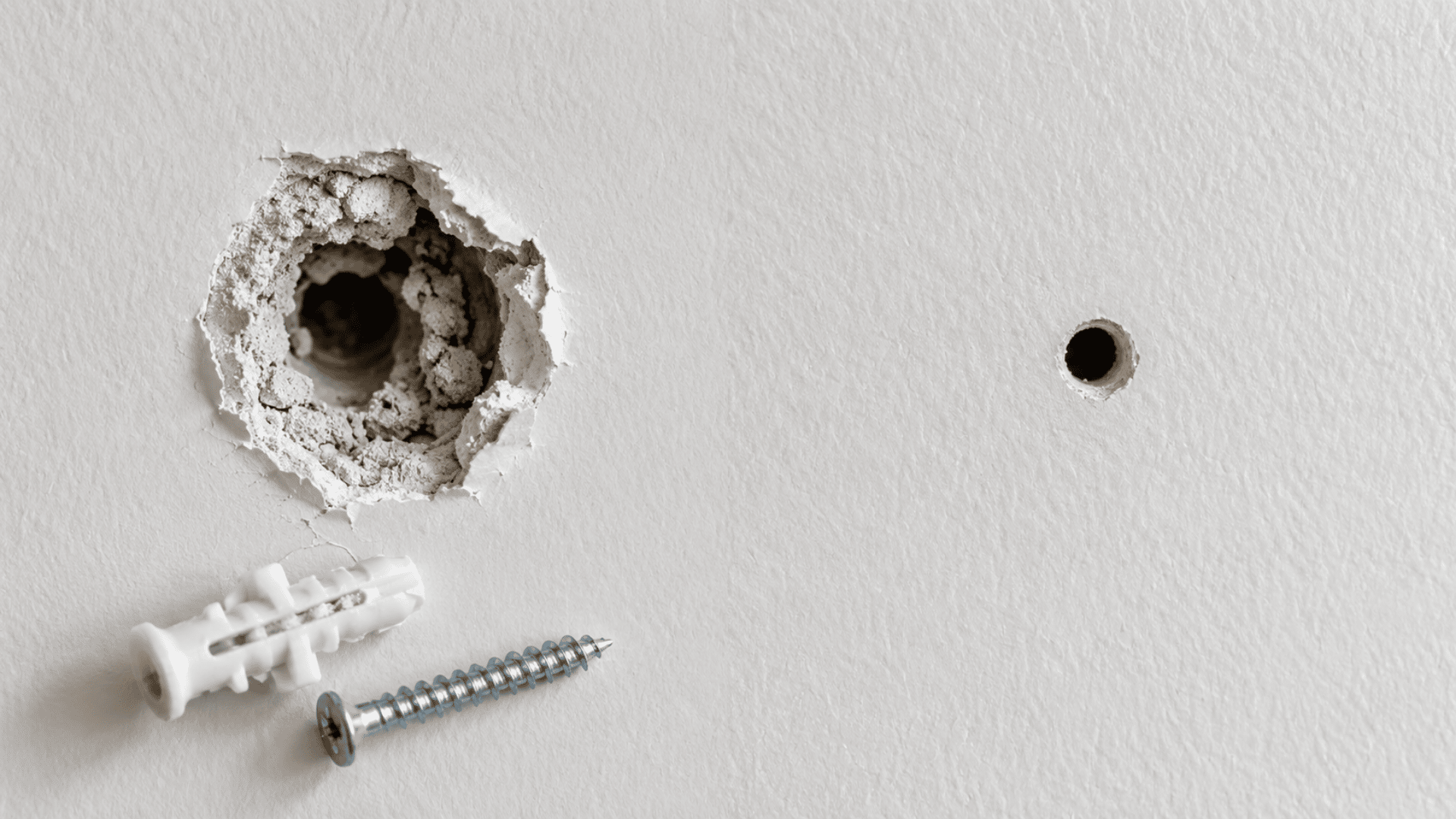
A loose or spinning drywall anchor usually means the hole has widened or the drywall around it has started to break apart. Stop tightening as soon as the anchor turns with the screw, since forcing it can make the damage worse.
- Remove the screw and check the hole for loose or crumbling drywall.
- Replace the anchor if it is stripped, bent, or no longer holds firmly.
- Use a larger anchor only when its required hole size matches the existing opening.
- Move the mounting point to solid drywall if the original spot is too damaged.
- Patch the unused hole afterward so the wall is ready for paint or another fixture.
When to Use a Stud Instead of a Drywall Anchor
Drywall anchors are useful when your mounting point falls between studs, but they are not the right answer for every fixture.
Use a stud when the product instructions require framing support or when the item places a substantial load on the wall.
Cabinets, large shelves, and some equipment mounts are common examples where structural fastening may be required.
I check for a stud before choosing an anchor because finding one can change the mounting plan completely. If the bracket holes line up with framing, fastening into that framing may give you the support the fixture manufacturer intended.
The screw or fastener must still be suitable for both the bracket and the framing material.
Takeaway
Once you know how to use drywall anchors, most small mounting jobs become much easier to plan. Spend more time choosing and measuring than you spend tightening the screw.
Check the item’s weight, read the anchor package, and use the listed pilot hole size. Seat the anchor straight and stop tightening once the bracket is secure.
I also check for a stud before drilling. If one sits in the right location, it may give you a better mounting option for heavier fixtures.
For smaller items mounted between studs, a properly chosen drywall anchor can provide the support you need.
If an anchor starts spinning or the drywall begins breaking around it, stop and fix the mounting point rather than tightening harder.
Have you used drywall anchors before? Share what worked for you in the comments below.
Frequently Asked Questions
Can you Put Drywall Anchors in Without a Drill?
Yes, some self-drilling anchors can be installed with a screwdriver. Check the package first, because installation instructions vary by anchor design.
Can you Screw Directly into Drywall Without an Anchor?
A screw alone has limited grip in hollow drywall. Use an appropriate anchor or fasten into a stud when the mounted item needs reliable support.
Why does My Drywall Anchor Keep Spinning?
The hole may be oversized, the drywall may be damaged, or the anchor may have been overtightened. Remove it and inspect the hole before reinstalling.
Can you Reuse a Drywall Anchor?
It depends on the anchor. Some systems allow the screw to be removed and reinserted, but the anchor itself may need replacement. Check its instructions.
Do I Hammer in Drywall Anchors?
Some plastic anchors can be gently tapped into a pilot hole with a mallet. Do not hammer self-drilling anchors, which screw directly into drywall.

Tommy Hardy, an alumnus of the Georgia Institute of Technology with a degree in Mechanical Engineering, has been a go-to figure in residential upkeep and innovation for over 18 years. His career commenced in a leading home appliance manufacturing company, where he mastered the intricacies of household systems. Joining our platform in 2020, Tommy quickly became a reader favorite for his practical and easy-to-follow guides. He took the helm of our DIY section in 2019, consistently delivering content that empowers homeowners. Beyond his professional pursuits, Tommy is a passionate gardener and enjoys woodworking, skills enhancing his hands-on approach to home care.