Deferring reactive repairs in favor of strategic property upgrades directly reduces long-term operational expenditures for commercial real estate, avoiding the 7% compounding annual cost of failing to keep up with maintenance requirements. When facilities managers transition from emergency fixing to planned capital improvements, they eliminate the escalating costs of recurring structural failures and temporary patches.
Capital investments in commercial building envelopes generate predictable, multi-year savings by protecting underlying systems before catastrophic failures occur. Aligning capital improvement schedules with preventative facility planning stabilizes annual maintenance budgets and shields operational bottom lines.
Strategic Capital Upgrades Stabilize Operating Expenses
Commercial real estate maintenance costs balloon when deferred maintenance becomes standard operational policy. Minor leaks, minor structural shifts, and aging building envelopes quickly turn into major capital disasters if ignored. Targeted capital improvements address root structural vulnerabilities before they trigger massive secondary repair invoices.
Hundreds of emergency repair calls are logged across commercial industrial parks every day. These unscheduled service events cost far more than planned capital work because of emergency call-out fees, rushed labor pricing, and immediate tenant disruption. Shifting budget allocation from emergency service funds to long-term capital improvement projects changes the overall financial narrative for commercial asset managers.
Modern building envelopes require a proactive approach to maintain structural integrity over multi-decade operational lifecycles. High-performance building envelopes significantly lower lifetime operating costs by drastically cutting annual structural maintenance demands. Investing in high-grade materials now stops incremental degradation from silently eroding long-term asset valuations.
Commercial Envelope Upgrades Protect Structural Components
The building exterior acts as the primary barrier against environmental degradation, structural decay, and moisture ingress. Water intrusion through compromised roofs or walls can cause undetected interior deterioration long before visible damage appears in tenant spaces. Strategic envelope upgrades ensure interior mechanical systems and structural frameworks remain fully protected year-round.
Maintaining structural health requires specialized commercial experience from local experts. So for businesses based in Houston, it’s sensible to get in touch with Charter Roofing for heavy industrial properties. Professional asset management across Texas and the whole country depends on early diagnostic physical assessments rather than waiting for structural failures to force emergency intervention.
High-durability roofing assemblies and reinforced exterior cladding systems eliminate the ongoing labor fees associated with patch-style repairs. Repeatedly patching an aging surface costs far more over a five-year window than replacing the unit outright with long-warranty materials. Smart asset managers track the total cost of ownership rather than chasing short-term patch savings.
Modern Materials Drive Down Multi-Year Maintenance Cycles
Advanced material science has radically altered how modern commercial real estate operates over extended life cycles. Modern modified bitumen systems, high-solids elastomeric coatings, and continuous exterior insulation offer far greater durability than legacy construction standards. Choosing superior materials helps property managers avoid ongoing repair cycles.
Commercial property managers can drastically reduce operational disruptions by evaluating key physical performance factors during planned facility renovations:
- High-reflectivity roofing membranes lower thermal shock stresses on internal structural supports
- Advanced joint sealants resist heavy UV degradation and prevent moisture intrusion
- Integrated drainage systems manage heavy stormwater volume to avoid structural pooling
Addressing these physical factors during scheduled capital improvement cycles ensures uninterrupted tenant operations. Advanced material selections directly mitigate structural decay, preserving core asset value over decades of continuous use. High-performing facilities command higher commercial lease rates while simultaneously spending less on routine building maintenance.
Energy Efficiency Upgrades Reduce Mechanical Wear
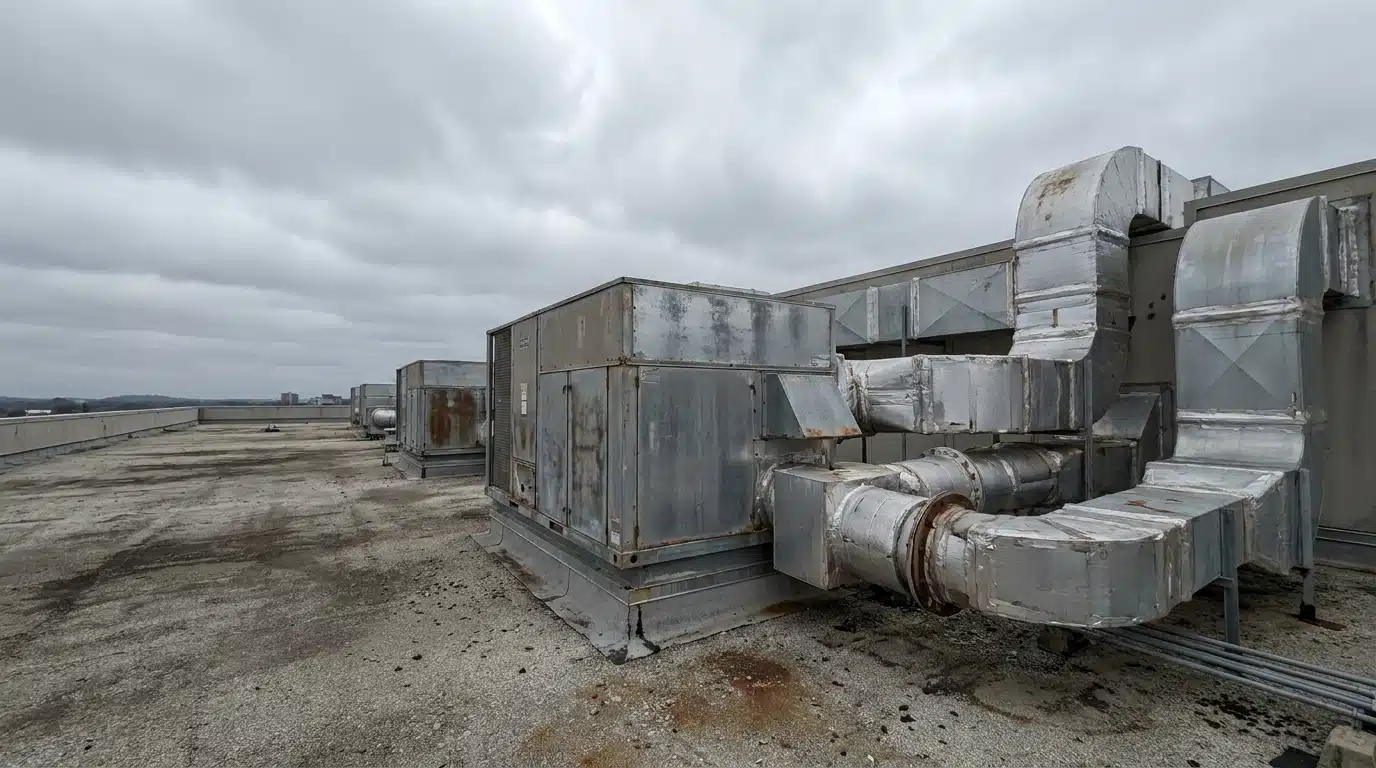
Building upgrades focused on thermal performance deliver immediate reductions in facility maintenance demands beyond basic utility savings. Upgraded insulation levels, reflective surface coatings, and continuous air barriers reduce total HVAC operational loads. Lowering continuous run times on heavy commercial heating and cooling equipment directly extends overall mechanical service lifespans, even if you’re using modern units.
Commercial buildings lose substantial energy through sub-optimal structural barriers, driving up mechanical system wear and tear. Facilities using high-performance building envelope upgrades lower HVAC run times substantially, reducing expensive compressor overhauls and early system replacements. Reduced mechanical stress yields fewer service calls and significantly lower routine maintenance invoices over time.
Strategic insulation installations prevent extreme temperature fluctuations inside core building spaces. Stable interior temperatures protect critical building materials, electrical runs, and interior plumbing systems from thermal expansion and contraction cycles. This reduced thermal movement protects internal fasteners, wall joints, and piping connections from stress fractures over long operational periods.
Long-Term Financial Planning Prevents Emergency Outlays
Moving a commercial facility from reactive repairs to an upgraded capital standard requires systematic financial planning. Asset managers must balance short-term capital expenditures against multi-year operational budget reductions. Investing in structural longevity delivers consistent, predictable returns through reduced labor hours, fewer material replacements, and stable insurance risk profiles.
Planned capital upgrades allow real estate owners to schedule building downtime during off-peak operational periods. Unscheduled emergency fixes inevitably occur during critical business hours, disrupting tenant workflows, risking inventory losses, and creating liability hazards. Proactive physical asset management eliminates operational volatility while building lasting equity across portfolio properties.
Real estate portfolios that prioritize preventive asset upgrades consistently outperform properties that rely on emergency service strategies. Lower maintenance costs translate directly to higher net operating income, driving overall property value upward. Systematic physical upgrades keep commercial assets competitive, durable, and highly profitable throughout their operational lifecycles.
Lower Your Total Cost of Ownership
Reducing routine commercial building upkeep requires a shift from short-term fixes to a long-term capital strategy. Proactive structural investments safeguard mechanical systems, preserve interior spaces, and keep operational budgets completely predictable. Explore our latest insights on business management and property maintenance for more guidance on a range of related talking points.

Licensed broker Logan Patel holds an MBA in Urban Economics from UCLA and has steered buyers and investors through market swings for a decade. He joined us in 2024 to demystify listings, financing, and neighborhood data with clear, chart-backed advice. When he isn’t scanning comps, Logan coaches youth basketball and scouts mid-century districts for hidden architectural gems on weekend walks.