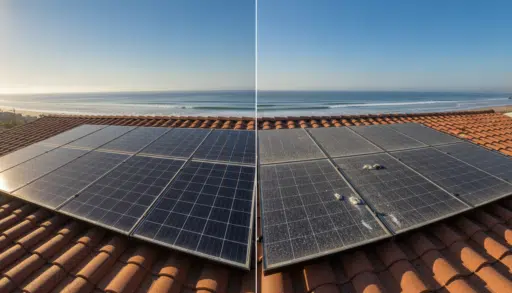

Picture standing in your backyard in Del Mar on a bright, cloudless morning, coffee in hand, glancing up at the solar array on your roof and feeling pretty good about your electricity bill this month.
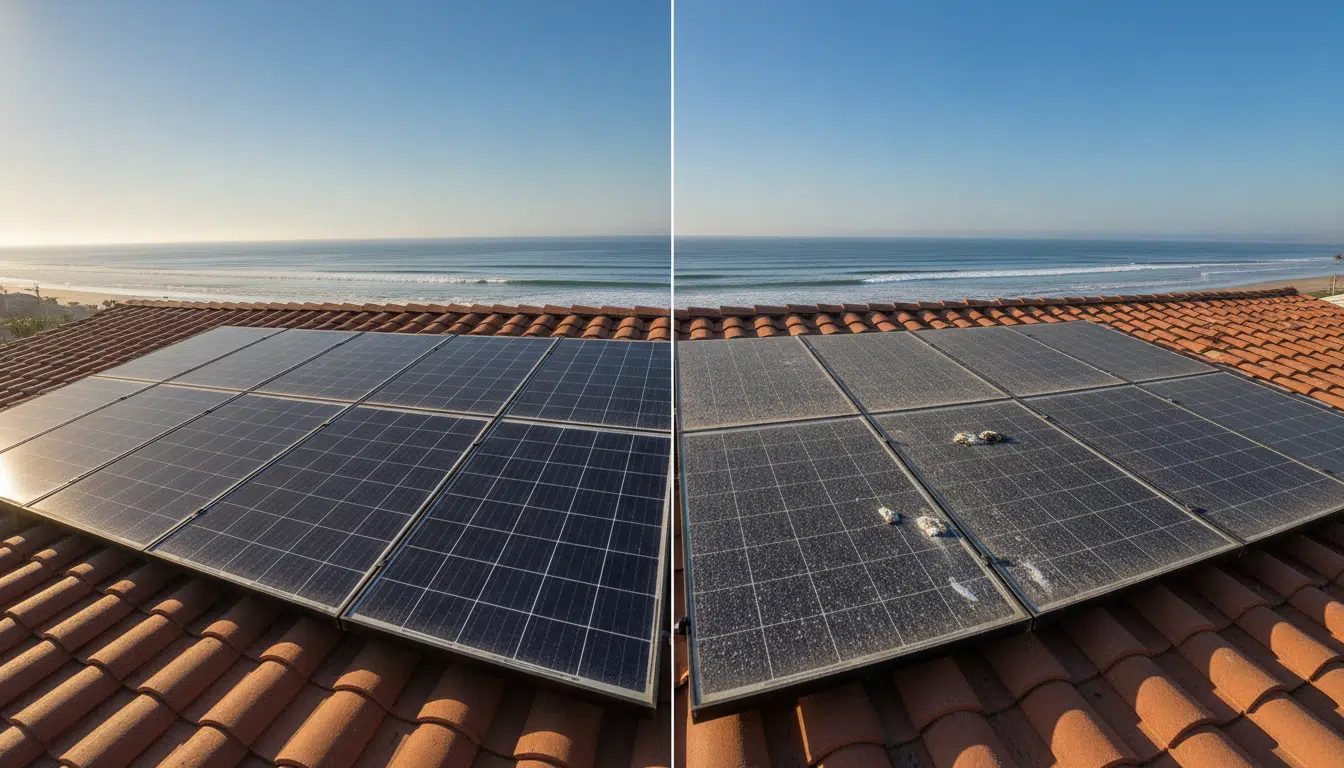
What you probably aren’t noticing from the ground is the thin film of dust, salt residue, and bird droppings that’s been quietly building up on those panels for months, working against every bit of sunshine this coastal town gets. It’s an easy thing to overlook, since solar panels don’t come with a warning light for “getting dirty,” but that invisible buildup has a very real cost attached to it.
Why Dirty Panels Produce Less Power
Solar panels convert sunlight into electricity, and that conversion depends entirely on how much light reaches the cells beneath the glass surface. Dust, pollen, dirt, and organic residue sitting on top of a panel act as a physical barrier, scattering and blocking sunlight before it ever gets the chance to become usable energy.
This effect, known in the solar industry as “soiling,” is more significant than most homeowners assume. The National Renewable Energy Laboratory, a U.S. Department of Energy national lab, has developed and published research methods specifically to quantify how much energy solar systems lose to accumulated dirt and debris over time, work that underscores just how variable and, in dry or dusty regions, how significant soiling losses can become without regular cleaning.
Why Coastal Homes Like Del Mar Are Especially Affected
Del Mar’s coastal location brings conditions that accelerate buildup compared to inland properties:
- Salt-laden ocean air settles onto rooftop surfaces and clings stubbornly to glass
- Marine layer moisture keeps panels damp for hours some mornings, helping dust and pollen adhere rather than blow away
- Local wildlife, gulls and songbirds included, contributes debris that a light breeze won’t clear on its own
None of this is unique to any one home. It’s a pattern across most coastal properties, which is why panels here tend to accumulate buildup faster than general cleaning guidelines assume.
How Much Efficiency Are You Actually Losing?
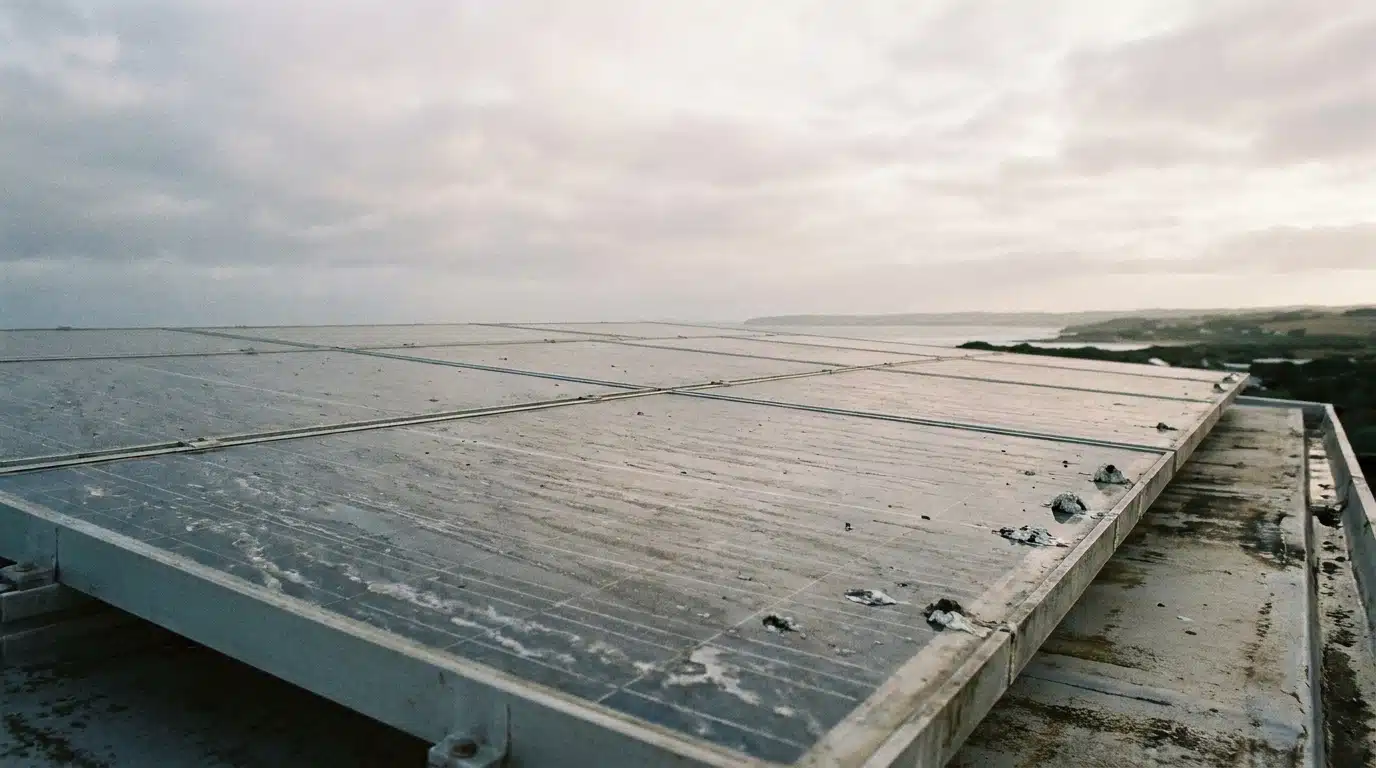
Even a seemingly light layer of dust can meaningfully reduce output, since solar cells are sensitive to small reductions in the light reaching their surface. Multiply a few percentage points of lost efficiency across an entire year, and the gap between clean and dirty panels adds up to a noticeable difference in both energy generated and money saved on your utility bill.
For homeowners who invested real money into a solar installation specifically to cut electricity costs, that gap represents value quietly slipping away every day the panels stay dirty.
What Clean Panels Actually Give You Back
Putting the efficiency argument together, a handful of concrete benefits come directly from keeping panels clean:
- More sunlight reaches the cells, since a clear surface no longer blocks incoming light the way dust and residue do
- Output moves closer to the system’s rated capacity, the number it was actually designed and sold to hit
- Savings compound over the year, since even a small daily efficiency gain adds up across twelve months of production
- The system ages more predictably, since consistent buildup and cleaning cycles are easier to track than sporadic, reactive cleaning
- You get a clearer read on real performance issues, since a clean baseline makes it easier to spot when a genuine equipment problem, rather than dirt, is behind a drop in output
Keeping solar panels clean helps maintain consistent energy production and makes genuine performance problems easier to spot. A simple, regular cleaning routine can prevent dirt and residue from quietly reducing the value of the system over time.
What Actually Removes This Buildup Safely
Technique matters as much as frequency here. Solar panels have a delicate glass surface and sensitive electrical components underneath, so aggressive scrubbing, harsh chemicals, or high-pressure equipment can cause real damage, including scratches, coating degradation, or problems with the panel’s seals.
Homeowners working with an experienced Del Mar Solar Panel Cleaning service can avoid many of these risks. Nick’s Window Cleaning Services provides professional exterior cleaning services for homeowners looking to maintain their property and solar panels properly.
Professionals use soft brushes, purified water, and methods designed specifically for solar glass rather than generic outdoor cleaning equipment. The right approach helps maintain the panels without creating unnecessary damage.
How Often Solar Panels Actually Need Cleaning
There’s no single answer that fits every home, since buildup speed depends on local conditions:
- Homes near the coast, construction, or trees typically need cleaning more often
- Drier inland areas with regular rainfall can often go longer between cleanings
- Most residential systems benefit from a professional cleaning once or twice a year
- Coastal homes often lean toward the more frequent end of that range
Keeping an eye on your system’s energy production data, most modern setups include some form of monitoring, can also help flag when output has dipped in a way that points to soiling rather than seasonal sunlight changes.
Conclusion
Solar panels are one of the few home investments where a simple maintenance task, cleaning, has a direct and measurable impact on how much value you actually get out of the system day to day. The dust, salt, and organic buildup that naturally accumulates on panels, especially in a coastal environment like Del Mar, quietly reduces how much sunlight reaches your cells, which translates directly into lost energy production and lost savings.
Treating regular, properly done cleaning as part of routine solar maintenance, rather than an afterthought, is one of the easiest ways homeowners can make sure their system keeps performing the way it was designed to, protecting both the investment they made and the energy efficiency they were counting on when they made it.

Tommy Hardy, an alumnus of the Georgia Institute of Technology with a degree in Mechanical Engineering, has been a go-to figure in residential upkeep and innovation for over 18 years. His career commenced in a leading home appliance manufacturing company, where he mastered the intricacies of household systems. Joining our platform in 2020, Tommy quickly became a reader favorite for his practical and easy-to-follow guides. He took the helm of our DIY section in 2019, consistently delivering content that empowers homeowners. Beyond his professional pursuits, Tommy is a passionate gardener and enjoys woodworking, skills enhancing his hands-on approach to home care.