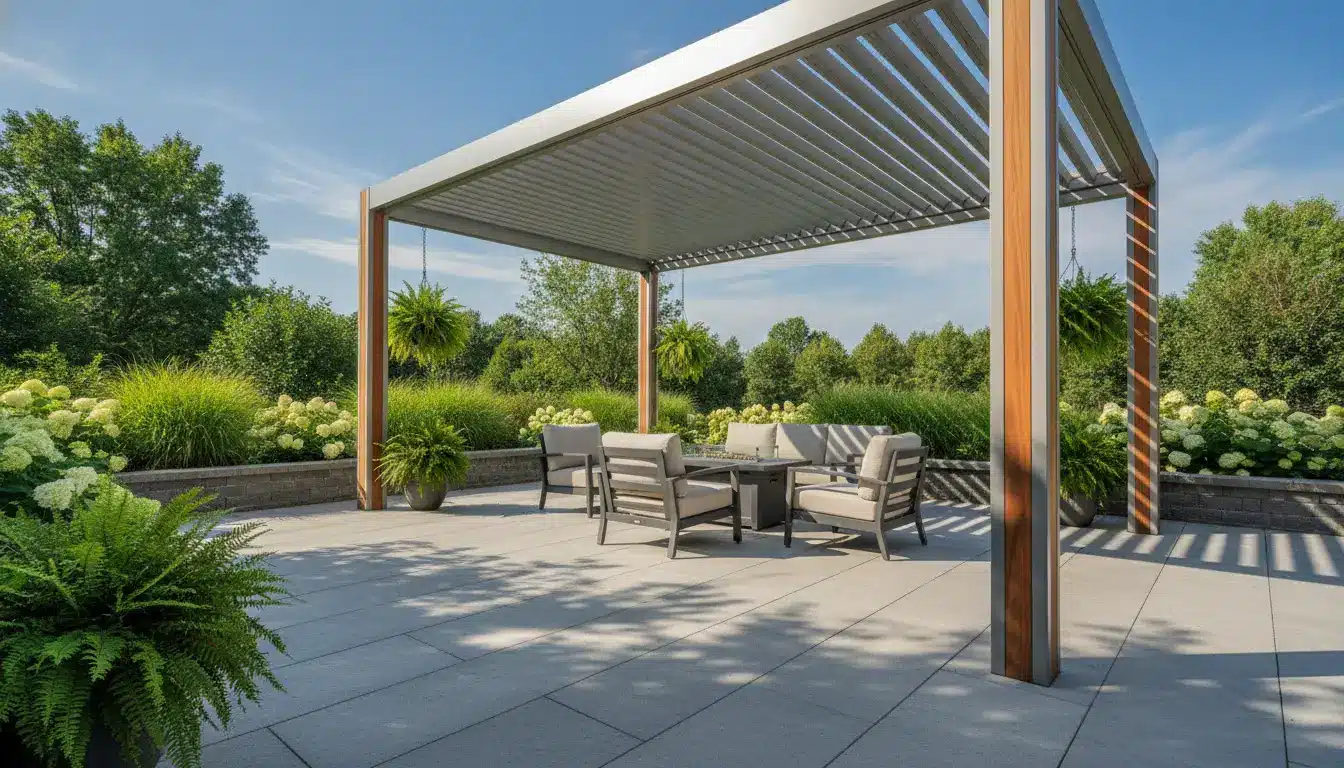

During the warmer months in the United States, outdoor living spaces become an important part of residential properties, commercial areas, and community facilities. As temperatures rise through spring and summer, property owners and facility managers increasingly look for ways to create comfortable outdoor environments while managing sunlight, ventilation, and weather exposure. An adjustable louvered aluminum pergola provides a practical architectural solution by combining outdoor shade management with flexible environmental control.
For property managers, contractors, and procurement professionals, understanding pergola design principles is important because outdoor structures must balance usability, durability, safety, and maintenance requirements. The effectiveness of a pergola depends not only on materials but also on structural design, installation conditions, and long-term care.
Technical Overview of Adjustable Louvered Pergola Systems
An adjustable louvered pergola uses movable roof slats that can change position to control sunlight and airflow. Unlike fixed roof structures, adjustable louvers allow users to modify the amount of shade and ventilation according to weather conditions.
The main design principles include:
- Adjustable control of sunlight exposure
- Improved outdoor air circulation
- Protection from changing weather conditions
- Integration with residential and commercial landscapes
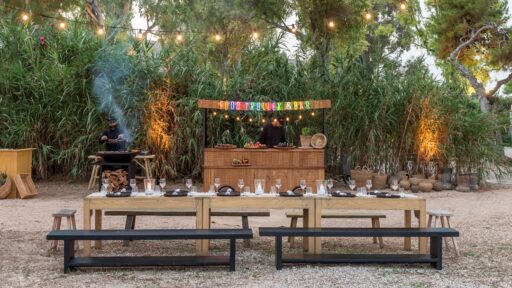
For example, a restaurant with an outdoor seating area may adjust the pergola roof throughout the day to reduce direct afternoon sunlight while maintaining airflow for customers.
Importance for Efficiency, Comfort, and Space Management
Outdoor structures influence how efficiently properties use available space. A well-designed pergola extends usable areas by creating a controlled outdoor environment without requiring a fully enclosed building.
Applications include:
- Residential patios and gardens
- Commercial outdoor dining areas
- Hotel and recreation spaces
- Community gathering areas
Adjustable shading can also reduce heat exposure in outdoor areas, improving comfort during peak summer periods. For facility managers, this creates more flexible spaces that can support different activities throughout the year.
Engineering Fundamentals and Material Considerations
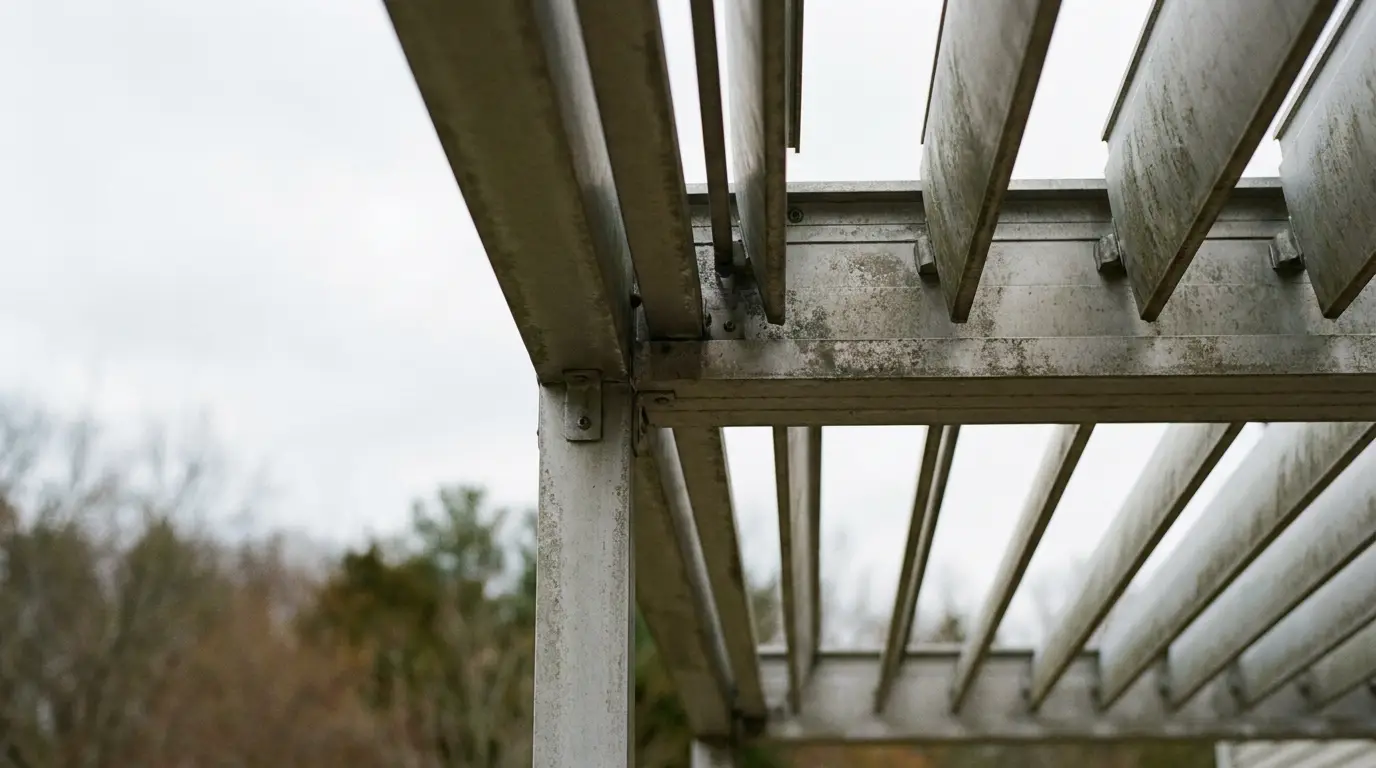
The performance of an aluminum pergola depends on structural design, material quality, and installation accuracy. Aluminum is commonly used in outdoor structures because it provides strength while maintaining resistance to moisture-related deterioration.
Key technical considerations include:
- Structural stability under wind conditions
- Proper connection between components
- Effective water drainage design
- Suitable foundation or mounting surface
The adjustable louver system requires precise movement and alignment. Regular inspection helps ensure smooth operation and prevents premature wear caused by environmental exposure.
Performance Factors and Maintenance Requirements
Several factors influence the long-term performance of an adjustable louvered pergola. Local climate, installation location, and maintenance practices all affect service life and reliability.
Important factors include:
- Exposure to wind and precipitation
- Frequency of louver adjustment
- Surface cleaning requirements
- Inspection of moving components
Regular cleaning and inspection help maintain proper operation. Removing accumulated debris from louvers and drainage areas prevents performance issues caused by blocked movement or water buildup.
Safety Practices and Installation Considerations
Safe pergola installation requires careful planning. Before assembly, professionals should evaluate the installation surface, local weather conditions, and structural requirements.
Recommended practices include:
- Installing on a stable foundation
- Following proper assembly procedures
- Inspecting connections regularly
- Avoiding unsafe use during extreme weather
Advantages, Limitations, and Future Trends
Adjustable louvered aluminum pergolas provide flexible outdoor space management, improved shade control, and integration with modern property designs. They are suitable for applications where users need greater control over outdoor conditions.
However, these structures require proper installation and maintenance. They are not a replacement for fully enclosed buildings when complete weather protection is required.
Future outdoor structure development is expected to focus on improved automation, weather-responsive controls, and more sustainable materials. Understanding design principles and maintenance requirements allows property professionals to make informed decisions when planning outdoor spaces.

With a Master’s in Architecture from the University of California, Berkeley, Alexander Martin has dedicated the last 18 years to enhancing outdoor living through thoughtful and robust structure design. His career kicked off in urban planning, giving him a unique perspective on integrating structures into diverse environments. In 2019, Alexander brought his expertise to our website, offering insights into creating versatile outdoor spaces. Since then, he has been the lead advisor for our outdoor design projects and is known for his ability to merge functionality with environmental consciousness. Alexander enjoys rock climbing outside of work and participates in community development projects, activities that reflect his passion for the outdoors and sustainable design.