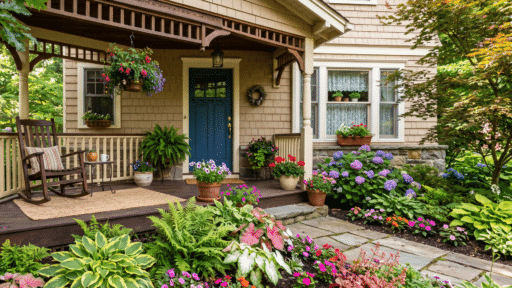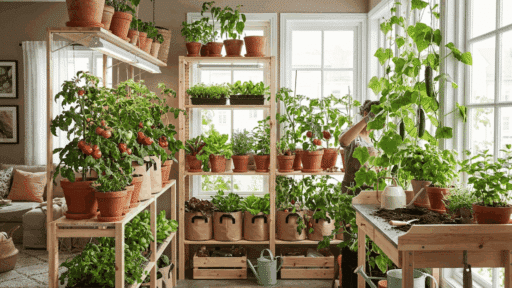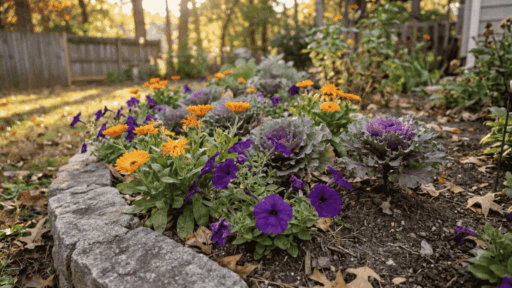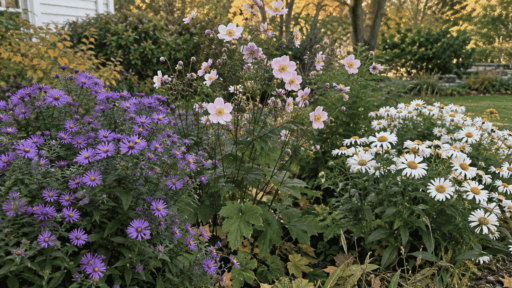

I used to think creating a beautiful yard meant spending every weekend trimming bushes, watering plants, and replacing the ones that somehow never survived.
If you have a small front yard, empty outdoor corner, or plants that keep drying out no matter what you do, you’re definitely not alone.
I have been there too, and honestly, that’s what made me look for landscaping plants that are easy to manage and still look great all year.
The good news is you don’t need a huge garden or hours of work to make your outside area feel fresh and welcoming.
In this guide, I’ll share the best landscaping plants for different spots, low-maintenance options, front yard ideas, small landscaping plants, and simple tips that make choosing the right plants much easier.
How to Choose the Right Landscaping Plant for Any Space
Choosing the right landscaping plant becomes much easier when you focus on area, maintenance, and how everything looks together.
These are the main things I look at before picking plants for any outdoor area.
| Factor | What to Focus On | Why It Matters |
| Space Size | Plant height and width | Keeps the yard balanced |
| Maintenance | Easy-care plants | Saves time and effort |
| Front Yard Look | Visibility and neatness | Improves curb appeal |
| Plant Combination | Colors and textures | Makes the landscape look clean and organized |
1. Start With the Size of Your Outdoor Landscape
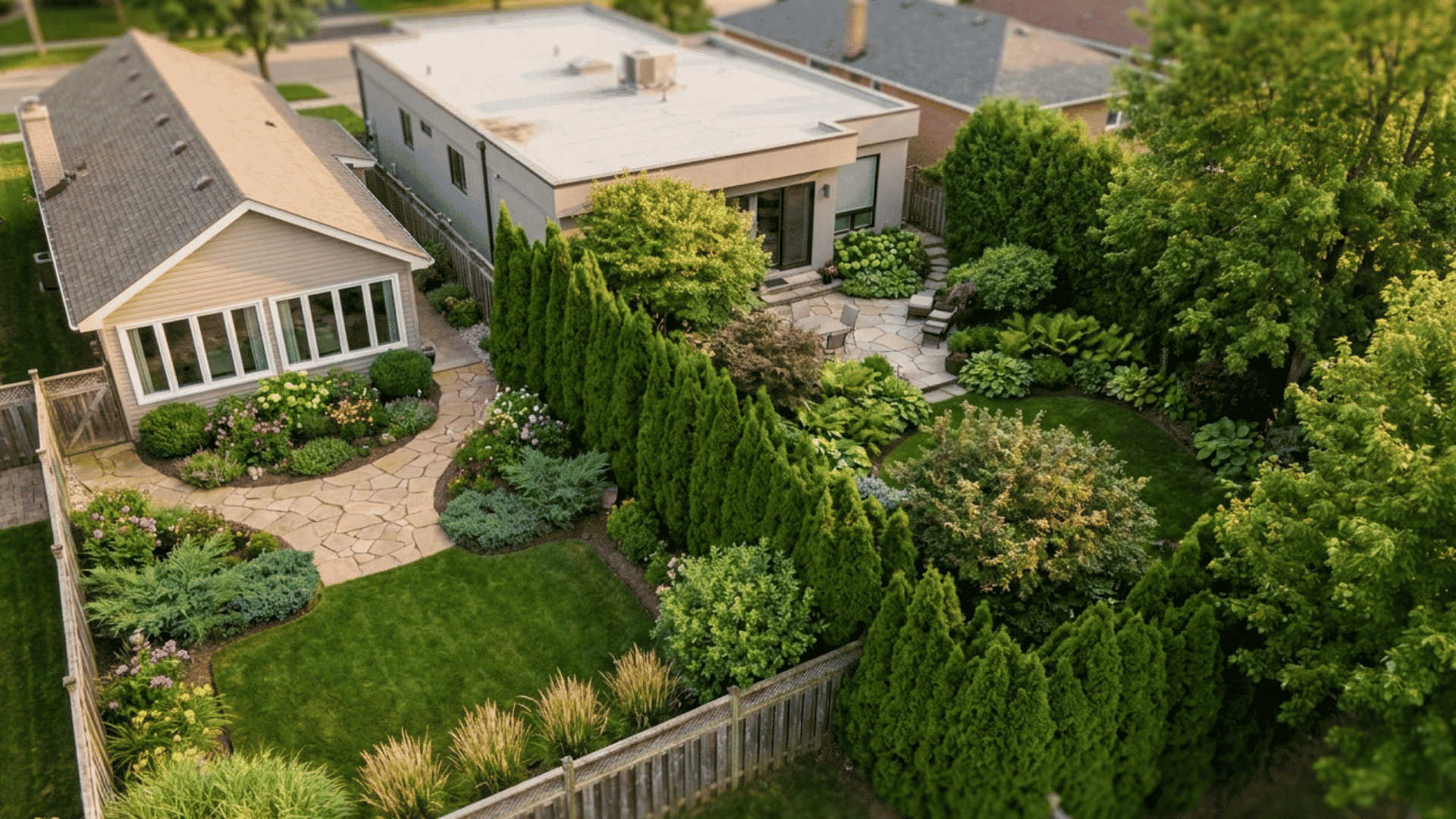
Always begin by checking how much area you actually have.
Large plants can quickly make a small yard feel crowded and messy, especially near walkways or windows. That’s why balancing plant height and width is important.
For smaller homes, compact shrubs and small landscaping plants usually work best. In larger yards, taller plants can help create privacy and fill empty corners without making the space feel too heavy.
2. Focus on Low Maintenance First
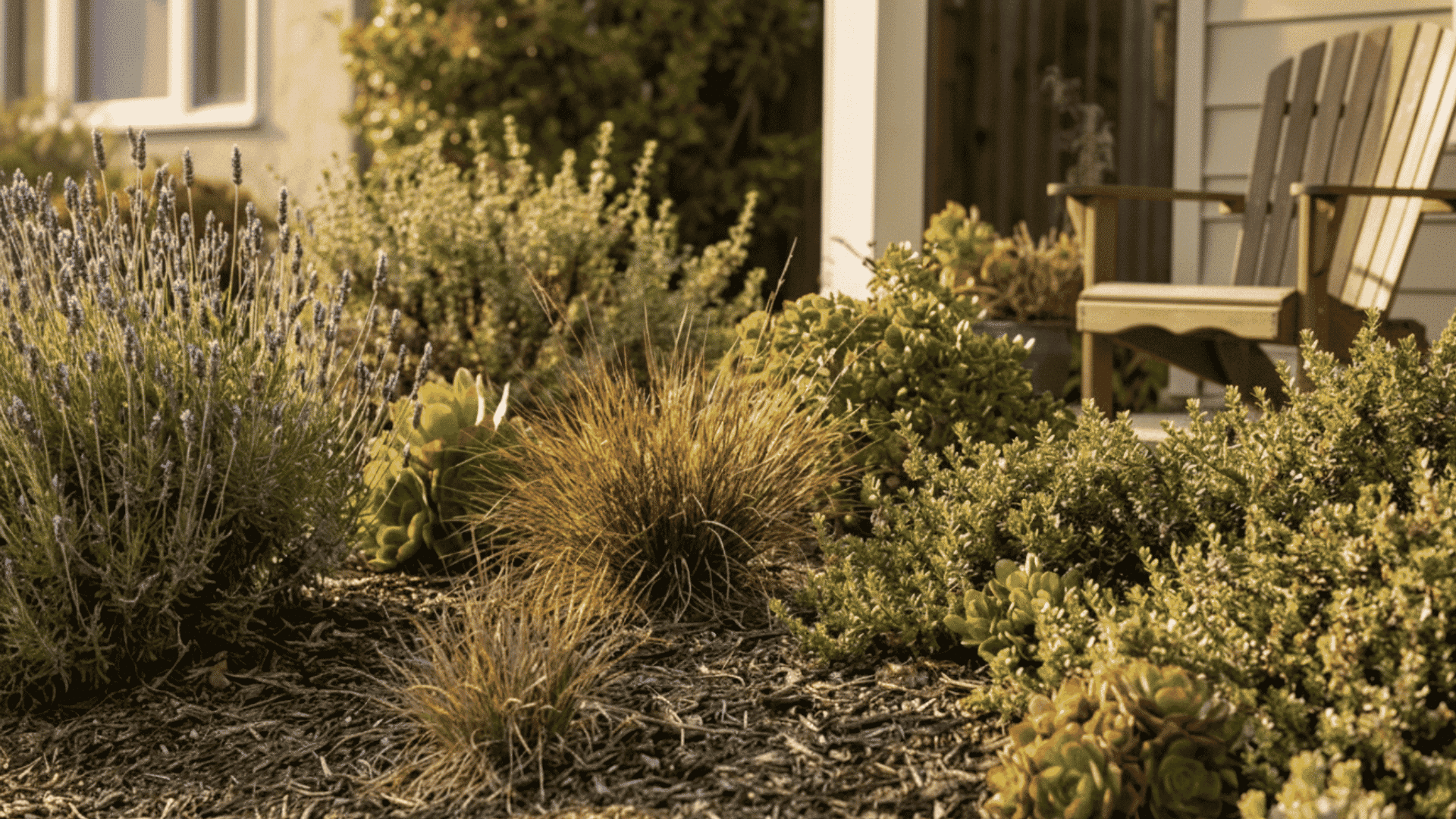
Plants that need constant watering or trimming can become difficult to manage.
Look for drought-tolerant plants, slow-growing shrubs, and hardy varieties that can handle changing weather.
These plants stay healthy with less effort, which makes landscaping much easier for busy homeowners or beginners who want something simple to care for.
3. Think About Front Yard Visibility
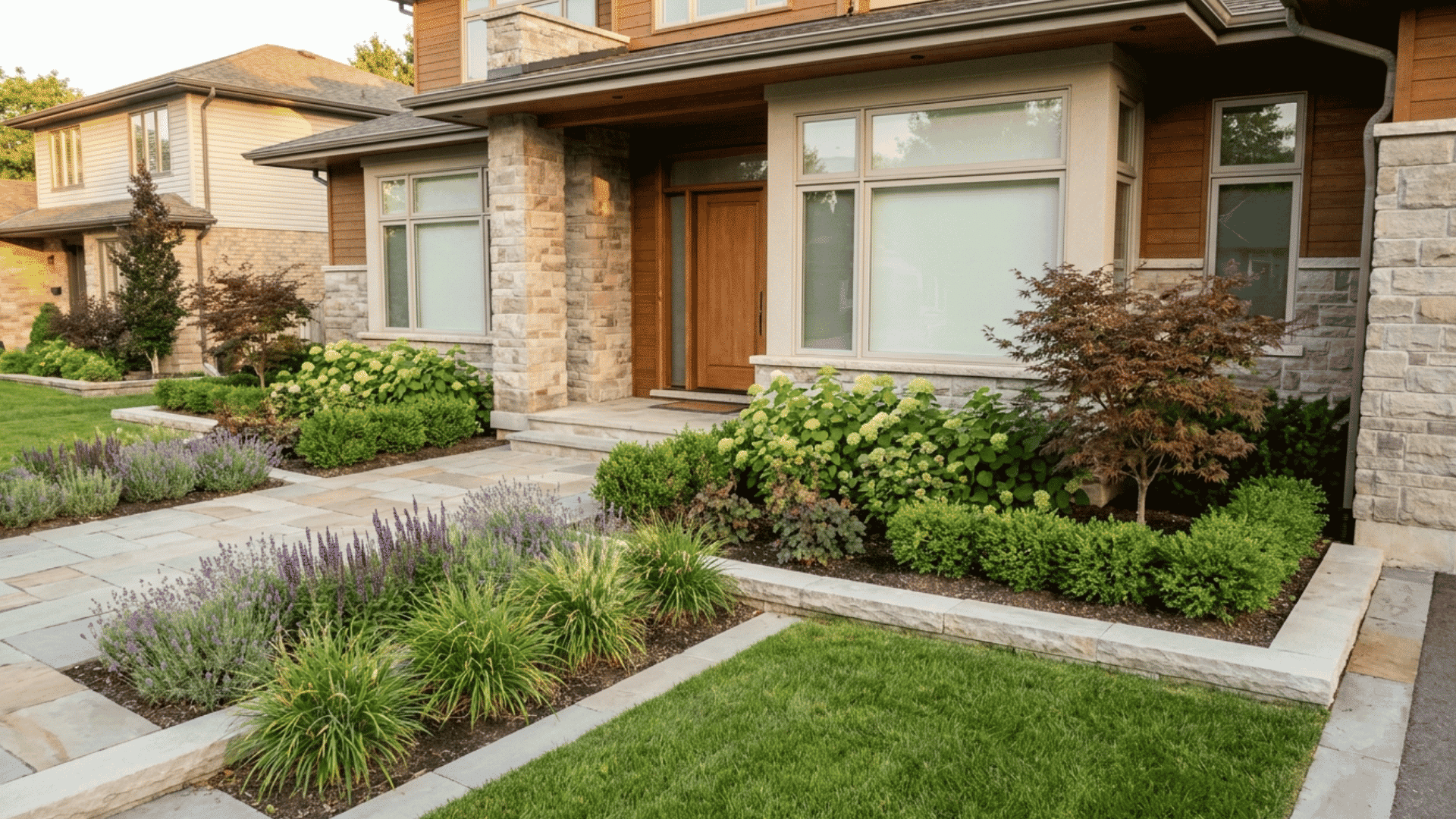
Always choose plants that stay neat naturally instead of growing too wild or blocking pathways.
Layering plants also helps create depth and makes the yard look more balanced. Short plants near walkways and medium shrubs near the house usually work well.
Also avoid planting anything that covers windows or makes the entrance feel crowded.
4. Choose Plants that Work Together
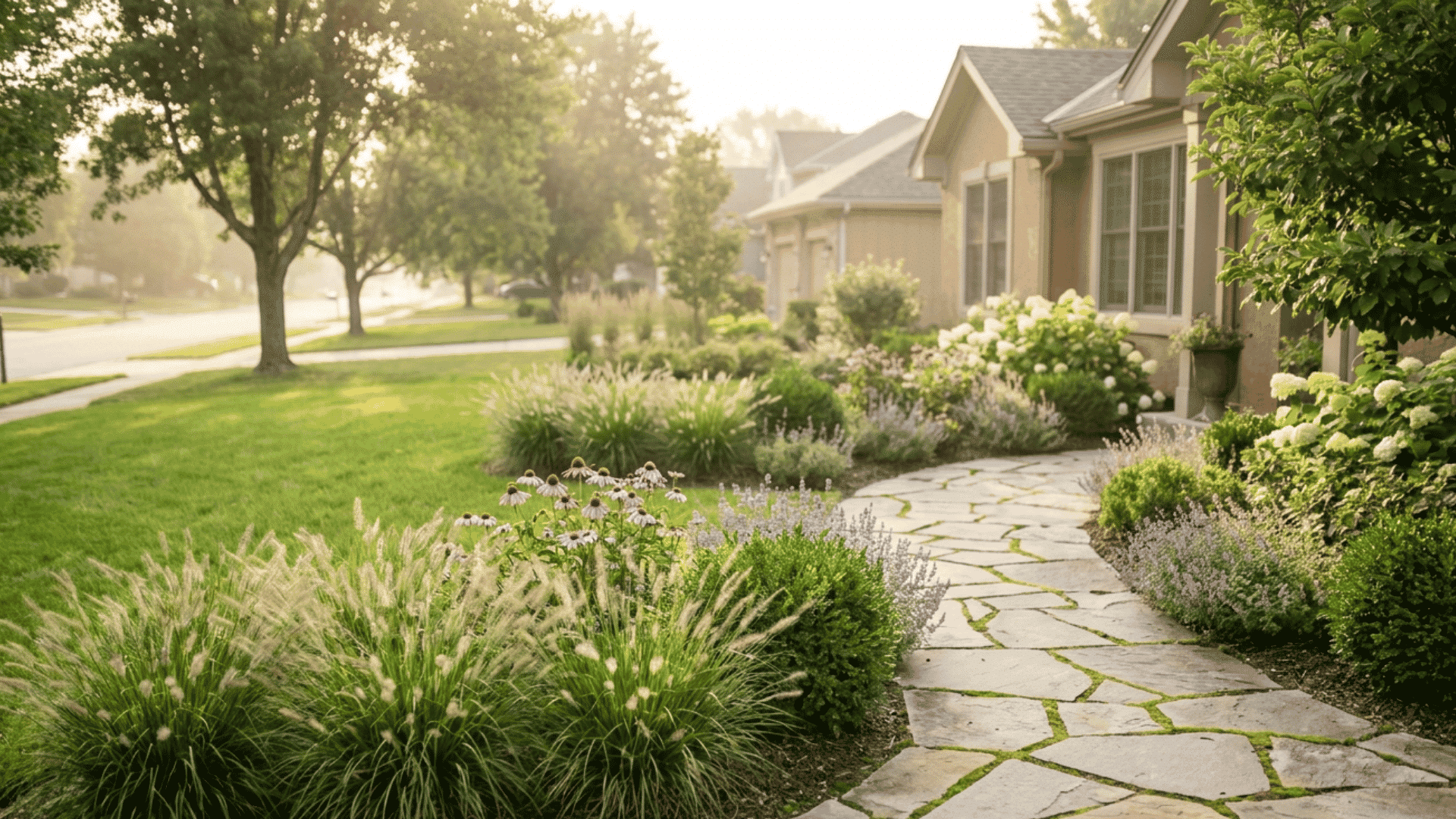
Landscaping looks better when plants actually work well together. Mixing greenery with flowering plants because it adds color without making the yard feel too busy.
Texture also matters a lot, so combining soft grasses with fuller shrubs creates a more natural look.
In my experience, landscapes look more polished when you repeat the same few plants throughout the yard instead of using too wide a variety.
Best Landscaping Plants for Low-Maintenance Outdoor Spaces
I always prefer plants that can handle changing weather, grow well with little care, and still make the space feel fresh and inviting.
These are some of the best low-maintenance landscaping plants for both small and large outdoor spaces.
1. Boxwood
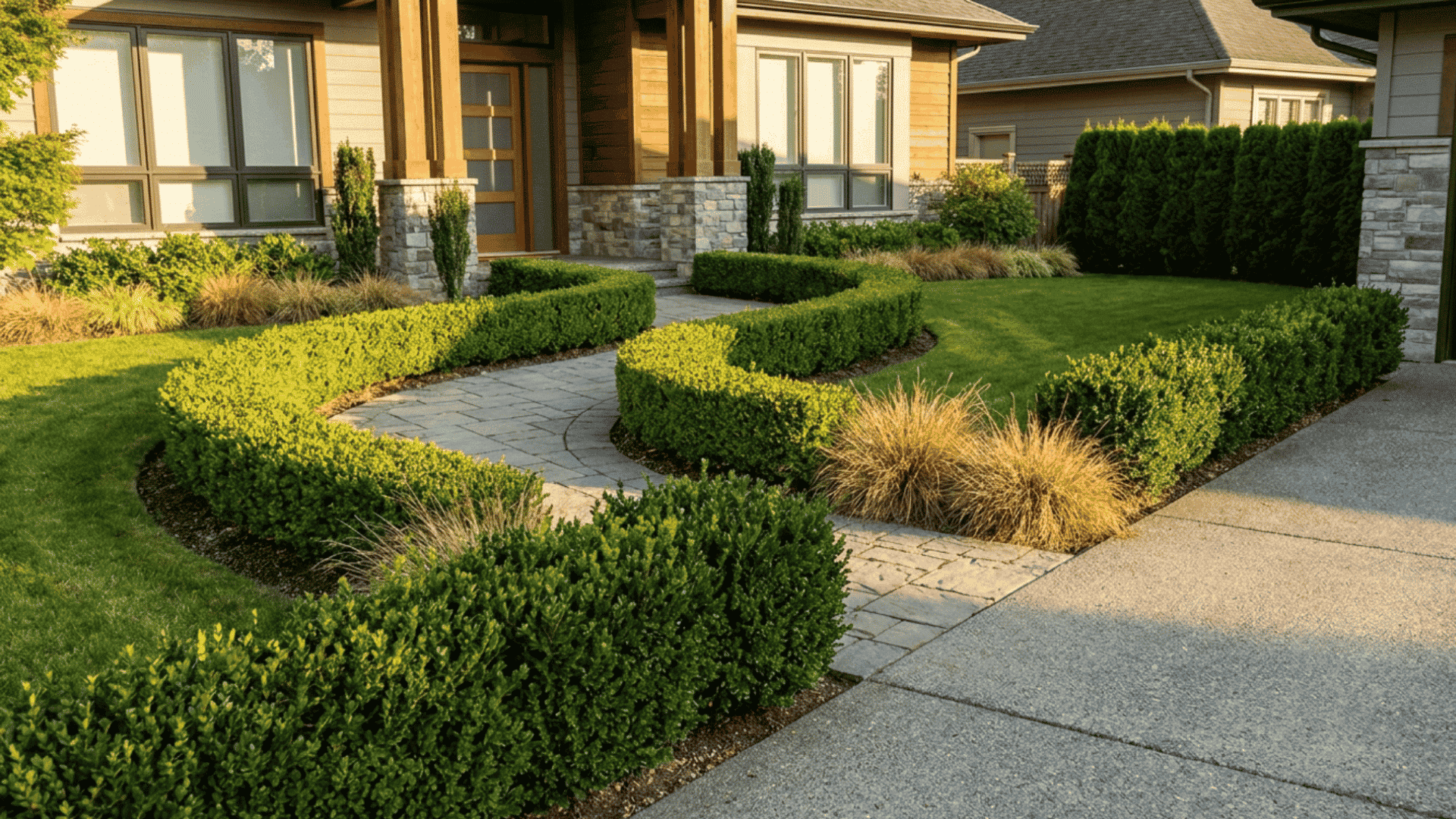
Boxwood is one of the most popular landscaping plants because it stays neat and fits well almost anywhere.
Placing it in front yards since it gives the area a clean and organized look throughout the year. It’s also easy to shape into borders or small hedges without much effort.
Since it grows slowly, you won’t have to trim it constantly, which makes it perfect for low-maintenance landscaping.
2. Lavender
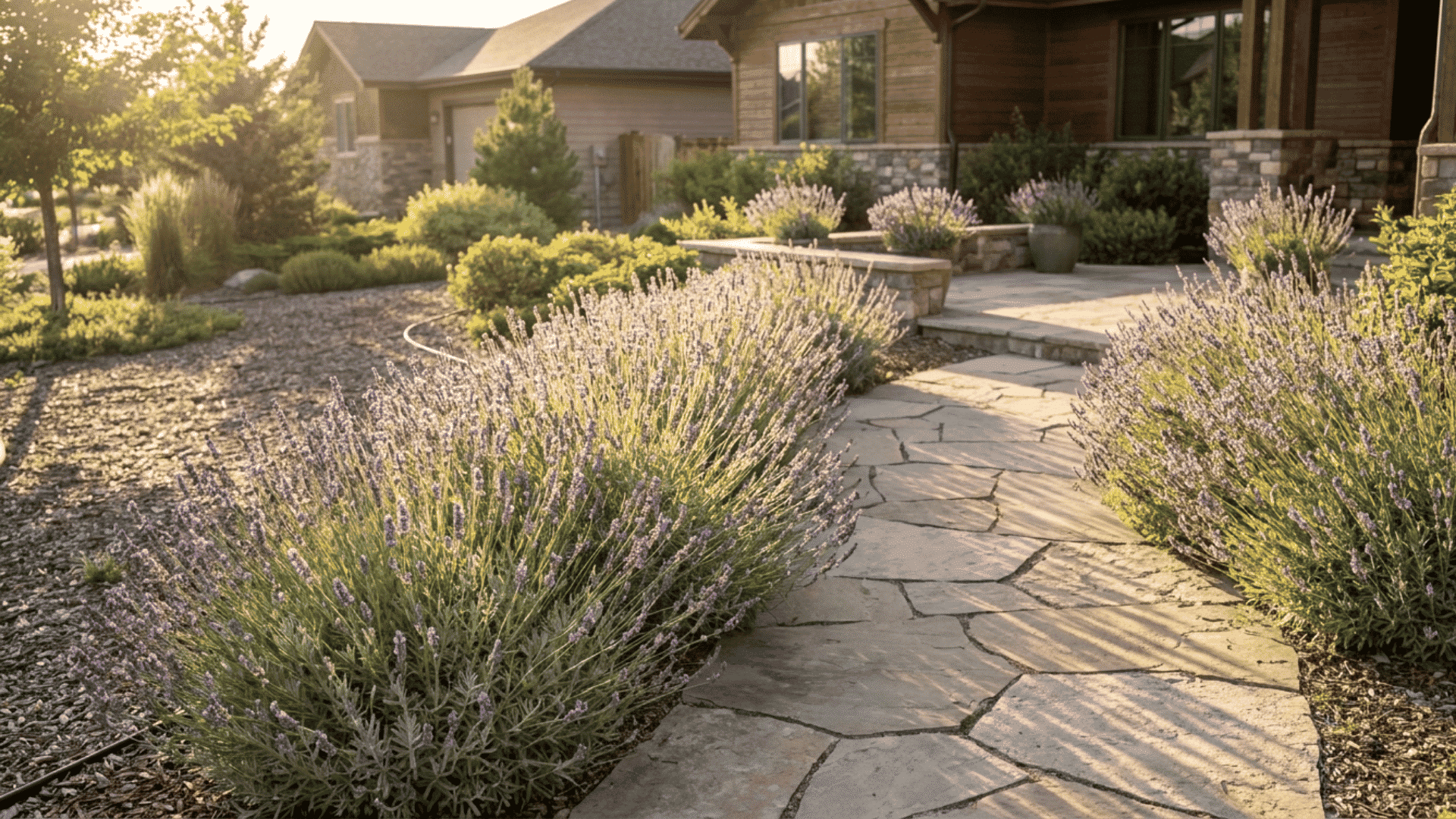
Lavender is one of my favorite plants for adding both color and fragrance to a yard. Its soft purple flowers instantly make outdoor spots feel more relaxing and welcoming.
It also handles dry weather really well, so you don’t need to water it often.
Lavender works especially well as a border plant along walkways, patios, or front yard edges because it stays tidy and smells amazing during blooming season.
3. Hostas
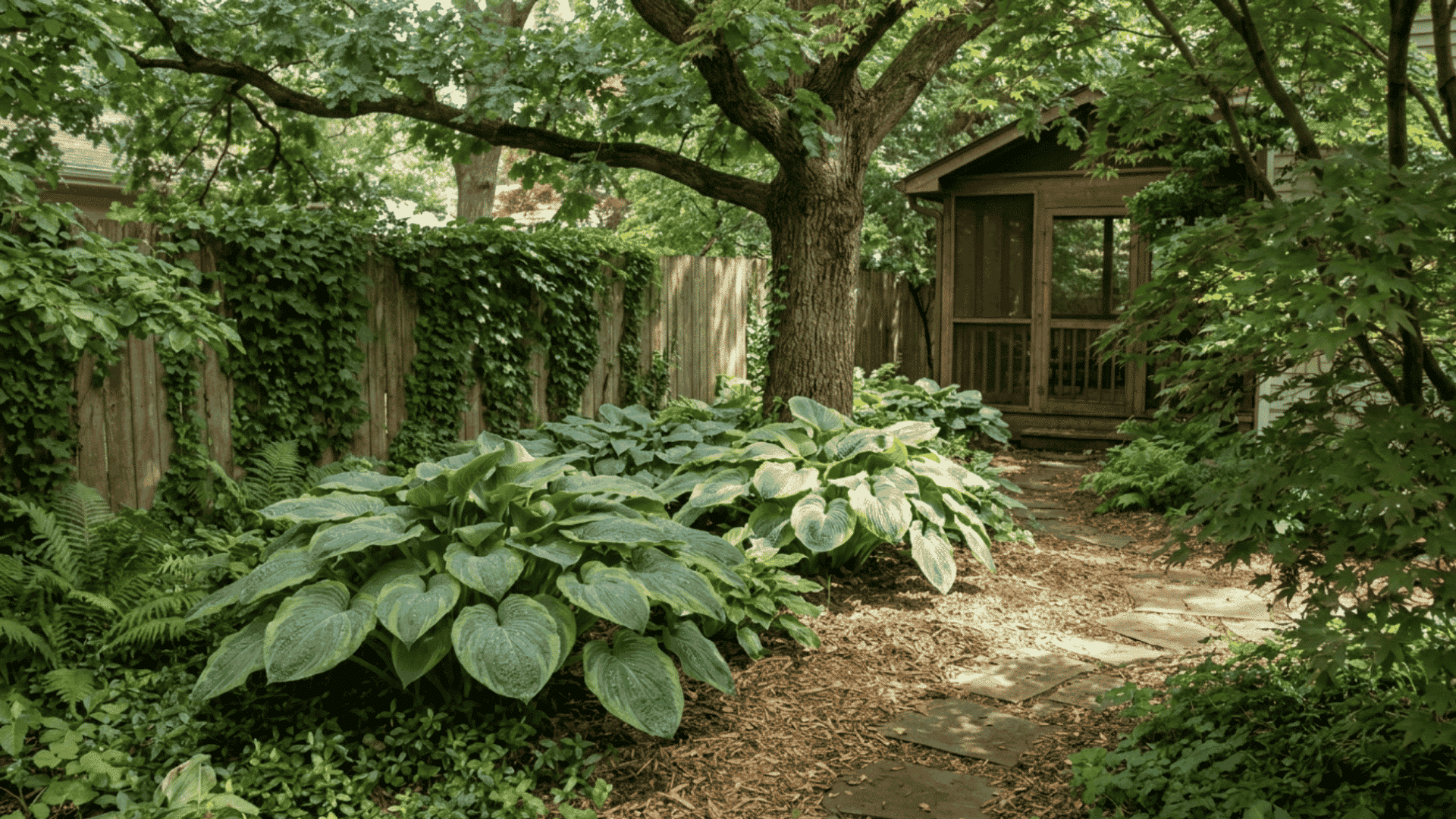
If you have shaded areas that look empty or dull, hostas are a great choice.
Their large textured leaves add fullness without needing much care. They grow well under trees, near porches, or beside fences where sunlight is limited.
Hostas also come back every year and usually need very little attention once they settle in, which makes them ideal for simple and easy landscaping.
4. Ornamental Grasses
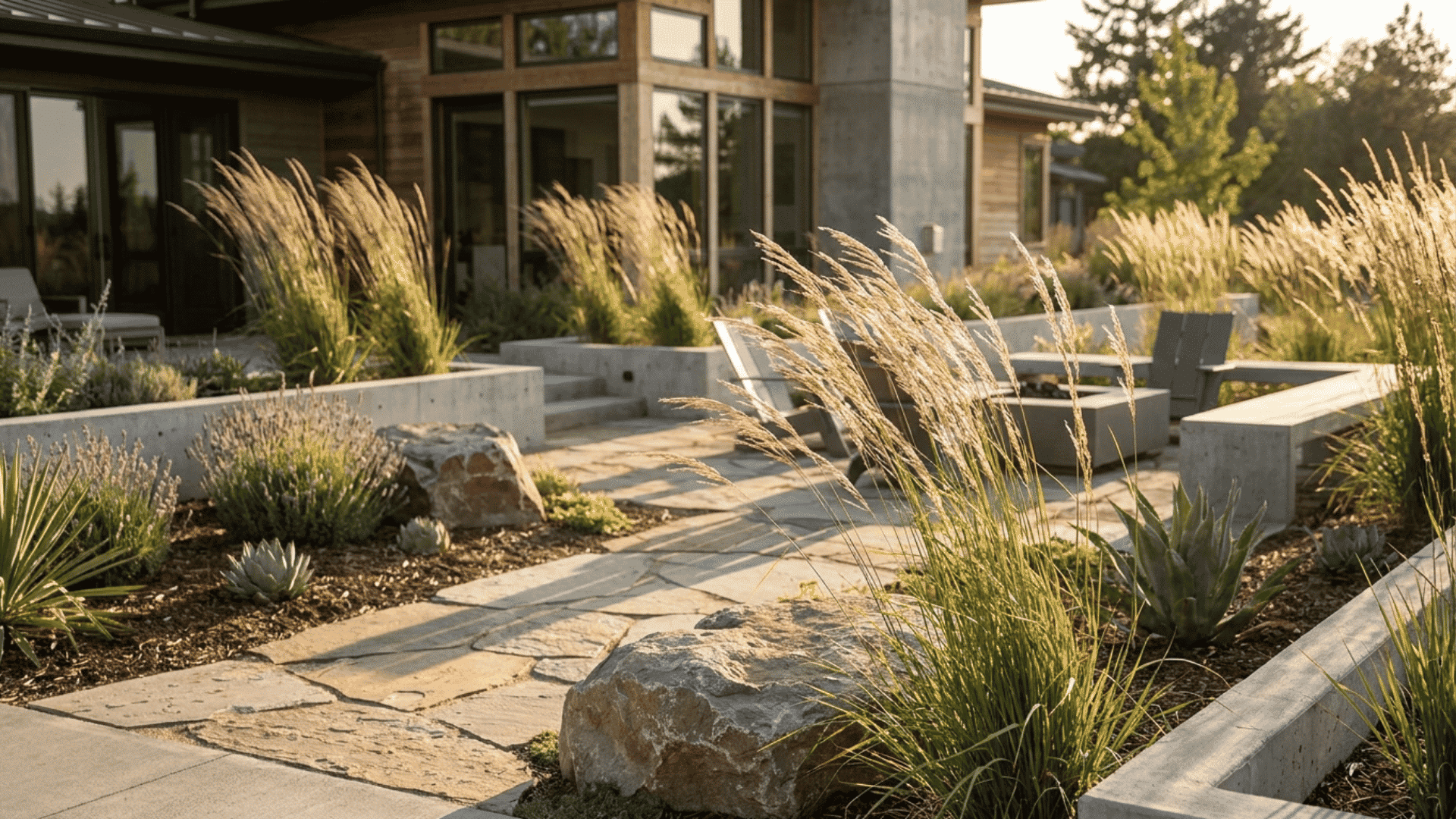
Ornamental grasses are perfect if you want your landscape to feel soft and natural.
They add movement to outdoor zones, especially when the wind blows through them. They work really well in modern landscaping designs and look great beside stones, pathways, or garden beds.
Most varieties can also survive strong heat and windy conditions, making them a smart option for homeowners looking for low-maintenance landscaping plants.
5. Hydrangeas
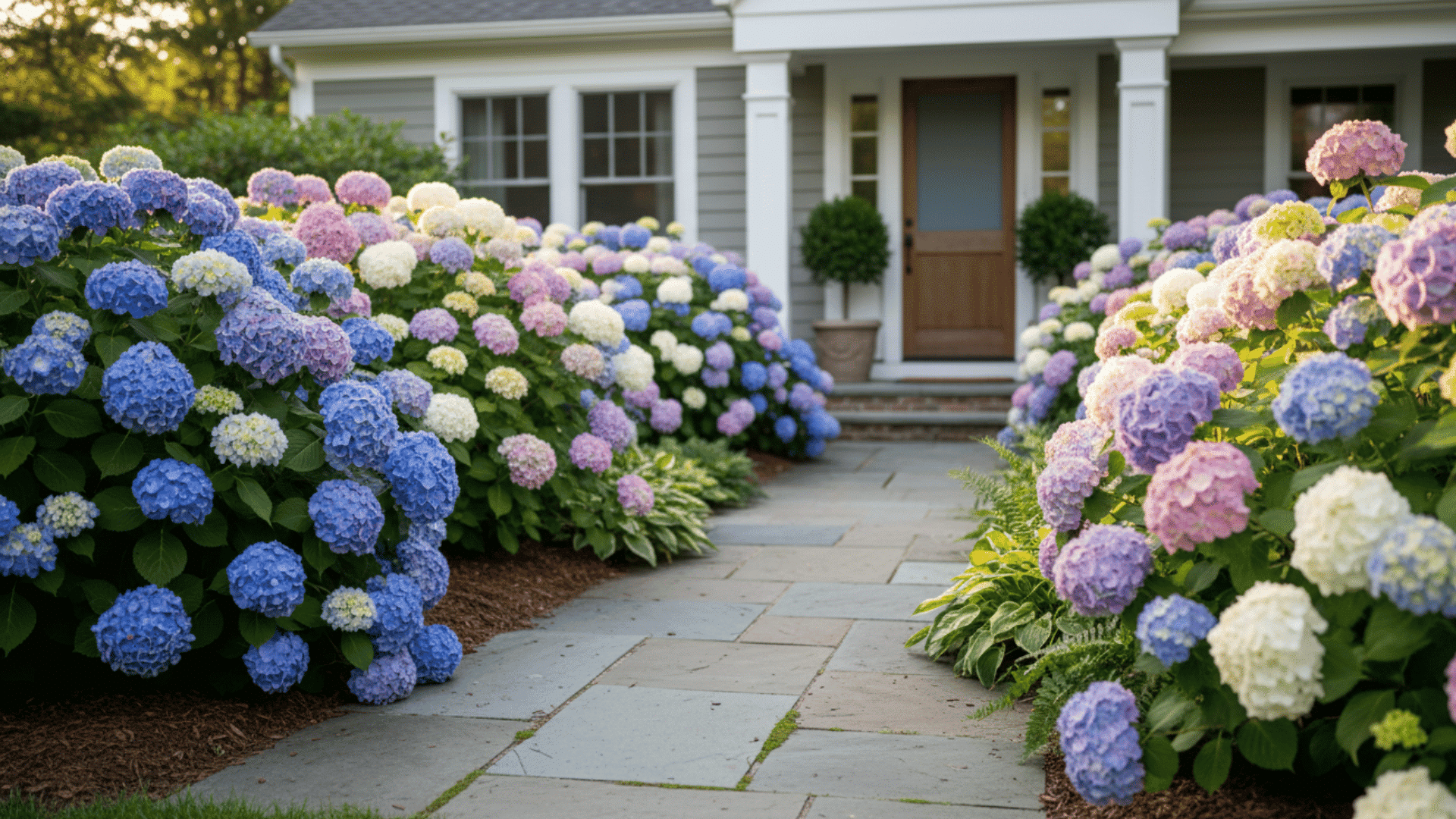
Hydrangeas are hard to miss because of their large and colorful blooms.
Use them near entryways or front porches since they create a strong visual impact without needing too much work. During warmer months, they only need regular watering and occasional trimming.
One thing I have learned is that removing old flowers after the season helps keep the plant healthy and encourages fresh blooms the following year.
6. Juniper
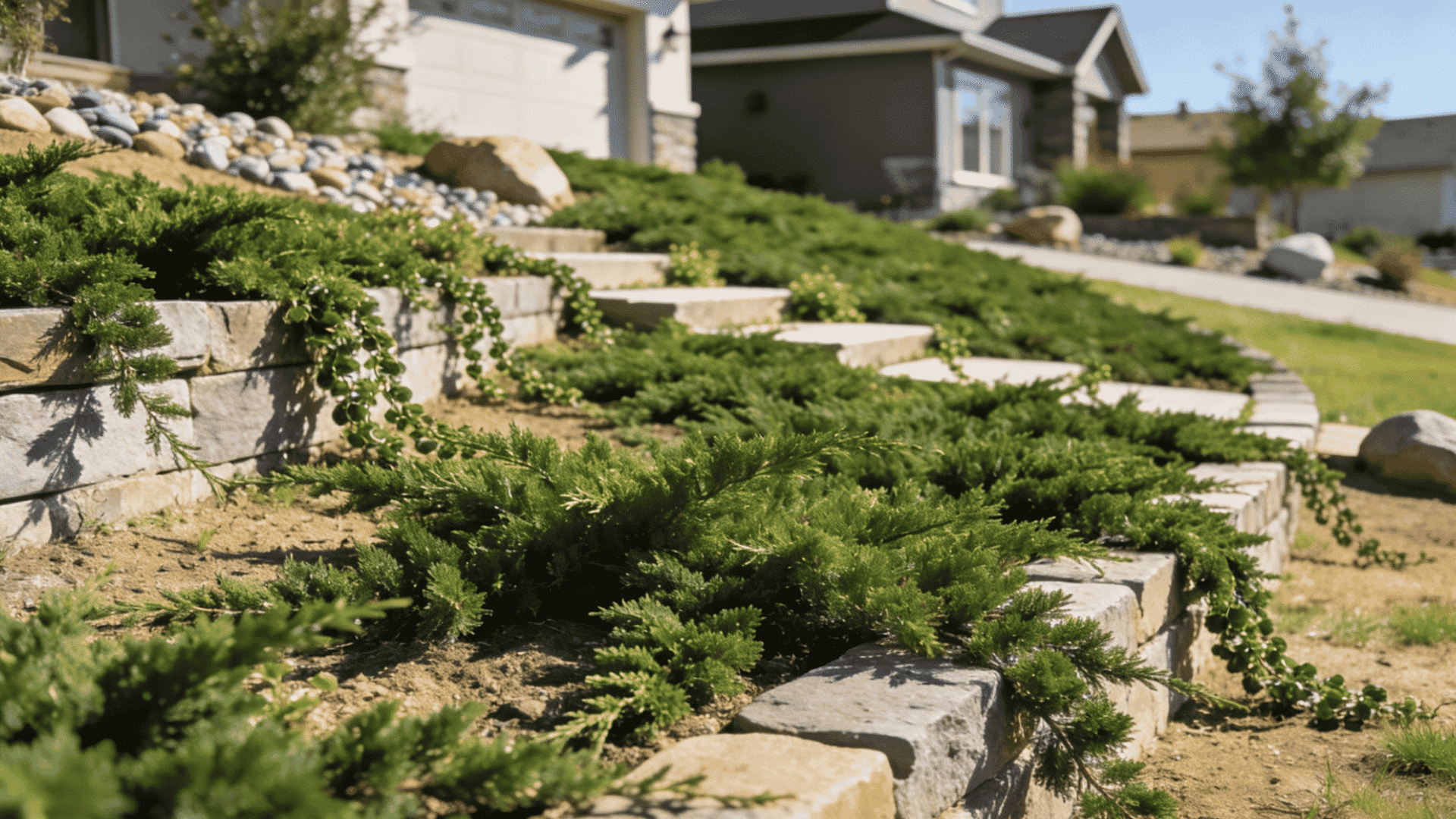
Juniper is one of the easiest evergreen landscaping plants to grow. It stays green throughout the year and spreads nicely as ground cover, which helps fill empty environment naturally.
It is often recommended for slopes, borders, or areas where grass struggles to grow.
Another reason to like juniper is that it handles poor soil and dry weather surprisingly well, so it keeps looking healthy even with very little maintenance.
7. Coneflowers
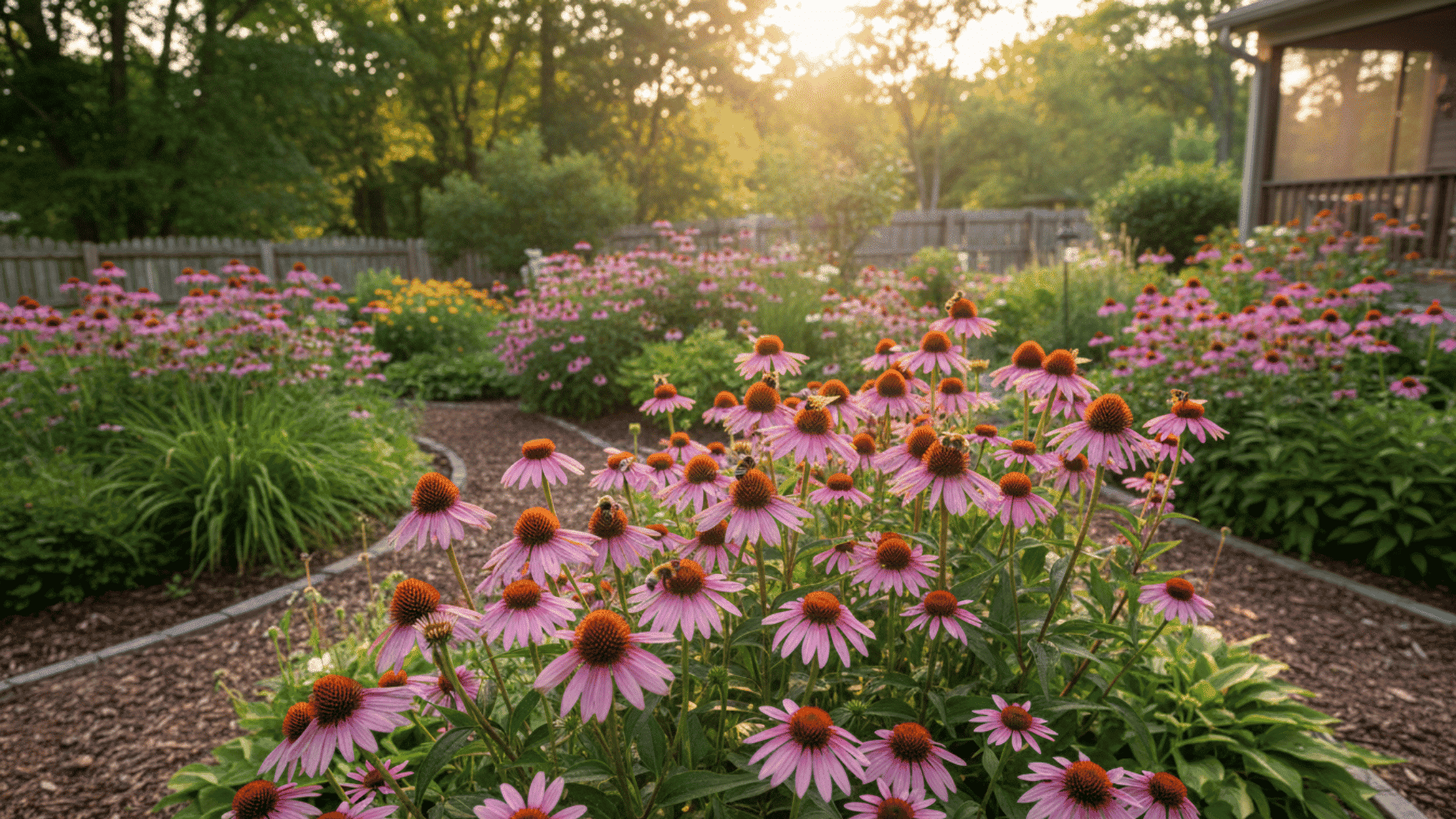
Coneflowers are a simple way to add long-lasting color to a yard. Their bright flowers attract butterflies and bees, which makes the garden feel more lively and natural.
They bloom for a long time without needing constant care or watering.
They also handle dry conditions really well, so they’re a good option for homeowners who want flowering plants without spending too much time maintaining them.
8. Sedum
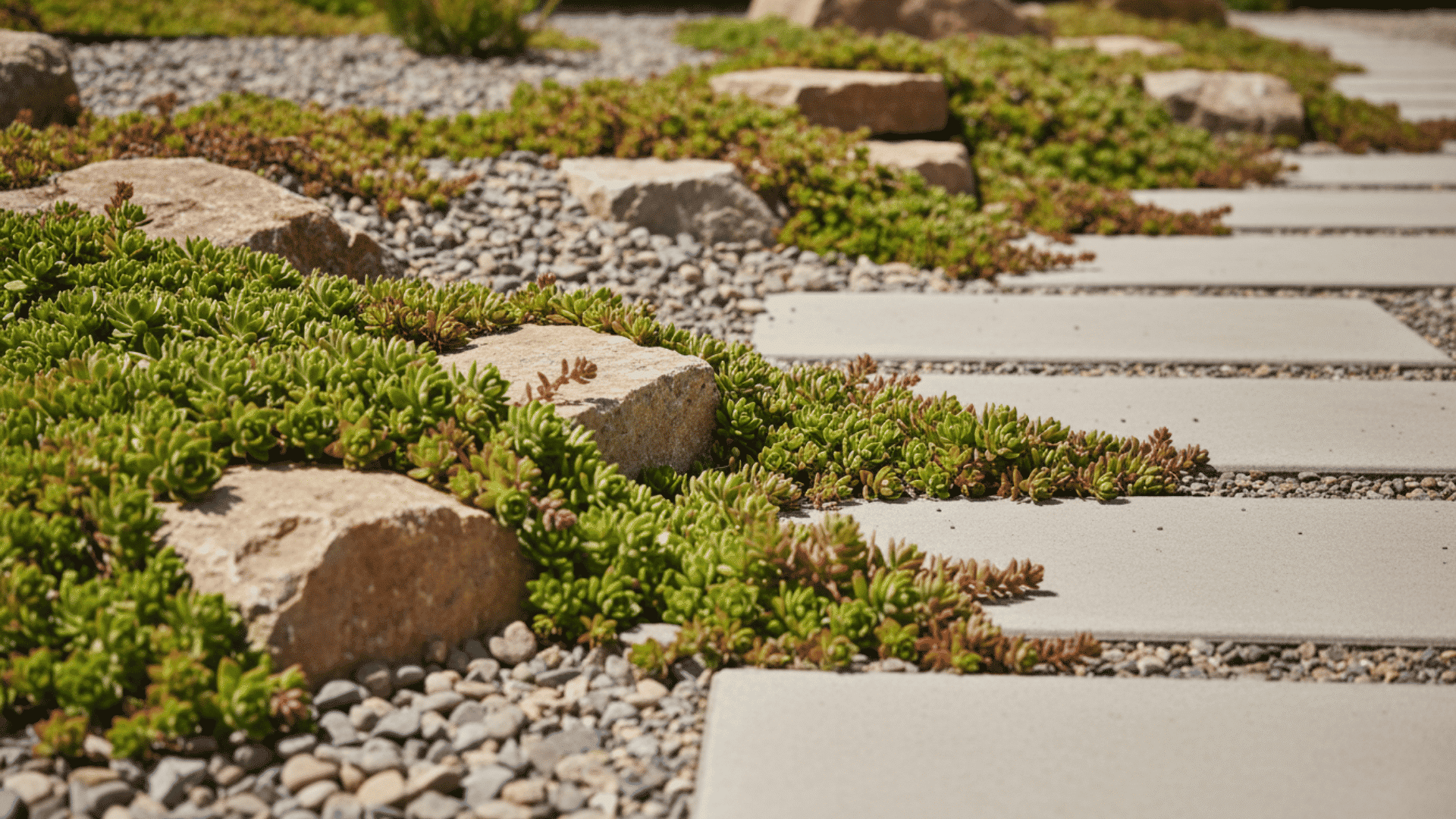
Sedum is honestly one of the easiest low maintenance landscaping plants. Its thick leaves store water, so the plant can survive hot and dry conditions without much watering.
It performs well in sunny areas, rock gardens, or along pathways where other plants may struggle.
Sedum also spreads nicely over time and adds texture to the landscape while still staying easy to manage.
Small Landscaping Plants that Make a Big Impact
A small yard doesn’t have to feel plain or crowded. Over time, I have seen that the right small landscaping plants can actually make outdoor areas look more layered, clean, and stylish.
The key is choosing compact plants that add texture, color, or shape without taking over the entire area.
These plants work especially well for front yards, pathways, patios, and smaller garden corners where space matters most.
9. Dwarf Boxwood
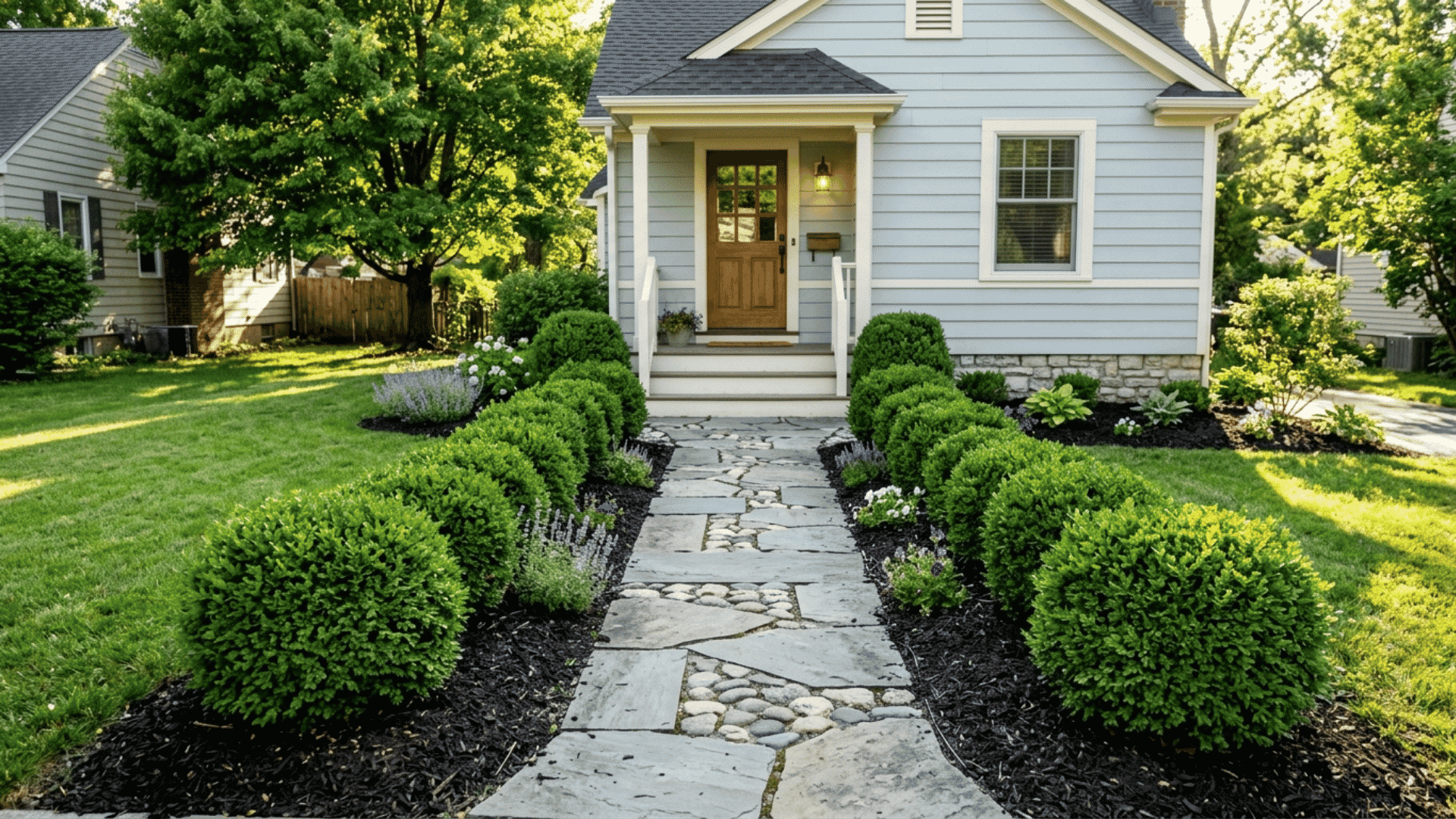
Dwarf boxwood is one of the easiest small landscaping plants to use in compact spaces. Its rounded shape stays neat naturally, which helps smaller yards look more organized.
Placing it along pathways or near entrances creates clean borders without needing constant trimming.
Since it stays compact, it fits nicely in front yards and small garden beds where larger shrubs would feel too heavy or crowded.
10. Heuchera (Coral Bells)
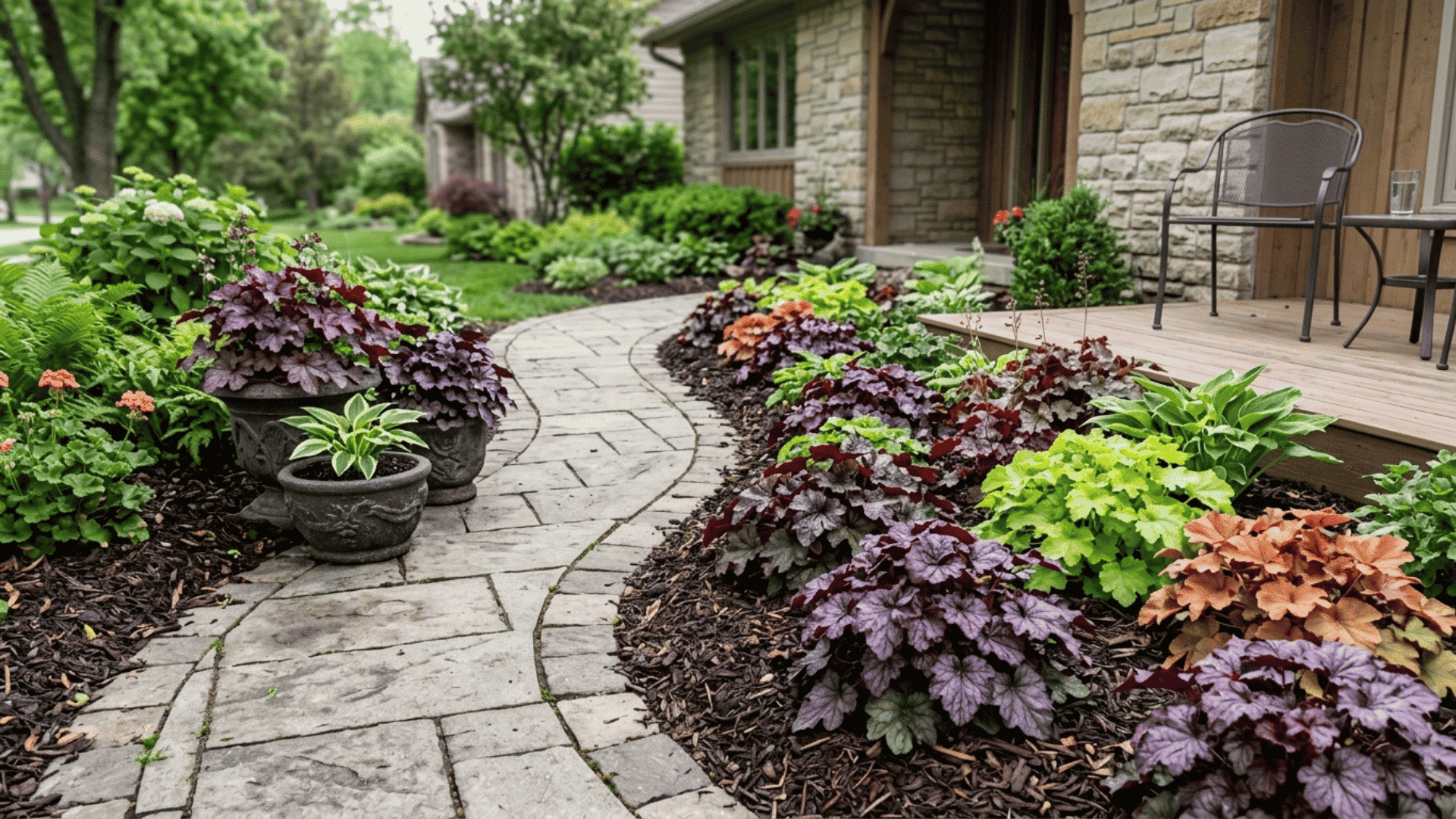
Heuchera, also called coral bells, is perfect for adding color without depending only on flowers.
Its leaves come in shades of green, purple, bronze, and deep red, making garden spaces look more lively year-round. It suits containers, borders, or small garden corners really well.
Since it stays compact and grows easily, it’s a great choice for simple, low-maintenance landscaping.
11. Creeping Thyme
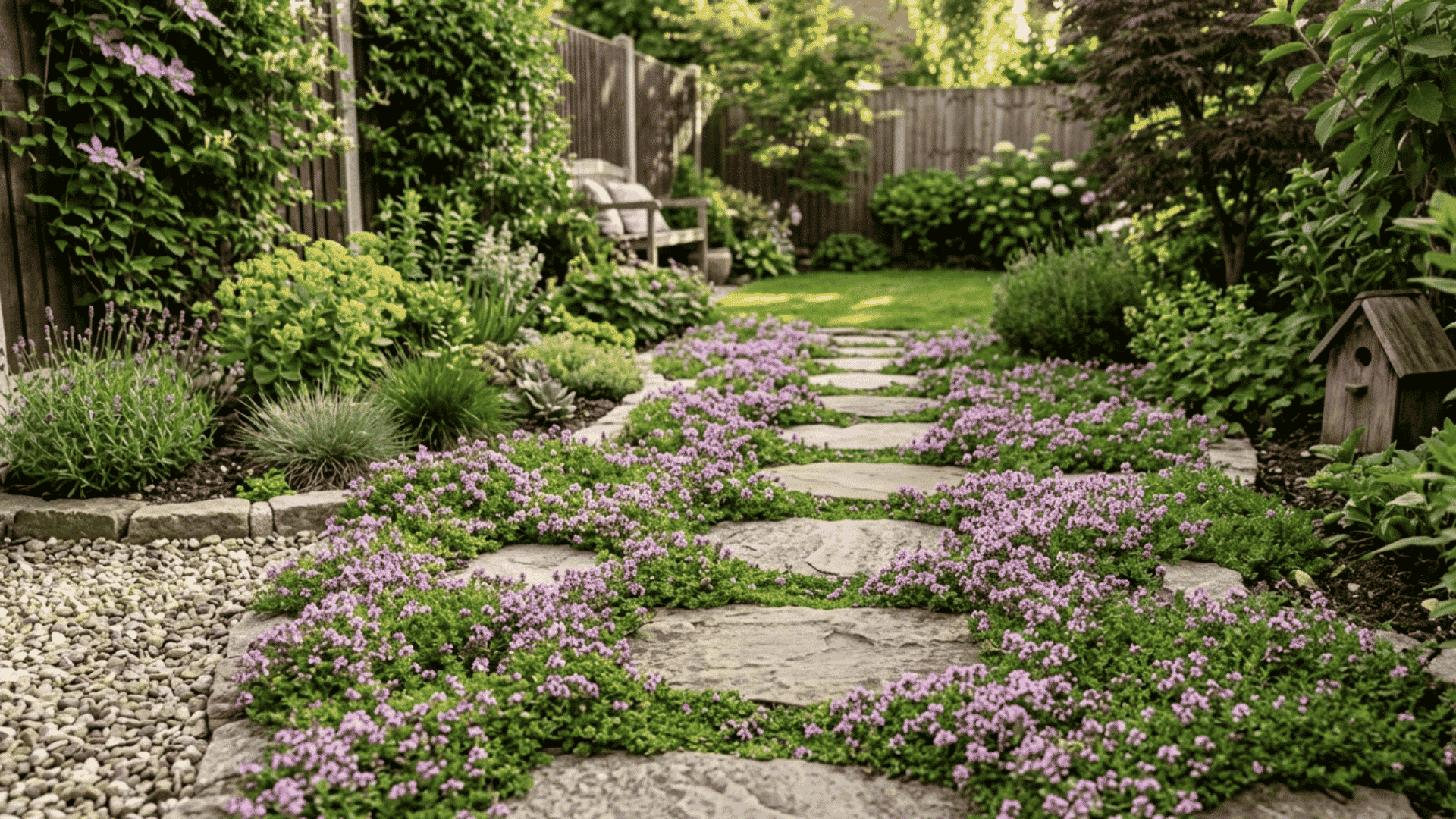
Creeping thyme is one of my favorite ground cover plants for smaller spaces. It spreads gently across the ground and fills empty areas beautifully without looking messy.
Using it between stepping stones because it softens hard surfaces and adds natural texture. During blooming season, the tiny flowers also bring a nice pop of color.
Plus, it handles dry weather well, which makes maintenance much easier.
12. Japanese Forest Grass
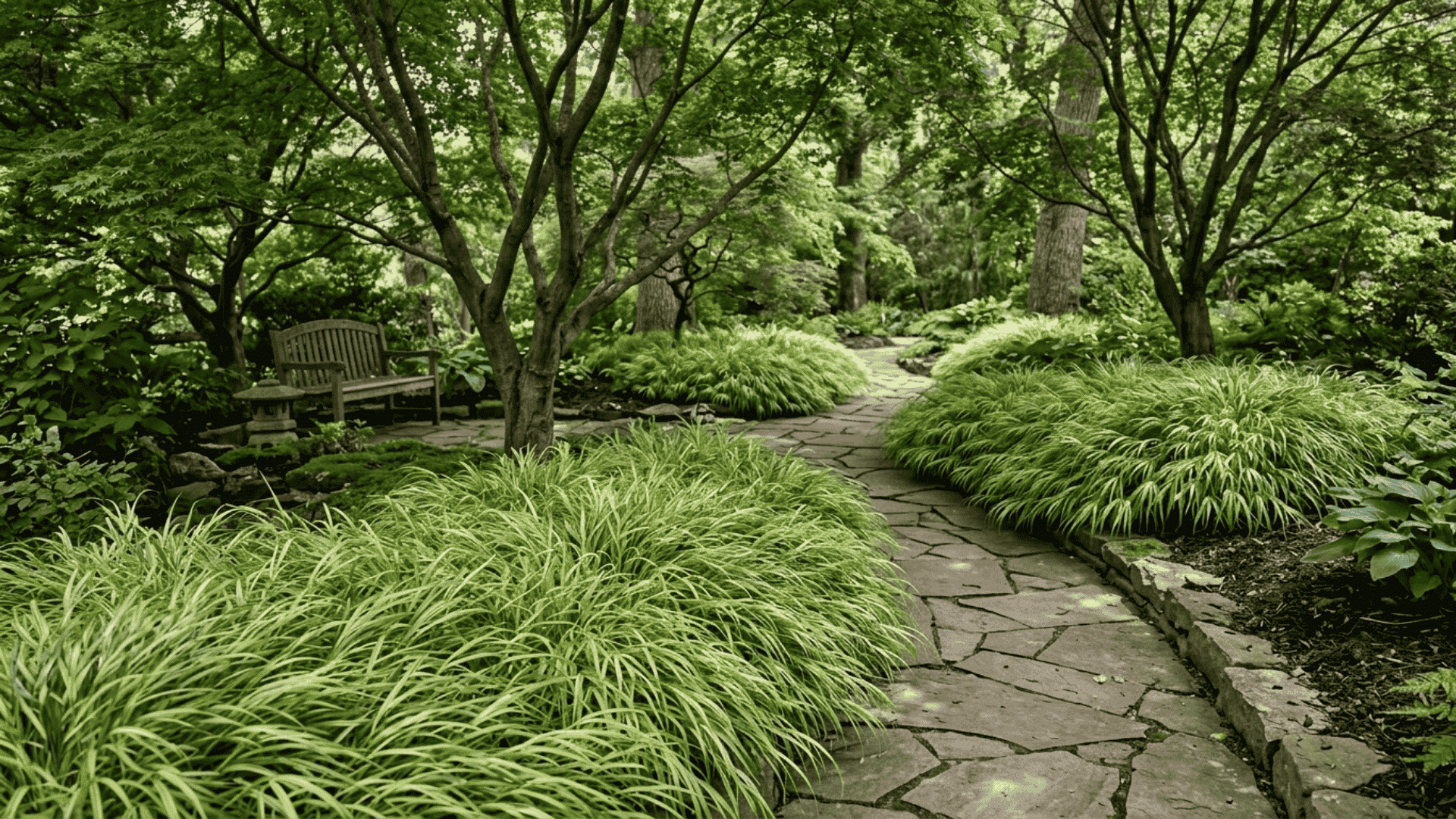
Japanese forest grass adds a soft and flowing look that makes small landscapes feel calm and balanced. It is recommended for shaded corners where other plants may struggle to grow properly.
Its gentle movement adds texture without making the area look busy.
Since the grass stays compact and grows in small mounds, it works well beside pathways, under trees, or around shaded seating areas.
13. Mini Roses
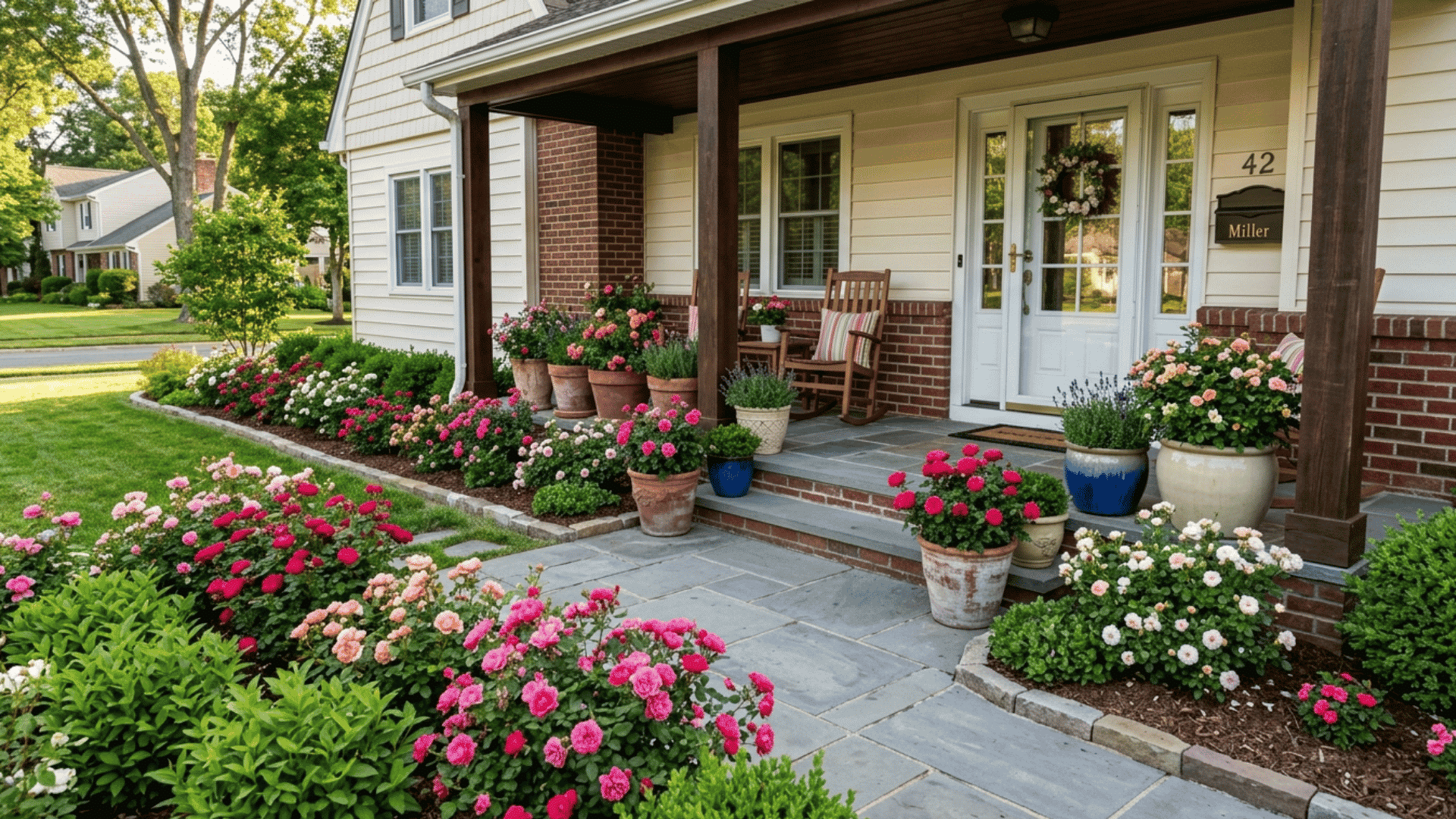
Mini roses are a great option if you want flowers without needing a large garden bed. They stay compact while still producing bright and beautiful blooms that instantly improve curb appeal.
They look especially nice near front porches, patios, or entryways where you want a welcoming touch of color.
With regular sunlight and simple care, mini roses can keep blooming and make a smaller outside area feel more cheerful.
Low-Maintenance Landscaping Plants for Busy Homeowners
If you don’t have hours to spend gardening every week, low-maintenance landscaping plants can make life much easier.
I always look for plants that can handle heat, changing weather, and occasional neglect without losing their shape or color.
These plants are great for busy homeowners who still want their outdoor areas to look fresh, green, and welcoming without constant watering, trimming, or replanting every season.
14. Russian Sage
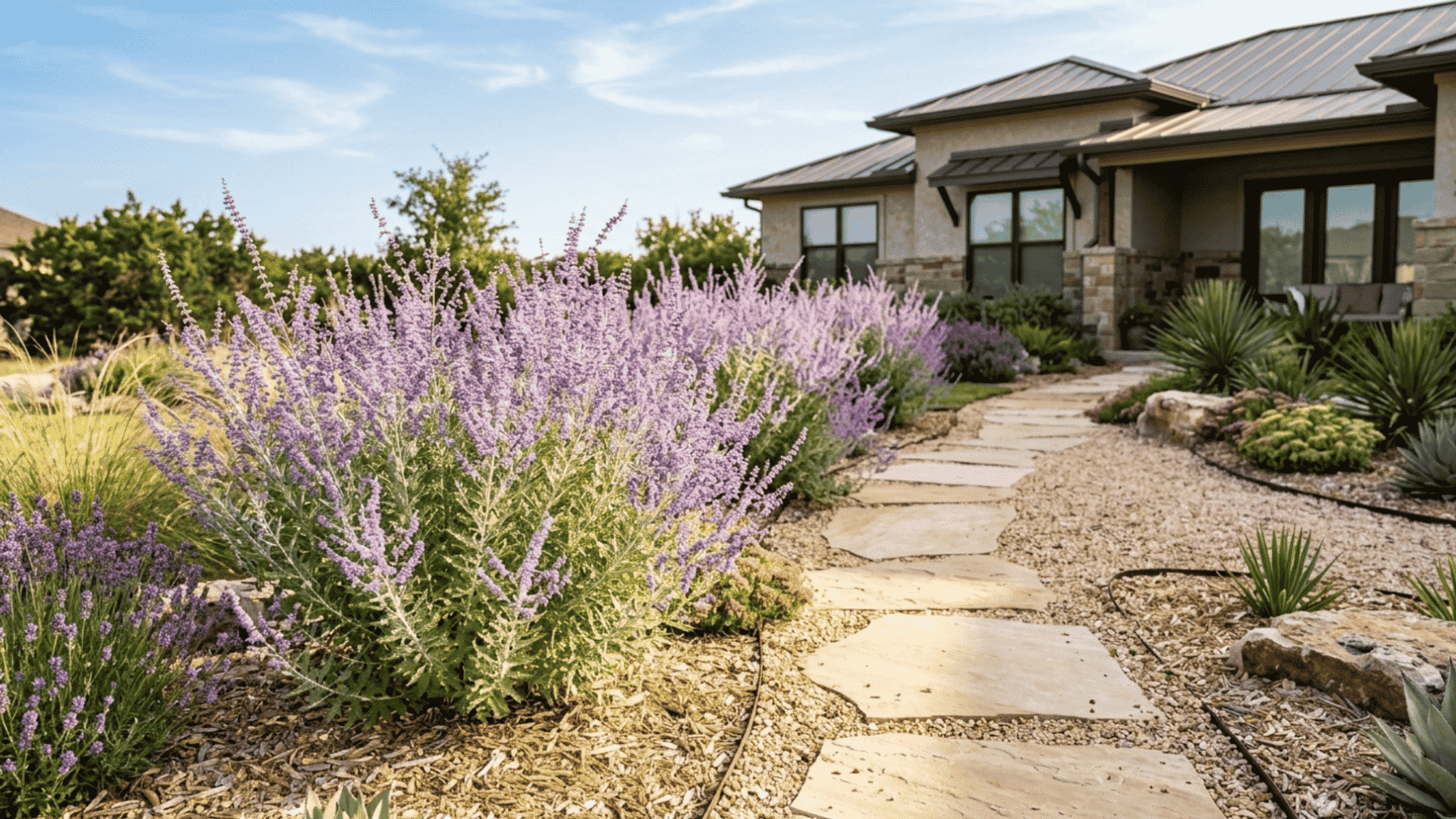
Russian sage is one of the best plants for hot and sunny areas because it handles heat really well.
Its soft purple flowers and silvery leaves add color without needing much care. It doesn’t need frequent watering once it settles into the soil.
It also grows naturally in a loose shape, so you won’t spend too much time trimming or maintaining it throughout the year.
15. Daylilies
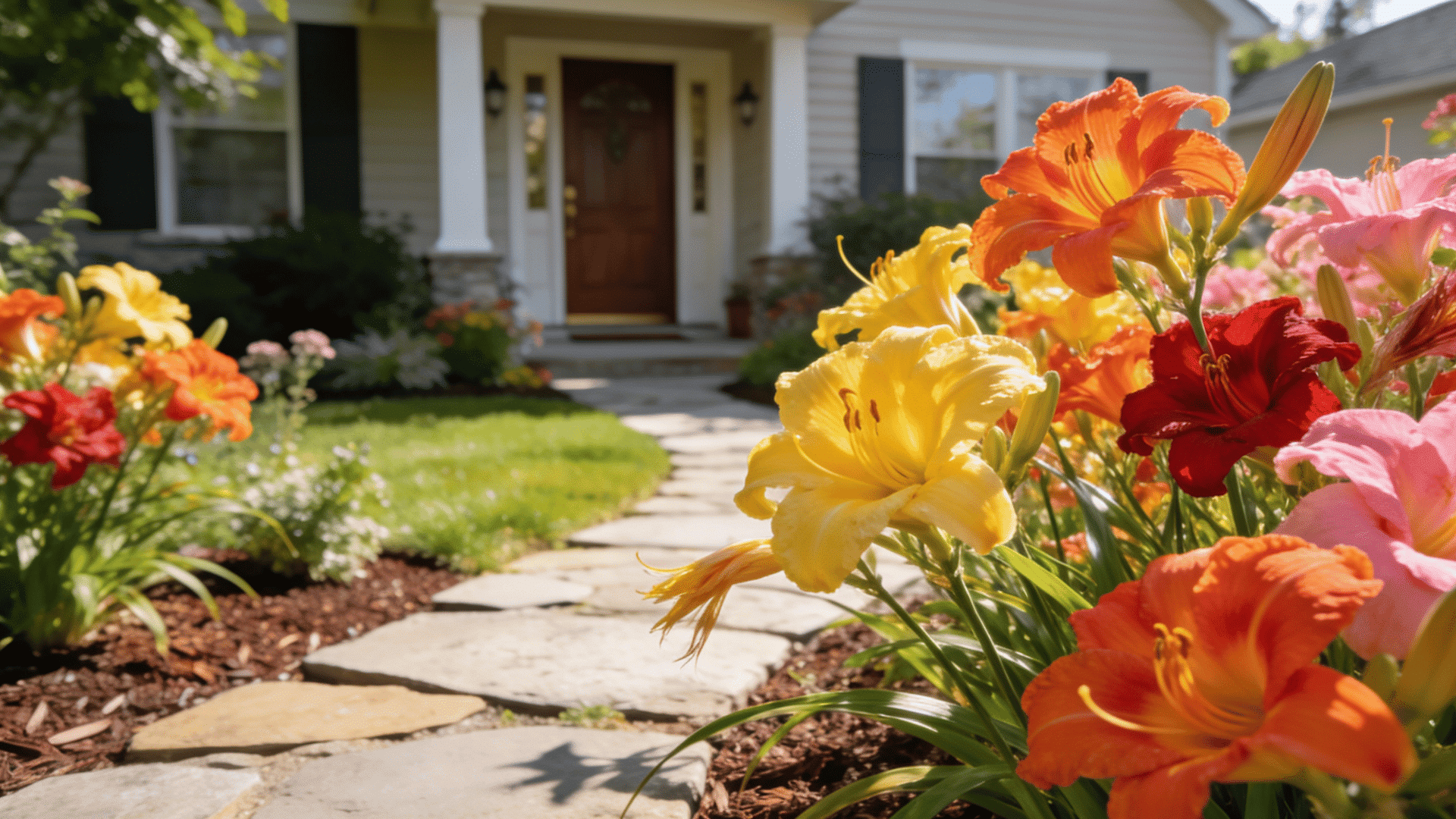
Daylilies are perfect for homeowners who want flowers that return every year with very little effort. They bloom reliably even when they don’t get constant attention.
Their bright flowers can make garden beds, pathways, and front yards feel more cheerful during the growing season.
Since they come back yearly and adjust well to different conditions, they are one of the easiest low-maintenance landscaping plants to grow.
16. Agave
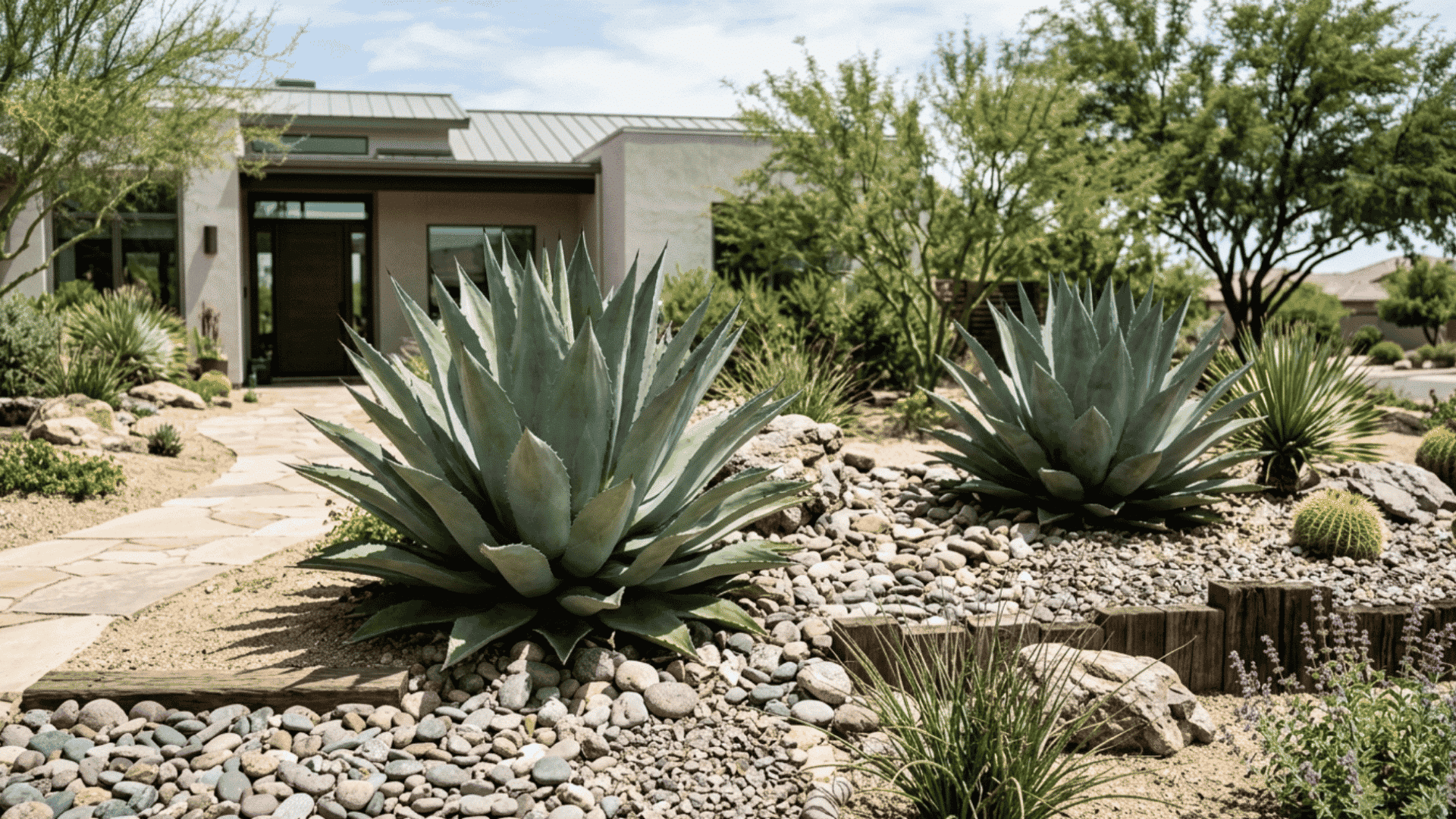
Agave is a great option for dry climates where watering can become difficult. Its thick leaves store water naturally, which helps the plant survive long periods without rain.
It has a bold and structured appearance because it adds a modern touch to the exterior area.
Agave works especially well in rock gardens, desert-style landscapes, or sunny front yards where you want strong visual impact with minimal maintenance.
17. Yucca
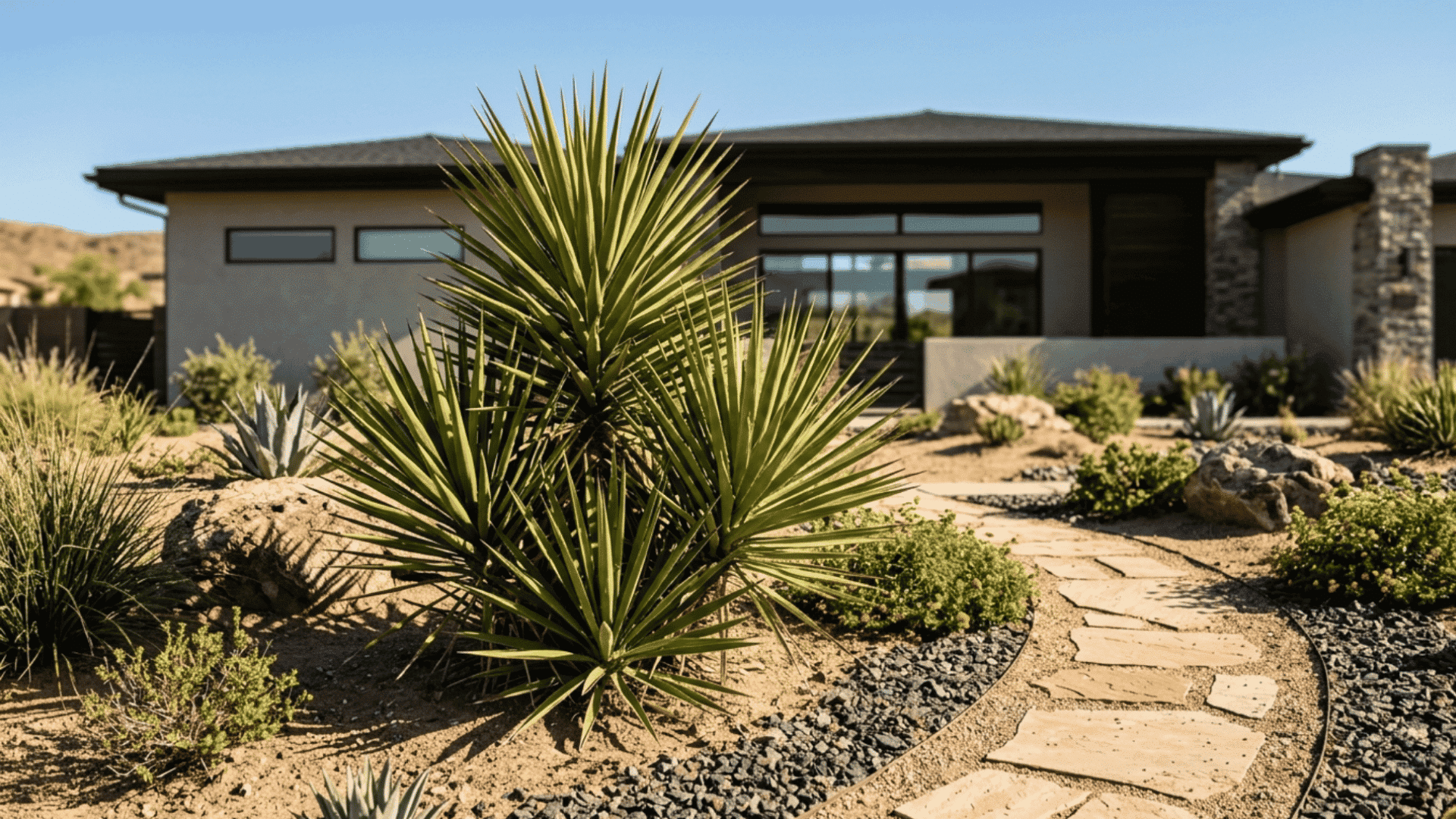
Yucca is one of the toughest landscaping plants for outdoor zones.
It handles heat, dry soil, and rough weather surprisingly well without needing much attention. Its long pointed leaves also add a sharp texture that makes gardens look more interesting and modern.
Yucca is preferred for homeowners who want something strong and eye-catching that can survive with very little watering or regular upkeep.
18. Catmint
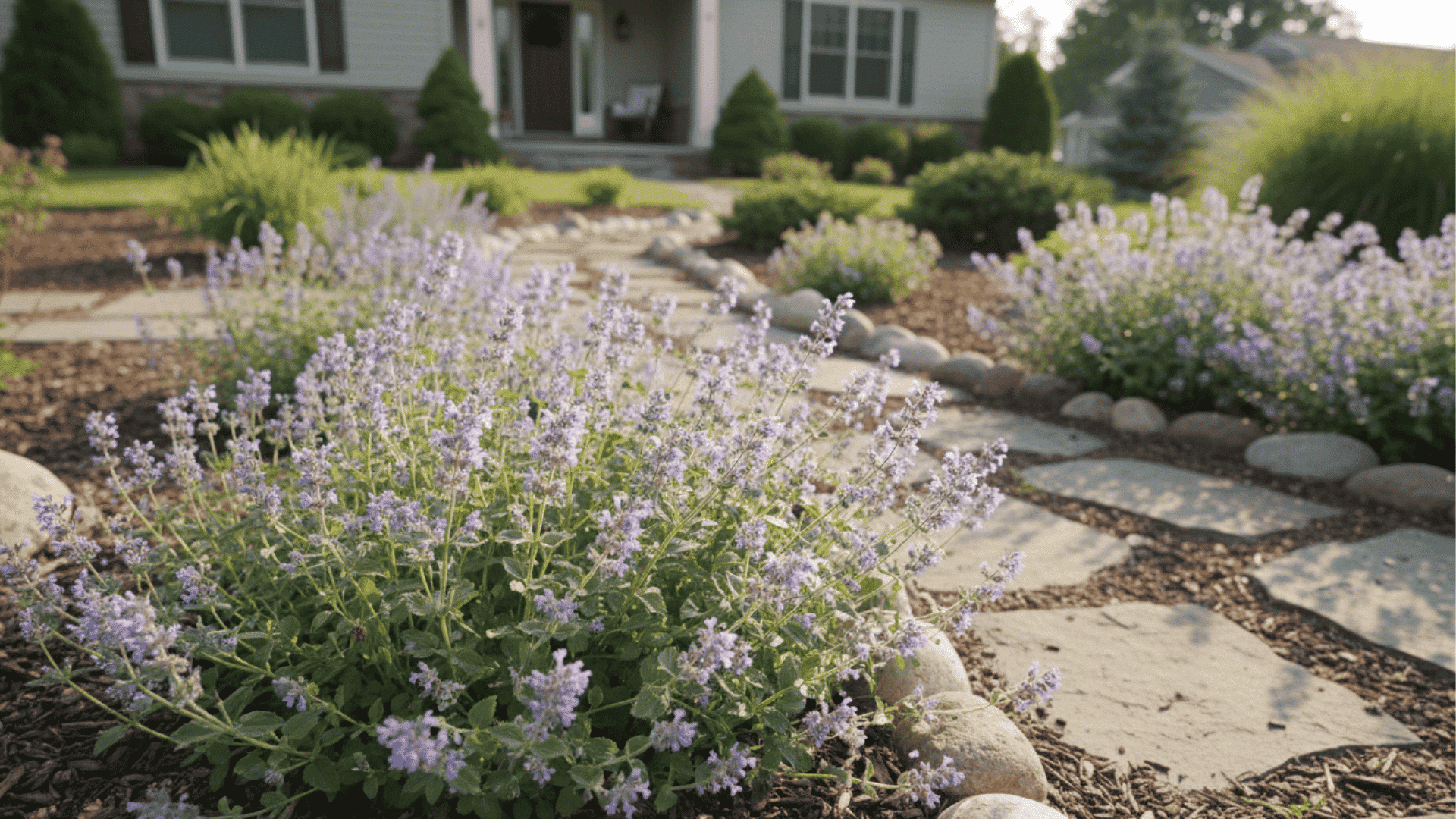
Catmint is a simple plant that adds soft color to landscapes for a long time. It keeps flowering through most of the season without needing too much care.
It also handles neglect really well, which makes it perfect for busy homeowners or beginner gardeners. Catmint performs beautifully along borders, pathways, or front-yard beds where you want easy color and texture.
19. Rosemary
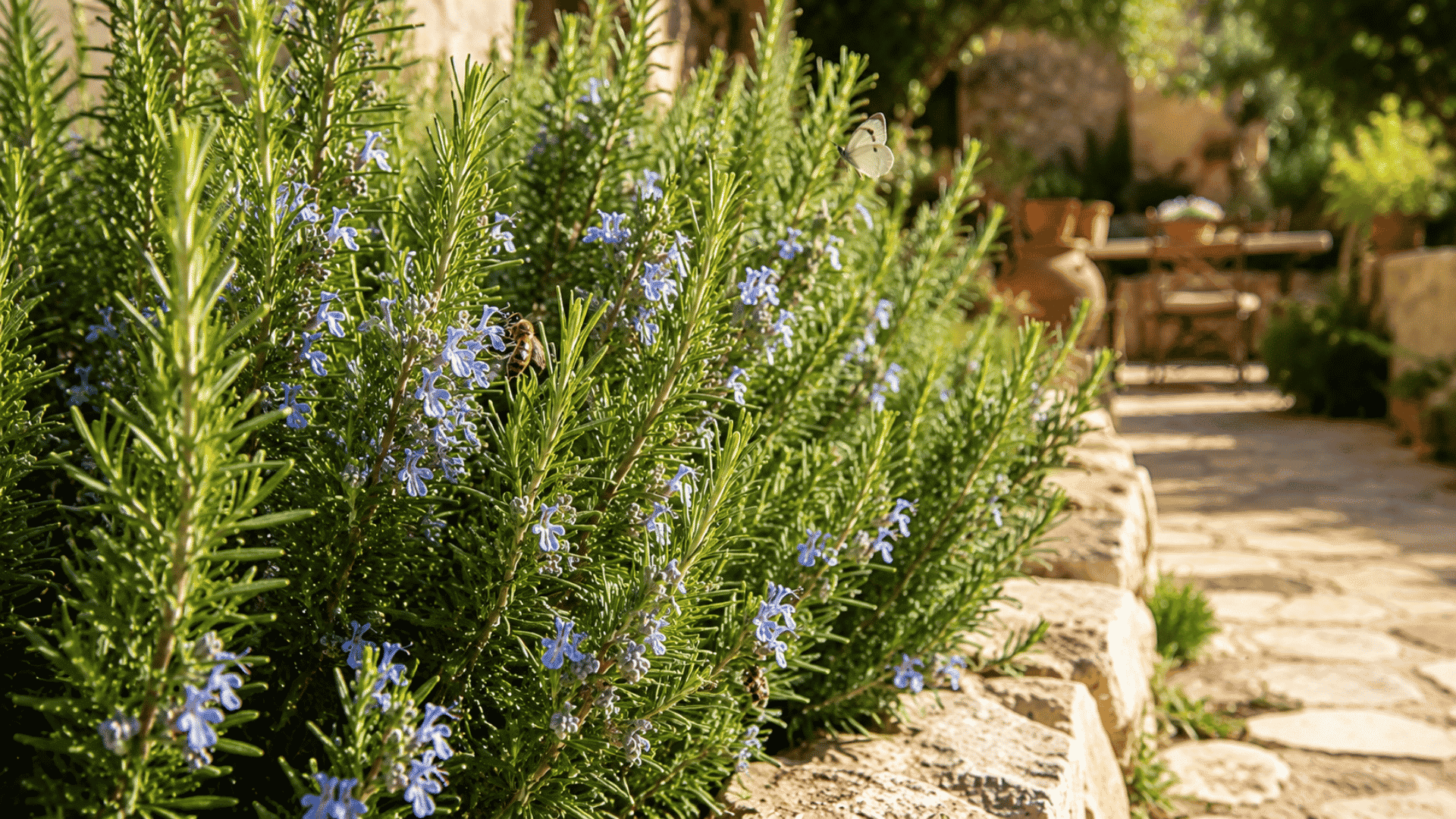
Rosemary is a popular low-maintenance landscaping plant because it looks beautiful while adding a fresh scent to the yard.
I usually plant it along pathways or near seating areas where the fragrance stands out more during warm weather. It also handles heat and dry soil really well, so it doesn’t need constant care.
The fun fact is rosemary naturally attracts pollinators, which helps make outdoor areas feel more lively and active.
20. Ferns
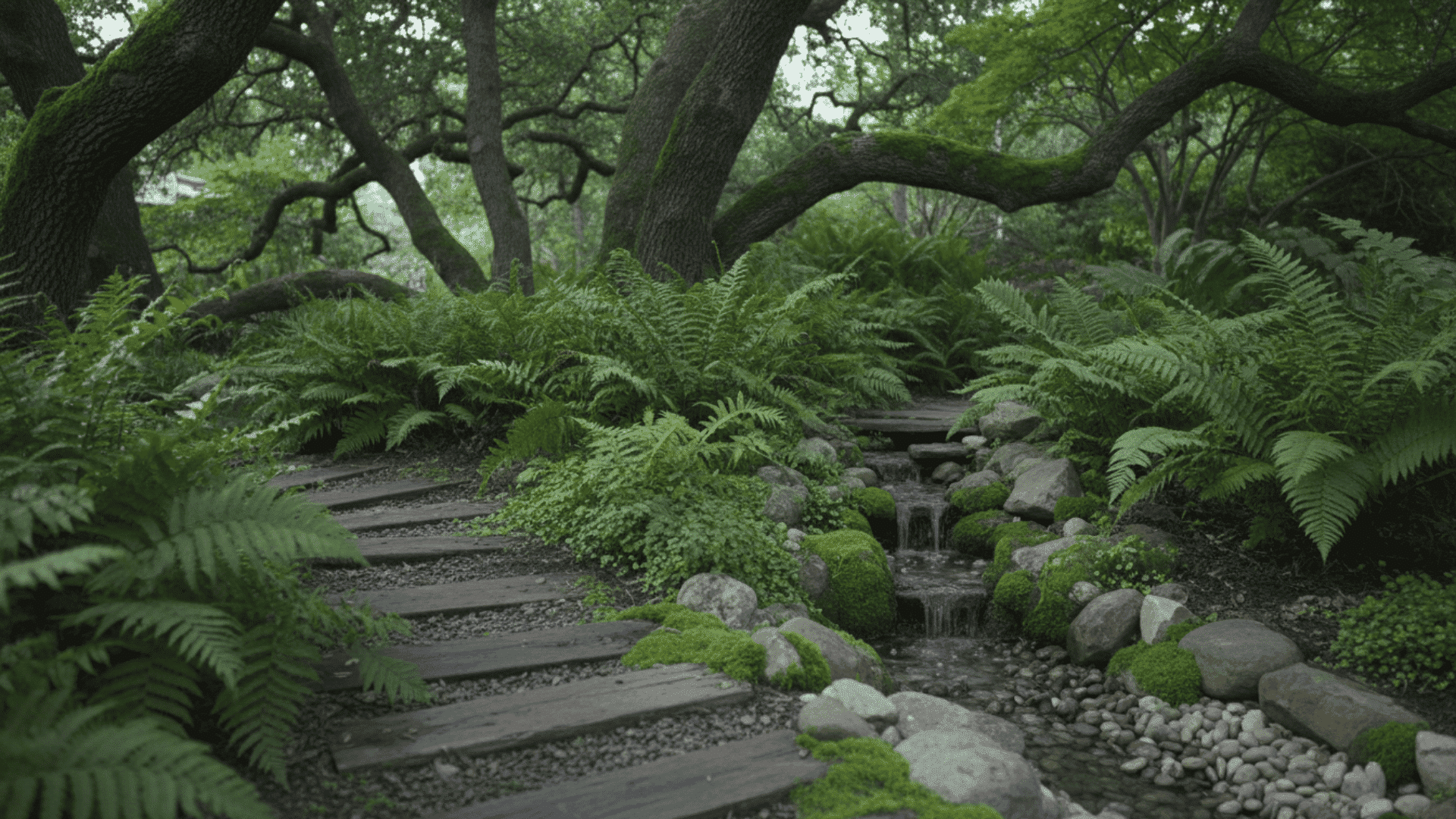
Empty shaded corners can feel dull, but adding ferns is a simple way to make the space look fresh and lively.
Their soft green leaves instantly make the yard feel fuller, cooler, and more natural without needing flowers for color. They also pair beautifully with stones, wooden pathways, and water features.
Once settled, ferns require very little maintenance, which makes them perfect for homeowners who want easy landscaping plants for low-light outdoor areas.
21. Marigolds
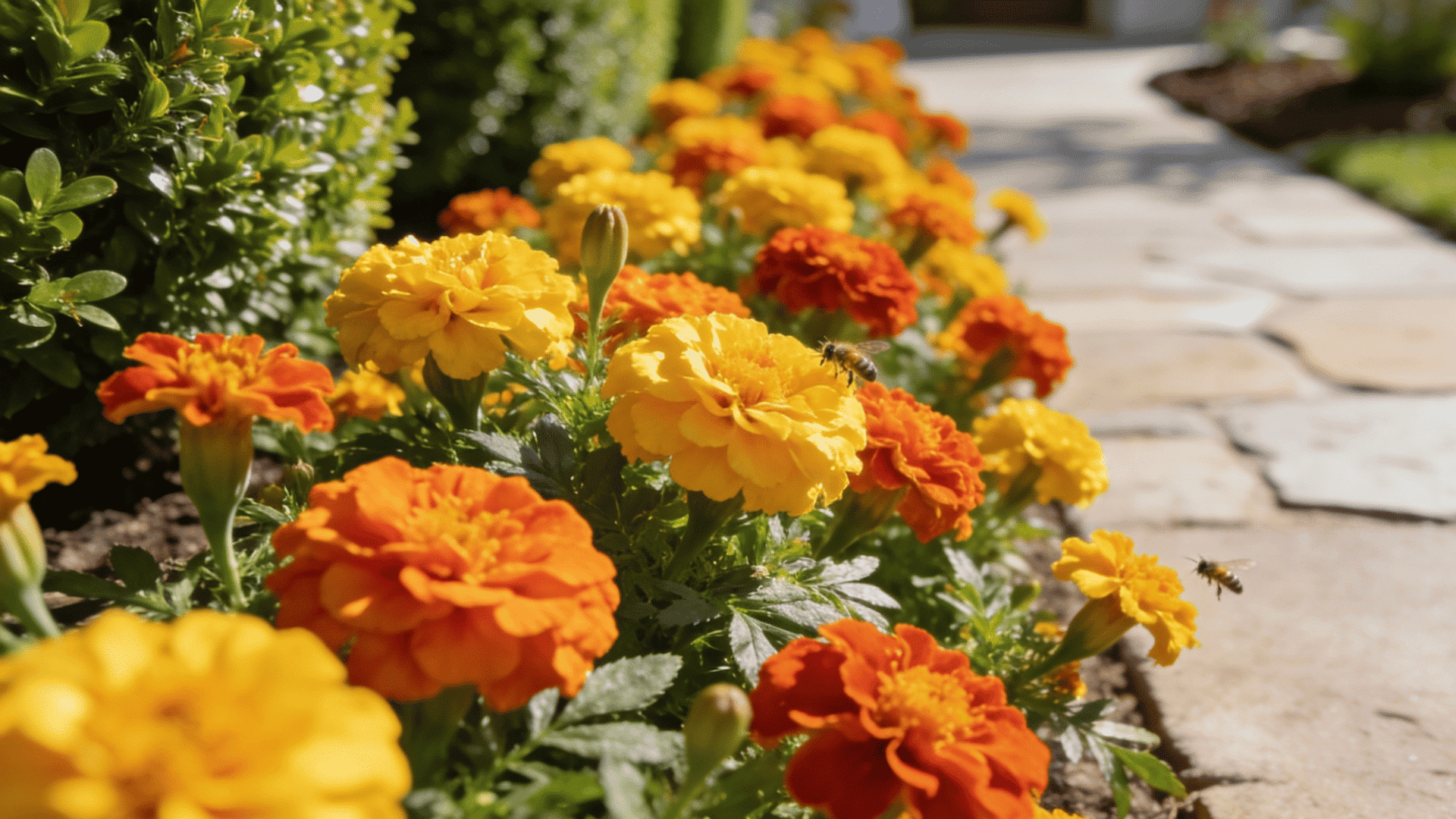
Marigolds are one of the easiest flowering plants to grow, especially for front yards and walkways that need more color.
Their bright yellow and orange flowers instantly make the landscape feel cheerful and welcoming.
It is suggested to mix them with green shrubs because the contrast always stands out nicely. They also handle strong sunlight surprisingly well.
Another reason to love marigolds is that many gardeners use them to naturally help keep certain pests away from nearby plants.
Common Landscaping Mistakes that Can Ruin Your Yard
These are some common landscaping mistakes people make and simple ways to avoid them.
| Common Mistake | Why It Can Be a Problem | Simple Solution |
| Planting without checking sunlight | Plants may turn yellow, stop blooming, or die | Match each plant with the sunlight conditions |
| Overcrowding plants | Poor airflow can trap moisture and lead to weak growth | Leave enough space between plants for healthy growth and airflow |
| Choosing high-maintenance plants too early | Constant care can become difficult for beginners | Start with low-maintenance landscaping plants first |
| Watering too much or too little | Incorrect watering can damage roots and weaken plant health | Follow the watering needs of each plant and check soil moisture regularly |
| Ignoring seasonal maintenance | Untrimmed plants and fallen leaves can make the yard look messy and unhealthy | Prune, clean, and maintain the landscape regularly throughout the year |
| Using too many plant varieties | Too many different plants can make the landscape look cluttered and unbalanced | Choose a simple mix of plants that work well together |
Note: The best landscaping choices depend on your climate, available space, maintenance preferences, and the type of outdoor look you want to create.
Bringing It All Together
Creating a beautiful yard doesn’t have to feel difficult or time-consuming.
I have realized that choosing the right landscaping plant can make a huge difference in how easy your yard is to maintain throughout the year.
You don’t need a massive garden or expensive design to make your surroundings feel fresh and welcoming.
Even starting with one garden bed, a small border area, or your front walkway can completely improve the look of your home.
The key is choosing plants that fit your garden and lifestyle.
I have learned that the best landscapes aren’t always the biggest ones; they are the ones that stay beautiful without becoming stressful to maintain.
Ready to refresh your landscape? Start with a few low-maintenance landscaping plants and slowly build a yard you’ll actually enjoy caring for.
Frequently Asked Questions
What is the Best Landscaping Plant for Beginners?
Lavender, sedum, and boxwood are easy to grow and need very little maintenance.
Which Low-Maintenance Landscaping Plants Need the Least Water?
Agave, juniper, and rosemary handle dry weather well and need less watering.
What are the Best Small Landscaping Plants for Front Yards?
Dwarf boxwood, creeping thyme, and coral bells fit nicely in small front yards.

Veronica Lee holds a Master’s degree in Landscape Architecture from Cornell University and has dedicated more than 15 years to transforming outdoor areas into artistic and sustainable spaces. Her career took off in a renowned landscape design firm, where she excelled in creating visually stunning and environmentally responsible designs. In 2019, Veronica brought her expertise to our platform, quickly becoming a key contributor to our outdoor design and sustainability sections. As the lead of our landscape innovation series ever since joining, she has inspired readers with her forward-thinking and practical approach. When not drafting designs, Veronica enjoys pottery and participates in local conservation efforts, activities that complement her professional ethos of blending art with nature.