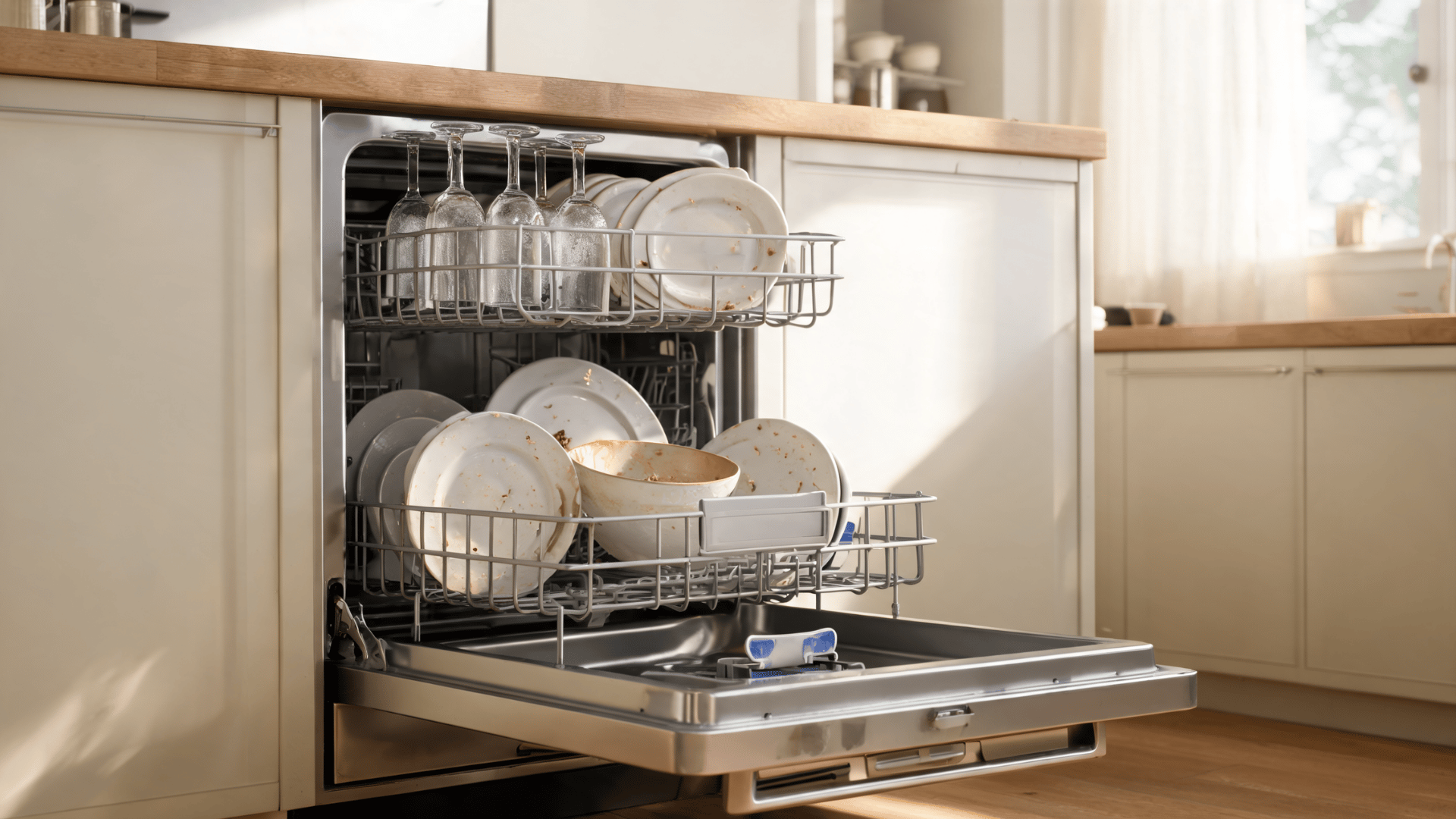
If your dishwasher is not cleaning dishes properly, the cause is usually smaller than it feels in the moment.
You open the door expecting clean plates, and instead you get grit on the glasses, a film across everything, and a smell that wasn’t there when you loaded it.
When this happened in my kitchen, I assumed the motor had failed. It hadn’t. The filter was clogged, and that one thing was enough to make an otherwise healthy machine leave every load half-washed.
A clogged filter, blocked spray arms, poor loading, low water temperature, hard water, or the wrong detergent can each cause a dishwasher not cleaning dishes properly, and they often overlap.
Work through the causes discussed in this blog, starting with the fastest checks. Most take under fifteen minutes and require no tools beyond a toothbrush and a flashlight.
Read along as I cover likely problems along with practical fixes that can help your dishes come out clean again.
Should You Fix Your Dishwasher Yourself or Call a Technician?
Before reading further, use this table to see whether your issue is a quick DIY fix or a sign you need a technician. This covers both a dishwasher not cleaning dishes properly and one that is not rinsing well.
| Problems | Likely Cause | DIY or Technician? | Troubleshooting |
|---|---|---|---|
| Food particles left on dishes | Dirty filter or blocked spray arms | DIY | Clean the filter |
| Greasy, filmy dishes | Cool water or weak spray pressure | DIY | Check water temperature |
| Cloudy or spotty glasses | Hard water or too much detergent | DIY | Refill rinse aid, reduce detergent |
| Soapy or foamy residue | Wrong detergent or overdosing | DIY | Adjust or switch detergent |
| Dirty top rack only | Blocked upper spray arm | DIY | Check arm movement |
| Detergent left in dispenser | Blocked dispenser or low water flow | DIY | Clear the dispenser |
| Standing water at the bottom | Filter or drain blockage | DIY first, technician if it persists | Inspect the drain area |
| Buzzing sound, weak or slow fill | Faulty inlet valve | Technician | Have the valve inspected |
| Grinding noise, or still dirty after every fix | Worn pump, motor, or heating element | Technician | Call for repair |
If the basic checks do not solve the problem, the dishwasher may have a mechanical fault that requires a technician.
Common Dishwasher Cleaning Problems and their Fixes
In most cases, a dishwasher not cleaning dishes properly traces back to something blocking or diluting the wash water, not a failed motor.
Filters trap food, spray arm holes clog with mineral deposits, and incorrect loading blocks the spray path before water ever reaches your plates. Even detergent choice and water temperature can cause the issue.
The causes below are ordered from the most common and easiest to check first to the ones that usually need a technician. Have a look!
1. Your Dishwasher Filter is Dirty
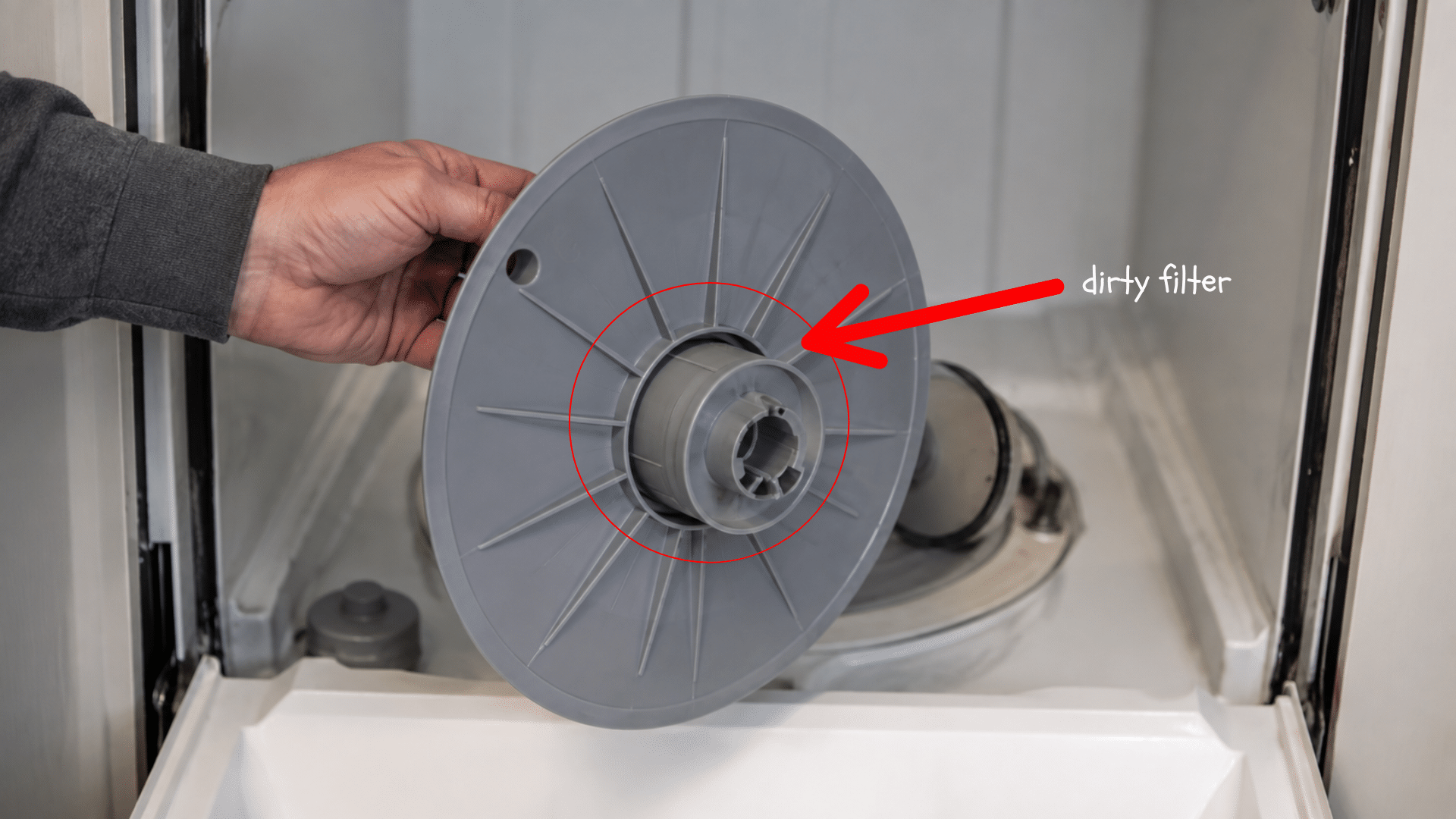
The filter traps food scraps at the bottom of the dishwasher. When clogged, it can recirculate dirty water, leaving grit on glasses, standing water, or an unpleasant smell.
Tools You’ll Need to Clean the Filter:
- Rubber gloves
- Old toothbrush or soft cleaning brush
- Mild dish soap
- Clean cloth or towel
How to Clean the Filter:
- Check your dishwasher’s manual for the filter’s exact location and how it releases. Most sit under the bottom rack.
- Twist or lift the filter out as directed. Some models have a separate mesh screen underneath.
- Rinse both parts under warm water.
- Scrub gently with the toothbrush to loosen stuck food.
- Reinstall securely; a loose filter can rattle or let debris back through.
- Clean it monthly, or weekly if you run heavy loads or skip pre-scraping.
2. Spray Arms are Blocked
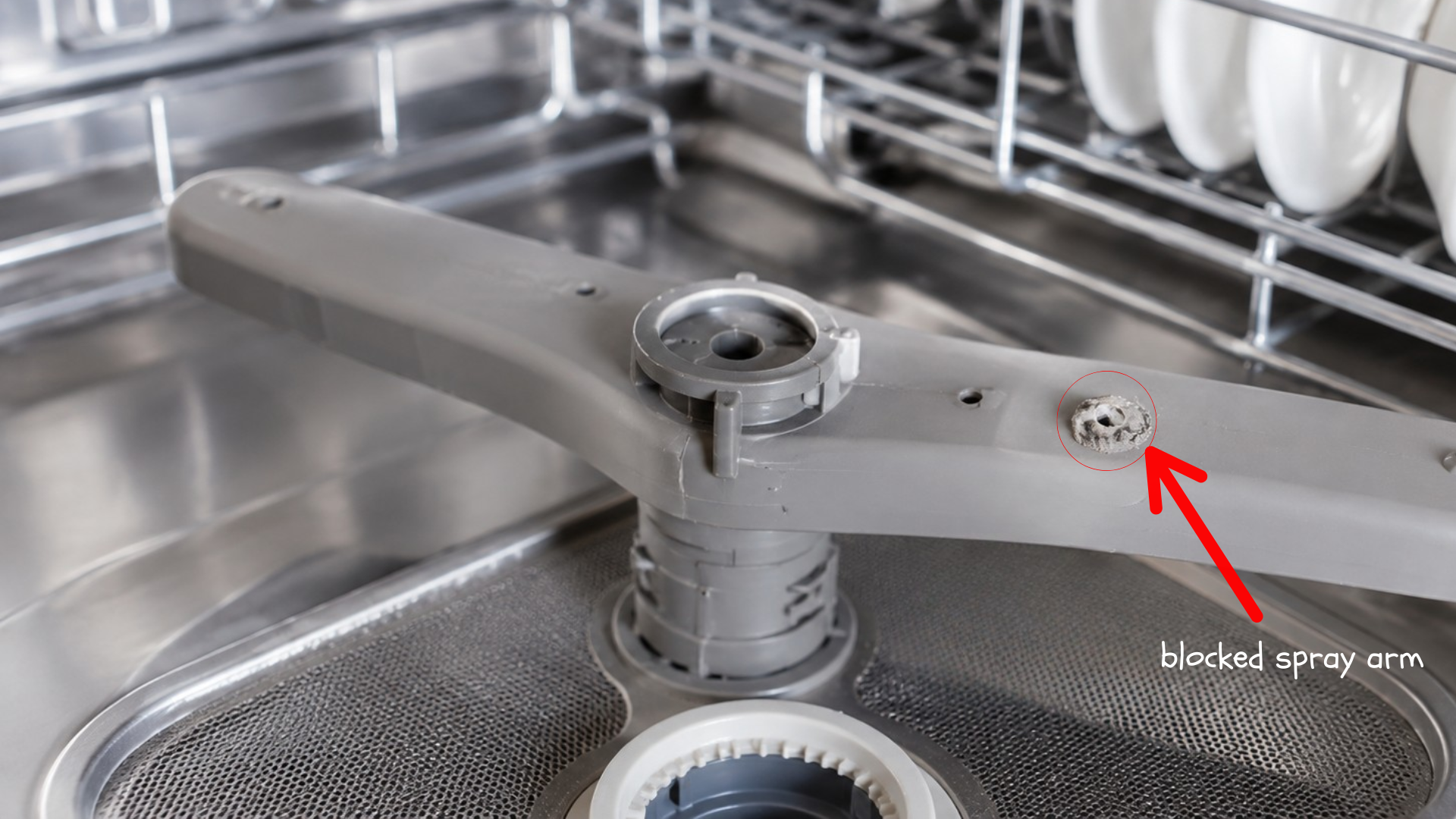
The spray arms spin below and above the racks, forcing water through small holes to reach every dish.
When those holes clog, water pressure drops unevenly, which is why some dishes come out clean while others right next to them don’t.
Hard water areas see this most often, since mineral deposits narrow the holes faster than grease alone does.
Tools You’ll Need to Clear the Spray Arms:
- Toothpick or thin wooden skewer
- Dishwasher descaler
How to Clear the Spray Arms:
- Remove the spray arms if your model allows it, usually with a locking clip or screw.
- Clear each hole with a toothpick, checking by holding the arm up to a light.
- Soak in an approved descaler overnight if mineral buildup is visible.
- Reinstall and spin each arm by hand to confirm it moves freely before running a load.
3. You are Loading the Dishwasher Incorrectly
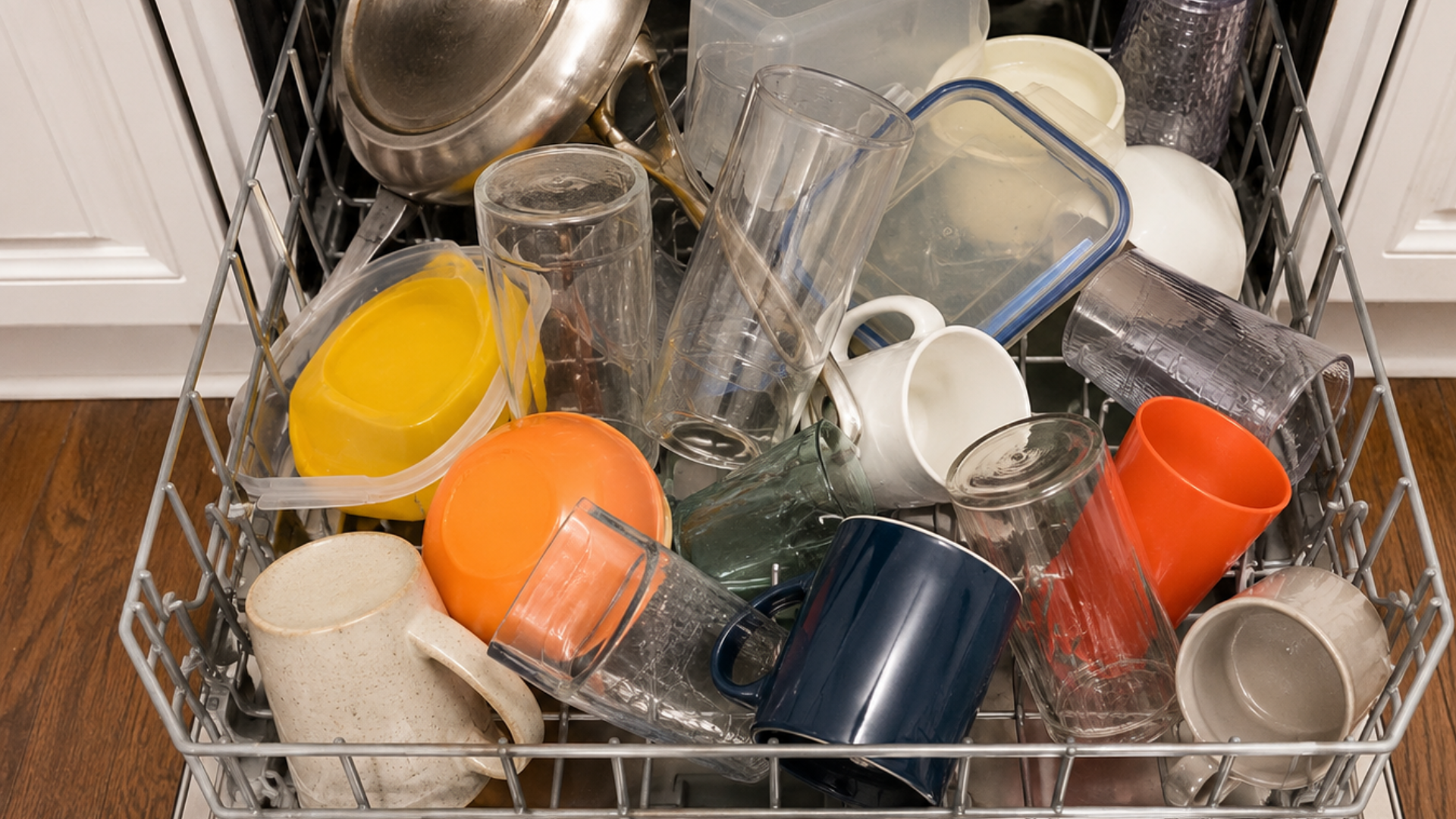
Overcrowded or badly angled dishes block water from reaching everything the spray arms are supposed to cover. Rack position matters as much as angle.
Cups, glasses, and plastics belong on the top rack, away from the heating element. Pots, pans, and heavily soiled plates do better on the bottom rack, where the spray runs strongest.
How to Load the Dishwasher Correctly:
- Angle bowls, cups, and mugs downward so water doesn’t pool inside them.
- Tilt plates toward the center sprayer rather than stacking them flat.
- Keep tall items along the rack edges so they don’t block the arms.
- Mix forks and spoons in the cutlery basket instead of letting them nest together.
- Place knives point down to avoid injury when you unload.
- Wash wooden cutting boards by hand instead of running them through, since the heat and moisture crack the wood over time.
Leave a finger’s width of space between dishes wherever you can.
In this video by Clean That Up, see how proper spacing and dish placement can improve cleaning results.
4. You are Using the Wrong Detergent
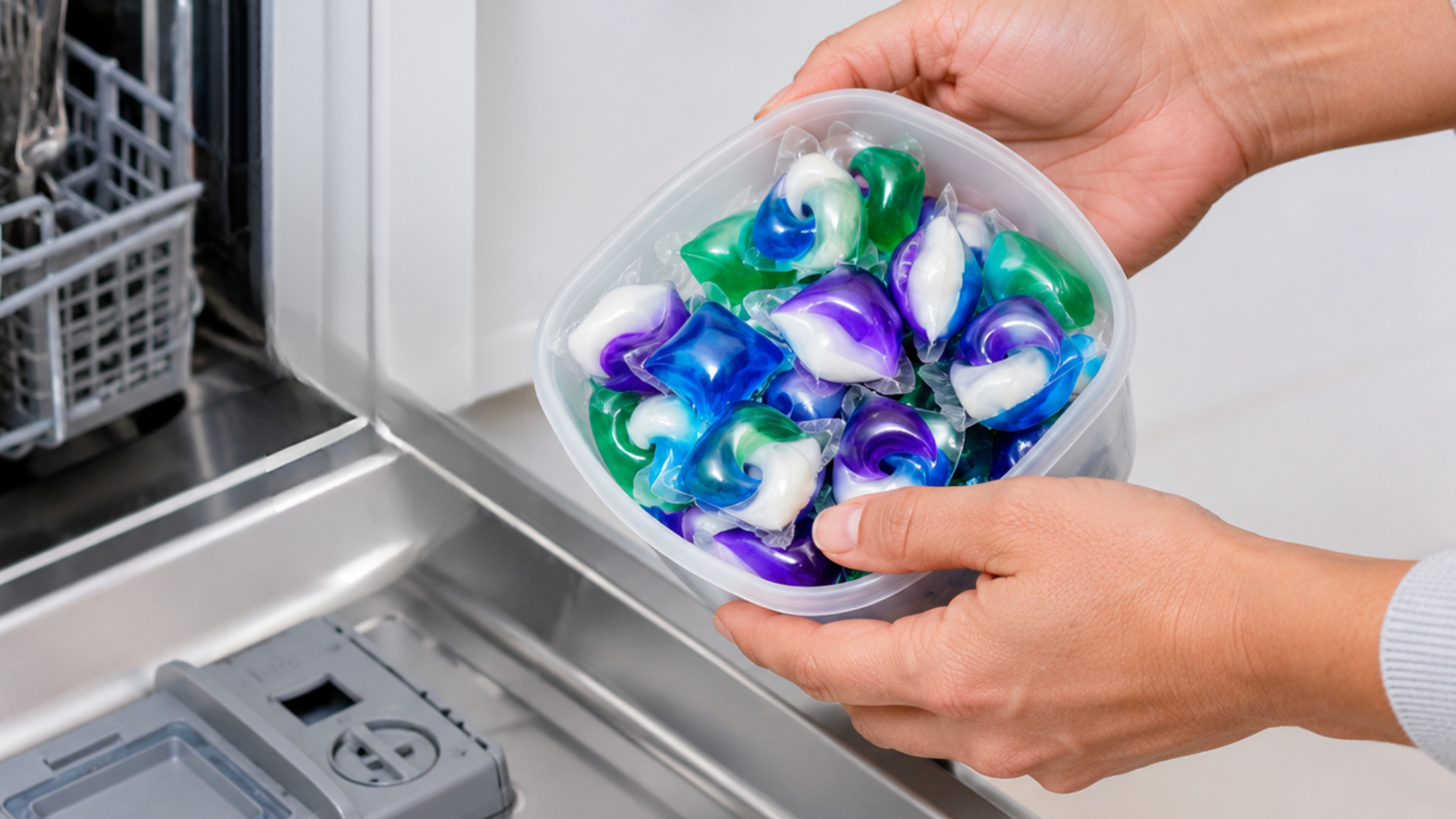
Too much detergent leaves a chalky film, while too little leaves grease behind. Old detergent loses strength once it’s been open for a few months.
Gel formulas in particular struggle once water drops below 120°F, since the gel doesn’t fully liquefy in time for the wash cycle.
Getting the detergent right resolves a dishwasher not cleaning dishes in a surprising number of cases without touching a single part.
Materials You’ll Need to Fix the Detergent Problem:
How to Fix the Detergent Problem:
- Use detergent made specifically for dishwashers, never regular dish soap.
- Follow the dose printed on the packaging for your water hardness, not a habitual scoop.
- Replace detergent that’s damp, clumped, or older than a few months.
- Switch from gel to a pod or powder if your water runs cooler than 120°F.
5. Hard Water is Leaving Spots on Your Dishes
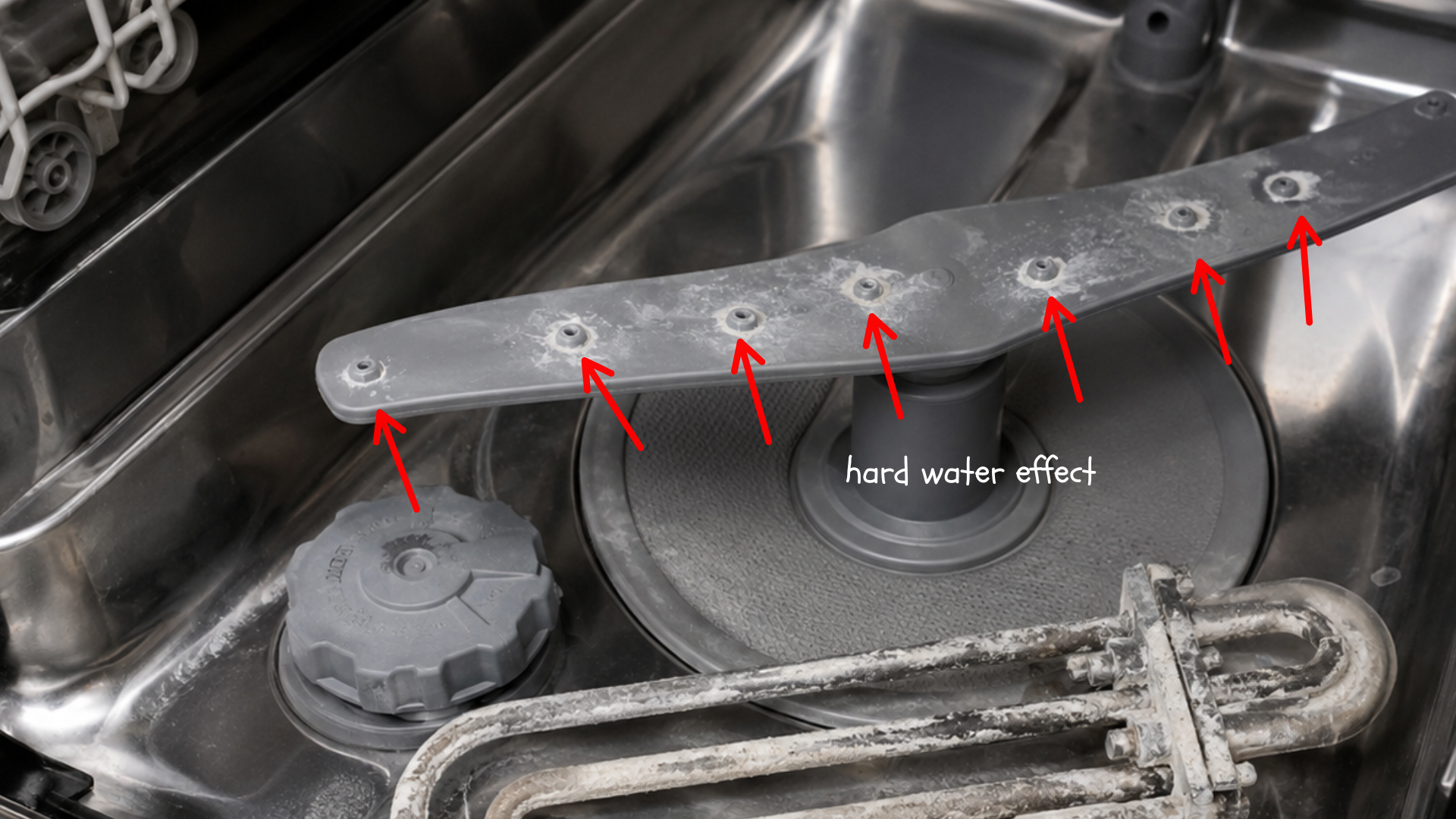
Hard water leaves cloudy spots and a white film on glasses, and over time the same minerals coat the heating element and narrow the spray holes.
This is one of the most common causes behind a dishwasher not rinsing well, especially in homes without a softener.
Tools and Materials You’ll Need for Hard Water:
- Dishwasher rinse aid
- Water hardness test strips
- Dishwasher cleaner
- Toothpick or soft brush for spray holes
- Water softener
How to Fix Hard Water Spotting:
- Keep the rinse aid reservoir topped up; it’s what stops water from beading and drying into spots.
- Test your water hardness with a strip if you’ve never checked it.
- Run a dishwasher cleaner monthly to dissolve mineral film before it thickens.
- Consider a water softener if spotting continues after the steps above.
Bonus Tip! If you are out of rinse aid use white vinegar occasionally, citric acid cleaner, dishwasher salt, or the heated-dry setting. These options may reduce spots, but commercial rinse aid works best long-term.
6. The Water is Not Hot Enough
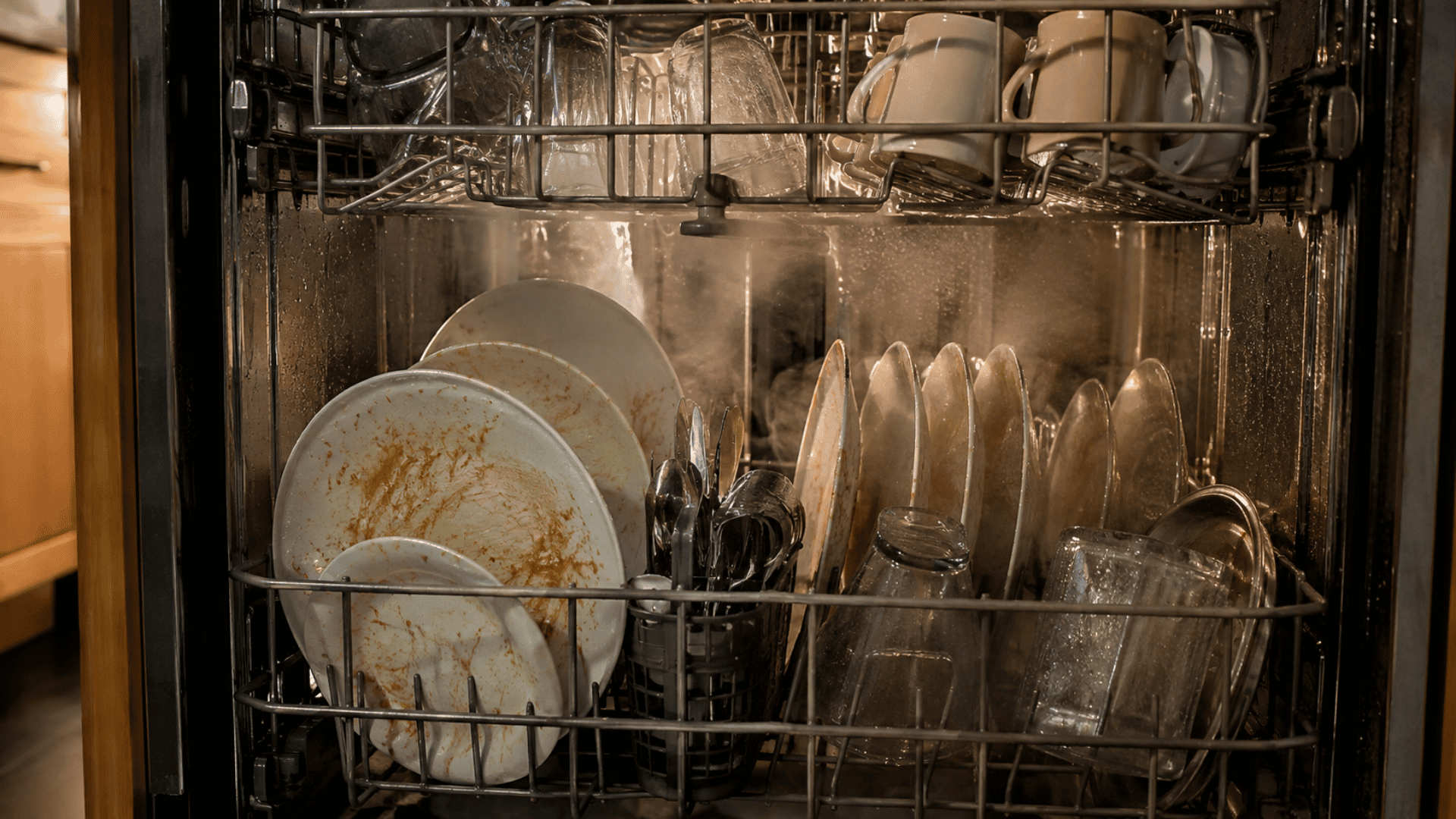
Water below about 120°F doesn’t fully dissolve detergent or cut through grease. That shows up as greasy plates, detergent sitting undissolved in the dispenser, or dishes still wet after a heated-dry cycle.
Tools You’ll Need to Check the Water Temperature:
Wear rubber gloves to handle hot water.
How to Raise the Water Temperature:
- Run the kitchen tap on hot until it feels consistently hot at the faucet nearest the dishwasher.
- Check the temperature with a thermometer; aim for close to 120°F.
- If it’s short of that, check your water heater’s thermostat and raise it carefully, since anything above 120°F risks scalding.
- Start the dishwasher right after the tap runs hot so the first fill isn’t cold.
- Use a “sanitize” or high-temp cycle for greasy loads if your model has one.
My own dishwasher sits at the end of a long hot water line, so the first fill was going in lukewarm every single time. Running the tap for a full minute before starting the cycle fixed it completely, no parts involved.
7. Your Dishwasher is Not Getting Enough Water
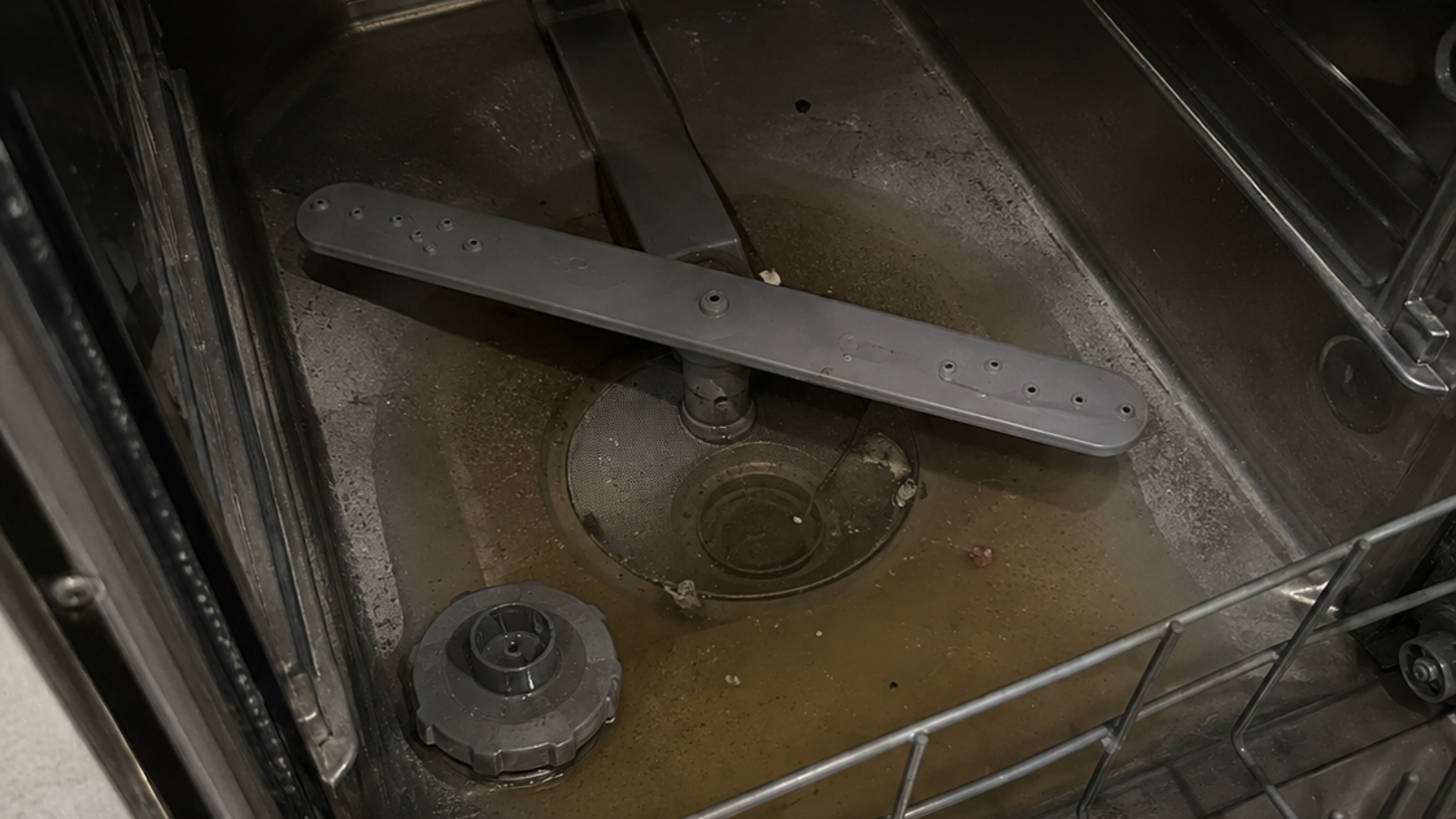
Low water flow keeps the spray arms from covering every rack. That often shows up as a slow fill, a dirty upper rack, or a cycle that finishes without throwing any error at all.
How to Fix Low Water Flow:
- Check the inlet hose for kinks or damage behind the unit.
- Clear anything crushing the hose, including items stored underneath the sink.
- Open the shutoff valve under the sink all the way; a partially closed valve is an easy thing to miss.
- Test whether other taps in the kitchen also run weak, which points to a household pressure issue rather than the dishwasher itself.
If the hose and household pressure both check out but the fill is still slow, move on to the inlet valve below.
8. The Detergent Dispenser is Not Opening Properly
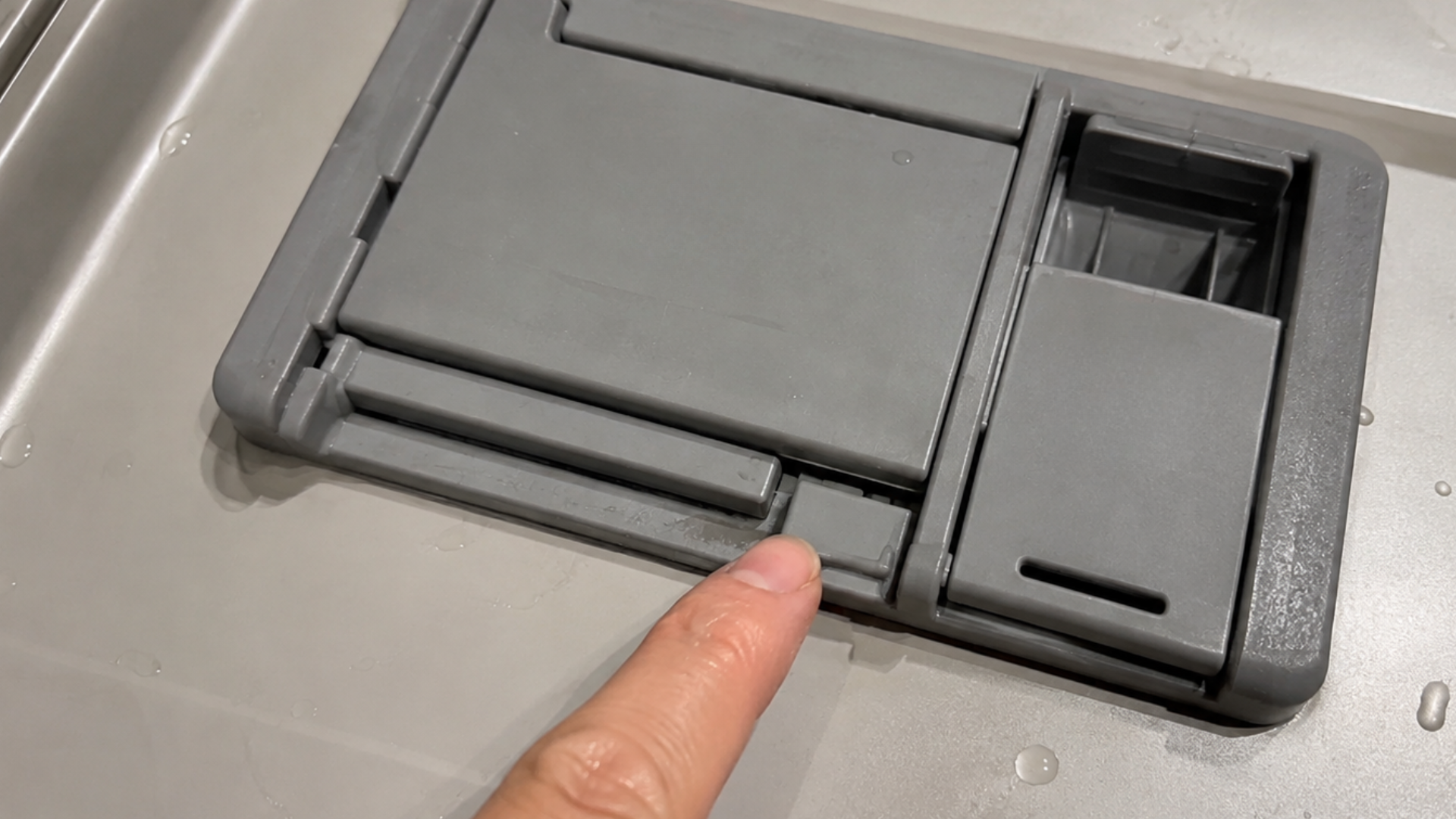
If the dispenser stays closed, detergent cannot mix with the wash water. A tall dish, hardened detergent, or a damaged latch may block the door.
Tools You Will Need:
- Soft toothbrush
- Damp microfiber cloth
- Cotton swabs for cleaning around the hinge
- Screwdriver
How to Solve It:
- Move tall plates away from the dispenser.
- Clean detergent buildup around the hinge.
- Check that the door opens freely.
- Test whether the latch clicks securely.
- Replace a loose or damaged latch.
9. The Drain is Partially Blocked
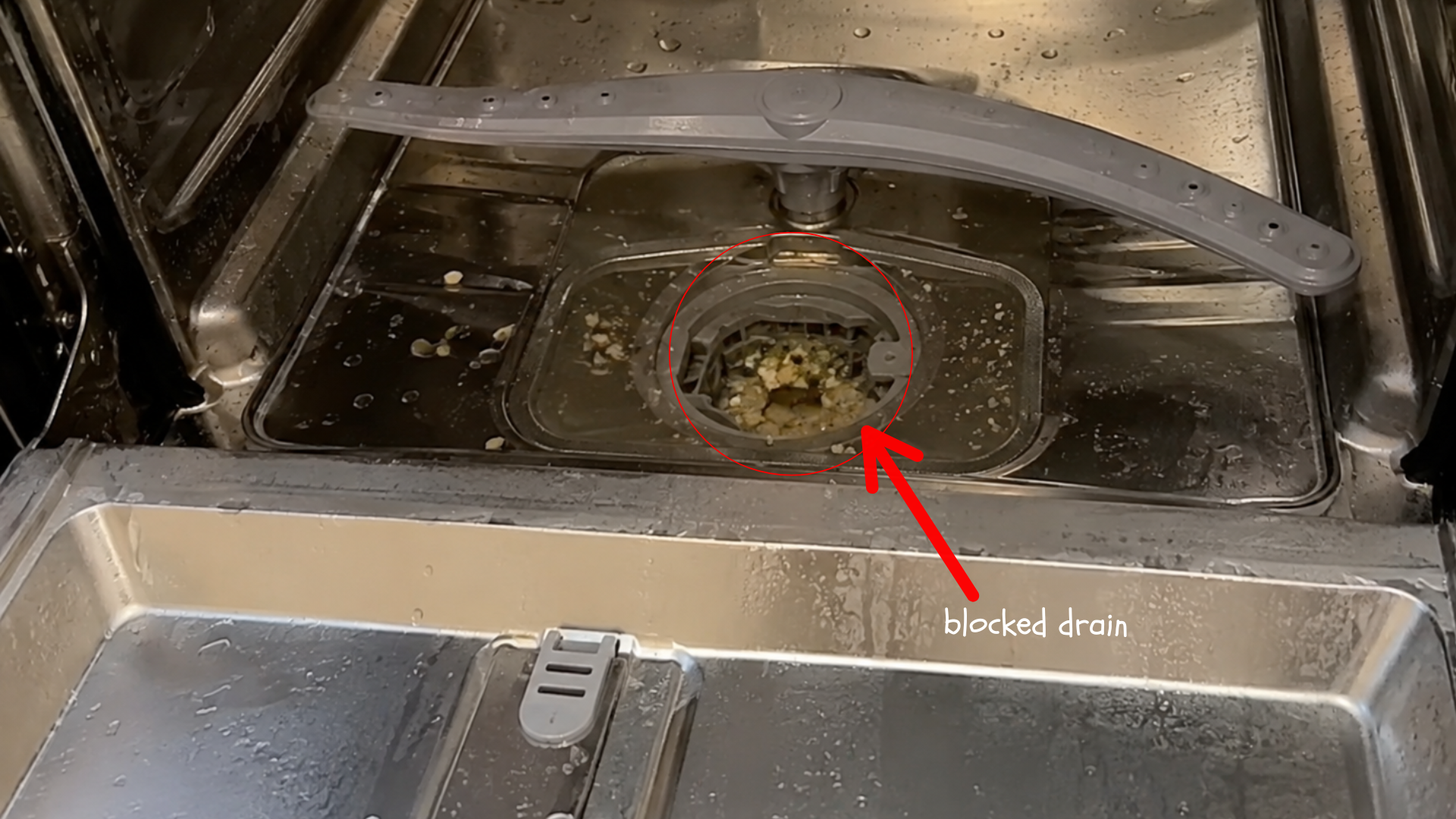
A blocked drain can cause dirty water and food particles to recirculate. Standing water at the bottom after a cycle is the clearest warning sign.
Tools You Will Need:
- Rubber gloves
- Absorbent towels
- Small bucket or shallow container
- Dishwasher-safe drain cleaning brush
How to Solve It:
- Check the drain hose for kinks.
- Feel for grease buildup or soft blockages.
- Clean the filter and drain area.
- Clear the garbage disposal if connected.
- Call a technician if water remains.
10. The Water Inlet Valve is Faulty
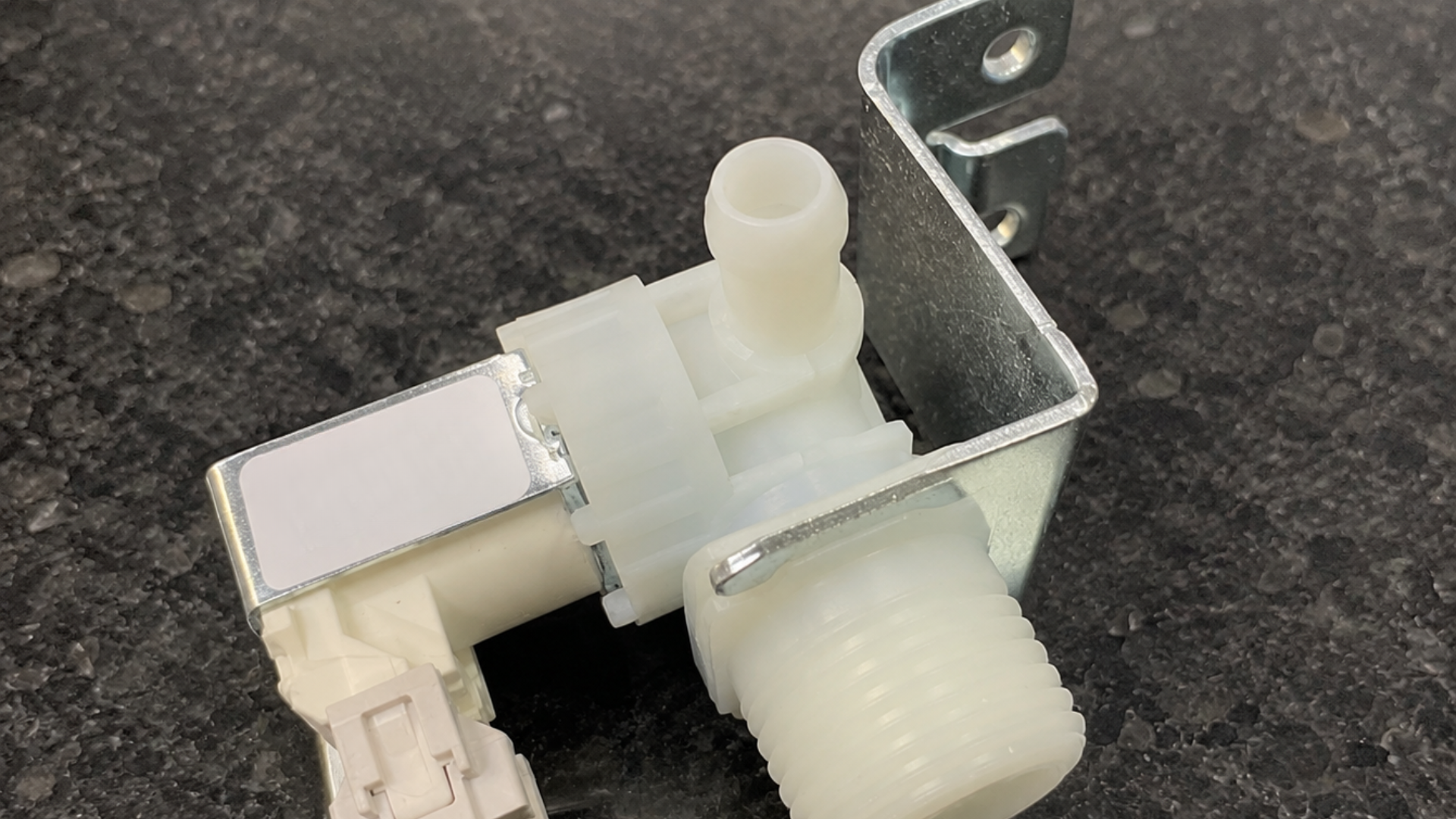
A worn or clogged inlet valve may prevent enough water from entering the dishwasher. Warning signs include weak filling, buzzing sounds, and reduced spray pressure.
How to Check the Inlet Valve:
- Confirm household water pressure is normal by checking another tap.
- Check the inlet hose for bends between the shutoff valve and the machine.
- Listen specifically during the fill stage for a buzzing or humming sound.
- Inspect the valve, if accessible, for visible sediment or mineral crust.
- Have a technician replace the valve; it’s a straightforward part swap but involves shutting off water lines.
Before replacing the inlet valve, watch this video by Parts Dr to test the valve.
11. Internal Parts May be Wearing Out
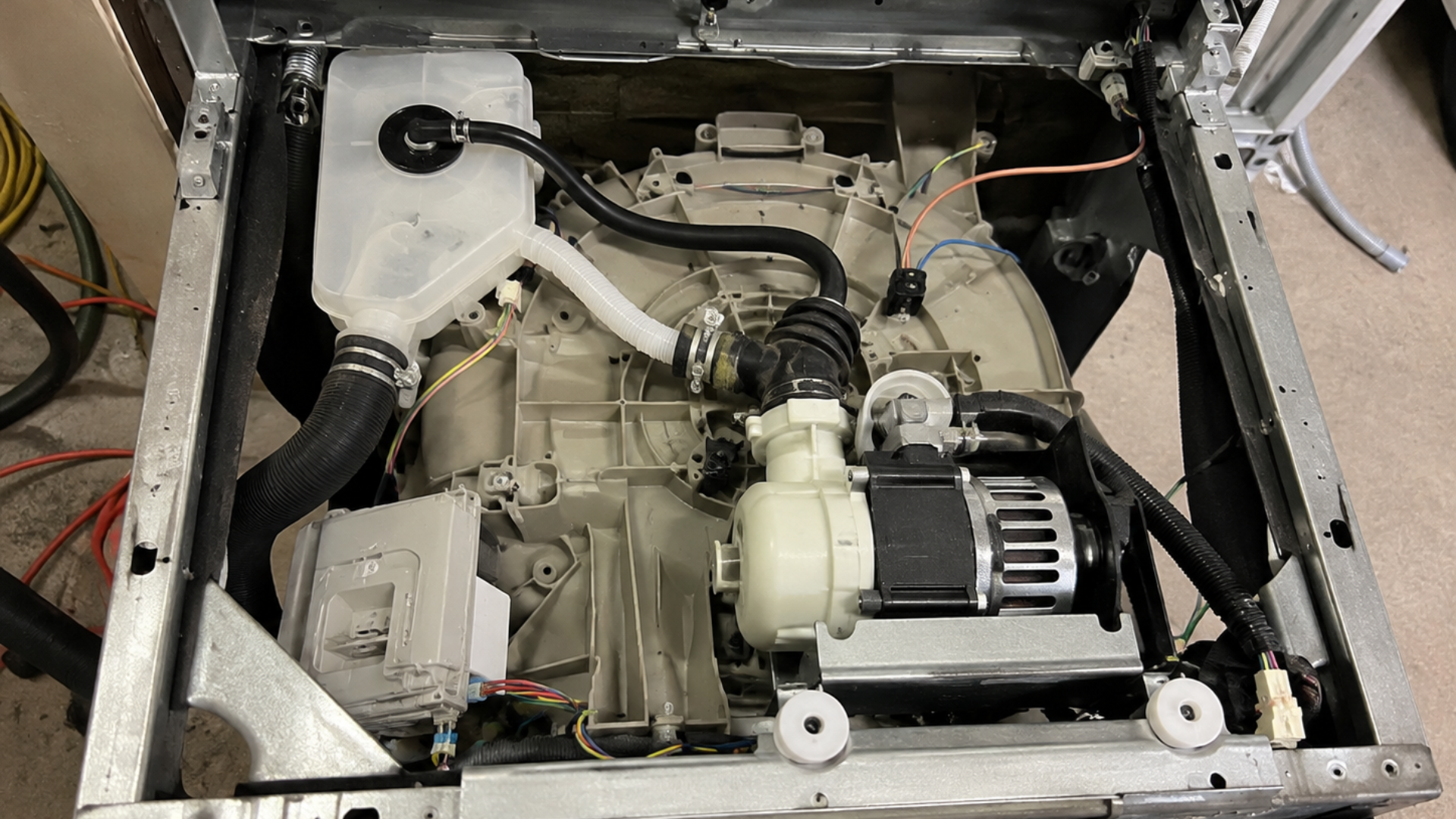
A worn wash pump, circulation motor, heating element, or control board can quietly interrupt the cleaning cycle without throwing any code.
The dishwasher runs and sounds normal but keeps leaving dishes dirty, greasy, or wet.
How to Check for Worn Internal Parts:
- Rule out the filter, loading, and water supply first, since those are far more common.
- Listen closely for grinding or a motor sound that’s changed from usual.
- Check whether the water inside actually gets hot by touching a dish partway through.
- Note if any cycle stage seems to skip or cut short.
- Call a technician for anything involving the motor, pump, or control board.
Dishwasher Suddenly Stopped Cleaning After Years of Running
If your dishwasher worked well for years and then started leaving dishes dirty, the cause is usually buildup, not a new fault.
Detergent pods left in the dispenser pick up a sticky coating over time, especially in machines that rarely run a hot cycle.
That residue collects inside the wash arms and hoses, slowly choking off water flow. Clear it with white vinegar and a few empty cycles.
- Run two or three empty cycles on the hottest setting, no detergent, to flush the lines.
- Add white vinegar to the rinse aid compartment during one cycle to break down grease.
- Place pods in the tub instead of the dispenser.
- Resume normal detergent use once dishes come out clean for two loads in a row.
Simple Dishwasher Maintenance Schedule
A few minutes of upkeep on a regular schedule catches most of these problems before they start. Use the table below as a running checklist rather than something to do all at once.
| Duration | Maintenance Tasks |
|---|---|
| After Each Load | Remove large food scraps from the filter area. Check that no dishes block the spray arms. Leave the door slightly open until the interior dries. |
| Every Week | Wipe the door seal and edges. Check the filter for visible buildup. Refill rinse aid when needed. |
| Every Month | Remove and wash the filter. Clear blocked spray arm holes. Run an empty hot cycle with an approved dishwasher cleaner. Check that the detergent dispenser opens freely. |
| Every Few Months | Inspect the inlet and drain hoses. Check racks, seals, and spray arms for damage. Review detergent use based on your water hardness. |
Final Thoughts
Most cases of a dishwasher not cleaning dishes properly trace back to a dirty filter, blocked spray arms, or poor loading. The wrong detergent, hard water, and low water temperature come close behind.
A smaller number come from buildup after years of normal use, or from a part that’s actually failed.
None of this requires replacing the machine. Work through the triage table at the top in order, fix whatever matches, then run one test load.
Keep the filter clean and the spray arms clear on the schedule above, and most of these causes won’t come back. If you’re still seeing buzzing, grinding, or no improvement after working through every fix here, call a technician.
Do share your experience and stay tuned for more appliance troubleshooting guides.
Frequently Asked Questions
Should I Rinse Dishes Before Putting Them in the Dishwasher?
Scrape off large food scraps, but skip a full rinse. Some detergents work better with a little food residue present, and rinsing beforehand mostly wastes water.
Can Choosing the Wrong Wash Cycle Leave Dishes Dirty?
Yes. Quick or eco cycles often skip the heat and time needed for heavy grease. Save those for light loads, and use a heavy or pots-and-pans cycle for the rest.
Why are Plastic Dishes Still Wet After the Cycle?
Plastic holds less heat than glass or ceramic, so water sits on the surface longer instead of evaporating. Rinse aid, a heated-dry setting, and angling plastics downward all help.
Should I Reset the Dishwasher After Cleaning the Filter or Spray Arms?
Usually not necessary after routine cleaning. If a cycle error shows up afterward, check your manual for the model-specific reset method, since it varies by brand.

NKBA-certified designer Harper Williams holds a degree in Interior Architecture from Auburn University and has specialized in high-function kitchens and spa-inspired baths since 2011. She joined us in 2024 to simplify layout planning, fixture selection, and budget tricks for remodelers. Away from CAD files, Harper restores vintage cookstoves and crafts small-batch soaps.