
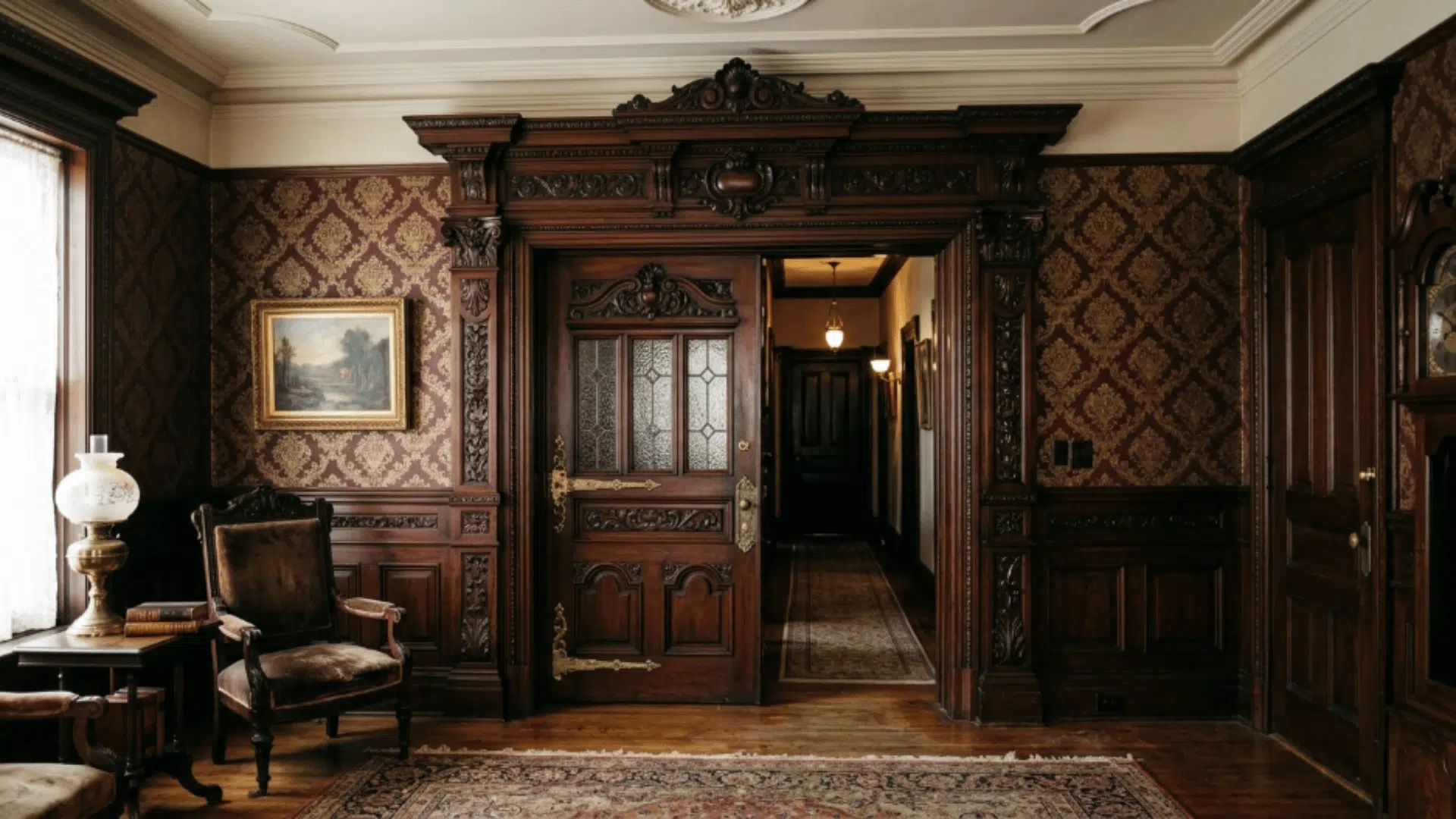

Most people spend hours picking paint colors, furniture, and flooring, but door casing styles barely make the list.
That’s a missed opportunity. The trim around a door does more than hide gaps. It shapes the character of an entire room. The wrong casing can make even a well-designed space look unfinished.
The silver lining: Updating door casings is one of the simplest and most budget-friendly ways to refresh a home’s look.
This guide leads you through the most popular door casing styles from classic to contemporary, along with practical tips for picking the right one for any space.
What Is Door Casing?
Door casing is the trim or molding that surrounds a door frame. It sits on the wall around the edges of the door and helps cover the small gaps between the wall and the frame.
Without it, those edges would look unfinished and rough, which can affect the overall appearance of a room. Beyond just covering gaps, door casing also plays an important role in design.
It adds character, ties together other trim elements like baseboards, and helps create a clean, polished look.
The style you choose can make a room feel more modern, traditional, or cozy, depending on the overall design of your space.
Different Door Casing Styles to Try
Choosing the right door casing style can change how a room feels without a major renovation. Some styles are simple and clean, while others add more detail and character.
The key is to pick one that matches your home’s overall look and fits your personal taste.
1. Traditional Door Casing

Traditional door casing is known for its classic and evergreen appearance. It often includes detailed molding and layered trim that adds depth around the door frame.
This style is commonly seen in older American homes, especially Colonial and Victorian designs.
It works well in spaces that call for a more formal, refined look. If your home has rich finishes or detailed interiors, this style blends in naturally.
It helps create a balanced and complete feel in the room.
2. Modern Minimalist Casing

Modern minimalist casing focuses on clean lines and simple shapes.
It usually features flat trim with minimal detailing, giving it a sleek, uncluttered look. This style is perfect for homes with a modern or contemporary design.
It helps keep the space feeling open and neat without drawing too much attention.
If you prefer a simple and functional look, this is a great option. It also pairs well with neutral colors and smooth finishes.
3. Craftsman Style Casing

Craftsman casing is known for its straight edges and thicker trim. One of its standout features is the flat-top header, which gives it a strong, structured appearance.
This style is popular in American Craftsman homes and bungalows. It adds character without being overly decorative.
Craftsman casing works well in cozy interiors and spaces with natural materials. It creates a warm and grounded feel that many people like.
4. Colonial Door Casing

Colonial door casing features decorative profiles with soft curves and layered details. It offers a classic and stylish look that fits well in traditional homes.
This style is commonly found in East Coast houses and older American architecture. It adds a touch of detail without feeling too heavy or complex.
Colonial casing works best in spaces with classic furniture and neutral tones. It helps bring a sense of balance and charm to the room.
5. Farmhouse Style Casing

Farmhouse casing is simple but has a slightly rustic feel. It often uses wider boards with clean edges, giving it a sturdy and relaxed look.
This style pairs well with wood finishes and soft, neutral colors. It is a great choice for homes seeking a cozy, welcoming atmosphere.
Farmhouse casing doesn’t rely on heavy decoration, yet it still adds personality. It works well in kitchens, living rooms, and country-style homes.
6. Victorian Door Casing

Victorian casing is detailed and decorative, often featuring intricate patterns and layered trim. It is one of the more eye-catching styles and adds a strong sense of character.
This style is best suited for historic or vintage-inspired homes.
It works well in spaces where you want the trim to stand out. Victorian casing can make a room feel more classic and rich in detail.
It pairs best with traditional decor and ornate elements.
7. Flat Stock Casing

Flat stock casing is one of the simplest and most practical options. It uses plain, rectangular boards with no curves or added design.
This makes it budget-friendly and easy to install, especially for DIY projects. It fits well in modern interiors that prefer simplicity.
Flat-stock casing creates a clean, neat finish without extra effort. It’s a great choice if you want something functional and straightforward.
8. Beaded Door Casing

Beaded casing includes a small, rounded detail along the edge of the trim. This subtle feature adds a bit of style without making the design too bold.
It works well in homes that mix traditional and modern elements. Beaded casing adds just enough detail to make the trim feel finished.
It’s a good option if you want something simple with a slight decorative touch. This style fits nicely in transitional interiors.
9. Rustic Wood Casing

Rustic wood casing highlights the natural texture and grain of the wood. It brings warmth and a more natural feel into the space.
This style is often used in cabins, farmhouse homes, or rustic interiors. It works well with stone, wood, and earthy tones.
Rustic casing adds character without needing extra decoration. It’s ideal for spaces that want a relaxed, natural look.
10. Custom Built-Up Casing

Custom-built casing combines different trim pieces to create a unique design.
It allows people to mix styles and build something that fits their exact vision.
This option is often used in high-end or custom-designed homes. It gives you more control over the final look and the level of detail.
While it may take more time and effort, the result can be very distinctive. It’s a great choice if you want something that stands out.
How to Choose the Right Door Casing Style?
Choosing the right door casing style is about finding a balance between design, function, and practicality. The trim you pick should not only look good but also fit naturally with your home’s overall style.
Taking a few key factors into account can help you make a choice that works well in the long run.
- Match Your Home’s Architecture: Go for clean, simple casing in modern homes, while traditional homes look better with more detailed trim
- Think About the Room’s Purpose: Formal spaces may suit decorative styles, while casual areas work well with simple designs
- Consider Your Budget: Some styles are easier and cheaper to install, while others may require more time and cost
- Choose the Right Finish: Painted casing gives a neat, uniform look, while natural wood adds warmth and texture
Final Thoughts
Door casing might seem like a minor part of a room, but it can quietly change how everything comes together. The right choice adds structure, improves the overall look, and makes your space feel more complete.
As you explore different door casing styles, it becomes clear that even small updates can make a noticeable difference.
You don’t need a full renovation to refresh your home; sometimes, updating the trim is enough to give your space a cleaner and more polished feel.

Alex Guerrero, a graduate with a Fine Arts degree from the Rhode Island School of Design, has been a visionary in the world of color and design for over 15 years. His professional journey began in the heart of the fashion industry in Milan, where he developed an acute sense for color harmonies and trends. Alex joined our team in 2018, offering fresh and innovative perspectives on color utilization in various spaces. Renowned for his ability to blend contemporary trends with timeless elegance. Outside of work, Alex is an accomplished painter and a volunteer art therapist, his artistic talents further enriching his professional insights.