
In every renovation, sooner or later, you have two photos side by side, and someone says: I like both, but which one makes sense? Ultimately, that means nothing more than this: A floor-standing vanity — or perhaps one with legs floating above the floor.
Both styles have real merit. Both have real trade-offs. However, the right answer is less fashion and much more function — floor plan, plumbing arrangement, how many people can be squeezed in there, and yes, what the storage gives you.
Here is what to do, without the clever showroom spin.
How a Wall-Hung Vanity Really Benefits a Bathroom
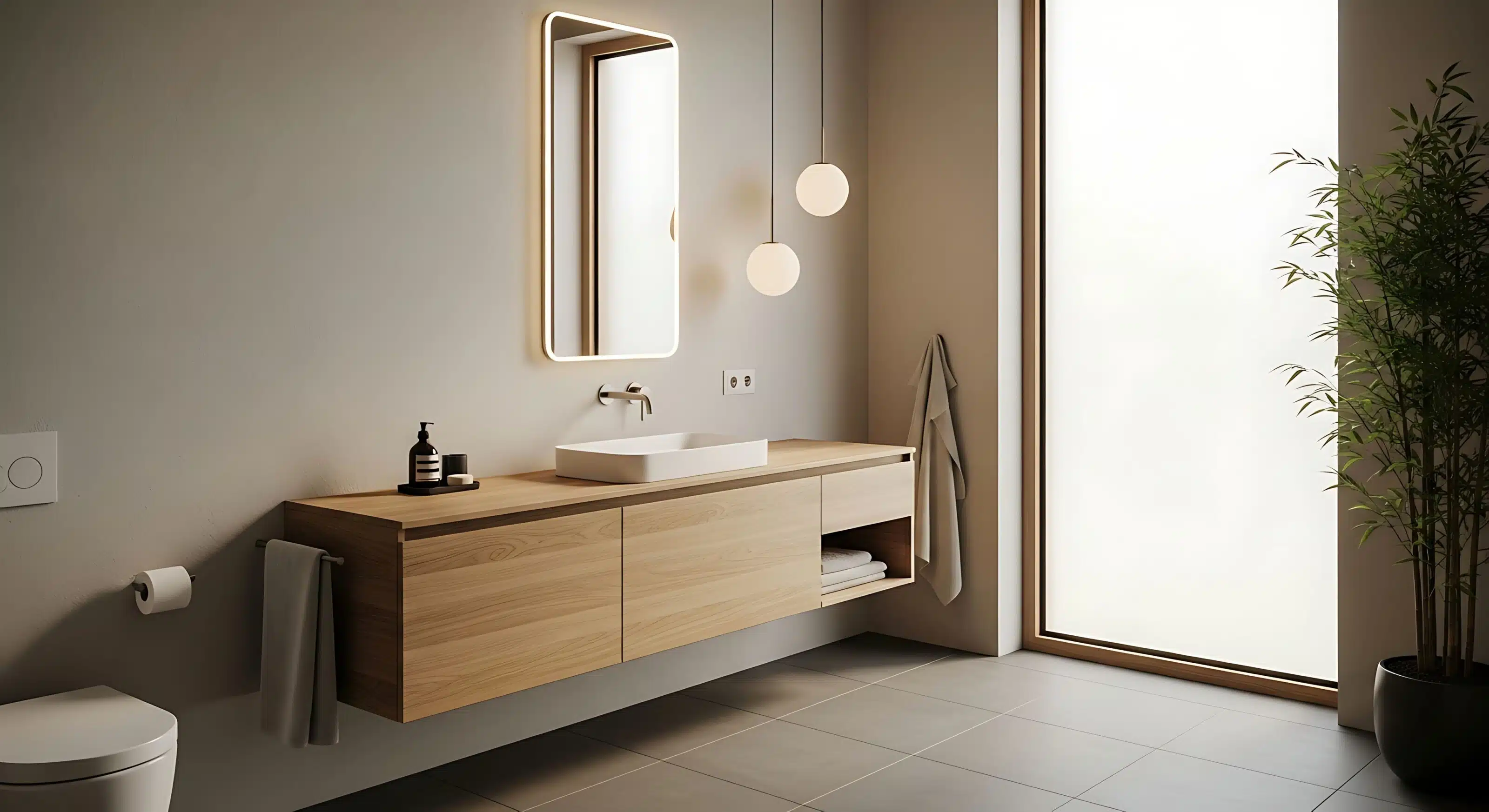
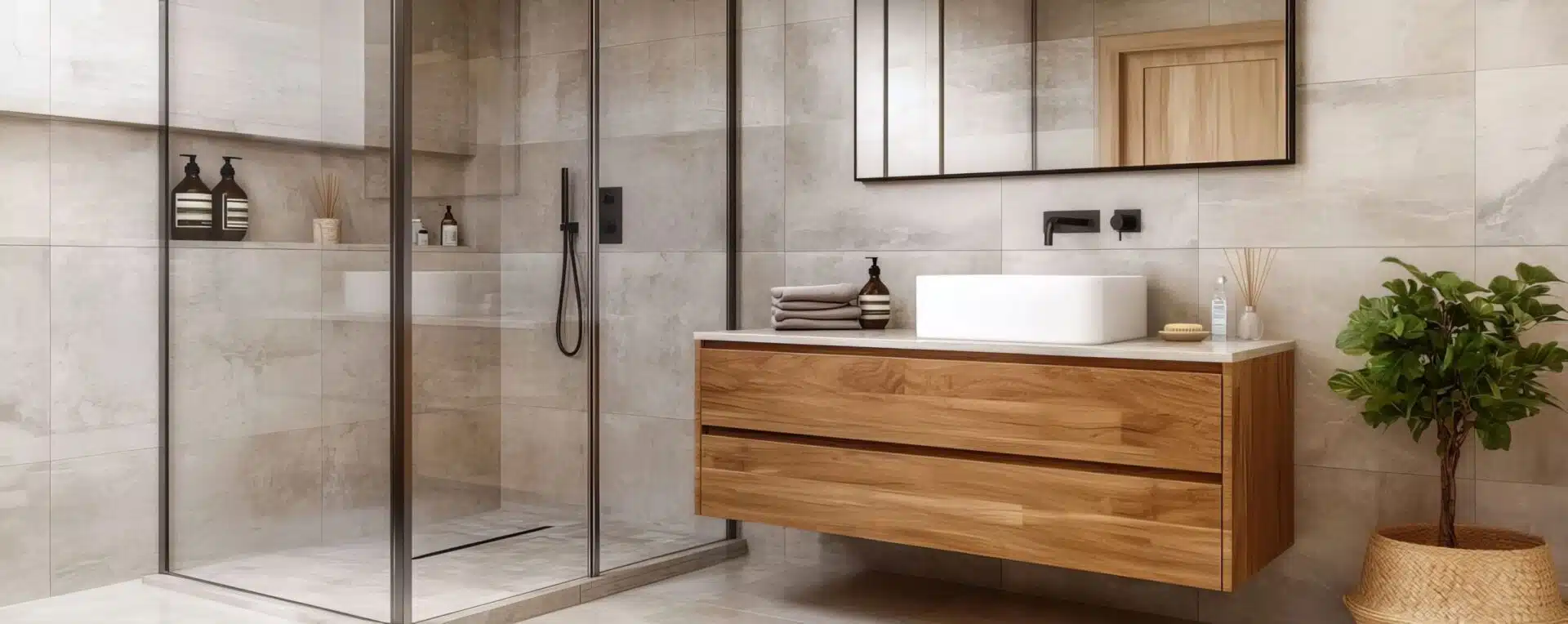
A wall-mounted vanity has an undeniable allure, after all. If you hang the cabinet and it is clear of the floor, the space reads more: your line of vision travels further, and the floor appears to become a single continuous surface; when cabinets are on pedestal legs, their bodies manage visually not only to touch the wall but also fill its height — that is, if they are installed consistently.
That visual breathing room can make an impact in a smaller bathroom. In fact, it explains why wall-hung vanities are so widespread in apartment renovations throughout Sydney and Melbourne — not that they are definitively better, but that they fit the proportions of tighter spaces well enough.
And there is a very practical advantage from a cleaning point of view: No kick-toe to scrub about, no shuttered corners for dust and grime. One pass and you have mopped the entire floor.
However, wall-hung vanities may not be the right choice for everyone. These require a solid wall structure to take the load — not all walls have it, and bring additional cost if retrofitted. Of course, also being a factor is that the plumbing must terminate at the right height, and if your current rough-in doesn’t match up, it’s yet another thing to consider before falling for the look.
Also, think about storage. You get less of it without the floor cavity. Some wall-hung designs are more about considered styling than functional storage — and if you’re housing a large household’s worth of products, this is something that needs to matter.
Where a Freestanding Vanity Really Comes Into Its Own
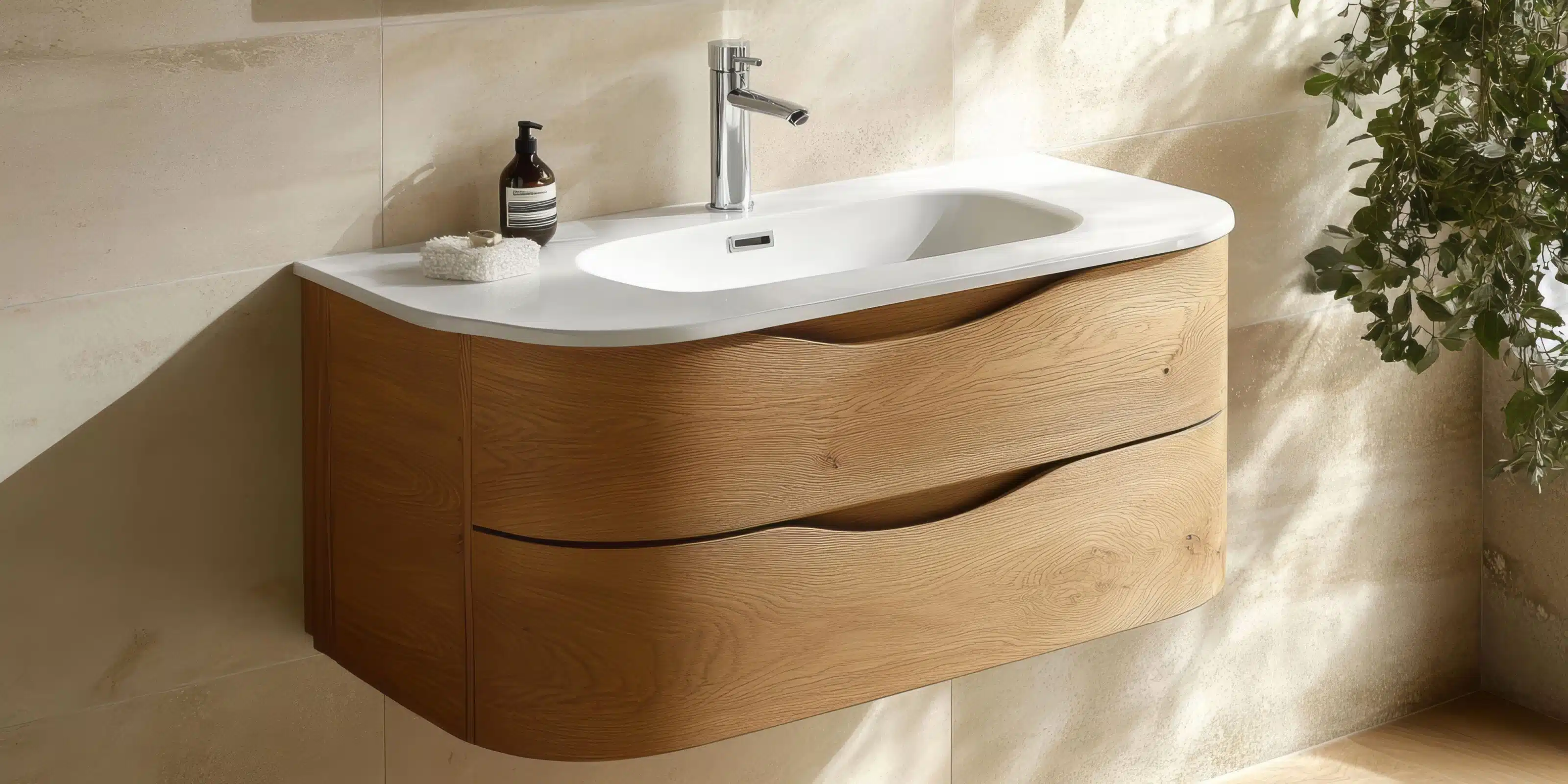
In this design climate, which leans towards the streamlined floating aesthetic, a freestanding bathroom vanity is a bit underrated. However, there are tons of situations where it is just the best match.
The most obvious is plumbing. If you live in a home that is older and the waste pipe comes out through the floor instead of the wall, it simply becomes a lot easier to install a freestanding vanity. You are not reconfiguring the rough-in to fit the cabinets — the cabinets fit the existing condition. This can bring significant savings on labour alone.
Then there is the storage issue. Especially in the larger formats, freestanding vanities tend to provide more of it. Deep drawers, wide cabinets, and sometimes even base open shelving provided space when it was needed most.
As for the freestanding vanity, it too has matured significantly in terms of style. Floor-standing doesn’t automatically mean someone is out of date anymore. Where the category once had elegant forms and busy leg details, now contemporary profiles, smooth leg lines, and tasteful hardware have reshaped it considerably. A well-selected freestanding bath vanity can stand alone in a contemporary renovation without the need for any visual apology.
It’s also usually the more forgiving choice in period homes. A floating vanity will clash with the architecture in a Federation or California bungalow bathroom. This makes the illusion of a freestanding piece — particularly one finished in a furniture-like manner — feel more organic.
Style: New Question if The Query Is Not
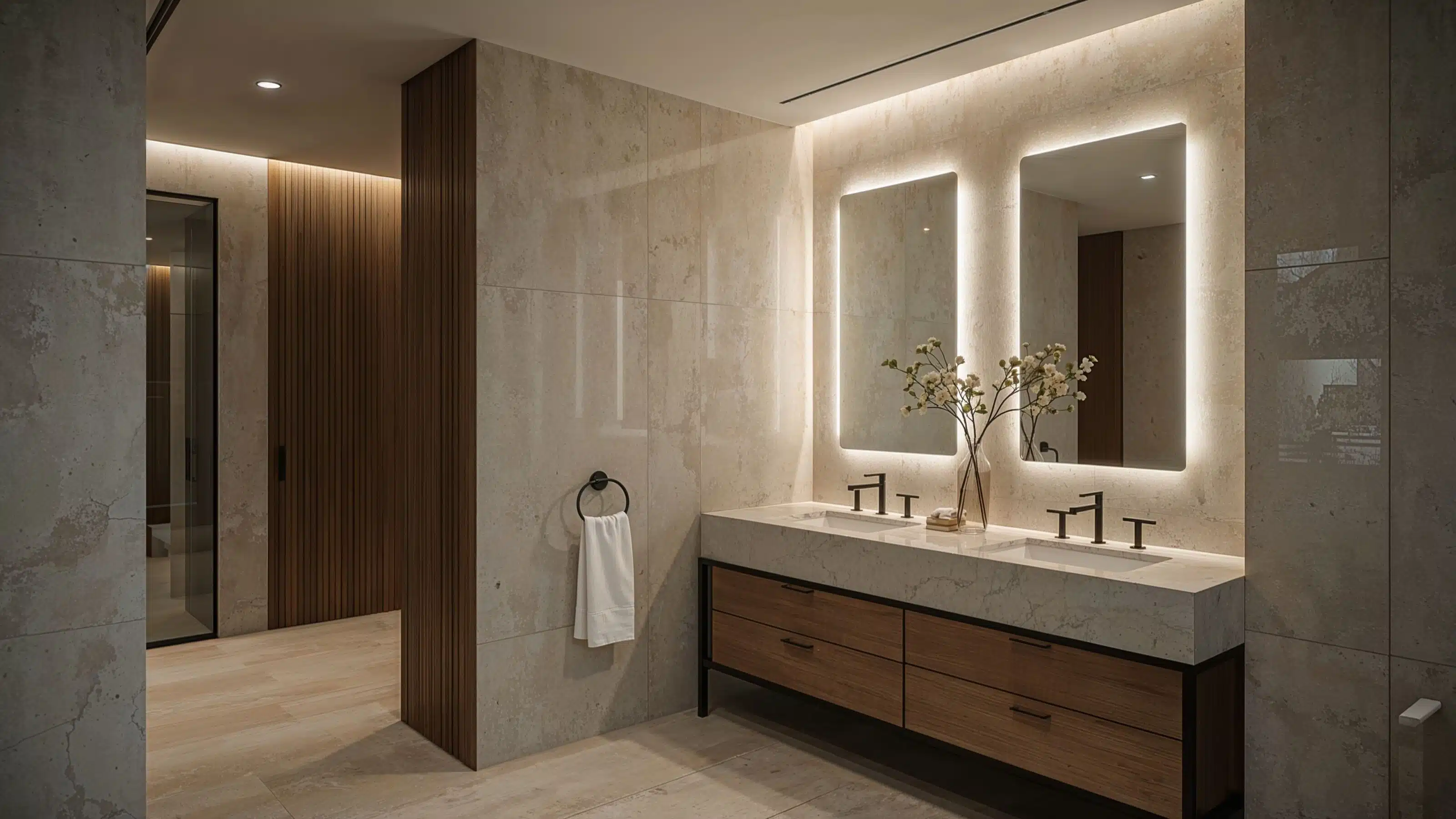
And another thing worth thinking about, along with the height question, is shape. The bathroom vanity market has left behind the rectangular boxes, and the curved vanities have especially fared well in the past few years.
Curved vanities, wall hung or freestanding, are perfect for bathrooms with little space to work with or areas with oblique angles. The softer profile isn’t as visually demanding as a cabinet with sharp edges, and in smaller rooms, that can mean the space feels less boxy and more intentional. Curved vanities, however, are great at not trying too hard — they soften a hard-surfaced room without looking like an awkwardly placed design statement.
Even if curved vanities are in your favourites list, the practicality should also be taken into consideration. Internal storage takes various shapes and forms, and curved formats may be less efficient than a square-equivalent cabinet, you will need to weigh visual gain against usable space trimmed.
Begin with Your Constraints and Not with Your Shortlists
It defines what is permissible in the wall structure. How does the plumbing stand at present? How many storage units do you really need? What else is the architectural style and look of the rest of the bathroom?
Wall-hung is the fabulously trendy finding that works for any floorplan, larger but not quite, durable walls are helpers to help support housing the fixture, and you absolutely really want lots of gap — especially in a modern revamp. If you have unsightly pipework to conceal, restricted shallow storage or desire a fixture pre-dating the open-plan era, then there’s no need for compromise — a freestanding bathroom vanity is another excellent choice.
And if you sort of fall in the middle, looking between them, saying, “What is going to be harder on my space ever?” Curved vanities are a nice midway house. The type of furniture and the more malleable style are typically so pliant to slide into holes that have not yet hardened into shape or appearance.
First, one must learn the basics. It is much easier, after all, to avoid gushing about a nice vanity that you have to sweat while installing, looks just too small for everyday function, or that seems one cabinet short of functioning properly, even though it’s equipped with countless cabinets.
It is important to master the fundamentals first. No one raves about a pretty vanity that is a hell to install, looks too shallow for daily use, or that, no matter how many cabinets it’s fitted with, always seems to be on the verge of running out of storage space.

Holding a Master’s in Architecture from the University of Texas at Austin, Emily Rodriguez has dedicated more than two decades to the art and science of building renovation. Starting her journey in historic preservation, she developed a profound respect for blending old with new in building design. Emily became a vital part of our team in 2019, renowned for her insightful and innovative renovation tips. She has been leading our DIY home improvement series since ever since, where she shares her wealth of knowledge in turning outdated spaces into modern havens. When not engaged in writing or consulting, Emily is a passionate advocate for heritage conservation and enjoys exploring vintage architecture, a hobby that complements her professional expertise.