
The way people use their homes has changed. Remote work is common now. Many families now spend more time at home than they did a decade ago, driven by remote work, hybrid schedules, and changing lifestyles.
And with that shift, expectations for what a living space should do have grown well beyond appearance.
Modern interior design responds to that change. It treats every room as a set of deliberate choices, where layout, material, and lighting all serve the people using the space.
The approach works in small apartments and large family homes alike because the goal stays the same: rooms that feel thought-through without feeling stiff.
Open Layouts and Spatial Flow
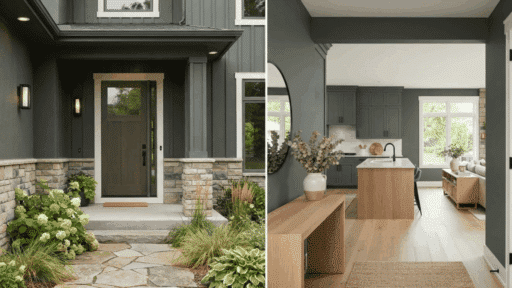
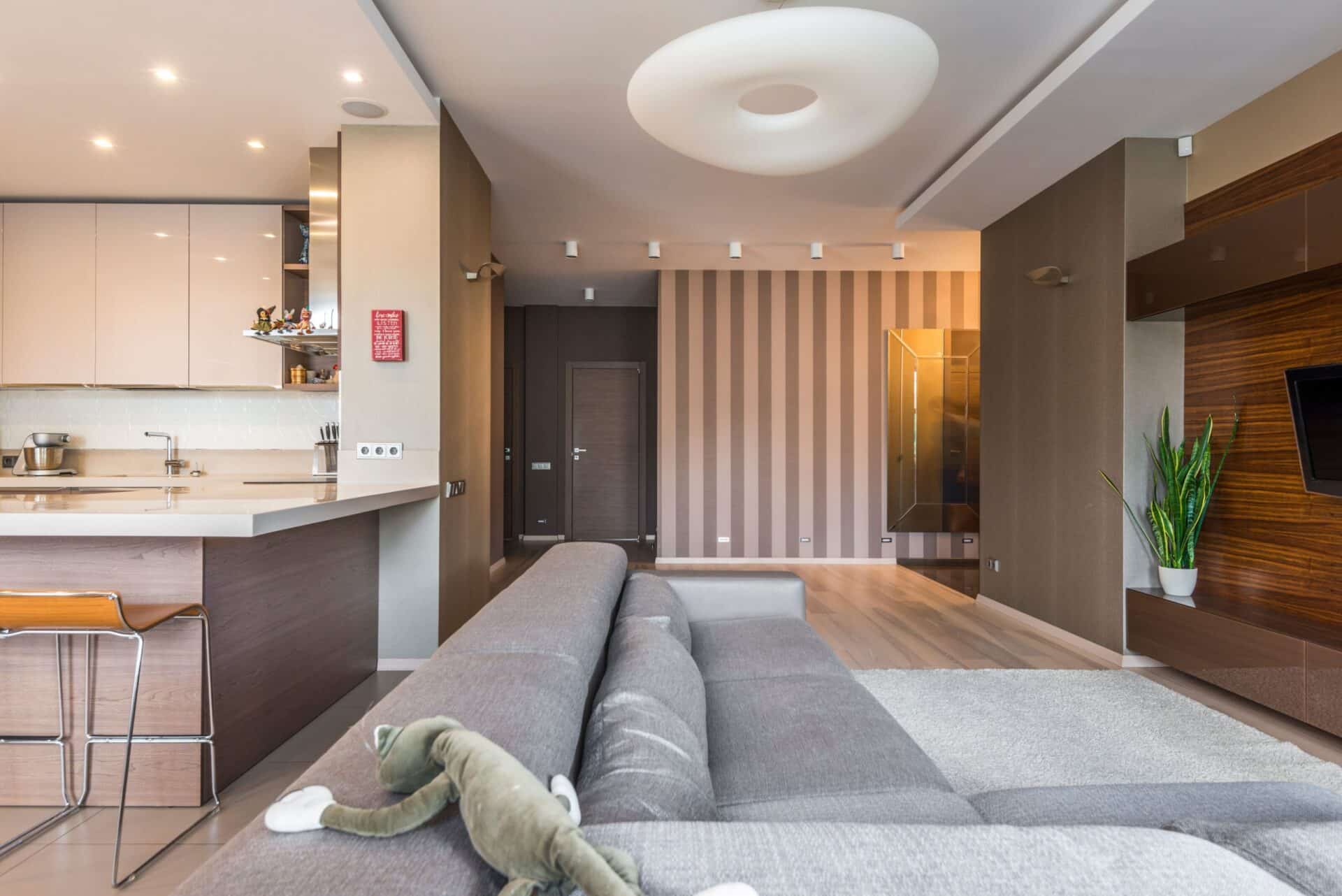
Walls between kitchens, dining rooms, and living areas are coming down. The open floor plan encourages movement and brings in more natural light, which makes the home feel more connected.
Here’s how designers define zones within open layouts:
- Area rugs and furniture placement carve a seating area out of a larger room without closing it off.
- Layered lighting signals transitions. Pendants hang over a dining table. Recessed fixtures sit in the lounge.
- Sliding glass doors stretch the living space outward into patios and gardens, softening the line between inside and outside.
Storage, Minimalism, and Mental Clarity
A clean room does more than look good. A 2025 study found that those who reported higher levels of household clutter also reported lower well-being, reduced life satisfaction, and more frequent negative emotions.
Clutter changed how people perceived the beauty of their home, which partly explained the decline in mental well-being.
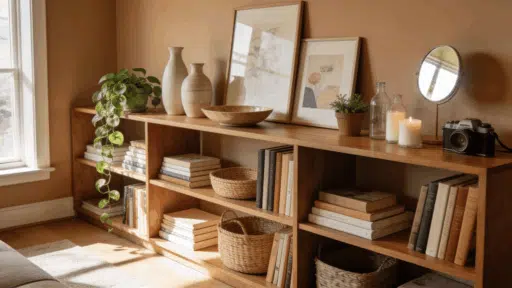
Modern design addresses this through smart storage. With integrated cabinetry, floating wall units, and multi-functional furniture (like storage ottomans), you can keep everyday items within reach but out of sight.
What remains visible either serves a purpose or holds personal meaning. Designers tend to group decorative items in odd numbers, threes or fives, to create arrangements that feel balanced on shelves and surfaces.
Natural Materials and Sensory Depth
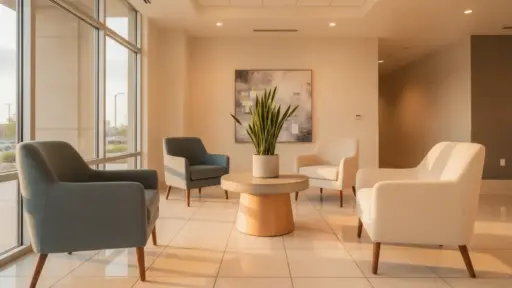
Busy patterns are out. Materials do the talking instead. The palette leans warm and neutral. Whites, beiges, and soft grays form a quiet base, and the emphasis falls on texture and finish.
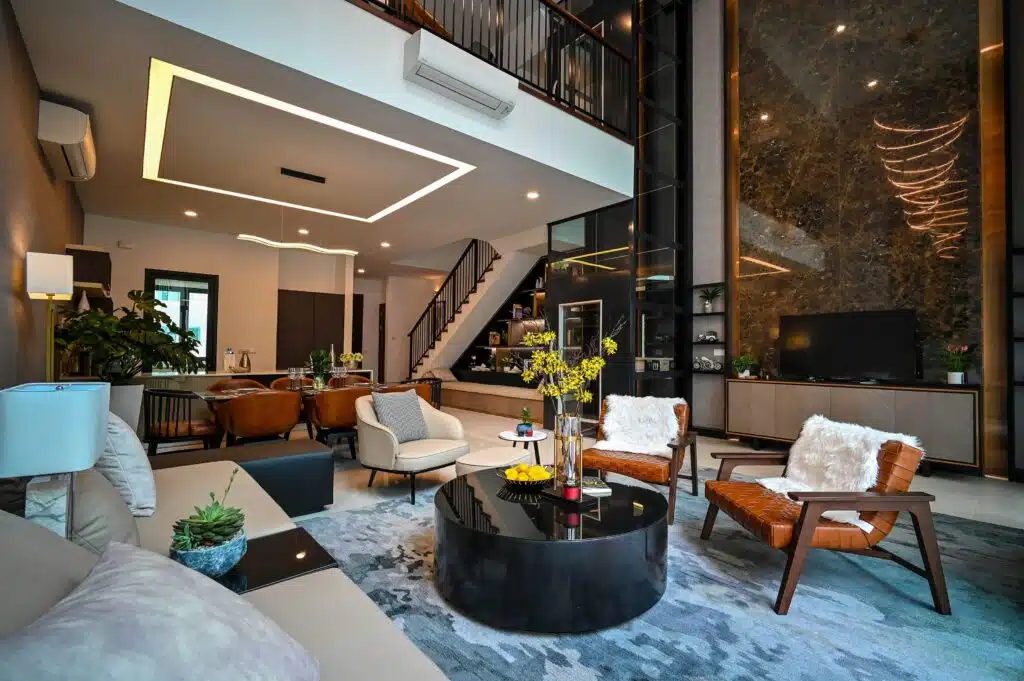
Natural wood, polished concrete, leather, and exposed stone each bring a different kind of warmth to a room.
There is science behind these choices. A study published in Scientific Reports found that biophilic elements in indoor environments led to measurable drops in heart rate, blood pressure, and cortisol.
That research reinforces what many homeowners already sense: natural materials make a space feel calmer. Bold or pastel accents in cushions, throws, or a single piece of artwork add personality on top of that neutral foundation and keep the room from going flat.
Lighting as a Design Tool
Light shapes how a room works at different hours. Large, unobstructed windows cut the need for artificial light during the morning and afternoon. After dark, the strategy changes.
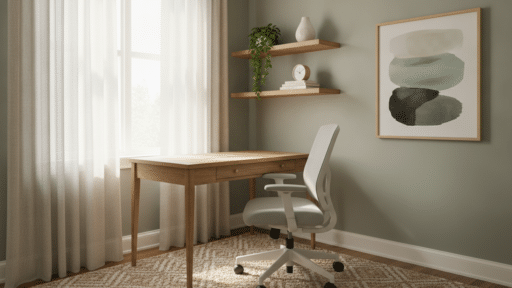
A mix of ambient, task, and accent lighting gives one room the range to serve several purposes. Dimmable fixtures let a home office become a relaxed living space by evening. That kind of control, over both natural and artificial light, is one of the clearest signs of a well-planned interior.
Smart Technology and Sustainable Choices
Homes are absorbing technology without letting it take over. Automated climate control, motorized blinds, and voice-activated lighting fold into clean architectural lines. Nothing extra sits on the counter or clutters a wall.
Green building practices are designed to reduce environmental impacts while supporting occupant health, comfort, and indoor environmental quality. That principle extends to interior decisions too.
Sustainable fabrics, energy-efficient appliances, and repurposed vintage furniture let homeowners cut waste without giving up style. Good design and responsible living point in the same direction.
Conclusion
Every room in your home tells a story about how it was planned. When open layouts, natural materials, considered storage, and layered lighting come together with intention, you get a space that supports the way you live.
You do not have to think about why it works. It just does. That kind of design holds up over time because it was never built around trends to begin with. It was built around you.

With a Master in Architectural Studies from University of Pennysylvania, Marwa Haydar has pioneered living spaces since 2005. Her expertise, initially honed in a prestigious architectural firm, is evident in her approach to creating environments. Marwa became part of our team in 2019 and has since been a driving force in our home improvement section, known for her practical yet stylish solutions. She’s been spearheading our design workshops since then, infusing her passion for teaching into her work. In her leisure time, Marwa enjoys exploring historic architecture and is an enthusiastic pottery hobbyist, further enriching her understanding of form and texture.